
Unknown's avatar

About gutsandgrowth

I am a pediatric gastroenterologist at GI Care for Kids (previously called CCDHC) in Atlanta, Georgia. The goal of my blog is to share some of my reading in my field more broadly. In addition, I wanted to provide my voice to a wide range of topics that often have inaccurate or incomplete information. Before starting this blog in 2011, I would tear out articles from journals and/or keep notes in a palm pilot. This blog helps provide an updated source of information that is easy to access and search, along with links to useful multimedia sources. I was born and raised in Chattanooga. After graduating from the University of Virginia, I attended Baylor College of Medicine. I completed residency and fellowship training at the University of Cincinnati at the Children’s Hospital Medical Center. I received funding from the National Institutes of Health for molecular biology research of the gastrointestinal tract. During my fellowship, I had the opportunity to work with some of the most amazing pediatric gastroenterologists and mentors. Some of these individuals included Mitchell Cohen, William Balistreri, James Heubi, Jorge Bezerra, Colin Rudolph, John Bucuvalas, and Michael Farrell. I am grateful for their teaching and their friendship. During my training with their help, I received a nationwide award for the best research by a GI fellow. I have authored numerous publications/presentations including original research, case reports, review articles, and textbook chapters on various pediatric gastrointestinal problems. In addition, I have been recognized by Atlanta Magazine as a "Top Doctor" in my field multiple times. Currently, I am the vice chair of the section of nutrition for the Georgia Chapter of the American Academy of Pediatrics. In addition, I am an adjunct Associate Clinical Professor of Pediatrics at Emory University School of Medicine. Other society memberships have included the North American Society for Pediatric Gastroenterology Hepatology and Nutrition (NASPGHAN), American Academy of Pediatrics, the Food Allergy Network, the American Gastroenterology Association, the American Association for the Study of Liver Diseases, and the Crohn’s and Colitis Foundation. As part of a national pediatric GI organization called NASPGHAN (and its affiliated website GIKids), I have helped develop educational materials on a wide-range of gastrointestinal and liver diseases which are used across the country. Also, I have been an invited speaker for national campaigns to improve the evaluation and treatment of gastroesophageal reflux disease, celiac disease, eosinophilic esophagitis, hepatitis C, and inflammatory bowel disease (IBD). Some information on these topics has been posted at my work website, www.gicareforkids.com, which has links to multiple other useful resources. I am fortunate to work at GI Care For Kids. Our group has 17 terrific physicians with a wide range of subspecialization, including liver diseases, feeding disorders, eosinophilic diseases, inflammatory bowel disease, cystic fibrosis, DiGeorge/22q, celiac disease, and motility disorders. Many of our physicians are recognized nationally for their achievements. Our group of physicians have worked closely together for many years. None of the physicians in our group have ever left to join other groups. I have also worked with the same nurse (Bernadette) since I moved to Atlanta in 1997. For many families, more practical matters about our office include the following: – 14 office/satellite locations – physicians who speak Spanish – cutting edge research – on-site nutritionists – on-site psychology support for abdominal pain and feeding disorders – participation in ImproveCareNow to better the outcomes for children with inflammatory bowel disease – office endoscopy suite (lower costs and easier scheduling) – office infusion center (lower costs and easier for families) – easy access to nursing advice (each physician has at least one nurse) I am married and have two sons (both adults). I like to read, walk/hike, bike, swim, and play tennis with my free time. I do not have any financial relationships with pharmaceutical companies or other financial relationships to disclose. I have helped enroll patients in industry-sponsored research studies.

Do you know about the “Choosing Wisely Campaign?”

If I had been given a multiple choice question about the “Choosing Wisely Campaign,” I would not have selected anything related to limiting low-value health services.  Yet, this campaign is in fact an effort to have physicians and physician groups develop a focus on becoming better “stewards of finite health care resources.”  A short perspective (NEJM 2014; 370: 589-92) on the rollout of this campaign which was launched nearly two years ago details some of the first steps.

In essence, Choosing Wisely promoted by the National Physicians Alliance and funded by the American Board of Internal Medicine has two core objectives (The Choosing Wisely™ Campaign Five Things Physicians and ).  The first is a developing lists by specialty societies of low-value tests and treatments (low-value services are often a waste of money) and the second is a patient education component led by Consumer Reports.  The authors state that the careful design has avoided negative publicity regarding issues like rationing and undermining the patient-doctor relationship.  An alternative explanation could be that the information has not been widely disseminated yet.

The article then details the low-value services that different societies identified.  “Participating societies generally named other specialties’ services as low-value…29% of listed items target radiology; 21% cardiac testing; 21% medications; 12% laboratory tests or pathology.  Cognitive specialists name very few of their own revenue-generating services.”

Examples of speciality groups that avoided any tough decisions:

  • American Academy of Otolaryngology: chose three imaging tests and two antibiotics.  It did not select any ENT procedures despite the extensive literature on the overuse of several.
  • American Academy of Orthopaedic Surgeons: listed an over the counter supplement, two small durable-medical equipment items and a rare minor procedure (needle lavage for osteoarthritis of the knee).  No major procedures were selected.

While atypical, some organizations did identify potential low-value services which were more meaningful:

  • Society of General Internal Medicine: their list included the annual physical
  • American Gastroenterological Association: their list included three specific endoscopic procedures, including not performing a repeat colorectal cancer screening within 10 years of a high-quality exam (Choosing Wisely • American Gastroenterological Association (AGA)

While the initial goals of Choosing Wisely were “not intended to inform cost-containment efforts and quality measures,” ultimately, when physician groups can identify low-value services, these will be targeted with financial incentives or with quality measurement tools.

Take home message: Choosing Wisely campaign is a start towards identifying tests, medicines, and procedures that are often unnecessary.  However, most physician organizations have not identified low-value services that would affect the revenue streams for their members.

Related link from Atul Gawande’s twitter feed: http://t.co/JtZWKRpGJp

Related blog post:
Trying to make Cents out of Value Care | gutsandgrowth

What is the long-term neurological outcome in Tyrosinemia Type 1?

The answer to the blog post title: mild impaired cognitive function, according to a recent study (J Pediatr 2014; 164; 398-401).

Using a cross-sectional study, children (n=10) with tyrosinemia type 1 were compared with their unaffected siblings.  Intelligence was measured with Wechsler Scales. These children were treated with nitisinone (NTBC).  NTBC which was introduced in 1992 has markedly improved the survival of tyrosinemia by blocking the accumulation of toxic metabolites.  Liver dysfunction is controlled in >90% and the risk of liver cancer has been reduced as well.

Key results:

  • Average IQ score in tyrosinemia patients was lower than their siblings: 71 vs. 91 (P= .008).
  • In the five patients with repeated measurements, there was a gradual decline in IQ over time (240 months), from 96 to 69.

Why?

The authors do not know but speculate that cognitive impairment may have been overlooked previously due to the short life span of untreated patients.  While the lower IQ may be due to the treatment itself, “similarly low IQs in patients who stopped taking nitisone after undergoing liver transplantation argues against the acute toxicity of nitisinone.” Thus, elevated tyrosine/low phenylalanine levels, which occurs in patients on NTBC/restricted protein diet, may be related to cognitive impairment.

Can parents not know if their child is overweight?

Answer to the blog title: Yes

When I look back at classroom pictures from 30 years ago, so many kids look thin compared to today’s kids.  Perhaps, the perception of what is normal has been lost.  In fact, recent studies (doi: 10.1542/peds.2013-2690) indicate that parents often do not know whether their child is overweight,  especially between the ages of 2-5.

A link from NY Times twitter feed: http://nyti.ms/1ctfgcm 

An excerpt:

Many parents apparently believe their children are leaner than they actually are.  A review of studies published in Pediatrics found that two-thirds of parents underestimate the weight of their offspring.

“If parents don’t recognize that their children are overweight, that prevents them from undertaking actions to correct it,” said the lead author, Alyssa Lundahl, a graduate student in psychology at the University of Nebraska-Lincoln…

Ms. Lundahl and her colleagues reviewed 121 studies that included more than 80,000 parental estimates of the weight of their children who were between the ages of 2 and 19. More than half of parents of overweight and obese children underestimated their weight, and so did about 14 percent of parents of normal weight children. Parents were most likely to underestimate the weight of 2- to 5-year olds.

The reasons for the misunderstanding are not known…“When health care professionals are able to correct a parent’s false impression,” Ms. Lundahl said, “they are more likely to do something about it.”

Related blog posts:

Male Vulnerability Factor?

A recent study examined mortality data from 1999-2008, comparing male deaths to female deaths (Pediatrics 2013; 132: 631-38) –thanks to Ben Gold for this reference.

Here’s a link to the abstract:  Pediatric Mortality in Males Versus Females in the  – Pediatrics

This study reviewed mortality data, including data from the CDC’s WONDER (wide-ranging online data for epidemiologic research) system .

Key Findings:

  • Males had higher relative risk of dying in all age groups with a relative risk of 1.44.
  • Males had higher mortality rates in 17 of 19 major ICD-10 categories (including cancer), thus this does not appear to be simply a matter of more accidents.
  • Even between 15-19 years when accidental and nonaccidental trauma were excluded males continue to demonstrate an increased relative risk of death.

While this study is limited by relying on the accuracy of coding for underlying cause of death, it supports the idea that males have a higher mortality throughout their lifespan.

Is a Three Year-Old Too Young for Bariatric Surgery?

Maybe not.

Recent article from WSJ (from Jeff Schwimmer’s twitter feed): http://online.wsj.com/news/article_

Here is an excerpt:

Daifailluh al-Bugami was just a year old when his parents noticed that his lips turned blue as he slept at night. It was his weight, doctors said, putting pressure on his delicate airways.

Now Daifailluh is 3, and at 61 pounds he is nearly double the typical weight of a child his age. So the Bugamis are planning the once unthinkable: To have their toddler undergo bariatric surgery to permanently remove part of his stomach in hopes of reducing his appetite and staving off a lifetime of health problems.

That such a young child would be considered for weight-loss surgery—something U.S. surgeons generally won’t do—underscores the growing health crisis here and elsewhere in the Middle East. Widespread access to unhealthy foods, coupled with sedentary behavior brought on by wealth and the absence of a dieting and exercise culture, have caused obesity levels in Saudi Arabia and many other Gulf states to approach or even exceed those in Western countries…

Daifailluh’s doctor, Aayed Alqahtani, is a leading advocate of a radical approach to the problem. Patients travel to him from across the country and the Gulf region. Over the past seven years, he has performed bariatric surgery on nearly 100 children under the age of 14, which experts on the procedure believe is the largest number performed by one doctor on young children… “We should not deprive our patients from bariatric surgery based on their age alone,” the surgeon says. “If they have [medical] conditions that threaten their lives, then we should not deny the bariatric surgery…”

Pediatric surgeons in the U.S. say they also are facing demands from families to operate on younger patients. Thomas Inge, surgical director of the Surgical Weight Loss Program for Teens at Cincinnati Children’s Hospital, says he will be operating on a 12-year-old later this month. He says that as younger and younger children are referred for consideration of surgery, care teams will need to carefully weigh the pros and cons…

Many doctors say they aren’t ready to follow Dr. Alqahtani yet. Kirk Reichard, chairman of the pediatric-surgery committee for the American Society for Metabolic and Bariatric Surgery, notes that there are no data to show that surgery doesn’t affect young children’s long-term sexual maturation or cognitive functioning.

Related blog posts:

Sometimes more is not better

‘More is not better’ may be the case with trimethoprim/sulfamethoxazole (TMP/SMX) Pneumocystis prophylaxis (PCP) (J Pediatr 2014; 164: 389-92).  This study indicates that a single-day course of TMP/SMX prophylaxis is as effective as other regimens.

Design: Prospective survey of 20 centers with newly diagnosed cancer between 2009-2011.  This included 1093 with solid tumors and 1373 with leukemia/lymphoma.  55.6% received 3-day/week prophylaxis, 16.5% received 2-day/week regimen, and 27.9% received 1-day/week regimen (5-10 mg/kg/day into 2 doses).

Key result:

  • Incidence of PCP at 3 years was 0.09% overall.  The two cases occurred in the 2-day regimen (though both had withdrawn from treatment)

The authors note the need for PCP prophylaxis has been questioned for solid tumor patients.  However, the lack of PCP among the 439  children with leukemia/lymphoma indicates that a single day per week regimen is effective.

Bottomline: In GI/liver patients who need TMP/SMX prophylaxis, 1-day per week regimen is likely effective (as it is in leukemia/lymphoma patients).  One-day/week is easier and should help with compliance, which is the key to preventing PCP.

Acute Liver Failure –Is There a Role for Steroids?

The title is not a simple question.

Some who support the use of steroids (for acute liver failure) should remember Galen’s assertion about a different treatment, circa 100 AD:   “All who drink of this remedy recover in a short time except those whom it does not help, who all die. It is obvious, therefore, that it fails only in incurable cases.”

Two recent publications offer conflicting advice about steroids for acute liver failure (ALF):

  • Hepatology 2014; 59: 612-21.
  • J Pediatr 2014; 164: 407-409.

The first study involved a retrospective analysis of autoimmune, indeterminate, and drug-induced ALF from patients (n=361) prospectively enrolled in the ALF Study Group between 1998-2007.

  • Autoimmune, n=66, mean age 46 years
  • Indeterminate, n=164, mean age 39 years
  • Drug-induced, n=131, mean age 44 years

Outcomes:  Steroid use was associated with increased spontaneous survival (35% vs 23%) but this benefit did not persist with multivariate analysis.  In addition, steroid use was associated with lower survival in patients with the highest MELD scores. Furthermore, the authors discount the possibility of selection bias, noting that INR was higher in the no-steroid group.

In contrast, the second article, a case presentation/pediatric grand rounds article, states that “in our experience over the past decade, more than one-half of the children (56%) presenting with indeterminate acute hepatitis or ALF (after being evaluated) comprehensively …had a markedly elevated sIL-2R level (>5000 U/mL) concerning for immune activation but never fulfilling diagnostic criteria for HLH [hemophagocytic lymphohistiocytosis] during their course.”

Notably, of the patients presenting with elevation of sIL-2R to >5000 U/mL, most who survived with their native liver had received treatment with steroids.” (JPGN 2013; 56: 311-5.) “We propose that children presenting with indeterminate, progressive hepatitis or indeterminate ALF are candidates for prompt initiation of anti-inflammatory therapy when there is concomitant evidence of immune activation.”

In patients with ALF, part of the evaluation needs to include sIL-2R. Other assessments for immune dysregulation would include serum triglycerides, ferritin, “CD107a expression, perforin/granzyme B protein expression, and assessment for macrophage activation (soluble CD163).”

Bottomline: If HLH criteria are not met, but patients have marked elevation of sIL-2R (>5000 U/mL), empiric corticosteroids need to be considered. Perhaps there is a window of opportunity (before a patient develops a high MELD score).  At the same time, we need to acknowledge that our knowledge base remains incomplete and it is unclear whether this will improve the outcome.

Disclaimer: These blog posts are for educational purposes only. Specific dosing of medications (along with potential adverse effects) should be confirmed by prescribing physician.  This content is not a substitute for medical advice, diagnosis or treatment provided by a qualified healthcare provider. Always seek the advice of your physician or other qualified health provider with any questions you may have regarding a condition.

Why an ERCP Study Matters to Pediatric Care

While there are pediatric patients who undergo endoscopic retrograde cholangiopancreatography (ERCP), this is a relatively infrequent occurrence. Nevertheless, a recent study has a couple useful clinical pearls that may have broader application.

  1. Clin Gastroenterol Hepatol 2014; 12: 303-07.
  2. Clin Gastroenterol Hepatol 2014; 12: 308-10 Associated editorial
  3. Gastroenterol 2014; 146: 581-82. Associated summary

Key points/Implications:

  • Aggressive hydration may prevent post-ERCP pancreatitis. In the study, the treatment group received an average of 3290 mL over the 9-hour period compared with 945 mL in the standard infusion group.
  • Implication: The speculation from the study and the editorials is that improved pancreatic perfusion will result in better oxygenation and reduce the likelihood of  pancreatitis. In the 2nd reference, the author states that his practice is to administer “at least 3 L of crystalloid in recovery to young, healthy patients who have undergone high-risk ERCP and an additional 3 to 5 L within the first 12 hospital hours to those admitted with postprocedure pain”
  • The best fluid (for post-ERCP and acute pancreatitis) may be lactated Ringer’s (LR).
  • Implication: The lactate in LR may help reduce pancreatitis by avoiding acidosis which could promote zymogen activation and pancreatic inflammation. A previous small trial (n=40) of acute pancreatitits from any cause showed lesser degrees of systemic inflammatory response with LR in compared with normal saline (Clin Gastroenterol Hepatol 2011; 9: 710-17e1).
  • This study adds aggressive IVFs as another intervention to prevent ERCP.  Rectal indomethacin and prophylactic stent placement (in high-risk patients) are other accepted treatments.

Study details:

This pilot study randomly assigned 39 patients to aggressive hydration and 23 to standard hydration; all patients were inpatients who were not at risk for fluid overload. The aggressive group received 3 mL/kg/h during the procedure, a 20 mL/kg bolus after the procedure, and then continued on 3 mL/kg/hr for 8 hours.  In contrast, the standard group received LR at 1.5 mL/kg/h during and for 8 hours afterwards.

Demographics: The average age was 43 years in the aggressive hydration group and 45 years in the standard group. 78% were hispanic.  The ERCP procedures were mostly “average risk.”  74% had ERCP for choledocholithiasis.  Only 2 subjects needed precut sphinterotomy (3%).

Results:

  • No patients in the aggressive hydration group developed acute pancreatitis compared with 4 (17%) in the standard hydration group
  • Elevated amylase (23% vs. 39%) and epigastric pain (8% vs 22%) were also less frequent in the aggressive hydration group.

Numerous Limitations: This was a small pilot study with an atypical population; thus, the findings are difficult to generalize.  A false-positive (type 1 error) can easily occur due to the small numbers, especially as the standard hydration group had a rate of acute pancreatitis that was about double from previous studies. In addition, this study was not blinded and could have been susceptible to bias.  Furthermore, the authors defined acute pancreatitis differently than in previous studies.  In this study, the authors required enzyme increases 2 or 8 hours after ERCP with new abdominal pain; in previous studies, the definition of acute pancreatitis relied on enzyme increases for at least 24 hours after the ERCP.

Take-home message for those not doing ERCPs: Think about using lactated ringer’s and aggressive hydration in otherwise-well patients who present with acute pancreatitis.

Related blog entries:

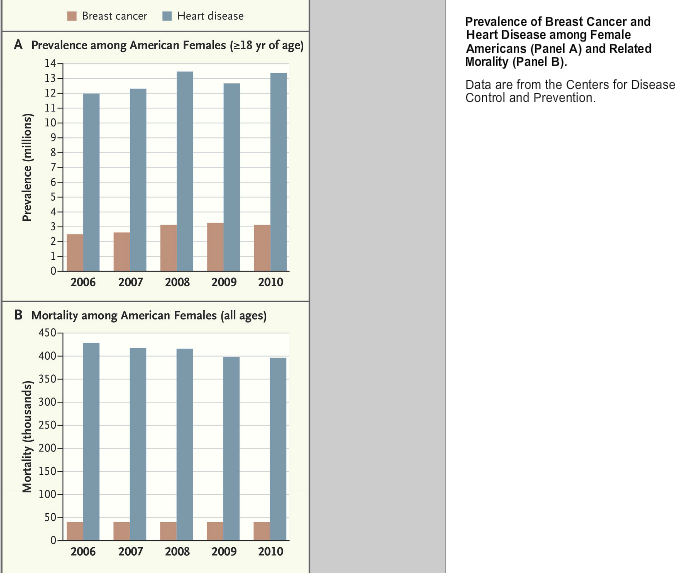
Facts, “Misfearing” and Women’s Health

A terrific short perspective article shows how “misfearing” affects health care (NEJM 2014; 370: 595-597).

The author quotes one of her patients who when asked what is the number-one killer of women, replies “I know the right answer is heart disease…but I’m still going to say ‘breast cancer.'”

Key points:

  • “Tornadoes. Terrorist attacks. Homicides.  The big, the dramatic, and the memorable occupy far more of our worry budget than the things that kill with far greater frequency.”
  • “Misfearing” is a term coined by Cass Sunstein “to describe the human tendency to fear instinctively rather than factually”  274. Cass R. Sunstein, “Misfearing: A Reply” – University of Chicago 
  • “When I read Angelina Jolie’s New York Times editorial…She’s beautiful and brave, I thought, and I want to be like her.  The cardiologist in me, however, said, ‘Oh no –will this make it even harder for us to help women believe they’re at risk for cardiovascular disease?'” My Medical Choice by Angelina Jolie – NYTimes.com

A graphic from this perspective article shows that mortality from cardiovascular disease is approximately ten times greater than mortality from breast cancer (if difficult to see, the graphic is available online http://www.nejm.org/doi/full/10.1056/NEJMp1314638?query=featured_home):

Cardiovascular vs. Breast Cancer Mortality in Women

Cardiovascular vs. Breast Cancer Mortality in Women

In pediatric GI, families are often more worried about the treatment than the disease (e.g.. inflammatory bowel disease), despite the fact that the disease is often far more dangerous.

Take home message: (quote from author) “If we want our facts to translate into better health, we may need to start talking more about our feelings.” This is true not just in cardiovascular disease, but in all aspects of medicine.

Related blog posts:

Eosinophilic Esophagitis and Psychosocial Dysfunction

There are many medical challenges in treating patients with eosinophilic esophagitis (EoE) and this has been discussed extensively in this blog (some links below).  What is striking in managing these patients and families is how often there are significant psychosocial problems.  Does this disorder serve as an excuse for other issues? Does the altered diet create enormous stress and isolation? Is the diagnosis of EoE an epiphenomenon for many of these patients?

While these questions are not answered, a recent retrospective study from a tertiary care center does provide some data on the frequency of psychosocial dysfunction in children and adolescents with EoE (JPGN 2013; 57: 500-05).

Psychosocial evaluation was offered as part of these patients’ clinical evaluation; this took place in 64 of 152 patients during the study timeframe.  Subsequently, a retrospective review of these patients, who had been offered a 1-hour behavioral health assessment by either a psychologist or social worker, were analyzed.

Key findings:

  • 69% had some psychosocial impairment
  • 64% had social difficulties
  • 41% had anxiety
  • 33% had sleep difficulties
  • 28% had depression
  • 26% had school problems
  • 44% had adjustment problems; this was more common in older children and in children with gastrostomy tubes

The main limitations of this study are its retrospective nature and the fact that only a minority of patients were analyzed; the latter indicates a high likelihood of a selection bias. The severity of EoE was not correlated with these problems, but could have been higher  at a tertiary center.

Take-home message: As with other chronic diseases, EoE patients have frequent psychosocial health problems –this study starts to define the extent of the problem.