Good News for Fans of Gluten

EW Lopes et al. Clin Gastroenterol Hepatol 2022; 20: 303-313.Open Access: Dietary Gluten Intake Is Not Associated With Risk of Inflammatory Bowel Disease in US Adults Without Celiac Disease

Key finding: In 3 large adult US prospective cohorts (n=208,280), gluten intake was not associated with risk of CD or UC in 5,115,265 person-years of follow-up evaluation.

My take (from authors): These ” findings are reassuring at a time when consumption of gluten has been increasingly perceived as a trigger for chronic gastrointestinal diseases.”

Related blog posts:

Chattahoochee River, Atlanta

ACG Adult GERD Guidelines 2022

PO Katz et al The American Journal of Gastroenterology: January 2022 – Volume 117 – Issue 1 – p 27-56doi: 10.14309/ajg.0000000000001538. Open Access: ACG Clinical Guideline for the Diagnosis and Management of Gastroesophageal Reflux Disease

Related blog post: 2018 Pediatric Gastroesophageal Reflux Clinical Practice Guidelines

Superior Results for Over-The Scope Clip for Severe UGI Bleeding

DM Jensen et al. Clin Gastroenterol Hepatol 2021; 19: 2315-2323. Randomized Controlled Trial of Over-the-Scope Clip as Initial Treatment of Severe Nonvariceal Upper Gastrointestinal Bleeding

Editorial: NS Buttar et al. Clin Gastroenterol Hepatol 2021; 19: 2266-2269. Full Text -Open Access: Silencing the Erupter: Over-the-Scope Clip in the Management of Nonvariceal Upper Gastrointestinal Bleeding

Background: “The OTSC (Ovesco Endoscopy AG, Tubingen, Germany) is a flexible, biocompatible nitinol clip that has multiple teeth oriented like a bear-claw, deployed via a band ligation–type mechanism. It is substantially larger than standard 2-tined hemostatic clips, allowing 1 OTSC to entrap far more tissue in a full-thickness bite. This unique design and its marked compressive force are purportedly capable of clinching even large vessels in excavated/fibrotic/near-perforating ulcers that are in complex anatomic locations. The bear-claw design allows not only for better tissue capture, but also adds higher site stability.”

53 patients (from cohort of 346) met the following criteria:

  • (1) clinical instability (hypotension, shock, syncope, tachycardia, melena, hematemesis, and/or hematochezia)
  • (2) laboratory evidence of high-volume blood loss (hemoglobin level ≤9 g/dL, or hemoglobin level decrease of ≥2 g/dL from baseline at admission)
  • (3) need for packed red blood cell (PRBC) transfusion (received 1 or more units PRBC)

In this study, the authors compared OTSC to standard treatment (hemoclips or multipolar electrocoagulation).

Key findings from study:

  • Immediate hemostasis was achieved in all patients.
  • The cumulative 30-day rebleeding rate was significantly lower in the OTSC group than in the standard group (4% vs 28.6%; P = .017), with most patients experiencing rebleeding within 4 days. All rebleeds occurred in patients with major stigmata of recent hemorrhage (SRH) and none with lesser SRH. SRH included active spurting bleeding, visible vessel, or clot.
  • The number of PRBC units transfused was also significantly higher in the standard versus OTSC group (0.68 vs 0.04 units; P = .03).
  • Severe complications were less frequent in OTSC (0 % vs. 14.3%)
  • Limitations:  despite randomization, within the groups, major SRH with active arterial bleeding (Forrest 1A) was observed in a higher number of patients in the standard group (7 standard vs 2 OTSC) and study was conducted in specialized quaternary medical center with high expertise. In addition, “whether it should be used in all cases of NVUGIB or be reserved for patients with a high-risk for adverse outcome lesions12 remains to be addressed.”
  • The editorial reviewed two other studies supporting the superiority of OTSC: FLETRock and STING.

My take (from editorial): The data about improved outcomes in the OTSC compared with standard therapy are compelling. Training in OTSC application will be needed for more widespread adoption.

Related blog posts:

From The Onion

Amazing Case Report: Speedy Recognition of an Aortoesophageal Fistula

EC Oldfield, PJ Parekh. Clin Gastroenterol Hepatol 2021; 19: xxv. Open Access: Thoracic Aortic Erosion into the Esophagus With Aortoesophageal Fistula

The authors recognized a “visible thoracic aorta eroding into the esophagus through a large transmural defect (Figure A) and a nonbleeding aortoesophageal fistula (Figure B) directly superior to the erosion in the middle third of the esophagus. This 76 year old patient had a known thoracic aortic aneurysm.

My take: This is an amazing case report because the patient survived. It is very easy to imagine the circumstance of massive exsanguination. In all patients with known cardiac repair and disease, it is important to consider the possibility of an major vessel fistula into the esophagus in those presenting with significant hematemesis and to consider how this could be managed.

Related blog posts:

Gluten-Free Diet –Role in IBS?

MI Pinto-Sanchez et al. Clin Gastroenterol Hepatol 2021; 19: 2343-2352. Open Access: Gluten-Free Diet Reduces Symptoms, Particularly Diarrhea, in Patients With Irritable Bowel Syndrome and Antigliadin IgG

In this prospective study of 50 patients with IBS (ROME III, all subtypes), with and without serologic reactivity to gluten (antigliadin IgG and IgA), and 25 healthy subjects (controls) were studied before and after 4 weeks of a GFD. Celiac disease (CD) was ruled out in patients and controls by negative tissue transglutaminase (tTG) IgA antibody and deamidated gliadin IgA or IgG antibodies and by the absence of mucosal atrophy in a duodenal biopsy specimen (Marsh 0 or 1). At least 4 and 2 biopsy specimens were obtained from the second and the first part of the duodenum, respectively.

Key findings:

  • Compared with baseline, IBS symptoms improved in 18 of 24 patients (75%) with antigliadin IgG and IgA and in 8 of 21 patients (38%) without the antibodies
(A) Improvement in IBS symptoms (>4.5 points in the total Birmingham score) in antigliadin antibody (AGA)+ and AGA patients after GFD. (B) Change in IBS symptoms after a gluten-free diet (GFD) compared with baseline in AGA+ and AGA patients.

The associated editorial (A Rej et al. Open Access: Personalizing Dietary Therapies For Irritable Bowel Syndrome: What Is Gluten’s Role?) provides some useful points:

  • “A key trigger for symptom generation in IBS is diet, with more than 80% reporting food-related symptoms…It seems that wheat is a key component for symptom generation in IBS, as demonstrated by a study in 920 patients by Carroccio et al,8 which identified wheat sensitivity in 30% of patients”
  • The authors note that the Pinto-Sanchez population had a higher-than-expected rate of AGA positivity of 50% when previous studies have found rates of 7-18%.

My take: This prospective study indicates that a GFD is associated with clinical improvement in a significant number of individuals with IBS (with and without antigliadin antibodies) who did not report any gluten sensitivity or were not on a gluten-restricted diet before study entry. Based on a number of other studies, however, it seems that a low FODMAPs diet is likely to have a higher efficacy for patients with IBS.

Related blog posts:

Emerging Data on Risankizumab for Crohn’s Disease

From Gastroenterology and Endoscopy News: New Anti–IL-23 Therapy Shows Benefit in Crohn’s Disease

An excerpt:

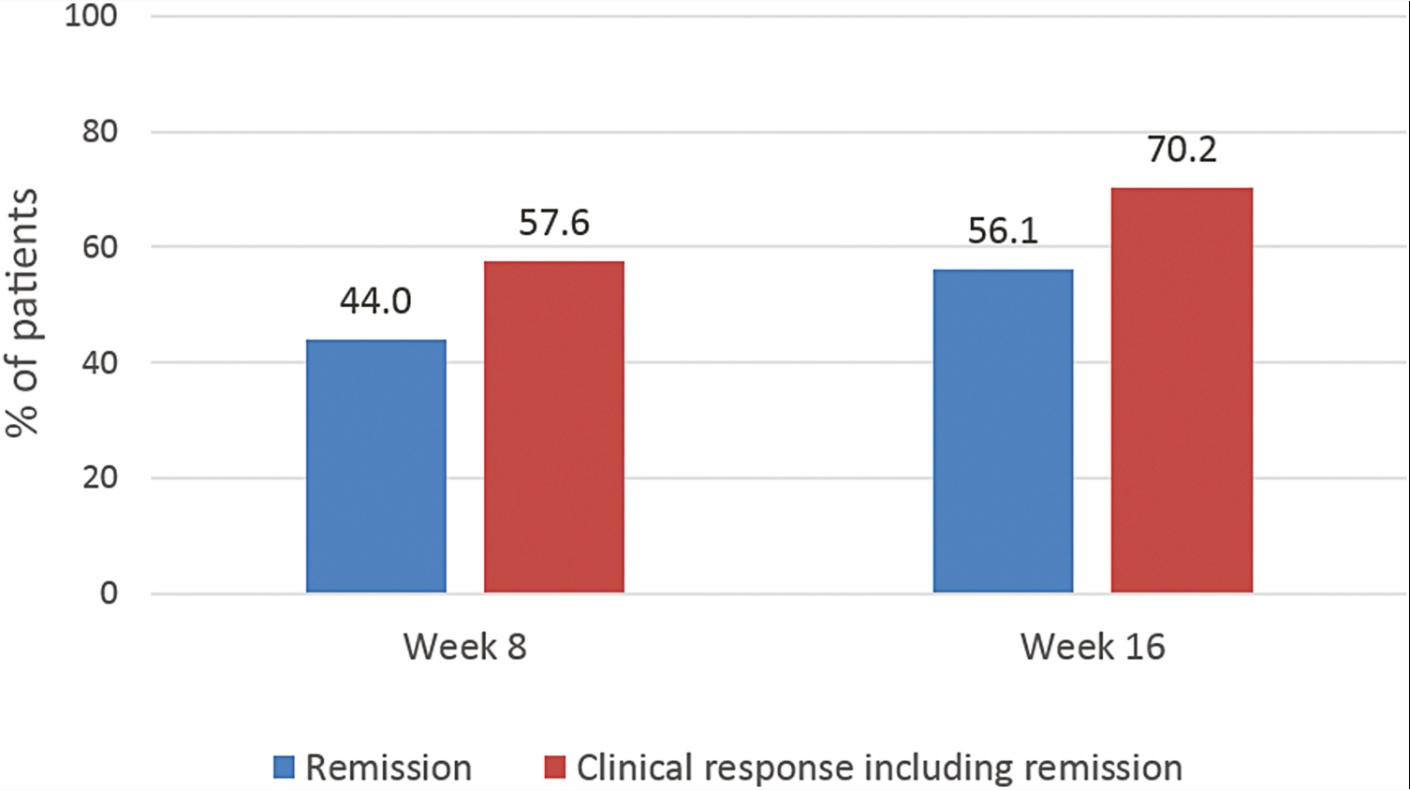
Two phase 3 placebo-controlled trials with the immune modulator risankizumab demonstrated control of Crohn’s disease whether or not patients had previously received a biologic agent.

Rates of clinical remission at 12 weeks with the interleukin (IL)-23 inhibitor risankizumab (Skyrizi, AbbVie), were about 48% in patients without prior exposure to biologic therapy and more than 40% in those with prior exposure…

The two trials, ADVANCE and MOTIVATE were presented together at the 2021 Digestive Disease Week (abstract 775a)…

Only 12% of patients in the placebo group achieved endoscopic remission versus 40.3% of those on the 600-mg dose of risankizumab (P<0.001). [Rates of endoscopic remission were higher in the biologic-naive (50.5%)]

My take: In addition to ustekinumab (already approved), a number of other therapeutic agents that target IL-23 are likely to be available soon to help manage Crohn’s disease. This includes risankizumab but others with phase 3 studies include brazikumab, mirikizumab, and guselkumab..

Slide from David Rubin Twitter Feed (March 2021). Ozanimod now approved.

Ustekinumab vs Adalimumab: Head-to-Head Study

From Gastroenterology & Endoscopy News: Head-to-Head Trial Shows Similar Efficacy and Safety With Ustekinumab and Adalimumab

An excerpt:

The first head-to-head trial comparing ustekinumab and adalimumab has found the two drugs are similarly safe and effective in patients with moderate to severe Crohn’s disease

Dr. Scherl and her co-investigators in the SEAVUE trial randomly assigned 386 biologic-naive patients with Crohn’s disease to receive one year of treatment with either ustekinumab or adalimumab at standard on-label doses, with no dose escalation throughout the study period and no concomitant immunomodulators...

The findings, which were presented at the 2021 annual meeting of the European Crohn’s and Colitis Organisation (oral presentation OP02), showed that after one year of treatment, 65% of patients who received ustekinumab and 61% of those who received adalimumab achieved clinical remission, defined as a CDAI below 150...[And] similar additional outcomes, including clinical response at one year (72.3% for ustekinumab vs. 66.2% for adalimumab), corticosteroid-free remission at one year (60.7% vs. 57.4%, respectively), endoscopic remission at one year (28.5% vs. 30.7%) 

My take: This study indicates that ustekinumab likely has similar safety and efficacy as adalimumab (though the study did not allow dose escalation or immunomodulators); thus, it could be positioned as a first-line treatment. It is administered less frequently as well.

Related blog posts:

NASPGHAN Toolbox App

Patrick Reeves passed along the following helpful information about the NASPGHAN toolbox:

The NASPGHAN Fellows committee, working in close partnership with the NASPGHAN Technology and Training committees, has developed an App named, “The NASPGHAN Toolbox”.

The App is equipped with ready access to: clinical calculators, guidelines and algorithms, medication guides, patient education resources, and more. You can access the Toolbox via its URL (https://toolbox.naspghan.org/) on your phone or computer.

The NASPGHAN team hopes this will enhance your day-to-day patient care of children with gastrointestinal disorders.

Some highlights:

Some screenshots:

How To Test For Zollinger-Ellison: On or off PPI Therapy?

S Bhattacharya et al. The American Journal of Gastroenterology: November 2021 – Volume 116 – Issue 11 – p 2216-2221doi: 10.14309/ajg.0000000000001487. Validity of Secretin Stimulation Testing on Proton Pump Inhibitor Therapy for Diagnosis of Zollinger-Ellison Syndrome

Methods: Twenty-eight patients corresponding to 29 SSTs (secretin stimulation tests) were performed on PPI, and 70 patients corresponding to 107 SSTs were performed off PPI. 

Key findings:

  • Sensitivity, specificity, and PPV of SSTs on PPI were determined to be noninferior to SSTs off PPI (P ≤ 0.05 for all).

My take: Zollinger-Ellison is a rare consideration in pediatric gastroenterology (I have only seen one case in ~ 25 years of practice). However, if testing is needed, this article indicates that stopping PPIs is probably not needed.

Disclaimer: This blog, gutsandgrowth, assumes no responsibility for any use or operation of any method, product, instruction, concept or idea contained in the material herein or for any injury or damage to persons or property (whether products liability, negligence or otherwise) resulting from such use or operation. These blog posts are for educational purposes only. Specific dosing of medications (along with potential adverse effects) should be confirmed by prescribing physician.  Because of rapid advances in the medical sciences, the gutsandgrowth blog cautions that independent verification should be made of diagnosis and drug dosages. The reader is solely responsible for the conduct of any suggested test or procedure.  This content is not a substitute for medical advice, diagnosis or treatment provided by a qualified healthcare provider. Always seek the advice of your physician or other qualified health provider with any questions you may have regarding a condition.