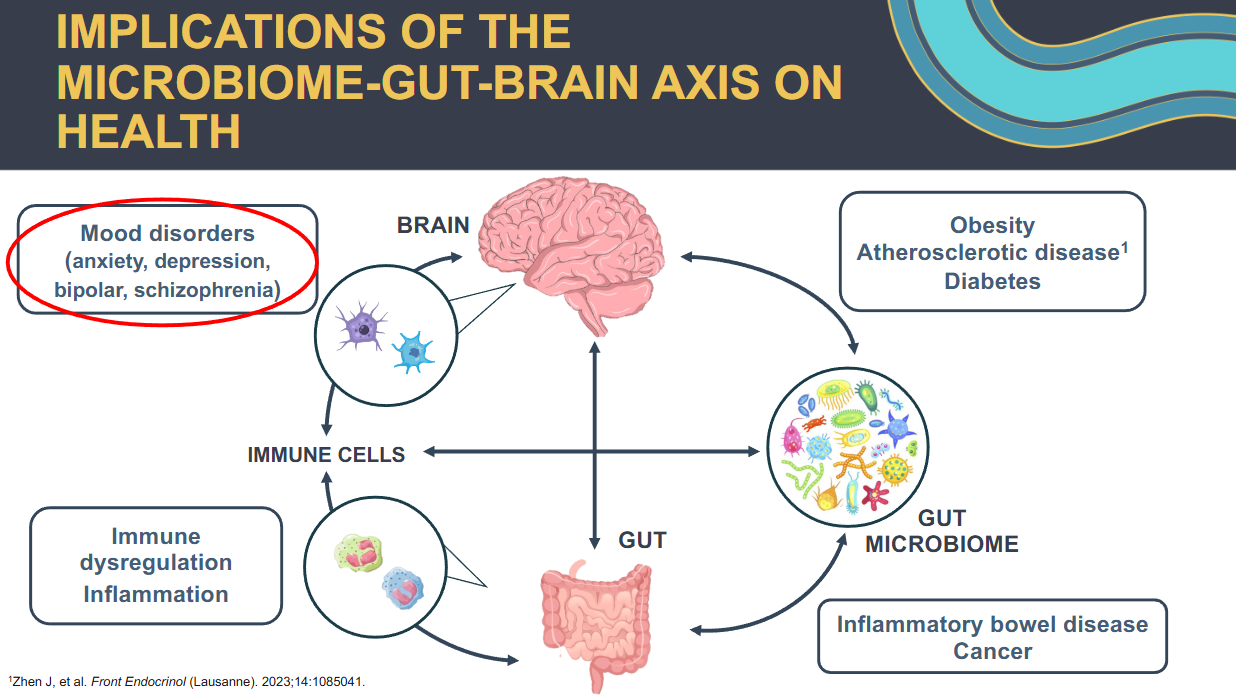
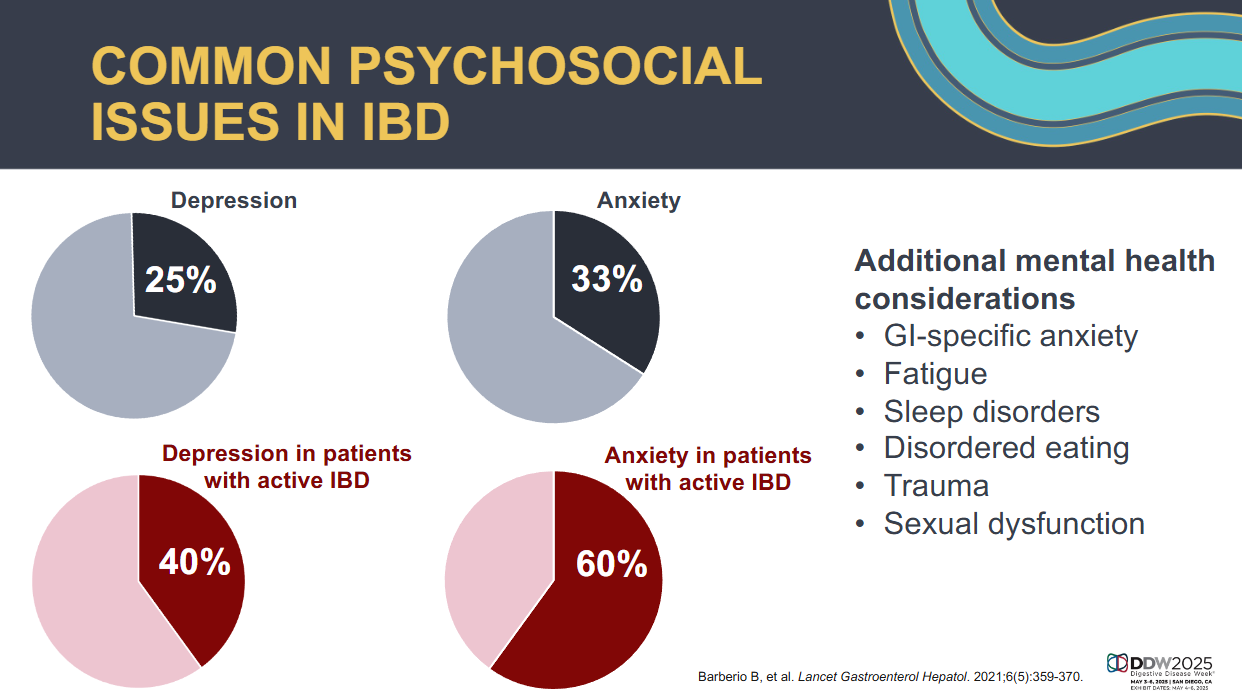
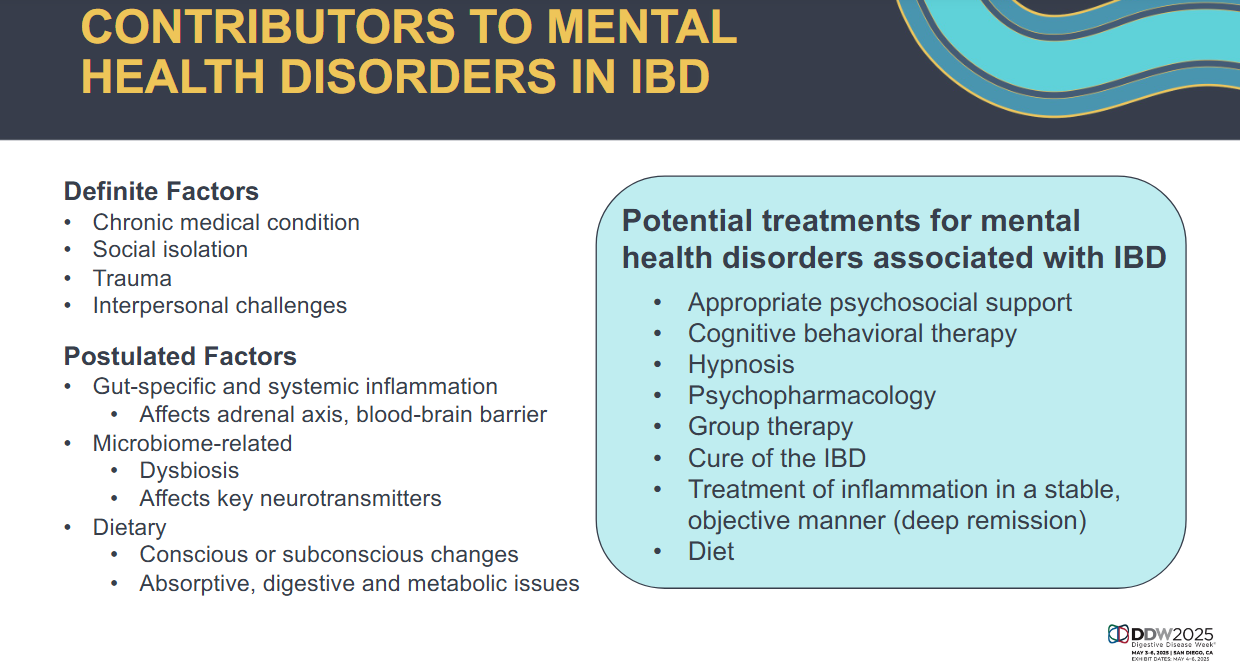
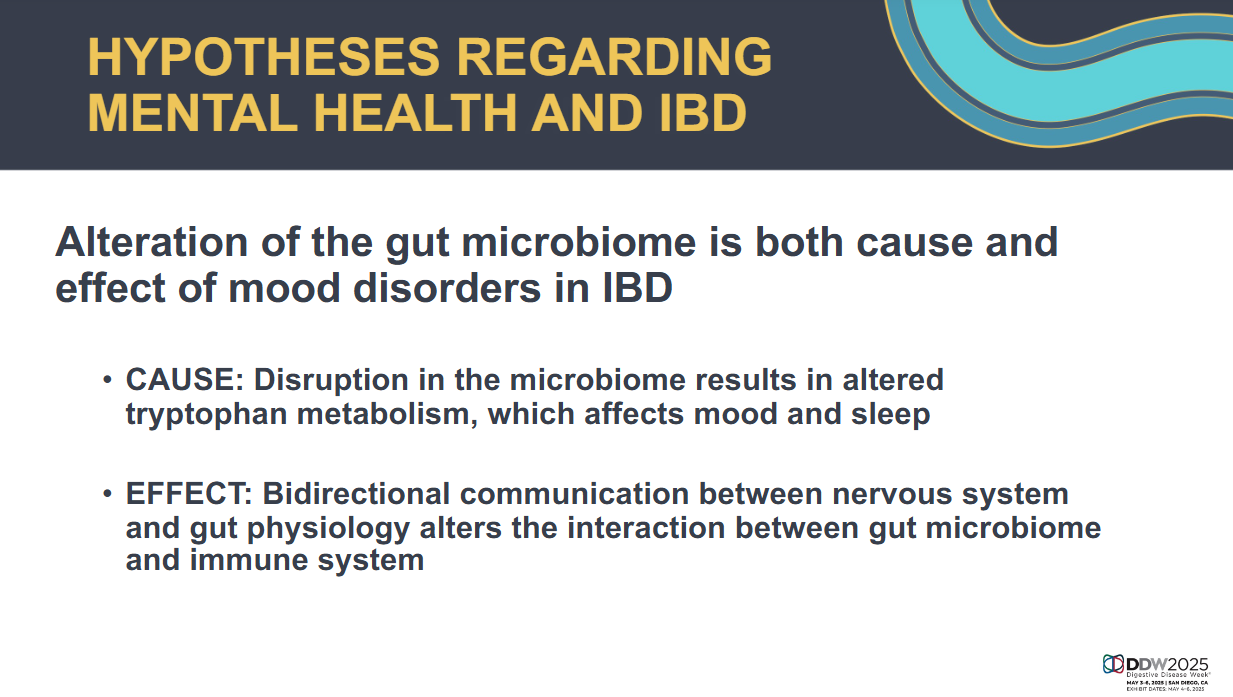
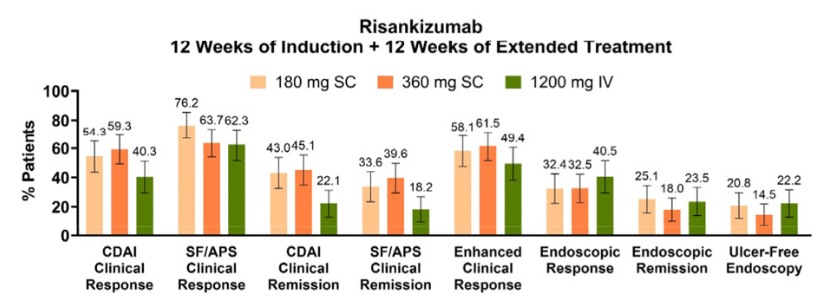
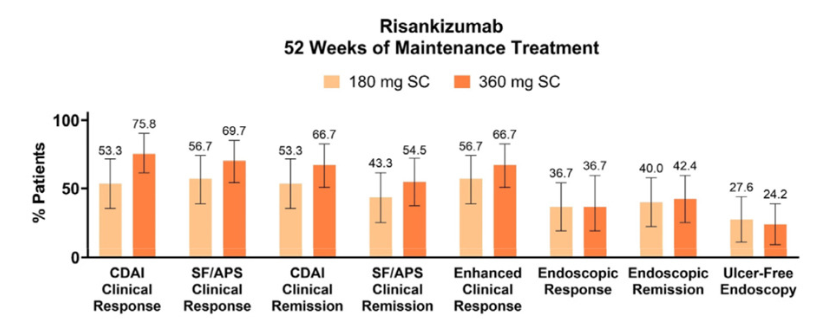
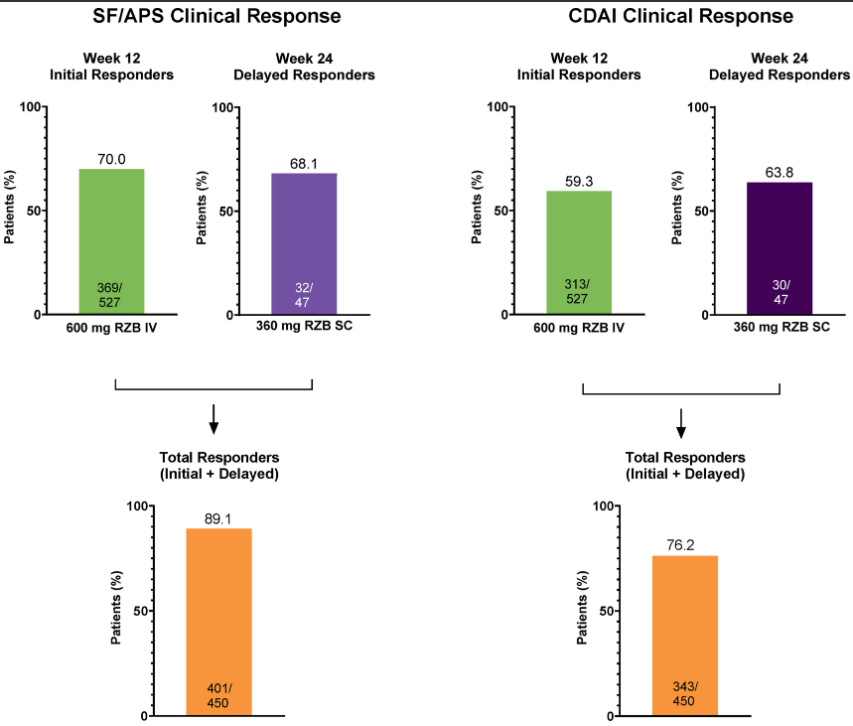
Methods: Per the study design, patients who did not achieve SF/APS clinical response following induction could receive 12 weeks of extended treatment with RZB, either via administration of the higher (1200 mg) IV RZB dose evaluated in ADVANCE and MOTIVATE or by initiation of SC RZB at doses (180 mg and 360 mg) used in FORTIFY maintenance therapy.
Key findings:
Over 60% of initial nonresponders achieved clinical response with extended RZB treatment. These patients also demonstrated improved clinical and endoscopic outcomes during the extended treatment period, which were sustained or continued to improve during maintenance.
My take: While there is a very good response with initial risankizumab therapy in Crohn’s disease, it looks like judgment on response needs to wait until 24 weeks as there are many who do not respond at 12 weeks who will subsequently respond to treatment.
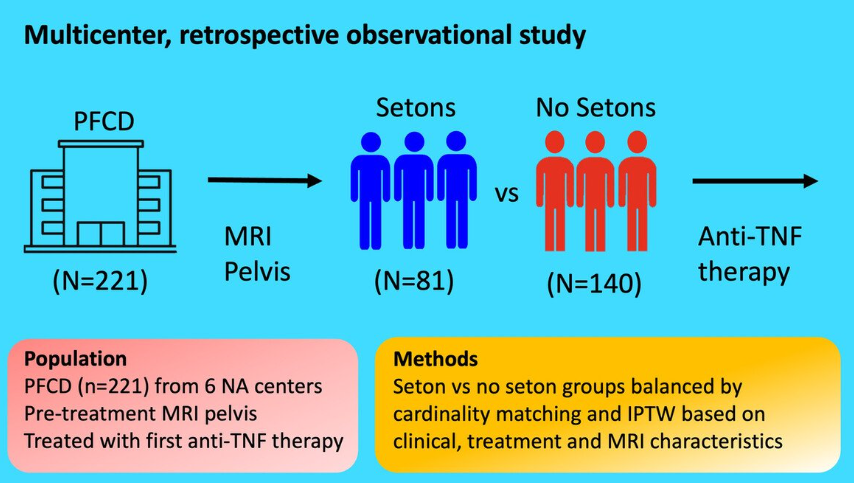
This study included 221 patients — 81 with setons and 140 without setons. Patients were treated with their first anti-TNF therapy for perianal fistulizing Crohn’s disease (PFCD) after undergoing a pelvic MRI between 2005 and 2022 from 6 North American centers. Our primary outcome was major adverse fistula outcome (MAFO), a composite of repeat local surgical intervention, hospitalization, or fecal diversion for PFCD.
Key findings:
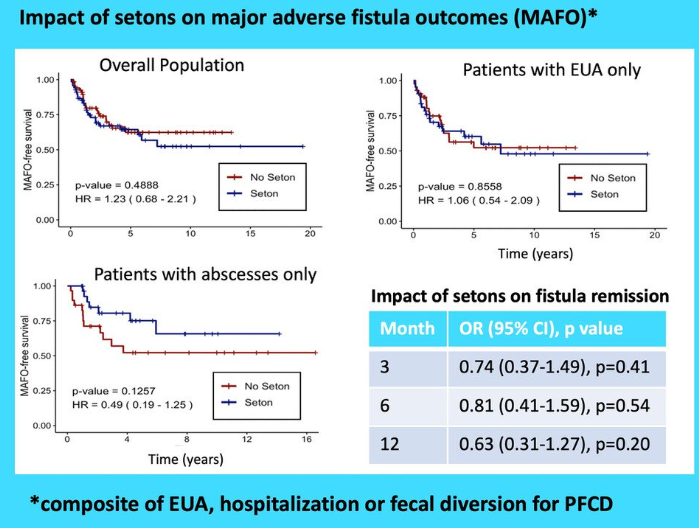
Patients with setons had similar rates of MAFO (HR 1.23; 95% CI, 0.68–2.21) and fistula remission at 6 months (OR, 0.81; 95% CI, 0.41–1.59) and 12 months (OR, 0.63; 95% CI, 0.31–1.27) compared to patients without setons
In patients with abscesses, there were lower rates of MAFO (HR, 0.49; 95% CI, 0.19–1.25) but not statistically significant in patients with setons
My take: This study indicates that seton placement may not be needed in patients who are starting anti-TNF therapy with fistulizing disease, especially if there is not an abscess present.
Disclaimer: This blog, gutsandgrowth, assumes no responsibility for any use or operation of any method, product, instruction, concept or idea contained in the material herein or for any injury or damage to persons or property (whether products liability, negligence or otherwise) resulting from such use or operation. These blog posts are for educational purposes only. Specific dosing of medications (along with potential adverse effects) should be confirmed by prescribing physician. Because of rapid advances in the medical sciences, the gutsandgrowth blog cautions that independent verification should be made of diagnosis and drug dosages. The reader is solely responsible for the conduct of any suggested test or procedure. This content is not a substitute for medical advice, diagnosis or treatment provided by a qualified healthcare provider. Always seek the advice of your physician or other qualified health provider with any questions you may have regarding a condition.
Introduction: “Unlike PPIs, metabolism of zastaprazan in not dependent on CYP2C19, and it does not require enteric coating due to its acid stability. While PPIs bind irreversibly only to active proton pumps, zastaprazan can bind reversibly and competitively to both active and inactive proton pumps. Moreover, as prodrugs, PPIs necessitate activation into their active form within acidic conditions, typically requiring a regimen of 3-5 consecutive days of dosing…By contrast, P-CABs deliver a rapid onset of action and complete efficacy from the initial dose, as they can directly inhibit proton pumps.”
Methods: A phase III, multicenter, randomized, double-blind, noninferiority clinical study was conducted with 300 subjects (>19 yrs) with confirmed erosive esophagitis compared daily zastaprazan (20 mg) to esomeprazole (40 mg)
Key findings:
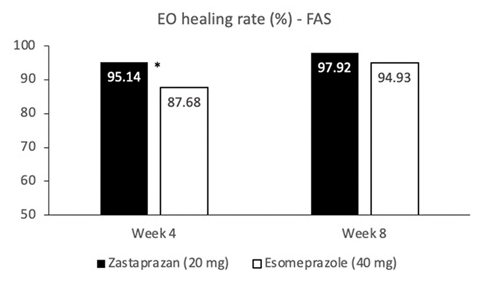
The cumulative healing rate at week 8 were 97.92% (141/144) for zastaprazan and 94.93% (131/138) (P = 0.178) for esomeprazole.
The healing rate at week 4 in the zastaprazan group was higher than the esomeprazole group (95.14% [137/144] vs 87.68% [121/138]; P = 0.026)
My take: Zastaprazan had higher healing rates at 4 weeks; results at 8 weeks were similar. This phase 3 study suggests that there will be other CABs besides vonoprazan approved for treating acid-related disorders.
This was a nationwide Israeli study with 15,111 patients with UC, of whom 2322 (15%) received biologics, with a median follow-up of 7.0 years. The dataset includes ~98% of the Israeli population; “the accuracy of medication data is high, as the Israeli health care system provides medications almost free of charge through the HMOs, and the electronic dispensing of drugs contributes to reliable and precise data.”
Key findings:
After 5 years of treatment, 43% of the patients with UC sustained their first biologic
The durability rate was similar between pediatric-onset and adults after 1 and 5 years from initiation of treatment (72% and 43% vs 71% and 43%, respectively)
Durability of adalimumab vs infliximab after 1 or 5 years was similar, whether prescribed as monotherapy (65%/46% vs 63%/33%, respectively) or combotherapy (78%/56% vs 91%/58%, respectively)
Durability of infliximab at 1 yr and 5 yrs was higher as combotherapy (85%/50%) vs monotherapy (69%/42%; , P = .007), while it was similar for adalimumab (80%/52% vs 74%/52%)
The durability rate was similar for vedolizumab monotherapy at 1 yr and 5 yrs (77%/56%) compared with adalimumab monotherapy (69%/52%), and infliximab monotherapy (73%/55% vs 62%/44%). However, combotherapy of antitumor necrosis factors (TNFs) had longer durability than vedolizumab (85%/50% vs 75%/43%), respectively;
My take: When looking at the durability plots, the three main biologics in this study, infliximab, adalimumab and vedolizumab, performed similarly. Whether therapeutic drug monitoring would influence theses results is not clear. It is interesting that a recent study in the pediatric population found that combination therapy was important for adalimumab and not infliximab (see: Why Do Children Taking Adalimumab Benefit from Methotrexate Dual Therapy?)
Also, from AGA Today (3/20/25): FDA Approves Guselkumab To Treat Patients With Crohn’s Disease
HCPlive (3/20, Campbell) reports the FDA on Thursday announced the approval of “guselkumab (Tremfya) for the treatment of adults with moderately to severely active Crohn disease.” The announcement from Johnson and Johnson claims the “approval is based on data from multiple phase 3 trials, including the GALAXI trials, which found guselkumab outperformed ustekinumab (Stelara) for multiple endoscopic endpoints. The agent now boasts indications for moderately to severely active Crohn disease and moderately to severely active ulcerative colitis (UC).” This is the fourth indication for guselkumab in the US
Disclaimer: This blog, gutsandgrowth, assumes no responsibility for any use or operation of any method, product, instruction, concept or idea contained in the material herein or for any injury or damage to persons or property (whether products liability, negligence or otherwise) resulting from such use or operation. These blog posts are for educational purposes only. Specific dosing of medications (along with potential adverse effects) should be confirmed by prescribing physician. Because of rapid advances in the medical sciences, the gutsandgrowth blog cautions that independent verification should be made of diagnosis and drug dosages. The reader is solely responsible for the conduct of any suggested test or procedure. This content is not a substitute for medical advice, diagnosis or treatment provided by a qualified healthcare provider. Always seek the advice of your physician or other qualified health provider with any questions you may have regarding a condition.
Background: “Protopathic bias may result from the use of PPIs for cardiac symptoms mistaken for gastrointestinal symptoms (e.g. heartburn), producing a spurious association between cardiac events and PPI use. In addition, some cardiovascular risk factors may be more prevalent among users of PPIs eg. smoking, obesity) but may not be well captured in observational data sets, resulting in confounding.”
Methods: This meta-analysis included randomized trials with at least 100 subjects, treatment duration >30 days, and a non-PPI comparator (active or placebo). In total, this study examined 164 trials including 52 trials with PPI (n=14,998) vs placebo (n=8,323), 61 trials with PPI (n=12,505) vs any active comparator (n=8,566), and 51 trials with PPI (n=9,430) vs H2 receptor antagonist (n=6,050).
Key finding:
Cardiovascular outcomes were infrequent in randomized trials of PPIs, and our primary analysis found no overall association (summary incident rate ratio, MACE+ events, PPI:placebo, 0.72)
My take: This study found no clear association of cardiovascular events with PPI treatment.
In the movie There’s Something About Mary, there is a scene (YouTube: 7-minute abs) where the main character picks up a hitchhiker. The hitchhiker reveals his brilliant idea for the 7-minute ab workout to replace the 8-minute ab workout. Of course, he becomes upset when the lead character suggests that someone else could invent the 6-minute ab workout.
This is what I was thinking of when I read a recent article describing a simplified, less restrictive low FODMAP diet.
This pilot study with 35 subjects with IBS-D were randomized to a standard low FODMAP diet (LFD) or to a simplified FODMAP diet which eliminated solely fructans and galactooligosaccharides. The primary endpoint was the proportion of subjects meeting the FDA responder definition for abdominal pain intensity (ie. a >/= 30% reduction in weekly average of daily abdominal pain scores for 2 of the 4-week treatment period).
Key findings:
There was a similar reduction in key symptoms (see below)
Fewer individuals in the simplified diet dropped out due to side effects or difficulty with adherence (12.5% vs 26.3%)
Blue columns indicate response to traditional low FODMAP diet (n=19) and orange represents response to simplified low FODMAP diet (n=16)
My take: Larger trials are needed. This study suggests that a simplified version of a low FODMAP diet would improve symptoms in most patients with IBS-D.
Background: This study aimed to identify biomarkers by conducting a Danish nationwide genome-wide association study (GWAS) on severe vs less severe ulcerative colitis.
Methods: Severe ulcerative colitis: Patients with severe ulcerative colitis were defined as having at least 1 major ulcerative colitis–related operation, at least 2 ulcerative colitis–related hospitalizations exceeding 2 days, and/or use of at least 5000 mg of systemic corticosteroids within 3 years of diagnosis
The authors utilized two source populations
The Center for Molecular Prediction of Inflammatory Bowel Disease (PREDICT) neonatal blood spot cohort (NBS) includes individuals born in Denmark and diagnosed with ulcerative colitis from 1981 to 2022
The North Denmark Biobank study is a population-based cohort of patients from Northern Denmark with inflammatory bowel disease from 1978 to 2020 (NorDIBD)
The combined cohort included 4491 patients (4153 from NBS and 338 from NorDIBD) with a mean (SD) age at diagnosis of 23.3 (8.4) years; 53% of patients were female and 27% had severe disease.
Key findings:
The association with HLA-DRB1*01:03 (Figure 1) had an OR of 6.38 for major operation, OR of 5.24 for at least 2 hospitalizations, and OR of 2.30 for use of at least 5000 mg of systemic corticosteroids in carriers vs noncarriers
Carriage of HLA-DRB1*01:03 allele was 2.8% in these cohorts
Limiation: Danish cohort -may not be applicable to other populations
My take: HLA-DRB1*01:03 is a low-frequency allele, carriers have a significantly higher risk of severe ulcerative colitis.
Disclaimer: This blog, gutsandgrowth, assumes no responsibility for any use or operation of any method, product, instruction, concept or idea contained in the material herein or for any injury or damage to persons or property (whether products liability, negligence or otherwise) resulting from such use or operation. These blog posts are for educational purposes only. Specific dosing of medications (along with potential adverse effects) should be confirmed by prescribing physician. Because of rapid advances in the medical sciences, the gutsandgrowth blog cautions that independent verification should be made of diagnosis and drug dosages. The reader is solely responsible for the conduct of any suggested test or procedure. This content is not a substitute for medical advice, diagnosis or treatment provided by a qualified healthcare provider. Always seek the advice of your physician or other qualified health provider with any questions you may have regarding a condition.
Methods: Using two large administrative databases, MarketScan and Medicare, the authors estimated annual prevalence of EoE, as well as age- and sex-stratified estimates, standardized to the U.S. population. Health care utilization, including medications and endoscopic procedures, was quantified, and annual EoE-associated costs were calculated.
Key findings:
There was a 5-fold increase in prevalence in both databases since 2009.
Standardized to the U.S. population, the prevalence of EoE was 142.5/100,000, extrapolating to 472,380 cases. This equates to ~1 in 700 persons.
Total EoE-associated annual health care costs were estimated to be $1.32 billion in 2024 dollars after accounting for inflation.
PPIs were used more commonly than steroids for treatment. For Marketscan in 2022, PPIs were used in 41% and steroids in 26%.
There has been a 5-fold prevalence increase since 2009Prevalence by State. Overall, ~1 in 700 EoE Prevalence in U.S.
My take: There is likely a true increase in the number of affected individuals, though some changes in prevalence are due to an increased recognition/testing of eosinophilic esophagitis.
In the REPREVIO study, a double-blind, randomized, placebo-controlled trial, 80 adults received either vedolizumab (300 mg IV) (n=43) or placebo (n=37) at weeks 0, 8, 16 and 24 following ileocolonic resection and had one or more risk factors for recurrence.
Key findings:
At week 26, the probability of a lower modified Rutgeerts score with vedolizumab versus placebo was 77·8% (95% CI 66·4 to 86·3; p<0·0001).
Severe endoscopic recurrence was observed in ten (23·3%) of 43 patients in the vedolizumab group versus 23 (62·2%) of 37 patients in the placebo group (difference –38·9% [95% CI –56·0 to –17·3]; p=0·0004).
Adverse effects were noted in three patients who received vedolizumab (bilateral tubo-ovarian abscesses, thrombosed hemorrhoids, and pancreatic adenocarcinoma) and two patients who received placebo (intestinal perforation related to Crohn’s disease and severe abdominal pain)
My take: This study shows that vedolizumab is another biologic capable of reducing postoperative recurrence following ileocolonic resection in Crohn’s disease. Infliximab has been shown to reduce recurrence as well (shown in the PREVENT study).
“Corticosteroids and Janus kinase inhibitors (JAKi) are commonly used for the treatment of inflammatory bowel disease (IBD) and are known to aggravate a prior tendency to acne or trigger the development of new acneiform eruptions. Both randomized controlled trials and real-world studies have identified acne as one of the most common treatment-emergent adverse events in JAKi… This review examines the characteristics of drug-induced acne in IBD treatments, provides a practical guide for gastroenterologists to manage mild-to-moderate occurrences, and highlights when to seek specialist dermatology advice.”
My take: This is a helpful review of acne management in the setting of IBD.
Disclaimer: This blog, gutsandgrowth, assumes no responsibility for any use or operation of any method, product, instruction, concept or idea contained in the material herein or for any injury or damage to persons or property (whether products liability, negligence or otherwise) resulting from such use or operation. These blog posts are for educational purposes only. Specific dosing of medications (along with potential adverse effects) should be confirmed by prescribing physician. Because of rapid advances in the medical sciences, the gutsandgrowth blog cautions that independent verification should be made of diagnosis and drug dosages. The reader is solely responsible for the conduct of any suggested test or procedure. This content is not a substitute for medical advice, diagnosis or treatment provided by a qualified healthcare provider. Always seek the advice of your physician or other qualified health provider with any questions you may have regarding a condition.