How Reliable is an Acetaminophen Level in Patients with Acetaminophen Overdose?

A recent study (TM Leventhal et al. Clin Gastroenterol Hepatol 2019; 17: 2110-6) provides more data indicating that acetaminophen levels are frequently undetectable even in patients suspected of developing acute liver failure (ALF) due to acetaminophen overdose.

The authors performed a retrospective study with 434 subjects from the ALF study group who met criteria for either ALF (coagulopathy and hepatic encephalopathy w/in 26 weeks of first symptoms) or Acute Liver Injury (ALI) (severe liver injury with coagulopathy but no encephalopathy).  In this group, all of the patients had liver disease attributed to acetaminophen (APAP) toxicity.

Key findings:

  • 227 patients (52%) had undetectable acetaminophen levels
  • Transplant-free survival rate was 79.5% (including both ALF and ALI patients)
  • APAP-protein adduct data was available for 37 patients in cohort; all patients with this assay had evidence of APAP toxicity regardless of whether APAP level was detected

Discussion Points:

  • Symptoms from APAP toxicity frequently emerge >24 hours after ingestion.  APAP, though, has a short half-life, approximately 2-2.5 hours.  Thus, most patients will have APAP clearance from plasma in 18 hours
  • Unintentional overdose, often with multiple doses over therapeutic limit of 4 g/day (in adults), more frequently is associated with an undetectable APAP level than a single large intentional overdose which results in a higher peak level

My take: This study shows that APAP levels are unreliable in determining APAP ingestions and not predictive of ALF.  The use of N-acetylcysteine should not be determined by APAP levels in patients with suspected overdose.

Related blog posts:

Disclaimer: These blog posts are for educational purposes only. Specific dosing of medications/diets (along with potential adverse effects) should be confirmed by prescribing physician/nutritionist.  This content is not a substitute for medical advice, diagnosis or treatment provided by a qualified healthcare provider. Always seek the advice of your physician or other qualified health provider with any questions you may have regarding a condition

Atlanta Botanical Garden

Improving Fatty Liver Disease Nomenclature

Those who follow this blog regularly know that I have frequently agreed with articles suggesting improving/updating nomenclature for many conditions including the following:

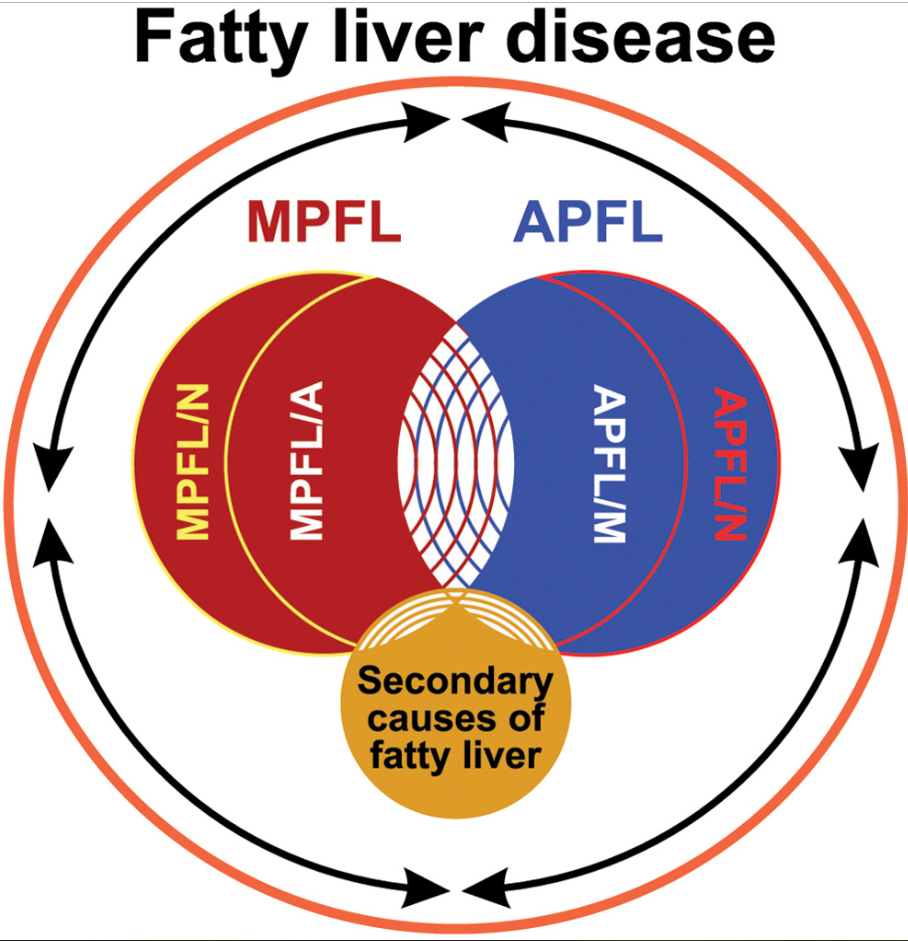
A recent commentary (M Eslam et al. Gastroenterol 2019; 157: 590-3) suggests that fatty liver diseases could use a nomenclature makeover as well.

In pediatrics, the issue of alcoholic and nonalcholic fatty liver disease (NAFLD) overlap is fairly minor in many ways.  In fact, when I am seeing a young teen with NAFLD, parents will often chuckle when I tell them that ‘Johnny’ needs to lay off the booze (now and in the future).  However, it is difficult to fully differentiate nonalcoholic fatty liver disease from alcoholic fatty liver disease, especially in adults.

Full Text: Toward More Accurate Nomenclature for Fatty Liver Diseases

Key points:

  • “Light (1.0-9.9 g/d) or moderate (10.0–29.9 g/d; 10.0–19.9 g/d for women) alcohol consumption in patients with NAFLD is not uncommon…The negative impact of alcohol intake also extends to nonalcoholic steatohepatitis resolution.”
  • “it is time for clinicians to recognize that, within the spectrum of fatty liver disease, there will be patients with true alcohol-related liver disease (AFLD), those with predominant AFLD compounded by metabolic cofactors, those with true NAFLD in whom alcohol consumption is near zero and disease progression is due to metabolic factors, and perhaps a majority with fatty liver disease owing to an abnormal metabolic milieu but with alcohol intake of ≤30 g/d.”
  • ” An updated and more appropriate nomenclature and classification system is required to reflect the nuances of disease etiology within the spectrum of fatty liver disease…”
    • MPFL: metabolic dysfunction predominant fatty liver;
    • APFL, alcohol predominant fatty liver;
    • MPFL/A and MPFL/N: metabolic dysfunction predominant fatty liver with, and without alcohol intake that is anything more than ceremonial
    • APFL/M and APFL/N: alcoholic predominant fatty liver with metabolic dysfunction or with no metabolic dysfunction.

My take: The authors present a good rationale for updating fatty liver disease –will this be adopted?

Related blog posts:


Sad Truth: Job Security in Hepatology

A recent study (ND Parikh et al. Hepatology 2019; 70: 487-95, and associated editorial JA Marrero. 459-61) provide a forecast of increasing liver disease and liver disease severity, driven mainly by fatty liver disease and obesity.

Key findings:

  • Nonalcoholic fatty liver disease (NAFLD) related additions to the liver transplant waitlist expanded from 391 in 2000 to 1605 in 2014.  This corresponded to an overall increase in obesity of 44.1% during that time period.
  • NAFLD-related wait-list additions were predicted by the prevalence of obesity 9 years prior.
  • The authors anticipate that obesity population will increase to over 92 million adults by 2025.
  • The authors project that NAFLD-related wait-list additions will increase to 2104 by 2030, a 55% increase

Because the decrease in complications related to new treatments for Hepatitis C is not expected “until well into the next decade,” the burden of chronic liver disease will continue to rise.

The editorial notes that overall graft survival rates for obese patients with BMI less than 40 do not appear different than those of lean individuals.  Those with BMI >40 had reduced 5-year graft and survival rates.  Also, obese patients have higher morbidities, even in those without reduced survival.

My take: This study identifies a marked increase in end-stage liver disease in the growing population of obese patients.

Related blog posts:

Sclerosing Cholangitis-Like Changes Due to Drug Induced Liver Injury

A recent study (J Ahmad et al. Clin Gastroenterol Hepatol 2019; 17: 789-90) reviewed subjects in enrolled in drug-induced liver injury (DILI) prospective cohort to determine the frequency of sclerosing cholangitis (SC)-like changes in this population.  SC-like changes have previously been noted in up to 10% of DILI cases (Dig Liv dis 2015; 47: 502-7). In this study, 233 of 1487 subjects had underwent an MRI.

Key findings:

  • Four of 56 (7%) with adequate quality images had SC-like images (4 with intrahepatic stricture and 1 with a common hepatic duct stricture as well)
  • Patients with SC-like changes had a more severe initial injury noted and were more likely to develop chronic injury as noted by persistent lab abnormalities at 6 months

My take: This study indicates that a severe DILI can result in secondary sclerosing cholangitis.

Related blog posts:


Liver Briefs -June 2019 part 2

E Cowell et al. JPGN 2019; 68: 695-99. This study reviewed 61 cases of pediatric hepatocellular carcinoma to determine predisposing conditions  (in Houston TX).  The majority did NOT have recognizable predisposing conditions.  25 of 61 (41%) had a predisposing condition including cryptogenic cirrhosis/steatosis (9), genetic (7), biliary pathology (4), viral hepatitis (1), and other (4).  Those without a recognizable predisposing condition were diagnosed later and with more advanced disease/decreased survival.

VA McLin et al. JPGN 2019; 68: 615-22. Useful review on congenital portosystemic shunts.

DE Kaplan et al. Gastroenterol 2019; 156: 1693-1706. This large study form the VA with more than 70,000 patients examined the relationship between statin exposure and survival in patients with cirrhosis.  “Each cumulative year of statin exposure was associated with an independent 8-8.7% decrease of mortality of patients with cirrhosis of Child-Turcotte-Pugh classes A and B.”

AG Singal et al. Gastroenterol 2019; 156: 1683-1692. Direct-acting antiviral therapy was not associated with recurrent hepatocellular carcinoma (HCC) in a multicenter cohort study with 793 patients with HCV-associated HCC. Thus, DAAs appear safe in patients who have achieved a complete response to HCC Rx

Liver Briefs -June 2019

YH Yeo et al. Hepatology 2019; 69: 1385-97.  The prevalence of high risk individuals in the U.S. who are susceptible (not immune) to hepatitis B has decreased from 83% to 69% from 2003 to 2014.  That still leaves 64 million who would benefit from HBV vaccination.

M Sharma et al. Hepatology 2019; 69: 1657-75. This meta-analysis compared therapies for primary prevention of esophageal varices and concluded that nonselective beta-blocker (NSBB) monotherapy may decrease all-cause mortality and carried a lower risk of serious complications than variceal band ligation (VBL). However, the commentary (1382-84 by L Laine) reaches a different conclusion. “Current recommendations for primary prevention with VBL or NSBB or carvediolo still appear to be acceptable…using a shared decision-making approach” to weigh issue such as daily medication or periodic endoscopy.

J Nguyen et al. J Pediatr 2019; 207: 90-6. This study modeled the cost-effectiveness of early treatment with direct-acting antiviral therapy in adolescents with hepatitis C infection.  With pangenotypic agenst, the cost would be $10000 to $21000 per QALY gained.

S Trinh et al. Clin Gastroenterol Hepatol 2019; 17: 948-56. This retrospective hepatitis B study examined the changes in renal function between 239 tenofovir disoproxil fumarte (TDF) treated patients and 171 entecavir treated patients.  Key finding: TDF was not associated with higher risk of worsening renal function in this cohort with a mean followup of 43-46 months in patients with baseline normal renal function.  In patients with renal impairment, deterioration of renal function was noted in TDF-treated patients.  Thus, TDF should be avoided in patients with impaired renal function.


Rhododendrom in Sandy Springs

.

Liver Shorts: May 2019

ED Bethea et al. Clin Gastroenterol Hepatol 2019; 17: 739-47. Using a Markov-based mathematical model, the authors “found transplanting HCV-positive livers into HCV-negative patients with preemptive DAA therapy to a cost-effective strategy that could improve health outcomes.”

A Villanueva. NEJM 2019; 1450-62. This is a succinct review of hepatocellular carcinoma (HCC). Some points:

  • More than 1 million patients will die from liver cancer in 2030.
  • The rate of death from liver cancer increased 43% from 2000 to 2016,.  The 5-year survival rate is grim at only 18%.  Only pancreatic cancer is more lethal.
  • HCC is rare among patients without preexisting liver disease.  Cirrhosis is the main risk factor, though hepatitis B has direct oncologic effects even in the absence of cirrhosis.
  • The authors note that cancer surveillance has no “high-quality randomized controlled trials.” However, this may be due to difficulties with enrollment. In one study, 99%of patients declined to assume the risk of being randomly assigned to the nonsurveillance group. Nonetheless, mathematical models, and lower quality studies all show survival benefits of surveillance.

Related blog post:

  • Liver Shorts April 2019 Obesity/NAFLD and alcoholic liver disease are driving an increase in HCC and liver cancer mortality

Expanding Organ Transplantation with Hepatitis C-Positive Donors

A recent study (AE Woolley et al NEJM 2019; 380: 1606-17) highlighted the outcomes of heart and lung transplant (uninfected) recipients of organs from HCV-infected donors (“DONATE HCV” trial).

In this study, 44 patients (36 lung transplant recipients, 8 heart transplant recipients) were treated preemptively with 4 weeks of sofosbuvir-velpatasvir to block viral replication.

Key findings:

  • 42 of 44 (95%) had a detectable viral load immediately after transplantation.
  • The first 35 (who have all completed 6 months of folllowup) all cleared HCV viremia –undetectable HCV at 6 months post-transplantation
  • No treatment-related complications were noted

In the associated editorial by EA Blumberg (1669-70), it is noted that organs for transplantation are in short supply for the more than 113,000 persons on waiting lists in the U.S.  “In 2018, only 36,500 persons received transplants…and 12,225 persons were removed from the waiting list because of death or progressive illness than rendered them” too sick for transplantation.

HCV donors will expand the donor pool substantially (up to one-third more donors) and these donors are typically younger and with fewer coexisting conditions.

My take: With the high response rate of the newer direct-acting antivirals (100% in this study) along with the (cost) effectiveness of a shorter course, this study shows how promising HCV-positive donors are for improving outcomes in patients in need of organ transplantation.  Long term data are still needed to determine if there are unforeseen problems (eg. late severe relapse of HCV, increased cardiovascular disease).

Related blog post: Increased Organ Availability Related to Opioid Epidemic

Mortality Rate with Autoimmune Hepatitis –Increased if Cirrhosis

Briefly noted: Using a Dutch database to identify 449 patients with autoimmune hepatitis, a recent study (FF van den Brand et al. Clin Gastroenterol Hepatol 2019; 17: 940-7) found that having associated cirrhosis increased the mortality rate over a 10-year followup.  In this circumstance, the standardized mortality ratio (SMR) was 1.9.  In contrast, if cirrhosis was not present, there was no significant increase in SMR (1.2).  Patients with overlapping PSC had the greatest increase in mortality with an SMR of 4.7.

View from Sofia Reina museum. Madrid