Fructans and FODMAPs in Children with Irritable Bowel Syndrome

A recent randomized control trial (BP Chumpitazi et al. Clin Gastroenterol Hepatol 2018; 16: 219-25) evaluated 23 children in a double-blind placebo (maltodextrin) cross-over design (2014-2016) to determine whether fructans (0.5 g/kg/day with max 19 g divided over 3 meals) worsen symptoms in children with irritable bowel syndrome (IBS). Fructans are a commonly ingested FODMAP carbohydrate (oligosaccharides).  All subjects were 7-18 years (median 12.4 years) and met Rome III IBS criteria.

Key findings:

  • Subjects had more episodes of abdominal pain/day while receiving fructan-containing diet (3.4 ± 2.6) compared with placebo-group (2.4 ± 1.7) (P<.01).
  • The fructan group had more severe bloating (P<.05) and flatulence (P=.01).  This was associated with higher hydrogen production (617 ppm/h compared with 136 pph/h) (P<.001)
  • 18/23 (78%) had more frequent abdominal pain with fructan-containing diet and 12 (52%) had fructan sensitivity which the authors defined as having an increase of ≥30% in abdominal pain frequency following fructan ingestion.

My take: While the number of participants in this study is limited, the implications are clear: in children with irritable bowel, fructans frequently exacerbate symptoms. At this time, though, it is not possible to predict which patients with IBS will benefit.

Related blog posts:


Chattahoochee River
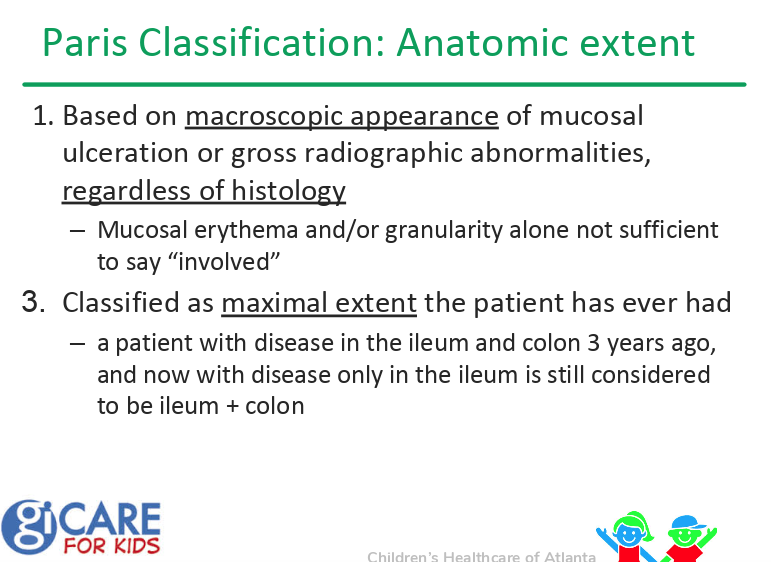
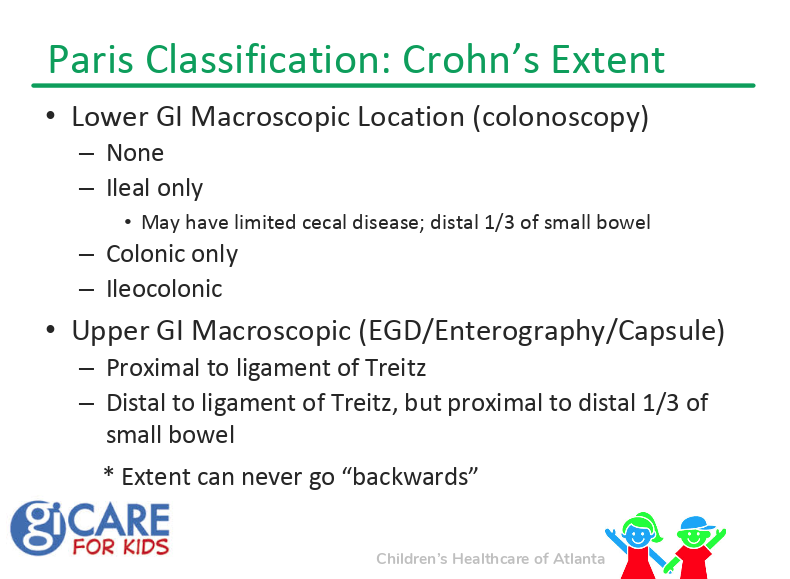
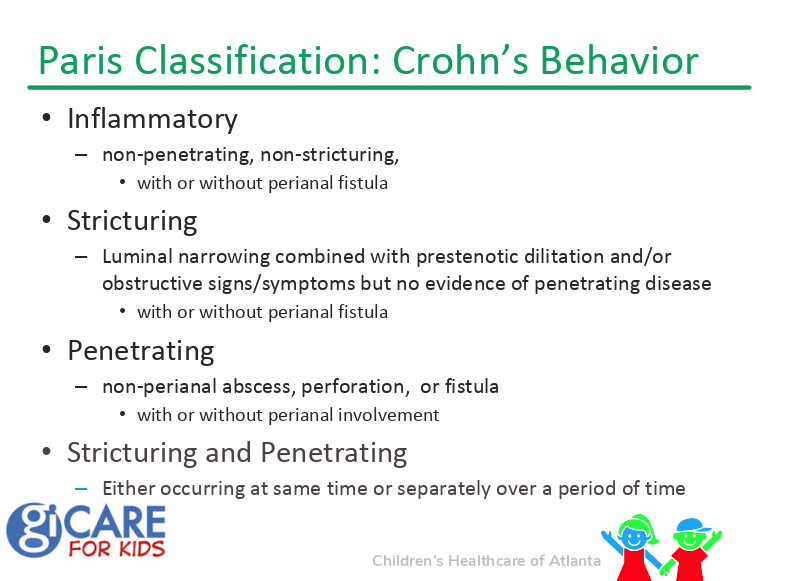
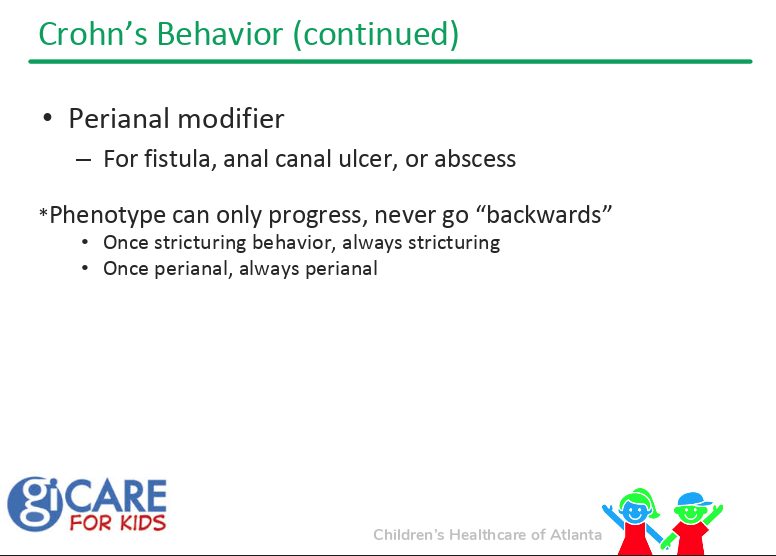
Paris Classification Quiz and Explanation

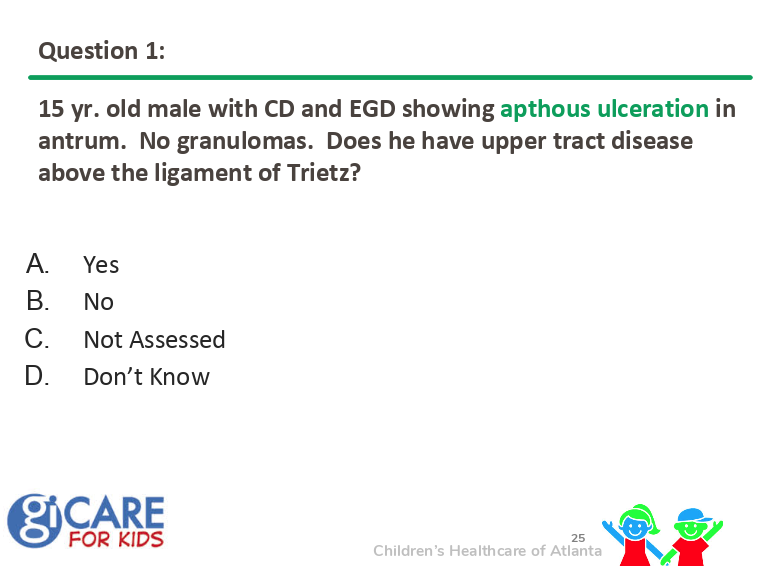
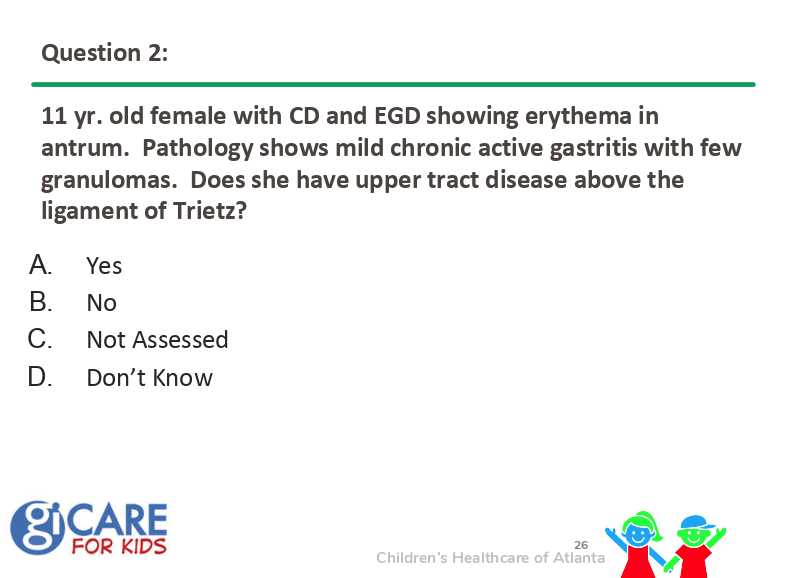
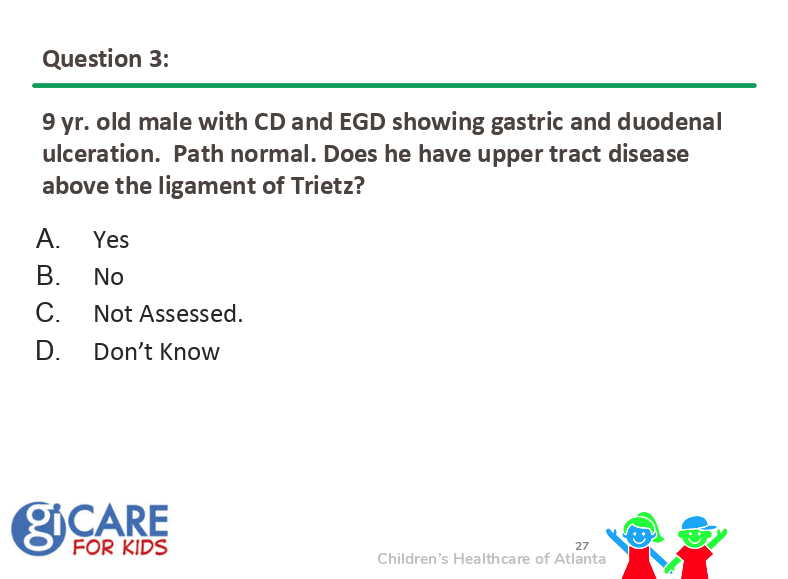
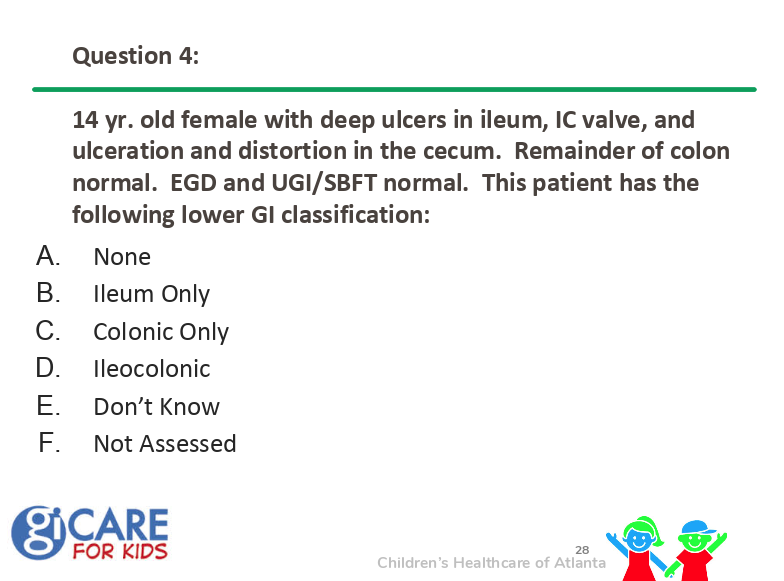
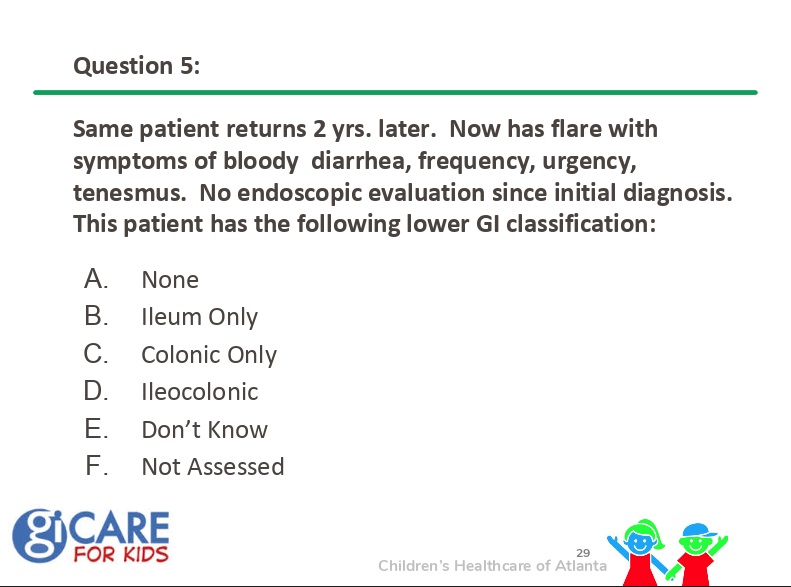
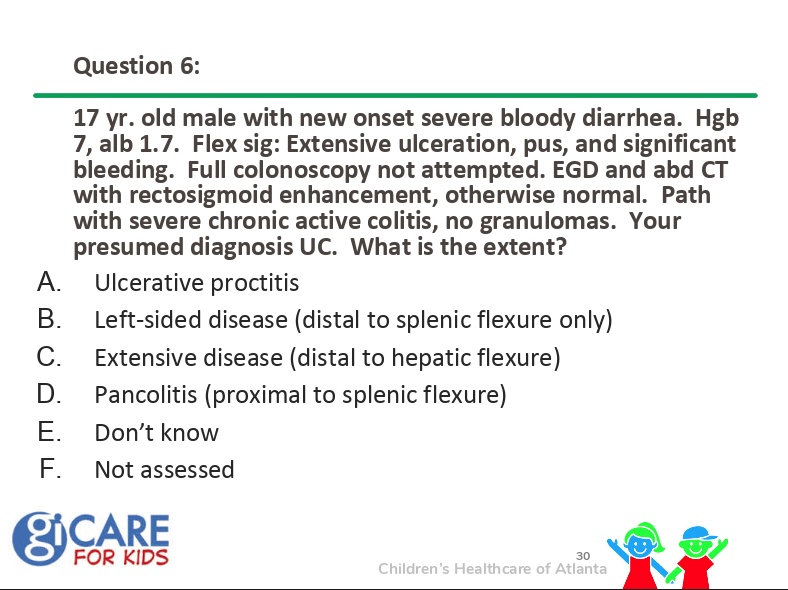
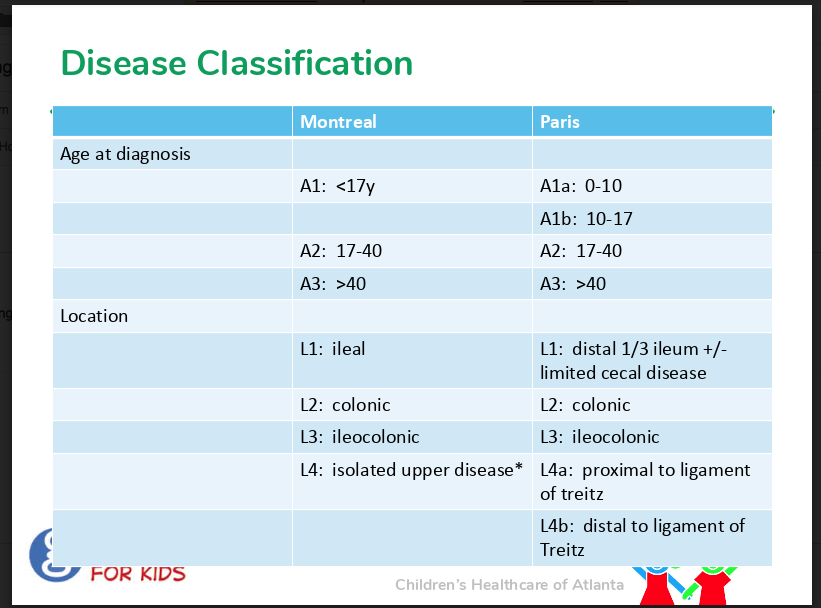
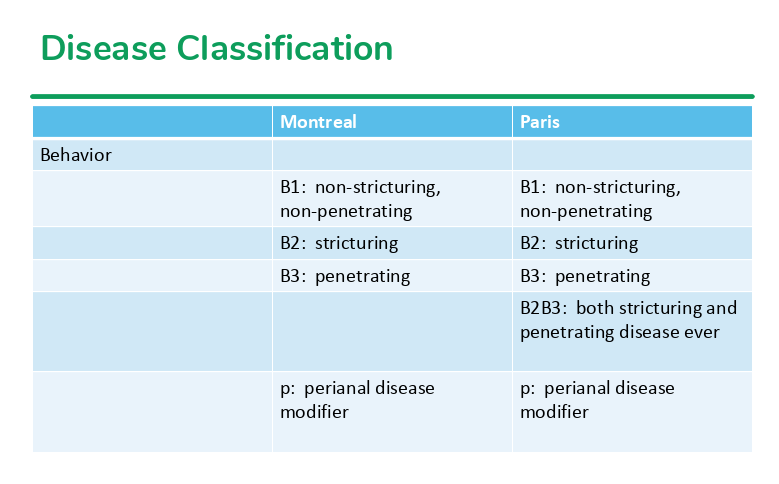
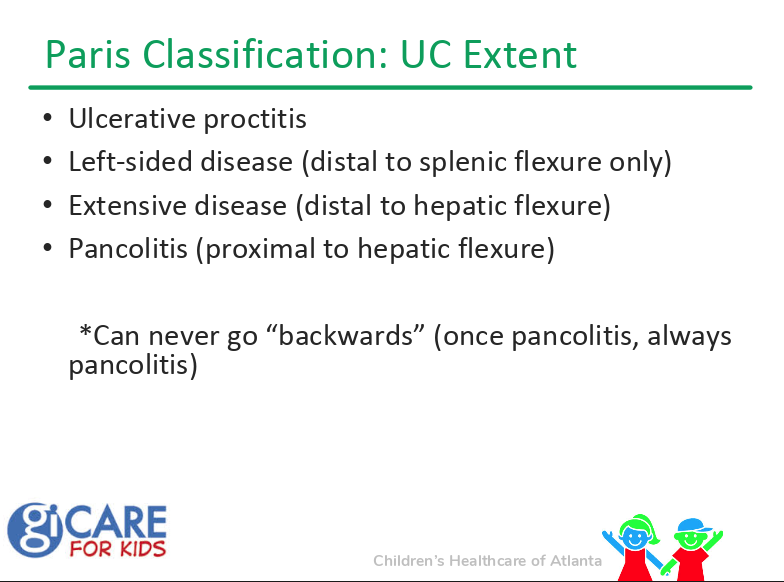
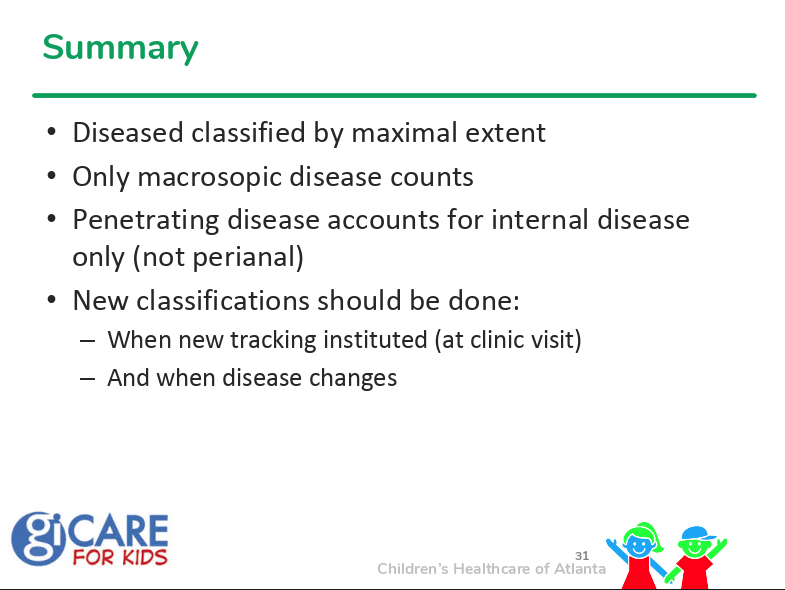
At one of our ImproveCareNow population management meetings, Dr. Chelly Dykes reviewed the Paris Classification and frequent misconceptions in using this system.  To illustrate this point, I am going to post 6 Quiz Slides and then follow that with the answers and explanation.  These quiz slides were derived from previous ImproveCareNow community meetings.

Answers:

  1. A
  2. B (macroscopic disease counts –erythema alone does not count)
  3. A (macroscopic disease counts)
  4. B (not ileum only unless colonic disease extends beyond cecum)
  5. F (though B acceptable)
  6. F (though B acceptable)

Related blog posts:

Briefly noted: Mongersen, Aprepitant, and Anesthetic Outcomes

BG Feagan et al. Gastroenterol 2018; 154: 61-4.  In this study of GED-0301 (Mongersen), an antisense oligodeoxynucleotide affecting Smad7, was randomly assigned to 63 patients with Crohn’s disease (160 mg/day).  Endoscopic improvement was observed in 37%  at week 12. Clinical remission (CDAI<150) was noted in  32% (4 weeks of Rx), 35%  (8 weeks of Rx) and 48% (12 weeks of Rx). No new safety signals were noted.

Related blog posts:

PJ Pasricha et al. Gastroenterol 2018; 154: 65-76.  First of all, I have to say that I like the visual abstracts in many Gastro studies.  In this randomized, double-masked “APRON” study of 126 patients with chronic nausea or gastroparesis receiving Aprepitant, a neurokinin-1 receptor antagonist, or placebo, the key findings were the following:

  • Aprepitant did not reduce symptoms of nausea significantly compared to placebo
  • Apreptiant-treated patients had improvements in secondary outcomes of symptom severity for nausea (1.8 vs 1.0, P=.005 on Gastroparesis Clinical Symptom Index) and overall symptoms (1.3 vs. 0.7, P=.001)

Related blog post:

B Bielawska et al. Gastroenterol 2018; 154: 77-85. Using data (administrative databases) and propensity matching from more than 3 million outpatient colonoscopies (2005-2012), the authors noted that the use of anesthesia assistance (AA) was associated with an increased risk of aspiration pneumonia (OR 1.63) but not perforation (OR 0.99). Though this study is limited by its retrospective design and reliance on administrative data, the authors state “the potential for residual confounding by indication for AA [is] extremely unlikely, especially because AA use in Ontario appears to be driven by institutional policy or business model rather than by patient factors.”

Related blog posts:

Bright Angel Trail

Briefly Noted: Pantoprazole dosing for obese children

V Shakhnovich et al. J Pediatr 2018; 193: 102-8. Using pharmocokinetic data from 41 obese children (6-17 years), the authors conclude that lean body weight dosing of pantoprazole led to pantoprazole pharmocokinetics similar to nonobese peers.  They also note that variability in age-related changes in CYP2C19 activity affected pantoprazole values in children <12 years of age.

Related blog post: #NASPGHAN17 EoE Session -James Franciosis presented data on how CYP2C19*17 allele was important in whether patients responded to PPIs for Eosinophilic Esophagitis.


Bright Angel Trail, Grand Canyon

Preterm Infants with Increased Infections Following Acid Suppression Therapy

A recent study (P Manzoni et al. J Pediatr 2018; 193: 62-7) provide more data on the detrimental effects of gastric acid inhibitors (eg. proton pump inhibitors, histamine-2 receptor antagonists).  This study was a secondary analysis using prospectively collected data from 235 preterm very low birth weight infants. Key findings:

  • “After multivariate analysis, exposure to inhibitors of gastric acidity remained significantly and independently associated with LOS [late-onset sepsis] (OR 1.03); each day of inhibitors of gastric acidity exposure conferred an additional 3.7% odds of developing LOS.”
  • Acid suppression therapy was associated with gram-negative (P<.001) and fungal pathogens (P=.001)
  • The study showed an association between acid blockers and with necrotizing enterocolitis, which was mitigated in those who received bovine lactoferrin

My take (borrowed, in part, from authors): This data “confirm, strengthen, and expand on previous reports describing an association between inhibitors of gastric acidity and infections.”  Thus, the risks of these medications is likely greater than the benefits in the majority of preterm infants.

Related blog posts:

Bright Angel Trail

Briefly Noted: Arsenic Levels with GFD, Cellphones, and Enuresis Outcomes

This post has a couple interesting items:

  1. Arsenic levels were not increased in individuals with celiac disease who were consuming a gluten-free diet
  2. Cellphones: There are good reasons for physicians to avoid giving out their cellphone numbers to patients
  3. Enuresis -most patients respond to bedwetting alarms

RD Watkins et al. Practical Gastroenterology; 2018; 42: 12-6.  In this retrospective review of 39 patients (with available arsenic levels), patients with celiac disease (adult & pediatric) had normal and/or undetectable arsenic levels.  The mean duration on a gluten-free diet was 2.35 years for pediatric patients and 3.31 years for adults.

33 Charts/Bryan Vartabedian: Should Physicians Give Their Cell Phone Numbers to Patients

E Apos et al. J Pediatr 2018; 193: 211-6.  This study showed that enuresis treatment with a bedwetting alarm system was effective in 76% of patients (n=2861) and that mean treatment time to achieve dryness was 62 days. The most frequent age group was 6 years to 10 years of age.


View from Bright Angel Trail

Why Does Primary Sclerosing Cholangitis Increase the Risk of Colorectal Cancer in Ulcerative Colitis?

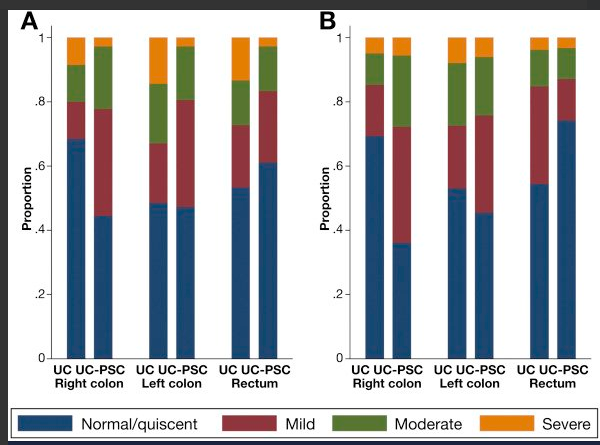
A recent retrospective study (Clin Gastroenterol Hepatol 2018; 16: 68-74) compared adult patients who had ulcerative colitis (UC) with (n=23) and without primary sclerosing cholangitis (n=120) (PSC). All patients had pancolitis and were in clinical remission.

Key finding:

  • Patients with UC-PSC had more subclinical endoscopic activity (odds ratio (OR) 4.21) and histologic activity (OR 5.13) in the right colon compared with patients without PSC

It is known that the presence of PSC is a risk factor for colorectal cancer (CRC).  A previous meta-analysis (RM Soetiknno et al. Gastrointest Endosc 2002; 56: 48-54) described a OR of CRC of 4.09.

My take: This study shows that UC patients with PSC who are in clinical remission have a greater degree of endoscopic and histologic inflammation in the proximal colon compared to patients without PSC.  This increased inflammation is a likely factor in the increased risk for CRC.

Related blog posts:

Another Day in the US: School Deaths Related to Firearms

Between 2001-2013, gun related deaths exceeded the total number of deaths from AIDS, terrorism, war, and illegal drug overdoses combined (according to Vox -see Firearm Mortality in U.S).  Here are some tweets in reaction to yesterday’s tragic events.

Link to The Onion commentary: ‘No Way To Prevent This’

Related blog posts:


Acute Pancreatitis: Clinical Report from NASPGHAN

There are no surprises in a recent clinical report on acute pancreatitis (M Abu-El-Haija et al. JPGN 2018: 66: 159-76) from NASPGHAN.

Here are a few of the points:

  • The authors recommend ultrasound for initial imaging and checking liver enzymes, GGT, calcium and triglycerides.
  • For fluids, they indicate that in adults there is evidence suggesting that lactated ringer’s (LR) is likely preferable to normal saline.  In children, on presentation, “if evidence of hemodynamic compromise, a bolus of 10 to 20 mL/kg” of crystalloid is recommended followed by “1.5 to 2 times maintenance IV fluids.”
  • For pain management not responding to acetaminophen or NSAIDs, “IV morphine or other opioids should be used.”
  • They recommend early oral/enteral nutrition (within 48 to 72 hours of presentation).
  • They recommend against prophylactic antibiotics in severe acute pancreatitis.
  • They recommend against probiotics, anti-proteases, and antioxidant therapy.
  • For fluid collections that need drainage or necrosectomy, nonsurgical approaches are favored.
  • Acute biliary pancreatitis, “Cholecystectomy safely can and should be performed before discharge in cases of mild uncomplicated acute biliary pancreatitis.”

Related blog posts:

American Ingenuity!!

Cancer due to Overweight/Obesity

The increasing risk of cancer due to overweight and obesity has been reported by the Centers for Disease Control and Prevention in recent MMWR report (CB Steele et al. MMWR 2017; 66: 1052-8)  Vital Signs: Trends in Incidence of Cancers Associated with Overweight and Obesity — United States, 2005–2014

Key points:

  • Overweight and obesity are associated with increased risk of at least 13 different types of cancer.
  • Overweight- and obesity-related cancers accounted for 40% of all cancers diagnosed in 2014.
  • The incidence of overweight- and obesity-related cancers (excluding colorectal cancer) increased significantly among persons aged 20–74 years during 2005–2014, mirroring increases of obesity observed since 1960.
  • The findings emphasize the importance of intensifying nationwide efforts to prevent and treat overweight and obesity.

My take: While the medical risks related to overweight/obesity generally are attributed to worsened cardiovascular disease, this study adds information regarding the increased risks of some types of cancer as well.

Related blog posts: