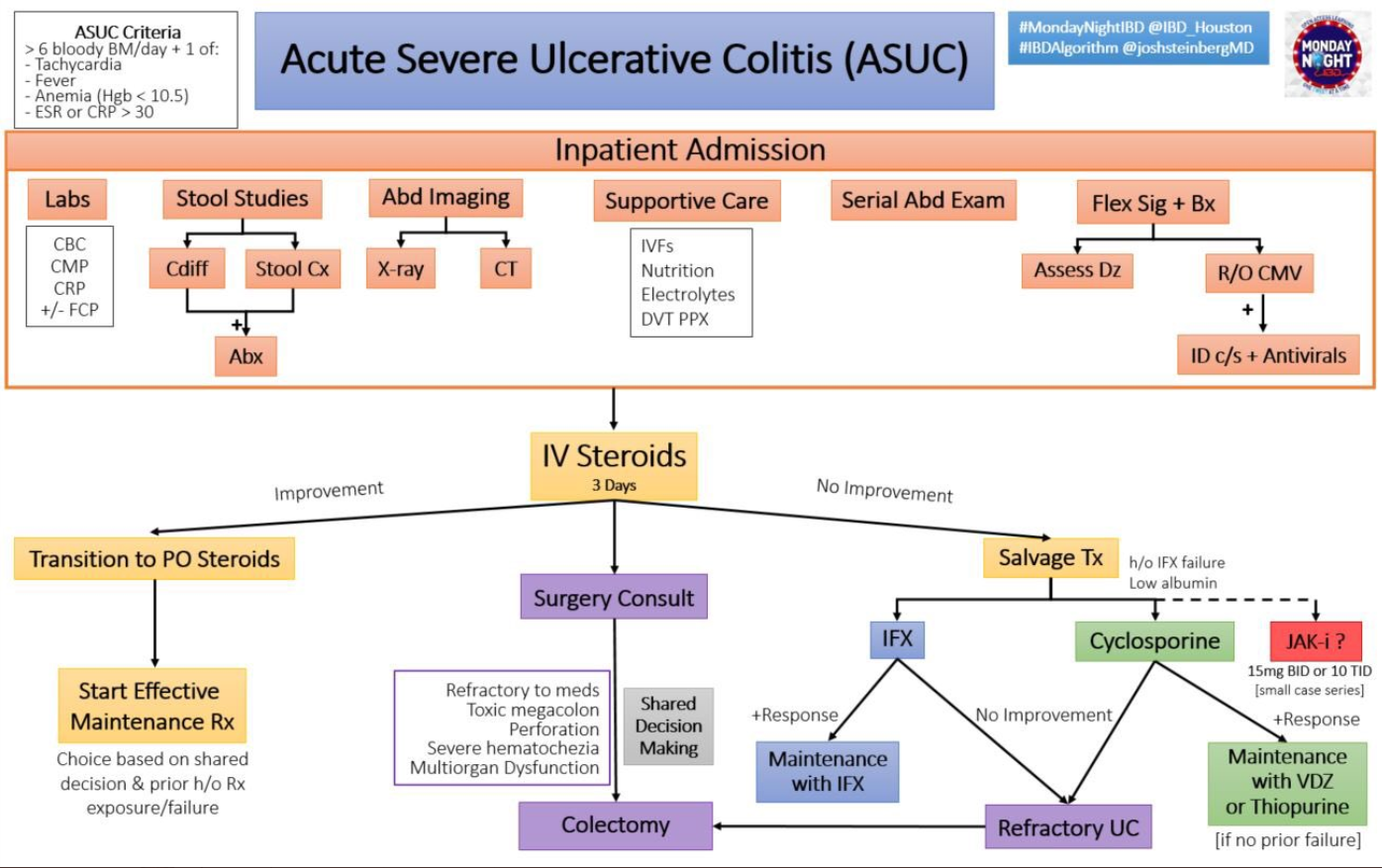
For infliximab salvage therapy, the article recommends re-dosing at 3-5 days after initial dose.
Disclaimer: This blog, gutsandgrowth, assumes no responsibility for any use or operation of any method, product, instruction, concept or idea contained in the material herein or for any injury or damage to persons or property (whether products liability, negligence or otherwise) resulting from such use or operation. These blog posts are for educational purposes only. Specific dosing of medications (along with potential adverse effects) should be confirmed by prescribing physician. Because of rapid advances in the medical sciences, the gutsandgrowth blog cautions that independent verification should be made of diagnosis and drug dosages. The reader is solely responsible for the conduct of any suggested test or procedure. This content is not a substitute for medical advice, diagnosis or treatment provided by a qualified healthcare provider. Always seek the advice of your physician or other qualified health provider with any questions you may have regarding a condition
This study focused on 94 with isolated colonic Crohn’s disease (L2). Key findings: Response to enteral nutrition (78.3%) was comparable to those with L1 disease (82.4%) (n=104). Skp lesions and granulomas, identified in 65% and 36% in those with L2 disease was similar to those with L1 disease.
25/428 (6%) children with recently diagnosed UC underwent colectomy at ≤1 year, 33 (9%) at ≤2 years, and 35 (13%) at ≤3 years.
An initial PUCAI ≥ 65 was highly associated with colectomy (P = 0.0001)
A pretreatment rectal gene expression panel showed that patients who had colectomy had significantly higher values for this genetic signature in comparison with those who did not require colectomy
Using an intent-to-treat analysis of all patients randomized to ustekinumab at maintenance baseline, 34.4% of patients in the every-8-weeks group and 28.7% in the every-12-weeks group were in clinical remission at week 252. In the 8 week group in the long-term extension portion of the study the rate was 54.9%
Adverse effect profile (per 100 patient-years): generally were similar in the placebo and combined ustekinumab groups for all adverse events (440.3 vs 327.6), serious adverse events (19.3 vs 17.5), infections (99.8 vs 93.8), and serious infections (3.9 vs 3.4).
White Sands (actually gypsum) at White Sands National Park, NM
72.6% of patients receiving combination corticosteroids with 5-ASA responded to treatment at one week compared with 76.3% of responders in the group receiving corticosteroids alone
“There were no differences in hospital length of stay between groups (median, 10 vs. nine days for the combination and monotherapy groups, respectively), the proportion of patients whose C-reactive protein level normalized (34.2% vs. 34.3%, respectively), or the proportion requiring colectomy within 90 days (4.9% vs. 4.5%, respectively).”
While 5-ASAs did not alter the trajectory of acute colitis, one other finding was a lower rate of biologic use (27% vs 47%, P=.07) at 90 days in those who continued to receive 5-ASA therapy at 90 days.
My take: 5-ASAs do not appear to be helpful during hospitalization for ASUC but may be beneficial as a maintenance therapy in some patients.
Disclaimer: This blog, gutsandgrowth, assumes no responsibility for any use or operation of any method, product, instruction, concept or idea contained in the material herein or for any injury or damage to persons or property (whether products liability, negligence or otherwise) resulting from such use or operation. These blog posts are for educational purposes only. Specific dosing of medications (along with potential adverse effects) should be confirmed by prescribing physician. Because of rapid advances in the medical sciences, the gutsandgrowth blog cautions that independent verification should be made of diagnosis and drug dosages. The reader is solely responsible for the conduct of any suggested test or procedure. This content is not a substitute for medical advice, diagnosis or treatment provided by a qualified healthcare provider. Always seek the advice of your physician or other qualified health provider with any questions you may have regarding a condition
This article describes a retrospective review of seven patients with a dual diagnosis of inflammatory bowel disease (IBD) and chronic recurrent multifocal osteomyelitis (CRMO). In their cohort 4 of 6 were receiving anti-TNF therapy at the time of CRMO diagnosis. Misleading statements from this article:
The triad of IBD, CRMO and psoriasis has not been reported previously to their knowledge
“It seems unlikely that anti-TNF-alpha therapy would promote its [CRMO] development”
In JPGN Reports (not available on pubmed), Cordesse et al (JPGN Reports; November 2020 – Volume 1 – Issue 2 – p e007) identified the association of IBD, CRMO and psoriasis; in addition, they identified a paradoxical reaction to anti-TNF-alpha therapy; in this case series of three patients, anti-TNF-alpha therapy triggered CRMO and stopping anti-TNF-alpha therapy led to resolution of CRMO in two of the cases.
In a response to a letter to the editor (Hochman JA. JPGN 2022; DOI: 10.1097/MPG.0000000000003407. Faulty Information Regarding CRMO and IBD), Dushnicky et al (DOI: 10.1097/MPG.0000000000003433) note that JPGN Reports is not available on Pubmed; however, the articles that have described this association are near the top of a google search if one looks for “IBD, CRMO and Psoriasis.” Interestingly, in their response to the letter to the editor, the authors did not amend their claim that anti-TNF therapy is unlikely to promote CRMO despite being furnished with information showing that it can. In my view, the situation with CRMO is similar to psoriasis which can be treated with anti-TNF therapy and can paradoxically be caused by anti-TNF agents as well.
My take:
CRMO is important to recognize due to its association with IBD and to realize that antibiotics are not an effective treatment.
Anti-TNF-alpha agents can cause CRMO in some patients.
In 2022, a web browser search (eg Google), in addition to Pubmed, is probably worthwhile when claiming that this is the first case of xyz ‘to our knowledge.’
Previous studies have shown an association between the early use of antibiotics and an increased risk of inflammatory bowel disease. A recent study examined all the children born in Denmark from 1995-2009 and followed them up to 2013 via a prospectively maintained database.
During a median 9.5 years (9.3 million total person-years), CD was diagnosed in 208 of 979,039 children.
Key findings:
Antibiotic use in the first year of life was associated with a higher risk of CD (adjusted hazard ratio, 1.4)…with the highest risk with ≥6 courses of antibiotics (adjusted hazard ratio, 4.1)
The cumulative risk of CD at the 11th birthday for children exposed to antibiotics in their first year of life was 0.16% compared to 0.11% for children unexposed to antibiotics in their first year of life.
My take: This study indicates that antibiotics (and/or serious infections) are associated with an increased the risk of pediatric Crohn’s disease but the absolute risk is very low. We still have a lot to learn about how environmental exposures, including diet, infections, antibiotics, and pollution, contribute to the increasing prevalence of inflammatory bowel disease.
When I first saw this title, I mistakenly thought the title indicated that celiac disease (CD) occurred less often in those with inflammatory bowel disease (IBD). This would have been surprising given previous studies have found the opposite. In fact, this study confirms the bidirectional associated risk between patients with CD and in patients with IBD but with a twist. Most IBD treatments were associated with a lower risk of developing CD than those who were not treated.
Database study: Of the 72,965,940 individuals in the database (1999-2020), 133,400 had celiac disease (CD) (0.18%), 191,570 (0.26%) had ulcerative colitis (UC), and 230,670 (0.32%) had Crohn disease.
Key findings:
Patients with IBD were more likely to have a diagnosis of celiac disease (odds ratio [OR], 13.680), with a greater association with Crohn disease (OR 24.473).
Treated patients with IBD with UC and with Crohn disease, respectively, had a lower risk association with CD compared to those not undergoing IBD treatment, specifically corticosteroids (OR, 0.407 and 0.585), 5-aminosalicylates (OR, 0.124 and 0.127), immunomodulators (OR, 0.385 and 0.425), and anti-tumor necrosis factor drugs (OR, 0.215 and 0.242)
A new diagnosis of CD after 1 year of IBD diagnosis, was 1.59% for Crohn disease and 0.90% for UC compared to 0.16% in patients without IBD (P<0.0001)
A new diagnosis of IBD, Crohn disease and UC respectively, in patients with celiac disease was 2.75% and 1.11% compared to 0.29% and 0.25% in the non-celiac population (P<0.0001)
A new diagnosis of IBD and celiac disease among patients with microscopic colitis was 10.5% and 2.6% respectively; a new diagnosis of microscopic colitis among patients with celiac disease was 0.01%
My take: This study confirms the bidirectional associated risk between IBD and celiac disease. The risk of developing celiac disease in those with IBD may be lower in those receiving some treatments; however, this assertion is limited by the nature of a database study.
Because our office is one of the centers participating in a mirikizumab study for adolescents, I was particularly interested in seeing the published results of a phase 2 study in 191 adults.
Background: “Mirikizumab (LY3074828) is a humanized immunoglobulin G4 (IgG4)–variant monoclonal antibody that binds specifically to the p19 subunit of IL23 and has demonstrated efficacy in psoriasis and ulcerative colitis, and is currently in phase 3 testing for psoriasis, ulcerative colitis, and CD. We evaluated the efficacy and safety of mirikizumab for the treatment of patients with moderately-to-severely active CD”
Methods: Patients (N = 191) were randomized (2:1:1:2) to receive placebo (PBO), 200, 600, or 1000 mg mirikizumab, administered intravenously (IV) every 4 weeks. Patients who received mirikizumab and achieved ≥1 point improvement in Simple Endoscopic Score-CD at Week 12 (rerandomized maintenance cohort) were rerandomized to continue their induction IV treatment (combined IV groups [IV-C]) or receive 300 mg mirikizumab subcutaneously (SC) every 4 weeks. Nonrandomized maintenance cohort included endoscopic nonimprovers (1000 mg) and PBO patients (PBO/1000 mg) who received 1000 mg mirikizumab IV from Week 12. The primary objective was to evaluate superiority of mirikizumab to PBO in inducing endoscopic response (50% reduction from baseline in Simple Endoscopic Score-CD) at Week 12.
**approximately two thirds of participants had received biologic therapy and approximately half of all patients in this trial having experienced at least 1 biologic failure
Key findings:
At Week 12, endoscopic response was significantly higher for all mirikizumab groups compared with placebo (PBO) (200 mg: 25.8%, P = .079; 600 mg: 37.5%, P = .003; 1000 mg: 43.8%, P < .001; PBO: 10.9 %).
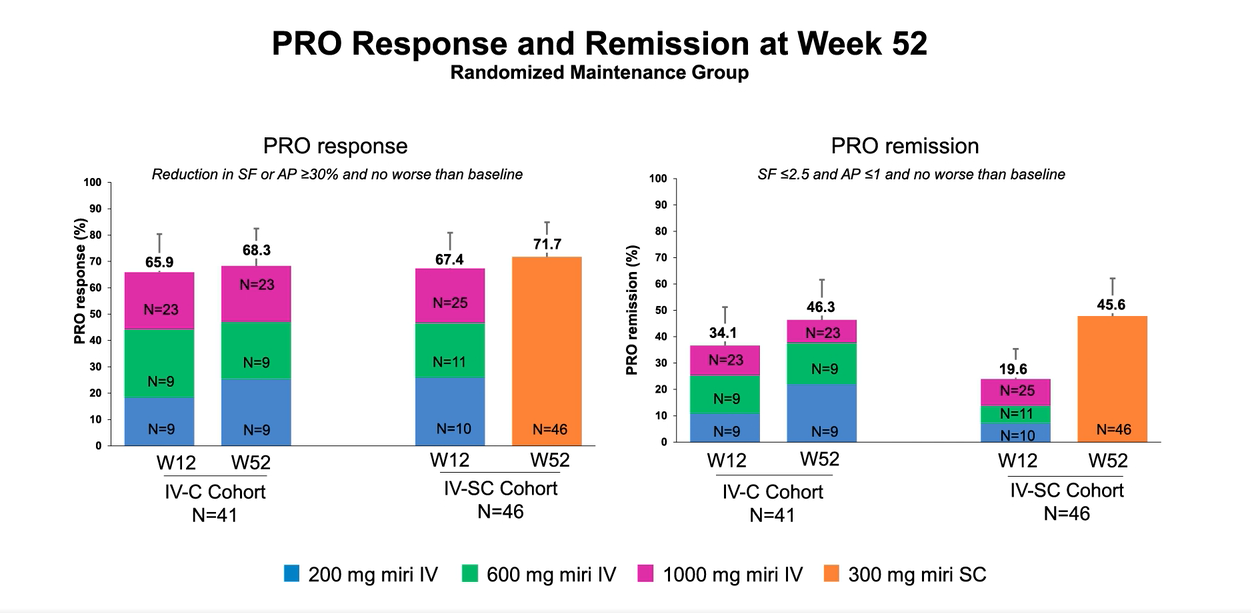
Endoscopic response at Week 52 was 58.5% (24/41) and 58.7% (27/46) in the IV-C (combined IV groups) and SC (subcutaneous) groups , respectively. See 4th and 6th slides below which show that those with response at 12 weeks continued with response at 52 weeks.
In the Non-Randomized group which included non-improvers and placebo, they received the highest dose, 1000 mg. A significant number of non-improvers responded at week 52.
My take: In this study of adults, with moderate to severe Crohn’s disease, Mirikizumab showed good efficacy and safety at both 12 weeks and 52 weeks. Because about half of the participants were biologic failures, this indicates that this agent shows promise in those with refractory disease.
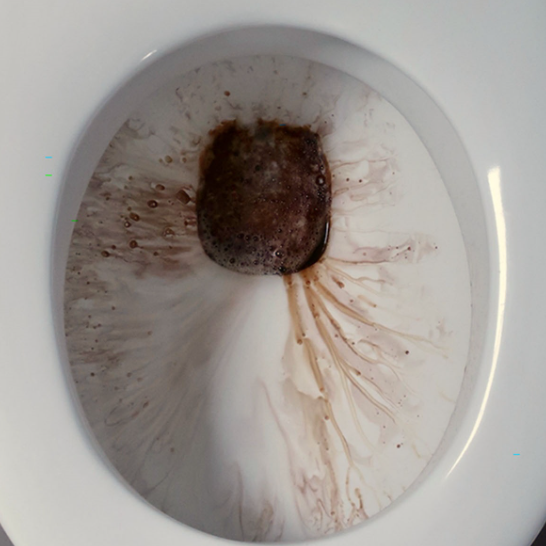
“The boy noticed the colorization only when he urinated in the toilet at home and this phenomenon was most pronounced after the toilet had been cleaned.” He had a normal urinalysis. “Discoloration of urine by a chemical reaction between mesalamine and sodium hypochlorite bleach has been widely reported in online patient forums, we only found 2 related case reports.”
“Mesalamine and its metabolite, N-acetyl-5-aminosalicylic acid, have structural similarity to methyldopa, which is metabolized to melanin-like compounds. In an alkaline environment (the pH of bleach is 11–13), polymerization of these melanin-like metabolites causes a brownish/red discoloration of urine after methyldopa ingestion.”
In 2014, one of the posts on this blog addressed stopping anti-TNF therapy: Marriage, Divorce and Separation with Anti-TNF Therapy. My take at that time was “most patients are better off staying married to their anti-TNF therapy.”
Despite changes in therapeutic options, a recent study and editorial come to the same conclusion in 2022:
In the retrospective study, 78 patients with CD and 56 patients with UC underwent endoscopic reassessment. Key findings:
Mucosal healing (MH) was achieved by 32 patients with CD (41%) and 30 patients with UC (53.6%); 26 patients with CD (33.3%) and 22 patients with UC (39.3%) achieved histologic healing (HH)
Among 45 patients (n=24 CD, n=21 UC) with both MH & HH, anti-TNF therapy was stopped & patients received either an immunomodulatory or mesalamine. 76% of patients with CD had clinical relapse within 3 years and 17% within 1 year. Importantly, objective markers of relapse, including calprotectin and endoscopy were NOT performed; thus, this is certainly an underestimation of relapse rate and time to relapse.
In the commentary, the authors note the high rate of relapse in other studies with anti-TNF withdrawal (eg. STORI trial) and high rate of surgery in patients with perianal CD who stopped therapy. In the STORI trial, “the best outcomes [for infliximab withdrawal] were those with subtherapeutic infliximab trough levels, ie, those for whom infliximab was not responsible for maintaining their remission.”
The data are less certain for UC. The editorial notes that 85% of the 21 patients in the Scarallo study had limited left-sided colitis and only 17 were followed for at least 1 year. In adult studies on anti-TNF discontinuation with UC (Kennedy et al. Aliment Pharm Ther 2016; 43: 910-23 and Molander et al. Inflamm Bowel Dis 2014; 20: 1021-28), 42% and 35% relapsed within 12 months, whereas another small study (Farkas et al. World J Gastroenterol 2014; 20: 2995-3001) found 100% of patients on combination therapy who stopped anti-TNF agent had to restart anti-TNF therapy.
My take (from editorial): “The totality of the currently available evidence suggests that discontinuing anti-TNF medications in children with IBD is associated with a greatly increased risk of disease exacerbation, especially if the anti-TNF trough level was therapeutic.”
In this report, the authors describe nine patients with refractory microscopic colitis (median age 55 years) who were treated with vedolizumab.
Key findings:
Clinical response with induction in 9 (100%); time to >50% response ranged from 1 to 7 weeks with 5 patients responding within 2 weeks.
Sustained response with maintenance therapy in 6 (67%); duration of follow-up ranged from 1 month to 15 months. The three patients without response had symptom duration of 10 yrs, 12 yrs, and 25 yrs prior to institution of vedolizumab.
Only two patients had histologic follow-up. While both had clinical response, the patient with lymphocytic colitis had histologic resolution whereas a patient with collagenous colitis had histologic persistent.
My take: Given vedolizumab’s favorable safety profile, further studies (with endoscopic endpoints) of vedolizumab are needed to define its efficacy for microscopic colitis.
Key finding: The risk of serious infections was not different between vedolizumab and anti-TNF in the overall IBD cohort (HR, 0.95; 95% CI, 0·79-1.13), while the risk was decreased for vedolizumab users in patients with UC (HR, 0.68; 95% CI, 0.50-0.93), but not CD (HR, 1.10; 95% CI, 0.87-1.38)
Disclaimer: This blog, gutsandgrowth, assumes no responsibility for any use or operation of any method, product, instruction, concept or idea contained in the material herein or for any injury or damage to persons or property (whether products liability, negligence or otherwise) resulting from such use or operation. These blog posts are for educational purposes only. Specific dosing of medications (along with potential adverse effects) should be confirmed by prescribing physician. Because of rapid advances in the medical sciences, the gutsandgrowth blog cautions that independent verification should be made of diagnosis and drug dosages. The reader is solely responsible for the conduct of any suggested test or procedure. This content is not a substitute for medical advice, diagnosis or treatment provided by a qualified healthcare provider. Always seek the advice of your physician or other qualified health provider with any questions you may have regarding a condition.