Infliximab Not Associated with Malignancy

JS Hyams et al. Gastroenterology http://dx.doi.org/10.1053/j.gastro.2017.02.004

Using the DEVELOP registry, a prospective study showed no increased risk of malignancy among 5766 pediatric participants with inflammatory bowel disease.

Link: Full Abstract

Immunosuppressive therapy for inflammatory bowel disease (IBD) in pediatric patients is thought to increase risk of malignancy and lymphoproliferative disorders, including hemophagocytic lymphohistiocytosis (HLH). We compared unadjusted incidence rates and of malignancy and HLH in pediatric patients with IBD exposed to infliximab compared with patients not exposed to biologics and calculated standardized incidence ratios (SIRs).

Methods

We collected and analyzed data from 5766 participants in a prospective study of long-term outcomes of pediatric patients with IBD (NCT00606346), from 2007 through 30 June 2016. Patients were 17 years old or younger and had Crohn’s disease, ulcerative colitis, or IBD unclassified with 24,543.0 patient-years of follow-up. We estimated incidence rates for malignancy and HLH as events/1000 patient-years of follow-up. We calculated age-, sex-, and race-adjusted SIRs, with 95% CIs, using the Surveillance, Epidemiology, and End Results Program (SEER) database.

Results

Thirteen of the 15 patients who developed a malignancy and all 5 of the patients who developed HLH had been exposed to thiopurine; 10 patients with malignancy patients had also been exposed to a biologic agent. Unadjusted incidence rates showed no increased risk of malignancy (0.46/1000 patient-years) or HLH (0.0/1000 patient-years) in patients exposed to infliximab as the only biologic vs those unexposed to biologics (malignancy: 1.12/1000 patient-years; HLH: 0.56/1000 patient-years). SIRs did not demonstrate an increased risk of malignancy among patients exposed to infliximab (SIR; 1.69; 95% CI, 0.46–4.32) vs patients not exposed to a biologic agent (SIR, 2.17; 95% CI, 0.59–5.56), even when patients were stratified by thiopurine exposure.

Conclusions

In determination of age-, sex- and race-adjusted SIRs using data from a large clinical trial and the SEER database, we found that infliximab exposure did not associate with increased risk of malignancy or HLH in pediatric patients with IBD. Thiopurine exposure is an important precedent event for the development of malignancy or HLH in pediatric patients with IBD.

Related blog posts:


A Better Budesonide for Eosinophilic Esophagitis

A recent study (S Olivia et al. JPGN 2017; 64: 218-24) examines a preprepared viscous budesonide (PVB) for eosinophilic esophagitis (EoE).

The authors used higher doses than in previous studies: 1 mg twice a day if height <150 cm and 2 mg twice a day if height >150 cm.  Treatment period was 12 weeks.

Key findings:

  • 32 of 36 (89%) showed macroscopic remission at 12 weeks and median eosinophils count in histology dropped from 42.2 to 2.9 cells/hpf.  46.7% maintained remission (off therapy) at 36 weeks.
  • 89% achieved eosinophil count <20 cells/hpf at 12 weeks.
  • In this short study, the authors did not identify any changes in cortisol levels.

My take: A reliable composition from a manufacturer, if not too expensive, would be a big improvement for many kids with EoE. Higher doses of budesonide may be warranted in some cases of EoE.

Related article: “How I Approach the Management of Eosinophilic Esophagitis in Adults” I Hirano. Am J Gastroenterol 2017; 112: 197-99. (Thanks to Seth Marcus for this reference). The author states that he prefers to perform a baseline assessment prior to PPI initiation.  After diagnosis, he will use PPI and if no response, advance to either a dietary approach or topical steroids (he prefers fluticasone using the diskus formulations). His goals for therapy include: elimination of esophageal eosinophilia (<5-15 eos/hpf), resolution of dysphagia, and maintenance of esophageal diameter ≥16 mm. He does advocate annual testing for adrenal insufficiency for those taking long-term topical steroids.

Related blog posts:

screenshot-162

Vitamin D and Ulcerative Colitis Remission

A recent study (J Gubatan et al. Clin Gastroenterol Hepatol 2017; 15: 240-6) examined a prospective study of 70 patients with ulcerative colitis (UC).  These patients (average age 48.6 yrs) were initially in clinical remission.  Key findings:

  • Mean baseline vitamin D (25-OH) level was lower among patients with subsequent relapse (29.5 ng/mL) than those without relapse (50.3 ng/mL)
  • Over 12 months, a 25-OH D value <35, was associated with a small increased risk of relapse (odds ratio1.25). 20% of patients with a value <35 had clinical relapse compared with 9% (P= .003) who had values >35.

Because vitamin D levels are inversely related to UC disease activity, this study is particularly intriguing.  By enrolling patients prospectively while in remission, this study suggests that good vitamin D levels may directly have immunoprotective and anti-inflammatory properties.

The AGA Journals blog provides an excellent summary of this study: Can Vitamin D Affect Risk of Ulcerative Colitis Relapse?

“In an editorial that accompanies the article, Stephen Hanauer reminds readers that the mean vitamin D level in the entire cohort was 44 ng/mL, and 60% of the subjects were taking vitamin D supplements. A normal vitamin D level is considered to be 20–40 ng/mL in healthy individuals, and the 35 ng/mL cut-off level used in the study was within this range.

Hanauer also mentions that in assessing the confidence intervals for risk of relapse at lower or higher vitamin D levels, there does not appear to be a dose–response effect in the odds ratios according to levels. Based on these findings, Hanauer says it would be premature to target a level of 35 ng/mL. He states that the best predictors of clinical relapse are still endoscopic and histologic markers of inflammation.”

My take: At this time, trying to maintain a normal vitamin D level is likely to be worthwhile; though, values obtained during acute flares remain unreliable.

Related blog posts:

Disclaimer: These blog posts are for educational purposes only. Specific dosing of medications/diets (along with potential adverse effects) should be confirmed by prescribing physician/nutritionist.  This content is not a substitute for medical advice, diagnosis or treatment provided by a qualified healthcare provider. Always seek the advice of your physician or other qualified health provider with any questions you may have regarding a condition.

screenshot-99

Complexity in Cystic Fibrosis Diagnosis

The availability of multiple diagnostic techniques for cystic fibrosis has increased the complexity and created areas of uncertainty.  A recent supplement (J Pediatr 2017; 181S: 1-55) delve into these issues.

“The diagnosis of CF has become increasingly complex, as CFTR mutations resulting in a wide spectrum of dysfunction have been increasingly identified.”

On page S6, 27 consensus recommendations are given.

The article S45-51, reviews cystic fibrosis transmembrane conductance regulator-related metabolic syndrome (CRMS) and cystic fibrosis screen positive, inconclusive diagnosis (CFSPID).  Key points:

  • CRMS and CFSPID are equivalent entities with CRMS being the preferred terminology in the US
  • CRMS/CFSPID are relatively frequent; for every 3 to 5 cases of CF, there is one case of CRMS/CFSPID.
  • The majority of CRMS/CFSPID do NOT develop CF. Approximately 10-20% develop clinical features concerning for CF.

screenshot-116

Related blog posts:


Triglyceride Levels and Pancreatitis

A recent study (JAMA Intern Med 2016; 176: 1834-42) suggests that even mild to moderate hypertriglyceridemia may increase risk of pancreatitis.

Among two large cohorts that were followed prospectively for a median of 6.7 years, 434 out of 116,550 patients developed acute pancreatitis.

Key finding (which persisted after adjustment of multiple potential confounding factors):

screenshot-140

More complete summary at GI & Hepatology News: “Mild, moderate hypertriglceridemia tied to pancreatitis”


Consensus Pancreatitis Recommendations

The INSPPIRE Group (CE Gariepy et al. JPGN 2017; 64: 95-103) has published consensus recommendations for acute recurrent pancreatitis (ARP) and chronic pancreatitis (CP).

While the authors acknowledge the need for high-level evidence/further research, they provide a large number of consensus recommendations.  These recommendations are succinctly summarized in Table 1 and Table 2.  From a reader’s perspective, my preference would have been to separate the recommendations for ARP and CP rather than to intermix them (though many of the recommendations are the same for both conditions).

ARP specific recommendations:

  • “Initial evaluation should include AST,ALT, GGT, Total bilirubin (fractionate if elevated), fasting lipids, and total serum calcium.”
  • Evaluate for fat-soluble vitamin deficiency, and pancreatic exocrine insufficiency at least annually

ARP and CP recommendations:

  • Consider ammonia and urine organic acids if there is a concern for undiagnosed metabolic disease.
  • Check for celiac disease.
  • Check for O&P if immunosuppressed, travel to endemic areas of Ascaris, or if peripheral eosinophilia.
  • Evaluation of genetic causes: should include sweat chloride test and PRSS1 gene testing. Consider SPINK1, CFTR, and CTRC evaluation.
  • Evaluate with MRCP (not ultrasound) acutely if GGT >2 x ULN or if direct bilirubin is elevated.
  • Non-acutely, MRCP recommended to evaluate pancreatic ductal abnormalities.  “When available, secretin-enhanced MRCP …should be obtained.” sMRCP can provide dynamic images of the pancreatic duct allowing differentiation of fixed from nonfixed lesions; this technique has not been widely adopted by pediatric radiologists compared with adult radiologists.

CP specific recommendations:

  • Evaluate for fat-soluble vitamin deficiency, pancreatic exocrine insufficiency, and pancreatic endocrine insufficiency at least annually

The authors did not recommend checking serum IgG4 in the absence of associated systemic disease or suggestive imaging for autoimmune pancreatitis.

Briefly noted: J-H Choi et al. Clin Gastroenterol Hepatol; 2017: 15: 86-92.  This study indicated that vigorous hydration with lactated ringer’s (LR) reduces risk of pancreatitis after ERCP.  A potential inference would be that LR would be an optimal fluid for pancreatitis more broadly. (Related: Why an ERCP Study Matters to Pediatric Care | gutsandgrowth)

Related blog posts:

Dragon Point, Labadee

Dragon Point, Labadee

Ileocecal Resection in Pediatric Crohn’s Disease

A recent retrospective study (K Diederen et al. Inflamm Bowel Dis 2017; 23: 272-82) provides data on the likelihood of complications and recurrence following ileocecal resection in pediatric Crohn’s disease (n=122).

Key findings:

  • Severe postoperative complications were noted in 9.8%.  Risk factors included colonic disease (Odds ratio 5.6), microscopically positive resection margins (OR 10.4), and emergency surgery (OR 6.8)
  • Overall complication rate was reported as 29.5% which is similar to rates reported in adults
  • Clinical recurrence rates after 1, 5, and 10 years: 19%, 49%, and 71%
  • Surgical recurrence rates after 1, 5, and 10 years: 2%, 12%, and 22%
  • Immediate postoperative therapy reduced the risk of clinical recurrence (HR 0.3) and surgical recurrence (HR 0.5)
  • “In this study, postoperative catch-up growth was found in patients younger than 16 years in the year after surgery.” Thus, surgery could be an important to reverse growth retardation.

Complications within 30 days of surgery were categorized with the Clavien-Dindo classification. Those with grade ≥III which required either surgical, endoscopic or radiologic intervention were considered severe.  In this population, the complications included intraabdominal septic complications and/or anastomotic leakage.

My take: In some patients, ileocecal resection should NOT be a last resort.  Waiting too late, increases the risk of complications.  The task at hand is prospectively identifying those who merit surgery sooner and then convincing the family to proceed.

screenshot-118

Related blog posts:

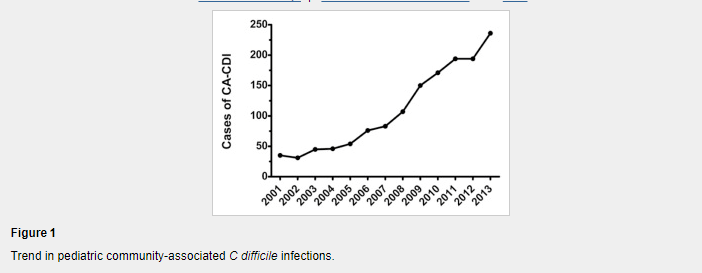
Clostridium difficile Infection in Inflammatory Bowel Disease: Expert Updates

A recent clinical practice update (S Khanna et al. Clin Gastroenterol Hepatol; 2017; 15: 166-74) provides some succinct recommendations regarding Clostridium difficile infection (CDI) in Inflammatory Bowel Disease (IBD).

Background: In 2011, the authors note that CDI was associated with 29,000 deaths and is now the most lethal enteric pathogen in the U.S.

Differences in pathogenesis of C diff in IBD compared to those without IBD:

  • Younger age
  • Less frequent antibiotic exposure
  • More often community onset (rather than hospital onset)
  • Higher recurrence (may be related to dysbiosis)

Key recommendations:

  • In patients with IBD flare, test for CDI
  • In patients with CDI and IBD, clinicians should consider “using vancomycin instead of metronidazole.”
  • In patients with recurrent CDI and IBD, consider fecal microbiota transplantation

Figure 4 proposes a management algorithm (for adults).  If uncomplicated CDI, recommended dose of vancomycin was 125 mg q6h. If no improvement in 3-4 days, then “consider escalation of immunosuppression.” For complicated CDI, consider oral vancomycin at 500 mg q6h and IV metronidazole 500 mg q8.  In addition, consider rectal vancomycin and surgery consult.

Complicated CDI includes ICU admission, hypotension, T >38.5, ileus/megacolon, mental status changes, leukocyte count >35,000  or < 2000, or lactate >2.2 mmol/L

Another review article (Y Chen et al. Inflamm Bowel Dis 2017; 23: 200-07) is a meta-analysis that identified six studies.  One of these studies was a case-control study with nearly 400,000 patients (and about 7000 cases of C diff). Key finding: CDI results in nearly a doubling of the risk of colectomy (OR 1.90), mainly in patients with ulcerative colitis.

Related blog posts

Disclaimer: These blog posts are for educational purposes only. Specific dosing of medications (along with potential adverse effects) should be confirmed by prescribing physician.  This content is not a substitute for medical advice, diagnosis or treatment provided by a qualified healthcare provider. Always seek the advice of your physician or other qualified health provider with any questions you may have regarding a condition.


Rare Tragic Reaction to Infliximab

A recent post on the pediatric GI Listserv pointed out a troubling case report: “Fatal Central Nervous System Disease Following First Infliximab Infusion in a Child With Inflammatory Bowel Disease,” FM. Baumer et al; Pediatric Neurology 2016; 57: 91-94.

“A seven-year-old boy diagnosed with ulcerative colitis and primary sclerosing cholangitis received infliximab. Six hours following his uneventful infusion, he awoke with headache and emesis and rapidly became obtunded…Cranial computed tomography revealed hypodense lesions in the cerebral hemispheres, cerebellum, and pons accompanied by hemorrhage…Within four days he met criteria for brain death.”

The authors note that “the close temporal association between our patient’s presentation and the infliximab infusion raises concern for a drug-related cause for his cerebral injury.” While this case report is terribly sad, severe and fatal reactions can unfortunately be encountered with a wide range of medications, including commonly used antibiotics.

My take: Thus, while the vast majority of pediatric patients with inflammatory bowel disease will benefit from infliximab therapy, there are rare tragic outcomes.  img_3954


Gastrojejunostomy Complications Frequent

Gastrojejnostomy (GJ) placement allows enteral feeds to bypass the stomach.  When a gastrostomy is already in place, GJ placement may allow patients to avoid surgery (eg. fundoplication).  Most practitioners would consider the risk of GJ placement to be low, but a recent report (J Moorse et al. JPS 2017; http://dx.doi.org/10.1016/j.jpedsurg.2017.01.026) suggests that it is higher than expected.  The abstract and link are below.

Link: Gastrojejunostomy tube complications — A single center experience and systematic review

Abstract

Purpose

Gastrojejunostomy tubes (GJTs) enable enteral nutrition in infants/children with feeding intolerance. However, complications may be increased in small infants. We evaluated our single-institution GJT complication rate and systematically reviewed existing literature.

Methods

With REB approval, a retrospective single-institution analysis of GJT placements between 2009 and 2015 was performed. For the systematic review, MOOSE guidelines were followed.

Results

At our institution, 48 children underwent 154/159 successful insertions primarily for gastroesophageal reflux (n = 27; 55%) and aspiration (n = 11; 23%). Median age at first GJT insertion was 2.2 years (0.2–18). Thirty-five (73%) had an index insertion when ≤10 kg. GJTs caused 2 perforations and 1 death. The systematic review assessed 48 articles representing 2726 procedures. Overall perforation rate was estimated as 2.1% (n = 36 studies, 23/1092, 95% CI: 1.0–3.2). Perforation rates in children <10 kg versus ≥10 kg were estimated as 3.1%/procedure (95% CI: 1.1%–5.0%) and 0.1%/procedure (95% CI: 0%–0.3%), respectively. The relative risk of perforation was 9.4 (95% CI: 2.8–31.3). Overall mortality was estimated as 0.9%/patient (n = 39 studies; 95% CI: 0.2–1.6%). Most perforations (19/23; 83%) occurred ≤30 days of attempted tube placement.

Conclusion

Gastrojejunostomy tubes are associated with significant complications and frequently require revision/replacement. Insertion in patients <10 kg is associated with increased perforation risk. Caution is warranted in this subgroup.

With regard to the methodology

  • ~90% of the procedures were performed by interventional radiology and the interventionist had a median of 6.6 years of experience
  • Most GJs were 16 French in width and most were either 15 cm or 22 cm in length

My take: This report highlights the significant risks associated with GJ placement, particularly in smaller patients (<10 kg).  Despite these risks, GJ placement is often the safest option.

Costa Maya, Mexico

Costa Maya, Mexico