

Currently fecal microbiota transplantation (FMT) “best practices” exclude obese stool donors based on a report of germ-free mice gaining weight after FMT from mice with obesity and based on a case report of an individual with 34 pound weight gain after FMT.
A recent report (M Fischer et al. Clin Gastroenterol Hepatol 2018; 16: 1351-3) suggests that the the BMI of the stool donor does not affect recipient weight after a single FMT procedure for C difficile infection.
This analysis included 173 patients with a mean age of 57 years. One group of 103 were from a randomized control trial; in this group, 66 (64%) received FMT from a normal weight (BMI 18-24.9) donor and 37 (36%) received FMT from an overweight (BMI 25-29.9) donor. Among an additional 70 individuals from an observational cohort, 25 received FMT from normal weight donor, 30 received FMT from overweight donor, and 15 received FMT from an obese donor.
Key finding:
The authors caution that a prospective study is required to confirm these findings and in the interim, they recommend exclusion of obese/overweight FMT donors.
My take: There are plenty of willing stool donors –so who knows if this will ever be examined adequately. This study challenges the idea that FMT from an obese donor will result in recipient obesity, presumably via changes in the microbiome.
Related blog posts:

A recent study (Y Xu. Clinical Nutrition 2018; https://doi.org/10.1016/j.clnu.2018.08.022) showed that exclusive enteral nutrition (EEN) is less effective in patient’s with Crohn’s disease with isolated colonic disease.
This was a retrospective study of 241 adults: 52 patients in the cCD (isolated colonic disease) group and 189 patients in the non-cCD group.
Key findings:
Related blog posts:

When our government takes actions on behalf of our country, this reflects on all of our values. So, earlier this year I was disgusted and angry when I learned that as part of a ‘zero tolerance’ rule, young children were separated from their parents and placed in something akin to cages. For me, this is a stain on our country’s history that could be compared to other atrocities like the Tuskegee experiments and Japanese internment during WWII. While this policy was more short-lived, there are still children separated from their parents and for the children involved the consequences could be life-long. Sadly, our entire country is responsible because we elected this administration which adopted these policies.
Now, this administration which seems incapable of any shame, is planning more steps that should make decent persons upset. Additional threats to lawful immigrants are being devised (KM Perreira et al. NEJM 2018; 379: 901-3).
“Under current guidelines, persons labeled as potential public charges can be denied legal entry to the United States” and in some cases deported. Public-charge guidelines aim to keep immigrants from relying on public charges (eg. cash-assistance programs like welfare) for the first 5 years after admission to the U.S.
“The Trump administration is proposing sweeping changes to these [public-charge] guidelines.” One of these proposed expansions of public-charge determination is including enrollment for Obamacare, which is legally mandated and which can include subsidies. Another target is the Children’s Health Insurance Program. As a consequence of these guideline changes, instead of ~3% of lawful immigrants being considered as receiving a public charge, if adopted, this would increase to a range from 32% to 47%.
If these policies are adopted, this is likely to have a lot of adverse health consequences. Immigrants, including U.S.-born children, will be less likely to receive health care and more likely to be food insecure; 25% of U.S.-born children of immigrants currently receive SNAP (supplemental nutrition assistance program) benefits. Health consequences will affect millions and include an increase in low birth infants, increased infant mortality, and increased maternal morbidity.
For health care providers and institutions, implementation of these policies is likely to result in higher costs from uncompensated care.
In related commentaries (BL Grace et al. NEJM 2018; 379: 904-5, M Martin. NEJM 2018; 379: 906-7), the authors note the following points:
My take: We are all accomplices (many unwitting) in the roll out of these detrimental policies that are now affecting lawful immigrants..
Related blog posts:

Here’s a link to a well-described case report. Her Searing Gut Pain Suggested Celiac Disease. Why Didn’t Cutting Out Gluten Help?
This 57 year old with ‘presumptive’ celiac disease did not improve with a gluten-free diet. After an initial self-diagnosis and subsequently an endoscopy that also suggested celiac disease, she did not improve. While the doctors involved in her care had labeled her ‘noncompliant,’ it turns out she did NOT have celiac disease and improved after the right diagnosis (diagnosis noted at bottom of this post).

My take: There are several entities that can mimic celiac disease (even histologically), including Crohn’s disease, Autoimmune enteropathy, CTLA4 deficiency, and Whipple’s disease (the diagnosis in this case). When someone is not getting better, the diagnosis needs to be reconsidered.
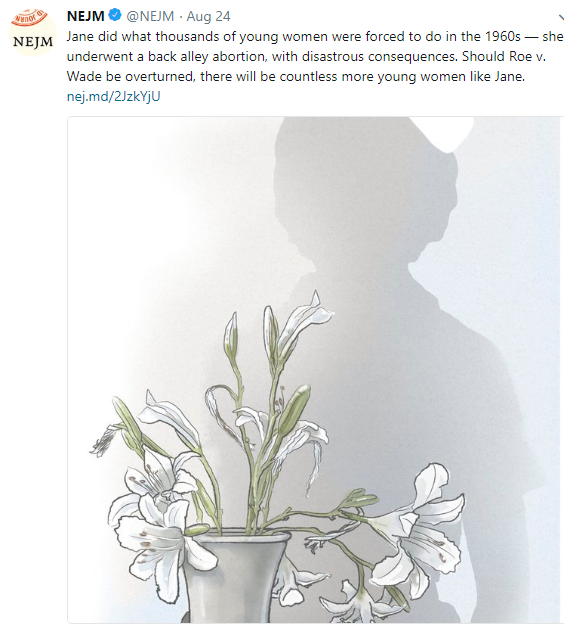
A recent commentary describes the tragic outcome of one young nurse in 1968: A Remembrance of Life before Roe v. Wade
An excerpt: Why am I telling Jane’s story now? The lack of legal and safe abortion before the Roe v. Wade decision of 1973 killed and maimed thousands of young women.


A recent study (AS Elnaggar et al. Liver Transplantation 2018; 24: 881-87; editorial 868-9) examine the effect of different types of surgical shunts in the setting of portal vein thrombosis (PVT). The authors examined surgical shunts from 1998-2011 in their institution (senior author: Jean Emond).
Key finding:
The authors note that liver atrophy, especially in children, can have a “significant effect on cognitive function and somatic growth.” Thus, restoring portal flow may improve adverse effects that PVT has caused.
Limitations:
Long-term followup of patients who have needed surgical shunts is needed. For mesoportal shunts, strictures have been noted in the hepatic end in 15% of patients.
My take: This study shows that portal blood flow, which was interrupted by PVT and restored by mesoportal (Rex) shunt, is important in maintaining liver mass. So, while all shunts may stop upper GI bleeding, mesoportal shunt is likely to improve other adverse effects of PVT.

Virginia Museum of Fine Arts (Richmond) has acquired Chihuly’s Red Reeds
An interesting commentary (KP Quinlan. JAMA Pediatrics; 2018; 172: 714-6) points out the need for better surveillance and prevention efforts for sudden unexpected infant deaths (SUIDs).
Key points:
Related posts:
Useful website: Charlieskids.org This website has a book called “Sleep Baby Safe and Snug” which incorporates updated recommendations on safe sleep practices.
Children should sleep in the same room but on a separate surface from their parents for at least the first six months of their lives, and ideally the first year. They say that this can halve the risk of SIDS…You can read the AAP’s full guidance here. These are a few more of the pediatricians’ recommendations: