gutsandgrowth

Pediatric Gastroenterology

gutsandgrowth

Deaths and Morbidity from Childbirth –U.S. with Highest Rate in the Industrialized World

Previously the issue of maternal mortality has been discussed on this blog: Take Two: Mushroom poisoning and maternal death with childbirth

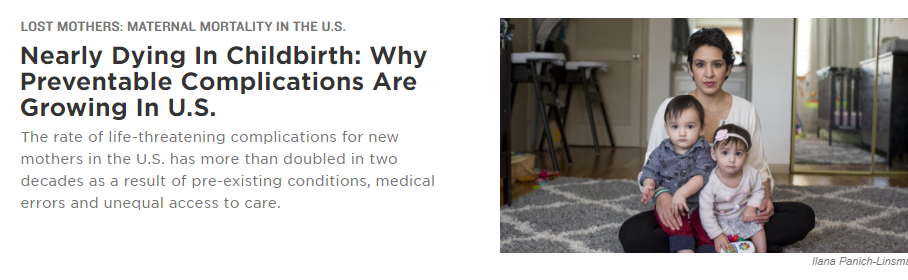
An update on this topic from NPR: Full Link  Nearly Dying In Childbirth: Why Preventable Complications Are Growing In U.S.

For the past year, ProPublica and NPR have been examining why the U.S. has the highest rate of maternal mortality in the industrialized world. That relative high rate of death, though, has overshadowed the far more pervasive problem that experts call “severe maternal morbidity.” 

Each year in the U.S., 700 to 900 women die related to pregnancy and childbirth. But for each of those women who die, up to 70 suffer hemorrhages, organ failure or other significant complications. That amounts to more than 1 percent of all births. The annual cost of these near deaths to women, their families, taxpayers and the health care system runs into billions of dollars

In the News …Hepatitis A Outbreak in California Linked to Homelessness

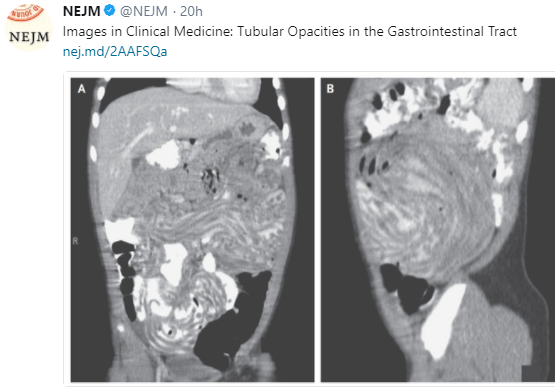
From NEJM: Full Link: Hepatitis A Outbreak in California — Addressing the Root Cause

On October 13, 2017, Governor Jerry Brown of California declared a state of emergency in response to a hepatitis A outbreak that began in the homeless population in San Diego. In the past year, more than 649 people throughout California have been infected, 417 have been hospitalized, and 21 have died from hepatitis A, making this the largest outbreak in the United States in the past 20 years. The vast majority of those affected have been homeless. Like two thirds of people who experience homelessness in California, most were unsheltered.

The environmental conditions associated with homelessness — overcrowding in encampments and emergency shelters, exposure to the elements, and limited access to facilities for hygiene and food preparation and storage — facilitate infectious-disease transmission..Infectious diseases are one of many health threats faced by homeless people. Poorly controlled chronic diseases, complications of substance use disorders and smoking, and unintentional injuries and violence are prevalent, difficult to manage, and often severe among homeless adults.

Last Year’s Most Popular Posts

I want to thank the many people who have helped me with this blog –now with 2180 posts over more than 6 years.  This includes my wife, my colleagues at GICareforKids, and colleagues from across the country who have provided critical feedback as well as useful publications to review.  I hope this blog continues to be a useful resource.

Here are the top dozen most popular blog posts from 2017:


Thinking Clearly About Fecal Microbiota Transplantation & Hepatic Encephalopathy

An intriguing open-label randomized clinical trial (JS Bajaj et al. Hepatology 2017; 66: 1727-38) showed that fecal microbiota transplantation (FMT) was helpful in hepatic encephalopathy.

Background: It is well-recognized that changing bacteria flora can be beneficial in patients with hepatic encephalopathy (HE) associated with cirrhosis.  This has been shown with prior treatments with both lactulose and rifaximin.  It is clear that FMT can improve microbial dysbiosis, particularly in patients with Clostridium difficile.  In this study, the authors randomized 20 patients to either standard of care (SOC) or to SOC & FMT (single enema) with a 5-month follow-up. SOC patients received lactulose and rifaximin.

Key findings:

  • No FMT patients and 5 SOC patients developed further HE
  • Cognition improve in the FMT, but not the SOC, group
  • FMT was associated with increased microbial diversity

Since this was a small study, a bigger trial with longer follow-up is needed.

My take: This intriguing study suggests that FMT, or similar more selected modification of bacterial flora, could be helpful in reducing hepatic encephalopathy among patients with cirrhosis.

Related blog posts:

South Kaibab Trail, Grand Canyon

Expert Guidance on Pediatric Postoperative Crohn’s Disease

A recent NASPGHAN clinical report (JB Splawski et al JPGN 2017; 65: 475-86) updates recommendations to lower the rate of postoperative recurrence in pediatric Crohn Disease (CD).  In this report, after review of a number of studies, the authors provide a management algorithm (Figure 1).  In addition, they review risk factors for surgery/postoperative recurrence in CD.

Key points:

  • “Endoscopic recurrence precedes clinical recurrence, and is a better predictor of the risk for future surgery.”
  • “Anti-TNF agents appear to be the most effective treatment in preventing postoperative recurrence.”  These agents “can be started as early as 4 weeks after surgery.”
  • “Prophylactic treatment to prevent recurrence rather than treating after the disease recurs, appears to be more effective in preventing further surgery.”
  • “Early postoperative surveillance for disease recurrence allows for a change in management to prevent complications that may lead to further surgery.” The authors note that fecal calprotectin (and lactoferrin) return to baseline around 2 months after surgery, and “monitoring disease activity postsurgery with these tests may help determine appropriate selection for more invasive testing such as endoscopy.”

My take: The authors emphasize that “whatever treatment is chosen, early surveillance for disease recurrence is clearly needed.”  In addition, anti-TNF agents are most likely to lower risk of further surgery.

Related blog posts:

Silver Bridge, Colorado River, Bright Angel Trail. Grand Canyon


A Call to Arms for Health Care Professionals

A recent editorial published simultaneously in NEJM (DB Taichman et al. 2017; 377: 2090-91), Annals of Internal Medicine, PLOS Medicine and JAMA urges physicians:

  • “Don’t be silent. We don’t need more moments of silence to honor the memory of those who have been killed. We need to honor their memory by preventing a need for such moments.”

A short list of how health care professionals can help:

  • “Educate yourself”
  • Contact your local, state, and federal legislators.  “And do it again at regular intervals.”
  • Attend public meetings. “Demand answers, commitments, and follow-up”
  • “Go to rallies.”
  • “Join, volunteer for, or donate to organizations fighting for sensible firearm legislations.”
  • Vote for candidates “with stances that mitigate firearm-related injury.”

My take: I’m proud of my friends who have been trying to make a difference.  If any other medical problem exacted the toll of firearms, it is hard to imagine such complacency/resignation.

Related blog posts:

Sunrise over South Rim of Grand Canyon

Does It Matter How Hard Your Poop Is?

A recent study (MH Vriesman et al. J Pediatr 2017; 190: 69-73) with 1835 children examined the issue of stool consistency, comparing the Bristol Stool Scale (BSS) and the Questionnaire on Pediatric Gastrontestinal Symptoms-Rome III (QPGS-RIII). Most of the patients in this study were older children, with 803 (43.7%) age 8-12 years and 1032 (56.3%) ≥13 years.

Key findings:

  • Surprisingly (to me) there only slight agreement between BSS and QPGS-RIII for assessing stool consistency (κ = .046; P=.022).
  • With the BSS, hard stools (types 1 & 2) were reported more frequently than QPGS-RIII: 18.0% vs. 7.1%.
  • Both scales reported similar levels of functional constipation, 9.3% for BSS and 8.6% for QPGS-RIII. The presence of hard stools or painful defecation is only 1 of 6 Rome criteria for the diagnosis of functional constipation.

These results indicate significant variability in how often pediatric patients considered their stools hard based on the instrument (BSS vs QPGS-RIII).  The reason why there is fairly close agreement on functional constipation is due to the fact that Rome III criteria combine the presence of hard stools and painful defecation into a single criteria and the fact that there are multiple criteria needed.  “Not all children with hard stools have painful defecation and vice versa, with only 21% of children with painful defecation reporting hard stools.”

My take: This study suggests that painful defecation is more important to ascertain than if the stools are hard. In addition, this may explain why softening the stools as a stand alone strategy is not effective in many children.

Related study: S Muddasani et al. J Pediatr 2017; 190: 74-8.  This retrospective study showed that pelvic floor physical therapy was effective in the majority of children (n=64,mean age 8.7 yrs) with fecal incontinence due to pelvic floor dyssynergia. It is notable that there were only two physical therapists involved; thus, in order to replicate these results, one would need quite capable PTs.

Related blog posts:

Does Celiac Disease Increase the Likelihood of Clostridium difficile infections?

Thanks to Mike Hart for the following reference:  Risk of Clostridium difficile in patients with Celiac Disease: A Population-Based Study B Lebwohl et al. AJG 2017; doi:10.1038/ajg.2017.400

Abstract

Objectives:

Patients with celiac disease are at increased risk for infections such as tuberculosis, influenza, and pneumococcal pneumonia. However, little is known about the incidence of Clostridium difficile infection (CDI) in patients with celiac disease.

Methods:

We identified patients with celiac disease based on intestinal biopsies submitted to all pathology departments in Sweden over a 39-year period (from July 1969 through February 2008). We compared risk of CDI (based on stratified Cox proportional hazards models) among patients with celiac disease vs. without celiac disease (controls) matched by age, sex, and calendar period.

Results:

We identified 28,339 patients with celiac disease and 141,588 controls; neither group had a history of CDI. The incidence of CDI was 56/100,000 person-years among patients with celiac disease and 26/100,000 person-years among controls, yielding an overall hazard ratio (HR) of 2.01 (95% confidence interval (CI), 1.64–2.47; P<0.0001). The risk of CDI was highest in the first 12 months after diagnosis of celiac disease (HR, 5.20; 95% CI, 2.81–9.62; P<0.0001), but remained high, compared to that of controls, 1–5 years after diagnosis (HR, 1.85; 95% CI, 1.22–2.81; P=0.004). Among 493 patients with CDI, antibiotic data were available for 251; there were no significant differences in prior exposures to antibiotics between patients with celiac disease and controls.

Conclusions:

In a large population-based cohort study, patients with celiac disease had significantly higher incidence of CDI than controls. This finding is consistent with prior findings of higher rates of other infections in patients with celiac disease, and suggests the possibility of altered gut immunity and/or microbial composition in patients with celiac disease.


Silver Bridge crossing Colorado River. Part of Grand Canyon’s Bright Angel Trail.

Therapeutic Drug Monitoring for Vedolizumab

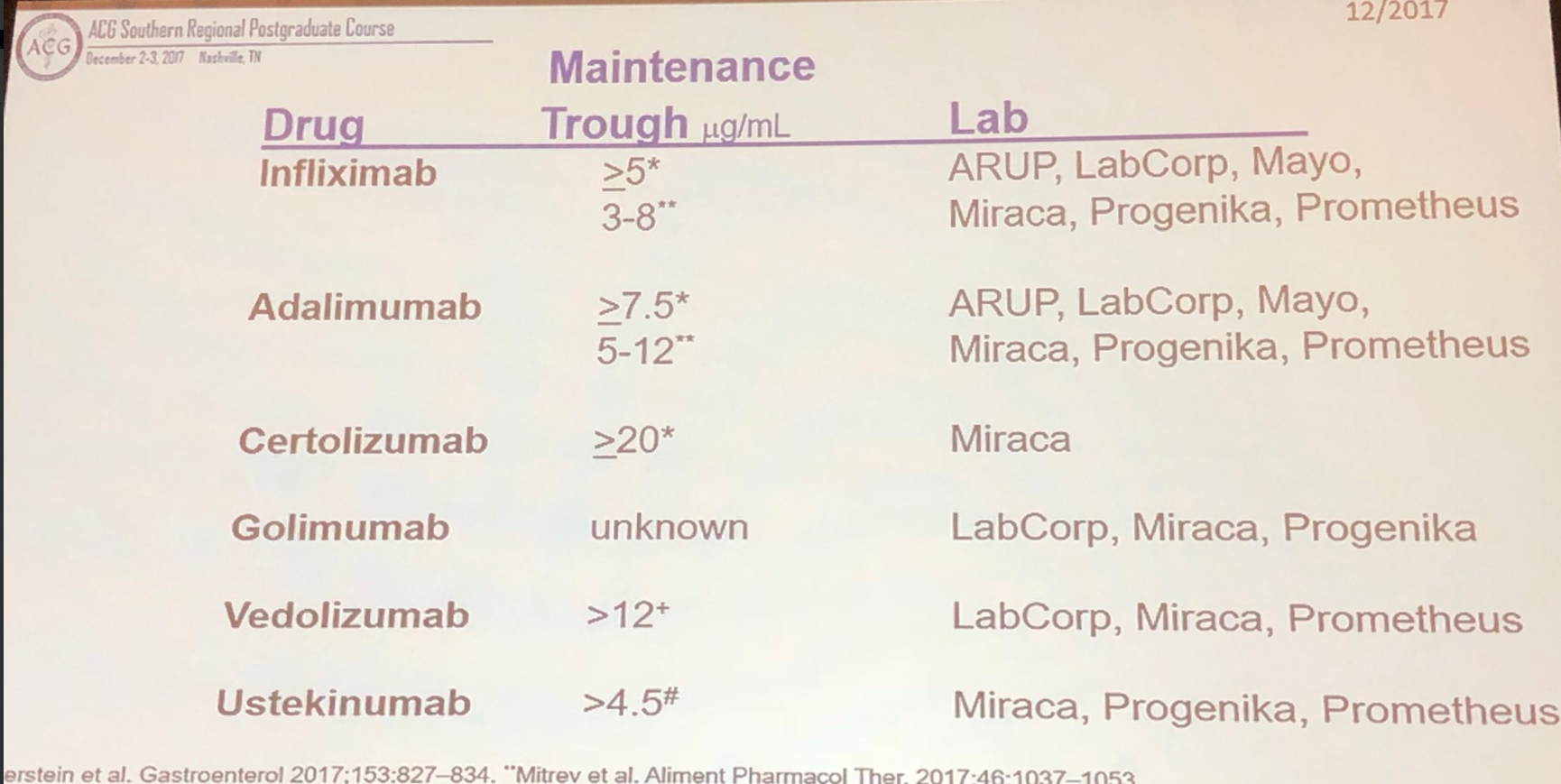
A recent observational study (N Williet et al. Clin Gastroenterol Hepatol 2017; 15: 1750-7) provides some important information about where we are heading with regard to therapeutic drug monitoring (TDM) with vedolizumab (VDZ).

This study enrolled 47 consecutive patients with either Crohn’s disease (CD, n=31) or ulcerative colitis (UC, n=16). In those without a clinical response at week 6, an additional dose of 300 mg of VDZ was administered at week 10.

Key findings:

  • VDZ levels were higher in responders than in nonresponders, which is in agreement with previous studies ( (NEJM 2013; 369: 711-21, NEJM 2013; 369: 699-710)
  • A low therapeutic drug level as early as week 2 (<24.5 mcg/mL) and at the end of induction (week 6) (<18.5 mcg/mL) was associated with the need for drug optimization within 6 months in all patients
  • All patients with a level <19.0 mcg/mL at week 6, regained a secondary response after optimization at week 10.
  • The authors note that in the GEMINI trial, anti-VDZ antibodies were detected in 56 of 1434 patients (3.7%).  In this cohort, no anti-VDZ were detected using the same methods.

My take: Low trough levels of VDZ at week 6 are associated with the need for drug optimization/increased dosing.