How to Talk About Childhood Obesity

Pont SJ, et al. Pediatrics. 2017. doi: 10.1542/peds.2017-3034. A policy statement from the American Academy of Pediatrics addresses the issue of stigma associated wtih pediatric obesity.  This is summarized in the following links:

An excerpt form NY Times piece:

Dr. Pont is one of the lead authors of a new policy statement from the American Academy of Pediatrics titled “Stigma Experienced by Children and Adolescents With Obesity.” The statement, published online Monday in the journal Pediatrics, advises pediatricians to use neutral words like “weight” and “body mass index” rather than terms like “obese” and “fat.” …

In a study published earlier this year in the journal Preventive Medicine, Dr. Puhl and her colleagues looked at the longitudinal effects of teenagers being teased about their weight. The study involved over 1,800 people who had been followed for 15 years and are now in their mid 30s…

“These teasing experiences have long-lasting implications for health and for health behavior.” For women especially, these adolescent experiences of teasing by peers or family members were associated with binge eating, poor body image, obesity, and a higher B.M.I. 15 years later, she said; for men there were some of the same associations, including obesity as adults, if they had been teased by their peers as adolescents…

Weight stigma does exactly the opposite; criticizing and inducing shame only make people feel terrible about themselves, not motivated or capable of making changes…

“Recognize that a child is far more than what their weight is, praise them for all the positives, so when we get to some of the more challenging topics, they can still maintain their self-esteem,”…

The most effective way for parents to help a child is to make healthy changes for the whole family, regardless of shape or size, Dr. Pont said. Try making small changes slowly, like adding one new green vegetable into the family diet, not keeping sugary drinks in the home or walking to school instead of driving.

Related blog posts:

Smoke in Grand Canyon after recent brush fires

Fatty Liver Disease with Craniopharyngioma and with Down Syndrome

A recent retrospective study (SY Yung et al. Ann Pediatr Endocrinol Met 2017; 22 https://doi.org/10.6065/apem.2017.22.3.189 –thanks to Jeff Schwimmer for this reference) describes the problem of nonalcoholic fatty liver disease (NAFLD) in long-term survivors of childhood-onset (CO) craniopharyngioma.

This study reviewed 75 children with CO-craniopharyngioma who had surgery prior to 15 years of age. The mean followup was 4.3 years.

Key findings:

  • 51 had either elevated AST or ALT above 40 IU/L. ALT ≥60 IU/mL was observed in 15 patients.
  • Estimated prevalence of NAFLD based on mainly imaging was 47%. 27 underwent ultrasonography and 5 underwent CT scan.
  • Among those with available growth data, 41% were obese and 18% were overweight.
  • NAFLD developed within a year after surgery in many patients.

This study had many limitations, including reliance of ultrasonography for diagnosis and incomplete evaluations.  Despite this, it is clear that hypothalamic obesity places patients at a high risk for developing NAFLD.  In addition, NAFLD in this population may be more aggressive.

My take: This study documents the well-recognized phenomenon of NAFLD in CO-craniopharyngioma with obesity.  Current treatment relies on trying to preserve hypothalamic function and optimizing lifestyle/nutrition.

Briefly noted: D Valentini et al. J Pediatr 2017; 189: 92-7.  Using ultrasound in 280 Italian children with Down syndrome, the authors identified NAFLD in 45% of those considered nonobese and 82% of those overweight/obese. In a related commentary (pg 11-13 Full text: Down syndrome and Pediatric NAFLD …), the authors (AD Matteo, P Vajro) note that Down syndrome patients may have increased NAFLD due to less activity, more obesity including possible excess adiposity in those with normal BMI, obstructive sleep apnea, or perhaps other mechanisms.

Related blog posts:


Autoimmune Liver Disease in Children with Sickle Cell Disease

A recent retrospective study (S Jitaruch et al. J Pediatr 2017; 189: 79-85) documents the important association of autoimmune liver disease in children with sickle cell disease (SCD).  I have seen  children with hemoglobinopathy and autoimmune hepatitis.

Key findings:

  • 13 of 77 patients with SCD were diagnosed with autoimmune liver disease
  • 2 patients presented with acute liver failure
  • 6 patients had cholangiopathy on cholangiogram “suggesting autoimmune sclerosing cholangitis”
  • At median follow-up of 3.8 years, 5 achieved full remission, 4 partial remission, 1 had liver transplant, 1 died of subdural hemorrhage (prior to liver disease treatment), and 2 were lost to followup

My take: this report is a good reminder that though there are a good number of reasons for abnormal liver blood tests in children with SCD, it is important to follow these children closely and to obtain serology (including ANCA) in those with persistent elevations.

Related blog post: Blood is not enough

South Kaibab Trail at the basin of the Grand Canyon (Colorado River)


Cytosponge for Eosinophilic Esophagitis

A recent prospective study (DA Katzka et al. Am J Gastroenterol 2017; 112: 1538-44 -thanks to Ben Gold for this reference) provided more information regarding the potential utility of the cytosponge for eosinophilic esophagitis (EoE); the cytosponge has been studied for Barrett’s esophagus.

Background: 86 adult patients were recruited; 6 could not swallow sponge.  In the remainder, 105 procedures were performed comparing the cytosponge to standard endoscopic biopsies. The cytosponge technique can be completed in ~5 minutes without sedation. “All that is required is centrifuging the cytosponge specimen in its preservative to create a pellet followed by routine paraffin embedding and processing.”

Key findings:

  • Cytosponge was considered to have adequate specimen in 102 of 105 cases, compared with 104 of 105 with endoscopic sampling
  • Using a cutoff of <15 eos/hpf for inactive disease, the authors found that the cytosponge had a sensitivity of 75% and a specificity of 86%.
  • Six patients had active EoE on cytosponge with negative endoscopic biopsies.
  • 14 patients with active EoE with endoscopic biopsies had <15 eos/hpf with cytosponge
  • No complications were noted with cytosponge.

The sensitivity of 75% is likely due to inadequate contact between cytosponge and esophageal wall which could be related to technique, especially in those with a normal caliber esophagus.

My take: The cytosponge appears to identify active EoE in the majority of adult patients.  In those with abnormal cytosponge, the likelihood of active EoE would be very high; as such, it could be a useful biomarker.  It is still probable that many with normal cytosponge result would need endoscopy due to suboptimal sensitivity.

Related blog posts:

NEJM 2017; 377: e22. In this patient with lingual papillomas, hx/o melenoma, and both hyperplastic and adenomatous polyps, a genetic mutation identifying Cowden syndrome was identified.

Fatty Acid Intake and Risk of Ulcerative Colitis Flare

A recent study (Barnes EL et al. Clin Gastroenterol Hepatol 2017; 15: 1390-6) found an association between the intake of certain fatty acids and the risk of an ulcerative colitis flare.  This is nicely summarized in the AGA Journals Blog.

Here’s the link: Does Consumption of Certain Fatty Acids Increase Risk of Ulcerative Colitis Flares?

Here’s an excerpt:

Diets with high levels of fatty acids such as myristic acid (found in palm oil, coconut oil, and dairy fats) increased risk of flare in patients with ulcerative colitis (UC), researchers report in the September issue of Clinical Gastroenterology and Hepatology. Their findings, from a prospective study of more than 400 patients in remission during treatment with aminosalicylates, could guide future studies of supplements or compounds that reduce risk of flares in patients with UC in remission…

Edward L. Barnes et al performed a prospective study of dietary patterns among 412 patients, from 25 sites, with UC in remission during monotherapy with an aminosalicylate (mesalamine, sulfasalazine, or balsalazide for at least 3 months before enrollment). Patients completed a validated food frequency questionnaire (on consumption of dairy, fruits, vegetables, eggs, meat, fish, cereals, breads, and starches, beverages, sweets, and baked goods) at enrollment and were followed for 12 months…

Forty-five patients (11%) had a relapse of UC within 1 year of study enrollment… In multivariable analysis, higher intake of myristic acid (odds ratio, 3.01) and alpha linolenic acid (odds ratio, 5.50) were associated with increased risk of relapse, although a dose–response relationship was retained only for myristic acid intake.

Other foods previously implicated in flares of UC, such as processed meat, alcohol, and foods high in sulfur, were not associated with an increased risk of flare.

Related blog posts:

From Andy Warhol Exhibit at the High Museum

Infant Feeding, Opportunity, and Asthma

A recent study (A Kloop et al. J Pediatr 2017; 190: 192-9) examined the relationship between mode of infant feeding and the development of asthma.  The authors used prospective data from 3296 Canadian children in the Canadian Healthy Infant Longitudinal Development (“CHILD” study) cohort.

Key finding:

  • “Compared with infants who received direct breast milk only [at 3 months of age], those who received some expressed milk had a 43% increased odds [of asthma at 3 years of life] …and those who received only formula had a 79% increased odds.”

The authors speculate that the direct breastfeeding may offer some advantages over expressed breast milk:

  • There may be alteration in breast milk components with storage
  • A nursing infant may trigger an increased immune response and be directly exposed to some beneficial commensal bacteria

Since this is an observational study and patients were not randomized there may be other unrecognized confounding variables.

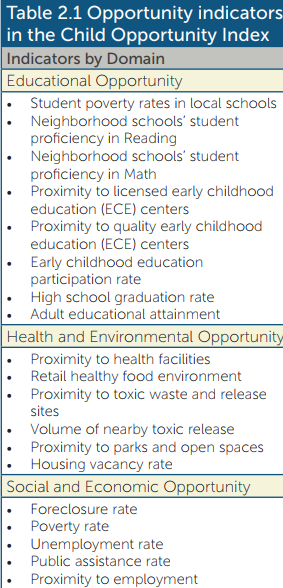
Another study in the same issue (AF Beck et al. J Pediatr 2017; 190: 200-6) assessed whether the Child Opportunity Index (COI) was associated with asthma outcomes in a retrospective cohort of 5462 children in Hamilton County, Ohio.  The COI (see below for the measures in this index) has previously been linked to life expectancy, low birth weight, and prematurity.  Interestingly, one can go to diversitydatakids.org to see how this affects your location (here is the link for a heat map of this index in the Atlanta area: Atlanta COI)

Key finding:

  • Median hospitalization rates varied based on COI –those with very high opportunity had a rate of 1.8 per 1000.  The other quintiles of COI were the following: high opportunity 2.1, moderate opportunity 4.6, low opportunity 7.6, and very low 9.1

My take: The first study indicates that direct breastfeeding is associated with lower rates of asthma.  The second study shows that issues related to education, environment, and social/poverty have an enormous impact on need for asthma-related hospitalization.


Costs of Biologics for Inflammatory Bowel Disease

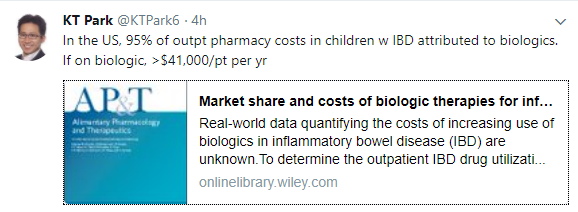
A recent study examines the market share and costs of biologic therapies for inflammatory bowel disease:

Excerpt from abstract:

The average biologic-taking patient accounted for $25 275 PMPY in 2007 and $36 051 PMPY in 2015. The average paediatric biologic-taking patient accounted for $23 616 PMPY in 2007 and $41 109 PMPY in 2015. In all patients, the share of costs for biologics increased from 72.9% in 2007 to 85.7% in 2015 (81.7% in 2007 to 94.9% in 2015 in paediatrics).

Conclusion

The vast majority of costs allocated to out-patient IBD medications in the USA is attributed to increasing use of biologic therapies despite the relative minority of biologic-taking patients.

My take: Biologic therapies are costly but also very effective.

Related Blog Posts:


The Original Anti-TNF Therapy: Thalidomide

A recent study (M Lazzerini et al. Clin Gastroenterol Hepatol 2017; 15: 1382-9) used data from 2 multicenter trials of 70 children to assess the efficacy of thalidomide in pediatric patients with refractory inflammatory bowel disease (37 with Crohn’s disease, 23 with ulcerative colitis)

Key findings:

  • 42 patients (60%) had clinical remission & 45 (64%) had clinical response at week 8
  • 38 patients (54%) had clinical remission or response at week 52. 29 of these patients had mucosal healing (no erosions or ulcerations) & 20 patients had histologic healing
  • 7 patients dropped out from study prior to 52 weeks due to side effects (n=5) or clinical relapse (n=2)

My take: I have not used thalidomide therapy and remain concerned about long term side effects (eg. peripheral neuropathy).  Though, the authors are correct that its safety “may be acceptable compared with the safety of other” treatments, especially if there are few remaining options.

Related blog posts: