Deceptive Research: When Sugar Leaves A Bitter Taste

screen-shot-2016-09-13-at-6-51-28-pm

This study was covered widely including USA Today, NBC News and other outlets.

From NY Times, an excerpt:

The sugar industry paid scientists in the 1960s to play down the link between sugar and heart disease and promote saturated fat as the culprit instead, newly released historical documents show.

The internal sugar industry documents, recently discovered by a researcher at the University of California, San Francisco, and published Monday in JAMA Internal Medicine, suggest that five decades of research into the role of nutrition and heart disease, including many of today’s dietary recommendations, may have been largely shaped by the sugar industry…

he Sugar Association, paid three Harvard scientists the equivalent of about $50,000 in today’s dollars to publish a 1967 review of research on sugar, fat and heart disease. The studies used in the review were handpicked by the sugar group, and the article, which was published in the prestigious New England Journal of Medicine, minimized the link between sugar and heart health and cast aspersions on the role of saturated fat…

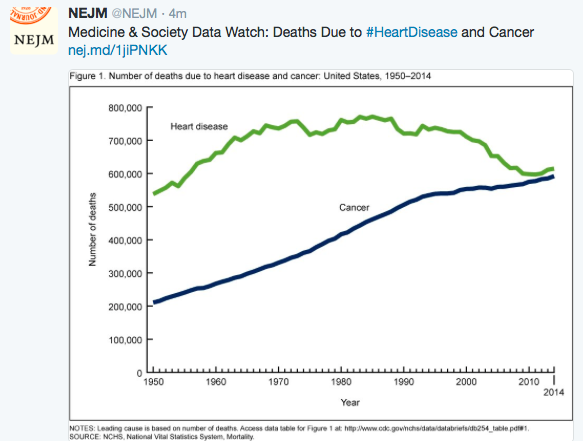
The New England Journal of Medicine did not begin to require financial disclosures until 1984.

Eosinophilic Disease in Children with Intestinal Failure

Last week, this blog posted an abstract regarding the use of “real foods” for short gut kids.  This post looks into whether certain foods may provoke an allergic response.

A large (n=105) single center retrospective study (C Duggan et al. JPGN 2016; 63: 336-39) examined the histology from 208 endoscopic procedures to determine the frequency of eosinophilic disease in children with intestinal failure.

Key findings:

  • 37% of patients had evidence of eosinophilic inflammation in at least one section of the GI tract.
  • Most common sites for eosinophilic disease: colon/rectosigmoid 18/68 (26%), esophagus 17/83 (20%), ileum 9/54 (17%) and duodenum 4/83 (5%)
  • Both peripheral eosinophilia and hematochezia correlated with eosinophilic colitis
  • The authors state that “a strict elemental diet for 3 months before endoscopy was not associated with a decreased frequency of eosinophilic inflammation.”

While a strict elemental diet was not shown to be effective in this study, the limitations of the study design (eg. retrospective, small number on amino acid diet) preclude a definitive answer about the utility of these diets.  Other confounders, including ongoing parenteral nutrition support, also ‘muddy’ the picture.  A prospective study would be able to determine more conclusively how effective elemental diets are at minimizing eosinophilic inflammation and to allow for a more uniform definition of abnormal tissue eosinophilia.

Given the frequency of elemental diets early in life along with prior GI insults, the propensity to eosinophilic disease may have its origins well before this study period.  In healthy children, the LEAP, LEAP-ON, and EAT studies indicated that earlier exposure to allergens reduces the risk of allergic disease.

My take: This study shows a high prevalence of GI eosinophilic inflammation among children with intestinal failure.  Thus, in children with hematochezia and intestinal failure, eosinophilic colitis needs to be considered.

Related blog posts:

Grinnell Glacier, Glacier Natl Park

Glacier Natl Park

Pediatric Experience with Vedolizumab


N Singh et al. Inflamm Bowel Dis 2016; 22: 2121-25.  Abstract:

Background: Though vedolizumab has received regulatory approval for the treatment of Crohn’s disease (CD) and ulcerative colitis (UC) in adults, there is increasing off-label use in children.

Aims: To describe the experience with vedolizumab in pediatric inflammatory bowel disease (IBD) patients at 3 tertiary IBD centers and examine predictors of remission.

Methods: A retrospective review identified pediatric IBD patients (age < 18 yrs) receiving vedolizumab. Data on demographics, disease behavior, location, activity, and previous treatments/surgeries were collected. Disease activity was assessed using the weighted pediatric CD activity index or pediatric UC activity index. Primary outcome was week 14 remission, defined as pediatric UC activity index <10 or weighted pediatric CD activity index <12.5. Descriptive statistics and univariate analyses were performed to examine associations of clinical characteristics with efficacy.

Results: Fifty-two patients, 58% CD and 42% UC, initiated vedolizumab between June 2014 and August 2015. Median age at vedolizumab initiation was 14.9 (range 7–17) years. Ninety percent had failed ≥1 anti-tumor necrosis factor (TNF) agent. Week 14 remission rates for UC and CD were 76% and 42%, respectively (P < 0.05). Eighty percent of anti–TNF-naive patients experienced week 14 remission. At week 22, anti–TNF-naive patients had higher remission rates than TNF-exposed patients (100% versus 45%, P = 0.04). There were no infusion reactions or serious adverse events/infections.

Conclusions: Our results suggest that vedolizumab is efficacious and safe in pediatric IBD patients, with UC patients experiencing earlier and higher rates of remission than CD patients. Anti–TNF-naive patients experienced higher remission rates than those with anti-TNF exposure. Controlled clinical trial data are needed to confirm these observations.

Related Blog Posts:

Glacier Natl Park

Glacier Natl Park

Real Foods in Short Gut Kids

Screen Shot 2016-08-17 at 7.31.27 AM

 Reference from Kipp Ellsworth:

Transition to a Tube Feeding Formula With Real Food Ingredients in Pediatric Patients With Intestinal Failure K Samela et al. NCP: Published online before print August 4, 2016, doi:10.1177/0884533616661011

AbstractDue to concerns related primarily to allergic response and malabsorption, enteral nutrition therapy has traditionally relied on the use of elemental formulas in children with intestinal failure (IF). Blended food diets via a gastrostomy tube have been reported to improve feeding tolerance in pediatric populations receiving long-term enteral nutrition therapy. Complex macronutrients have been shown to stimulate intestinal adaptation in animal models. We report on our experience in children with IF who had an overall improvement in stool output when transitioned from an elemental formula to a tube feeding formula with real food ingredients (TFRF). Data were collected in a retrospective chart review of children with IF, >1 year of age, who were receiving enteral nutrition via continuous infusion, bolus feeding, or both. Indications for the TFRF trial were diarrhea or inconsistent stooling patterns. Ten children with a mean small bowel length of 48.3 cm were trialed on TFRF. Nine of 10 (90%) children tolerated the transition to 100% TFRF, of which 7 of 9 (78%) had their entire colon in continuity. The average age at successful transition was 29.2 months, and the average length of time to transition to 100% TFRF was 67.3 days. TFRF is well tolerated in children >1 year of age with IF; it also improves their stooling patterns. A commercially available TFRF is a cost-effective and nutritionally adequate means of providing nutrition to this patient population.


If I ever see an infant with Congenital Sodium Diarrhea

If I ever see an infant with Congenital Sodium Diarrhea (CSD), I will revisit: AR Janecke et al JPGN 2016; 63: 170-6.

A couple of pointers from this article:

  • CSD represents a group of clinical conditions with high fecal sodium losses at birth  Three mutations: SPINT2, GUCY2C, and SLC9A3 account for the majority of cases.
  • IBD occurs in some of these children.
  • GUCY2C causes a secondary loss of sodium-proton antiporter 3 function related to mutations in the receptor for guanylate cyclase C (GC-C).  (I find this particularly interesting due to work in my fellowship with guanylin which binds to GC-C.)
  • SPINT2 is associated with a syndromic CSD which may include choanal/intestinal atresias, cleft palate, hypertelorism, and polydactaly.  Unlike classical CSD (due to SLC9A3), this form of CSD is characterized by associated villous atropy and some characteristic tufts.
  • Table 1 lists other causes on the differential diagnosis including microvillus inclusion disease and epthelial dysplasia (tufting enteropathy)

Related blog posts:

Mountain Goat at Glacier Natl Park. Antenna part of a study.

Mountain Goat at Glacier Natl Park. Antenna part of a study.

Hepatocellular Carcinoma Still Occurs in Patients who Clear HBsAg

Briefly noted:

Editorial: MH Nathanson, N Terrault Hepatology 2016; 64: 328-29. This very unusual editorial explains a published erratum of 2010 paper reversing a claim that patients with Hepatitis B who had achieved HBsAg clearance had markedly decreased rates of hepatocellular carcinoma (37 cases per 100,000 person-years). After correction of the arithmetic error, the rate of HCC in this population was actually 442 cases per 100,000 person-years.  The editorial does reiterate that studies have shown lower HCC among those with low HBV DNA which is a prerequisite for HBsAg clearance. Exact risk is difficult in this population due to infrequent development of HBsAg loss and infrequent development of HCC.  The message: While loss of HBsAg may lower HCC risk, there remains a need for HCC surveillance.

Related blog posts:

Wild Goose Island, Glacier Natl Park

Wild Goose Island, Glacier Natl Park

Competition and Costs in HCV Market

Following FDA approval of Zepatier (Elbasvir/Grazopresvir) (related blog post:In brief: Pediatric HCV trial, Exercise for NAFLD, and … – gutsandgrowth), it is gratifying to see reductions in the cost of HCV treatment.  Merck has priced Zepatier at $54,600 for a 12-week course which is substantially lower than Sovaldi ($84.000), Harvoni ($94.500), and Viekira Pak ($83,000).

Zepatier is indicated for genotypes 1 and 4 and can be used in patients with severe renal impairment, including dialysis. It is likely that this will pressure rival drug companies to lower their prices as well.

More information: Will Zepatier Shake Up the HCV Market? This link is to an issue of “Specialty Pharmacy Continuum” but interestingly this same story (?verbatim) was published months later by “Gastroenterology and Endoscopy New” (August 2016) without acknowledging the previous publication (by same author).

Grinnell Glacier Trail, Glacier Nat'l Park

Grinnell Glacier Trail, Glacier Nat’l Park

Safety of Fluticasone for Eosinophilic Esophagitis (Abstract)

Doerthe A Andreae et al. The American Journal of Gastroenterology 111, 1187-1197 (August 2016) | doi:10.1038/ajg.2016.238

METHODS:

In an open-label, prospective, single-center study, we offered pediatric patients with active EoE fluticasone 2 puffs to swallow twice a day (strengths in μg/puff: 2–4 years: 44, 5–11 years: 110, ≥12 years: 220). Clinical, endoscopic, and histological assessments were performed at baseline and shortly after therapy. If histological remission was seen, fluticasone was continued with clinical follow-ups every 4 months and endoscopic and histological follow-ups yearly. Clinical scores were derived from eight symptoms (abdominal pain, nausea, vomiting, regurgitation, chest pain, dysphagia, food impaction, and early satiety). Endoscopic scores were derived from six features (rings, exudates, furrows, edema, stricture, and shearing). Scores were expressed as ratio (features present/total). In addition to peak eosinophils/high power field (HPF) (primary outcome), histological features (eosinophilic microabscesses, degranulation, superficial layering, basal zone hyperplasia, dilated intercellular spaces, and lamina propria fibrosis) were assessed. Median clinical and endoscopic scores and individual histologic features were compared over 4 time intervals: <4 months, 4–12 months, 13–24 months, and >24 months. Growth and adverse effects were monitored.

RESULTS:

We enrolled 54 patients, 80% male, median age 6.5 years (range 2–17 years), 85% atopic (57% asthma, 68% allergic rhinitis, and 31% atopic dermatitis), and 74% with food allergy. Mean follow-up was 20.4 months, the longest being 68 months (5.7 years). Esophageal eosinophil counts significantly decreased (median peak eosinophils/HPF at baseline 72, <4 months: 0.5, 4–12 months: 1.75, 13–24 months: 10, and >24 months: 12, all P<0.01). All histological features significantly decreased from baseline to all follow-up time points (all P<0.01). Lamina propria fibrosis significantly decreased (% patients with fibrosis at baseline 92, <4 months: 41, 4–12 months: 50, 13–24 months: 45, and >24 months: 39, all P<0.01). Endoscopic features improved (score at baseline 0.37, <4 months: 0.17, 4–12 months: 0.17, 13–24 months: 0, and >24 months: 0.1, all P<0.01, except at >24 months: P<0.05). Symptoms improved (score at baseline 0.22, <4 months: 0, 4–12 months: 0.11, 13–24 months: 0.11, and >24 months: 0.11, all P<0.05 except at >24 months: P=0.05). In a mixed linear regression model that accounts for correlation of repeated observations in the patient in a per-patient analysis, we found that treatment with swallowed fluticasone led to a statistically significant and sustained decrease in peak esophageal eosinophil counts. Asymptomatic esophageal candidiasis was seen in three children but resolved with anti-fungal therapy. Height and weight z-scores followed expected growth curves.

CONCLUSIONS:

We demonstrate that swallowed fluticasone is effective as a long-term maintenance therapy for children with EoE, without growth impediment or serious side effects.

My take: This post, from an abstract, shows a single-center’s experience with fluticasone. This study provides some reassurance regarding safety & efficacy when used as a maintenance medication. However, as noted in links below, higher doses of fluticasone have been associated with adrenal insufficiency.

Related blog posts: