30 Million Excess Deaths (Estimated) Worldwide due to COVID-19

The COVID-19 pandemic caused the most severe drops in life expectancy seen in 50+ years.” per IHME

NY Times 3/11/24: The Fourth Anniversary of the Covid Pandemic

“Globally, Covid ranks among the worst killers since 1900. AIDS, for example, is estimated to have killed about 40 million people, but over a half century rather than only four years. The 1918 flu killed somewhere between 20 million and 50 million people.”

“Among high-income countries, the U.S. has had one of the highest Covid tolls. The excess-death rate here, as a study by Jennifer Nuzzo and Jorge Ledesma of Brown University notes, has been much higher than in Canada, Britain, Germany, France, Spain, Sweden, Denmark, Japan, South Korea or Australia…”

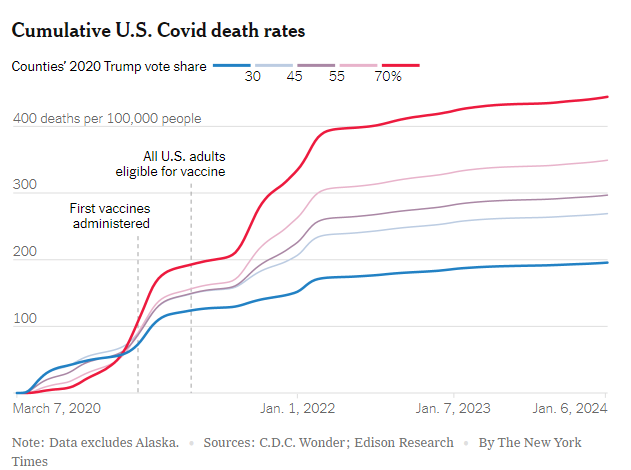
Many Americans, especially political conservatives, were skeptical of the vaccines despite overwhelming evidence of their effectiveness. To this day, more than 30 percent of self-identified Republicans have not received a Covid vaccine shot, compared with less than 10 percent of Democrats…You can see the tragic effects of vaccine skepticism in this chart.

While many liberals exaggerated the value of pandemic restrictions, they were right about the vaccines. “

According to data from Washington State in 2023, the death rate for those older than 65 years due COVID-19 was nearly double in those unvaccinated compared to those who had been boosted. In the younger age group, 35-64, the rate of fatal infection was much lower but remained 5 times as high in those unvaccinated compared to those who had been boosted.

My take: COVID-19 has exacted a tremendous toll and these articles do not even focus on long COVID which afflicts so many people as well.

Related blog posts:

NY Times: ‘What’s My Life Worth?’ The Big Business of Denying Medical Care

NY Times 3/14/24: ‘What’s My Life Worth?’ The Big Business of Denying Medical Care

Some of the input from this video was from physicians in our ImproveCareNow consortium (personal communication). Here’s an key points/excerpt: Prior Authorization Video (8:37 minute video)

  • This video explains how insurance companies have ‘weaponized’ prior authorization to postpone and/or deny care in order to increase their profits. “This is medical injustice disguised as paperwork.”
  • The video states that ~80% of PAs are effective in preventing patients from getting the care their physician recommended. However, when physicians spend their time appealing denials, they are usually successful in getting the medication covered.
  • “Prior authorization gives your insurance company more power than your doctor.”
  • There are efforts in Congress, including the GOLD Card Act of 2023, aimed at reforming prior authorization.

My take: Prior authorization delays and denials of care sometimes have devastating consequences (watch the video)

Related blog posts:

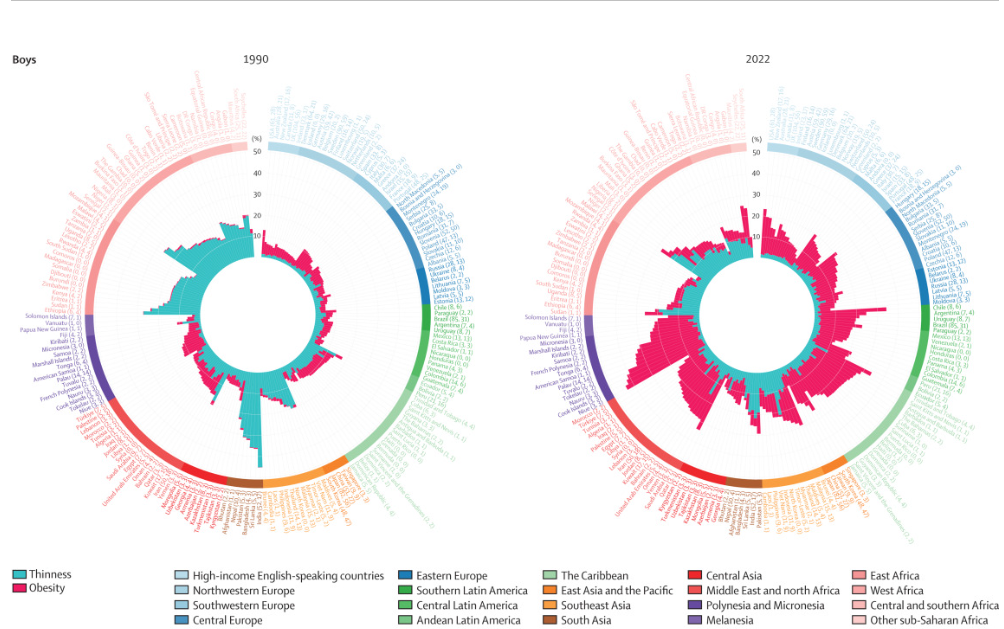
Worldwide Trends in Underweight and Obesity

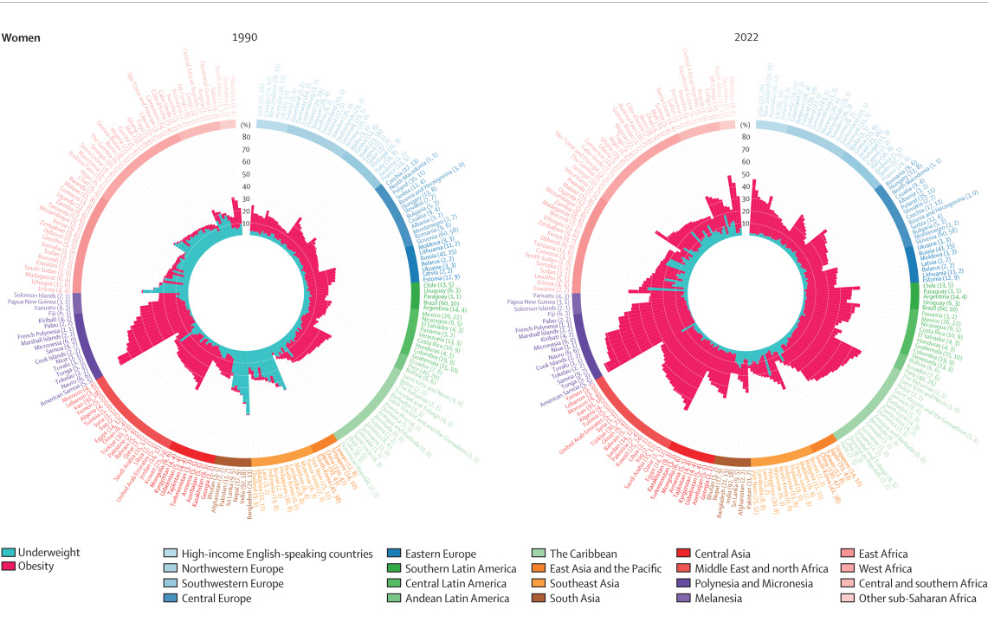
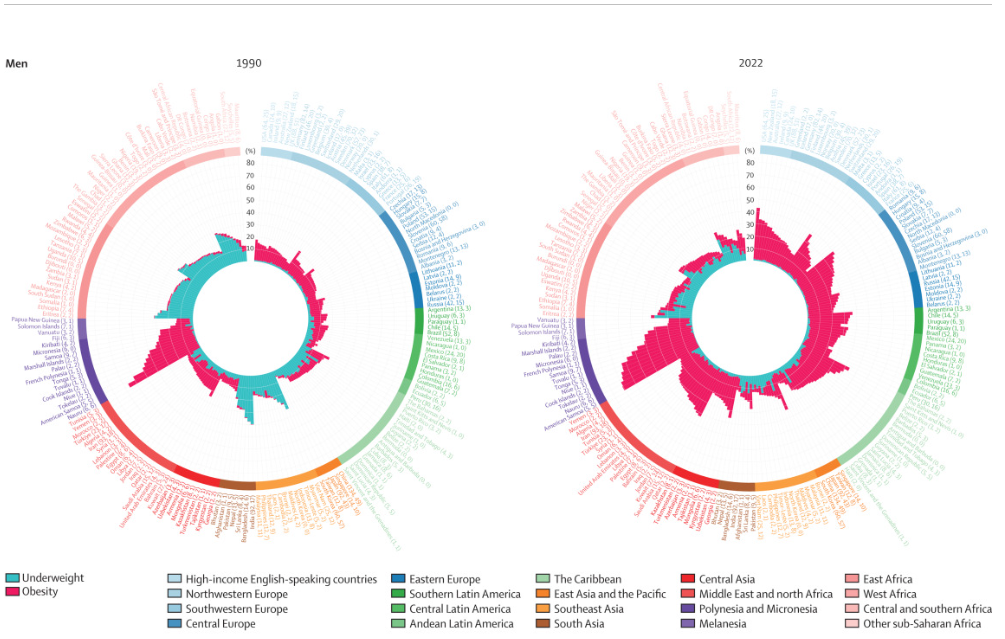
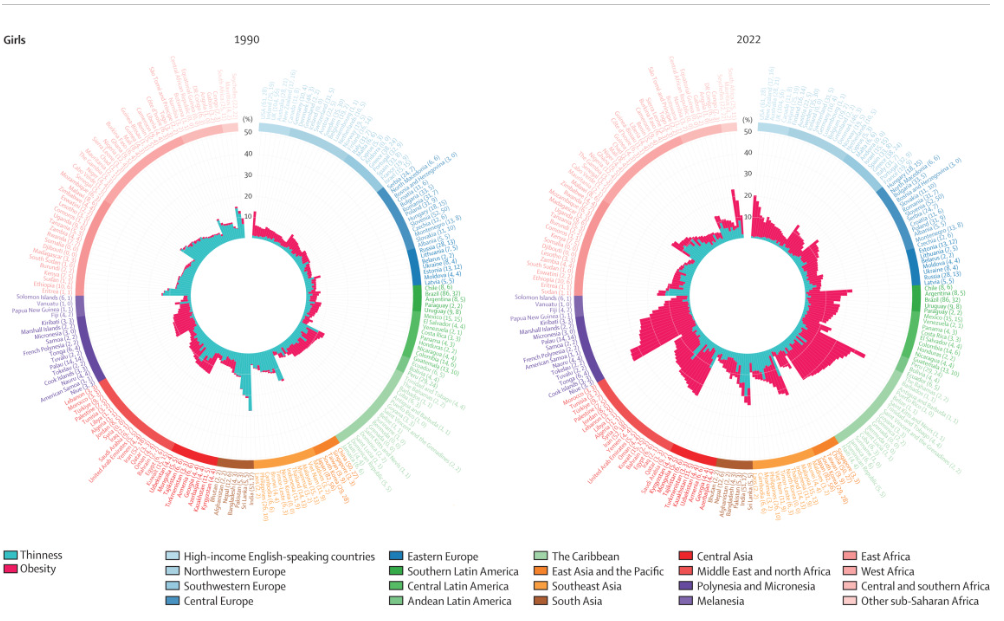
NCD Risk Factor Collaboration. The Lancet 2024; DOI:https://doi.org/10.1016/S0140-6736(23)02750-2 Open Access! Worldwide trends in underweight and obesity from 1990 to 2022: a pooled analysis of 3663 population-representative studies with 222 million children, adolescents, and adults

The authors used data from 3663 population-based studies with 222 million participants that measured height and weight in representative samples of the general population.

Key findings:

  • More than a billion people globally are now considered obese.
  • Obesity has more than quadrupled among children and adolescents since 1990.
  • Among all adults, 43 percent were overweight in 2022.
  • The combined burden of underweight and obesity has increased in most countries, driven by an increase in obesity, while underweight and thinness remain prevalent in south Asia and parts of Africa.
  • The trend of increasing obesity prevalence was present in adults and children (5-19 years).
  • Age-standardized prevalence of obesity increased by more than 20 percentage points in 49 countries (25%) for women and 24 countries (12%) for men, and by as much as 33·0 percentage points in The Bahamas for women and 31·7 percentage points in Romania for men.

My take: This is an impressive study providing extensive data on what’s happening with weight trends. Clearly, there is an urgent need for obesity prevention.

Related blog posts:

Humor from The Onion:

CAR T-cell Therapy: A Cure for Autoimmune Disease?

  • F Muller et al. NEJM 2024; 390: 687-700. CD19 CAR T-Cell Therapy in Autoimmune Disease —A Case Series with Follow-up
  • JD Isaacs. NEJM 2024; 390: 758-759. (editorial) CAR T Cells — A New Horizon for Autoimmunity?

Methods: This case series enrolled 15 patients with severe SLE (8 patients), idiopathic inflammatory myositis (3 patients), or systemic sclerosis (4 patients) who received a single infusion of CD19 chimeric antigen receptor (CAR) T cells after preconditioning with
fludarabine and cyclophosphamide. All patients were refractory to at least two conventional therapies.

Key findings:

  • Median follow-up was 15 months.
  • All the patients with SLE had DORIS remission, all the patients with idiopathic inflammatory myositis had an ACR–EULAR major clinical response, and all the patients with systemic sclerosis had a decrease in the score on the EUSTAR activity index.
  • Immunosuppressive therapy was completely stopped in all the patients without having relapses or worsening of their disease.

Some points from the editorial:

  • “Similar outcomes [as CAR T-cell infusion] can sometimes be achieved with autologous stem-cell transplantation but with a risk of substantial toxic effects and even death”
  • The editorial explains the potential mechanisms of how CD19 CAR T-cells therapy works in comparison to CD20 monoclonal antibodies like rituximab. “Whereas rituximab primarily depletes B cells with some secondary loss of plasmablasts, CD19 CAR T-cells have direct cytotoxicity for plasmablasts and many plasma cells.”
  • “The future trajectory of CAR T-cell therapy for autoimmunity will be driven by efficacy, safety, cost, and acceptability… if extended follow-up reinforces the current data, the benefit-to-risk ratio is likely to prove acceptable to both physician and patient, at least in certain cases of refractory disease. Therapy is individualized, difficult to scale, and expensive.”
  • Long-term safety for CAR T therapy is still poorly understood. Recently a report identified secondary cancers in patients who have received this treatment for oncologic diseases (Verdun N, Marks P. Secondary cancers after chimeric antigen receptor T-cell therapy. N Engl J Med 2024;390:584-586)

My take: For now, almost all autoimmune diseases will be treated with indefinite conventional agents. Nevertheless, it is a hopeful step that a cure for these diseases may be possible.

Related blog post: Great Story -How CAR-T Came About

Ram Head Trail, St John

How Many Kids Would Be Good Candidates for Bariatric Surgery?

WL Shapiro et al. Pediatrics 2024: e2023063916. Prevalence of Adolescents Meeting Criteria for Metabolic and Bariatric Surgery (link includes a ~4 minute video abstract)

Methods: This retrospective cohort study analyzed electronic health record data of 603,051 adolescents aged 13 to 17 years between January 1, 2018, and December 31, 2021

Key findings:

  • 4.4% (1 in 23) of all adolescents met the eligibility criteria for bariatric surgery.
  • 22.2% had obesity (12.9% class 1, 5.4% class 2, and 3.9% class 3).
  • The most frequently diagnosed comorbid conditions were gastroesophageal reflux disease (3.2%), hypertension (0.5%), and nonalcoholic fatty liver disease (0.5%). 
  • The authors estimate that ~1 million U.S. adolescents meet criteria for bariatric surgery though only ~1700 receive this treatment yearly
  • The study strongly demonstrates that the comorbid conditions associated with obesity are underdiagnosed. In some cases this is because the screening is not done; yet, in other cases, despite screening, comorbid conditions go undiagnosed. For example, the prevalence of hypertension based on having at least 3 elevated BP measurements was 10 times higher than the prevalence based on the diagnosis being made (ICD 10) codes

My take: A lot of kids meet criteria for bariatric surgery but few undergo this surgery. If effective anti-obesity medications become more widely adopted (affordable), this may be a preferable option to surgery, especially in the pediatric age group. Surgery could be deferred to those who did not respond. Also, immediate implications of the study are that we need to be more diligent about looking for associated health problems (eg. OSA, HTN, T2DM, MASLD).

Related blog posts:

AGA: High Quality Upper Endoscopy

S Nagula et al. Clin Gastroenterol Hepatol 2024; DOI:https://doi.org/10.1016/j.cgh.2023.10.034. Open Access! AGA Clinical Practice Update on High-Quality Upper Endoscopy: Expert Review

The summary with nine “best practice advice” statements is not very helpful. However, Figure 2 and Table 1 are very useful.

From Figure 2 -not shown below (but in article) are Prague classification for Barrett’s and EREFS for eosinophilic esophagitis. The remaining parts of this figure include the Los Angeles classification for erosive esophagitis, the Hill classification of the gastroesophageal flap, and the Forrest classification of peptic ulcers:

From Table 1:

Table 1 also gives guidance for biopsies with peptic ulcer disease, Barrett’s esophagus, gastric preneoplasia, and for gastric polyps.

My take: When suspicious of underlying disease, this article recommends taking more biopsies and in more jars.

Related blog posts:

How Will We Afford the Future of Medicine?

NY Times 2/19/24, Elizabeth Currid-Halkett: The Future of Medicine Is Unfolding Before Us. Are We Nurturing It?

This essay describes the terrific response of the author’s son with Duchenne Muscular Dystrophy to Elevidys. “At $3.2 million per patient, Elevidys is the second-most-expensive drug in the world.”

“D.M.D. prevents the production of dystrophin, a protein needed to protect and repair muscle cells. It is caused by a genetic mutation on the X chromosome, thus the disease almost exclusively affects boys (one in 3,300). Over time, children with D.M.D. lose muscle mass and thus the ability to do basic things like run and walk. Eventually they lose their ability to breathe, and they experience heart failure.”

She argues that “every child afflicted with a life-threatening disease deserves the chance Eliot has been given.” The article argues that the FDA should broaden the indications to cover older children with DMD in which the data are less convincing.

While this article discusses some ways to lower costs like reducing regulatory hurdles to get approval from FDA, it mainly discusses ways to force insurance companies to cover the cost. Disappointingly, the author (a public policy professor) does not address the reality that these costs are shared by everyone. For DMD alone, if the full cost is unchanged, that’s nearly $1000 for every person in the country. Yet, there are numerous other costly genetic therapies (for spinal muscular atrophy, hemophilia, Crigler-Najjar, others) in addition to extremely expensive treatments for cancer, inflammatory bowel disease, cystic fibrosis, rheumatoid arthritis, Alzheimer’s, obesity and many others.

My take: The ability to cure severe diseases like DMD is amazing. But, there is not a plan for how to deliver/afford these expensive therapies. If we cannot provide these treatments, it will be agonizing to watch patients deteriorate while a cure is just out of reach.

Meanwhile, we are not spending enough to address our biggest drivers of poor national health including poverty, education and poor diet.

Related blog posts:

Turk’s Cap Cactus. St John

Primary Prevention of Obesity Still Needed

SL Gortmaker, SN Bleich, DR Williams. NEJM 2024; 390: 681-683. Childhood Obesity Prevention — Focusing on Population-Level Interventions and Equity

Despite the exciting advances in obesity pharmacology, most children and adults are unlikely to benefit from these expensive therapies anytime in the near future.

This commentary’s key points:

  • “Scholars and policymakers shouldn’t lose sight of population-level strategies that can prevent excess weight gain and obesity among children in the first place.”
  • The authors identify three successful policy examples: 1. Revision of WIC food packages to improve nutritional quality at a cost about $18 per child. 2. Improving school lunch standards (2010 Healthy, Hunger-Free Kids Act) at a cost of about $30 per child. 3. Excise tax on sugar-sweetened beverages. “In California, an analysis found that such a tax would be cost-saving, would prevent 42,700 cases of obesity in children and 223,000 cases in adults statewide over 10 years because of projected reductions in consumption of sugar-sweetened beverages.”
  • “Leveraging these strategies won’t fix the problem of childhood obesity overnight, but it could (and has already begun to) slow the development of new cases, particularly among members of historically underserved populations — a major public health achievement.”

My take: There is not a simple solution for widespread obesity in children and adults. We need to chip away at this problem from every angle. It is crucial to use public policy changes as one of our tools.

Related blog posts:

Near Leduck Island off St John

When Is It Safe To Replace a Central Line in the Setting of Candida Infection?

D Katz et al. JPGN Reports 4(4):p e358, November 2023. | DOI: 10.1097/PG9.0000000000000358 Open Access! Early Central Venous Catheter Replacement After Candida in Pediatric Intestinal Failure Patients.

Background:

  • The Infectious Diseases Society of America (IDSA) recommends the removal of both short- and long-term catheters in patients with catheter-related bloodstream infection (CRBSI) due to fungi (1). 
  • In addition to source control, antifungal treatment and blood culture-confirmed clearance are recommended for all cases of CRBSI due to candida…In contrast, little is known about the optimal timing for the replacement of a CVC in the setting of candidemia (5–7). As a result, practices greatly vary between practitioners.

Methods: This was a retrospective, single-center review of children with intestinal failure (IF). Patients were divided into early (<7 days after their first negative culture), and late (≥7 days after their first negative culture) CVC replacement following uncomplicated candidemia. 

Key findings:

  • Early replacement occurred in 18 encounters and late replacement in 21 encounters. The median time to CVC replacement or exchange in the early group was 4 days, compared to 10 days in the late group (P < 0.001).
  • The median duration of the hospitalization in the early group was 12 days compared to 21 days in the late group (P = 0.011).
  • None of the patients were reinfected with candida within 30 days.

My take: This small study provides reassurance that earlier replacement of  CVCs after clearance of uncomplicated candidemia is beneficial.

Related blog posts:

Income and Health Outcomes in Pediatric Short Bowel Syndrome

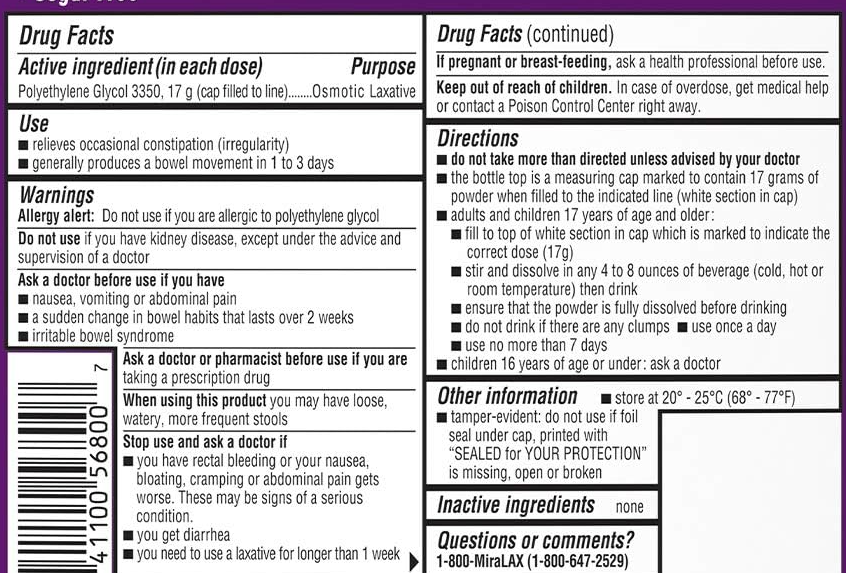
Clarification: Yesterday’s post on the safe use of polyethylene glycol (Long Term Use of Polyethylene Glycol (PEG 3350)) noted the labeling indicates “‘to not use these medications for more than 7 days.” However, Ben Enav pointed out that the label also states the following in bold: “do not take more than directed unless advised by your doctor.” The actual label is shown below.

———

SA Gutierrez et al. J Pediatr 2024; 265: 113819. Neighborhood Income Is Associated with Health Care Use in Pediatric Short Bowel Syndrome

Methods: The authors used the Pediatric Health Information System (PHIS) database to evaluate associations between neighborhood income and hospitalization data for children with short bowel syndrome (SBS). This included 4289 children with 16,347 hospitalizations from 43 institutions.

Key findings:

  • 2153 of the 4289 (50%) patients were readmitted during the study period (2006-2015)
  • Children living in low-income neighborhoods were more likely to be Black, Hispanic, have public health insurance, and live in the Southern U.S.
  • Children from low-income neighborhoods had a 38% increased risk for all-cause hospitalizations (rate ratio [RR] 1.38), an 83% increased risk for CLABSI hospitalizations (RR 1.83) and increased hospital length of stay.
  • 2.4% of patients in this cohort experienced 10 or more CLABSI hospitalizations

One of the study’s limitations is that ‘there is no singular ICD-9 code for SBS.’

My take: It is speculation about the reasons why children in low income neighborhoods have higher rates of hospitalizations and CLABSI hospitalizations. It could be that more parents in these households have less time and resources to manage a child with SBS. It is possible that these households have more chaotic environments. Regardless of the reason, it takes a lot of work and meticulous care to prevent CLABSI hospitalizations in children with SBS.

Related blog posts:

A lot of Turk’s Cap Cacti along the Ram Head Trail, St John