Population-Based Study: Prevalence of Bowel and Bladder Dysfunction in Early Childhood (Good Bowel Control is Happening Later)

SJ Verkuijl et al. JPGN 2023; 77: 47-54. Open Access! The Prevalence of Bowel and Bladder Function During Early Childhood: A Population-Based Study

Methods: This cross-sectional questionnaire study (n=791 Dutch children) up to age 7 yrs of age.

Key findings:

  • The mean age at which parents/caregivers considered their child fully toilet-trained was 5.1 ± 1.5 years. “Compared to studies performed 15 years ago, we found toilet training to be completed at an older age (23,26–28).”
  • Prevalence of fecal incontinence among toilet-trained children was 12%.
  • Prevalence of constipation was 14%, with excessive stool retention (75.9%) and painful/hard stools (78.7%) as the 2 most common symptoms.
  • The prevalence of urinary incontinence among all toilet-trained children was 40%. The majority of these urinary incontinent children suffered from daytime incontinence (56%). Enuresis occurred in 22% and the other 22% suffered from combined daytime incontinence and enuresis.
  • There were significant associations between fecal incontinence and constipation [odds ratio (OR) = 3.88], fecal incontinence and urinary incontinence (OR = 5.26), and constipation and urinary incontinence (OR = 2.06)
  • Half of the children with constipation and almost all the children with fecal incontinence remained untreated.
Stool Frequency by age (Figure 1 B)

In the discussion, the authors note “treatment of constipation and/or fecal incontinence often leads to the resolution of urinary incontinence (34).”

In my experience, many families sent by urologists have been told that the constipation is causing urinary incontinence. For many children, the explanation is more complicated; association of constipation does not indicate causation. A lot of children have limited sensation of response to both bowel and bladder, rather than the rectum pushing on the bladder. Most children that I see with constipation/encopresis do not have urinary incontinence. However, behavior approaches to toileting can be helpful for both.

My take: This is a useful study providing an updated view on when to expect good toileting and highlighting the frequency of bowel/bladder dysfunction (which is often untreated).

Related blog posts:

More Data: Upadacitinib “is Effective and Safe” Plus 2 in Kids

S Friedberg et al. Clin Gastroenterol Hepatol 2023; 21: 1913-1923. Open Access! Upadacitinib Is Effective and Safe in Both Ulcerative Colitis and Crohn’s Disease: Prospective Real-World Experience

Methods: “We performed a prospective analysis of clinical outcomes on upadacitinib in patients with UC and CD using predetermined intervals at weeks 0, 2, 4, and 8 as part of a formalized treatment protocol.” 84 met inclusion criteria  (44 UC patients, 40 CD patients) -though complete data was available for only a fraction of these. All of the patients had received prior anti-TNF therapy and 89% had received 2 or more advanced therapies. 

Key findings:

  • Ulcerative colitis: At 4 and 8 weeks of treatment, 19 of 25 (76.0%) and 23 of 27 (85.2%) achieved clinical response and 18 of 26 (69.2%) and 22 of 27 (81.5%) achieved clinical remission, respectively. Of those who previously were tofacitinib-exposed, 7 of 9 (77.8%) achieved clinical remission by 8 weeks.
  • Crohn’s disease: In CD, 13 of 17 (76.5.%) achieved clinical response and 12 of 17 (70.6%) achieved clinical remission by 8 weeks. Of those with increased fecal calprotectin and C-reactive protein levels, 62% and 64% normalized by week 8, respectively. 
  • Results were seen as early as week 2 in both UC and CD, with clinical remission rates of 36% and 56.3.%,
  • Acne was the most commonly reported adverse event, occurring in 24 of 105 patients (22.9%) (Table 4). Six patients stopped upadacitinib due to adverse effects.

My take: “In this large real-world experience in medically resistant patients with UC or CD, we report that upadacitinib is rapidly effective and safe, including in those who had prior tofacitinib exposure.” In pediatrics, the effectiveness of this upadacitinib is a logical target for ImproveCareNow. More pediatric data will be needed to garner FDA approval.

Related articles:

LV Collen. Inflamm Bowel Dis 2023; 29: 1175-1176. Rapid Clinical Remission With Upadacitinib in a Pediatric Patient With Refractory Crohn’s Disease A pediatric patient with Crohn’s disease refractory to anti-tumor necrosis factor therapy, vedolizumab, ustekinumab, and 6-mercaptopurine achieved rapid clinical remission with upadacitinib.

A Bousvaros, BAR Schmidt, M Kurtz. Gastroenterology & Hepatology 2023; 19: 401-403. Open Access! “Treatment of Genital Crohn’s Disease with Upadacitinib in a Male Child: A Case Report”. This report describes the rapid response to upadacitinib in a 12 yo with refractory Crohn’s ileocolitis (x 5 yrs) with associated “granulomatous lymphangitis” affecting the penis and scrotum. It notes that “anti-TNF therapy was described as the most effective treatment, with either improvement or resolution of scrotal swelling in most patients. However, intermittent penile swelling persisted in a subset of the patients.18“…”Although data on the use of JAK inhibitors to treat pediatric IBD are limited, the fact that these are small molecules with wide systemic effects suggests that JAK inhibitors may be useful in the treatment of extraintestinal manifestations of IBD….[and]  that JAK inhibitors such as upadacitinib may play an important role in the treatment of such refractory patients.”

Related blog posts:

On an adventurous day, we climbed the Nietzsche trail to get from the coast to the top of Eze, France.

Practical Guide to Dietary Therapy for Eosinophilic Esophagitis

JW Chang et al. Clin Gastroenterol Hepatol 2023; 21: 1690-1698. Open access! Development of a Practical Guide to Implement and Monitor Diet Therapy for Eosinophilic Esophagitis

  • The authors note that dietary therapy is underutilized–“successful clinical implementation is hampered by the need for a multidisciplinary approach including dietitian support and provider expertise.”
  • “Because symptoms are often discordant with underlying disease activity, symptoms alone should not be used to make decisions about treatment changes.56 Relying on symptoms in isolation to guide food elimination or reintroduction is insufficient and can result in false identification of food triggers and unnecessarily prolonged dietary restriction. Patients should be warned that their trigger foods are not necessarily the foods that cause immediate symptoms related to obstruction (eg, commonly meats, bread, sticky textures). Endoscopy with biopsy is the gold standard for monitoring response to therapy and is recommended at least 6–8 weeks after a change in therapy, including elimination and reintroduction phases to identify of food triggers.57
  • “The most identified food triggers for EoE are animal milk (up to 90%) and wheat (up to 75%), and up to half of patients who undergo dietary therapy will have more than 1 dietary trigger. 58,62 In a recent study of adult patients undergoing dietary therapy with the SFED, 69% of patients had only 1 food trigger identified, making this a reasonable option for long-term therapy.59
  • “The most common reasons for nonresponse to the elimination phase include purposeful or inadvertent dietary nonadherence, cross-contamination, and incorrect or inadequate removal of potential food triggers”
  • While medications used for EoE treatment are expensive, repeated endoscopy for dietary therapy may be costly and is an important consideration
  • The Consortium of Eosinophilic Gastrointestinal Disease Researchers (CEGIR) 58 page Supplement in article: Resource Supplement for Dietary Management for Patients/families -includes guidance for selecting food, apps, websites
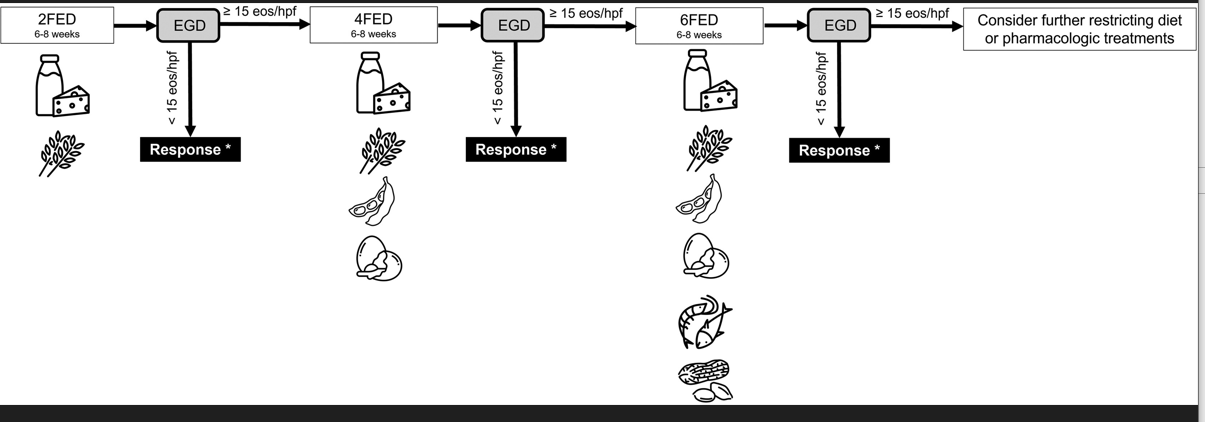
Step-up strategy: 1 food dairy, 2 foods dairy/wheat, 4 foods dairy/wheat/soy/eggs, 6 foods dairy/wheat/soy/eggs/fish/peanuts

Related blog posts:

Costs and Opportunity Costs in Pediatric Liver Transplantation

GV Mazariegos et al. Liver Transplantation 2023; 29: 671-682. Open access! Center use of technical variant grafts varies widely and impacts pediatric liver transplant waitlist and recipient outcomes in the United States

Background: Waitlist (WL) mortality is highest in children under the age of 1 year (12.5 deaths/100 WL years).2 It is thought that TVG (technical variant grafts) [including living donor (LD) and deceased donor split/partial grafts] improve outcomes.

Methods: The authors, in this retrospective study, analyzed Organ Procurement and Transplantation Network (OPTN) data on first-time LT or liver-kidney pediatric candidates listed at centers that performed >10 LTs during the study period, 2004–2020. 

Key findings:

  • Sixty-four centers performed 7842 LTs; 657 children died on the WL
  • Death from listing was significantly lower with increased center TVG usage (HR = 0.611) and LT volume (HR = 0.995)
  • Recipients of LD transplants (HR = 0.637) had significantly increased survival from transplant compared with other graft types, and recipients of deceased donor TVGs (HR = 1.066) had statistically similar outcomes compared with whole graft recipients

My take (borrowed from authors): “LD partial grafts and overall volume performed by the center in the preceding 3 years was significantly associated with increased post-LT survival. Deceased donor graft type (DD TVG vs. DD Whole) was not a predictor of post-LT survival after accounting for patient diagnosis, center volume, and other significant factors that were predictive of survival. DD TVG should not be considered an inferior graft option in experienced centers…LD grafts are associated with a survival advantage.”

BA Sayed, M Cattral, VL Ng. Liver Transplantation 2023; 29: 663-664. Open access! (editorial) Insufficient use of technical variant grafts: An unfulfilled promise in pediatric liver transplantation Key points:

  • “While outcomes have improved, with current 1- and 5-year patient survival >97% and 94%, respectively, many children continue to die on the waitlist (WL) or are removed because they are too sick.1,2
  • “As expected, these children were younger, smaller, sicker (more status 1 listings), and remained on the WL longer than children who received a transplant during the same time period…These small infants are particularly at risk because of the difficulty of obtaining an appropriately sized-matched graft. Data indicate that this problem can be solved largely by increasing the use of technical variant grafts (TVGs), which includes living donor (LD) grafts and split/reduced grafts from deceased donors (DDs).4,5
  • “This manuscript obliquely touches on another pressing issue within the pediatric LT community, namely, the core skill set of a pediatric LT surgeon. Currently, there is no such distinct designation in the North American training environment, and therefore, no training requirements exist. To provide the full spectrum of surgical care, the technical skill set should include LD hepatectomies and graft implantations, DD graft reduction/splitting, the reduction or hyper-reduction of left lateral segment grafts, and staged abdominal closure.”

My take: Where a patient is listed is a very important variable in outcomes. Choosing a low volume center without availability to perform TVG increases the risk of lethal outcomes. This information should be disclosed to families at all centers.

Also: T Miloh et al. Liver Transplantation 2023; 29: 735-744. Open access! Costs of pediatric liver transplantation among commercially insured and Medicaid-insured patients with cholestasis in the US

Health care resource utilization and costs associated with pediatric LT were retrospectively assessed using insurance claims data from the US IBM MarketScan Commercial and Medicaid databases collected between October 2015 and December 2019. Study cohort: 53 commercially insured and 100 Medicaid-insured children

  • Key findings: Commercially insured and Medicaid-insured patients averaged US $512,124 and $211,863 in medical costs and $26,998 and $15,704 in pharmacy costs, respectively

Related blog posts:

Place Massena, Nice France
Le Plongeoir (restaurant) Nice, France

In the News: Hunger Strike Due to Pickleball (not The Onion)

An excerpt from Newser, Couple Tired of Pickleball Noise Asks What Gandhi Would Do (July 26, 2023):

“The Canadian city of Chilliwack has just three pickleball courts. For Rajnish and Harpreet Dhawan, the problem is that the closest of them is about 30 feet from their house. The Dhawans hear the sound of ball striking paddle 11 hours every day, in every room of their home. They hear it even when no one is playing. The couple blames auditory hallucinations, heart flutters, and insomnia on the constant drumbeat, the Washington Post reports. Frustrated that complaining to city officials for nearly a year hasn’t changed the situation, they began a hunger strike, inspired by Mohandas K. Gandhi… Rajnish ended his strike Tuesday morning about 50 hours into it… Indoor courts are being built, and the ones by the Dhawans’ home are to close in November.”

Related article: Why is it called pickleball? Probably because of a “pickle boat”…not because of the dog named pickles!

My take: I am sympathetic to the Dhawans -the pickleball noise would drive me bonkers if I lived next to one of these courts.

FGF21 Analogue Pegozafermin in NASH (MASH)

R Loomba et al. NEJM 2023; DOI: 10.1056/NEJMoa2304286. Randomized, Controlled Trial of the FGF21 Analogue Pegozafermin in NASH

Background: Pegozafermin is a long-acting glycopegylated (pegylated with the use of site-specific glycosyltransferases) fibroblast growth factor 21 (FGF21) analogue in development for the treatment of nonalcoholic steatohepatitis (NASH) and severe hypertriglyceridemia

Methods: In this phase 2b, multicenter, double-blind, 24-week, randomized, placebo-controlled trial, 222 patients with biopsy-confirmed NASH and stage F2 or F3 (moderate or severe) fibrosis were randomly assigned patients to receive subcutaneous pegozafermin at a dose of 15 mg or 30 mg weekly or 44 mg once every 2 weeks or placebo weekly or every 2 weeks. 

Key findings:

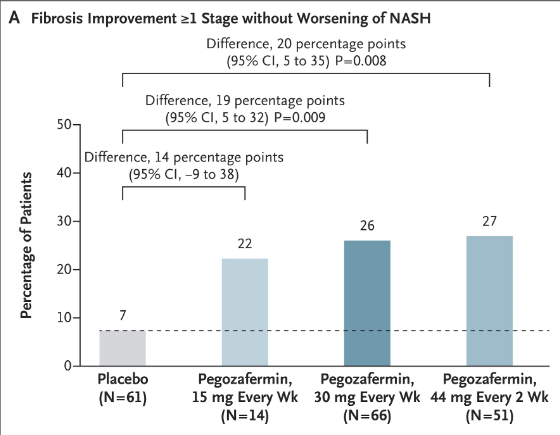
  • The percentage of patients who met the criteria for fibrosis improvement was 7% in the pooled placebo group, 22% in the 15-mg pegozafermin group, 26% in the 30-mg pegozafermin group, and 27% in the 44-mg pegozafermin group
  •  The percentage of patients who met the criteria for NASH resolution was 2% in the placebo group, 37% in the 15-mg pegozafermin group, 23% in the 30-mg pegozafermin group, and 26% in the 44-mg pegozafermin group
  • The most common adverse events associated with pegozafermin therapy were nausea and diarrhea.

My take: Thus far, there are no approved pharmacologic therapies for NASH, so this phase 2 study of pegozafermin is an important early step. It is likely that some of the medications which help obesity will likely help with NASH as well.

Case Study of Private Equity in Physician Practices: Anesthesia in Colorado

6/29/23 Washington Post: Financiers bought up anesthesia practices, then raised prices

Some excerpts:

The multibillion-dollar private equity firm Welsh, Carson, Anderson & Stowe took less than a year to create, from scratch, Colorado’s biggest and most prominent anesthesiology practice…The company employed 330 anesthesiologists in Colorado at one point…

Typically following the same approach it took in Denver: acquiring the largest anesthesiology firm in a city and growing its reach from there, company officials said. It has issued more than $1.3 billion in dividends to its shareholders…

12 former USAP anesthesiologists cited an array of reasons for leaving.

For starters, their pay declined more than they expected, they said. The company more often required them to work shifts of more than 24 hours, physicians said. Some said they were asked to take on more than 80 hours in a week. Several said that under USAP management, they felt like interchangeable “widgets” with less control over the practice than they previously had…“Their doctors were overworked and paid below market rate for what they do,” Manchon said. “That’s why their doctors were leaving.”

My take: Private equity involvement in medicine is focused on profits not patients. That being said, most other parts of the U.S. healthcare system (hospitals, physicians, insurance companies and pharmaceutical companies) do not provide great value either.

Related blog posts:

Nice, France
War Memorial at Castle Hill in Nice, France

Understanding Reflux/Airway Disease and Potential Role of Airway Impedance

A recent blog post, Airway Impedance to Objectively Assess Airway Mucosal Integrity, reviewed a study by Rosen et al (R Rosen et al. J Pediatr 2023; 256: 5-10) which used a novel approach in assessing airway disease using airway impedance.

This month’s Journal of Pediatrics provides a terrific commentary by my partner, Jose Garza. Open Access: Airway Impedance: In Search of a New Tool (DOI:https://doi.org/10.1016/j.jpeds.2023.01.007).

The article first describes the history of identifying gastroesophageal reflux: “the first attempt to detect GER was in 1884 by Reichman, who lowered a sponge into the esophagus of a patient with heartburn and showed that it contained acid when retrieved. He found that fluid expressed from the sponge was acidic in persons with heartburn and alkaline in normal controls. The first in situ measurement of acid reflux in the esophagus is credited to Tuttle and Grossman 2 in 1958.”

With the development of multi-channel impedance, the concept of reflux has shifted in young children: “non-acid reflux events are more important to the development of symptoms than acid events.”

With regard to Rosen et al, the commentary reiterates that “measuring laryngeal mucosal integrity [using impedance] is safe and feasible in children with extraesophageal symptoms.” The study showed “no correlation between otolaryngology airway inflammation scores with airway impedance, further emphasizing the fact that we need to move away from these scores, as they have failed to show correlation with GERD and with laryngeal mucosal integrity.”

“The authors did find a decrease in airway impedance in patients with history of aspiration; those who aspirated more textures had lower median airway impedance. Therefore, not all airway inflammation is the result of reflux and oropharyngeal dysphagia–associated aspiration can cause GER-like symptoms and airway inflammation. Aspiration can be silent, and if we do not look for it, we are not going to find it.”

“Another group of patients with low airway impedance comprised patients receiving PPIs, which makes it clear that acid is not what is affecting the airway. Otherwise, PPIs would improve airway impedance.” 

My take (borrowed from author): “It is not yet clear whether measuring airway impedance will eventually become a widespread test with clinical applicability. However, the concepts advanced in this report are clearly a step in the right direction.”

Place Massena, Nice, France

Understanding Racial Differences in Response to IBD Treatment — Golimumab in Ulcerative Colitis

R Greywoode et al. Inflamm Bowel Dis 2023; 29: 843-849. Open Access! Racial Difference in Efficacy of Golimumab in Ulcerative Colitis

The authors analyzed pooled individual-level data (n=1066) from induction and maintenance trials of golimumab in adults with moderate-to-severe UC. Key findings:

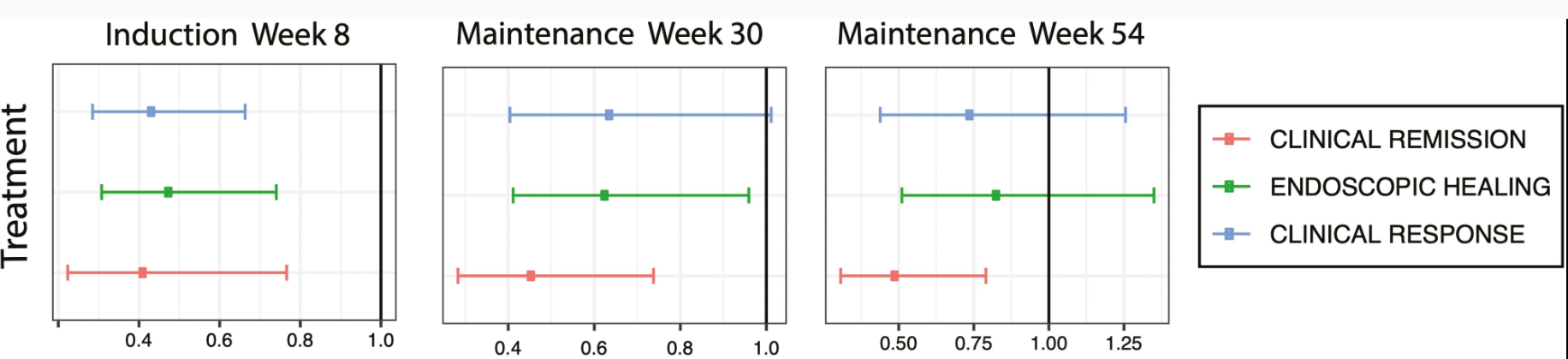
  • Compared with White participants, participants from racial minority groups had significantly lower clinical response (adjusted odds ratio [aOR], 0.43), clinical remission (aOR, 0.41), and endoscopic healing (aOR, 0.48) at week 6.
  • Participants from racial minority groups also had significantly lower clinical remission (aOR, 0.46) and endoscopic healing (aOR, 0.63) at week 30.
  • There were no racial differences in placebo response rates.

Discussion:

This is a fascinating study. Most of the differences in response to IBD treatment have been attributed to social determinants of health including access to care (geography, insurance), and adherence to medical care. This study implicates biological factors rather than social factors for driving the difference in response. “There is also a growing body of research uncovering differences in the frequencies of genetic variants in diseases, which may contribute to differences in observed health outcomes among divergent ancestral populations.32,33

“One of the challenges in further understanding how race may affect response to IBD biologic drugs is the relatively small number of participants from racial minority groups included in clinical trials. There is a longstanding disparity in clinical trial participation in the United States, whereby racial and ethnic minority groups have disproportionately low representation.34-37

While the differences in the disease phenotype may account for the response to treatment, there may be other factors as well. With hepatitis C infection, those of us who remember the frequent use of Peg-interferon therapy will recollect that specific mutations in Interleukin-28B (IL28B) gene predicted lower response rates in African-American populations (related post: Understanding IL28B).

My take: Most of the changes in outcomes to treatment are likely driven by socioeconomic factors. This study is a good reminder that biological factors play a big role as well.

This figure shows the treatment responses compared to 1.00 (white population)

You No Longer Have Fatty Liver Disease-You Have Steatotic Liver Disease!

A total of 236 panelists from 56 countries participated in four online surveys and two hybrid meetings.

Key points:

  • Steatotic liver disease (SLD) was chosen as an overarching term to encompass the various “aetiologies” of steatosis.
  • The name chosen to replace NAFLD was metabolic dysfunction-associated steatotic liver disease (MASLD). There was consensus to change the definition to include the presence of at least one of five cardiometabolic risk factors (see 2nd figure).
  • The term steatohepatitis was felt to be an important pathophysiological concept that should be retained. Metabolic dysfunction-associated steatohepatitis (MASH) is the replacement term for NASH.
  • Those with no metabolic parameters and no known cause were deemed to have cryptogenic SLD.
  • A new category, outside pure MASLD, termed MetALD was selected to describe those with MASLD who consume greater amounts of alcohol per week (140 to 350 g/week and 210 to 420 g/week for females and males respectively). 

AASLD News Digest: “MASLD, formerly known as NAFLD, is the most common chronic liver disease around the world, affecting more than 30% of global population. This was why it was vital that the global liver community coalesce around an affirmative, non-stigmatizing name and diagnosis. Ultimately, the global members of the Nomenclature Development Initiative were focused on ensuring the global community had better nomenclature that could be used around the world so that the research and funding could be better directed to save more people’s lives.”

My take: NAFLD is now MASLD –time to update patient handouts (hopefully someone at GIKids.org is on top of this). Aslo, if you have really bad disease, should it be called the ‘monster MASH’ ?