“What Makes A “Successful” Kasai Portoenterostomy “Unsuccessful”?

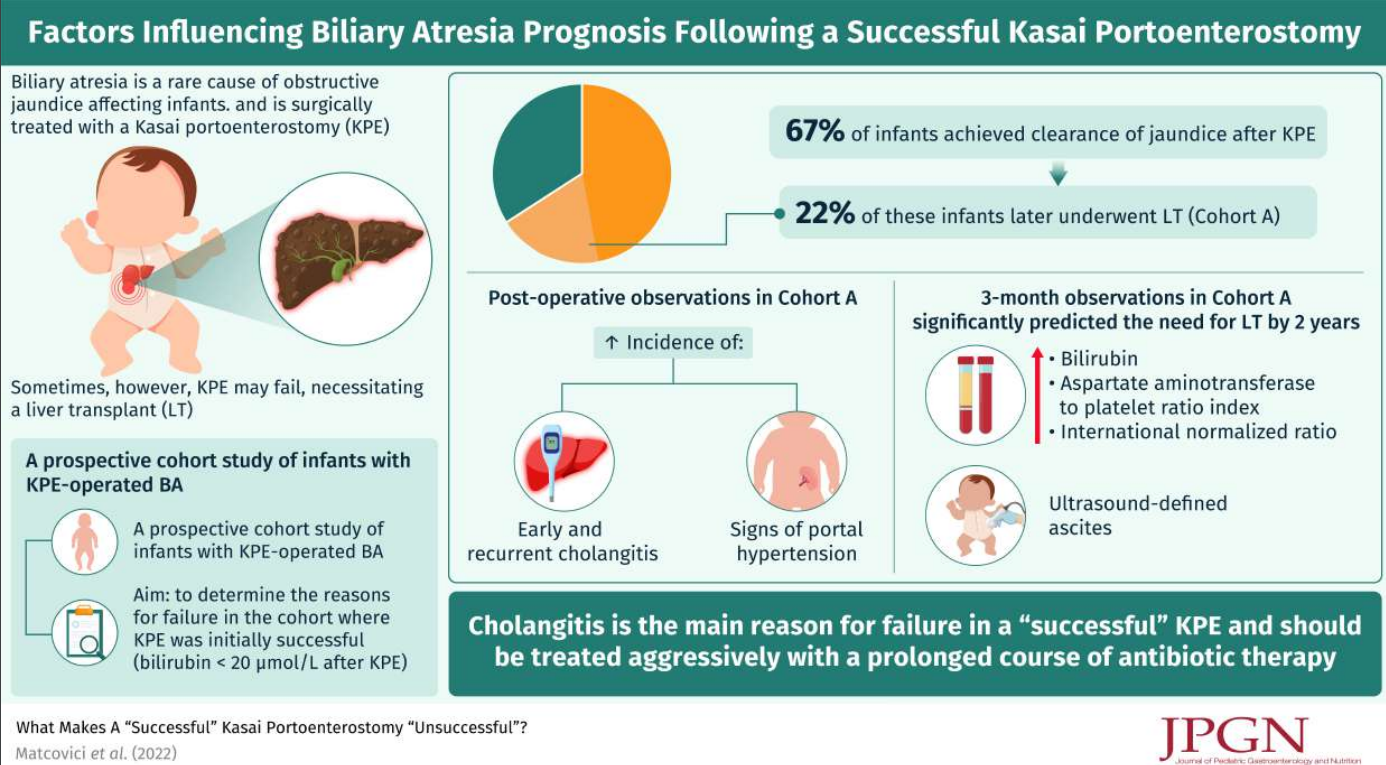
M Matcovici et al. JPGN 2023; 76: 66-71. What Makes A “Successful” Kasai Portoenterostomy “Unsuccessful”?

Methods: This review of a single-center prospective biliary atresia (BA) database examined which factors were associated with long-term success of a Kasai portoenterostomy (KPE). Successful KPE was defined by achieving a postoperative bilirubin of ≤20 µmol/L. Cholangitis was based on Tokyo (Adult) Guidelines (Calculator MD Calc: Tokyo Guidelines for Acute Cholangitis 2018). Explanation of Tokyo Guidelines: Tokyo Classification Cholangitis

Key findings:

  • 90 (67%) achieved clearance of jaundice after KPE. From these 20 (22%) (Cohort A) underwent LT with the remainder continuing with native liver (Cohort B) (median follow-up of 4.15 years)
  • Postoperatively, both cholangitis [any episode, 18/20 (90%) vs 15/70 (21%); P < 0.0001] and portal hypertension (PHT) [gastrointestinal (GI) bleed, 10/20 (50%) vs 2/70 (2.8%); P < 0.0001] were significantly more common in cohort A

My take: The authors assert that “failure is not preordained at KPE but due to recurrent cholangitis and/or symptoms of PHT.” In my view, this study shows an association but not causation of cholangitis/PHT with increased likelihood of KPE failure. It is quite possible that the cholangitis develops in those with suboptimal bile flow; thus, cholangitis (as well as PHT) may be an indicator that the KPE is not working as well, rather than the reason. Yet, it is also likely that episodes of cholangitis exacerbate any underlying problems.

Related blog posts:

Useful Endoscopic Tricks for Stricture Management and Magnets

JL Yasuda et al. JPGN 2023; 76: 77-79. Measurement of Stricture Dimensions Using a Visual Comparative Estimation Method With Biopsy Forceps During Endoscopy

This quick study looked at using biopsy forceps in 191 endoscopies to estimate esophageal stricture narrowing. Key findings:

  • Lin’s concordance correlation coefficient was 0.92 (95% confidence interval: 0.89–0.94) between the visual diameter estimates and the fluoroscopic stricture measurements.
  • Correlation was strongest for smaller to mid-sized stricture diameters
  • Yellow biopsy forceps open wide to ~6 mm and standard orange biopsy forceps ~7 mm
  • Dimensions of the actual scope can be helpful in estimating a stricture. Some pediatric scope have 5-6 mm diameter and standard scopes ranging from 8.0-9.8 mm

My take: This study shows that commonly available endoscopic tools can be used to more accurately estimate stricture diameter.

Related blog posts:

K Guilcher et al. JPGN Reports 3(4):p e257, November 2022. | DOI: 10.1097/PG9.000000000000025. Open Access! Innovative Makeshift Technique for Removing Ingested Rare Earth Magnets “In this case, a makeshift technique of a prototype magnet in a net attracted the buried magnets within the food bolus and allowed successful retrieval of all intragastric magnets at once.” My take: This is a clever way to co-opt the enemy (the magnets). However, other useful approaches: 1. Many times an endoscopic forceps will attract the magnets 2. Using fluoroscopy, can be helpful in locating difficult to visualize objects

Atlanta Botanical Gardens: Garden Lights, Holiday Lights (with and without 3-D glasses)

Celiac Disease Identified After Family Index Case

MJ Gould et al. JPGN 2023; 76: 49-52. Characteristics of Pediatric Patients With Celiac Disease Identified Due to an Affected First-Degree Family Member

In this retrospective study, 49 patients were screened due to an affected first-degree relative with celiac disease. They were compared to 178 patients who were screened for other clinical indications. Key findings:

  • Although 51% of patients screened due to an affected first-degree relative were asymptomatic, their disease histology and TTG levels were as severe as those screened for symptoms suggestive of celiac disease (in the comparison group 16% were asymptomatic). 

Comments:

  1. “Previous studies have shown that asymptomatic adolescents and those diagnosed with CD by serologic screening are less likely to adhere strictly to a GFD when compared to younger children and adults diagnosed because of classical symptoms” (Dig Dis Sci. 2008 Jun; 53(6): 1573–1581).”
  2. Some individuals who are thought to be asymptomatic, clinically improve with a gluten free diet (GFD). In one study, “the GFD group also had reduced indigestion (P=.006), reflux (P=.05), and anxiety (P=.025), and better health, based on the visual analog scale (P=.017), than the gluten-containing diet group” (Gastroenterology  2014 Sep;147(3):610-617).

My take: In this study, being asymptomatic (identified due to affected first-degree relative) was NOT associated with milder celiac disease based on serology or histology.

Relate blog posts:

Garden Lights, Holiday Lights at Atlanta Botanical Gardens

Safety Net for Celiac Disease?

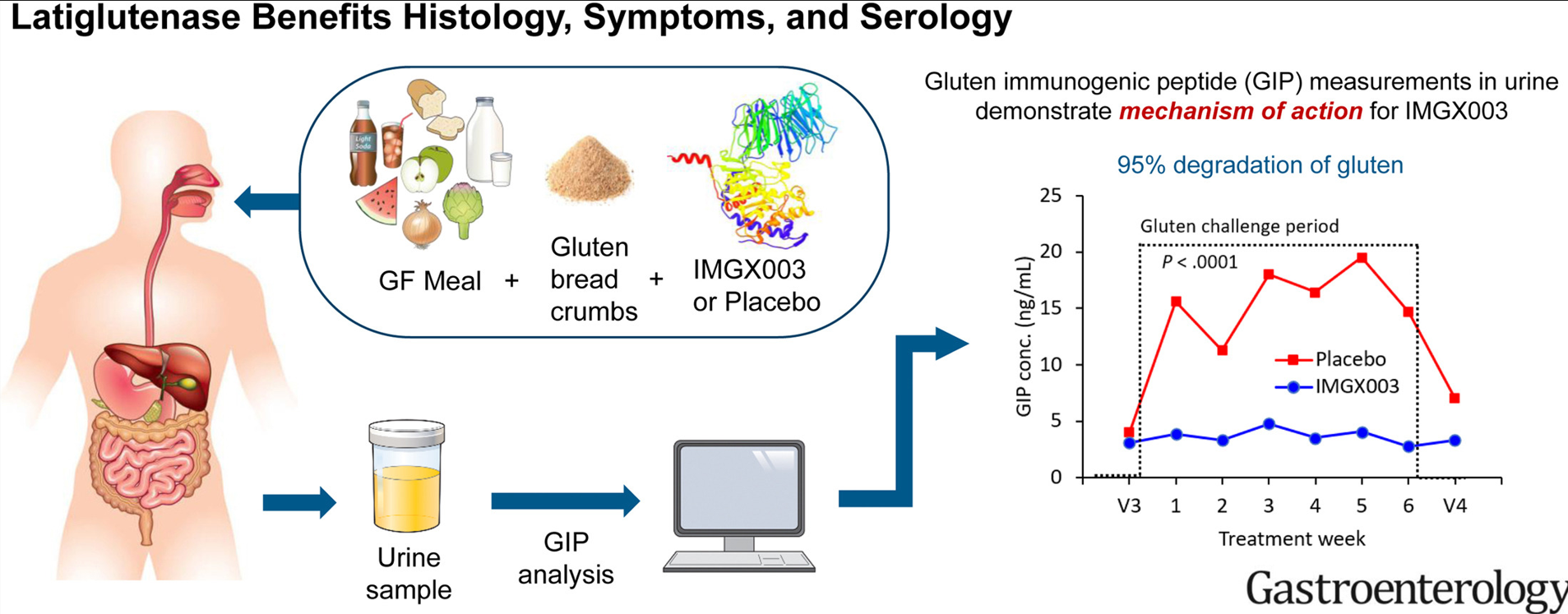
JA Murray, JA Syage et al.Gastroenterol 2022; 163: 1510-1521. Open access! Latiglutenase Protects the Mucosa and Attenuates Symptom Severity in Patients With Celiac Disease Exposed to a Gluten Challenge

Background: Latiglutenase (IMGX003) is an investigational dual-enzyme drug candidate that acts to degrade gluten in vivo when consumed with a meal. The authors note that “despite strict adherence to a GFD, about half of CD patients show evidence of persistent small intestinal mucosal injury (Marsh grades II–III);’ thus, there is a need to improve treatment with other measures in addition to diet.

Methods: 43 patients (IMGX003, n = 21; placebo, n = 22) completed this double blind and placebo controlled study which assessed the efficacy and safety of a 1200-mg dose of IMGX003 in patients with celiac disease (CD) exposed to 2 g of gluten per day for 6 weeks study

Key findings:

  • In IMGX003-treated patients, there was less damage to mucosa. The mean change in the ratio of villus height to crypt depth (primary endpoint) for IMGX003 vs placebo was –0.04 vs –0.35 (P = .057). The mean change in the density of intraepithelial lymphocytes (secondary endpoint) for IMGX003 vs placebo was 9.8 vs 24.8 cells/mm epithelium (P = .018). 
  • Measurements of gluten-immunogenic peptides (GIP) in urine indicated 95% gluten degradation in the stomach by latiglutenase.

The 2 g dose per meal of gluten allowed used in the study, “would likely substantially exceed that accidently occurring while on a GFD, 4 supporting such an approach for management for gluten-triggered symptoms in treated patients.”

Graphical abstract:

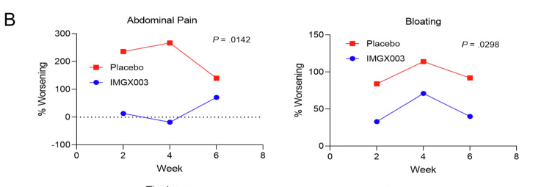
In both the placebo and IMGX003 groups, there was an increases in symptoms, but this was blunted in the treated group–Figure 2:

My take: This study shows the potential for latiglutenase to act as a ‘safety net’ to protect from CD from accidental gluten exposure. The findings reinforce the idea that this agent is not likely to be effective in the absence of gluten restriction. As an aside, I would be interested in finding out whether patients with presumed non-celiac gluten sensitivity would improve on this therapy.

Related blog posts:

IBD Updates: Understanding Newest IBD Therapies for Kids- Bowel Sounds, Hispanic Patients with IBD, More on Intestinal Ultrasound

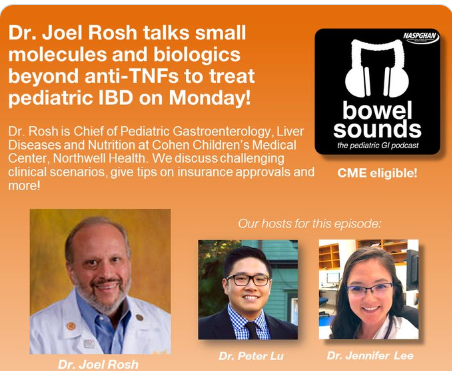
Bowel Sounds Link: Joel Rosh talks small molecules and biologics

This is another good chat. Dr. Rosh provides a lot of information about the newest IBD agents. Overall, the episode indicates a very enthusiastic experience with IL-23 targeting agents like risankizumab (perhaps the ‘Michael Jordan’ of biologics) and with JAK agents like tofacitinib and upadacitinib. Dr. Rosh’s experience with regard to safety of these newer agents has been very positive. For tofacitinib, the typical dosing alluded to in the podcast was 10 mg twice a day (not three times a day). The potential adverse effects, though unlikely in the pediatric population, are carefully discussed with families and monitored.

So far, Dr. Rosh has not found a niche for ozanimod. In addition, he briefly discusses therapeutic drug monitoring. With regard to using vedolizumab as a first-line agent for ulcerative colitis, he often uses the VARSITY study (BE Sands et al NEJM 2019; 381: 1215-26) to justify this to payers. There is a sad element to the podcast though –Dr. Rosh admits to being a lifelong Mets fan!

Related blog posts:

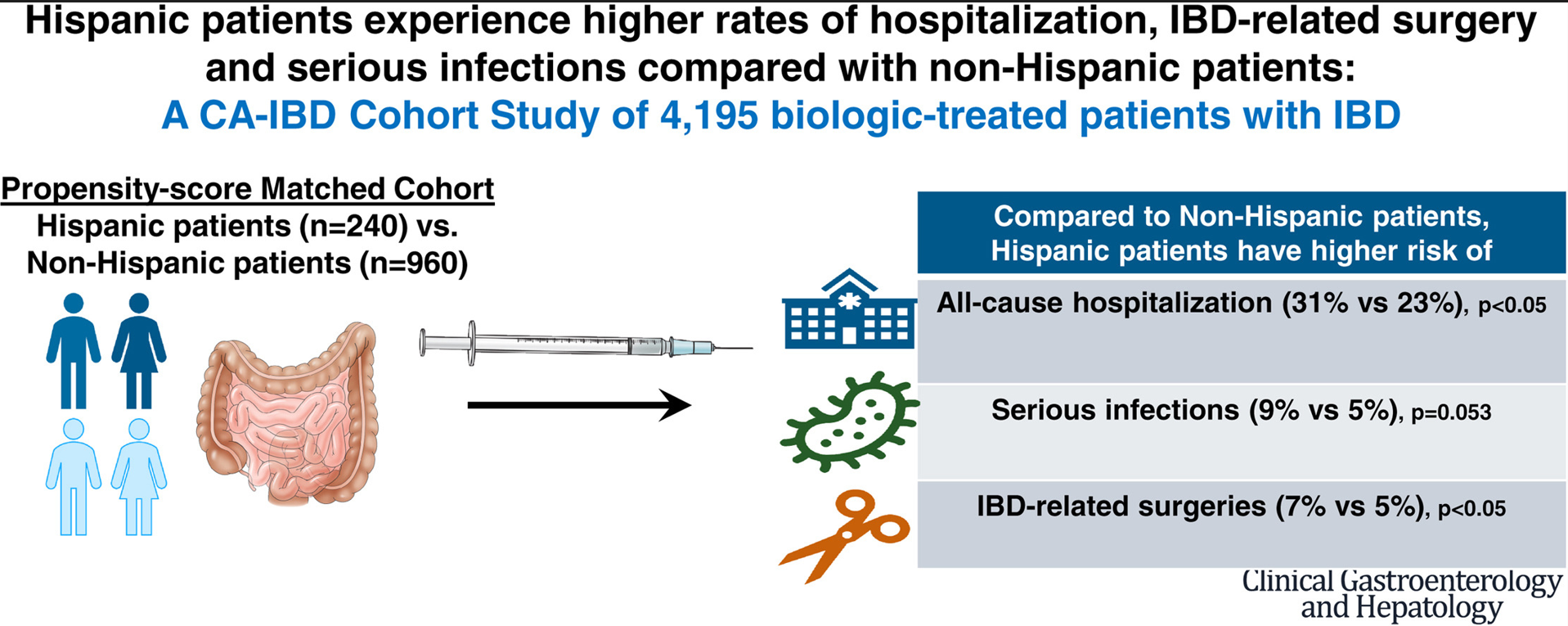
NH Nguyen et al. Clin Gastroenterol Hepatol 2023; 21: 173-181. Open Access! Effectiveness and Safety of Biologic Therapy in Hispanic Vs Non-Hispanic Patients With Inflammatory Bowel Diseases: A CA-IBD Cohort Study

Key findings in this retrospective study with 240 Hispanic patients:

  • Within 1 year of biologic initiation, Hispanic patients had higher rates of hospitalizations (31% vs 23%; adjusted hazard ratio [aHR], 1.32; 95% CI, 1.01–1.74) and IBD-related surgery (7.1% vs 4.6%; aHR, 2.00; 95% CI, 1.07–3.72), with a trend toward higher risk of serious infections (8.8% vs 4.9%; aHR, 1.74; 95% CI, 0.99–3.05).
  • The authors state “these findings suggest that biologic agents may not be as effective or safe in Hispanic patients as they are in non-Hispanic Caucasians… Besides biological factors, socioeconomic factors related to costs and access to care, which contribute to delayed initiation of biologics, and/or limited postinitiation monitoring, leading to higher rates of unplanned health care utilization.”

T Kucharzik et al. Clin Gastroenterol Hepatol 2023; 21: 153-163. Open Access! Early Ultrasound Response and Progressive Transmural Remission After Treatment With Ustekinumab in Crohn’s Disease (STARDUST study)

Key findings:

  • IUS showed that ustekinumab-treated CD patients achieved progressive IUS response (46.3%) and transmural remission (24.1%) through week 48, with a more robust response in the colon and biologic-naive patients
  • Fair/moderate reliability (κ = 0.21–0.51) was observed between week 4 IUS response and week 48 overall endoscopic response and fecal calprotectin/complete biomarker outcomes.

What’s Wrong with Noncompete Clauses

NY Times (1/9/23): Lina Khan: Noncompetes Depress Wages and Kill Innovation

This editorial provides a rationale for the FTC’s proposal to eliminate non-compete clauses.

Background: “When you’re subject to a noncompete clause, you lose your right to go work for a competing company or start your own, typically within a certain geographic area and for a certain period of time…In theory, noncompete clauses promote investment and innovation by assuring companies that their employees can’t run off with valuable secrets. And, again in theory, workers should be paid more in exchange for agreeing to sign a contract that restricts their autonomy. But the reality looks very different.”

Key points:

  • About 1 in 5 U.S. workers are subject to noncompete clauses.
  • “Noncompete clauses systemically drive down wages, even for workers who aren’t bound by one.”
  • Employees do not receive additional compensation for signing a noncompete clause. “Employers often spring them on workers after they’ve accepted a job, when their bargaining power is effectively zero.”
  • “Noncompetes reduce entrepreneurship and start-up formation…and keep innovative ideas from breaking into the market.”
  • “Noncompetes are the type of restriction that Section 5 of the F.T.C. Act, a federal law passed by Congress more than a century ago, is supposed to prevent.”
  • There are alternative ways to protect company secrets like nondisclosure agreements
  • California does not allow noncompete clauses (since 19th century) and this “hasn’t kept the California economy — the world’s fifth-largest — stuck in the Stone Age.”

My take: Elimination of noncompete clauses would be good for doctors (and other workers) and for the economy as well. Established business with market dominance will need to use other ways besides coercion to keep talented employees when noncompete clauses go away.

Siesta Key Beach, FL

Meds for Obesity: AAP Guidelines

Selected recommendations:

  • In children 10 y and older, pediatricians and other PHCPs should evaluate for lipid abnormalities, abnormal glucose metabolism, and abnormal liver function in children and adolescents with obesity (BMI ≥95th percentile) and for lipid abnormalities in children and adolescents with overweight (BMI ≥85th percentile to <95th percentile). 
  • Pediatricians and other PHCPs should provide or refer children 6 y and older (Grade B) and may provide or refer children 2 through 5 y of age (Grade C) with overweight (BMI ≥85th percentile to <95th percentile) and obesity (BMI ≥95th percentile) to intensive health behavior and lifestyle treatment.
  • Pediatricians and other PHCPs should offer adolescents 12 y and older with obesity (BMI ≥95th percentile) wt loss pharmacotherapy, according to medication indications, risks, and benefits, as an adjunct to health behavior and lifestyle treatment. 
  • Pediatricians and other PHCPs should offer referral for adolescents 13 y and older with severe obesity (BMI ≥120% of the 95th percentile for age and sex) for evaluation for metabolic and bariatric surgery to local or regional comprehensive multidisciplinary pediatric metabolic and bariatric surgery centers. 

My take: As with the AGA, the AAP has now recommended the widespread adoption of pharmacologic therapy for use in patients with obesity. It appears that treatment would be required indefinitely, though, given the likelihood of weight gain when treatment is stopped (reviewed on a future post).

Related blot posts:

 Garden Lights, Holiday Lights at Atlanta Botanical Gardens

The Onion’s Take on the New AAP Guidelines: