More on Hidradenitis Suppurativa and Inflammatory Bowel Disease

In a population-based inception cohort study (S Yada et al. Clin Gastroenterol Hepatol 2016; 14: 65-70) of 679 patients with inflammatory bowel disease (IBD) followed for a median of more than 19.8 years, it was determined that patients with IBD were ~9 times more likely to develop hidradenitis suppurativa (HS) compared with general population. 8 of 679 patients developed HS; only one had HS prior to IBD.

Other findings:

  • Most Crohn’s disease patients with HS had perianal disease.  Most ulcerative colitis patients developed HS after colectomy.
  • Female sex and obesity were risk factors for HS.

In a second retrospective study (N Kamal et al. Clin Gastroenterol Hepatol 2016; 14: 71-9), the authors identified 15 patients with CD and HS.  10 patients had perianal disease.  In this population, “both diseases were characterized by their severity, requirement of systemic medical therapies including anti-TNF and high operative rate.” this article contained some very helpful pictures.

Unrelated article: F Wang, JL Kaplan, BD Gold et al. Cell Reports; 2016: 14: 945-55.  This highly technical study used two independent cohorts of patients with Crohn’s disease and non-IBD controls.  One cohort, RISK, had over 700 patients and ~30,000 mean number of reads per sample; the other cohort, PIBD-CC, and 87 patients and ~3000 mean number of reads per sample.  Overall, the study showed associations between Crohn’s disease and bacteria in the lumen and the study helps provide an information-based method to depict dysbiosis.

Related blog post: Add it to the list

San Juan

San Juan

Guts and Valentines?

I learned this week that the Crohn’s & Colitis Foundation of America (CCFA) was founded in part  based on a love story:

From CCFA: Irwin M. Rosenthal, one of the visionary co–founders of CCFA, and Suzanne were due to be married in a few months time when suddenly Suzanne became very ill. Motivated by her struggle with Crohn’s disease, Irwin, along with William and Shelby Modell, and Dr. Henry D. Janowitz, established the Foundation for Research in Ileitis, now known as the Crohn’s & Colitis Foundation of America.

To send an CCFA eValentine: CCFA Valentine E-card

Screen Shot 2016-02-12 at 4.19.04 PM

Value of Calprotectin

A large study (WJ Sandborn et al Gastroenterol 2016; 150: 96-102) focuses on the question of how well calprotectin values correlate with clinical outcomes.  As part of a double-blind, placebo-controlled phase 2 trial of 194 patients who received various doses of tofacitinib or placebo, the authors obtained data on fecal calprotectin (FCP).  Here were the key findings:

  • Week 8 FCP levels were significantly lower in those with a clinical response: 156 vs 725 mg/kg, in clinical remission: 64 vs 617 mg/kg, in endoscopic remission: 44 vs 489 mg/kg and in mucosal healing: 127 vs. 753 mg/kg.
  • On an individual level, FCP showed only moderate agreement for these measures.

For clinical remission, FCP concentration:

  • At 50 mg/kg, the specificity was 0.91, sensitivity was 0.43
  • At 150 mg/kg, the specificity was 0.79, sensitivity was 0.68

For endoscopic remission, FCP concentration:

  • At 50 mg/kg, the specificity was 0.88, sensitivity was 0.52
  • At 150 mg/kg, the specificity was 0.75, sensitivity was 0.79

For mucosal healing, FCP concentration:

  • At 50 mg/kg, the specificity was 0.92, sensitivity was 0.29
  • At 150 mg/kg, the specificity was 0.85, sensitivity was 0.54

The authors speculate that the only fair to good accuracy of FCP in classifying clinical and endoscopic outcomes of individual patients could be related to day-to-day variability in FCP levels and due to residual microscopic inflammation.

My take: While a single normal calprotectin value is not entirely reassuring, I would not be surprised if these values outperform the PGA (physician global assessment).  It is likely that serial calprotectin values will be helpful in tracking clinical progress.

In brief:

Agardh et al. JPGN 2016; 62: 43-46.  Authors show that fecal calprotectin levels were markedly elevated (median 844 mg/kg) in 11 of 12 patients with juvenile polyps and that these levels normalized after polypectomy.  These levels were similar to their cohort (n=129) of children with active IBD (median values of 962 mg/kg).

Heida et al. JPGN 2016; 62: 47-49.  The investigators retrospectively examined 80 children who had endoscopy due to suspected inflammatory bowel disease.  In all 10 of the children with calprotectin levels less than 50 (mcg/g), IBD was excluded.

Related blog posts:

Old Town, San Juan

Old Town, San Juan

Characteristics of Skin Lesions Associated with Anti-Tumor Necrosis Factor Therapy

As noted in previous blog posts (see below), anti-tumor necrosis factor (anti-TNF) therapy has been associated with skin problems.  The following study/abstract elaborate on this issue further and indicate that while ~30% of patients with IBD may develop skin reactions, only 28 of 917 (3%) patients required anti-TNF therapy to be discontinued due to skin reactions.

I Cleynen et al. Ann Intern Med. Published online December 2015 doi:10.7326/M15-0729  Characteristics of Skin Lesions Associated With Anti–Tumor Necrosis Factor Therapy in Patients With Inflammatory Bowel DiseaseA Cohort Study ONLINE FIRST

 Background: A subgroup of patients with inflammatory bowel disease (IBD) treated with anti–tumor necrosis factor (TNF) antibodies develop skin lesions, but the lesions and their clinical course are not well-characterized.

Objective: To describe patients treated with anti-TNF antibodies who did and did not develop skin lesions.

Design: Retrospective cohort.

Setting: Single IBD tertiary referral center.

Patients: 917 consecutive patients with IBD who initiated anti-TNF therapy.

Measurements: Skin lesions, patient demographic characteristics, treatments, clinical course, and serologic and genetic markers.

Results: During a median follow-up of 3.5 years (interquartile range [IQR], 0.5 to 7.4 years), skin lesions associated with the use of anti-TNF therapy developed in 264 of 917 (29%) patients (psoriasiform eczema, 30.6%; eczema, 23.5%; xerosis cutis, 10.6%; palmoplantar pustulosis, 5.3%; psoriasis, 3.8%; other, 26.1%). Lesions typically developed at flexural regions, genitalia, and the scalp, especially the psoriasiform lesions. Thirty-one percent of women and 26% of men developed lesions. Median cumulative doses (2864 mg/y [IQR, 2203 to 3819 mg/y] and 2927 mg/y [IQR, 2377 to 3667 mg/y]) and trough levels (4.2 µg/mL [IQR, 2.6 to 5.8 µg/mL] and 4.0 µg/mL [IQR, 1.6 to 5.9 µg/mL]) of infliximab were similar in patients with and without lesions. All but 28 patients (11%) were successfully managed without needing to stop therapy because of lesions.

Limitation: Retrospective nature and no matched control group of patients not receiving anti-TNF therapy.

Conclusion: Skin lesions occur frequently in association with anti-TNF therapy but rarely require discontinuation of therapy. Close surveillance and early referral to a dedicated dermatologist are recommended.

Related blog posts:

Should Methotrexate Be Used For Ulcerative Colitis?

A recent study (F Carbonnel et al. Gastroenterol http://dx.doi.org/10.1053/j.gastro.2015.10.050, article in press; thanks to KT Park twitter feed for reference) with 111 patients provides more questions than answers.  It appears that methotrexate improved clinical remission but the overall difference is fairly small; the abstract is below.

My initial impression: Immunomodulators (including methotrexate and thiopurines) have some efficacy as monotherapy agents in patients with inflammatory bowel disease. Their role as part of combination therapy (with anti-TNF agents) has been associated with improved outcomes but how long to use combination therapy and at what dosage is still being worked out.

Here’s the abstract and a link: Methotrexate is not Superior to Placebo in Inducing Steroid-free Remission, but Induces Steroid-free Clinical Remission in a Larger Proportion of Patients with Ulcerative Colitis

Background & Aims

Parenteral methotrexate is an effective treatment for patients with Crohn’s disease but has never been adequately evaluated in patients with ulcerative colitis (UC). We conducted a randomized controlled trial to determine its safety and efficacy in patients with steroid-dependent UC.

Methods

We performed a double-blind, placebo-controlled trial to evaluate the efficacy of parenteral methotrexate (25 mg/week) in 111 patients with corticosteroid-dependent UC at 26 medical centers in Europe, from 2007 through 2013. Patients were given prednisone (10 to 40 mg/day) when the study began, and randomly assigned to groups (1:1) given placebo or methotrexate (intramuscularly or subcutaneously, 25 mg weekly) for 24 weeks. The primary endpoint was steroid-free remission (defined as a Mayo score ≤ 2 with no item > 1 and complete withdrawal of steroids) at week 16. Secondary endpoints included clinical remission (defined as a Mayo clinical subscore ≤ 2 with no item > 1) and endoscopic healing without steroids at weeks 16 and/or 24, remission without steroids at week 24, and remission at both weeks 16 and 24.

Results

Steroid-free remission at week 16 was achieved by 19/60 patients given methotrexate (31.7%) and 10/51 patients given placebo (19.6%)—a difference of 12.1% (95% confidence interval [CI], –4.0% to 28.1%; P=.15). The proportions of patients in steroid-free clinical remission at week 16 were 41.7% in the methotrexate group and 23.5% in the placebo group, for a difference of 18.1% (95% CI, 1.1%–35.2%; P=.04). The proportions of patients with steroid-free endoscopic healing at week 16 were 35% in the methotrexate group and 25.5% in the placebo group—a difference of 9.5% (95% CI, –7.5% to 26.5%; P=.28). No differences were observed in other secondary endpoints. More patients receiving placebo discontinued the study because of adverse events (47.1%), mostly caused by UC, than patients receiving methotrexate (26.7%; P=.03). A higher proportion of patients in the methotrexate group had nausea and vomiting (21.7%) than in the placebo group (3.9%; P=.006).

Conclusions

In a randomized controlled trial, parenteral methotrexate was not superior to placebo for induction of steroid-free remission in patients with UC. However, methotrexate induced clinical remission without steroids in a significantly larger percentage of patients, resulting in fewer withdrawals from therapy due to active UC.

Related blog posts:

Banning Mills

Banning Mills

Optimism for New Treatment in Inflammatory Bowel Disease: AJM300

Yesterday’s post on “Eternal Nutrition” had a link to podcasts on enteral nutrition as therapy for Crohn’s disease.  I listened to the podcasts and they were helpful (Enteral Therapy as Primary Therapy for Crohn’s Disease Podcast).  A few points that were made included the following:

  1. Try to have the right person teach/place the nasogastric feeding tube.  If the first experience is bad, this may make further attempts quite difficult.  At CHOP, their facility has an education center and they schedule 3-hour learning session for enteral feeds.  Teaching the teen to place the NG tube is preferred.
  2. Many pediatric gastroenterologists in U.S. are not informing their patients that enteral feedings are a treatment option.
  3. In most parts of the world, induction with enteral nutrition involves virtually 100% of diet as enteral nutrition for ~8-12 weeks.  CHOP modification involves 80-90% of calories delivered enterally, typically over an overnight drip.  If someone is not responding to enteral feeds, CHOP may increase calories delivered enterally.
  4. For maintenance with CHOP modification, gradually reduction from 7 days per week to 5 days per week is attempted.  At CHOP, they prefer hydrolysate for enteral tube feedings and think more rapid gastric emptying could be helpful.  However, the podcast state that specific formulas have not been shown to be superior in trials to date.  At CHOP, if formula is taken orally, then an intact protein formula is selected.
  5. If someone uses enteral formula for maintenance, then consideration of a gastrostomy tube (after 3 months) is reasonable.  They have not had local issues at sites due to Crohn’s disease.
  6. Resources include the Oley.org website and the Crohn’s Survival Guide.
  7. Enteral therapy seems to work in small bowel as well as colonic disease, despite early reports suggesting less efficacy with colonic disease.

———————

A recent phase II study (N Yoshimura et al. Gastroenterol 2015; 149: 1775-83) indicates that an oral antagonist of α4 integrin may be quite useful for ulcerative colitis.

This double-blind, placebo-controlled trial with 102 patients found the following:

  • A clinical response rate at 8 weeks of 62.7% in the treatment group and 25.5% for placebo)
  • Rates of remission were 23.5% in the treatment group  compared with 3.9% in the placebo group.
  • Mucosal healing were 58.8%% in the treatment group  compared with 29.4% in the placebo group.
  • No serious adverse events were noted.

In the commentary by  BG Levesque and S Ghosh (pg 1669-72), it is noted that subsequent oral integrins will be compared to vedolizumab and similar safety concerns exist; that is making sure that there are no cases of progressive multifocal leukoencephalopathy (PML) which has been associated with natalizumab therapy.  For vedolizumab, the RAMP safety monitoring program has NOT identified PML in 2884 IBD patients.

The commentary (in blue) discusses several integrins as potential therapeutic targets and outlines future therapies.

Nontargeted therapies:

  • A) Induction: corticosteroids, 5- aminosalicylates, cyclosporin, and tacrolimus
  • B) Maintenance: thiopurines, methotrexate, 5-aminosalicylates, and tacrolimus.

Targeted therapies (those in development phase in italics)

  • A) Monoclonal antibodies (induction and maintenance): tumor necrosis factor inhibitors, vedolizumab, other integrin/adhesion molecule inhibitors, interleukin-12/23 inhibitors, and interleukin-6 inhibitors.
  • B) Oral synthetic (induction and maintenance or stop and start): Jakinibs, integrin blockers, sphingosine-1-phosphate (s1P) regulators, and SMAD7 antisense oligonucleotide.

“The results of AJM300 demonstrate feasibility of such an approach, and we anticipate a proliferation of such approaches given the robust evidence supporting integrins as a target, especially if the drug can be targeted or delivered in a gut-specific manner.”

My take: There are a number of therapies being developed that are likely to transform the treatment of inflammatory bowel disease; future treatments will be more precise, more effective and have many more options.

Related blog posts:

Banning Mills

Banning Mills


IBD ‘Pearls’

clinical pearl is “a short, straightforward piece of clinical advice.” Here are a few:

2015 DDW abstract –#536 DR Hoekman et al “Non-trough IFX concentrations reliably predict trough levels and accelerate dose-adjustment in Crohn’s disease.”  This abstract examined data from 20 CD patients.  The authors noted that infliximab concentrations of 15 mcg/mL or higher at week 4 and 7.5 mcg/mL or higher at week 6 appeared to predict trough concentrations of 3 mcg/mL or higher at week 8.

U Kopylov et al. Inflamm Bowel Dis 2015; 21: 1847-53.  This nested case control study identified 19,582 eligible patients.  Key findings:

  • Treatment with thiopurines for more than 5 years did not increase the risk of lymphoma, melanoma or colorectal cancer.
  • There was an association between thiopurine use and nonmelanoma skin cancer (OR 1.78).
  • No association was found between the risk of the evaluated malignancies and anti-TNFα medications

K Huth et al. Inflamm Bowel Dis 2015; 21: 1761-68. This prospective cohort study completed over 2 successive influenza seasons showed that offering education and access to vaccination improved rates of vaccination from 47% (2011-12) to 75% (2013-14).  The education module is available: www.cheo.on.ca/en/IBDflu

KH Katsanos et al. “Review article: non-malignant oral manifestations in inflammatory bowel disease” Aliment Pharmacol There 2015; 42: 40-60. (Thanks to Ben Gold for this reference). This review article provides extensive information about oral lesions in IBD, differential diagnosis, numerous pictures, and management recommendations.  Some oral lesions are directly related to IBD, others can be induced by vitamin deficiencies or by medications.

One of my pet peeves -I avoid using straws

One of my pet peeves -I avoid using straws.  I heard this statistic several years ago and also see too many littered straws.

Disclaimer: These blog posts are for educational purposes only. Specific dosing of medications/diets (along with potential adverse effects) should be confirmed by prescribing physician/nutritionist.  This content is not a substitute for medical advice, diagnosis or treatment provided by a qualified healthcare provider. Always seek the advice of your physician or other qualified health provider with any questions you may have regarding a condition.

Nutrition Symposium Georgia AAP (Part 1)

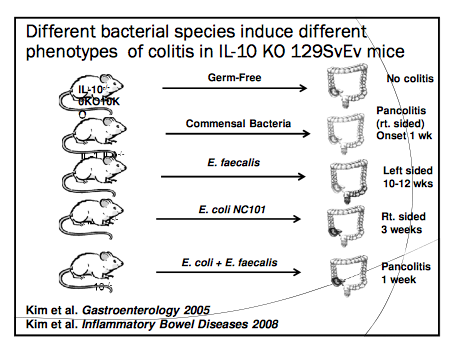
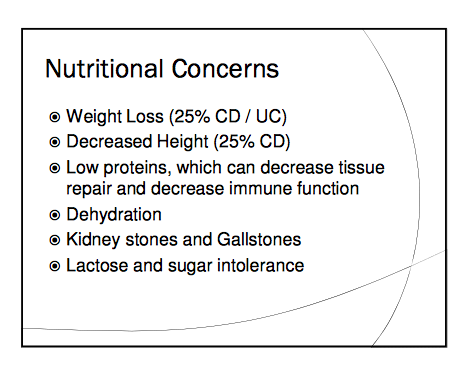
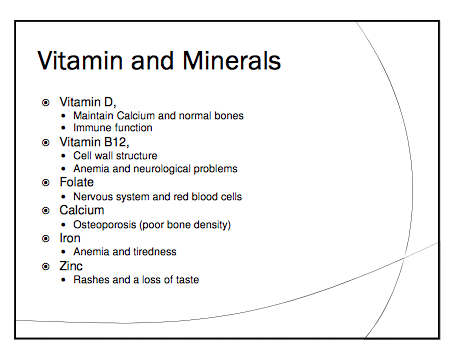
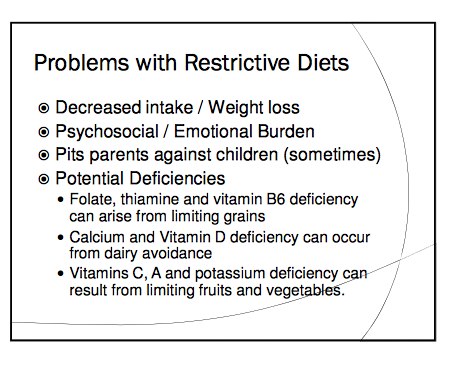
At this year’s nutrition symposium, Dr. Stan Cohen presented the latest information on nutrition and inflammatory bowel disease.  His entire presentation will be on the Nutrition4Kids website.  While I took a few pictures, my notes from his presentation were minimal, mainly because I had to give a talk afterwards.  He reviewed how the microbiome can be influenced by diet and that this in turn can result in phenotypic changes.  Specific complications from poor diet/nutrient deficiencies were discussed.  In addition, data from exclusive enteral nutrition and the specific carbohydrate diet were presented. Here are some slides from his lecture (also available at Georgia AAP Symposium Website):

Screen Shot 2015-11-13 at 5.55.55 PM

Screen Shot 2015-11-13 at 5.57.12 PM

Screen Shot 2015-11-13 at 5.57.27 PM

Screen Shot 2015-11-13 at 6.01.10 PM

Related blog posts:


Why the Genetics of Inflammatory Bowel Diseases Matter Now

A terrific update on the genetics of inflammatory bowel diseases (DPB McGovern, S Kugathasan, JH Cho. Gastroenterol 2015; 149: 1163-76) explains why and how this information matters right now.  The article is a little difficult to read due to its review of highly technical material.

Here’s what I think were the key points:

  • Big advances in understanding the genetics started with the first genome-wide association studies (GWAS) using genome-wide single nucleotide polymorphisms (SNP) chips in 2005.  “The conceptual basis of GWAS is that most complex (ie, not single-gene Mendelian) genetic disorders are polygenic, being driven by multiple common genetic polymorphisms.”
  • “Early GWAS identified the most significant loci.”  Now, more than 200 loci associated with IBD have been identified with GWAS and Immunochip data. Table 1 lists these loci over 4 pages.  About 2/3rds of these are associated with Crohn’s disease (CD) and ulcerative colitis (UC) whereas the remaining 1/3rd are unique to either CD or UC.
  • These loci provide insight into disease mechanisms. NOD2 mutations result in “impaired activation of NF-κB” This supported “the general concept that deficiencies of innate immune cell function represent a central factor in Crohn’s disease, distinguishing it from ulcerative colitis.”
  • ATG16L1 gene mutation “establish the fact that the CD risk allele is correlated with impaired autophagy.”  This is leading directly into treatment efforts.
  • IL23R.  “The most significant association is Arg381Gln…confers a 2- to 3-fold protection against development of IBD.”  The protective effect is thought to be due to “decreased numbers of interleukin (IL)-23 dependent CD4+ Th17 and CD8+ Tc17 cells…decreasing IL-23 signaling, such as through monoclonal antibody blockade of anti-p40 or anit-p19 may be beneficial.”
  • FUT2 mutations.  These mutations affect the mucus layer in Crohn’s disease.
  • Studies in non-Caucasians highlight other susceptibility regions.
  • “Currently, sequencing of the whole exome has become not only a practical method but also a cost-effective option to identify functionally relevant variants in the protein encoding regions of the genome.”

Very Early Onset IBD:

  • Whole exome sequencing (WES) identified XIAP (X-linked inhibitor of apoptosis) in a case of boy with very early onset (VEO) IBD.  XIAP is a positive regulator of NOD2 function.  WES has also identified FOXP3, and IL10RB genes.
  • “The VEO group experiences a more severe disease course and more frequently shows a positive family history for IBD in support of higher genetic load.”  Table 2 lists ~40 genes associated with VEO.  These genes are involved in epithelial barrier function, neutropenia/defects in phagocyte function, hype-and autoinflammation, and  regulatory T cells and immune regulation.

Genetic Testing Will Impact Current Therapies and Help Explain Extraintestinal Manifestations:

  • Currently testing for TPMT variations is recommended prior to use of thiopurines due to concerns of toxicity in individuals with decreased metabolism of these medications.  However, genetic testing can identify other individuals with propensity to leukopenia (eg. NUDT15 polymorphism) and those with increase risk for pancreatitis (eg. HAL-DQA1-HLA-DRB1)
  • Primary Sclerosing Cholangitis (PSC) is associated with numerous genetic loci as well. PSC “genetically is more similar to UC than to CD.” Most other extraintestinal manifestation studies have been underpowered.
  • IBD share more genetic similarity to spondyloarthropathy (SpA) than any other immune-mediated diseases.  “The vast majority of shared susceptibility loci are concordant between IBD and SpA.”
  • With regard to psoriasis, the genetic relationship to IBD is complex.  Anti-TNF agents can cause psoriaform lesions in IBD patients.  In addition, anti-IL17a therapy, “so successful in psoriasis, appears to worsen Crohn’s disease” but not in those with a TNFSF15 variant.  Specific genotyping may help identify which patients with CD are susceptible to psoriaform lesions and those who may improve with therapy typically given for psoriasis.

My take: This article shows how understanding genetics of IBD is providing insight into pathophysiology and more personalized treatment approaches.

Briefly noted: EM Stoffel, CR Boland. Gastroenterol 2015; 149: 1191-1203. Excellent review of the genetics and genetic testing for Hereditary Colorectal Cancer.  The review includes polyposis syndromes and Lynch syndrome.

Atlanta Botanical Gardens

Atlanta Botanical Gardens

Just Saying…Vaccines Don’t Trigger Inflammatory Bowel Disease

The other day I was having a fun discussion on words that we may choose before providing information that others might not like.  Some examples:

  • “No offense but”…
  • “Don’t take this the wrong way”…
  • “Just saying”…

A recent report (GP de Chambrun et al. Clin Gastroenterol Hepatol 2015; 13: 1405-15) debunks claims that vaccines increase the risk of inflammatory bowel disease (IBD).  A report by Thompson NP et al (Lancet 1995; 345: 1071-74) suggested that measles vaccination could increase risk of IBD.  In the current study, the researchers examined 11 previous studies for review and meta-analysis.  Vaccines included: BCG, DPT, smallpox, poliomyelitis, pertussis, H1N1,measles, mumps, rubella, and combined MMR.  This study included 2399 patients with IBD and 33,747 controls. Bottomline: “Results of this meta-analysis show no evidence supporting an association between childhood immunization or H1N1 vaccination in adults and risk of developing IBD.” With regard to the measles vaccine in particular, the relative risk was 1.33 (CI 0.31 -5.80) in cohort studies and the relative risk was 0.85 (CI 0.60 -1.20) in case-control studies.

What types of words do you hear people use before saying something someone is not going to like?

Related posts: