More IBD Cases Than Ever in Young Canadian Children

Summary of recent article (Link to full study: Benchimol EI, et al. Am J Gastroenterol. 2017;doi:10.1038/ajg.2017.97) by Healio Gastroenterology: IBD incidence rapidly increasing in young Canadian children

An excerpt:

To evaluate the recent incidence, prevalence and trends in childhood-onset IBD in Canada, Benchimol and colleagues used health administrative data from five provinces to identify children aged younger than 16 years who were diagnosed with IBD between 1999 and 2010. During this period, 3,462 children were diagnosed with Crohn’s disease, 1,382 with ulcerative colitis and 279 with unclassifiable IBD, for an overall IBD incidence of 9.68 (95% CI, 9.11-10.25) per 100,000 children.

Throughout the study period, the annual percentage change in overall IBD incidence remained statistically stable, increasing by just 2.06% per year, but the incidence increased significantly among children aged younger than 5 years, rising by 7.19% per year.

Further, the annual percentage change in the prevalence of IBD increased significantly throughout the study period (4.56%), and at the end of the study period IBD prevalence was 38.25 (95% CI, 35.78-40.73) per 100,000 children.

The investigators noted their findings confirmed the predominant form of pediatric-onset IBD was Crohn’s disease, and that more boys were affected than girls.

My take: While Canada has high prevalence of IBD, I expect that there will be similar trends in epidemiology in multiple regions in young children.  When one looks at the increases in IBD prevalence over the last 100 years (see previous post) and the emergence of IBD in non-Western countries, it is quite alarming.

Also, last week a blog post discussed hepatic problems associated with IBD (Liver problems with IBD): here is full article text link: Hepatic Issues and Complications Associated with IBD

Related blog posts:

Clostridium difficile Infection in Inflammatory Bowel Disease: Expert Updates

A recent clinical practice update (S Khanna et al. Clin Gastroenterol Hepatol; 2017; 15: 166-74) provides some succinct recommendations regarding Clostridium difficile infection (CDI) in Inflammatory Bowel Disease (IBD).

Background: In 2011, the authors note that CDI was associated with 29,000 deaths and is now the most lethal enteric pathogen in the U.S.

Differences in pathogenesis of C diff in IBD compared to those without IBD:

  • Younger age
  • Less frequent antibiotic exposure
  • More often community onset (rather than hospital onset)
  • Higher recurrence (may be related to dysbiosis)

Key recommendations:

  • In patients with IBD flare, test for CDI
  • In patients with CDI and IBD, clinicians should consider “using vancomycin instead of metronidazole.”
  • In patients with recurrent CDI and IBD, consider fecal microbiota transplantation

Figure 4 proposes a management algorithm (for adults).  If uncomplicated CDI, recommended dose of vancomycin was 125 mg q6h. If no improvement in 3-4 days, then “consider escalation of immunosuppression.” For complicated CDI, consider oral vancomycin at 500 mg q6h and IV metronidazole 500 mg q8.  In addition, consider rectal vancomycin and surgery consult.

Complicated CDI includes ICU admission, hypotension, T >38.5, ileus/megacolon, mental status changes, leukocyte count >35,000  or < 2000, or lactate >2.2 mmol/L

Another review article (Y Chen et al. Inflamm Bowel Dis 2017; 23: 200-07) is a meta-analysis that identified six studies.  One of these studies was a case-control study with nearly 400,000 patients (and about 7000 cases of C diff). Key finding: CDI results in nearly a doubling of the risk of colectomy (OR 1.90), mainly in patients with ulcerative colitis.

Related blog posts

Disclaimer: These blog posts are for educational purposes only. Specific dosing of medications (along with potential adverse effects) should be confirmed by prescribing physician.  This content is not a substitute for medical advice, diagnosis or treatment provided by a qualified healthcare provider. Always seek the advice of your physician or other qualified health provider with any questions you may have regarding a condition.


Expert Advice on Clostridium difficile and Inflammatory Bowel Disease

Link: Management of Clostridium difficile Infection in Inflammatory Bowel Disease: Expert Review from the Clinical Practice Updates Committee of the AGA Institute

Abstract: The purpose of this expert review is to synthesize the existing evidence on the management of Clostridium difficile infection in patients with underlying inflammatory bowel disease. The evidence reviewed in this article is a summation of relevant scientific publications, expert opinion statements, and current practice guidelines. This review is a summary of expert opinion in the field without a formal systematic review of evidence.

Best Practice Advice 1: Clinicians should test patients who present with a flare of underlying inflammatory bowel disease for Clostridium difficile infection.

Best Practice Advice 2: Clinicians should screen for recurrent C difficile infection if diarrhea or other symptoms of colitis persist or return after antibiotic treatment for C difficile infection.

Best Practice Advice 3: Clinicians should consider treating C difficile infection in inflammatory bowel disease patients with vancomycin instead of metronidazole.

Best Practice Advice 4: Clinicians strongly should consider hospitalization for close monitoring and aggressive management for inflammatory bowel disease patients with C difficile infection who have profuse diarrhea, severe abdominal pain, a markedly increased peripheral blood leukocyte count, or other evidence of sepsis.

Best Practice Advice 5: Clinicians may postpone escalation of steroids and other immunosuppression agents during acute C difficile infection until therapy for C difficile infection has been initiated. However, the decision to withhold or continue immunosuppression in inflammatory bowel disease patients with C difficile infection should be individualized because there is insufficient existing robust literature on which to develop firm recommendations.

Best Practice Advice 6: Clinicians should offer a referral for fecal microbiota transplantation to inflammatory bowel disease patients with recurrent C difficile infection.


Related blog posts:

screenshot-94

Safer Than You Think: Biologic Therapies for IBD and Risk of Infection and Malignancy

While there have been a number of studies which have highlighted the potential risks of biologic agents, many studies have NOT identified any risk of infection or malignancy.

Another recent systematic review/meta-analysis (S Bonovas et al. Clin Gastroenterol Hepatol 2016; 14: 1385-97) provides reassuring data regarding the following biologics: infliximab, adalimumab, certolizumab, golimumab, natalizumab, and vedolizumab.

The authors identified 49 randomized placebo-controlled studies with 14,590 participants.

Key findings:

  • There was a moderate infection risk with odds ratio of 1.19 (19% increase in odds of developing an infection) and significant increase in opportunistic infections (eg. tuberculosis) OR 1.90
  • Risk of serious infections was NOT increased in patients treated with biologics with OR 0.89.  In studies with low risk of bias, the risk of serious infections had OR of 0.56.
  • No increase in malignancy risk was identified with OR 0.90 but the authors note that data was insufficient in terms of exposure and follow-up to be conclusive.

The authors note that the studies including in this review challenge some of the findings of observational studies. “However, observational studies lack the experimental random allocation of participants…the discrepancies between observational studies and randomized trial evidence might be explained by the inability of observational designs to fully address the complex and important differences between the IBD patients receiving and those not receiving biologics.”

Study limitations include “sponsorship bias -because the trials were supported by pharmaceutical companies and limited followup of 24 months. In addition, most of the trials in the meta-analysis were judged to be at high or unclear risk of bias because of their methodological characteristics.

My take: This study indicates that biologic therapies do not appear to increase the risk of serious infections and may not increase the overall risk of malignancy.

Related blog posts:

Portland Fish Market

Portland Fish Market


GI Educational Cartoons For Children

Diana Lerner and the Medical College of Wisconsin have developed additional GI educational videos.  Previously, they had developed cartoon videos explaining endoscopy (prev post: Terrific Educational Videos on Endoscopy).  Now there are several more.  All of these are in English and some in Spanish.

Topics include inflammatory bowel disease, gastroesophageal reflux, eosinophilic esophagitis, and celiac disease.

Here’s the link:  Pediatric Gastroenterology Cartoons For Kids

Related blog post:

screen-shot-2016-10-23-at-10-39-50-am


Should We Care About Subclinical Primary Sclerosing Cholangitis with Inflammatory Bowel Disease?

A recent study (AK Lunder et al. Gastroenterol 2016; 151: 660-69, editorial 590-3) provides more information about the prevalence of subclinical primary sclerosing cholangitis (PSC) in the setting of long-term inflammatory bowel disease. From a cohort of 756 Norwegian patients in the “IBSEN” cohort of patients with inflammatory bowel disease, the authors analyzed 327 patients with magnetic resonance cholangiography (MRC).

Key findings:

  • 24 (7.5%) of 327 patients who had been followed for 20 years were found to have PSC lesions.  Only 7 (2.2%) were known to have PSC based on biochemical or clinical features. Subsequently, a missed case of small-duct PSC was recognized increasing the rate to 8.1%.
  • Subclinical PSC, interestingly, was detected more often in Crohn’s patients (9.0%) compared with ulcerative colitis (6.8%)
  • Extensive colitis, high prevalence of colectomy, and refractory IBD symptoms were more common in patients with suspected PSC compared with those without PSC features (P= .029, P= .002, and P= .012 respectively)

The natural history of these subclinical cases of PSC is unclear.  Studies have shown that patients with PSC with normal alkaline phosphatase values have an excellent outlook.  Yet, there should be some concern.  PSC has been associated with 400-fold higher chance of cholangiocarcinoma and 5-fold increased risk of developing colorectal cancer.  This could indicate the need for more intensive surveillance in these patients –though the exact risks in those with subclinical disease is unknown.

My take: Until we know more, I doubt looking for subclinical PSC makes sense outside research protocols.

Related blog posts:

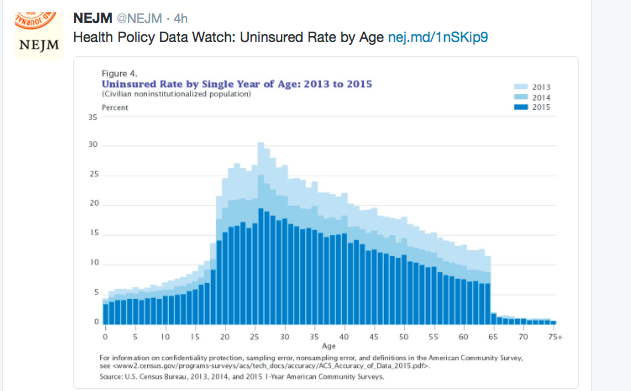
insurancecoverage

World Congress 2016 Postgraduate Course

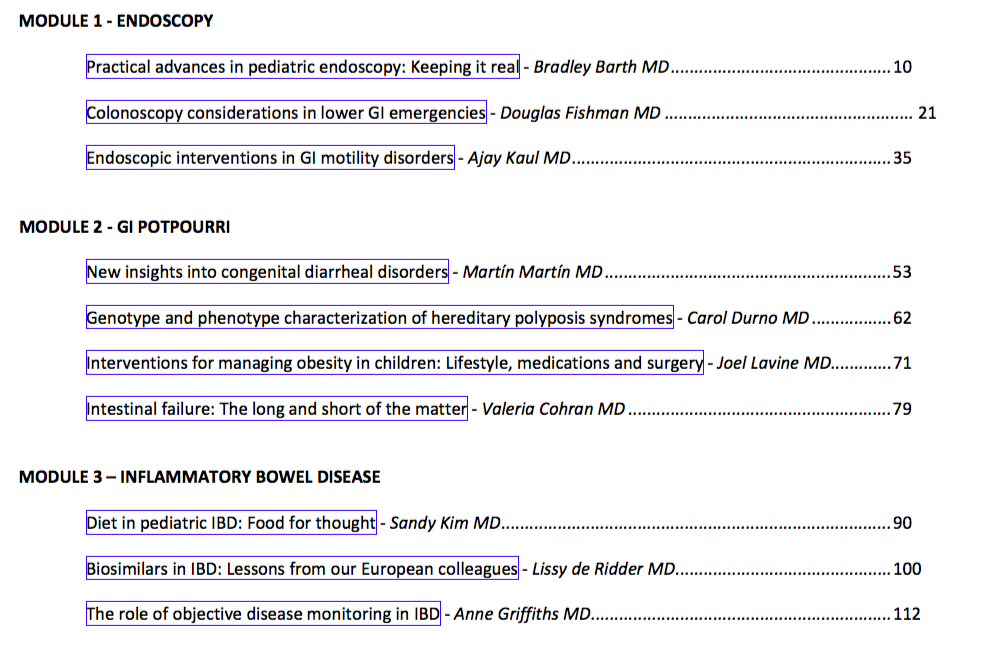
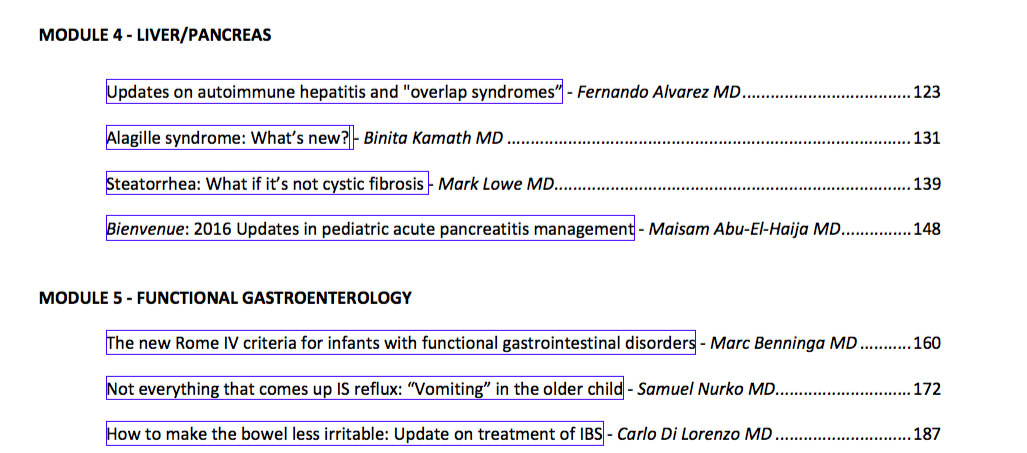
I’ve attached (with permission) the syllabus from the World Congress 2016 Postgraduate Course: 2016-world-congress-postgraduate-course-syllabus

screen-shot-2016-10-14-at-11-45-54-am

screen-shot-2016-10-14-at-11-46-04-am

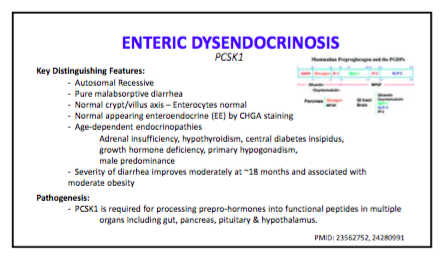
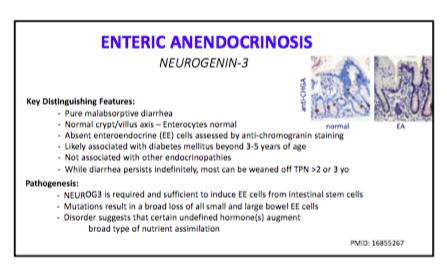
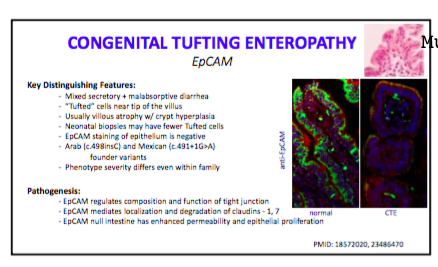
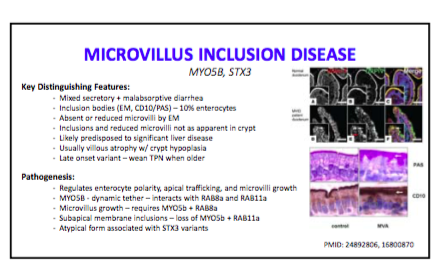
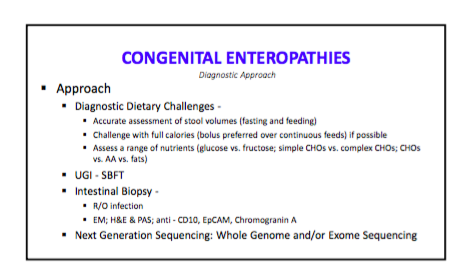
One lecture that I will highlight with a few slides is from Dr. Martin Martin (pg 53-62) which emphasizes a new model for evaluating neonatal intestinal failure/congenital diarrhea by using whole exome sequencing –see slides below.

Other pointers:

  • Pg 82.  Breastmilk associated with shorter duration of TPN dependence in short bowel syndrome
  • Pg 137. Look for vasculopathy (MRI/MRA) and renal disease in Alagille syndrome
  • Pg 152. Lactated ringer’s likely better in acute pancreatitis than normal saline.
  • Pg 171. If constipation at less than 1 year is untreated, >60% have issues with constipation at age 3.

screen-shot-2016-10-14-at-11-37-07-am screen-shot-2016-10-14-at-11-37-00-am screen-shot-2016-10-14-at-11-36-44-am screen-shot-2016-10-14-at-11-36-34-am screen-shot-2016-10-14-at-11-35-40-am


Disclaimer: These blog posts are for educational purposes only. Specific dosing of medications/diets (along with potential adverse effects) should be confirmed by prescribing physician/nutritionist.  This content is not a substitute for medical advice, diagnosis or treatment provided by a qualified healthcare provider. Always seek the advice of your physician or other qualified health provider with any questions you may have regarding a condition.

4 Points for C diff in Inflammatory Bowel Disease

A nice review: K Rao, PDR Higgins. Inflamm Bowel Dis 2016; 22: 1744-54.

Many aspects of Clostridium difficile with and without coexisting inflammatory bowel disease has been reviewed on this blog.  This review adds a few additional points:

  1. C difficile testing in patients with IBD, “start with enzyme immunoassay-based tests with a reflex to PCR test for discordant enzyme immunoassay results.”  Rationale: “PCR is quite sensitive for the presence of toxigenic C difficile, it may increase the detection of asymptomatic colonization and shedding.”
  2. Don’t test for C difficile in patients in clinical remission. “Clayton et al evaluated outpatients with IBD who were in clinical remission and had no recent exposure to antimicrobials, corticosteroids, immunomodulatory agents, or hospitalizations.  These patients had toxigenic C difficile carriage rates of 8.2%.”
  3. What to do when IBD patients test positive for C difficile infection (CDI) -treat which one or both? The authors recommend, that “if there is no response to the treatment for CDI after 48 hours, then concurrent immunologic therapy can be started/escalated.”
  4. Safety of FMT with IBD. “There may be additional risk incurred in the IBD population…[in a recent study] 14% of the subgroup of patients with IBD experienced adverse events including IBD flare, requiring hospitalization in some instances.” Overall, there is not enough data to “risk stratify patients in terms of these adverse outcomes.”

In addition to these pointers, advice on treatment based on severity and whether CDI is recurrent is listed on Table 1.

  • For primary CDI (nonsevere): metronidazole, vancomycin or fidaxomicin.
  • For primary CDI (severe): vancomycin or fidaxomicin.
  • For primary CDI (severe & complicated*): vancomycin at highest dose and IV metronidazole and (if ileus present) vancomycin rectally
  • Recurrent CDI: 1st recurrence — same as initial Rx, 2nd recurrence -same as initial Rx, then use either vancomycin pulsed and/or tapered regimen of 6 or more weeks

Related blog posts:

View from Grinnell Glacier Trail, Glacier Nat'l Park

View from Grinnell Glacier Trail, Glacier Nat’l Park

Disclaimer: These blog posts are for educational purposes only. Specific dosing of medications/diets (along with potential adverse effects) should be confirmed by prescribing physician/nutritionist.  This content is not a substitute for medical advice, diagnosis or treatment provided by a qualified healthcare provider. Always seek the advice of your physician or other qualified health provider with any questions you may have regarding a condition.

Why Asthma Study is Important: Hygiene Theory

In my view, one of the most important pediatric studies this year was just published (reference below).  For a long time, it has been recognized that growing up on farms can reduce the likelihood of developing conditions like asthma, as well as inflammatory bowel disease (Related post: NYT: Educate Your Immune System | gutsandgrowth).  This study: Innate Immunity and Asthma Risk in Amish and Hutterite Farm Children provides an in depth assessment of 60 children and helps uncover the reason for these epidemiologic results.

Here’s the quick 2 minute summary: Innate Immunity and Asthma Risk in Amish and Hutterite Farm Children

Screen Shot 2016-08-05 at 9.13.14 AM


Identifying IBD Years Before Symptoms

A while back there was a movie called “Minority Report.”  The movie’s premise was that crimes could be predicted and stopped before they occurred.  A recent study (P Lochhead et al. Clin Gastroenterol Hepatol 2016; 14: 818-24) presents intriguing data suggesting a similar scenario for inflammatory bowel disease (IBD).

The authors used a prospective, nested case control study of participants in the Nurses’ Health Study I and II. Median age of patients with Crohn’s disease (CD) (n=83) and ulcerative colitis (UC) (n=90) was 52.7 years and 50.4 years respectively. Key findings:

  • Median prediagnostic hsCRP levels (mg/L) were 2.3 in CD, 2.2 in UC and 1.5 in controls (n=344).
  • Median prediagnostic IL6 levels (pg/mL) were 1.7 in CD, 1.2 in UC, and 1.0 in controls.
  • Median time interval between blood collection and diagnosis was 6.6 years for CD and 6.8 years for UC.
  • There was increased odds for developing disease even after adjustment for potentially confounding variables like smoking.  This analysis held up even when excluding disease that developed within 2 years of sampling.

Overall, this study suggests that there is a significant population of patients with subclinical IBD which precedes the diagnosis by several years.  This report adds to a number of other studies showing potential “preclinical phase” of many diseases including rheumatoid arthritis and type 1 diabetes.

My take: It is fascinating that bloodwork can be abnormal years before clinical symptoms. However, as in “Minority Report” the problem will be with identifying a crime/disease that might never occur.

Unrelated –Chart Depicting Car Temps:

car temp