Vedolizumab for Primary Sclerosing Cholangitis (with IBD)?

“The monoclonal antibody vedolizumab may reduce biliary inflammation in patients with primary sclerosing cholangitis and comorbid inflammatory bowel disease, according to early, open-label study findings reported at the meeting sponsored by the European Association for the Study of the Liver”  –according to GIHepNews: Biliary inflammation reduced by IBD drug

“Vedolizumab given to 27 patients with primary sclerosing cholangitis (PSC) and inflammatory bowel disease (IBD) resulted in a 50% reduction or normalization of serum alkaline phosphatase levels in 17 cases (63%).”

This was an open-label, proof-of-concept study involving 27 patients aged 25-30 years with PSC and comorbid IBD.

My take: This is interesting but needs a lot more study.

Atlanta Zoo 2016

Atlanta Zoo 2016

CCFA Conference Notes 2016 (part 2) -Pediatric Lecture

This blog entry has abbreviated/summarized this terrific presentation; most of the material has been covered in this blog in prior entries but still this was a useful review. Though not intentional, some important material is likely to have been omitted; in addition, transcription errors are possible as well.

2nd Lecture: What is Next in Treatments for Pediatric Patients? –Dr. Michael Rosen

I really enjoyed meeting Dr. Rosen. He is super-friendly and knowledgeable.

Combination therapy. Grossi V et al showed improvement in infliximab durability with concomitant therapy.

Screen Shot 2016-04-17 at 11.44.52 AM Screen Shot 2016-04-17 at 11.44.38 AM

Screen Shot 2016-04-17 at 11.46.30 AM

Now starting COMBINE trial (ImproveCareNow)–randomized to low dose MTX or placebo in combination with anti-TNF agent.

Screen Shot 2016-04-17 at 11.42.32 AM

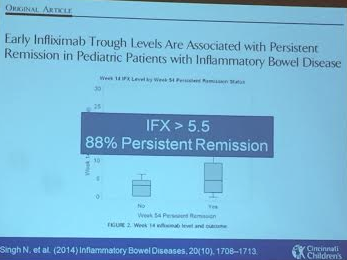
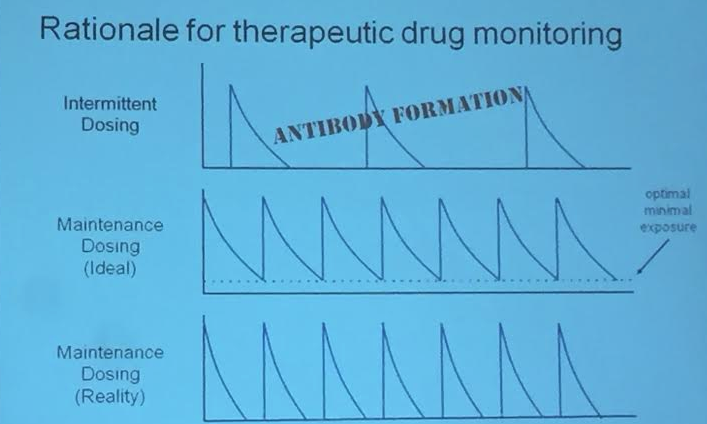
Therapeutic drug monitoring in pediatrics. Is this an alternative to combination therapy? Rationale (see slide): lower antibody formation if trough levels maintained. IFX level >5.5 associated with persistent remission (Singh et al 2014). Children are growing and they may need more adjustments. In Cincy, checking levels at week 14 after initiation and then every 6-12 months.

Screen Shot 2016-04-17 at 11.48.03 AM Screen Shot 2016-04-17 at 11.47.12 AM

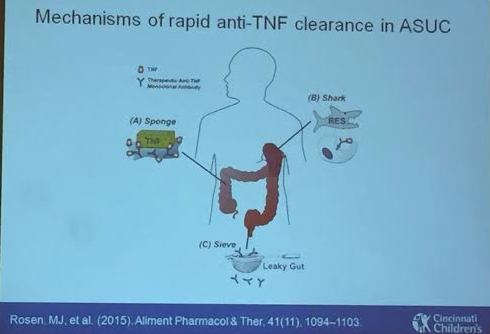
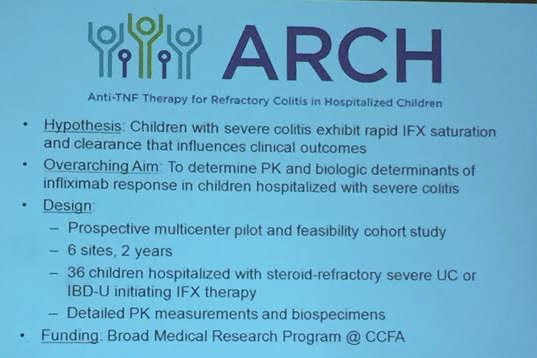
Acute Severe Ulcerative Colitis. High rates of dose escalation in this population. Some of this is due to more rapid clearance of anti-TNF –leaking in gut and other mechanisms as well. Week 8 level of 40 associated with clinical response. Thus, this population may benefit from 10 mg/kg at start (in those with albumin <3) and may need more frequent dosing, especially early into treatment (?0, 2, 6, 10). ARCH study to look into this further

Screen Shot 2016-04-17 at 11.49.33 AM

Screen Shot 2016-04-17 at 11.49.45 AM

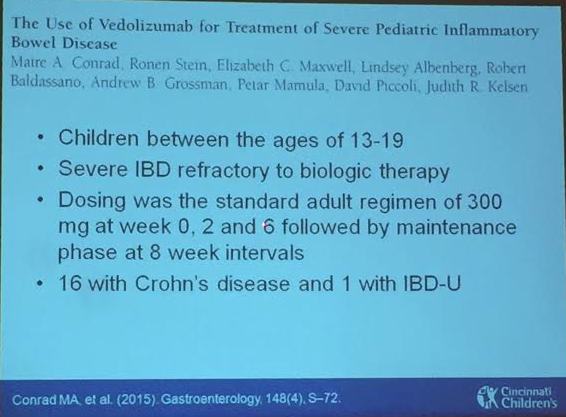
Vedolizumab. Conrad MA 2015. About 1/3rd of these refractory patients in this abstract responded.

Screen Shot 2016-04-17 at 11.50.01 AM

Screen Shot 2016-04-17 at 11.50.16 AM

Ustekinumab . IL-12 & IL-23 blockage. No studies in pediatrics. Case report reviewed of good response in a refractory case.

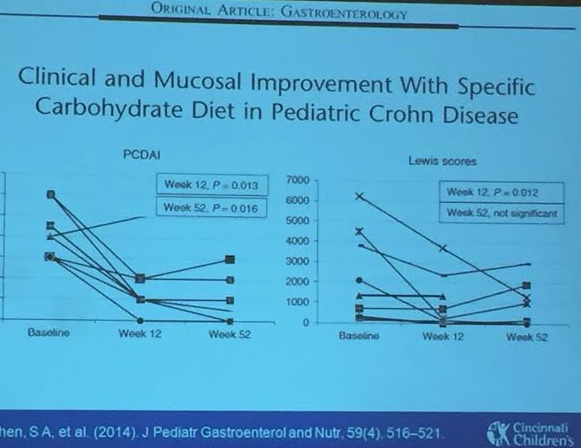
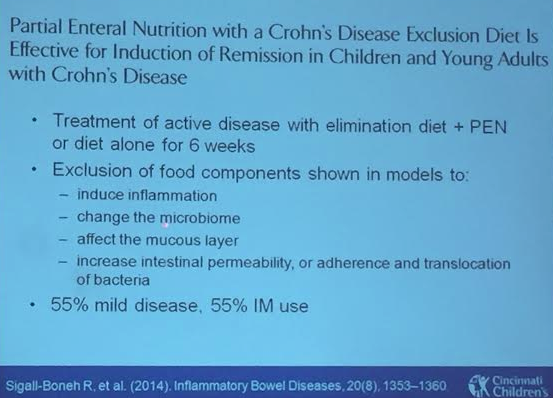
Enteral therapy. Specific carbohydrate diet experience. These diets have some published data, most retrospective studies. Our group (Cohen SA et al) did perform a small prospective study. Sigall-Boneh R et al showed improvement with partial enteral nutrition.

Screen Shot 2016-04-17 at 11.53.14 AM

Screen Shot 2016-04-17 at 11.53.26 AM


Screen Shot 2016-04-17 at 11.54.44 AM

Screen Shot 2016-04-17 at 11.55.08 AM Screen Shot 2016-04-17 at 11.54.57 AM

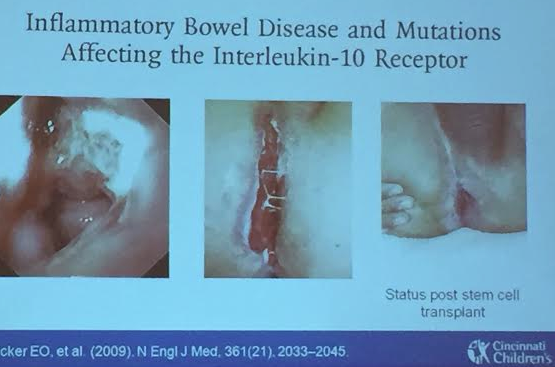
Very early-onset of IBD. IL-10 receptor deficiency was a key early discovery and can be treated with stem cell transplant. STAT3 mutation case reviewed which was managed with tocilizumab. More targeted therapy expected based on specific mutations.

Screen Shot 2016-04-17 at 11.55.33 AM


Optimism for New Treatment in Inflammatory Bowel Disease: AJM300

Yesterday’s post on “Eternal Nutrition” had a link to podcasts on enteral nutrition as therapy for Crohn’s disease.  I listened to the podcasts and they were helpful (Enteral Therapy as Primary Therapy for Crohn’s Disease Podcast).  A few points that were made included the following:

  1. Try to have the right person teach/place the nasogastric feeding tube.  If the first experience is bad, this may make further attempts quite difficult.  At CHOP, their facility has an education center and they schedule 3-hour learning session for enteral feeds.  Teaching the teen to place the NG tube is preferred.
  2. Many pediatric gastroenterologists in U.S. are not informing their patients that enteral feedings are a treatment option.
  3. In most parts of the world, induction with enteral nutrition involves virtually 100% of diet as enteral nutrition for ~8-12 weeks.  CHOP modification involves 80-90% of calories delivered enterally, typically over an overnight drip.  If someone is not responding to enteral feeds, CHOP may increase calories delivered enterally.
  4. For maintenance with CHOP modification, gradually reduction from 7 days per week to 5 days per week is attempted.  At CHOP, they prefer hydrolysate for enteral tube feedings and think more rapid gastric emptying could be helpful.  However, the podcast state that specific formulas have not been shown to be superior in trials to date.  At CHOP, if formula is taken orally, then an intact protein formula is selected.
  5. If someone uses enteral formula for maintenance, then consideration of a gastrostomy tube (after 3 months) is reasonable.  They have not had local issues at sites due to Crohn’s disease.
  6. Resources include the Oley.org website and the Crohn’s Survival Guide.
  7. Enteral therapy seems to work in small bowel as well as colonic disease, despite early reports suggesting less efficacy with colonic disease.

———————

A recent phase II study (N Yoshimura et al. Gastroenterol 2015; 149: 1775-83) indicates that an oral antagonist of α4 integrin may be quite useful for ulcerative colitis.

This double-blind, placebo-controlled trial with 102 patients found the following:

  • A clinical response rate at 8 weeks of 62.7% in the treatment group and 25.5% for placebo)
  • Rates of remission were 23.5% in the treatment group  compared with 3.9% in the placebo group.
  • Mucosal healing were 58.8%% in the treatment group  compared with 29.4% in the placebo group.
  • No serious adverse events were noted.

In the commentary by  BG Levesque and S Ghosh (pg 1669-72), it is noted that subsequent oral integrins will be compared to vedolizumab and similar safety concerns exist; that is making sure that there are no cases of progressive multifocal leukoencephalopathy (PML) which has been associated with natalizumab therapy.  For vedolizumab, the RAMP safety monitoring program has NOT identified PML in 2884 IBD patients.

The commentary (in blue) discusses several integrins as potential therapeutic targets and outlines future therapies.

Nontargeted therapies:

  • A) Induction: corticosteroids, 5- aminosalicylates, cyclosporin, and tacrolimus
  • B) Maintenance: thiopurines, methotrexate, 5-aminosalicylates, and tacrolimus.

Targeted therapies (those in development phase in italics)

  • A) Monoclonal antibodies (induction and maintenance): tumor necrosis factor inhibitors, vedolizumab, other integrin/adhesion molecule inhibitors, interleukin-12/23 inhibitors, and interleukin-6 inhibitors.
  • B) Oral synthetic (induction and maintenance or stop and start): Jakinibs, integrin blockers, sphingosine-1-phosphate (s1P) regulators, and SMAD7 antisense oligonucleotide.

“The results of AJM300 demonstrate feasibility of such an approach, and we anticipate a proliferation of such approaches given the robust evidence supporting integrins as a target, especially if the drug can be targeted or delivered in a gut-specific manner.”

My take: There are a number of therapies being developed that are likely to transform the treatment of inflammatory bowel disease; future treatments will be more precise, more effective and have many more options.

Related blog posts:

Banning Mills

Banning Mills


Venous Thromboembolism: A Good Question for Pediatric Collaboration

Two recent clinical review articles (see below) indicate that most adults with inflammatory bowel disease (IBD) admitted to the hospital would benefit from venous thromboembolism (VTE) prophylaxis.  Since children with IBD have a lower risk of VTE, it is unclear whether more efforts at VTE prophylaxis are needed in the pediatric population.  Previous studies have shown that in those IBD patients less than 20 years, the incidence rate was 8.9 per 10,000 person years.  In contrast, in those IBD patients older than 60, the incidence rate was 54.6 per 10,000 person years (VTE with IBD | gutsandgrowth).

  • Inflammatory Bowel Dis 2015; 21: 1195-1203.
  • Inflammatory Bowel Dis 2015; 21: 1204-1213.

In the first article, the authors review common risk factors and disease-specific risk factors.  They state the following:

Because hospitalization puts the patient at greater risk for TE compared with an outpatient setting, all hospitalized patients should receive anticoagulant therapy in the absence of severe bleeding, even if the patients are in remission.

The second review describes epidemiological data, pathophysiology, and VTE prevention. They also state the following:

Currently, the most effective strategy for preventing VTE in hospitalized patients with IBD with active disease is prophylactic anticoagulation.  In fact, all of the current guidelines for the management of patients with IBD suggest the use of anticoagulants to prevent VTE.

The authors note that the rates of thromboprophylaxis are “still unacceptably low.”

Bottomline: In adults with active IBD, VTE prophylaxis is recommended. In the pediatric population due to the lower incidence of VTE, more study is needed –perhaps another project for ImproveCareNow.

Briefly noted:

Cochrane Review of Vedolizumab for Ulcerative Colitis.  Inflammatory Bowel Dis 2015; 21: 1151-59.  Based on four studies (n=606 patients) with low risk of bias, pooled analysis showed that vedolizumab was superior to placebo for induction of remission (RR=0.86), clinical response (RR=0.82), endoscopic remission (RR=0.82) and for achieving remission at 52 weeks in week 6 responders (RR=2.73).  No statistically significant difference was observed in the incidence of adverse events between vedolizumab and placebo.

Zoo Atlanta

Zoo Atlanta

Toronto Consensus: Practice Guidelines for Nonhospitalized Ulcerative Colitis

A group of 23 experts followed a rigorous process over a 1-year period to assess the quality of evidence and develop consensus statements regarding the medical management of ulcerative colitis (UC) in adults (Bressler B, Marshall JK et al. Gastroenterol 2015; 148: 1035-58, editorial 877-80).

The need for updated guidelines has emerged due to practice variation related in part to a wider availability of treatments and diagnostic tools. It is recognized that early institution of effective therapy is associated with the best outcomes.  In addition, due to the chronic nature of ulcerative colitis and the potential for reduced durability of biologic agents, careful decision-making can improve response.

Table 4 in the article summarizes the recommendations.  I will list a few:

1. Thiopurines:

  • “In patients with UC, we recommend against the use of thiopurine monotherapy to induce complete remission.”
  • In selected patients, “we suggest thiopurine monotherapy as an option to maintain complete corticosteroid-free remission.”

2. Anti-TNF therapy:

  • “In patients with UC who fail to respond to thiopurines or corticosteroids, we recommend anti-TNF therapy to induce complete corticosteroid-free remission.”
  • “When starting anti-TNF therapy, we recommend it be combined with a thiopurine or methotrexate rather than used as monotherapy to induce complete remission.”
  • For UC patients with suboptimal response or for those who lose response to anti-TNF therapy, “we recommend dose intensification.”  Dose optimization should be informed by therapeutic drug monitoring.

3. Vedolizumab

  • Vedolizumab is recommended with primary anti-TNF failure (rather than switching to an alternative anti-TNF), whereas either a 2nd anti-TNF or vedolizumab is recommended with secondary anti-TNF failure based on therapeutic drug monitoring.

4. Fecal microbial transplant (FMT)

  • “We recommend against FMT…outside the setting of a clinical trial.”

5. 5-ASA and Corticosteroids

  • Rectal 5-ASA is recommended at 1 g daily for mild-to-moderate ulcerative proctitis.  5-ASA enemas are recommended for mild-to-moderate left-sided ulcerative colitis.
  • In patients with moderate-to-severe UC, corticosteroids are recommended as 1st line therapy for induction of remission but not for maintaining remission.  In addition, corticosteroids are recommended as 2nd-line agents for inducing remission in those with mild-to-moderate disease who do not respond to 5-ASA products.

With all of the treatments, the authors recommend followup to assure response to therapy; this followup ranges from within 2 weeks for steroids, to 4-8 weeks with 5-ASA products, to 8-14 weeks for biologic agents.

Overall, the emphasis of this consensus statement is on maximizing the response to biologic agents.  By optimizing dosing and using combination therapy, the treatment guidelines aim to lower rates of antidrug antibody formation.  This in turn should improve results and is in agreement with data from both the SONIC study and the UC-SUCCESS study.

The editorial comments that methotrexate “may be an attractive option for young male patients;” however, “the absence of data on risk of malignancy with methotrexate in IBD may reflect lower frequency of use for this indication.”

While these guidelines will be useful, there are many unanswered questions (discussed in editorial).

  • In patients on combination therapy, what is the optimal dose of the immunomodulator?
  • When or Should the immunomodulator be withdrawn?
  • For secondary failure, should a 2nd anti-TNF be used prior to vedolizumab?
  • How should these guidelines be tailored for the pediatric population (or the elderly)?
  • What is the optimal monitoring for UC patients with regard to biomarkers and endoscopy?
  • What is the appropriate role of therapeutic drug monitoring?

Bottomline: These guidelines are likely to promote the use of more combination therapy and help define the current role of vedolizumab.

Related blog posts:

Disclaimer: These blog posts are for educational purposes only. Specific dosing of medications/diets (along with potential adverse effects) should be confirmed by prescribing physician/nutritionist.  This content is not a substitute for medical advice, diagnosis or treatment provided by a qualified healthcare provider. Always seek the advice of your physician or other qualified health provider with any questions you may have regarding a condition.

Early Look At Entyvio (Vedolizumab) in Pediatrics

From DDW 2015 and HealioGastro: Entyvio shows promise in pediatric patients

First study, abstract 321:

Namita Singh, MD, of Cedars Sinai Medical Center in New York, … presented results of a prospective observational study in which they initiated Entyvio (vedolizumab, Takeda; 6 mg/kg, maximum 300 mg) — off label — via intravenous infusion in pediatric patients…The primary clinical outcomes was clinical remission at week 6 (PUCAI ≤ 10; PCDAI ≤ 10).

The study looked at 23 patients (15 with Crohn’s; eight with ulcerative colitis) enrolled between June 2014 and October 2014; median age of vedolizumab initiation was 14 years.

At 88%, the patients with ulcerative colitis had a higher rate of remission than those with Crohn’s who were at 40% [at week 6]. This trend sustained at week 14 and Singh said all patients with ulcerative colitis were in remission at week 14.

Week 6 and week 14 remission rates overall were 46.6% and 54.5%, respectively, and week 6 remission predicted week 14 remission (P < .05).

“Week 6 remission is associated with week 14 remission,” Singh said. “This suggests that we can determine early in therapy whether a patient will be a primary responder to therapy. If not, then perhaps we should move on to another therapy.”

“Longer duration from last anti-TNF exposure is associated with higher remission rates,” Singh said.

Second study, abstract 322:

Ronen Stein, MD, from the Perelman School of Medicine at the University of Pennsylvania, also presented data on vedolizumab therapy in patients with severe pediatric IBD…In this single center, prospective observational cohort study, the primary endpoint was a decrease in PCDAI/PUCAI from baseline to weeks 6, 14 and 22 and secondary endpoints were changes in albumin, hematocrit and CRP as well as remission at the same time points.

Patients received vedolizumab infusions (300 mg) at weeks 0, 2 and 6 for induction and maintenance through week 22.

The researchers included children aged 13 years to 21 years (n = 17) with IBD who weighed 40 kg or more and had a past failure on TNF-alpha inhibitor therapy. Of these patients, 15 had Crohn’s disease and two had unclassified IBD (IBD-U).

More than three-quarters started on systemic corticosteroids at baseline; more than one quarter were on immunomodulators. Seven patients had previous abdominal surgery and 59% of patients had failed more than one biologic therapy…

At each time point in question, this study saw improvement of PCDAI (P < .001 at week 6; P < .05 at week 14; P < .0001 at week 22).

“Starting at week 6, there was a significant decrease in PCDAI that was sustained for weeks 14 and 22.”

Five patients reached remission at week 6.

“There really is no pattern to tell us which patients will be in remission at week 6. They have pretty different characteristics,” Stein said.

Briefly noted:

Link: Case description/images of 9 year old with gastric Crohn’s

Related blog posts:

I love Ria’s Bluebird –the best pancakes ever!

I Love the place: the best pancakes ever!

Enthusiasm for Vedolizumab

A recent GI & Hepatology News article quoted several leading IBD researchers stating that they consider Vedolizumab a first-line biologic therapy for ulcerative colitis.  Here’s the link:

Vedolizumab for UC

Here’s an excerpt:

Dr. Feagan presented outcome results after 80 and 104 weeks of vedolizumab treatment of 278 patients with ulcerative colitis who had completed a full year of treatment during the GEMINI 1 trial [Phase 3, Randomized, Placebo-Controlled, Blinded, Multicenter Study of the Induction and Maintenance of Clinical Response and Remission by Vedolizumab in Patients with Moderate to Severe Ulcerative Colitis] (N. Engl. J. Med. 2013;369:699-710). He reported that the percentage of patients in clinical remission grew from 66% after 52 weeks on treatment (the time of entry into the long-term phase of the study), to 77% after 80 weeks, which then dropped to 73% after 104 weeks. Patients with a clinical response increased from 78% after 52 weeks to 88% after 80 weeks, and then dropped to 83% after 104 weeks.

During weeks 53-104 on treatment the rates of adverse events, serious adverse events, serious infections, adverse events resulting in treatment discontinuation, enteric infections, and malignancies were all low and similar to the event rates seen among the patients randomized to placebo in the GEMINI 1 study.

The results suggest that with vedolizumab treatment of inflammatory bowel disease “once you achieve an effect it is long-lasting,” Dr. Rutgeerts said in an interview. But he cautioned that the long-lasting efficacy was achieved with treatment every 4 weeks. While this approach was safe, it would also be expensive in routine practice, he noted. “The safety looks good, but the cost would be very high.”

“A key concept of vedolizumab is that it builds efficacy over time,” commented Dr. Silvio Danese during a talk at the meeting. “Vedolizumab is not the fastest runner, but [treating inflammatory bowel disease] is a marathon, and the important thing is getting to the finish”

Bottomline: Head-to-head trials would be helpful to determine which biologic agent should be considered first-line.

Related blog posts:

Screen shot 2015-01-01 at 2.41.27 PM

Podcast on Vedolizumab Efficacy for Crohn’s Disease

According to AGA Journals blog, one may need to wait up to 10 weeks to determine whether vedolizumab is effective for Crohn’s disease. Here’s the link: Vedolizumab for Crohn’s.

Here’s an excerpt: (re: Bruce Sands’ article in the September issue of Gastroenterology)

Sands et al. report that vedolizumab, an antibody against the integrin α4β7, is no more effective than placebo in inducing clinical remission at week 6 in patients with Crohn’s disease in whom previous treatment with tumor necrosis factor antagonists had failed.

However, at week 10, a higher proportion of patients given vedolizumab were in remission (26.6%) than of those given placebo (12.1%)… Adverse events were similar between groups.

Related blog post:

Comparing Biologics for Ulcerative Colitis

A recent study has reviewed biologic therapies for ulcerative colitis (Ann Intern Med. 2014;160(10):704-711). Here’s the abstract link: bit.ly/1o5PpRX.

Data Synthesis: ..There were 7 double-blind, placebo-controlled trials that were rated as low risk of bias and showed that all biological agents (adalimumab, golimumab, infliximab, and vedolizumab) resulted in more clinical responses, clinical remissions, and mucosal healings than placebo for induction therapy. The results of network meta-analysis suggested that infliximab is more effective to induce clinical response (odds ratio, 2.36 [95% credible interval, 1.22 to 4.63]) and mucosal healing (odds ratio, 2.02 [95% credible interval, 1.13 to 3.59]) than adalimumab. No other indirect comparison reached statistical significance. For maintenance, 6 double-blind, placebo-controlled trials that were rated high risk of bias showed that all biological agents have greater clinical efficacy than placebo. The occurrence of adverse events was not different between biological agents and placebo.

Limitation: Few trials, no head-to-head comparisons, and inadequate follow-up in maintenance trials.

Conclusion: Biological agents are effective treatments for UC, but head-to-head trials are warranted to establish the best therapeutic option.

Related blog posts:


What you might not know about anti-TNF monitoring…

At a recent group dinner meeting, we had the opportunity to review therapeutic anti-TNF monitoring. In addition, we discussed emerging treatments for inflammatory bowel disease, like golimumab, tofacintinib and vedolizumab.

As noted in previous blog entries (see below), therapeutic anti-TNF monitoring can help adjust treatment.  Namely, if a patient loses response to therapy and has low trough levels of anti-TNF (Infliximab ❤ μg/mL, Adalimumab <8 μg/mL, or certolizumab <27.5 μg/mL) without antidrug antibodies (ADAs), then increasing the dose is likely to be effective.  However, if a patient has a therapeutic level and is not responding, changing to another agent and/or further investigation is worthwhile.

So, what information is new?

  • Only about 20% of patients who lose clinical response develop ADAs.  So, drug level, rather than ADAs, is most helpful.
  • For infliximab, adjusting dose 14 weeks into therapy to achieve a target trough level between 3-7 mcg/mL may be helpful.
  • Severe colitis patients may need higher initial doses (?as high as 20 mg/kg) due to potential for ‘antigen sink.’  This is due to notably higher clearance in the presence of low albumin, and high CRP.  Other factors that increase clearance include higher BMI and male gender.
  • About 1/2 of patients who receive higher doses due to severe disease may be able to deescalate dosage when improved. (?which half)
  • Currently, a reactive approach to checking levels is common in U.S. in part due to costs associated with checking trough levels and ADAs (as much as $2500).  That is, most commonly checking levels is undertaken in patients with suboptimal clinical response.  A proactive approach to achieve target levels may be shown to be helpful.
  • While studies have not shown higher adverse reactions with higher trough levels, there are a few clinical situations in which lower trough levels can be important.  In patients with psoriatic skin lesions and arthralgias, if trough levels are elevated, lowering the dose may be helpful.

Outstanding questions?

  • Should patients have drug levels checked when they are asymptomatic?
  • How does a practitioner account for variability among different laboratory assays?
  • What is the optimal target level for each anti-TNF agent? Is this different in Crohn disease compared with ulcerative colitis? Is the trough target level different in adults than children?
  • Is there a toxic level?
  • If a rapid test response were available, would checking drug levels be needed for hospitalized patients to assess anti-TNF rescue therapy?

Related blog links:

Disclaimer: These blog posts are for educational purposes only. Specific dosing of medications (along with potential adverse effects) should be confirmed by prescribing physician.  This content is not a substitute for medical advice, diagnosis or treatment provided by a qualified healthcare provider. Always seek the advice of your physician or other qualified health provider with any questions you may have regarding a condition