Clostridium difficile Guidelines

Clinical Practice Guidelines for Clostridium difficile Infection in Adults and Children: 2017 Update by the Infectious Diseases Society of America (IDSA) and Society for Healthcare Epidemiology of America (SHEA)

Clinical Infectious Diseases, Volume 66, Issue 7, 19 March 2018, Pages e1–e48,https://doi.org/10.1093/cid/cix1085

Summary from Infectious Disease Advisor: Updated C difficile Infection Clinical Guidance From IDSA/SHEA

The comprehensive clinical practice guideline …was endorsed by the Infectious Diseases Society of America (IDSA) and the Society for Healthcare Epidemiology of America (SHEA)…

Recommendations for treatment of CDI in adults… now favors a 10-day course of vancomycin or fidaxomicin rather than metronidazole for first-line therapy of mild/moderate CDI in adults… Fidaxomicin, also a newly recommended first-line therapy for mild/moderate CDI in adults, may reduce the risk for recurrent CDI because of its narrow spectrum compared with vancomycin.

Recommended treatment strategies for recurrent CDI, a complication that occurs in approximately 25% of patients, have also been revised…Following initial CDI treated with a 10-day course of vancomycin, either a several-week tapered and pulsed course of vancomycin or a 10-day course of fidaxomicin is recommended. For most patients, probiotics can be considered because of favorable cost and safety, although definitive efficacy data for probiotics to prevent recurrent CDI are still lacking. For multiply recurrent CDI (ie, at least 3 CDIs), correction of the patient’s underlying intestinal microbiota perturbation with fecal microbiota transplantation (FMT) should be strongly considered..

The diagnosis of CDI… Molecular tests (eg, nucleic acid amplification tests [NAATs], such as polymerase chain reaction), which do not differentiate colonization and infection, are now the most commonly used test for CDI among US hospitals. NAATs have the potential to misdiagnose patients with colonization as having CDI, particularly when used in patients with low likelihood of CDI. Thus, this guideline strongly reinforces the importance of practicing good diagnostic stewardship and limiting C difficile testing to patients with new-onset, unexplained, and clinically significant (ie, at least 3 unformed stools in a 24-hour period) diarrhea…formed stools should not be tested for C difficile, nor should patients be retested within 7 days of a previous negative C difficile test. In pediatric populations, because of the unclear role of C difficile as a cause of diarrhea in infants, children less than 12 months of age should not be tested…

If diagnostic stewardship is not an achievable goal, use of NAAT alone is likely to lead to frequent misdiagnosis of CDI among patients with C difficile colonization. In these cases, NAAT alone should be avoided and a multistep algorithm that incorporates toxin testing is recommended.

Related blog posts:

Cumberland Island 2018

Time-to-diagnosis of Biliary Atresia

A recent study (S Harpavat et al. JPGN 2018; 66: 850-6) identifies race/ethnicity as a factor affecting the timeliness of diagnosis.

Specifically, non-Hispanic white infants were diagnosed earlier than non-Hispanic black infants and Hispanic infants (P=.007); this was related to the timing of referral from the primary care physician.  The authors speculate that this could be related to three factors:

  • lighter colored skin could help identify jaundice more quickly
  • better access to health care
  • implicit bias leading to uneven treatment

The other finding in the study was that after referral, patients referred after 30 days of life had a more expedited diagnosis than those referred prior to 30 days of life.  The authors caution that the histology in these early cases is similar to those who present later, even if their aminotransferases are normal.  In addition, while physicians and parents want to avoid ‘over testing,’ prompt diagnosis, even prior to 30 days of life, may lead to improved outcomes.  Thus, the authors recommend proceeding with liver biopsy if there is clinical suspicion of biliary atresia.

My take: Obtaining objective evidence of cholestasis in infants that are jaundiced beyond 2 weeks of life is important.  This study highlights some of the reasons why the diagnosis is delayed in so many.

Related blog posts:


IBD Shorts July 2018

DJ Gracie et al. Gastroenterol 2018; 154: 1635-46. This study of 405 adults indicated that IBD triggers anxiety and that anxiety triggers IBD. Specifically: “Baseline CD or UC disease activity were associated with an almost 6-fold increase in risk for a later abnormal anxiety score (hazard ratio [HR], 5.77; 95% CI, 1.89-17.7).  In patients with quiescent IBD at baseline, baseline abnormal anxiety scores were associated with later need for glucocorticosteroid prescription or flare of IBD activity (HR 2.08; 95% CI, 1.31-3.30).”

RL Dalal, B Shen, DA Schwartz. Inflamm Bowel Dis 2018; 24: 989-96.  This review provides updated information on epidemiology, diagnosis, and treatment recommendations for pouchitis.

A Alper et al. JPGN 2018; 66: 934-6. Key finding: Celiac disease is “not increased in children with IBD compared with non-IBD children with gastrointestinal symptoms.”  False-positive tTG serology can occur.

AK Shaikhkhalil et al. JPGN 2018; 66: 909-14. The authors showed that using a quality-improvement effort, there was increase utilization of enteral exclusive therapy (EEN).  Baseline 5.was <5% and by completion of intervention, utilization increased to approximately 50%. The interventions to achieve this are specified in this article, including talking points.  EEN is described as “nutrition therapy.” Patients are offered oral EEN and if not adequate by 3-4 days, nasogastric feedings are initiated (~15%).  Interestingly, of those to complete EEN therapy, 97% did not need NG placement.

Pictures from Ameilia Island:

Amelia Island

ICN Travel Toolkit -Tips for Patients with Inflammatory Bowel Disease

ImproveCareNow’s Patient Advisory Committee: ICN Travel Toolkit – a collection of personal stories, plus tips and techniques for traveling with IBD – written by members of the ICN Patient Advisory Council (PAC).

In addition to the tips offered by the PAC (see below), I would recommend that those travelling keep a succinct medical summary with the following (minimum):

  • Diagnosis and extent of disease
  • Other medical problems
  • Physician (contact info)
  • Allergies –food/medicines
  • Current list of medications including dosage and frequency
  • List of prior treatments
  • Previous surgeries

Also, below are other travel -related links, including to the CDC travel website which makes recommendations based on travel destination along with underlying problems.

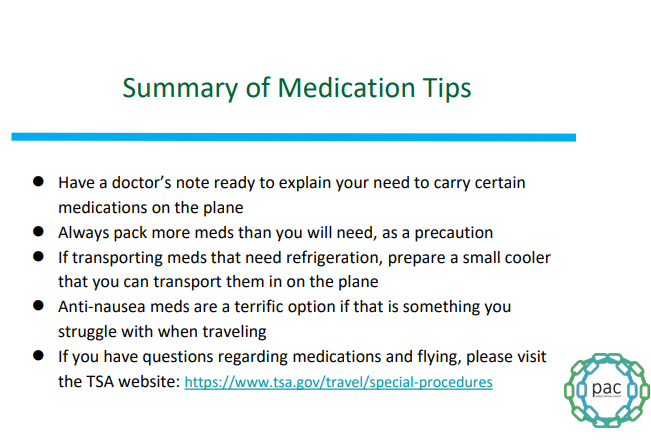
A summary of the ICN travel tips from the PAC PowerPoint Presentation:


Fluid Management for Abdominal Surgery

A recent study (PS Myles et al. NEJM 2018; 378: 2263-74, editorial 2335-6) throws some shade on the idea that restricting IV fluids during surgery results in better outcomes.

With ERAS (enhanced recovery after surgery) procedures, one of the components has been restricting IV fluids during surgery due to concerns that excessive fluid will result in bowel wall edema and slower recovery.  To better determine if a restrictive IV fluid approach or a more liberal approach was better, this RELIEF study randomized approximately 3000 patients who were receiving major abdominal surgery into two arms: a restrictive group and a  liberal group; they received a median of 3.7 liters of IV fluids and 6.1 liters respectively during and up to 24 hours after surgery.

Key findings:

  • Rate of disability-free survival at 1 year was 81.9% in the restrictive group and 82.3% in the liberal group (hazard ratio for death or disability was 1.05, CI 0.88-1.24, P=0.61)
  • Rate of acute kidney injury was 8.6% in the restrictive fluid group compared to 5.0% in the liberal fluid group (P<0.001). Renal replacement therapy was 0.9% in the restrictive fluid group compared to 0.3% in the liberal fluid group (P=0.048).
  • Rates of surgical site infection was 16.5% in the restrictive fluid group compared to 13.6% in the liberal fluid group (P=0.02).  The authors speculate that this could be related to perfusion of surgical anastomosis.

The associated commentary notes that in this age of minimally invasive surgery, a modestly liberal administration of IV fluids does not create substantial fluid retention.

My take: Restrictive fluid regimen during major abdominal surgery resulted in higher rates of kidney injury and surgical site infections.  This study indicates that for ‘enhanced recovery’ that a more liberal fluid regimen is safer.

Related posts:


Pediatric Intestinal Pseudo-obstruction: Consensus Recommendations

A new report from an ESPGHAN-Led Expert Group (N Thapar et al. JPGN 2018; 66: 9991-1019) provides detailed recommendations for pediatric intestinal pseudo-obstruction (PIPO).  In addition, this report serves as an excellent self-assessment of your vision.  If you can read figure 1, which has some incredibly tiny font size, then your vision is fantastic.

Full Link“Paediatric Intestinal Pseudo-obstruction: Evidence and Consensus-based Recommendations From an ESPGHAN -Led Expert Group”

Aside from that snarky comment, the report offers a great deal of useful advice.

  • After obstruction has been excluded, the authors recommend that patients should undergo a basic laboratory evaluation (including CBC, CMP, ESR/CRP, Celiac serology, Cortisol, Thyroid testing, Metabolic tests [urine organic acids, ammonia, lactate]) and to consider more extensive evaluation.
  • If primary, rather than secondary, PIPO is suspected, the authors recommend neurogastroenterology evaluation.

Subsequently, the authors review management: potential medications (Table 6), enteral feeds, gastrostomy and ileostomy, and in more than 80% then need for parenteral nutrition. At the time of therapeutic procedures, it is recommended to obtain full-thickness biopsies to further characterize the PIPO.

Clinical features which distinguish pediatric chronic intestinal pseudo-obstruction (CIPO) from adult CIPO are listed in Table 2. These include the following:

  • Frequent urologic involvement in pediatric CIPO which is rare in adults with CIPO.
  • Dilated bowel loops are commonly absent (~40%) in pediatric CIPO in the neonatal period and universal in adult cases.
  • Unlike in adults, there is a high risk of colonic and small bowel volvulus in pediatric CIPO and malrotation is evident in ~30% of pediatric CIPO (rarely seen in adults).
  • Also, in pediatrics, fabricated cases are more commonly encountered.

Intestinal transplantation should be considered in patients with PIPO who develop life-threatening complications associated with TPN or poor quality of life/high morbidity.

Pictures below from yesterday’s Peachtree Road Race and previous T-shirts from previous years.


Disclaimer: These blog posts are for educational purposes only. Specific dosing of medications/diets (along with potential adverse effects) should be confirmed by prescribing physician/nutritionist.  This content is not a substitute for medical advice, diagnosis or treatment provided by a qualified healthcare provider. Always seek the advice of your physician or other qualified health provider with any questions you may have regarding a condition.

Why Does this Patient Have Colitis?

Just in time for this year’s Peachtree Road Race…

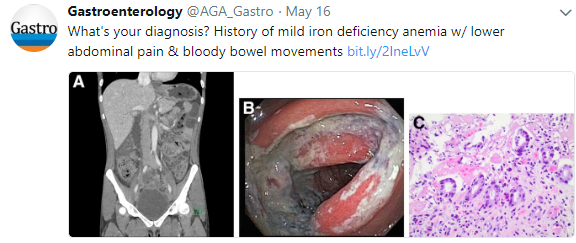
A brief report (RS Robinson et al. Gastroenterol 2018; 154: 1582-83) presents a case of a 28 year old, who had been in training for a marathon, with mild iron deficiency anemia, lower abdominal pain, and bloody bowel movements. The CT scan and colonoscopy showed diffuse colonic/ileal inflammation; the histology showed mucosal necrosis, crypt atrophy and acute inflammation (see below).

Answer to title question: Runner’s Colitis.  The authors note that in some long-distance runners an ischemic colitis can develop in part due to rerouting of blood with prolonged exercise.  Dehydration may exacerbate poor perfusion.  The splenic flexure and the rectosigmoid junction are particularly susceptible due to the ‘watershed’ nature of their blood supply.

The majority of individuals recover fully from this insult, though the literature describes one individual who required a subtotal colectomy after perforation.

HCV Treatment and “MELD Purgatory”

A recent study (A Kwong et al. Liver Transplantation 2018; 24: 735-43) and associated editorial (P Martin, pg 727-8) highlight an unintended consequence of HCV therapeutic success –“MELD purgatory.”

The study notes that with the availability of more effective direct-acting antivirals for HCV, there has been a decrease in wait-list mortality and a decrease in disease severity.  This was determined by reviewing 3 timed cohorts (2004 n=2408, 2009 n=2402, and 2014 n=2817) from the Organ Procurement and Transplantation database.

  • For example, the 2014 had a 21% lower risk of wait-list death (HR 0.79) than the 2009 cohort.  This is in contrast to other (non-HCV) disease in which there was no change in mortality.
  • Also, the MELD rate of change was 2.35 per year for the 2009 cohort compared to 1.90 for the 2014 group.
  • In their discussion, the authors note that while patients with HCV can achieve a sustained virologic response, those with advanced liver disease still need liver transplantation.  In these patient, there is a much lower prospect of attaining a high enough MELD score to receive organ offers –“leaving them with persistent complications and a decreased quality of life.”  This situation has been termed “MELD purgatory.”

The editorial notes that in the five years since the introduction of sofosbuvir, HCV has been displaced as the single commonest indication for liver transplantation by nonalcoholic fatty liver disease.  These agents have led to a decrease in advance HCV-related liver disease.  In addition, in the past, HCV infection had near universal recurrence after transplantation and this is no longer the situation.

My take: Undeniably, the advent of DAA have made a huge dent in progressive HCV liver disease. However, those with advanced liver disease may be stuck in a purgatory between good health and poor quality of life even after clearance of HCV infection.

Related blog posts: