Unknown's avatar

About gutsandgrowth

I am a pediatric gastroenterologist at GI Care for Kids (previously called CCDHC) in Atlanta, Georgia. The goal of my blog is to share some of my reading in my field more broadly. In addition, I wanted to provide my voice to a wide range of topics that often have inaccurate or incomplete information. Before starting this blog in 2011, I would tear out articles from journals and/or keep notes in a palm pilot. This blog helps provide an updated source of information that is easy to access and search, along with links to useful multimedia sources. I was born and raised in Chattanooga. After graduating from the University of Virginia, I attended Baylor College of Medicine. I completed residency and fellowship training at the University of Cincinnati at the Children’s Hospital Medical Center. I received funding from the National Institutes of Health for molecular biology research of the gastrointestinal tract. During my fellowship, I had the opportunity to work with some of the most amazing pediatric gastroenterologists and mentors. Some of these individuals included Mitchell Cohen, William Balistreri, James Heubi, Jorge Bezerra, Colin Rudolph, John Bucuvalas, and Michael Farrell. I am grateful for their teaching and their friendship. During my training with their help, I received a nationwide award for the best research by a GI fellow. I have authored numerous publications/presentations including original research, case reports, review articles, and textbook chapters on various pediatric gastrointestinal problems. In addition, I have been recognized by Atlanta Magazine as a "Top Doctor" in my field multiple times. Currently, I am the vice chair of the section of nutrition for the Georgia Chapter of the American Academy of Pediatrics. In addition, I am an adjunct Associate Clinical Professor of Pediatrics at Emory University School of Medicine. Other society memberships have included the North American Society for Pediatric Gastroenterology Hepatology and Nutrition (NASPGHAN), American Academy of Pediatrics, the Food Allergy Network, the American Gastroenterology Association, the American Association for the Study of Liver Diseases, and the Crohn’s and Colitis Foundation. As part of a national pediatric GI organization called NASPGHAN (and its affiliated website GIKids), I have helped develop educational materials on a wide-range of gastrointestinal and liver diseases which are used across the country. Also, I have been an invited speaker for national campaigns to improve the evaluation and treatment of gastroesophageal reflux disease, celiac disease, eosinophilic esophagitis, hepatitis C, and inflammatory bowel disease (IBD). Some information on these topics has been posted at my work website, www.gicareforkids.com, which has links to multiple other useful resources. I am fortunate to work at GI Care For Kids. Our group has 17 terrific physicians with a wide range of subspecialization, including liver diseases, feeding disorders, eosinophilic diseases, inflammatory bowel disease, cystic fibrosis, DiGeorge/22q, celiac disease, and motility disorders. Many of our physicians are recognized nationally for their achievements. Our group of physicians have worked closely together for many years. None of the physicians in our group have ever left to join other groups. I have also worked with the same nurse (Bernadette) since I moved to Atlanta in 1997. For many families, more practical matters about our office include the following: – 14 office/satellite locations – physicians who speak Spanish – cutting edge research – on-site nutritionists – on-site psychology support for abdominal pain and feeding disorders – participation in ImproveCareNow to better the outcomes for children with inflammatory bowel disease – office endoscopy suite (lower costs and easier scheduling) – office infusion center (lower costs and easier for families) – easy access to nursing advice (each physician has at least one nurse) I am married and have two sons (both adults). I like to read, walk/hike, bike, swim, and play tennis with my free time. I do not have any financial relationships with pharmaceutical companies or other financial relationships to disclose. I have helped enroll patients in industry-sponsored research studies.

John Snow and Hepatology Potpouri

If you mention the name “John Snow,” I bet most people would think about one of the characters from Game of Thrones.  However, a more important John Snow is referenced in a recent Hepatology review (Hepatology 2014; 60: 1124-25).  “In 1855, the physician and epidemiologist John Snow used the technique of medical geography to stem the cholera epidemic in London.  By mapping the number of choleras case and the local water supply, he found that the Broad Street pump station was responsible and after the pump handle was removed, incident cases declined.”

Hepatology 2014; 60: 1150-59, editorial 1124-25.  Using spatial (clustering) epidemiology, the authors show that parenteral antischistosomal therapy (PAT) alone cannot explain the high HCV prevalence in Egypt.  Other iatrogenic exposures and poor infection control are likely contributing factors.

Hepatology 2014; 60: 1222-30, editorial 1130.  In a prospective study (western Europe), the authors show that vitamin D (25-OH) levels were inversely associated with the risk of hepatocellular carcinoma (HCC).  What is remarkable about this study is the levels were obtained on average 6 years before HCC diagnosis.  Also, this study uses tertiles -comparing those in the top third to those in the lowest third.

Hepatology 2014; 60: 1399-1408.  More data showing injury from Herbals and dietary supplements.  Liver injury caused by bodybuilding herbal supplements (often anabolic steroids) were typically less severe than liver injury induced in non-bodybuilding herbals (predominantly middle-aged women). Table 3 identifies by name many of the herbal supplements/dietary supplements associated with death or liver transplantation.  “Contrary to popular belief, this study demonstrates that HDS products are not always safe.”

Lysosomal Acid Lipase Deficiency -Another Needle in a Haystack

A recent article (Atherosclerosis 2014; 235: 21-30) reviews lysosomal acid lipase deficiency (LAL-D) and how this rare disease needs to be considered by pediatric hepatologists.

LAL-D is a rare lysosomal storage disease which encompasses a rapidly progressive disease in infants (previously referred to as Wolman disease) as well as a later-onset condition called cholesteryl ester storage disease (CESD).  Both of these diseases are caused by mutations in the LIPA gene and share the same pathophysiology related to deficiency of LAL. The disease prevalence estimates vary widely (1 in 40,000 to 1 in 300,000) and depend on ethnicity and location.  Jewish, Iraqi, and Iranian infants appear to be at highest risk.

According to the review algorithm, patients with three or more of the following should be considered for screening:

  • ALT >1.5 ULN
  • Hepatomegaly (may be mild)
  • HDL <50 mg/dL
  • Low BMI (in adults <30 kg/m2)
  • Liver biopsy with microvesicular steatosis; grossly the liver may appear orange

Thus, the potential target patients:

  1. Non-obese individuals with persistent increases in LFTs –usually with LDL >160 and low HDL <50
  2. Non-obese NAFLD/microvesicular steatosis

Given the potential for treatment with recombinant sebelipase alfa (Synageva Biopharma) and the widely available testing, looking for LAL-D makes sense in selected patients; though, even in highly selected patients, finding cases may truly be like finding the so-called ‘needle in a haystack’ given the huge numbers of individuals with elevated ALTs who do not have LAL-D.

Note: many of the review’s authors received research grants from Synageva.  (I do not have any financial conflicts to disclose.)

More Measles Cases -Here’s the Data

This past month a recent perspective article (NEJM 2014; 371: 1661-3) provides an update on measles and the problems with vaccination rates.

Key points:

  • More measles cases in 2014 (592 thru Aug 29) than in any year in the past 20.  Already, the number of cases this year is >3-fold the number in 2013 and ~10-fold more than in 2012
  • Most cases are due to infections acquired during travel or due to cases being brought into U.S. by foreign travelers
  • Problem has expanded due to increasing number of unvaccinated children.  Vaccines “that remain in the vial are completely ineffective.”
  • Measles remains one of the most contagious illnesses and typically one person can infect up to 18 susceptible persons.  Due to its contagiousness, a high level of herd immunity (>92-94% immune) is needed to prevent sustained spread of virus.
  • Measles can be deadly with case fatality rate of 0.2% to 0.3% in the developed world and much higher in the developing world (2-15%).
  • Even a few cases are very expensive to control. A 2004 Iowa outbreak of only three patients cost more than $140,000 to contain/investigate.  An outbreak in Arizona with only 7 patients cost more than $800,000.

Related blog posts:

Cheap Technology for Button Battery Ingestions

Typical Button Battery

Typical Button Battery

An NPR report regarding “the results of .. experiments published Monday in the Proceedings of the National Academy of Sciences show that a prototype shield is effective at keeping small, 11 millimeter batteries from damaging the esophagus after being swallowed.”  This would be worthy endeavor to pursue.  The larger buttons (20 millimeters in diameter) “are particularly dangerous. One out of 8 children [under 6 years old] who swallow this larger battery are going to have a serious debilitating complication.”  Here’s the link: Battery Shield

Here’s an excerpt regarding the shield:

Microscopic metal particles are embedded in the shield, which is a millimeter thick. When a battery is inserted into a device, the pressure from the device’s cover or a spring that holds the battery in place pushes the metal particles together. The shield then acts like a switch, conducting electricity.

When the battery is free, floating down a child’s esophagus, for instance, there’s not enough pressure to make the microparticles smush together. The shield then acts as an insulator…

The shield’s material is commercially available and currently used in touch-screen devices where a gentle press of a fingertip can complete a circuit.

Related blog posts:


"Great Power" for Damaging an Esophagus

“Great Power” for Damaging an Esophagus

NASPGHAN Notes –Last Word for this Year

This blog entry has abbreviated/summarized several presentations. Though not intentional, some important material is likely to have been omitted; in addition, transcription errors are possible as well.

IBD Treatment: Targets for the Modern Age –Eric Benchimol (Children’s Hospital of Eastern Ontario)

Goal: Review mucosal healing and best targets to measure to predict prognosis

Treat-to-target:

  • Regular assessment of disease activity using objective outcome measures.
  • Adjust treatment if not accomplishing goal.
  • Proven helpful in rheumatoid arthritis, hypertension, diabetes, and hypercholesterolemia.

Old targets:

  • “Clinical remission”
  • “Feeling better”
  • Indices: PCDAI, CDAI, Harvey-Bradshaw
  • Problem: Active disease is not well-predicted by symptoms or laboratory markers
  • 2nd Problem: Active symptoms not always due to active IBD (could be due to functional complaints)
  • PUCAI score in ulcerative colitis does reflect ulcerative colitis severity fairly well

New Targets

  • High correlation with outcomes
  • Cost-effective
  • Available

Is mucosal healing achievable?   If you were scoped and adjustments made in therapy, then much higher rate (HR >4) of remission. Bougen, Clin Gastroenterol Hepatol 12: 978.  Endoscopy may be best way to assess mucosal healing.  Since it is invasive, efforts have been made to identify surrogate markers.
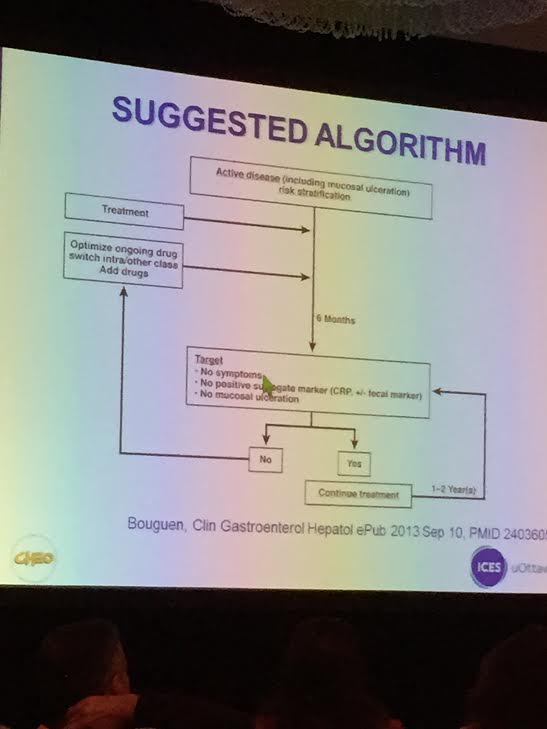
Treat-to-Target Algorithm

Treat-to-Target Algorithm

Surrogate Markers

  • Ultrasound –can be useful but operator-dependent
  • MRE had 83% accuracy for endoscopic remission: Gastroenterol 2014; 146: 374.
  • Calprotectin not as accurate in children? Am J Gastroenterol 2014; 109: 637. Sensitivity high 97%, specificity for remission 68%
  • CRP –if elevated, higher risk of complications or surgery. However, sensitivity is much lower for disease activity than calprotectin/imaging studies for active disease
  • Drug levels. Therapeutic IFX trough levels (and adalimumab) are highly predictive of mucosal healing.

Bottomline (my interpretation): Resolution of clinical symptoms and improvement in bloodwork is not good enough.  When/timing to assess with sensitive surrogate markers is still uncertain.  In many patients, endoscopy is needed to assure adequate improvement; however, in others, a followup imaging study (eg. MRE) or sensitive stool assays may be the best approach.

A related story (from AGA’s Today in Medicine email feed & pointed out to me by Ben Gold) indicates that estimation of clinical symptoms is not accurate:

Survey Suggests Severity Of IBD Is Underestimated By Gastroenterologists.

MedPage Today (10/31, Walsh, 186K) reports that survey results presented at a medical conference indicate that “the severity of inflammatory bowel disease is significantly underestimated by gastroenterologists.” Researchers found that “a total of 55% and 67% of physicians who participated in a web-based survey rated cases of Crohn’s disease and ulcerative colitis as being mild when they were actually moderate.” Meanwhile, “for case studies that represented severe disease, 76% and 81% of the physicians gave ratings of either moderate or mild for Crohn’s disease and ulcerative colitis, respectively.”


Related blog posts:

Risk Stratification in Pediatric IBD: Are we there yet? Jeffrey Hyams (Connecticut Children’s

Initially, Dr. Hyams described the exploding head syndrome; many attendees might have thought they had this due to information/”big data” overload, but this syndrome is a sleep disorder/parasomnia event.  Here’s a link to the image from his talk.  Then, Dr. Hyams reviewed data on risk stratification:

  • Mutations: Some genetic mutations are associated with disease severity
  • Still needed: specific pediatric data
  • Microbiome: Some profiles associated as prognostic factors in pediatric RISK study
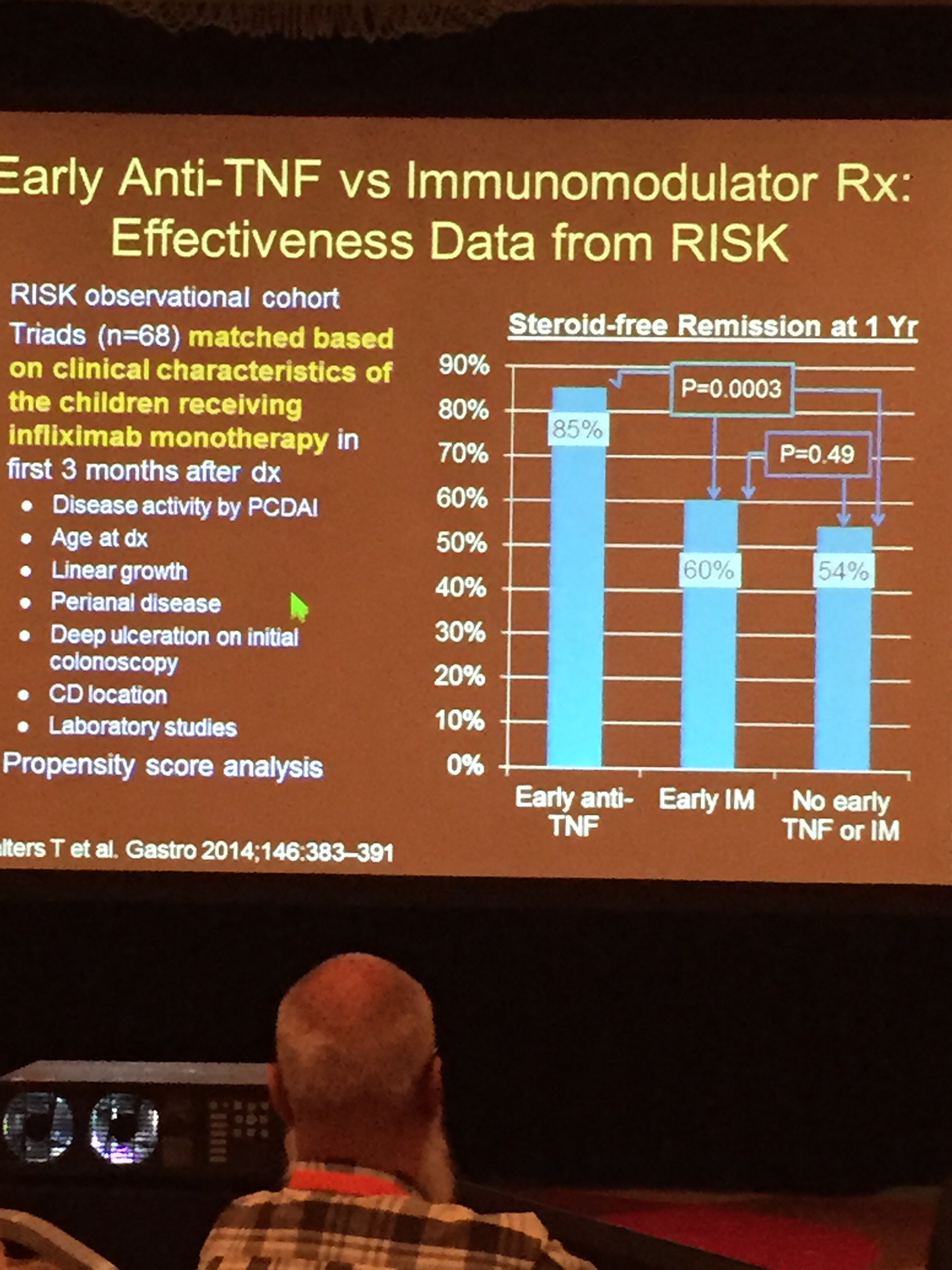
  • Early anti-TNF associated with improved outcomes (using propensity analysis) Gastroenterol 2014; 146: 383.

Bottomline: Not there yet with risk stratification. Many factors environmental, genetic susceptibility, immune response, and treatment need to be sorted out with “big data.”

Key Clinical Questions for your practice at this time:

  • Does this patient have known risk factors for doing poorly?
  • Am I using current therapies properly?
  • What is the risk of undertreated disease? This needs to be considered with discussion of safety of IBD meds.

Cross Examination of Cross-Sectional Imaging in IBD –Sudha Anupindi (Radiology/CHOP)

  • For the most part, barium studies discouraged (eg. UGI/SBFT) by speaker; radiation ~1 mSv.
  • CT (conventional) widely available and easy –if needed urgently/middle of night.

Initial presentation: imaging of choice

  • MR enterography –no radiation, better contrast resolution, best for perianal disease, able to evaluated peristalsis. Two limitations: cost, interpretation
  • CT enterography –fewer motion artifacts (0.6 seconds), lower cost, increased availability, better spatial resolution radiation reduced with current technology at most Children’s hospitals: 1-2 mSv

Abdominal ultrasound holds promise as alternative imaging with lower cost.

 

Esophageal Varices and Primary Prophylaxis

This blog entry has abbreviated/summarized this presentation. Though not intentional, some important material is likely to have been omitted; in addition, transcription errors are possible as well.

One of the topics debated at this year’s meeting was the issue of whether it is worthwhile for patients with esophageal varices to undergo primary prophylaxis.

Here’s a summary:

Esophageal Banding: Proactive vs Expectant Waiting Maureen Jonas (Boston Children’s) and Karen Murray (Seattle Children’s)

Reviewed definitions of portal hypertension. Hepatic venous portal gradient (HVPG) >12 associated with variceal bleeding is the standard in adult medicine.

Management issues: primary prophylaxis, treatment of acute bleeding, and secondary prophylaxis.

Adult Data/Guidelines:

  • 1-year rate of first bleeding 5% for small varices and 15% for large varices
  • 1-year recurrent variceal bleeding ~60%
  • Compensated cirrhotics with small high-risk varices (or mod-large varices): consider treatment with beta-blocker (and/or EVL for mod-large varices).
  • Beta-blockers and EVL –similar efficacy and survival in adults.
  • Lowering HVPG by 20% lowers risk of complications
  • Beta-blockers stopped in ~20% of adults due to side effects like fatigue or shortness of breath.

Pediatrics and Beta-Blockers:

  • Beta-blockers have good safety in children in a wide range of conditions –cardiomyopathy, migraines, others. HVPG is used in adults but is very invasive.
  • Pediatric HVPG correlation to variceal development is not yet established.
  • Bleeding from varices –17-29% in biliary atresia (BA) patients over 10 years. Yearly rates: 2-9%.
  • Mortality in pediatrics from bleeding varices: 2-5% with BA, 0-2% with portal vein thrombosis.

Non-Selective Beta-blockers.

  • There are adverse effects: hypotension, bronchospasm, hypoglycemia. Am Gastroenterol 2014; 27: 20-6.  In infants/pediatric patients with shock, tachycardia is the primary response. Beta-blockers interfere with this.
  • In pediatric studies, bleeding risk has not been proven to be reduced with non-selective Beta-Blockers.

Risks of primary prophylaxis with banding or sclerotherapy:

  • Adverse effects: could convert a child not prone to bleeding into one prone to bleeding. Stricture possible.
  • Efficacy? Limited data.  Study on prophylactic sclerotherapy if grade 2/3. Median followup was only 1.7 years. JPGN 2012; 55:574
  • Sometimes cannot eradicate varices and/or recur quickly. Gastroenterol 2013; 145: 801.

Rebuttal:

  • Sometimes we have to extrapolate from adult data
  • Currently about half of pediatric GIs use primary prophylaxis in these cases (JPGN 2011; 52: 751)

Take-home message: insufficient data to demonstrate efficacy of primary prophylaxis as well as to demonstrate adverse effects of primary prophylaxis.

Related blog posts:

More NASPGHAN Meeting Notes: IBD Hot Topics

The best preparation for tomorrow is to do today’s work superbly well”  –William Osler (quote cited in NEJM 2014; 371: 1565-66).

This blog entry has abbreviated/summarized the presentations. Though not intentional, some important material is likely to have been omitted; in addition, transcription errors are possible as well.

For me, these lectures were a useful review and represent an effort to achieve Osler’s objective of doing superb work.  If I had to choose a single issue that may affect my practice: when initiating infliximab, consider checking week 14 trough levels of infliximab and optimize dosing.

The role of the microbiome in IBD   –Subra Kugathasan (Emory)

This was a terrific lecture though with some overlap with a number of other presentations at the meeting. The lecture reviewed how to interpret microbiome studies and what we are learning from these studies with regard to inflammatory bowel disease.

Enteral Nutrition and Microbiota –conclusion:

  • EN may work by suppressing the entire microbiota in Crohn’s disease thus lowering antigenic effect to the gut
  • Some microbes may be pro-inflammatory and others pro-fibrotic
  • Chicken and egg: preliminary evidence suggests that dysbiosis is probably a preceding predisposing factor rather than due to the consequence of having inflammatory bowel disease.

The Role of Drug Monitoring in Inflammatory Bowel Disease –Jennifer Strople (Children’s Hospital of Chicago)

TPMT Testing/thiopurine metabolite monitoring

  • goal: minimize adverse effects and optimize thiopurine dosing.
  • those with lower (but not absent) activity may be best candidates for treatment with azathioprine/6-mercaptopurine (thiopurines).
  • normal TPMT testing does NOT exclude complications like bone marrow suppression or pancreatitis.
  • obtaining TPMT at baseline is cost-effective
  • goal of 6-thioguanine level of >235 (odds ratio favorable of responding to/remission with treatment)
  • drug levels: allows monitoring for noncompliance; limitation of costs and using levels inappropriately. Routine testing “has no role in patients who are doing well on acceptable doses of thiopurines”
  • younger patients often need higher doses

Monitoring for anti-TNF Therapy

  • Loss of response most common in first year of therapy.
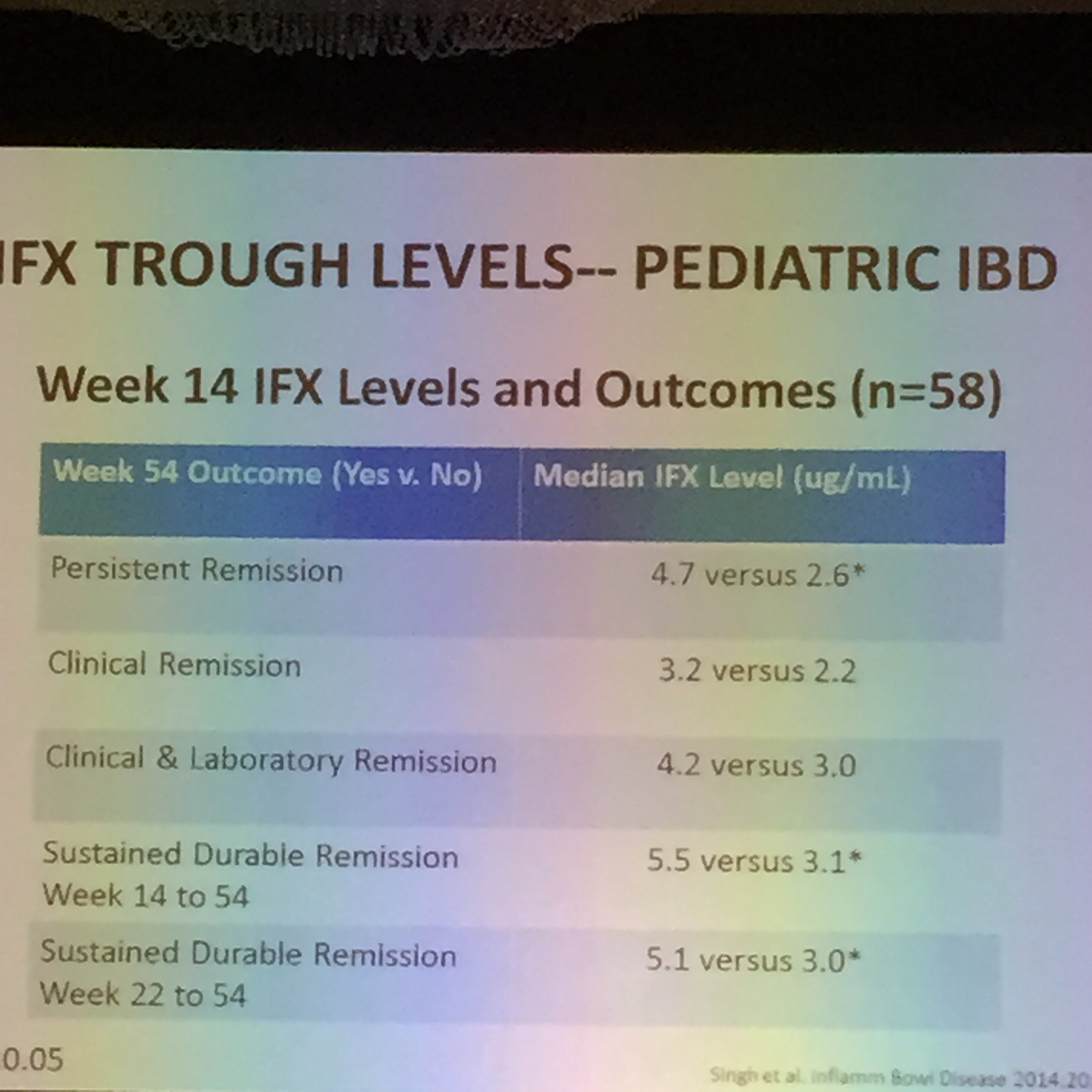
  • For infliximab (IFX), IFX trough levels >3 mcg/mL predicted sustained response. Gut 2014; 63: 1721.
  • Week 14 IFX levels predict outcomes:
IFX Levels at 14 weeks

IFX Levels at 14 weeks

  • Preliminary data with ulcerative colitis shows that troughs >3.7 mcg/mL increases likelihood of mucosal healing and remission.
  • Undetectable trough levels of IFX associated with increased risk of colectomy with ulcerative colitis Gut 2010 59: 49
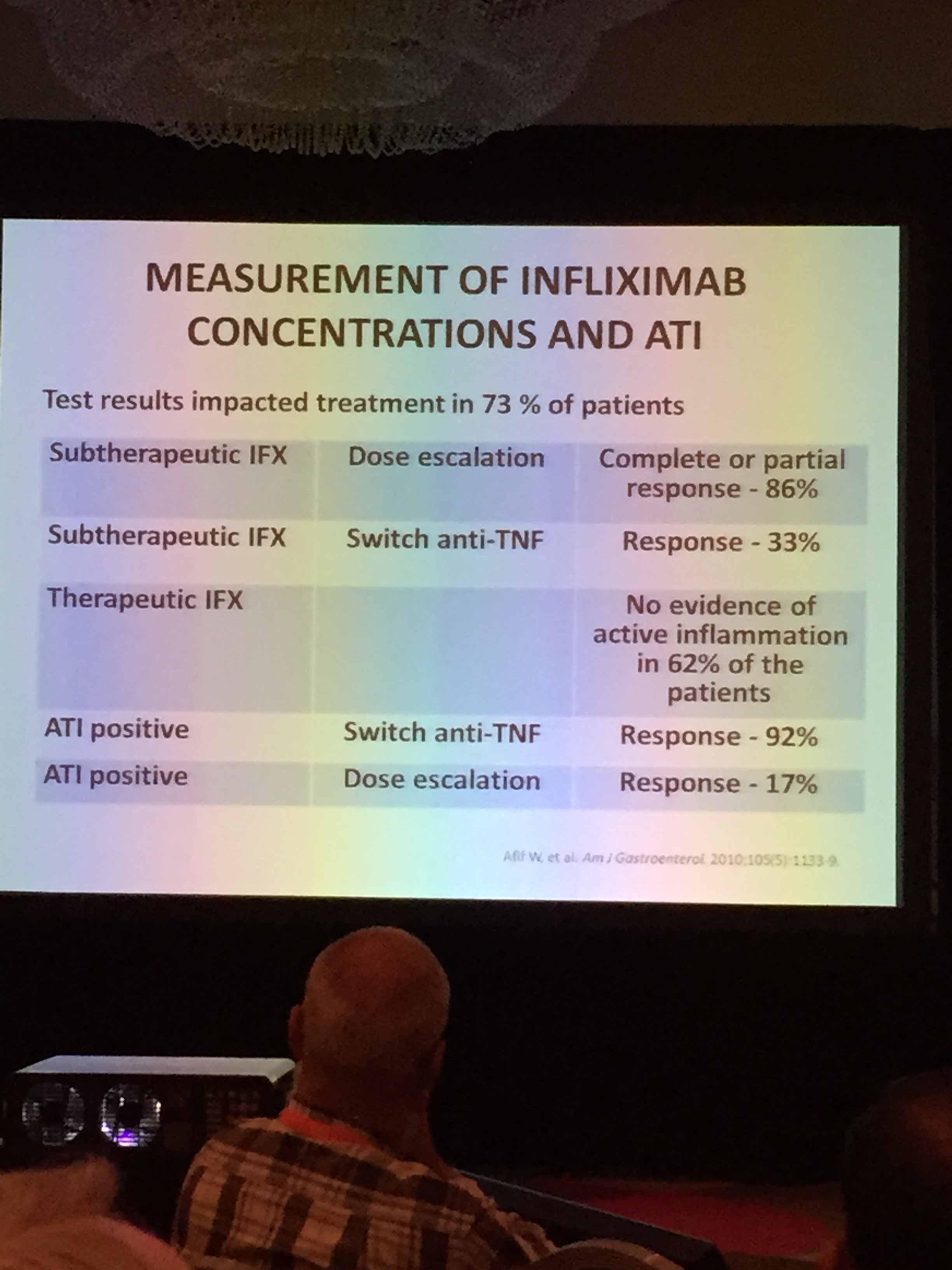
  • If a patient develops high levels of anti-drug antibodies (ADAs), this makes likelihood of response to medications unlikely. The specific ADA level is helpful; high levels of drug antibody are particularly problematic. If low levels of drug without ADAs, then increasing dose is typically effective.
IFX Algorithm

IFX Algorithm

  •  If losing response to therapy and if active disease is present, then check drug concentration. If subtherapeutic with no ADAs or low ADAs, dose escalation with or without immunomodulator is indicated.
  • If subtherapeutic with high ADA, then change drug
  • If therapeutic level, then may need to change to different anti-TNF or drug class.

Related posts on this topic:

Debate: Immunomodulators versus Biologic agents 

  • James Markowitz –consider starting with immunomodulators
  • Maria Oliva-Hemker –consider starting with biologics

In the face of the “Biologic Tsunami,” Dr. Markowitz suggested –“Don’t throw the baby out with the bathwater”

  • Reviewed infliximab data, and adalimumab data. 1-year remission rates 50-60%.
  • Durability of infliximab may be influence by immunomodulators (IMs): patients who had IM prior to IFX had better durability of response:  45% durability in those who had no IM prior to biologic, 53% durability in those who had IM for ❤ months, 66% durability in those who had IM for >6 months prior to IFX.
  • Adult data showing lack of efficacy with IMs influenced by different characteristics compared with children (eg. different disease location, ~40-50% of adults were smokers)
  • Reviewed toxicity of IMs and biologics
  • Children with severe disease do best with “early infliximab.”
  • IMs with 40-60% efficacy over 18 months and then relatively stable.
  • In Dr. Markowitz’ practice, IM use: girls receive thiopurines and boys receive methotrexate

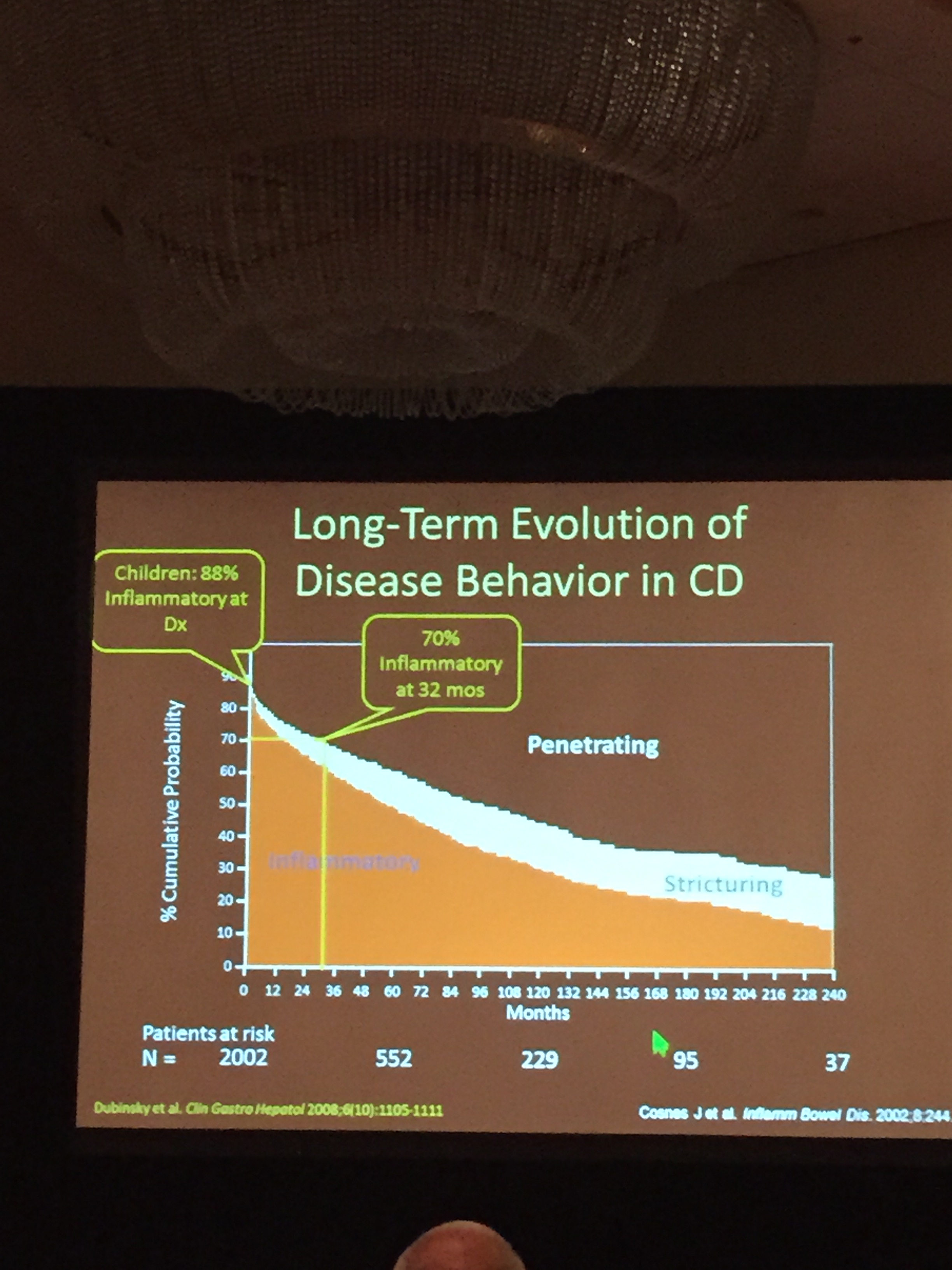
Biologics –important to start before disease phenotype changed to stricturing/penetrating disease. (See images below)

Related posts:

Early anti-TNF -RISK Cohort

Early anti-TNF -RISK Cohort


Long Term Risk of Stricturing (Cosnes et al)

Long Term Risk of Stricturing (Cosnes et al)

“The future of gastrointestinal disease and symptom monitoring: biosensor, E-portal, and social media”

At this year’s NASPGHAN meeting, the keynote lecture was given by Brennan Spiegel.  (Brennan Spiegel, MD (@BrennanSpiegel) | Twitter) This was a great talk!

This blog entry has abbreviated/summarized the presentation. Though not intentional, some important material is likely to have been omitted; in addition, transcription errors are possible as well.

Challenges in healthcare:

  • Time with patient is limited/poorly-timed in comparison to health care needs.
  • Care is reactive rather than proactive.
  • Care is expensive.

We spend all our time within walls of our clinic/hospital, but patients spend 99% time outside


How do we tailor care to the individual and make it more cost-effective? How do we get there?  Potential/Emerging Tools:

    • Patient provider portals (including mobile)
    • Social media
    • Wireless biosensors


Key question for patients: What is the most important goal for you/your family today?

How to improve communication with family? Electronic medical records often designed for billing rather than educating

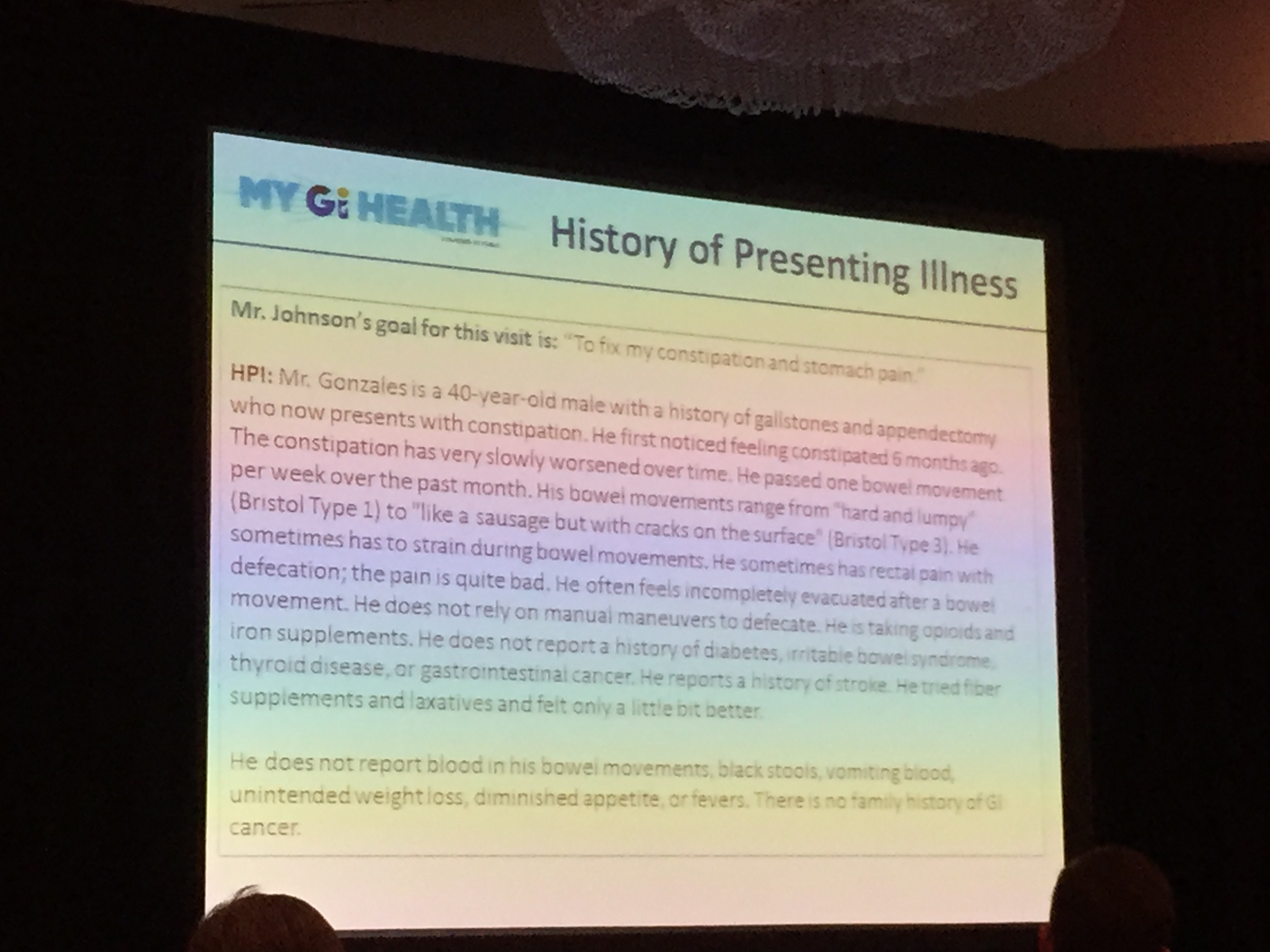
MyGiHealth website/soon-to-be-app.  Here’s a link to YouTube video introduction.

  • HISTORY: Trained computer to interview patient re: abdominal pain –where, timing, risk factors for H pylori, etc.
  • Symptoms and severity: constipation, abdominal pain, gas/bloating, heartburn, diarrhea, dysphagia, incontinence, nausea/vomiting (Promise scales –percentiles).
  • Computer history looked better than history by physician (example below with fictional patient). If history obtained prior to physician coming into room, this would allow physician more time to communicate with patient rather than documenting (Related post: Aptly titled “The Cost of Technology” | gutsandgrowth)
  • Man vs Machine (Spiegel in press Am J Gastro 2014). History performed well with regard to billing complexity and completeness.
  • THIS IS COOL!
  • Physician still needed to analyze information and make diagnosis/treatment plan.
  • Also website/app with EDUCATION applicable to patient.
History by computer outperformed physicians

History by computer outperformed physicians

Obtaining information outside the confines of the office can help overcome Hawthorne effect. (Related blog post: Checklists -Helpful? Overhyped? Hawthorne Effect …). Passive vs Active monitoring.

Twitter: “What you say on twitter may be seen by everyone all over the word instantly”

  • Tool for epidemiologic data.
  • Marketing/advertising
  • Recruiting for clinical studies
  • Measure consumer sentiment
  • Educate patients/providers
  • Forge patient affinity groups
  • Monitor patients for clinical practice
  • Help to manage and direct care

Mayo clinic is studying the impact of social media.

Example of patients initiating research. “Spontaneous Coronary Artery Dissection: A Disease-Specific Social Networking Community-Initiated Study” Lead author: Marysia Tweet

Biosensors:

  • “91% of people keep their phone within 3 feet of themselves 24 hours a day.”
  • Can be used to track intake of food, air quality, movements etc
  • Current sensors: Fit bit, amigo (?sp), shine (?sp), Zeo (for sleep) others.
  • Fitbit: Calories, distance, active time, sleep time
  • More advanced sensors for athletes. Stride dynamics can predict marathon winner at mile 16!
  • Wireless sleep (eg. Zeo) monitor equivalent to formal sleep study
  • Q Sensor –can measure stress: physical ,cognitive, emotional (watching horror movie)
  • Hapi fork –can tell if you are eating too fast (correlated with BMI)
  • Proteus –monitors intake
  • Propeller –monitors MDI use for asthma (FDA approved)
  • AbStats Digestion Sensor –adheres to abdomen and can provide neurogastroenterology data. Green light –will tolerate feeds, Yellow light –will tolerate clears

75,000 health apps available at this time.

Recommended Reading by Dr. Spiegel: The Creative Destruction of Medicine by Eric Topol.  The Creative Destruction of Medicine: How the Digital …


Parenteral Lipids & Cholestasis –a Little More Data

A recent publication in JPGN indicates that resuming low dose soy-based parenteral lipid can be effective in patients (n=7) whose cholestasis had resolved on a fish oil-based parenteral lipid. It does not resolve the larger question of whether fish oil-based parenteral lipids are truly more effective than soy-based parenteral lipids (see previous blog links below).

Here’s the abstract:

Objectives: Intestinal failure associated liver disease (IFALD) contributes to significant morbidity in pediatric intestinal failure (IF) patients. However, the use of parenteral nutrition (PN) with a fish oil-based IV emulsion (FO) has been associated with biochemical reversal of cholestasis and improved outcomes. Unfortunately, FO increases the complexity of care: as it can only be administered under FDA compassionate use protocols requiring special monitoring, is not available as a 3-in-1 solution and is more expensive than comparable soy-based lipid formulation (SO). Due to these pragmatic constraints a series of patient families were switched to low-dose (1 g/kg/day) SO following biochemical resolution of cholestasis. This study examines if reversal of cholestasis and somatic growth are maintained following this transition.

Methods: Chart review of all children with IFALD who switched from FO to SO following resolution of cholestasis. Variables are presented as medians (interquartile ranges). Comparisons performed using Wilcoxon signed-rank test.

Results: 7 patients aged 25.9 (16.2,43.2) months were transitioned to SO following reversal of cholestasis using FO. At a median follow up 13.9 (4.3,50.1) months there were no significant differences between pre- and post-transition serum alanine and aspartate aminotransferases, direct bilirubin, and weight-for-age z-scores. Due to recurrence of cholestasis, one patient was restarted on FO after four months on SO.

Conclusions: Biochemical reversal of IFALD and growth were preserved after transition from FO to SO in 6/7 (86%) patients. Given the challenges associated with the use of FO, SO may be a viable alternative in select home PN patients.

Related blog posts: