Chronic Hepatitis B in North American Children

As part of the Hepatitis B Research Network (HBRN), 343 children were enrolled in 7 U.S. and Canadian centers.  A recent study (KB Schwarz et al. J Pediatr 2015; 167: 1287-94) provides data on HBV epidemiology and a related commentary by Brian McMahon (1186-7) provides some useful advice on what is needed to further reduce HBV infection.

88 children were not enrolled.  More than half of these patients refused to participate, the other reasons included language barriers or inability to comply with follow-up.

Key findings:

  • 78% of the subjects in this study were Asian
  • 55% were adopted.  This high adoption rate likely skews some of the data because (according to the associated editorial) “children with HBV in the US..most are likely to be children of parents who immigrated to the US from endemic countries and not adoptees.”
  • 97% had international origins with either the child or a parent born abroad
  • HBV genotype B was most common (43%) followed by genotype C (32%), D (16%), A (5%), E (4%) or multiple (<1%).

In the editorial, Dr. McMahon notes that ascertaining the rate of a birth dose of HBV vaccine would be of interest.  In many countries, vaccination is started at ≥2 months and this is unlikely to prevent HBV transmission.  Two important public health issues for North America:

  • “First, all pregnant women, especially those foreign-born, need to be screened for HBsAg and if positive, their infants should receive HBV vaccine and hepatitis B immune globulin immediately after birth.”
  • “Second, all foreign-born children and adults who immigrate to the US or Canada should be tested for HBsAg.”

My take: This study provides an up-to-date snapshot of tertiary care for children with HBV in North America.  There are many opportunities to curtail (or hopefully eliminate) the impact of HBV in our communities and around the world.

AASLD Guideline (Nov 2015): Treatment of Chronic HBV 

Related blog posts:

San Diego Zoo

San Diego Zoo

My Favorite Posts 2015

I want to thank all of those who have provided input to this blog this year.  Best wishes to all for a happy and healthy 2016.

Here’s my list of favorite posts in the past year:

On being a doctor:

Nutrition posts:

Gastroenterology posts:

IBD posts:

Liver posts:

Screen Shot 2015-12-09 at 8.21.20 PM

Should Teenagers with Severe NAFLD Undergo Bariatric Surgery?

A recent commentary (Stavra A. Xanthakos and Jeffrey B. Schwimmer. Nat Rev Gastroenterol Hepatol. 2015 Jun; 12(6): 316–318.) discusses the role of bariatric surgery for teenagers with severe nonalcoholic fatty liver disease (NAFLD).  Full text Link: On a knife-edge—weight-loss surgery for NAFLD in adolescents.

Here’s an excerpt:

Abstract: A new position statement from Europe endorses expert-based recommendations to consider bariatric surgery as a treatment for severe NAFLD in severely obese adolescents. This article discusses the problem of severe paediatric obesity, its relationship with NAFLD, and the knowledge and needs regarding bariatric surgery in adolescents… it is critical that adolescents with NAFLD undergoing bariatric surgery be evaluated and managed in bariatric surgery centres with appropriate paediatric multidisciplinary expertise and a commitment to rigorously phenotype NAFLD histology at baseline and to follow outcomes prospectively as long as possible. These procedures can be particularly challenging in adolescents, who are prone to relocate in adulthood and thus might not return for follow-up. High quality prospective multicentre studies with low attrition rates, such as the Teen Longitudinal Assessment of Bariatric Surgery (USA) and the Adolescent Morbid Obesity Study (Sweden) have begun to provide short to intermediate term (1–2 year) outcomes after adolescent bariatric surgery, but do not include prospectively collected data on histological liver outcomes to support evidence-based recommendations regarding NASH as a specific indication for bariatric surgery. However, given the benefits that are emerging for type 2 diabetes and sleep apnoea, (which are comorbid conditions often associated with NASH), we concur with previously published expert guidelines that conclude that bariatric surgery is not contraindicated in a non-cirrhotic patient with NAFLD who otherwise meets appropriate medical and psychosocial criteria for bariatric surgery.2 The adolescent and family should, however, be counselled that a positive outcome with respect to NAFLD is, as yet, not a foregone conclusion.

Related blog posts:

Screen Shot 2015-12-15 at 7.37.51 PM

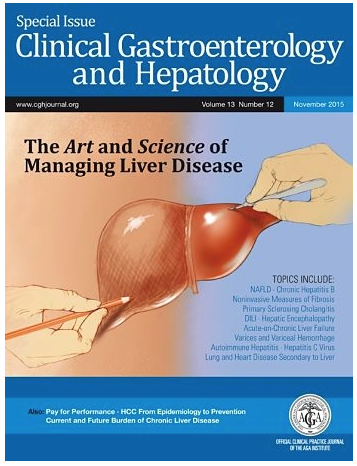
Journals Supplanting Textbooks: Managing Liver Disease

Between Journals and online resources, textbooks are increasingly less useful.  Case in point -this past month, Clinical Gastroenterology and Hepatology published a special issue: The Art and Science of Managing Liver Disease.  Some of the articles are excellent reviews.

Screen Shot 2015-11-21 at 5.35.44 PM

With autoimmune hepatitis (AIH), the authors make a number of useful points and concisely summarized diagnosis and management.  A few points:

  • Anti-soluble liver antigen/liver-pancreas (SLA/LP) and Asialoglycoprotein receptor (ASGPR) useful in diagnosis of AIH type 1 or 2 and is prognostic for severe disease.
  • In U.S. current guidelines suggest an azathioprine dose of 50 mg (for adults) whereas in Europe the dose is typically 1-2 mg/kg/day.  The authors suggest that the U.S. guidelines could lead to undertreatment, particularly with increasing rates of obesity.
  • The authors state that routine “testing for TPMT deficiency before AZA treatment of AIH is unnecessary, because severe TPMT deficiency occurs in 0.3%-0.5% of the general population and does not invariably cause AZA-induced bone marrow toxicity.” [I will probably continue to check TPMT activity.] They do recommend TPMT testing in cirrhotic patients and those with cytopenias.
  • The authors note that successful long-term withdrawal can occur in 19-40% but recommend biochemical remission (>12-24 months) and histologic remission.  They caution against withdrawal in patients after a relapse due to increased risks of progression to cirrhosis and/or death.
  • When discussing alternative therapies, the authors note that mycophenolate mofetil (MMF) is typically effective for patients intolerant to AZA but not likely to work in AZA nonresponders.
  • Alternative agents reviewed included tacrolimus, cyclosporine, sirolimus/everolimus, rituximab, and infliximab.

Other topics in this issue included NAFLD, HCC, Varices, Hepatic encephalpathy, HBV, HCV, Acute-on-Chronic Liver Failure, PSC and Malignancy, DILI, and noninvasive imaging for liver fibrosis.

Hypothyroidism with ATP8B1 Deficiency

A recent study (L Li et al. J Pediatr 2015; 157: 1334-9) indicated that hypothyroidism may be another extrahepatic feature of patients with ATP8B1 deficiency; this mutation’s main manifestation has been intrahepatic cholestasis in either progressive familial intrahepatic cholestasis (PFIC type 1) or benign recurrent intrahepatic cholestasis (BRIC type 1).

In this study, 3/13 were hypothyroid and an additional 2/13 had subclinical hypothyroidism.  These patients were compared with a cohort of children with ABCB11 deficiency (PFIC type 2 or BRIC type 2) in which 0/19 had hypothyroidism.

Related blog posts:

New Hepatitis B Treatment Guidelines

Link to full article: Updated Hepatitis B Treatment Guidelines from AASLD

With regard to pediatrics:

9A. The AASLD suggests antiviral therapy in HBeAg-positive children (ages 2 to <18 years) with both elevated ALT and measurable HBV DNA levels, with the goal of achieving sustained HBeAg seroconversion.

“Most studies required ALT elevation (>1.3 times ULN) for at least 6 months with HBV DNA elevations for inclusion. Given that HBV DNA levels are typically very high during childhood (>106 IU/mL), there is no basis for a recommendation for a lower-limit value with respect to treatment. However, if a level <104 IU/mL is observed, therapy might be deferred until other causes of liver disease and spontaneous HBeAg seroconversion are excluded.”

“Duration of treatment with oral antivirals that has been studied is 1-4 years. It may be prudent to use HBeAg seroconversion as a therapeutic endpoint when oral antivirals are used, continuing treatment for an additional 12 months of consolidation, as recommended in adults. It is currently unknown whether a longer duration of consolidation would reduce rates of virological relapse.”

“Children who stop antiviral therapy should be monitored every 3 months for at least 1 year for recurrent viremia, ALT flares, and clinical decompensation.”

9B. The AASLD recommends against use of antiviral therapy in HBeAg-positive children (ages 2 to <18 years) with persistently normal ALT, regardless of HBV DNA level.

Another nice summary of current treatment recommendations: P Martin et al. Clin Gastroenterol Hepatol 2015; 13: 2071-87.  Table 5 lists recommendations for treatment of HBeAg-positive.

  • The main group needing treatment (entecavir, tenofovir, or PEGinterferon alfa-2a) are those with HBV DNA >2000 IU/mL and elevated ALT.  Table 6 lists recommendations for those with HBeAg-negative.  Main group needing treatment are the same (HBV DNA >2000 IU/mL and elevated ALT).
  • With both groups (HBe-Ag negative and positive), “consider liver biopsy or transient elastography” if elevated HBV DNA >2000 and normal ALT.  If histologic disease present, consider treatment.
  • One point the authors make about therapy regards duration: “Historically, HBeAg seroconversion was considered a durable response, and discontinuation of antiviral therapy was recommended after a period of consolidation therapy of 6-12 months from the time of HBeAg seroconversion. However, patients who discontinue therapy …can experience recurrent viremia and ALT flares.  Thus, long-term therapy is justified.”
  • For HBeAg negative patients who have compensated liver disease, loss of HBsAg for 6-12 months may be discontinued from therapy.

Overlooking Obesity in Hospitalized Children

A recent study (MA King et al. J Pediatr 2015; 167: 816-20) shows that physicians and physician trainees rarely addressed overweight/obesity in hospitalized children at a Utah pediatric hospital.

Using a chart review and an administrative database, the authors note that overweight/obesity was identified in 8.3% (n=25) and addressed in 4% (n=12) of 300 hospitalized children with overweight/obesity.  They conclude that “this represents a missed opportunity for both patient care and physician trainee education.”

My take: In many cases, addressing overweight/obesity at a stressful time like a hospitalization may be unwelcome. In children who are not very sick, offering nutritional counseling would be worthwhile.  For others, I think encouraging outpatient followup would be reasonable.

Also noted: “High Prevalence of Nonalcoholic Fatty Liver Disease in Adolescents Undergoing Bariatric Surgery” SA Xanthakos et al. Gastroenterol 2015; 149: 623-34. In this cohort of 242 adolescents, 59% had NAFLD.  None had cirrhosis; stage 3 fibrosis was identified in 0.7%. Comment: I’m surprised that only 59% had NAFLD.

white flower

HCV Guidelines

The AASLD-IDSA Recommendations for Hepatitis C Virus have been published (Hepatology 2015; 62: 932-954).  The entire report is accessible from hcvguidelines.org and from the link: HCV Guidance 2015. While having a hard copy is easy to work with, the HCVguidelines website is likely to remain more up-to-date.

A few recommendations to highlight:

  • #6. “Antiviral treatment is recommended for all patients with chronic HCV infection, except those with limited life expectancy due to nonhepatic causes (I-A)
  • #7. “If resources limit the ability to treat all infected patients immediately as recommended, then it is most appropriate to treat those at greatest risk of disease complications” (see Tables 3 and 4)
  • #8. “Use of noninvasive testing or liver biopsy is recommended in order to assess the degree of hepatic fibrosis and, hence, the urgency of immediate treatment. (I-A)”

Other Hepatology studies of interest, briefly noted:

Hepatology 2015; 62: 684-93.  Nucleos(t)ide analog “treatment does not increase the risk of renal and bone events in general.  Nucleotide analogs may increase the risk of hip fractures, but the overall event rate is low.”  This study examined 46,454 untreated chronic hepatitis B patients in comparison to 7,046 treated patients.

Hepatology 2015; 62: 715-25. This study looked at the safety of simeprevir and sofosbuvir in hepatitis C-infected patients.  “Adverse safety outcomes were similar to matched untreated controls, suggesting that safety events reflect the natural history of cirrhosis and are not related to treatment.”

Hepatology 2015; 62: 773-83. This study found that “NAFLD is independently associated with subclinical myocardial remodeling and dysfunction.”

Bruce Munro, Atlanta Botanical Gardens

Bruce Munro, Atlanta Botanical Gardens

Should Younger Transplant Patients Receive Better Organs?

Many physicians are unhappy with the current liver transplantation allocation system.  A recent article (A Cucchetti et al. Liver Transl 2015; 21: 1241-49, editorial  LB Vanwagner, AI Skaro. Liver Transpl 2015; 21: 1235-37) suggests that there should be adjustments to consider age in liver organ allocation. While this issue is not new, the article does suggest the idea of “age-mapping” which is a different twist on this subject.

The editorial notes that the current MELD system as been a poor predictor of post transplant outcomes and “does little to promote utility in organ allocation.”  Because age is not a factor in MELD, “there is a subsequent loss of equity in the current system because younger recipients receive fewer opportunities to achieve a full lifespan compared with older recipients.” However, age matching is prohibited by discrimination laws.

“Age mapping differs from age matching.” With age mapping, all candidates would have an “equal chance of getting a liver” but the probability of receiving a ‘better organ’ (donor ≤35 years) would be more likely for younger recipients.

My take: The scarcity of organ availability compounded with the possible decline in organ quality leads to these discussions.  Who really can balance unfair against unfortunate?


Related blog posts:

Brooklyn Bridge

Portopulmonary Hypertension -A Little More Data

A recent study (E Echocahrd-Dugelay et al. JPGN 2015; 61: 346-54, editorial 268-9) provides a little more data on the rare condition of portopulmonary hypertension (POPH). Untreated POPH can lead to right-sided heart failure and death; a prompt diagnosis improves the chance for responding to treatment.

In brief, the authors reviewed their experience with 14 patients that were diagnosed with POPH between 1983-2009. The authors also reviewed the literature for a total of 98 patients.

Findings:

  • 0.5% of children with portal hypertension had POPH
  • 0.9% of children with end-stage liver disease awaiting liver transplantation had POPH
  • Congenital portosystemic shunts (CPSS) appeared to be a risk factor for POPH and were noted in 3 of their 14 cases as well as 22 of 98 cases overall.
  • In treated patients (n=42), five-year survival was noted to be 80%. Treatment included vasodilator therapy, closure of CPSS, or liver transplantation.
  • Hepatopulmonary syndrome (with hypoxemia) may precede POPH; this was reported in 6 of the 98 patients in this report

Dr. Ronald Sokol’s commentary noted that guidelines for timing/frequency of pulse oximetry testing and formal echocardiographic screening are needed but “challenging given the present body of evidence.”  He recommends screening all pediatric liver transplantation candidates who have cirrhosis and portal hypertension with pulse oximetry and echocardiography as well as those with clinical features of POPH (eg. syncope, shortness of breath, dyspnea).  For other patient populations, it remains unclear.

Bottomline (from the authors): “Detection of POPH at an early stage requires systematic screening at regular intervals by echocardiography in children with all causes of portal hypertension.” Unanswered questions:

  • how much portal hypertension is needed to merit screening?
  • how often should screening take place?

Related blog posts: