Lecture: IBAT Inhibitor for Alagille Syndrome

I recently attended an online lecture which reviewed Alagille Syndrome and the emergence of an IBAT inhibitor for the management of cholestatic pruritus. Selected slides from Mirum Pharmaceutical Lecture: “Updates in the Treatment of Cholestatic Pruritus in Patients With Alagille Syndrome.” *I have no financial disclosures or conflict of interests in this medication or company.

  • The severe itching which is seen in most patients with Alagille is often quite detrimental to quality of life. It impacts sleep, causes irritability, skin damage, and physical distcomfort
  • Typically, the first week of receiving the medication, it is started at1/2 the maintenance dose.
  • Monitoring response can be done with the ItchCheck App, Itch score or Clinical scratch score
  • Monitoring hepatic blood tests and periodic monitoring of fat soluble vitamins is recommended

My take: Though Alagille syndrome is a multisystem disease, improvement in pruritus due to cholestasis with an oral daily medication is an important advance/option. There is little systemic absorption and thus far a reassuring safety profile.

Related blog posts:

AASLD 2023 Practice Guidance for Primary Sclerosing Cholangitis and Cholangiocarcinoma

CL Bowlus et al. Hepatology 2023; 77: 659-702. Open Access! AASLD practice guidance on primary sclerosing cholangitis and cholangiocarcinoma

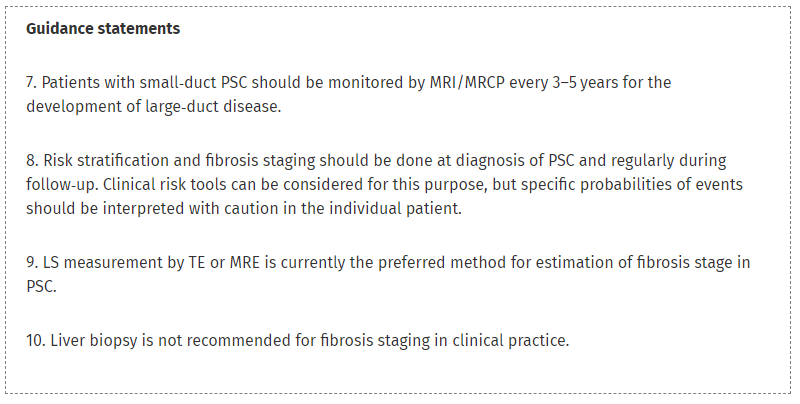
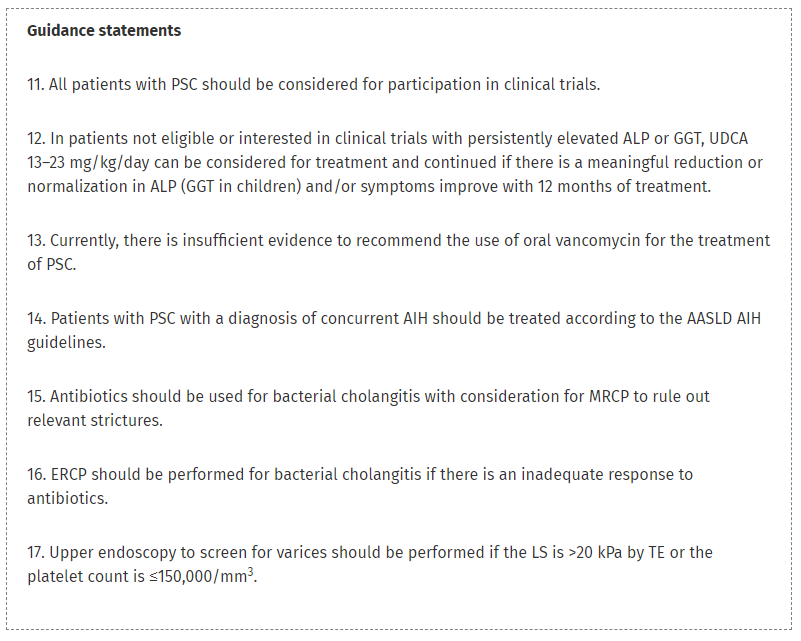
This is a lengthy article with a great deal of useful information. Here are some of the important recommendations most relevant for pediatric gastroenterologists/hepatologists:

  • In patients with PSC without known inflammatory bowel disease (IBD), diagnostic colonoscopy with histological sampling should be performed and may be repeated every 5 years if IBD is not initially detected
  • In patients with PSC in whom IBD is diagnosed, high‐definition surveillance colonoscopy with biopsies should start at age 15 years and be repeated at 1‐year to 2‐year intervals to evaluate for colonic dysplasia
  • New clinical risk tools for PSC are available for risk stratification, but probabilities of events in individual patients should be interpreted with caution
  • All patients with PSC should be considered for participation in clinical trials; however, ursodeoxycholic acid (13–23 mg/kg/day) can be considered and continued if well tolerated with a meaningful improvement in alkaline phosphatase (γ‐glutamyl transferase in children) and/or symptoms with 12 months of treatment
  • Upper endoscopy to screen for varices should be performed if the LS is >20 kPa by TE or the platelet count is ≤150,000/mm3
  • Bone density examinations should be performed to exclude osteopenia or osteoporosis at diagnosis and at 2‐year to 3‐year intervals thereafter based on risk factors

Related blog posts:

Disclaimer: This blog, gutsandgrowth, assumes no responsibility for any use or operation of any method, product, instruction, concept or idea contained in the material herein or for any injury or damage to persons or property (whether products liability, negligence or otherwise) resulting from such use or operation. These blog posts are for educational purposes only. Specific dosing of medications (along with potential adverse effects) should be confirmed by prescribing physician.  Because of rapid advances in the medical sciences, the gutsandgrowth blog cautions that independent verification should be made of diagnosis and drug dosages. The reader is solely responsible for the conduct of any suggested test or procedure.  This content is not a substitute for medical advice, diagnosis or treatment provided by a qualified healthcare provider. Always seek the advice of your physician or other qualified health provider with any questions you may have regarding a condition.

How to Lower Pediatric Liver Transplantation Waitlist Mortality

From the editorial, Key Points:

  • Esmati et al.1 present a fascinating analysis of the impact on waitlist outcomes of a 2014 Eurotransplant (ET) policy that prioritizes patients younger than the age of 2 years with biliary atresia for deceased donor liver transplantation (DDLT) offers
  • Waitlist mortality decreased from 6.7% before to 2.3% after implementation of the new policy. Unexpectedly, this was not associated with an increase in DDLTs
  • During the same time period, the proportion of young patients with BA who underwent living donor liver transplantation (LDLT) increased from 55% to 74%.
  • Without adaptions to the pediatric Model for End‐Stage Liver Disease (MELD) or Pediatric End‐Stage Liver Disease scores, children can never fairly “compete” for deceased donor livers because of the tremendous volume and demand from the adult candidate list

My take (borrowed from editorial): There are many potential ways to achieve the desired goal of zero pediatric waitlist mortality. And, multiple strategies can successfully be pursued in parallel: prioritize children, increase use of LDLT, and increase/mandate use of split livers.

Related blog posts:

Another (unrelated) study in this issue -easy way to assess mobility (a key element of frailty) in adults with decompensated liver disease: AJ Groff et al. Liver Transplantation 29: 226-228. Open Access! A novel method using the level of mobility to predict mortality in patients admitted for decompensated cirrhosis: A prospective study The authors found the following: a value of <8 on The Johns Hopkins Highest Level of Mobility score (JH‐HLM, see below) was associated with much higher risk of mortality compared with those with a JH‐HLM score of 8.

GALA: Alagille Study

SM Vandriel et al. Hepatology 2023; 77: 512-529. Open Access! Natural history of liver disease in a large international cohort of children with Alagille syndrome: Results from the GALA study

This was a very large retrospective study (with more than 90 authors) with 1433 children.

Key findings:

  • Only 40.3% of children reach adulthood with their native liver; 54.4% had their native liver at 10 years of life
  • “It is noteworthy that bile duct paucity was reported in only 65% of liver biopsies performed during the first 3 months of life, the period during which there are diagnostic challenges with distinguishing ALGS from syndromic BA.” Thus, with a liver biopsy, there is a significant risk of misdiagnosis
  • The all‐cause mortality rate was 8.5%
  • The total bilirubin level between 6-12 months of life had significant predictive value. In the associated editorial: “The authors reported that 79% of patients with median TB of <5.0 mg/dL..reached adulthood with their native livers, whereas only 31.6% and 18.2% of patients with median TB levels between” 5-10 and >10 mg/dL survived into adulthood with their native livers.
  • The editorial makes the point that this data will be helpful and ongoing studies will be needed to determine the effectiveness of novel treatments (e.g. IBAT inhibitors)

My take: This is a very useful study in understanding the long term outcomes of Alagille syndrome.

Related blog posts:

Sandy Springs, GA

How Low Can You Go with Split Livers?

Z Wang et al. Liver Transplantation 2023; 29: 58-66. Outcome of split-liver transplantation from pediatric donors weighing 25 kg or less

DJ Stoltz et al. Liver Transplantation 2023; 29: 3-4.(Editorial) Open Access! Exploring the lower weight limit of splitable liver grafts for pediatric recipients

From the editorial:

“In this issue of Liver Transplantation, Wang et al.7 describe the results of an innovative strategy to increase organ availability, particularly for low‐weight pediatric recipients, by utilizing a low‐weight donor population (≤25 kg) that historically has been avoided in pediatric split‐liver transplantation (SLT)…They found no significant differences in perioperative data, postoperative complications, patient survival, or graft survival between SLTs from donors ≤25 kg and the other three groups.”

Implications of study findings:

  • Splitting livers from donors weighing less than 25 kg will increase the pediatric donor pool and could improve waitlist mortality
  • Split smaller livers may mitigate “the clinical consequences of large‐for‐size syndrome and subsequent graft dysfunction”
  • “This approach requires a substantial level of surgical expertise to achieve comparable outcomes with more conventional operative techniques”
  • “1‐year graft survival for pediatric recipients receiving technical variant grafts was significantly worse at low‐volume centers performing an average of <5 pediatric liver transplantations per year” compared with high‐volume centers (89.9% vs. 95.3%; p < 0.001)
  • Limitations: Retrospective study. Also, only 22 of the split livers were from <25 kg donors

My take: Making the best use of this precious resource is a solemn responsibility. This study provides another reason for more transplants to be done in centers with a high level of expertise and more reasons to continue to use split livers. In those with sufficient expertise, even smaller livers can save two lives instead of one.

Related blog posts:

New Information on Neonatal Liver Failure

WS Thompson et al. Liver Transplantation 2023; 29: 118-121. Ultra-rapid whole genome sequencing: A paradigm shift in the pre-transplant evaluation of neonatal acute liver failure

In this case series, three patients had ultra-rapid whole genome sequencing (WGS). Case 1 identified PRF1 mutation consistent with familial HLH, Case 2 identified variants in FDXR implicated in a mitochondrial disorder and Case 3, found pathogenic mutations in ASL associated with agrininosuccinic aciduria.

The authors argue that ultra-rapid WGS which can provide information in as little as 12 hours and typically provides actionable results within 3 days. should be a first-line approach and would identify nearly all causative genetic reasons for neonatal acute liver failure. While GALD and viral etiologies would not be found, if there are no genetic causes, this would support the “initiation of empiric therapy.”

S Antala et al. Liver Transplantation 2023; 29: 5-14. Open Access! Neonates with acute liver failure have higher overall mortality but similar posttransplant outcomes as older infants

In this retrospective study with 1807 neonates and 890 infants (31-120 days) with ALF (identified in two large databases between 2004-2018), the key findings:

  • Neonates had higher death rates (46% alive without liver transplant, compared to 53% of infants who were alive without liver transplant)
  • Both groups had low liver transplant rates, with neonates less likely to be transplanted: 2% vs 6.4% (P<0.001)
  • Infants had higher rates of “unidentified” as etiology whereas neonates had higher rates of GALD and viral infections. Cardiac etiologies causing ALF were common in both groups, 24% of neonates and 18% of infants.

My take: Rapid genomic testing is very useful in infants/neonates with ALF. This population has a high mortality rate and a low rate of receiving liver transplants. Reducing the size for split liver donation could help with organ availability (see next post).

Related blog posts:

Pediatric Fatty Liver Disease is a Reversible Disease

S Lefere et al. Clin Gastroenterol Hepatol 2022; 20: 2317-2326. Open Access! Intensive Lifestyle Management Improves Steatosis and Fibrosis in Pediatric Nonalcoholic Fatty Liver Disease

In this prospective study with 204 children with severe obesity, intensive lifestyle changes were implemented. Key findings:

  • After 6 months, the median body weight loss was 16.0% in the 167 patients evaluated
  • Fibrosis improved in 75.0% (P < .001) (33% had F2 or higher fibrosis at baseline per elastography)
  • Fasting serum alanine aminotransferase and homeostasis model assessment of insulin resistance decreased significantly over the 1-year period (P < .001)

T Khurana et al. J Pediatr 2022; 250: 61-66. Clinically Meaningful Body Mass Index Change Impacts Pediatric Nonalcoholic Fatty Liver Disease

In this retrospective study with 784 children, Key findings:

  • Of these children, 168 (31%) had a BMIz (BMI z-score) change of >−.25 from baseline over a median of 367 days (IQR, 201-678 days). Thus, ~1/3rd of children achieved a drop in BMIz with lifestyle advice
  • A BMIz reduction of >.25 was associated with significant improvements in serum aminotransferase levels.

My take: These pediatric studies replicate similar findings from adult studies showing that modest reductions in weight are associated with improvement in NAFLD. However, most patients are not successful with lifestyle advice which underscores the need for pharmacotherapy.

Related blog posts:

Siesta Key, FL

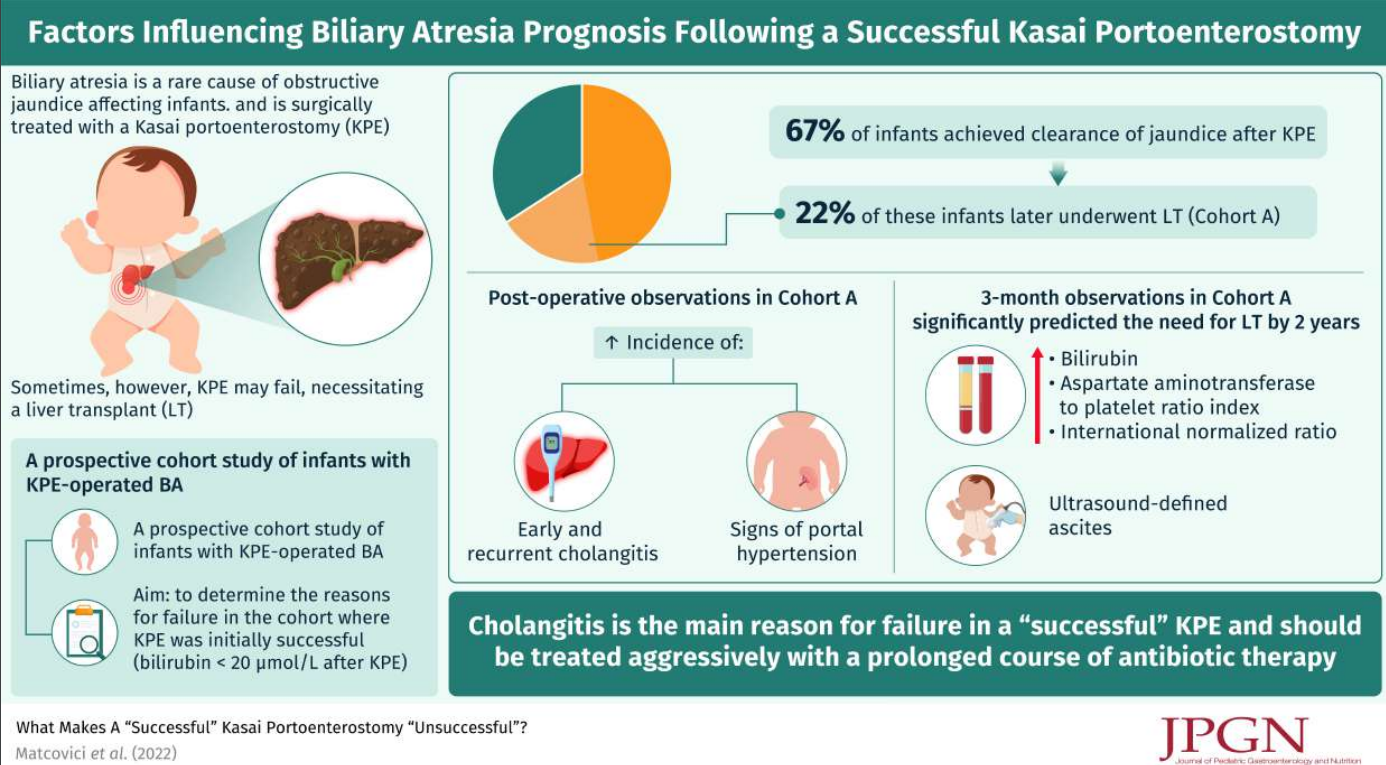
“What Makes A “Successful” Kasai Portoenterostomy “Unsuccessful”?

M Matcovici et al. JPGN 2023; 76: 66-71. What Makes A “Successful” Kasai Portoenterostomy “Unsuccessful”?

Methods: This review of a single-center prospective biliary atresia (BA) database examined which factors were associated with long-term success of a Kasai portoenterostomy (KPE). Successful KPE was defined by achieving a postoperative bilirubin of ≤20 µmol/L. Cholangitis was based on Tokyo (Adult) Guidelines (Calculator MD Calc: Tokyo Guidelines for Acute Cholangitis 2018). Explanation of Tokyo Guidelines: Tokyo Classification Cholangitis

Key findings:

  • 90 (67%) achieved clearance of jaundice after KPE. From these 20 (22%) (Cohort A) underwent LT with the remainder continuing with native liver (Cohort B) (median follow-up of 4.15 years)
  • Postoperatively, both cholangitis [any episode, 18/20 (90%) vs 15/70 (21%); P < 0.0001] and portal hypertension (PHT) [gastrointestinal (GI) bleed, 10/20 (50%) vs 2/70 (2.8%); P < 0.0001] were significantly more common in cohort A

My take: The authors assert that “failure is not preordained at KPE but due to recurrent cholangitis and/or symptoms of PHT.” In my view, this study shows an association but not causation of cholangitis/PHT with increased likelihood of KPE failure. It is quite possible that the cholangitis develops in those with suboptimal bile flow; thus, cholangitis (as well as PHT) may be an indicator that the KPE is not working as well, rather than the reason. Yet, it is also likely that episodes of cholangitis exacerbate any underlying problems.

Related blog posts:

Liver Briefs: HLH in Infancy, Maralixibat for Alagille Syndrome, Liver Disease Due to Inborn Errors of Immunity

N Hadzic et al. J Pediatr 2022; 250: 67-74. High Prevalence of Hemophagocytic Lymphohistiocytosis in Acute Liver Failure of Infancy In this retrospective study of pediatric acute liver failure (PALF, n=78) in children <24 months of age: Thirty of the 78 children had the HLH phenotype and underwent genetic assessment, which demonstrated positive findings in 19 (63.3%), including 9 (30%) with biallelic primary HLH mutations and 10 (33.3%) with heterozygous mutations and/or polymorphisms. The mortality in this group was 33% (n=10). The authors conclude that targeted genetic analysis (ie perforin, SIAP, XIAP, and GRA) or whole exome sequencing should become a standard part of PALF workup.

Related blog posts:

BM Kamath et al. J Pediaatr 2023; 252: 68-75. Open Access! Maralixibat Treatment Response in Alagille Syndrome is Associated with Improved Health-Related Quality of Life. Twenty of the 27 patients (74%), all with moderate-to-severe pruritus at enrollment, achieved an Itch-Reported Outcome (Observer) treatment response at week 48. “The significant improvements in pruritus seen with maralixibat at week 48 of the ICONIC study are clinically meaningful and are associated with improved HRQoL.”

Related blog posts:

D Sharma et al. Hepatology 2022; 76: 1845-1861. Tip of the iceberg: A comprehensive review of liver disease in Inborn errors of immunity This articles reviews inborn errors of immunity (IEI) and their liver manifestations. This includes the following:

  • T-cell/B-cell deficiency: SCID, CD40 ligand deficiency, DOCK8 deficiency, IL-21R deficiency, and Activated P13K delta syndrome
  • Antibody deficiency: CVID, X-linked aggamoglobulinemia
  • Phagocytic disorders: CGD
  • Primary Immune Regulatory Disorders: STAT1 GOF, STAT3 GOF, IPEX, APECED
  • Others: Wiskott-Aldrich syndrome, Immunodeficiency-centromeric instability-facial anomalies syndrome, Hepatic veno-occlusive disease with immunodeficiency, STAT3-deficient hyper IgE syndrome

In patients with IEIs with liver abnormalities, one needs to consider infectious etiologies (eg. HAV, HBV, HCV, HEV, CMV, EBV, HSV, cryptosporidium, liver abscess), autoimmune disorders (eg. AIH), drug-induced liver disease, and sclerosing cholangitis

Royal Terns at Siesta Key, FL

Most Popular 2022 Posts

The list of the most viewed gutsandgrowth blog posts in 2022.

Links to Posts: