Another Study Justifying Higher Infliximab Dosing in Pediatrics

S Lawrence et al. JPGN 2022; 75: 601-607. Optimized Infliximab Induction Predicts Better Long-Term Clinical and Biomarker Outcomes Compared to Standard Induction Dosing

In this retrospective observational cohort study (n=140 children), patients were started on 5 mg/kg/dose during induction. 78 children had “optimized dosing” with an infliximab level drawn prior to 3rd dose. A level <15 mcg/g was considered subtherapeutic. It is noted that combination therapy was much higher in the standard (not optimized) group (95% vs 42%).

Key findings:

  • Combined corticosteroid-free clinical and biomarker remission (CRP < 5 mg/L) was higher in the optimized compared to the standard cohort [65/78 (83%) vs 25/62 (40%), P < 0.001]. Remission rates correlated with trough levels; those in clinical remission had a median level of 3.6 compared to 2.0 in those without clinical remission.
  • The median post-induction trough was higher in the optimized group 4.2 mg/L vs 1.9 mg/L.
  • The optimized group were significantly more likely to achieve a therapeutic level (5 mg/L or greater): 44% vs 18%.

My take:

  1. The “optimized” group was not very well optimized –only 44% had a therapeutic level >5, but still performed much better than the standard group (which more often had combination therapy). This indicates a need to start with higher doses and reinforces the need for therapeutic drug monitoring.
  2. This study further shows that 5 mg/kg dosing is inadequate. In the standard group, even with combination therapy, only 18% achieved therapeutic levels.
  3. This article will be another one to include to try to persuade insurance companies that kids are different and need higher doses of infliximab.
  4. Though inconvenient for families, dosing more frequently is more effective than higher doses for improving trough levels (ie 5 mg/kg q4 wks results in better trough levels than 10 mg/kg q8 wks).

Here are some additional references on this topic (from a recent appeal):

For pediatrics, studies have shown that utilizing dosing of 5 mg/kg/dose results in subtherapeutic dosing in around 80%, especially if low albumin.  This places patients at high risk for developing antibodies to infliximab and complications from Crohn’s disease.

  1. LE Bauman et al Inflamm Bowel Dis 2020 Feb 11;26(3):429-439. Improved Population Pharmacokinetic Model for Predicting Optimized Infliximab Exposure in Pediatric Inflammatory Bowel Disease. The authors identified 228 pediatric patients with IBD and developed a pharmacokinetic model using weight, albumin, sedimentation rate and antibodies to infliximab (ATI) to help predict infliximab dosing that would achieve a therapeutic trough level (>5 mcg/mL). In their study, they also simulated 1000 patients and found that only 24% of patients receiving 5 mg/kg q8weeks achieved a therapeutic level; this increased to 56% for 10 mg/kg q8weeks
  2. Frymoyer A, Piester TL, Park KT. JPGN. 2016;62(5):723-727. Infliximab dosing strategies and predicted trough exposure in children with Crohn’s disease. Only 21% of children in this modeling study achieved a trough level >3 if the albumin was 3 or lower. The goal for trough level is NOW >5.
  3. JM Shapiro et al. JPGN 2016; 62: 867-72. Durability of Infliximab Is Associated With Disease Extent in Children With Inflammatory Bowel Disease.  In this study with 98 pediatric patients, 70% with extensive disease required dose escalation.
  4. Ungar B, Levy I, Yavne Y, et al. Clin Gastroenterol Hepatol. 2016;14(4):550-557.e552. Optimizing Anti-TNF-alpha therapy: serum levels of Infliximab and Adalimumab are associated with mucosal healing in patients with inflammatory bowel diseases. Getting good levels important to achieve healing/remission.
  5. NV Castelle et al. Clin Gastroenterol Hepatol 2022; 20: 465-467. Patients With Low Drug Levels or Antibodies to a Prior Anti-Tumor Necrosis Factor Are More Likely to Develop Antibodies to a Subsequent Anti-Tumor Necrosis Factor. Good levels are associated wtih fewer antibodies to infliximab.

Related blog posts:

On a recent trip to Florida, we picked up more than 40 sand dollars on a morning beach walk. This was during a cold snap, at low tide and after a storm.

Disclaimer: This blog, gutsandgrowth, assumes no responsibility for any use or operation of any method, product, instruction, concept or idea contained in the material herein or for any injury or damage to persons or property (whether products liability, negligence or otherwise) resulting from such use or operation. These blog posts are for educational purposes only. Specific dosing of medications (along with potential adverse effects) should be confirmed by prescribing physician.  Because of rapid advances in the medical sciences, the gutsandgrowth blog cautions that independent verification should be made of diagnosis and drug dosages. The reader is solely responsible for the conduct of any suggested test or procedure.  This content is not a substitute for medical advice, diagnosis or treatment provided by a qualified healthcare provider. Always seek the advice of your physician or other qualified health provider with any questions you may have regarding a condition.
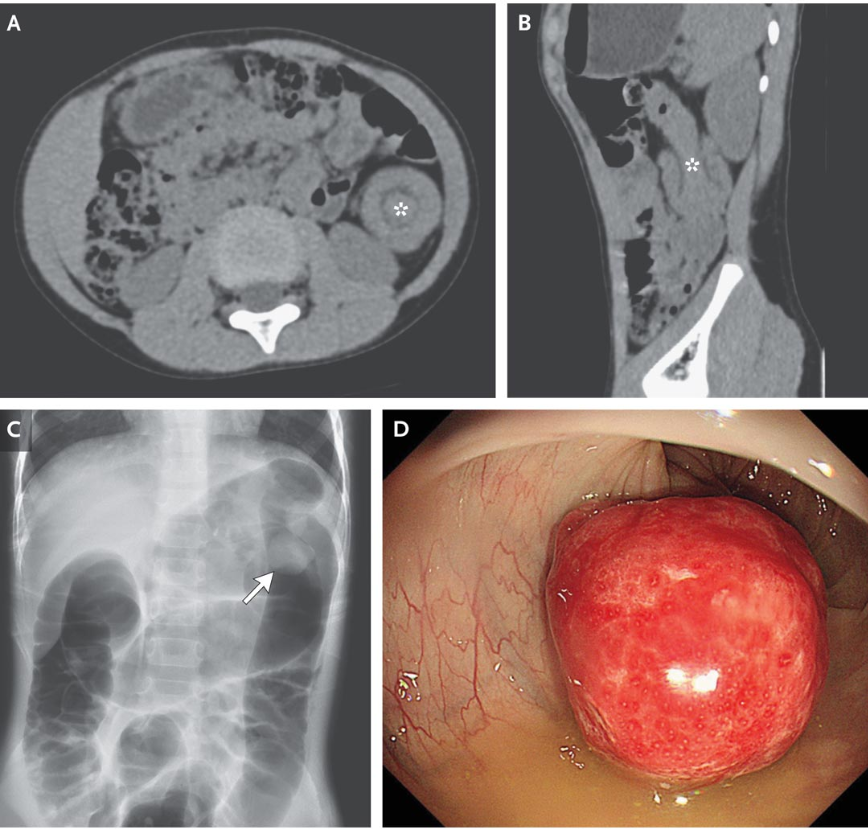

Image from NEJM: Colocolonic Intussusception

From NEJM Twitter feed:

“Colonic intussusception is a rare cause of intestinal obstruction in children, and most cases are ileocolic rather than colocolonic. A pathologic lead point, typically a juvenile polyp, is present in the majority of cases.” In this case, panel D shows a 2.5 cm pedunculated polyp which was thought to be the lead point.

Related blog posts:

“Is Salt at Fault?” in Inflammatory Bowel Disease

R Kuang et al. Inflamm Bowel Dis 2023; 29: 140-150. Is Salt at Fault? Dietary Salt Consumption and Inflammatory Bowel Disease

This review looks at the potential role of salt in relation to the epidemiology of inflammatory bowel disease. The general focus is that the prevalence/incidence of IBD has been increasing and there must be environmental/dietary factors involved. Could salt be one of those causal factors or is it merely a temporal association?

Key points:

  • Ultra-processed foods make up more than half of the daily caloric intake in developed countries such as the United States! and Canada and between one-third to one-fifth of diets in middle-income countries such as Brazil and Mexico.. Ultra-processed foods involve “fractioning of whole foods into substances, chemical modifications of these substances, frequent use of cosmetic additives and sophisticated packaging that allow producers to create highly profitable, convenient, and hyperpalatable products.” Ultra-processed foods are typically high in sugar, unhealthy fats, and salt and low in dietary fiber, protein, vitamins, and minerals. They are also calorie dense. For Americans, the primary source of sodium in the diet is from commercially processed foods.
  • At present, the typical American consumes over 40% more salt on a daily basis than is re-commended. Added salt is a key component of UPFs, whose increased consumption has been closely linked to this rise in the IBD incidence. Even though salt is a key component of UPFs, it has received limited attention in the investigation of IBD...Excess salt contributes to greater monocyte and T-cell-driven inflammation and a parallel loss of immunoregulatory mechanisms involving M2 macrophages and Tregs in the Th17 axis.
  • The authors argue that improvement in IBD with exclusive enteral nutrition is another factor indicating a potential role for salt reduction as beneficial. “Although these ultra-processed liquid nutrition formulas were high in sugars, emulsifiers, and carrageenan, they were very low in sodium content.”

My take: It is not clear what impact salt has on IBD. However, too much salt causes problems well beyond hypertension and may contribute to several inflammatory conditions, including IBD, asthma, and rheumatoid arthritis.

Related blog posts:

Unrelated website information: IBD-EII is a website which has tried to organize/summarize some of the more important IBD articles including a timeline of these publications and evidence for specific medications.

Atlanta Botanical Gardens. Garden Nights, Holiday Lights exhibit

Useful Endoscopic Tricks for Stricture Management and Magnets

JL Yasuda et al. JPGN 2023; 76: 77-79. Measurement of Stricture Dimensions Using a Visual Comparative Estimation Method With Biopsy Forceps During Endoscopy

This quick study looked at using biopsy forceps in 191 endoscopies to estimate esophageal stricture narrowing. Key findings:

  • Lin’s concordance correlation coefficient was 0.92 (95% confidence interval: 0.89–0.94) between the visual diameter estimates and the fluoroscopic stricture measurements.
  • Correlation was strongest for smaller to mid-sized stricture diameters
  • Yellow biopsy forceps open wide to ~6 mm and standard orange biopsy forceps ~7 mm
  • Dimensions of the actual scope can be helpful in estimating a stricture. Some pediatric scope have 5-6 mm diameter and standard scopes ranging from 8.0-9.8 mm

My take: This study shows that commonly available endoscopic tools can be used to more accurately estimate stricture diameter.

Related blog posts:

K Guilcher et al. JPGN Reports 3(4):p e257, November 2022. | DOI: 10.1097/PG9.000000000000025. Open Access! Innovative Makeshift Technique for Removing Ingested Rare Earth Magnets “In this case, a makeshift technique of a prototype magnet in a net attracted the buried magnets within the food bolus and allowed successful retrieval of all intragastric magnets at once.” My take: This is a clever way to co-opt the enemy (the magnets). However, other useful approaches: 1. Many times an endoscopic forceps will attract the magnets 2. Using fluoroscopy, can be helpful in locating difficult to visualize objects

Atlanta Botanical Gardens: Garden Lights, Holiday Lights (with and without 3-D glasses)

Celiac Disease Identified After Family Index Case

MJ Gould et al. JPGN 2023; 76: 49-52. Characteristics of Pediatric Patients With Celiac Disease Identified Due to an Affected First-Degree Family Member

In this retrospective study, 49 patients were screened due to an affected first-degree relative with celiac disease. They were compared to 178 patients who were screened for other clinical indications. Key findings:

  • Although 51% of patients screened due to an affected first-degree relative were asymptomatic, their disease histology and TTG levels were as severe as those screened for symptoms suggestive of celiac disease (in the comparison group 16% were asymptomatic). 

Comments:

  1. “Previous studies have shown that asymptomatic adolescents and those diagnosed with CD by serologic screening are less likely to adhere strictly to a GFD when compared to younger children and adults diagnosed because of classical symptoms” (Dig Dis Sci. 2008 Jun; 53(6): 1573–1581).”
  2. Some individuals who are thought to be asymptomatic, clinically improve with a gluten free diet (GFD). In one study, “the GFD group also had reduced indigestion (P=.006), reflux (P=.05), and anxiety (P=.025), and better health, based on the visual analog scale (P=.017), than the gluten-containing diet group” (Gastroenterology  2014 Sep;147(3):610-617).

My take: In this study, being asymptomatic (identified due to affected first-degree relative) was NOT associated with milder celiac disease based on serology or histology.

Relate blog posts:

Garden Lights, Holiday Lights at Atlanta Botanical Gardens

IBD Updates: Understanding Newest IBD Therapies for Kids- Bowel Sounds, Hispanic Patients with IBD, More on Intestinal Ultrasound

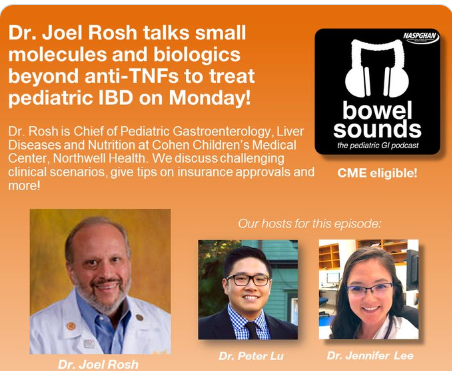
Bowel Sounds Link: Joel Rosh talks small molecules and biologics

This is another good chat. Dr. Rosh provides a lot of information about the newest IBD agents. Overall, the episode indicates a very enthusiastic experience with IL-23 targeting agents like risankizumab (perhaps the ‘Michael Jordan’ of biologics) and with JAK agents like tofacitinib and upadacitinib. Dr. Rosh’s experience with regard to safety of these newer agents has been very positive. For tofacitinib, the typical dosing alluded to in the podcast was 10 mg twice a day (not three times a day). The potential adverse effects, though unlikely in the pediatric population, are carefully discussed with families and monitored.

So far, Dr. Rosh has not found a niche for ozanimod. In addition, he briefly discusses therapeutic drug monitoring. With regard to using vedolizumab as a first-line agent for ulcerative colitis, he often uses the VARSITY study (BE Sands et al NEJM 2019; 381: 1215-26) to justify this to payers. There is a sad element to the podcast though –Dr. Rosh admits to being a lifelong Mets fan!

Related blog posts:

NH Nguyen et al. Clin Gastroenterol Hepatol 2023; 21: 173-181. Open Access! Effectiveness and Safety of Biologic Therapy in Hispanic Vs Non-Hispanic Patients With Inflammatory Bowel Diseases: A CA-IBD Cohort Study

Key findings in this retrospective study with 240 Hispanic patients:

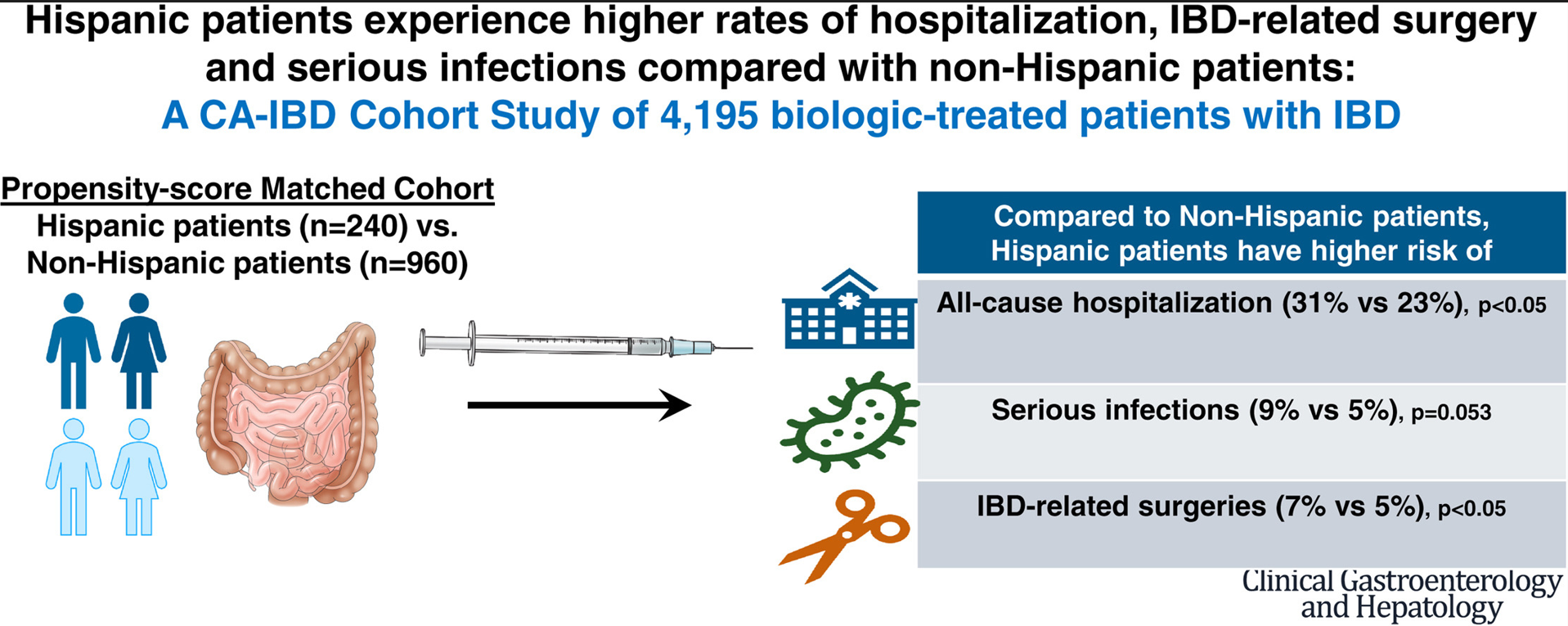
  • Within 1 year of biologic initiation, Hispanic patients had higher rates of hospitalizations (31% vs 23%; adjusted hazard ratio [aHR], 1.32; 95% CI, 1.01–1.74) and IBD-related surgery (7.1% vs 4.6%; aHR, 2.00; 95% CI, 1.07–3.72), with a trend toward higher risk of serious infections (8.8% vs 4.9%; aHR, 1.74; 95% CI, 0.99–3.05).
  • The authors state “these findings suggest that biologic agents may not be as effective or safe in Hispanic patients as they are in non-Hispanic Caucasians… Besides biological factors, socioeconomic factors related to costs and access to care, which contribute to delayed initiation of biologics, and/or limited postinitiation monitoring, leading to higher rates of unplanned health care utilization.”

T Kucharzik et al. Clin Gastroenterol Hepatol 2023; 21: 153-163. Open Access! Early Ultrasound Response and Progressive Transmural Remission After Treatment With Ustekinumab in Crohn’s Disease (STARDUST study)

Key findings:

  • IUS showed that ustekinumab-treated CD patients achieved progressive IUS response (46.3%) and transmural remission (24.1%) through week 48, with a more robust response in the colon and biologic-naive patients
  • Fair/moderate reliability (κ = 0.21–0.51) was observed between week 4 IUS response and week 48 overall endoscopic response and fecal calprotectin/complete biomarker outcomes.

Meds for Obesity: AAP Guidelines

Selected recommendations:

  • In children 10 y and older, pediatricians and other PHCPs should evaluate for lipid abnormalities, abnormal glucose metabolism, and abnormal liver function in children and adolescents with obesity (BMI ≥95th percentile) and for lipid abnormalities in children and adolescents with overweight (BMI ≥85th percentile to <95th percentile). 
  • Pediatricians and other PHCPs should provide or refer children 6 y and older (Grade B) and may provide or refer children 2 through 5 y of age (Grade C) with overweight (BMI ≥85th percentile to <95th percentile) and obesity (BMI ≥95th percentile) to intensive health behavior and lifestyle treatment.
  • Pediatricians and other PHCPs should offer adolescents 12 y and older with obesity (BMI ≥95th percentile) wt loss pharmacotherapy, according to medication indications, risks, and benefits, as an adjunct to health behavior and lifestyle treatment. 
  • Pediatricians and other PHCPs should offer referral for adolescents 13 y and older with severe obesity (BMI ≥120% of the 95th percentile for age and sex) for evaluation for metabolic and bariatric surgery to local or regional comprehensive multidisciplinary pediatric metabolic and bariatric surgery centers. 

My take: As with the AGA, the AAP has now recommended the widespread adoption of pharmacologic therapy for use in patients with obesity. It appears that treatment would be required indefinitely, though, given the likelihood of weight gain when treatment is stopped (reviewed on a future post).

Related blot posts:

 Garden Lights, Holiday Lights at Atlanta Botanical Gardens

The Onion’s Take on the New AAP Guidelines:

Why Vonoprazan Is More Effective For Erosive Esophagitis Than a Proton Pump Inhibitor

L Laine et al. Gastroenterol 2023; 164: 61-71. Open Access! Vonoprazan Versus Lansoprazole for Healing and Maintenance of Healing of Erosive Esophagitis: A Randomized Trial

Editorial: DA Katzka, PJ Kahrilas. Gastroenterol 2023; 164: 14-15. Open Access! Potassium-Competitive Acid Blocker Suppression of Gastric Acid in Erosive Esophagitis: Is Stronger and Longer Better?

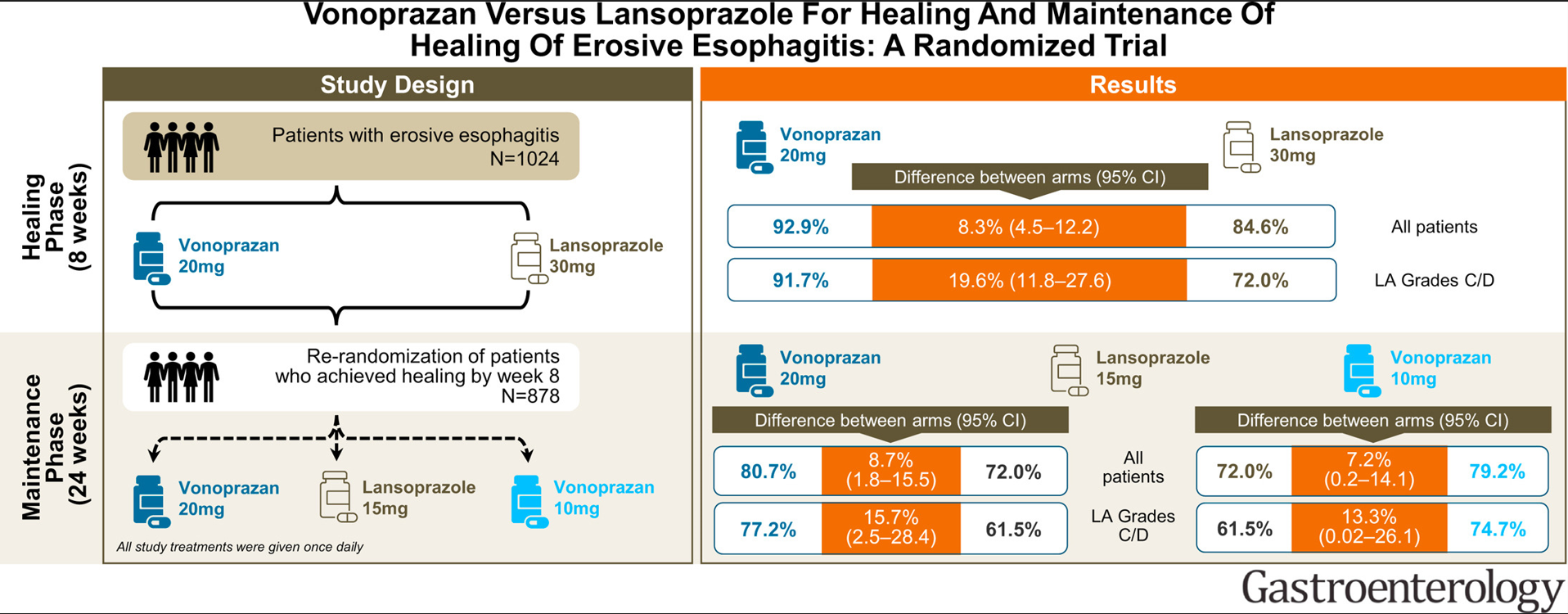
Methods: Adults with erosive esophagitis were randomized to once-daily vonoprazan, 20 mg, or lansoprazole, 30 mg, for up to 8 weeks (healing phase, n=1024). Patients with healing were rerandomized to once-daily vonoprazan, 10 mg, vonoprazan, 20 mg, or lansoprazole, 15 mg, for 24 weeks (maintenance phase, n=878). 

Key findings: (see graphical abstract)

  • In the healing phase, vonoprazan was noninferior to lansoprazole in the primary analysis and superior on the exploratory analysis of healing: 92.9 vs 84.6% (difference, 8.3%). It is noted that studies in Asian populations found smaller differences in healing between these medications.
  • Vonoprazan had superior healing Los Angeles Classification Grade C/D esophagitis at week 2 (difference, 17.6%)
  • Vonoprazan was superior with regard to maintenance of healing Grade C/D esophagitis (20 mg vs lansoprazole (difference, 15.7%) and 10 mg vs lansoprazole (difference, 13.3%).
  • The entire group maintenance healing rates in this trial were lower than in a prior randomized trial in Japan. In the current study at 24 weeks, vonoprazam 20 mg, vonprazan 10 mg and lansoprazole 15 mg had maintenance of healing in 81%, 79%, and 72% respectively compared with 98%, 95%, and 83% in the trial from Japan

The editorial provides a lot of insight into this now FDA-approved therapy for H pylori. Vonoprazan’s application to expand FDA approval is underway: FDA Accepts Review of NDA for Vonoprazan From Phathom Pharmaceuticals (June 3, 2022).

Key points from editorial:

  • Among their shortcomings, PPIs are far from perfect in healing high-grade (Los Angeles class C and D) esophagitis, resulting in the common practice of twice-daily dosing. Furthermore, up to 35% of patients with Los Angeles class C and D esophagitis remain unhealed at 8 weeks, even with twice-daily PPI use.5,6
  • Mechanism of action: Vonoprazan is a potassium-competitive acid blocker (PCAB) . It, reversibly binds to the α-subunit of H+, K+-ATPase to compete with potassium binding. Vonoprazan is acid stable, eliminating the need for enteric coating and allowing for rapid onset of action. Because it achieves high and sustained (half-life is approximately 9 hours) concentrations rapidly in the parietal cell secretory canaliculi, maximal acid inhibition is achieved quickly after a single dose.
  • Because it is not metabolized through the hepatic CYP2C19 or CYP3A4 enzymes, vonoprazan is much less prone to drug–drug interactions.
  • Safety: For the issue of long-term adverse events associated with PPI use…, the proposed mechanisms for these primarily relate to the effects of chronic acid inhibition and/or hypergastrinemia, and there is no reason to think that a PCAB would be any different than a PPI.

My take: There are a lot of individuals with ongoing heartburn & reflux despite PPI treatment. It is likely that vonoprazan will be targeted for patients with more severe erosive esophagitis and refractory symptoms. It is likely that the cost to U.S. patients will be substantially higher than the cost of PPIs.

Related blog posts:

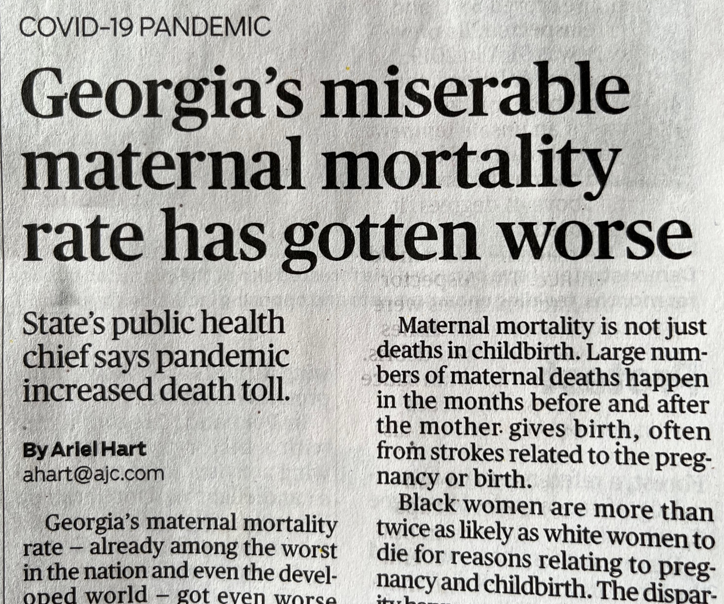
Maternal Mortality in Georgia

Dr. Kathleen Toomey, Commissioner and State Health Officer at Georgia, in an AJC report (Jan 21, 2023):

“We are going to see an increase in maternal mortality during the time of COVID,” Toomey said. “It’s sad but not unexpected.

Toomey spoke during budget hearings at the state Capitol, saying her agency is pivoting away from an all-hands-on-deck pandemic focus. She said her department would use some of its available bandwidth now to focus on the maternal mortality issue.

For the years 2018-2020, DPH posted pregnancy-related deaths for white women at 22.7 deaths per 100,000 births, and pregnancy-related deaths for Black women at 48.6 deaths per 100,000 births. It did not post overall figures for those years.

In another study (see below) on maternal mortality, it is noted that the mortality rate was 62% higher in states with restrictive abortion policies, likely related to poor availability of health care.

The Commonwealth Fund report (12/4/22): The U.S. Maternal Health Divide: The Limited Maternal Health Services and Worse Outcomes of States Proposing New Abortion Restrictions

My take: Improving maternal mortality should be near the top of the list of priorities and is a good area to try to mitigate health care disparities.

And on a lighter note –Tonight Show Interview with George Santos (Jon Lovitz). Thanks to Steven Liu for sharing this.