Overdiagnosis of Milk Allergy in Infancy and New Consensus Recommendations

Fun story form Avi Yemini on Twitter (98 second video): “You can never get tired of hearing this story about Queen Elizabeth II”

——————————————————-

HI Allen et al. Clin Exp Allergy 2022; 52: 848-858. https://doi.org/10.1111/cea.14179. Open Access: Detection and management of milk allergy: Delphi consensus study

This study reviewed the topic of milk allergy (both IgE-mediated and non-IgE mediated milk allergy) and provides consensus recommendations from 28 non-conflicted multidisciplinary international experts.

Key points:

  • “Milk allergy diagnosis can be difficult, making the condition vulnerable to overdiagnosis – and formula milk company sponsorship of milk allergy guidelines, their authors and healthcare professional education is thought to contribute to milk allergy overdiagnosis…Prescriptions for specialized formula used by bottle-fed infants with cow’s milk allergy have increased … expected volumes by up to 10-fold.”
  • “Consensus was reached that milk allergy does not need to be considered for changes to colour, frequency or consistency of stool, aversive feeding, occasional spots of blood in stool, nasal or respiratory symptoms, in the absence of a temporal relationship with milk protein ingestion. Exceptions to this were biopsy-proven eosinophilic gastrointestinal disorders or protein-losing enteropathy or, in a child ingesting milk protein, faltering growth or daily visible blood in stools”
  • “Participants noted that visible blood in the stool in an exclusively breastfed infant [has] many possible causes including infection and fissures….and the condition is generally of short duration without serious health consequences”

My take: Milk allergy is overdiagnosed in infancy. This guideline supports a more supportive treatment approach. Because breastmilk is hypoallergenic, maternal dietary restriction may be more harmful than helpful in those with mild symptoms (especially if not having trouble with growth or with hypoalbuminemia). Table 1 below lists some of the most important of the 38 consensus recommendations.

Related blog posts:

Boat view near Kenai Fjords National Park, AK

Predicting Risk of Celiac Disease in High-risk Families

CR Meijer et al. Gastroenterol 2022; 163: 426-436. Open access: Prediction Models for Celiac Disease Development in Children From High-Risk Families: Data From the PreventCD Cohort

B Lebwohl, L Greco. Gastroenterol 2022; 163: 368-369 (editorial). Open access: Can We Predict the Onset of Celiac Disease?

Design: “In this study, the investigators analyze long-term follow-up data from the PreventCD trial, a randomized trial of infants [n=944] with a first-degree relative with CD that was designed to test the strategy of low-dose gluten introduction at age 4 months. The trial did not show that this strategy reduced the risk of CD development,7 but the abundant data collected during this trial have allowed these investigators to study risk factors for the development of CD among the trial participants.” The median f/u was 8.3 yrs.

Key points from study and editorial:

  • 135/944 (14%) children developed CD (mean age, 4.3 years)
  • CD developed significantly more often in girls (P = .005) and in Human Leukocyte Antigen (HLA)-DQ2 homozygous individuals (8-year cumulative incidence rate of 35.4%
  • Prediction application calculator with screening recommendations https://hputter.shinyapps.io/preventcd/. This screening calculator generally recommends screening every 6 months for those at greastest risk and every 12 months for those at lower risk.

HLA testing in this setting has historically been performed primarily due to its excellent negative predictive value. Because HLA DQ2 and DQ8 are present in nearly 100% of people with CD, the primary value of its use has been in ruling out CD when an individual is found to have neither haplotype. This study shows some usefulness in predicting the likelihood of CD.

My take: This study showed 14% of high-risk children developed celiac disease and the number is likely to escalate with more time. In first-degree relatives, checking HLA-DQ2/8–typing may help determine frequency of screening in asymptomatic individuals –though simply choosing to screen every 1-2 years would be a reasonable alternative.

It should be noted that current expert guidelines provide divergent advice; “NASPGHAN recommends that asymptomatic children in high-risk groups (including first-degree relatives) be screened, 4 but the United States Preventive Services Task Force concluded that the evidence is insufficient to warrant recommending for or against screening asymptomatic individuals.”

Related blog posts:

Westchester Lagoon, off Tony Knowles Coastal Trail. Anchorage, AK

Disclaimer: This blog, gutsandgrowth, assumes no responsibility for any use or operation of any method, product, instruction, concept or idea contained in the material herein or for any injury or damage to persons or property (whether products liability, negligence or otherwise) resulting from such use or operation. These blog posts are for educational purposes only. Specific dosing of medications (along with potential adverse effects) should be confirmed by prescribing physician.  Because of rapid advances in the medical sciences, the gutsandgrowth blog cautions that independent verification should be made of diagnosis and drug dosages. The reader is solely responsible for the conduct of any suggested test or procedure.  This content is not a substitute for medical advice, diagnosis or treatment provided by a qualified healthcare provider. Always seek the advice of your physician or other qualified health provider with any questions you may have regarding a condition.

IBD Updates: SC Vedolizumab, PRODUCE study: Specific Carbohydrate Diet, Racial Epidemiology of IBD, and Microbiome in UC

Briefly noted –all of these articles are open access:

A Volkers et al. AP&T 2022; https://doi.org/10.1111/apt.17153 Open access: Real-world experience of switching from intravenous to subcutaneous vedolizumab maintenance treatment for inflammatory bowel disease. In this prospective cohort study, patients (n=135) with IBD who had ≥4 months IV vedolizumab were switched to SC vedolizumab. 

Key findings:

  • 4 patients with Crohn’s disease had loss of response.
  • 9% of patients were switched back to IV vedolizumab due to adverse events or fear of needles.
  • Median clinical and biochemical disease activity remained stable after the switch. Median vedolizumab serum concentrations increased from 19 μg/ml at the time of the switch to 31 μg/ml 12 weeks after the switch (p < 0.005).

Related blog posts:

HC Kaplan et al. Am J Gastroenterol 2022 Jun 1;117(6):902-917. Open access: Personalized Research on Diet in Ulcerative Colitis and Crohn’s Disease: A Series of N-of-1 Diet Trials. In this study, 21 patients (completed trial) were randomized to 1 of 2 sequences of 4 alternating 8-week SCD (specific carbohydrate diet) and MSCD (modified specific carbohydrate diet) periods.

Key findings: “SCD and MSCD did not consistently improve symptoms or inflammation.” “Some individuals had improvement in symptoms and fecal calprotectin compared with their UD, whereas others did not.” The authors note that it took 18 months to recruit 54 patients for this study across 19 research sites.

Related blog posts:

EL Barnes et al. Inflamm Bowel Dis 2022; 28: 983-987. Open access: Racial and Ethnic Distribution of Inflammatory Bowel Disease in the United States The authors electronic health records from 337 centers from January 2013 to December 2018 with nearly 40 million patients in U.S.

Key findings:

  • Black adult patients were significantly less likely than White patients to have a diagnosis of CD (odds ratio [OR], 0.53) or UC (OR, 0.41). Pediatric Black patients were also less likely to have a diagnosis of CD (OR, 0.41) or UC (OR, 0.38)
  • Adult Hispanic patients were less likely to have a diagnosis of CD (OR, 0.33) or UC (OR, 0.45) compared with non-Hispanic patients. Similarly, pediatric Hispanic patients were less likely to have a diagnosis of CD (OR, 0.34) or UC (OR, 0.50).
  • Thus, these data suggest that CD and UC are modestly less prevalent among patients of non-White races and Hispanic ethnicity

M Frioirksmork et al. Inflamm Bowel Dis 2022; 28: 1081-1089. Open access: Similar Gut Bacterial Composition Between Patients With Ulcerative Colitis and Healthy Controls in a High Incidence Population: A Cross-sectional Study of the Faroe Islands IBD Cohort. This cross-sectional study from the Faroe Islands (which has very high incidence of IBD) consisted of 41 patients with established ulcerative colitis and 144 age- and sex-matched healthy controls.

Key findings: There was a similarity in bacterial community composition and absence of the beneficial Akkermansia genus in both groups.

Neuromodulators & Gastroparesis (Bowel Sounds Episode)

A recent Bowel Sounds had some very useful insight into gastroparesis/dyspepsia. This bowel sounds was particularly interesting with regard to gastric electrical stimulation (very effective in highly selected group) and pyloric botox. It also reviewed many of the difficulties in diagnosis/overlap with dyspepsia.

Listen here: http://buzzsprout.com/581062/11110065

Useful references:

  • Lu PL, Di Lorenzo C. Gastroparesis in the Pediatric Patient: Children are Not Little Adults. Gastrointest Disord. 2020, 2(2), 86-95
  • Lu PL, Moore-Clingenpeel M, et al. The rising cost of hospital care for children with gastroparesis: 2004-2013. Neurogastroenterol Motil. 2016 Nov;28(11):1698-1704.
  • Lu PL, Teich S, et al. Improvement of quality of life and symptoms after gastric electrical stimulation in children with functional dyspepsia. Neurogastroenterol Motil. 2013 Jul;25(7):567-e456.
  • Orsagh-Yentis DK, Ryan K, et al. Gastric electrical stimulation improves symptoms and need for supplemental nutrition in children with severe nausea and vomiting: A ten-year experience. Neurogastroenterol Motil. 2021 Sep;33(9):e14199.

Neuromodulator Algorithm for Adults with Disorders of Gut-Brain Interaction from @Liane428:

This image has an empty alt attribute; its file name is screenshot-2022-08-12-162437.png
This image has an empty alt attribute; its file name is image-2.png


Related blog posts

Dreaded Nausea (2022) Plus Skills or Pills

C DiLorenzo. Front Pediatr 2022; https://doi.org/10.3389/fped.2022.848659. Open Access: Functional Nausea Is Real and Makes You Sick

Couple of key pointers:

Diagnosis:

  • ” I tend to refrain from ordering gastric emptying studies in patients with nausea unless vomiting hours after eating occurs.” According to the article, this is mainly due to the overlap symptoms of gastroparesis and functional dyspepsia, the suboptimal reliability of testing, and the uncertain value of testing in targeting therapy.
  • “Much like in most other DGBI, diagnostic tests in patients with chronic nausea should only be indicated in the presence of other alarm signs or features (weight loss, severe pain, bilious vomiting, etc.) (29). Upper endoscopies are particularly unhelpful with 98% reported to be normal in patient with nausea as the predominant symptom”

Treatment:

  • “Most beneficial treatment is hypnotherapy.” Cognitive behavioral therapy is likely helpful.
  • Medications that may be useful: cryproheptadine, STW5 (an herbal supplement), scopolamine patch, and erythromycin (when there is gastroparesis); “use of psychotropic agents such as amitriptyline, buspirone, and mirtazapine (which decrease visceral hyperalgesia, improve accommodation or accelerate gastric emptying may be justified in selected cases.” There is little evidence that classical antiemetics such as ondansetron are beneficial for functional nausea.
  • Also consider wrist acupuncture &/or commercially available devices based on the same principle, endoscopic injection of botulinum toxin in the pylorus; implantation of a gastric pacemaker improves drug-refractory nausea. Treatment of anxiety and depression, if present, is also beneficial.

My take: This is a useful review on a tough disorder to manage.

Related blog posts

Related article: PD Browne et al. Clin Gastroenterol Hepatol 2022; 20: 1847-1856. Open Access! Skills or Pills: Randomized Trial Comparing Hypnotherapy to Medical Treatment in Children With Functional Nausea

This article found that hypnotherapy was more effective than standard medical therapy during the first 6 months and similar subsequently in children with functional nausea. Standard medical therapy was a progression of treatment:

The End of the Vitamin D Epidemic (VITAL Study)

MS LeBoff et al. NEJM 2022; 387: 299-309. Supplemental Vitamin D and Incident Fractures in Midlife and Older Adults

SR Cummings, C Rosen. NEJM 2022; 387: 368-370. VITAL Findings — A Decisive Verdict on Vitamin D Supplementation

In an ancillary study of the Vitamin D and Omega-3 Trial (VITAL), the investigators tested whether supplemental vitamin D3 would result in a lower risk of fractures than placebo. Design: VITAL was a two-by-two factorial, randomized, controlled trial with 25,871 participants with a median followup of 5.3 years.

Key findings:

  • Supplemental vitamin D3, as compared with placebo, did not have a significant effect on total fractures (hazard ratio, 0.98), nonvertebral fractures (hazard ratio, 0.97), or hip fractures (hazard ratio, 1.01). 

From the editorial:

  • This study reinforces a recent trial which found that Vitamin D supplementation did not significantly improve bone mineral density/structure with high-resolution CT.
  • “There is no justification for measuring 25-hydroxyvitamin D in the general population or treating to a target serum level.” Exceptions may include some patients at high-risk for deficiency like persons living in residential settings with little sunlight exposure and those with malabsorptive conditions (eg. celiac disease, cholestatic liver disease).
  • “Providers should stop screening for 25-hydroxyvitamin D levels or recommending vitamin D supplements and people should stop taking vitamin D supplements to prevent major diseases or extend life.”

NY Times (7/27/22): Study Finds Another Condition That Vitamin D Pills Do Not Help

“The first part of VITAL, previously published, found that vitamin D did not prevent cancer or cardiovascular disease in trial participants. Nor did it prevent falls, improve cognitive functioning, reduce atrial fibrillation, change body composition, reduce migraine frequency, improve stroke outcomes, protect against macular degeneration or reduce knee pain. Another large study, in Australia, found that people taking the vitamin did not live longer.”

My take: This should be the end of the Vitamin D epidemic. Will it?

Related blog posts:

Understanding Hiccups Plus TikTok & Unhealthy Eating Habits

FW Woodley et al. JPGN Reports. 2022. August 2022 – Volume 3 – Issue 3 – p e209. Open access: Significant Temporal Association of Esophageal Air Events (Supragastric Belches, Air Swallows, and Gastric Belches) With Hiccups: A Case Study in an Adolescent

This report showed a significant temporal association between esophageal air events (EAEs) and hiccups using impedance-pH monitoring (I-pHM). EAEs include air swallows, gastric belching, and supragastric belching

This article reviews physiology of hiccups:

  • “Hiccups are physiologically normal but can become pathological when they occur with increasing regularity or for extended periods of time (1). The occurrence of hiccups is mediated through a reflex arc that consists of 3 basic branches: (1) afferent/sensory limb involving vagal, phrenic, and sympathetic nerves; (2) medulla and possibly the cervical spine (8) where central processing occurs; and (3) efferent/motor limb involving motor fibers of phrenic nerves and accessory nerves that innervate the diaphragm and intercostal muscles, respectively (1,9). A hiccup may be caused by any disturbance that triggers one of these branches (1).”

Understanding reasons for hiccups may help with treatment:

  • “We initially tried treating this patient’s hiccups with acid suppression. When symptoms persisted despite H2 blocker, PPI, and cyproheptadine therapy, I-pHM confirmed minimal GER and allowed us to focus instead on other treatments: behavioral techniques, diaphragmatic breathing, and baclofen.”

My take: It is nice to see a correlation between hiccups and physiology with I-pHM. In some patients, baclofen along with diaphragmatic breathing may be a consideration prior to definitive testing.

Related blog posts:

Unrelated article (but interesting): Brooks R, Christidis R, Carah N, et al Turning users into ‘unofficial brand ambassadors’: marketing of unhealthy food and non-alcoholic beverages on TikTok. BMJ Global Health 2022;7:e009112.

Key point: This study examines the marketing of unhealthy food and non-alcoholic beverages on TikTok. Videos posted by top food brands frequently feature branding, product images, engagement and celebrities/influencers. These videos reach billions of views.

Downtown Savannah

What Happens When Infliximab is Stopped in Patients in Deep Remission Plus One

S Buhl et al. NEJM 2022; DOI:https://doi.org/10.1056/EVIDoa2200061. Discontinuation of Infliximab Therapy in Patients with Crohn’s Disease

Design: This was a multicenter, randomized, double-blind, placebo-controlled withdrawal study of infliximab in patients (n=115) with Crohn’s disease who were in clinical, biochemical, and endoscopic remission after standard infliximab maintenance therapy for at least 1 year. Patients were randomly assigned 1:1 to continue infliximab therapy or to receive matching placebo for 48 weeks.

Key finding:

  • At the end of the trial at week 48, relapse-free survival was 100% in the infliximab-continuation group and 51% in the infliximab-discontinuation group

My take (borrowed from authors): Discontinuation of infliximab for patients with Crohn’s disease receiving long-term infliximab therapy and in clinical, biochemical, and endoscopic remission leads to a considerable risk of relapse

Related blog posts:

Figure from NEJM Evidence Twitter Feed

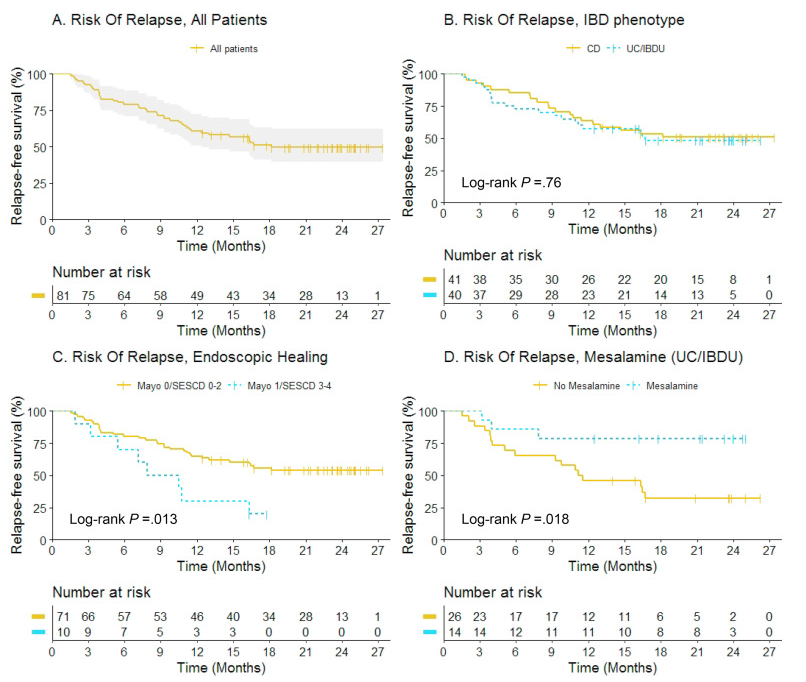
S Sassine et al. AJG 2022; Volume 117 – Issue 4 – p 637-646. doi: 10.14309/ajg.0000000000001650. Risk Factors of Clinical Relapses in Pediatric Luminal Crohn’s Disease: A Retrospective Cohort Study

Key findings–The following variables were associated with clinical relapse:

  • female sex (adjusted hazard ratio [aHR] = 1.52, P = 0.0007)
  • exposure to oral 5-ASA (aHR = 1.44, P = 0.04),
  • use of immunomodulatory agents compared with tumor necrosis factor-alpha inhibitors (methotrexate aHR = 1.73, P = 0.003; thiopurines aHR = 1.63, P = 0.002)
  • presence of granulomas (aHR = 1.34, P = 0.02)
  • increased eosinophils on intestinal biopsies (aHR = 1.36, P = 0.02)
  • high levels of C-reactive protein (aHR = 1.01, P < 0.0001)
  • fecal calprotectin (aHR = 1.08, P < 0.0001)
  • low serum infliximab levels (<7 mcg/mL) (aHR = 2.32P = 0.001).

Clever Technique to Avoid Hemospray Catheter Occlusion

JA Tau. Gastroenterology and Endoscopy News (July 14, 2022): Open Accss: EndoHacks: Thinking Outside the Traditional Endoscopy Box Optimizing Hemospray Delivery With Bone Wax

“Catheter occlusion, which occurs when the powder contacts blood or fluid within the catheter, is the main technical obstacle to successful powder delivery. Here is a cost-effective technique that overcomes this issue via the addition of a protective bone wax plug and stopcock (VideoGIE. 2021;6(9):387-389).”

“To set up, a tiny piece of bone wax is shaped into a 1-mm bead and applied to the tip of the 7 or 10 Fr delivery catheter (Figure 1). The catheter is then affixed to the Luer-lock end of a 3-way stopcock. The activated hemostatic powder device and an air-filled syringe are attached to the remaining ends of the stopcock. The stopcock initially is turned to oppose the device (Figure 2)…To fire without drying the working channel or air flushing the catheter, pass the bone wax–tipped catheter down the channel. The catheter tip is protected from moisture, and fluid can be suctioned, especially when using the 7 Fr catheter in a therapeutic gastroscope. When ready to fire, the bone wax plug is ejected with an air flush (Figure 3), the stopcock is turned to oppose the syringe (Figure 4), and the hemostatic powder is deployed.”

My take: If you follow the hemospray instructions carefully, this minimizes issues with catheter occlusion. This clever technique is likely to further eliminate this problem.

Related blog posts:

Bob Callan Trail, Atlanta