

Related blog post: Public Health Laws Weakened After COVID-19

Recent articles indicate the possibility of preclinical disease detection of inflammatory bowel disease; perhaps this is analagous to the “precrime’ detection in The Minority Report which allowed the police to arrest people before they committed their crime.
D Bergemalm et al. Gastroenterol 2021; 161: 1526-1539. Open Access: Systemic Inflammation in Preclinical Ulcerative Colitis
In this study from Sweden, the authors used biobanked plasma samples from 72 individuals with ulcerative colitis (UC) and matched healthy controls (n=140). Then the findings were validated in an inception cohort (n=101 with UC and 50 healthy controls. In addition, a cohort of heathy twin siblings of patients with UC (n=41) were matched with healthy controls (n=37).
Key findings:
The discussion elaborates on the role of these proteins.
My take: This study shows up-regulation of 6 plasma proteins indicating activation of both pro-inflammatory and tissue-repairing pathways several years before clinically overt UC. It offers hope of intervention to prevent the development of UC.
Related study: S-H Lee et al. Gastroenterol 2021; 161: 1540-1551. Open Access: Anti-Microbial Antibody Response is Associated With Future Onset of Crohn’s Disease Independent of Biomarkers of Altered Gut Barrier Function, Subclinical Inflammation, and Genetic Risk
In this study, the authors measured host serum antibody response to 6 microbial antigens at enrollment (Prometheus enzyme-linked immunosorbent assay test: anti-Saccharomyces cerevisiae antibodies immunoglobulin A/immunoglobulin G, anti-OmpC, anti-A4-Fla2, anti-FlaX, anti-CBir1) and derived the sum of positive antibodies (AS).
Key finding:
“High baseline AS (≥2) (43% of cases, 11% of controls) was associated with higher risk of developing CD (adjusted odds ratio, 6.5; 95% confidence interval, 3.4–12.7; P < .001). Importantly, this association remained significant when adjusted for markers of gut barrier function, fecal calprotectin, C-reactive protein, and CD-polygenic risk score, and in subjects recruited more than 3 years before diagnosis. Causal mediation analysis showed that the effect of high AS on future CD development is partially mediated (42%) via preclinical gut inflammation.

Y Ma et al. Hepatology 2021; 74: 2032-2046. Open Access: Human Leukocyte Antigen Profile Predicts Severity of Autoimmune Liver Disease in Children of European Ancestry
The main reason I had to highlight this article is the study period was 42 years!!! (1977-2019, n=236 children). Key findings: “Unique HLA profiles are seen in each subgroup of juvenile AILD: DRB1*03 for AIH-1, DRB1*03 plus DRB1*07 for AIH-2, and DRB1*13 for ASC. DRB1*03 and the A1-B8-DR3 haplotype are disease-predisposing genes for all three subgroups. The influence of HLA class II genes on disease severity is strong, DRB1*03 homozygosity and possession of DRB1*13 being associated to histologically more advanced disease from onset, while DRB1*07 is linked to the least optimal response to immunosuppression”
S Gawrieh et al. Hepatology 2021; 74 1809-1824. Saroglitazar, a PPAR-α/γ Agonist, for Treatment of NAFLD: A Randomized Controlled Double-Blind Phase 2 Trial
The “EVIDENCES IV study was a multicenter, randomized, double-blind, placebo-controlled phase 2 study to evaluate the safety and efficacy of saroglitazar.” n=106. Key findings:
My take: This study shows the potential of one agent for pharmacologic therapy for NAFLD/MAFLD.
SR Lieber et al. Liver Transplantation 2021; 27: 1454-1467. What Survivorship Means to Liver Transplant Recipients: Qualitative Groundwork for a Survivorship Conceptual Model
“A majority of LT recipients (75%) identified themselves as survivors. Integral to the definition of survivorship was overcoming hardship (including experiences on the waiting list) and the unique experience of being given a “second chance” at life. Motivations to survive included a new chance at life (55%), family (40%), spirituality/faith (30%), and fear of rejection (15%)”

HB Zheng et al. JPGN Reports: 2021; 2 (3) p e111. Open Access: Effective Use of Topical Sucralfate in the Conservative Management of Expanded Gastrostomy Tract Reduction
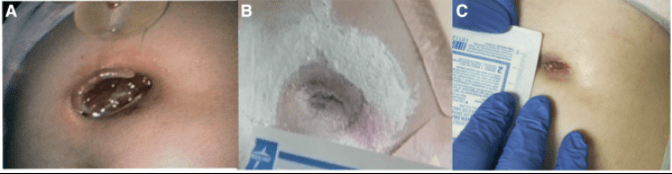
This case report describes a 10 yo with multiple medical problems with an expanding G-tube site with mucosal prolapse “where the G-tube balloon easily fell out of her gastrocutaneous fistula.”
The site was treated with three modalities, though the authors attribute the improvement to the use of sucralfate:
The authors provide pathophysiological reasons for sucralfate’s effectiveness:

KG Hulten, et al. Gastroenterol 2021; 11: 1433-1442. Open Access: Comparison of Culture With Antibiogram to Next-Generation Sequencing Using Bacterial Isolates and Formalin-Fixed, Paraffin-Embedded Gastric Biopsies
Background: “The general unavailability of culture-based susceptibility testing for H pylori has resulted in the almost universal reliance on hopeful (empiric) therapy and a high proportion of treatment failures.” Besides the lack of availability of culture-based susceptibility testing, the global increase in prevalence of antimicrobial resistance contributes to the poor cure rates obtained with empiric use of the currently most popular triple therapies for H pylori infection.
Methods: H pylori isolates (n=170) (clinical isolates and formalin-fixed, paraffin-embedded) were tested for susceptibility to amoxicillin, clarithromycin, metronidazole, levofloxacin, tetracycline, and rifabutin using agar dilution and NGS targeted to 23S rRNA, gyrA, 16S rRNA, pbp1, rpoB and rdxA. Agreement was quantified using κ statistics.
Key findings:
Associated editorial: F Megraud et al. Gastroenterol 2021; 11: 1367-1369. Open Access: Molecular Diagnosis for Helicobacter pylori . . . at Last
Excerpts from editorial:
My take: NGS can bring H pylori treatment to a new era (like almost all other infections). “Molecular methods can potentially augment or even replace the current in vitro methods for susceptibility testing, which are cumbersome, technically challenging, and time-consuming.”
Related blog posts:


J Ge et al. Gastroenterol 2021; 161: 1487-1501. Full text-open access: Outcomes of SARS-CoV-2 Infection in Patients With Chronic Liver Disease and Cirrhosis: A National COVID Cohort Collaborative Study
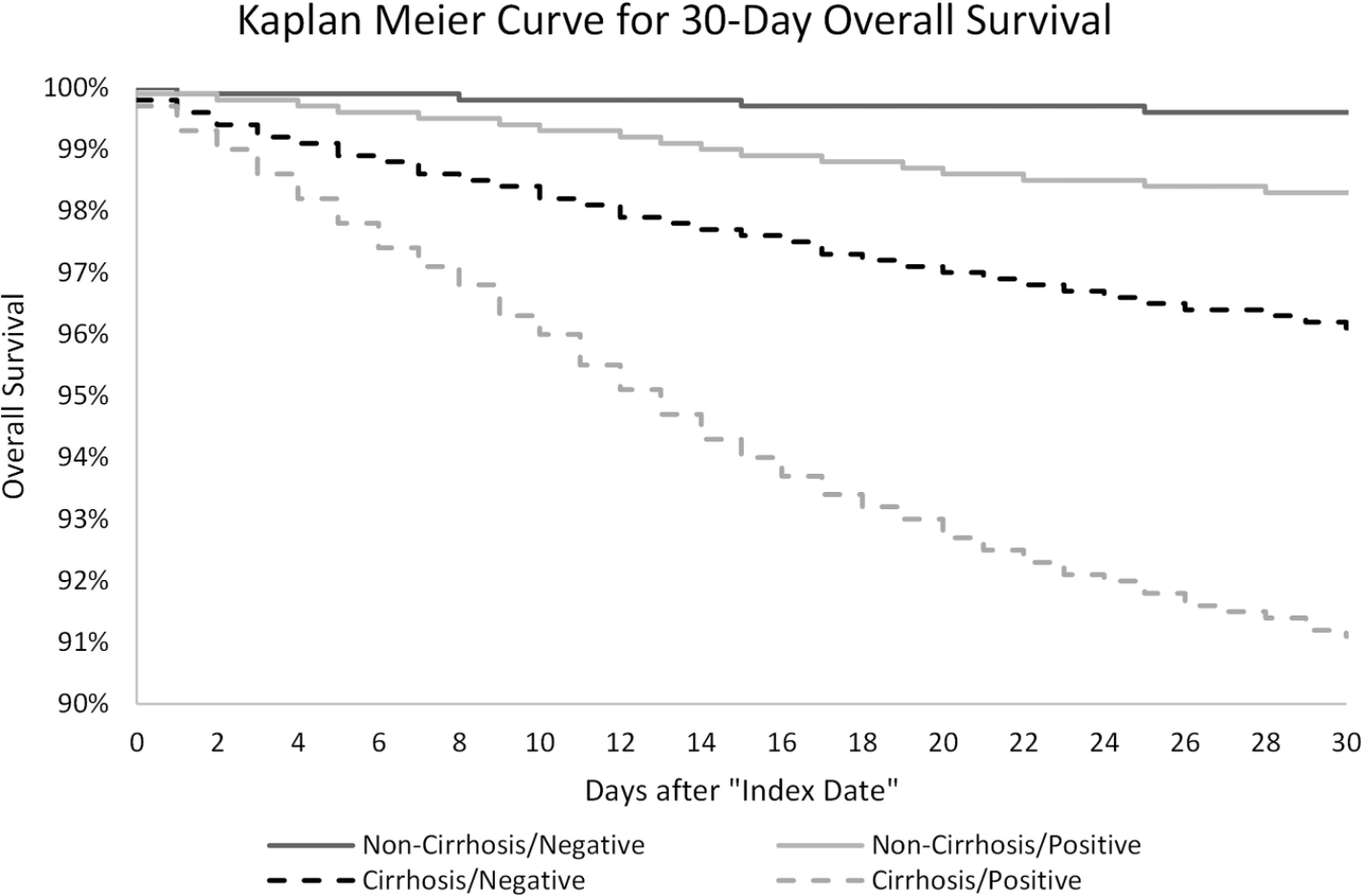
Key finding:
“In this study of approximately 221,000 nationally representative, diverse, and sex-balanced patients with CLD; we found SARS-CoV-2 infection in patients with cirrhosis was associated with 2.38 times mortality hazard, and the presence of cirrhosis among patients with CLD infected with SARS-CoV-2 was associated with 3.31 times mortality hazard”
Related blog post: Aspen Webinar 2021 Part 1 COVID-19 and the Liver
A recent article on simplifying the “simple” endoscopic assessment for Crohn’s disease reminded me of a scene from “There’s Something About Mary” (see below) where one of the characters plans to market a 7 minute abs video to replace the 8 minute abs video craze.
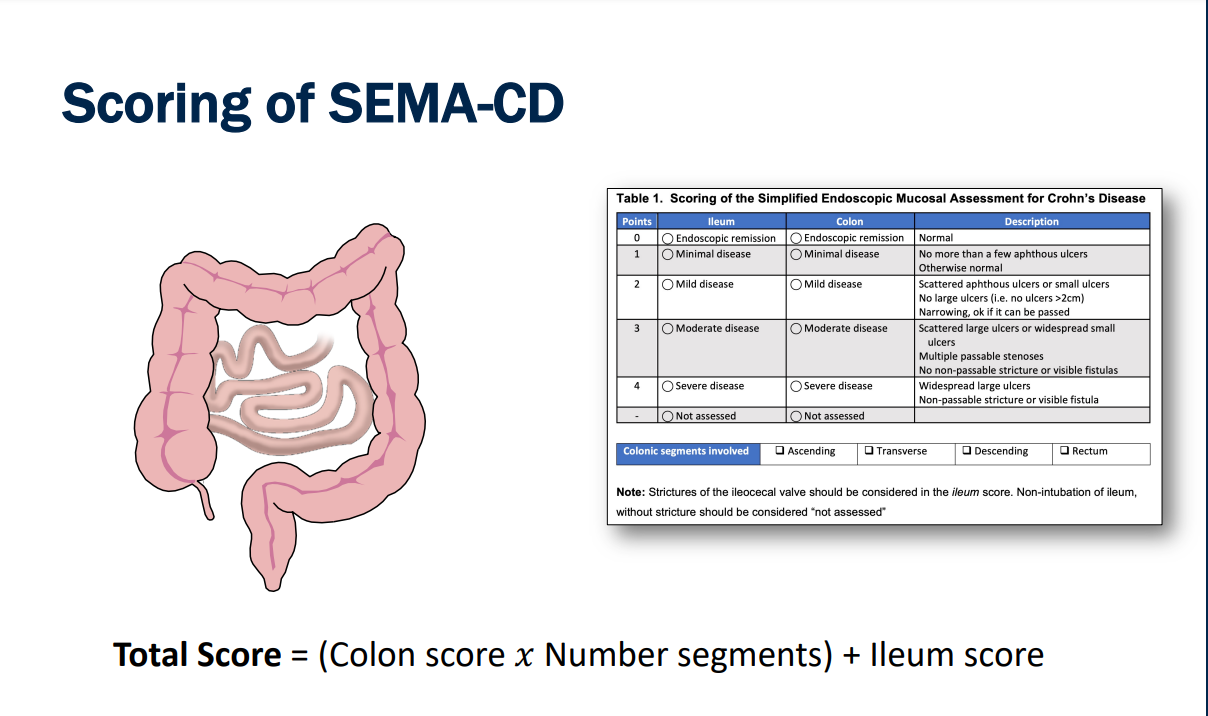
The article describes replacing the current “SES-CD” (or Simple Endoscopic Score for Crohn’s disease) with SEMA-CD (or Simplified Endoscopic Mucosal Assessment for Crohn’s disease).
YouTube: 7-minute abs Scene (from There’s Something About Mary)
J Adler et al. Inflamm Bowel Dis 2021; 27: 1585-1592. Development and Testing of a New Simplified Endoscopic Mucosal Assessment for Crohn’s Disease: The SEMA-CD
The SEMA-CD was scored by assigning a numerical value ranging from 0 (remission) to 4 (severe disease) for each bowel region (ileum and colon). The colon score was multiplied by the number of involved colonic segments and then added to the ileum score. “For example, if overall the colon was felt to have moderate involvement, and only the ascending and transverse colon had mucosal abnormalities, then a score of 3 for moderate disease would be multiplied by a total of 2 segments for a total [colon] score of 6.”
Key finding:
The authors note that clinical assessment is inadequate to monitor CD. CDAI (PCDAI) are poor surrogates for mucosal improvement…”30-68% of patients in clinical remission have evidence of mucosal inflammation on colonoscopy….Patients whose disease is managed based on clinical information alone are more likely to have disease complications, need more surgeries, or lose response to medications.”
My take: The SEMA-CD appears to be much easier than the SES-CD and thus more likely to be useful in clinical practice (& research), especially as it becomes incorporated into routine endoscopy software. If the SEMA-CD is widely adopted, we will need to be on the lookout for the ‘6 minute ab’ version.
Related blog post: Pediatric Adoption of ‘Treat to Target’ & Difficulty ‘Unlearning’

S Hong et al. Inflamm Bowel Dis 2021; 27: 1634-1640. Comparative Evaluation of Conventional Stool Testing and Multiplex Molecular Panel in Outpatients With Relapse of Inflammatory Bowel Disease
In this retrospective cohort study with 268 adult patients with inflammatory bowel disease, the authors compared the use of a GI PCR panel with 22 analytes (BioFire) and C diff testing to ‘conventional’ stool testing (culture, O&P and C diff). Key findings:
The authors note that the group who underwent GI PCR panel testing were more likely to present with severe symptoms (eg. fever, rectal bleeding) as well as a history of recent travel. Even when controlling for symptoms and biomarkers of inflammation, GI PCR testing was still associated with lower likelihood of escalating IBD therapies.
My take: This study indicates that identification of an infectious pathogen which is more likely with a GI PCR panel helps avoid escalation of IBD therapy and need for endoscopy in the outpatient setting.
Related blog post: Molecular Panels for Identifying Etiology with Acute GI Symptoms


The Minnesota Health Department Stats are easy to review -here is a link: COVID-19 Vaccine Breakthrough Weekly Update
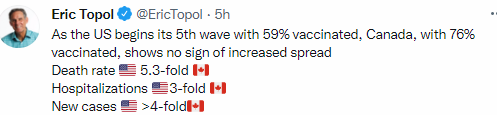
Here are some recent stats -showing that vaccines reduce the risk of hospitalization and death in all age groups:


 gutsandgrowth