Key Insights on MASLD from Dr. Marialena Mouzaki

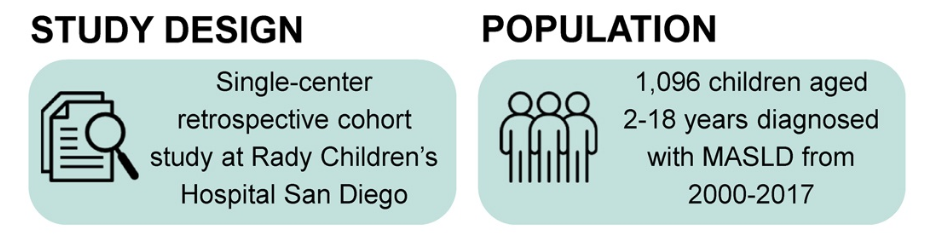
Dr. Marialena Mouzaki recently gave an excellent ground rounds at Children’s Healthcare of Atlanta. My notes below may contain errors in transcription and in omission. Along with my notes, I have included many of her slides (with permission).

Key points:

  • Epidemiology: Metabolic associated steatotic liver disease (MASLD) is very common and increasing in prevalence
  • There is new terminology and new diagnostic thresholds
  • Treatment cornerstone relies on lifestyle changes including diet modifications and exercise. Small weight reductions (10 lbs in adults)/improvement in BMI (z reduction of >0.25) can be beneficial
  • Diet: No specific diet has proven more effective than others (eg. low carb, Mediterranean). Avoiding simple sugars is helpful
  • Exercise: US children do not get enough physical activity (goal 1 hour daily). Exercise has not been studied well for pediatric MASLD but it has been proven to reduce cardiovascular disease and premature death
  • Medications: Medications are not part of routine care for pediatric MASLD in 2025 When they are available, use without lifestyle changes could be detrimental (eg. sarcopenia, worse cardiometabolic profile, nutritional deficiencies)
  • Multiple GLP-1 RA-containing agents appear promising (Semaglutide, tirzepatide, survodutide). Resmetirom is FDA approved for the treatment of MASLD with stage 2-3 fibrosis in adults.
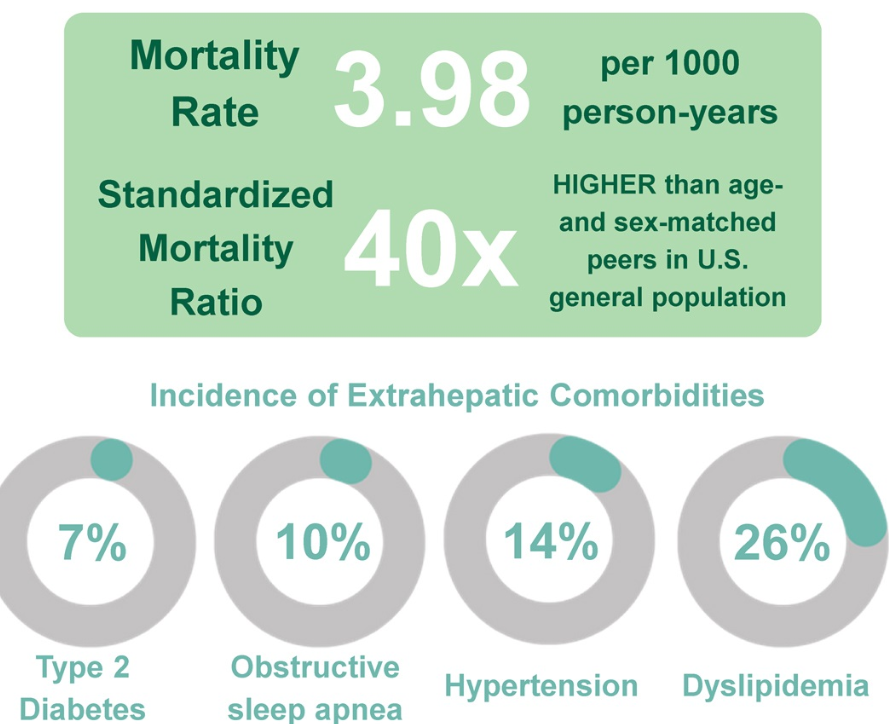
  • Treat comorbidities like diabetes, obstructive sleep apnea (OSA), dyslipidemia and hypertension. Treatment of OSA may help MASLD
  • The leading cause of mortality in adults with MASLD is due to cardiovascular disease

Related blog posts:

Lifetime Health Effects and Cost-Effectiveness of Tirzepatide and Semaglutide in US Adults

JH Hwang et al. JAMA Health Forum. 2025;6(3):e245586. Open Access! Lifetime Health Effects and Cost-Effectiveness of Tirzepatide and Semaglutide in US Adults

Methods: The authors modeled the effects of four medications,  tirzepatide and semaglutide compared to phentermine-topiramate and naltrexone-bupropion. The study used data from the 2017-2020 National Health and Nutrition Examination Survey. This included 4823 individuals (representing 126 million eligible US adults) aged 20 to 79 years who would meet the following clinical trial inclusion criteria for these drugs: (1) had a body mass index (BMI; calculated as weight in kilograms divided by height in meters squared) of 30 or greater or (2) had a BMI between 27 and 29.9 and at least 1 weight-related comorbidity (ie, diabetes, hypertension, dyslipidemia, or cardiovascular disease).

Key results:

  • Based on this model, in US adults, over a lifetime, tirzepatide would avert 45,609 obesity cases per 100,000 individuals and and semaglutide would avert 32,087 cases per 100,000 individuals.
  • Tirzepatide and Semaglutide would avert cases of diabetes by 20,854 per 100,000 individuals and 19,211 cases per 100,000 individuals respectively.
  • Tirzepatide and Semaglutide would avert cardiovascular disease cases by 10,655 per 100,000 individuals and 8,263 cases per 100,000 individuals respectively.
  • Despite the largest incremental QALY gains of 0.35 for tirzepatide and 0.25 for semaglutide among all antiobesity medications, the incremental cost-effectiveness ratios were $197,023/QALY and 467,676/QALY, respectively.
  • To reach the $100,000/QALY threshold, their prices would require additional discounts by 30.5% for tirzepatide and 81.9% for semaglutide from their current net prices.

In short, the authors indicate that based on a typical QALY threshold for cost-effectiveness, tirzepatide would need to be priced at $4,334 per year, from the current average of $6,236 per year; semaglutide would need to be $1,522 per year, from an average of about $8,412 per year today.

My take: The costs of these drugs in non-US markets would meet the QALY threshold for cost-effectiveness. However, until the patent on these drugs expires, US consumers are likely to be spending a great deal more. The U.S. patent on semaglutide will expire in 2032, and the U.S. patent on tirzepatide will expire in 2036.

CNN 9/24/24 ‘Greed, greed, greed’: Sanders demands Ozempic maker lower prices: “He {Bernie Sanders] noted that the list price for a four-week supply of Ozempic is $969 in America, but the drug can be purchased for $155 in Canada, $122 in Denmark and $59 in Germany. Similarly, Wegovy’s list price is $1,349 in the US, but it costs $186 in Denmark, $140 in Germany and $92 in the United Kingdom.”

Related blog posts:

If you were born on a Tuesday (like me), this is your buddha pose (from Temple of Big Buddha in Bangkok)

Tirzepatide: Breakthrough in Obesity and Diabetes Management (SURMOUNT-1 Study at 3 years)

AM Jastrebofff et al. NEJM 2025; 392: 958-971. Tirzepatide for Obesity Treatment and Diabetes Prevention

Methods: In this phase 3, double-blind, randomized, controlled trial, there were  2539 participants with obesity, of whom 1032 also had prediabetes. They were assigned in a 1:1:1:1 ratio to receive tirzepatide at a once-weekly dose of 5 mg, 10 mg, or 15 mg or placebo.

Key findings:

  • Weight loss: At 176 weeks, the mean percent change in body weight among the participants who received tirzepatide was −12.3% with the 5-mg dose, −18.7% with the 10-mg dose, and −19.7% with the 15-mg dose, as compared with −1.3% among those who received placebo (P<0.001 for all comparisons with placebo).
  • Type 2 Diabetes Reduction: Fewer participants received a diagnosis of type 2 diabetes in the tirzepatide groups than in the placebo group (1.3% vs. 13.3%; hazard ratio, 0.07). After 17 weeks off treatment or placebo, 2.4% of the participants who received tirzepatide and 13.7% of those who received placebo had type 2 diabetes (hazard ratio, 0.12)

My take: This study shows durable effectiveness of tirzepatide over a three year period with no new safety signals.

Related blog posts:

Exploring Walgreens’ Collapse: The Role of PBMs

This newsletter explains why Walgreens is collapsing. My concern is that even a company as big as Walgreens had hardly any control over the declining reimbursements for their pharmaceutical sales. They had to accept the reimbursement due to a lack of leverage related to the consolidation of insurance companies and pharmacy benefit managers (PBMs). Without intervention to reverse the ongoing consolidation of these companies (as well as hospitals), patients will face fewer choices and higher costs. Physician groups will face existential business threats.

Here’s an excerpt from the newsletter:

Walgreens is America’s second-largest drug store chain, and has been a public company for more than 100 years… it has closed a thousand stores since 2018, and plans to shut 1,200 more this year…

The real reason Walgreens, and the pharmacy business in general, is dying, is because of a failure to enforce antitrust laws against unfair business methods and illegal mergers…Moreover, even today, the other financial numbers from Walgreens aren’t bad. Sales aren’t going gangbusters, but the number is basically increasing, and so are the number of 30-day prescriptions, even though they’ve cut the number of stores every year since 2017…

But in its main line of business – pharmaceuticals – Walgreens doesn’t set prices. Insurance companies do. And there’s the rub…Walgreens gets a set reimbursement from that consumer’s insurance company for that medication. How much does it get? Well, those insurance company’s contract with what’s called pharmacy benefit managers (PBMs) to manage negotiations with pharmacies…

Theoretically, both sides have some leverage in this negotiation. If a pharmacy chooses not to accept the prices and terms offered by those PBMs, then consumers who have an insurance company that uses that PBM just won’t go there…Pricing wasn’t a big problem for Walgreens when there were lots of PBMs, because it had the ability to say no if the deal was unreasonable, and still maintain a flow of customers…Today, there are really only three PBMs – Express Scripts, Caremark and OptumRx – serving 80% of customers…

In 2015, the big three, with their market power, began lowering reimbursement rates on pharmacies and charging a host of new fees…

PBMs, however, are engaged in a sort of industry-specific arson. And we can see this dynamic by looking at independent pharmacies writ large, nearly one in three of whom have closed in the last ten years. Today, 46% of U.S. counties now have pharmacy deserts, meaning no pharmacies at all…

326 pharmacies have closed since December of 2024. Why is that month significant? Well, that’s the month Elon Musk tanked legislation to address some of the monopolistic squeezing that PBMs are putting on pharmacies and consumers.

Related explanation of PBMs (Dr.Glaucomflecken): The Middlemen of Healthcare (includes useful organizational flowchart)

Related blog posts:

Islands/Karsts in the Andaman Sea
Bangkok Canal

Competition for Competitive Acid Blockers

Thanks to Ben Gold for the reference in today’s post.

J-H Oh et al. Am J Gastroenterol 2025; DOI: 10.14309/ajg.0000000000002929 Randomized, Double-Blind, Active-Controlled Phase 3 Study to Evaluate Efficacy and Safety of Zastaprazan Compared With Esomeprazole in Erosive Esophagitis

Introduction: “Unlike PPIs, metabolism of zastaprazan in not dependent on CYP2C19, and it does not require enteric coating due to its acid stability. While PPIs bind irreversibly only to active proton pumps, zastaprazan can bind reversibly and competitively to both active and inactive proton pumps. Moreover, as prodrugs, PPIs necessitate activation into their active form within acidic conditions, typically requiring a regimen of 3-5 consecutive days of dosing…By contrast, P-CABs deliver a rapid onset of action and complete efficacy from the initial dose, as they can directly inhibit proton pumps.”

Methods: A phase III, multicenter, randomized, double-blind, noninferiority clinical study was conducted with 300 subjects (>19 yrs) with confirmed erosive esophagitis compared daily zastaprazan (20 mg) to esomeprazole (40 mg)

Key findings:

  • The cumulative healing rate at week 8 were 97.92% (141/144) for zastaprazan and 94.93% (131/138) (P = 0.178) for esomeprazole.
  • The healing rate at week 4 in the zastaprazan group was higher than the esomeprazole group (95.14% [137/144] vs 87.68% [121/138]; P = 0.026)

My take: Zastaprazan had higher healing rates at 4 weeks; results at 8 weeks were similar. This phase 3 study suggests that there will be other CABs besides vonoprazan approved for treating acid-related disorders.

Related blog posts:

NYC view from Brooklyn

Understanding Heavy Metals in Baby Formula: Insights from Abbott

Link to Abbott website: Facts for Parents About Heavy Metals and Infant Formula

Some excepts:

Consumer Reports published a report on the levels of heavy metals in U.S. infant formulas. In response, we want to share some important information with parents regarding the report.

  • First and foremost, Abbott’s Similac infant formulas are safe, and parents can use them confidently.
  • The results reported by Consumer Reports for our infant formulas meet the regulations for heavy metals already set by the European Commission and Health Canada. FDA is currently developing limits for infant formula in the U.S.
  • Abbott has a multi-step quality process for heavy metals to ensure that levels are below the relevant regulatory requirements in the countries we serve.

Occurrence of Heavy Metals

Heavy metals are naturally occurring in the environment, including in the soil, water, or air where foods are grown.  As a result, they are present in low levels in almost anything we eat or drink, including in baby food, all brands of infant formula, fruits and vegetables, and human breast milk.

Commitment to Safety and Quality

The levels of heavy metals that Consumer Reports detected in Abbott’s formulas are very low—just a few parts per billion. To put that in perspective, a single ppb equals a single grain of sand in 730 pounds of sand.

Approach to Heavy Metals

Individual ingredients that we believe may contain trace heavy metals (due to absorption from the natural environment) are tested during the qualification process before we approve them for use in our products.  We also have an ongoing surveillance testing program after the qualification process designed to periodically test samples of ingredients and finished products to ensure that our supplier and ingredient qualification process is working as intended...Parents can continue to use them with confidence. 

Related blog posts:

Comparing Infliximab, Adalimumab, and Vedolizumab in Adults and Children with Ulcerative Colitis

O Atia et al. Infammatory Bowel Diseases, 2025, 31, 617–624. Durability of the First Biologic in Children and Adults With Ulcerative Colitis: A Nationwide Study from the epi-IIRN

This was a nationwide Israeli study with 15,111 patients with UC, of whom 2322 (15%) received biologics, with a median follow-up of 7.0 years. The dataset includes ~98% of the Israeli population; “the accuracy of medication data is high, as the Israeli health care system provides medications almost free of charge through the HMOs, and the electronic dispensing of drugs contributes to reliable and precise data.”

Key findings:

  • After 5 years of treatment, 43% of the patients with UC sustained their first biologic
  • The durability rate was similar between pediatric-onset and adults after 1 and 5 years from initiation of treatment (72% and 43% vs 71% and 43%, respectively)
  • Durability of adalimumab vs infliximab after 1 or 5 years was similar, whether prescribed as monotherapy (65%/46% vs 63%/33%, respectively) or combotherapy (78%/56% vs 91%/58%, respectively)
  • Durability of infliximab at 1 yr and 5 yrs was higher as combotherapy (85%/50%) vs monotherapy (69%/42%; , P = .007), while it was similar for adalimumab (80%/52% vs 74%/52%)
  • The durability rate was similar for vedolizumab monotherapy at 1 yr and 5 yrs (77%/56%) compared with adalimumab monotherapy (69%/52%), and infliximab monotherapy (73%/55% vs 62%/44%). However, combotherapy of antitumor necrosis factors (TNFs) had longer durability than vedolizumab (85%/50% vs 75%/43%), respectively;

My take: When looking at the durability plots, the three main biologics in this study, infliximab, adalimumab and vedolizumab, performed similarly. Whether therapeutic drug monitoring would influence theses results is not clear. It is interesting that a recent study in the pediatric population found that combination therapy was important for adalimumab and not infliximab (see: Why Do Children Taking Adalimumab Benefit from Methotrexate Dual Therapy?)

Related blog posts:

Also, from AGA Today (3/20/25): FDA Approves Guselkumab To Treat Patients With Crohn’s Disease

HCPlive (3/20, Campbell) reports the FDA on Thursday announced the approval of “guselkumab (Tremfya) for the treatment of adults with moderately to severely active Crohn disease.” The announcement from Johnson and Johnson claims the “approval is based on data from multiple phase 3 trials, including the GALAXI trials, which found guselkumab outperformed ustekinumab (Stelara) for multiple endoscopic endpoints. The agent now boasts indications for moderately to severely active Crohn disease and moderately to severely active ulcerative colitis (UC).” This is the fourth indication for guselkumab in the US

Related blog posts:

Disclaimer: This blog, gutsandgrowth, assumes no responsibility for any use or operation of any method, product, instruction, concept or idea contained in the material herein or for any injury or damage to persons or property (whether products liability, negligence or otherwise) resulting from such use or operation. These blog posts are for educational purposes only. Specific dosing of medications (along with potential adverse effects) should be confirmed by prescribing physician.  Because of rapid advances in the medical sciences, the gutsandgrowth blog cautions that independent verification should be made of diagnosis and drug dosages. The reader is solely responsible for the conduct of any suggested test or procedure.  This content is not a substitute for medical advice, diagnosis or treatment provided by a qualified healthcare provider. Always seek the advice of your physician or other qualified health provider with any questions you may have regarding a condition.

AASLD Guidelines: Challenges of Liver Fibrosis Testing in Pediatrics

This guideline reviews and recommends blood-based tests as a tool to help determine the likelihood/severity of liver fibrosis in the presence of chronic liver disease. Most of the guideline focuses on adult liver disease. For pediatrics, the guideline makes the following recommendation:

In the pediatric patients with chronic liver disease, AASLD suggests the use of simple, cost-effective, and readily available blood-based NILDA [Non-invasive Liver Disease Assessment], such as APRI or FIB-4, for the detection of advanced fibrosis (F3-4) (ungraded statement).

Technical Remarks:

  • Some blood-based NILDA in children have good accuracy in detecting advanced fibrosis but have difficulty discriminating earlier stages of fibrosis.
  • FIB-4 does not perform as well in children as it does in adults, particularly very young children, due to the inclusion of age in the index.
  • Rapid growth in children and attendant fluctuations in alkaline phosphatase can confound interpretation of blood or collagen-based NILDA tests in pediatric liver disease.
  • There are insufficient biopsy validated data to recommend biomarkers for evaluating fibrosis in pediatric NASH and α1AT at this time.
  • In the pediatric population with CLD, there is growing but insufficient evidence to recommend blood-based NILDA as endpoints to monitor changes in fibrosis over time.

Despite the guidance recommendation, reading the text makes one leery about relying on these tests:

  • For example with biliary atresia: “The utility of APRI to assess or predict liver fibrosis in BA is mixed in the current literature.”
  • In conclusion, blood-based NILDA tests in children vary widely in their accuracy, even in detecting F3-4 fibrosis, and have difficulty discriminating earlier stages of fibrosis. These tests also have different disease-specific thresholds that correlate with histopathologic fibrosis and differ from adults. APRI and FIB-4 have been the most studied NILDA tests in children, but there is still insufficient evidence to recommend blood biomarkers as endpoints to monitor changes in fibrosis over time. Any blood-based NILDA that includes age (Table 5) should be used cautiously in children.

My take: This practice guideline, while recommending use of blood-based tests for fibrosis even in the pediatric age group, makes a fairly compelling argument that they are unreliable in children. Elastrography is likely to be more useful, though also imperfect, in the pediatric population.

Algorithm Recommended for Adults:

Related blog posts:

Identifying Biliary Atresia in Infants: New Guidelines

S Harpavat et al. Pediatrics Pediatrics (2025) 155 (3): e2024070077. (Open Access!) Guidance for the Primary Care Provider in Identifying Infants With Biliary Atresia by 2–4 Weeks of Life: Clinical Report

Recommended Screening:

  • Office visit at 2-4 weeks of age (by 4 weeks of life)
  • Check fractionated bilirubin: If there is any pale, gray or white stools, If there is any jaundice in eyes or skin, or If there is a prior history of abnormal direct or conjugated bilirubin*
  • If direct or conjugated bilirubin is 1 mg/dL or higher, urgent consult to GI
Stool color classification

“The most important result is the initial direct or conjugated bilirubin level, which will be “high” in BA starting at birth.11,17,18 “High” is defined as exceeding the laboratory’s derived reference range, even if only by 0.1 mg/dL In the period before 2 weeks of life, “high” is not defined by exceeding a fixed cut-off or exceeding a bilirubin ratio.”

Additional Recommendations:

  • The authors indicate that followup blood testing is NOT needed if the following: 1. Any prior direct or conjugated bilirubin level that was normal (in reference range) or 2. Prior direct or conjugated bilirubin levels that were all abnormal but equivalent or decreasing over time. In this instance, equivalent or decreasing is defined as both (i) less than or equal to the initial level; and (ii) <1 mg/dL
  • “Consider adding direct or conjugated bilirubin testing when serum total bilirubin testing is performed. As mentioned earlier, many centers measure at least 1 serum total bilirubin level via heel stick or venipuncture to assess risk for bilirubin encephalopathy. Direct or conjugated bilirubin levels can be measured from the same heel stick or venipuncture sample, without needing an additional blood draw.”

My take: Any child with an elevated direct or conjugated bilirubin (above reference range) in the first two weeks of life needs to be carefully followed. This guideline also recommends using abnormal stool color and prolonged jaundice/icterus as prompting bloodwork.

In the past, it was consider normal in newborns to have elevated direct bilirubin IF there was a low ratio of direct bilirubin to total bilirubin (less than 20% in those with bilirubin >5 mg/dL). However, this can result in missed cases of biliary atresia.

Related blog posts:

Safe Baby Formula Choices Based on Consumer Reports Testing

From Consumer Reports, April 18, 2025: We Tested 41 Baby Formulas for Lead and Arsenic

This Consumer Reports article is likely to generate a lot of attention. Thanks to Dr. Seth Marcus for sharing this reference.

An excerpt:

While some formulas had concerning levels [of arsenic and lead], there are safer choices. After seeing our results, the FDA is pledging further action…

Consumer Reports tests in the past have found elevated levels of inorganic arsenic in fruit juicebaby food, and bottled water…Our tests found the highest inorganic arsenic level in Abbott Nutrition’s EleCare Hypoallergenic, at 19.7 parts per billion (ppb), and the second highest in Similac Alimentum at 15.1 ppb, also made by Abbott.

As we had expected, CR’s tests found lead in almost all the formulas. Lead levels ranged from 1.2 ppb to 4.2 ppb, which is below the FDA’s Closer to Zero goal, but CR’s experts believe those levels are too high...

Together the formula made by these three companies—Abbott, Mead Johnson, and Perrigo—makes up 79 percent of the U.S. market…They also said trace levels of heavy metals in the food supply are not an issue that is unique to infant formula…

Perrigo, which makes Dr. Brown’s formula and many popular store brands we tested, including Kirkland, Parent’s Choice, Member’s Mark, and Up&Up, also told us that it routinely screens its formulas for heavy metals. “These compounds and PFAS are also found in breast milk,” a spokesperson wrote. “Their levels in infant formula are insignificant and well below regulations in the United States and around the world.”

Contaminants from the environment pose a problem for our entire food supply, CR experts say. But the problem is much more urgent for formula, given how vulnerable babies who depend on it are.

The FDA has long been limited by a lack of both resources and authority to carry out all the oversight it’s tasked with. ..

Keep these test results in perspective. Environmental pollutants are pervasive in our food supply, and all the contaminants in our tests—arsenic, lead, BPA, acrylamide, and PFAS—have also been previously detected in breast milk, food, and water…

Never ever try to make your own baby formula or offer alternative foods. It’s unsafe from a nutrition standpoint…

Use clean water to mix into your powdered formula. The EPA sets limits on contaminants in tap water for most of the country, but not every part of it. If you drink water from a well, for instance, that water is not regulated by the EPA. So it’s a good idea to get well water tested for heavy metals and PFAS before using it…

“Good Choices”

  • A2 Platinum -A2 Milk Company
  • ByHeart Whole Nutrition -ByHeart
  • Happy Baby Organics -Danone
  • Kendamil Organic -Kendal Nutricare
  • Neocate Hypoallergenic -Danone
  • Parent’s Choice Infant -Perrigo
  • Similac 360 Total Care -Abbott Nutrition
  • Similac 360 Total Care Sensitive -Abbott Nutrition
  • Similac Sensitive -Abbott Nutrition
  • Similac Soy Isomil -Abbott Nutrition

“Worse Choices”

  • Dr. Brown’s SoothePro -Perrigo
  • Elecare Hypoallergenic -Abbott Nutrition
  • Enfamil Nutramagen -Mead Johnson
  • Enfamil ProSobee Simply Plant-Based -Mead Johnson
  • Kabrita Goat Milk-Based -Ausnutria
  • PurAmino Hypoallergenic -Mead Johnson
  • Similac Alimentum -Abbott Nutrition
  • Similac NeoSure -Abbott Nutrition
  • Similac Total Comfort -Abbott Nutrition
  • Up&Up (Target) Soy -Perigo

My take: Formula companies need to continue to work on minimizing all of the contaminants. Yet, if all families selected only CR’s “top choices,” there would not be enough formula for infants who are not breastfed. In addition, this problem is even more of an issue in children needing specialized hypoallergenic formulas.

Related blog posts: