Why Fiber (Fruits and Veggies) is Good for You

A recent NY Times piece provides a summary of recent studies in mice which show that a low fiber diet promotes inflammation throughout the body and results in changes in the microbiome: Fiber is Good For You. Now Scientists May Know Why

An excerpt:

A diet of fiber-rich foods, such as fruits and vegetables, reduces the risk of developing diabetesheart disease and arthritis. Indeed, the evidence for fiber’s benefits extends beyond any particular ailment: Eating more fiber seems to lower people’s mortality rate, whatever the cause…

The ability of these bacteria to survive on fiber we can’t digest ourselves has led many experts to wonder if the microbes are somehow involved in the benefits of the fruits-and-vegetables diet. Two detailed studies published recently in the journal Cell Host and Microbe provide compelling evidence that the answer is yes.

In one experiment, Andrew T. Gewirtz of Georgia State University and his colleagues put mice on a low-fiber, high-fat diet… the scientists were able to estimate the size of the gut bacterial population in each mouse. On a low-fiber diet, they found, the population crashed, shrinking tenfold.

Dr. Bäckhed and his colleagues carried out a similar experiment, surveying the microbiome in mice as they were switched from fiber-rich food to a low-fiber diet…Along with changes to the microbiome, both teams also observed rapid changes to the mice themselves. Their intestines got smaller, and its mucus layer thinner. As a result, bacteria wound up much closer to the intestinal wall, and that encroachment triggered an immune reaction…

“It points to the boring thing that we all know but no one does,” Dr. Bäckhed said. “If you eat more green veggies and less fries and sweets, you’ll probably be better off in the long term.”

Related blog posts:

How Good Is Your ERCPist?

An interesting study and accompanying editorial (RN Keswani et al. Clin Gastroenterol Hepatol 2017; 15: 1866-75, & P Cotton Clin Gastroenterol Hepatol 2017; 15:1855-57) point out that ERCP is more successful in high volume centers and with high volume (HV) endoscopists.

The study was a systematic review and meta-analysis.  The threshold for low volume for endoscopist was < 27 case/year and for centers of <156 cases/year.  However, this data is not widely available.

  • In this study with 59,437 ERCPs, HV endoscopists had OR of 1.6 for success compared to LV endoscopist.
  • Similarly HV centers had OR of 2.0 for successful ERCP.
  • Post-ERCP adverse risks were lower for HV endoscopists with OR of 0.7

In addition, the level of complexity for the cases matters a lot. Dr. Cotton breaks down the complexity of procedures:

  • Standard complexity includes cannulation of bile duct, biliary stent removal/exchange, biliary stone removal <10 mm, treating bile leaks, treating benign and malignant strictures, and placing prophylactic stents..
  • Advanced procedure complexity includes any of the above procedures after Billroth II, minor papilla cannulaiton, removing biliary stents that have migrated internally, fine needle aspiration, treating pancreatic strictures, removing small (< 5 mm), mobile pancreatic stones, treating biliary strictures at hilum or more proximal
  • Highly technical complexity (“advanced tertiary”) includes removal of internally migrated pancreatic stents, intraductal image-guided therapy (eg. PDT EHL), pancreatic stones impacted or >5 mm, intrahepatic stones, pseudocyst drainage, ampullectomy, ERCP after Whipple or roux-en-Y bariatric surgery

My take: The ultimate goal is high success rates and lower complication rates.  Highly proficient endoscopists and high volume centers achieve these goals more consistently, particularly for more complicated ERCP procedures.

Grand Canyon near Phantom Ranch

Looking at the ‘Less is More’ Narrative

There is a widespread claim that up to 30% of health care dollars are wasted.  This claim is similar to other claims of fraud and abuse often extolled in political campaigns.  The questions, at least in medicine, is whether this claim is accurate and even if it is, is there a way to improve health care spending.

A recent commentary (L Rosenbaum. NEJM 2017; 377: 2392-7) tackles the “Less-Is-More-Crusade” in medicine.  Some of the key points:

  • The 30% waste figure is often attributed to Dartmouth investigators ((http://www.dartmouth.atlas.org/keyissues/issue.asp?con=1338)
  • This figure has many limitations including inadequate control for severity of illness, regional price differences, and the possibility that variation is due to underuse as well as overuse.
  • Confounders: difficulty controlling for sicker patients
  • “Other research suggests that higher spending is actually associated with better outcomes.”

Dr. Rosenbaum describes how MIT economists identified what worked out to be a randomization experiment of health care.  These economists examined hospital performance among patients transported by ambulance.  Since the ambulance companies had hospital preferences, the “patients [were] essentially randomly assigned to hospitals.”  Key finding: “hospitals that spend more during hospitalizations for various acute conditions have lower mortality rates at 1 year post-hospitalization than lower-spending-hospitals, a relationship driven largely by inpatient treatment intensity” (J Pol Econ 2015; 123: 170-214).

Another recent analysis found that Medicare beneficiaries discharged from EDs in “hospitals with the lowest admission rates were 3.4 times as likely to die within a week” as their counterparts at hospitals with the highest admission rates.  In addition, “low-admitting EDs tended to serve generally healthier populations.”

Dr. Rosenbaum points out that while many attribute physician greed as a driver of excess testing/overdiagnosis in a fee-for-service model, there are many other explanations.  Physician expertise and desire for more certainty are relevant factors.

My take: This commentary provides a lot of nuance.  Yes, there is certainly waste but there is a lot of underuse in medicine. Like in areas outside of medicine, “eliminating fraud and abuse” is an oversimplification and will be difficult to achieve.

Grand Canyon basin


Reminders and Hard Stops -One Way to Improve Care Using an Electronic Medical Record

A recent study (MA Konerman et al. Hepatology 2017; 66: 1805-13) provides a tangible example of how an electronic medical record (EMR) could be helpful in improving care.

Implementation of EMRs has been a source of consternation for many physicians.  Some of the concerns include spending inordinate amounts of time completing documentation and how they can make the patient encounter less personal.

Nevertheless, with a good EMR, there is the potential for better care.  One way to implement a specific improvement is to place a “hard stop” or a reminder.  A hard stop can prevent completing documentation until an issue is addressed.  A reminder can pop up for appropriate patients to query whether a specific problem is being addressed.  In theory, both could be helpful; though, too many reminders can trigger alarm fatigue and too many hard stops can be quite annoying and further slow delivery of patient care.

In the above-mentioned study, the authors placed a reminder (“best practice advisory”) that encouraged screening for hepatitis C virus (HCV) among patients born between 1945-65 who lacked a prior HCV diagnosis and lacked prior testing.  This resulted in an increase in HCV screening in a primary care setting from 7.6% to 72% (one year after implementing).  Of the 53 newly diagnosed patients, all were referred for specialty care.  11 had advanced fibrosis or cirrhosis.

My take: Using EMR tools, specific screening goals can be achieved.  Before placing hard stops and/or reminders, we need to make sure that these goals are carefully selected to generate a net benefit.

Related blog posts:

South Kaibab Trail, Grand Canyon


Oral Capsules for Fecal Microbiota Transplantation

A recent study (D Kao et al.JAMA. 2017;318(20):1985-1993. doi:10.1001/jama.2017.17077showed that oral stool capsules are as effective as stool delivered via colonoscopy for recurrent C difficile infection (RCDI).  Thanks to Ben Gold for this reference.

Findings  In this noninferiority randomized clinical trial that included 116 adults with RCDI, the proportion without recurrence over 12 weeks was 96.2% after a single treatment in a group treated with oral capsules and in a group treated via colonoscopy, meeting the noninferiority margin of 15%.

My take: This study adds to the literature that oral delivery is effective in fecal microbiota transplantation and that capsules could be a convenient way to deliver.

Bright Angel Trail, Grand Canyon

CALM Study: Tight Control Improves Outcomes in Crohn’s Disease

A recent study (JF Colombel et al. Lancet 2017; http://dx.doi.org/10.1016/S0140-6736(17)32641-7 ) shows that “tight control” improves outcomes in Crohn’s disease.  This study was alluded to in a previous post: CCFA 2017 Updates (part 2)

Background: The CALM study was an open-label, randomized study.  122 adult patients were randomized to typical clinical management and 122 patients received “tight control” in which treatment was modified by fecal calprotectin (≥250 mcg/g) and CRP (≥ 0.5 mg/dL) values in addition to clinical symptoms.

Treatment was escalated in both groups in a stepwise manner.  Initial treatment was with adalimumab induction and then every other week. If patient did not meet treatment objectives, which differed in the groups, then adalimumab would be given every week, and then, if still needed, azathioprine would be added. Interestingly, both groups had ~25% of participants who were smokers which is known to worsen outcomes.

Key Findings:

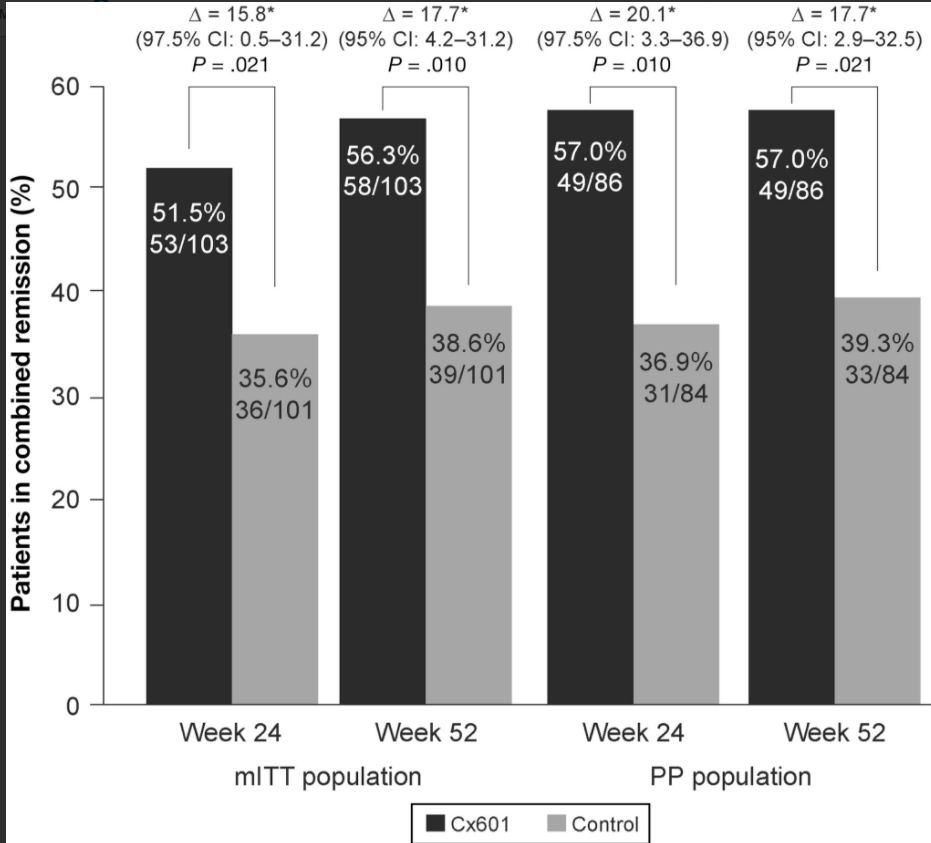
  • Mucosal healing (CDEIS <4) was significantly improved in tight control group at week 48: 46% vs. 30%.
  • Similarly, steroid-free remission based on CDAI <150 was better in tight control group compared with standard treatment at week 48: 59.8% vs. 39.3%.  Endoscopic response was 50.8% compared with 40.2% respectively.

My take (1st part borrowed from authors): “Tight control of inflammation in patients with Crohn’s disease, with objective markers of disease activity  and clinical symptoms to drive treatment decisions, achieved better endoscopic and clinical outcomes than conventional care based on symptoms alone.” Yet, there are a large number who do not respond adequately and better treatments in these patients are needed.

As an aside, these response rates based on objective markers are far lower than the remission rates claimed by ImproveCareNow; thus, while ImproveCareNow is forward-thinking and helping improve outcomes with inflammatory bowel disease, we need to be careful about citing remission rate trends that are not directly linked to objective markers.

Methylmalonic Acid as a Biomarker of Vitamin B12

A recent case study (L Jimenez et al. J Pediatr 2018; 192: 259-61) showed that methylamalonic acid (MMA) can be elevated in the absence of vitamin B12 deficiency.

Background:

  • Risk factors for vitamin B12 deficiency: terminal ileal resection and gastric acid blockade
  • Manifestations of vitamin B12 deficiency: megaloblastic anemia, bone marrow failure, demyelinating diseases, thrombosis, and psychiatric symptoms
  • Early assessment of vitamin B12 deficiency can be aided by MMA levels and homocysteine levels both of which are metabolized via vitamin B12-dependent pathways and are elevated in vitamin B12 deficiency.
  • MMA levels have higher sensitivity for vitamin B12 deficiency than vitamin B12 levels alone.

Key findings of this report:

  • In three children with short bowel syndrome, MMA levels were persistently elevated despite vitamin B12 supplementation and without other evidence of vitamin B12 deficiency
  • MMA levels declined after treatment of bacterial overgrowth
  • “It is hypothesized that propionate, a precursor to MMA, produced by excessive gut fermentation, is responsible for the elevation in plasma MMA levels.”

My take: this study is a good reminder of how MMA is useful in detecting vitamin B12 deficiency and points out that bacterial overgrowth may be an alternative explanation for elevated MMA levels.

Related blog posts:

Resources for Short Bowel Syndrome:

Disclaimer: These blog posts are for educational purposes only. Specific dosing of medications/diets (along with potential adverse effects) should be confirmed by prescribing physician/nutritionist.  This content is not a substitute for medical advice, diagnosis or treatment provided by a qualified healthcare provider. Always seek the advice of your physician or other qualified health provider with any questions you may have regarding a condition.

Bright Angel Trail, Grand Canyon

NY Times: Humira’s Best-Selling Drug Formula: Start at a High Price. Go Higher.

NY Times: Humira’s Best-Selling Drug Formula: Start at a High Price. Go Higher.

An excerpt:

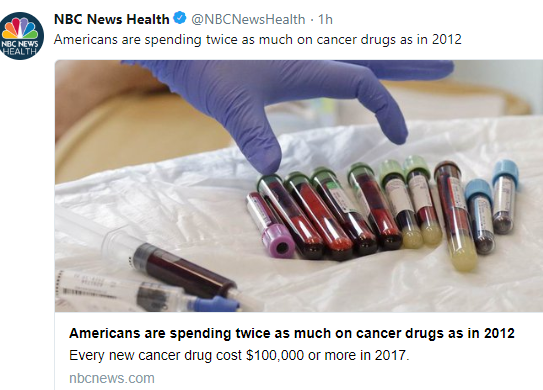
Humira is the best-selling prescription drug in the world…The price of Humira, an anti-inflammatory drug dispensed in an injectable pen, has risen from about $19,000 a year in 2012, to more than $38,000 today, per patient, after rebates, according to SSR Health, a research firm. That’s an increase of 100 percent…

How much you actually pay out of pocket, and whether you can afford Humira at all, depend on your insurance and eligibility for discounts…

Humira, which accounted for nearly two-thirds of AbbVie’s $25.6 billion in revenue in 2016, was not simple to develop. It is among a new class of drugs known as biologics, which are made from living cells rather than synthetic chemicals…

Looking at the international picture tells its own story about drug costs. A prefilled carton with two syringes costs $2,669 in the United States, compared with $1,362 in Britain, $822 in Switzerland and $552 in South Africa…

An analysis by the Institute for Clinical and Economic Review found that Humira’s list price would need to be discounted by at least 55 percent to be cost effective for rheumatoid arthritis, its originally approved use.

Dr. Steven D. Pearson, the founder of the institute, which provides cost benefit data to health plans, said competing drugs were overpriced as well.

“Even in a space like this, where there is a lot of competition, we don’t see the prices coming down,” he said. “That speaks to the fact that it doesn’t often function like a free market usually would.”..

AbbVie joined a few of its rivals in saying it would limit price increases to single digits this year, and so only raised Humira by another 9.7 percent this month, roughly four and a half times the inflation rate. For the drug industry, that counts as generosity.

My take: Humira is a very important and effective medication, particularly for inflammatory bowel disease and rheumatoid arthritis. I infer from this article which compares the Humira pricing strategy to that used by Martin Shkreli that if U.S. consumers are to have more affordable pharmaceuticals, government intervention will be needed. AbbVie, like many other pharmaceutical companies, will continue to aggressively price Humira; after all, 8 billion in profits is not as good as 10 billion.

Related blog posts:

Another Study: Low FODMAPs Diet for Irritable Bowel Syndrome

Another good study on the low FODMAPs diet for irritable bowel syndrome with diarrhea (IBS-D): S Eswaran et al. Clin Gastroenterol Hepatol 2017; 15: 1890-9

This was a propspective, single-blind trial of 92 patients (84 completed study) with IBS-D (65 women) comparing the low FODMAPs diet to a modified diet recommended by the National Institute for Health and Care Excellence (NICE) for 4 weeks. Key findings:

  • The low FODMAPs group had larger increase in IBS-QOL score (15.0 vs 5.0).  In addition, based on IBS-QOL a meaningful clinical response occurred in 52% compared with 21% in the mNICE group.
  • Activity impairment was significantly reduced in the low FODMAPs group; -22.89 compared with -9.44.  Anxiety scores decreased as well.

My take: This study indicates that the low FODMAPs diet helps patient with IBS-D, and not just with their GI symptoms.

Related blog posts:

Cabin at Phantom Ranch, Grand Canyon

Mailbag for postcards (delivered via mule)

Phantom ranch canteen