Optimistic Results for Hepatitis C plus Hepatology Update

The August issue of Hepatology had several articles on Hepatitis C confirming the efficacy of newer agents:

  • LI Backus et al Hepatology 2016; 64: 405-14.  This “real-world” observational study from the VA Clinical registry with 4,365 genotype 1 treatment-naive patients who received ledipasvir/sofosbuvir showed SVR rates of 91.3% (w/o ribavirin) and 92% (w ribavirin).
  • P Kwo et al. Hepatology 2016; 64: 370-80 (OPTIMIST-1) This study showed that 12 weeks of simeprevir+sofusbuvir for 12 weeks was highly effective (97% SVR) and that 8 weeks of this therapy was inferior (83% SVR).  N=310 with genotype 1 (w/o cirrhosis).  No patients stopped therapy due to adverse effects.
  • E Lawitz et al. Hepatology 2016; 64: 360-69 (OPTIMIST-2) This study showed that simeprevir+sofusbuvir for 12 weeks was effective in genotype 1 patients (n=103) with cirrhosis.  For treatment-naive, the SVR was 88% and for treatment-experienced patients, the SVR was 79%.

Also in Hepatology:

  • S Heibani et al Hepatology 2016; 64: 549-55. This study looked at 1-week versus 2-week intervals for endoscopic ligation.  While 1-week ligation eradicated varices more quickly, neither approach was associated with differences in number of endoscopies, complications (including rebleeding) or other clinical outcomes.
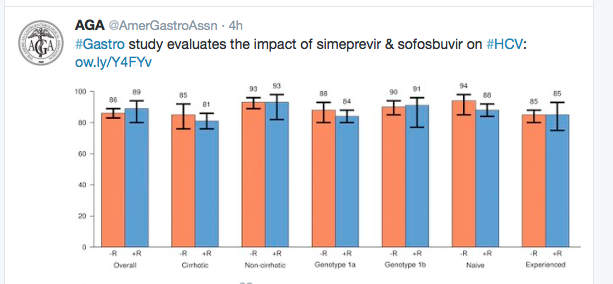
From earlier study of "real-world" treatment of Genotype 1. Gastroenterol 2016; 150: 419-29.

From earlier study of “real-world” treatment of Genotype 1. Gastroenterol 2016; 150: 419-29. (Full text link)
 

NPR: Children Missing Out on Hepatitis C Treatment

From NPR: Children Missing Out on Hepatitis C Treatment

An excerpt:

study by the Philadelphia Department of Health points to what Wen and others in the medical profession see as a worrisome trend: Children with hepatitis C may be unaware of their diagnosis and the potential need for treatments down the road in order to prevent long-term liver damage.

Using city surveillance data, the study found that as many as 8 in 10 children at high risk for hepatitis C exposure in Philadelphia were never screened for the condition. More specifically, of the approximately 500 moms-to-be who were registered as having hepatitis C between 2011 and 2013, only 84 of their newborns, or about 16 percent, were tested for the virus by 20 months of age.

My take: As the article discusses, with the advent of better treatments, which will be available for children (?next 1-2 years), identifying Hepatitis C acquired prenatally is becoming important.

Related blog posts:

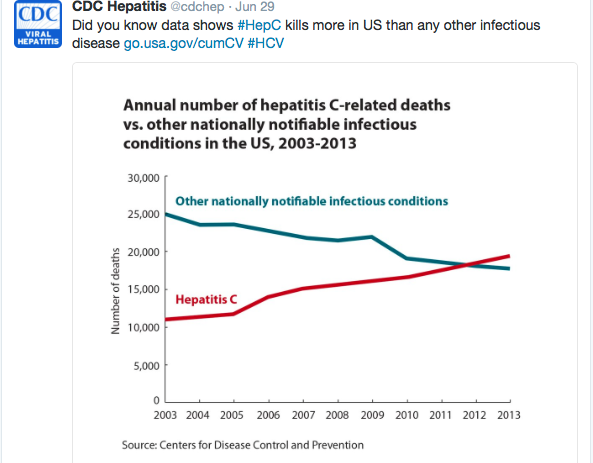
Rising HCV mortality

How Watching TV Food Commercials Affects Children’s Brains

A recent study of 23 children (8-14 yrs) correlated functional MRI results with watching commercials.

Full text: The Influence of Televised Food Commercials on Children’s Food Choices

Key finding: The ventromedial prefrontal cortex, a reward valuation brain region, showed increased activity during food choices after watching food commercials compared with after watching nonfood commercials.

Author’s conclusion: Overall, our results suggest watching food commercials before making food choices may bias children’s decisions based solely on taste, and that food marketing may systematically alter the psychological and neurobiologic mechanisms of children’s food decisions.

My take: When is the last time you saw a commercial for broccoli?  While food companies may not fully understand how their marketing affects kids’ brains, I’m certain they understand how it affects their bottom line.

Lake McDonald, Glacier Natl Park

Lake McDonald, Glacier Natl Park


Biologic Exposure Prenatally and Perinatally

The widespread use of anti-TNF therapy for inflammatory bowel disease has improved clinical outcomes including fewer surgeries, hospitalizations, and complications.  One consequence of this usage has been the exposure of infants to biologics due to their usage by their mothers during pregnancy.  A recent study (M Julsgaard et al. Gastroenterol 2016; 151: 110-19) explores this topic further.

In this study, the authors prospectively followed 80 pregnant women: 36 received adalimumab & 44 infliximab. In addition, 39 received concomitant thiopurine therapy.

Key findings:

  • The time from last exposure to anti-TNF agent correlated inversely with the concentration of these drugs in the umbilical cord and in mothers at the time of birth.
  • Median ratio for infant: mother drug concentration at birth was 1.21 for adalimumab and 1.97 for infliximab.
  • Mean time for drug clearance: 4.0 months for adalimumab and 7.3 months for infliximab. Drugs were not detected after 9 months of life for adalimumab and after 12 months of life for infliximab.
  • No increased risk of adverse pregnancy outcomes were identified; preterm birth was low (n=3 or 3.8%). 48% of women experienced a disease relapse during pregnancy.
  • In this small study, the relative risk for infection was 2.7 in infants exposed to combination therapy.  Benign courses of viral infections were noted in 16 (20%) of the entire cohort and of bacterial infections in 4 (5%).

The authors recommend avoidance of live virus vaccines in biologically-exposed infants for up to 1 year unless drug clearance has been documented. Currently, this would affect only rotavirus vaccination.

My take (borrowed from editorial pgs 25-26): “For now, the sum of evidence seems to support continued use of anti-TNF therapy in pregnancy when clinically indicated and, despite measureable levels in offspring, there does not seem to be a significant clinical consequence.”

Related study: “Adverse Pregnancy Outcomes among women with inflammatory bowel disease: a population-basd study from England” Inflamm Bowel Dis 2016; 22: 1621-30. The authors identified 1969 pregnancies from a total of 364,363 singleton pregnancies.  Women with Crohn’s had increased preterm births with an Odd ratio of 1.42, babies with low birth weight (OR 1.39); women with ulcerative colitis had only a small increase risk in preterm birth (absolute risk <2.7%).

Related blog posts:

Art at Big Creek Greenway, Alpharetta

Art at Big Creek Greenway, Alpharetta

Understanding Sodium Intake and Cardiovascular Risk

A recent review (ME Cogswell et al. NEJM 2016; 375: 580-5) helps sort out some of the confusion regarding sodium intake and cardiovascular disease. In brief, the authors point out the excessive sodium intake is clearly linked to heart disease, stroke and death.  The importance has been questioned by some due to a few studies suggesting that low sodium intake could also increase the risk of cardiovascular disease.

The authors note that these studies have shown only weak associations & were likely a matter of reverse causation due to the low sodium group having increased numbers of participants with numerous health issues (eg diabetes, hypertension, chronic illness and cardiovascular disease).

By looking at these results based on “Hill’s Criteria” to assess whether an association is causal, the authors show that the association of low sodium intake and cardiovascular disease indicates that this association is NOT causal.

Hill’s criteria:

  • Strength -degree which the exposure is associated with the outcome
  • Consistency -is this finding observed by different persons, in different places/times
  • Specificity -is observation limited to the exposure and the outcome
  • Temporality -did observation cause the outcome or did the outcome affect changes that lead to observation
  • Biologic gradient -?dose-response noted
  • Plausibility -is there a physiologic basis
  • Coherence -does this association conflict with other known facts
  • Experiment -is the finding affected by actions to prevent the exposure
  • Analogy -does an exposure with a similar physiologic action cause the outcome

The authors note that population exposure to sodium correlates better than individual exposure, perhaps due to measurement issues. Key points:

  • “There is strong evidence of a linear, dose-response effect of sodium reduction on blood pressure.  In addition, the evidence shows that sodium reduction prevents cardiovascular disease.”
  • “Reducing the average sodium intake by just 400 mg per day could potentially avert as many as 28,000 deaths and save $7 billion in health care costs annually in the United States.”
  • “Yet sodium levels are high before food reaches the kitchen or table, and the sodium density of the U.S. diet has changed little despite consumer education encouraging individual behavior change.”

My take: If we are to take advantage of the science to reduce cardiovascular deaths, we need to convince manufacturers and restaurants to reduce sodium.

Related blog posts:

Highline Trail, Glacier Nat'l park

Highline Trail, Glacier Nat’l park

Raynaud’s Phenomenon

IN 1862, Maurice Raynaud described a 26-year-old female patient: “Under the influence of a very moderate cold…she sees her fingers become ex-sanguine, completely insensible, and of a whitish-yellow color.  This phenomenon …lasts a variable time, and terminates by a period of very painful reaction, during which the circulation is re-established…and recurs to the normal state.”

An updated review on Raynaud’s: FM Wigley, NA Flavahan. NEJM 2016; 375: 556-65.

This review highlights treatments and the differential diagnosis of primary Raynaud’s phenomenon form secondary causes (eg scleroderma, SLE, dermatomyositis, Sjogren’s and others).

A) Pallor phase B) Cyanotic phase C) Normal nailfold capillaries (primary phenomenon) D) Abnormal nailfold capillaries typical of microvascular disease

A) Pallor phase B) Cyanotic phase C) Normal nailfold capillaries (primary phenomenon) D) Abnormal nailfold capillaries typical of microvascular disease

Lower Fiber Intake May Increase Risk of Crohn’s Flare

According to a recent study, lower fiber intake was associated with an increased risk of a flare of Crohn’s disease over a 6-month period (CS Brotherton et al. Clin Gastroenterol Hepatol 2016; 1130-36).

This study examined dietary surveys from 1619 participants (Crohn’s disease in 1130, Ulcerative colitis in 489).  All participants were considered to be in remission at baseline. The key endpoint was disease flare at 6 months which was defined as a disease activity index score exceeding remission cutoff values.

Key finding: “Compared with those in the lowest quartile of fiber consumption, participants with Crohn’s disease in the highest quartile were less likely to have a flare” (adjusted odds ratio 0.58). There was no significant association with ulcerative colitis.

The associated editorial (1137-39) notes that “among 12 RCTs that enrolled patients with Crohn’s disease, fiber did not influence disease activity in studies of induction (flare to remission) or maintenance (remission to flare)…most RCTs had small sample size.”

My take (borrowed from editorial): “A high fiber diet is likely safe in patients with IBD [in the absence of a known stricture/obstructive symptoms] and may impart a weak benefit.”  Overall, dietary approaches are gaining traction and careful evaluation of competing claims will likely be of great benefit.

Related blog posts:

This is where I was completely soaked. Grinnell Trail

This is where (moments later) I was completely soaked. Grinnell Trail

More on Ustekinumab, plus Allopurinol Study

More data emerging that indicates that subcutaneous ustekinumab will be useful for refractory Crohn’s disease: S Khorrami et al. Inflamm Bowel Dis 2016; 22: 1662-69.

  • This open-label cohort of 116 patients identified a clinical response (Harvey-Bradshaw Index) in 97 (84%) after loading dose, and clinical benefit in 58% at 12 months of followup.
  • Perianal disease improved in 11 of 18 (61%).
  • This cohort had refractory disease with almost 90% had failed or were intolerant to 2 or more anti-TNFs.

Another strategy for managing inflammatory bowel disease is using allopurinol which can help low-dose azathioprine achieve therapeutic levels.  In the largest cohort to date, Pavlidis et al (Inflamm Bowel Dis 2016; 22: 1639-46) showed that at the end of followup (median 19 months after treatment initiation) 113/164 (69%) of patients with Crohn’s disease and 83/136 (61%) with ulcerative/unclassified colitis had a clinical response; 52% and 54% respectively were in remission. The azathioprine dose was 25% of weight-based monotherapy dose adjusted based on TPMT status; thus, for normal/high TPMT activity, azathioprine was dosed at 0.5 mg/kg whereas for heterozygous/intermediate activity, azathioprine was dosed at 0.25 mg/kg.

Related blog posts:

Disclaimer: These blog posts are for educational purposes only. Specific dosing of medications/diets (along with potential adverse effects) should be confirmed by prescribing physician/nutritionist.  This content is not a substitute for medical advice, diagnosis or treatment provided by a qualified healthcare provider. Always seek the advice of your physician or other qualified health provider with any questions you may have regarding a condition.

Vickery Creek, Sandy Springs

Vickery Creek, Sandy Springs

FMT in the “Real World”

At DDW 2016, OpenBiome presented data (abstract Su1737) from 2,050 patients who received fecal microbiata transplants (FMT) in “the real world.”

Key findings:

  • Overall, 84% clinical cure rate with a single treatment
  • 85% of patients were treated with FMT via colonoscopy (250 mL) and 15% via nasal tube (50 mL). Nasal tube administration had a lower clinical cure rate of 77.9%, compared with 85.1% who had FMT via colonoscopy.

More information on this study: “Closet Thing to Miracle Cure”: Study Confirms Benefit of FMT in C difficile  Gastroenterology & Endoscopy News July 2016  This link also presents data on use of FMT in ulcerative colitis and the use of capsule FMT.

Related blog posts:

Lymphonodular Hyperplasia2

Psychological Therapies for Irritable Bowel Syndrome

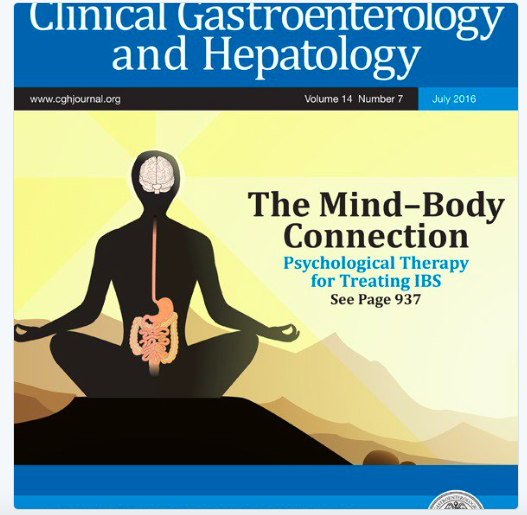
A recent meta-analysis (KT Laird et al. Clin Gastroenterol Hepatol 2016; 14: 937-47) of 41 randomized, controlled trials shows that psychological therapies improved symptoms of irritable bowel in adults.

Key finding:

  • “On average, individuals who received psychotherapy had a greater reduction in GI symptoms after treatment than 75% of individuals assigned to a control condition…This effect remained significant” for at least 6-12 months.

A summary of this study from GIHepNews.com:  Psychological Therapies for Irritable Bowel Syndrome

Excerpt of commentary by Dr. Christopher Almario:

While these findings are impressive and continue to support the use of psychotherapy in IBS, important issues remain. First, these results are based on data gathered in the highly controlled environment of randomized controlled trials (RCTs), and it is unclear whether they will translate to the “real world.” RCT participants may be more willing to complete psychotherapy because they know they are being observed by research staff (referred to as the Hawthorne, or observer, effect). However, in real clinical practice, patients with IBS not subject to the Hawthorne effect may be less compliant with such therapies.

Other issues relate to the current limited adoption of psychotherapy in clinical practice. Factors contributing to the low uptake include variable third-party reimbursement and poor patient and provider acceptance (JAMA. 2015 Mar;313:949-58). Another factor is limited access to qualified psychotherapists.

My take: I often refer patients to a “pain psychologist” who works in our office.  With the right psychologist, this can be very helpful.  In addition, I feel that families are more willing to see a psychologist than in the past.

Related blog posts:

JulyClinGastroCover