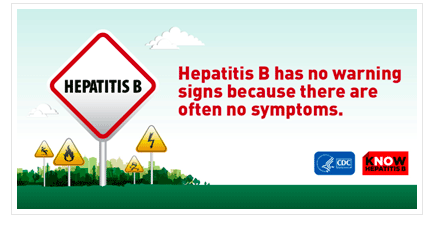
Know Hepatitis B Campaign

The CDC has launched a campaign to improve identification of Hepatitis B, particularly among Asian Americans.  Here’s the link: Know Hepatitis B Campaign

There are plenty of resources on this site.

Key fact:

“While Asian Americans make up about 5% of the total U.S. population, they account for half of the 2.2 million Americans living with chronic hepatitis B. In fact, one in 12 Asian Americans has hepatitis B.”

Related blog posts:

Screen Shot 2016-05-19 at 9.07.29 AM


Understanding Single-Payer Health Care: “Medicare for All”

A recent commentary (J Oberlander. NEJM 2016; 374: 1401-3) explains the “virtues and vices of single-payer health care.”

“In a country where nearly 30 million persons remain uninsured, even insured patients face staggering bills, and more money is spent on administration than on heart disease and cancer, it’s no surprise to hear calls for sweeping change.”

Virtues of Single-Payer System:

  • Based on Canadian experience, single-payer greatly reduces administrative costs and complexity.
  • Concentration of purchasing power
  • Guarantee that all residents receive care
  • The problems of a single-payer system “pale in comparison” to the current U.S. system

Vices of Single-Payer System:

  • Wait lists for some services
  • Public dissatisfaction
  • Would require increased taxes (though may improve overall finances for most)

It Does Not Matter if Single-Payer is Better:

It would face intense opposition from insurers, medical industry, and would not be adopted by Congress. “In short, single payer has no realistic path to enactment in the foreseeable future.”

My take (in agreement with author): “Preserving and strengthening the ACA [affordable care act] as well as Medicare, and addressing underinsurance and affordability of private coverage is a less utopian cause than single payer. I believe it’s also the best way forward now for U.S. medical care.”

Related blog posts:

Graphic showing association between obesity and asthma

Graphic showing association between obesity and asthma


Rome IV -Pediatric Changes

What are the changes in Rome IV for children and adolescents?  JS Hyams, C DiLorenzo et al (Gastroenterol 2016; 150: 1456-68) provide a helpful review.

Key point:

The ‘dictum’ that there was “no evidence for organic disease” as an criteria for functional disorders has been dropped in favor of “after appropriate medical evaluation the symptoms cannot be attributed to another medical condition.”  This subtle change discourages excessive investigations.

The functional disorders covered in this article include

  • H1 Functional nausea and vomiting disorders: H1a -cyclic vomiting syndrome, H1b -functional nausea and vomiting (NEW), H1c -rumination syndrome, H1d -aerophagia
  • H2 Functional abdominal pain disorders: H2a -functional dyspepsia, H2b -irritable bowel syndrome, H2c -abdominal migraine, H2d -functional abdominal pain -not otherwise specified
  • H3 Functional defecation disorders: H3a -functional constipation, H3b -nonretentive fecal incontinence

Other points:

  • “There are no published data on the treatment of isolated functional nausea and isolated functional vomiting”
  • “We have eliminated the requirement of pain to fulfill the criteria for FD” [functional dyspepsia]
  • Criteria for cyclic vomiting and abdominal migraines now require only 2 episodes in a 6 month period
  • Criteria for functional constipation requires only 1 month rather than 2 months (this is true for H3b as well).  The authors endorsed the NASPGHAN expert guidelines which included “no role for routine use of an abdominal x-ray to diagnose FC.”  The guideline discourages testing for cow’s milk allergy, hypothyroidism, celiac disease and hypercalcemia in the absence of alarm symptoms.

In a separate article, MA Benninga, S Nurko et al (Gastroenterol 2016; 150: 1443-55) describe the functional disorders affecting infants and toddlers.

In my view, the article in this special edition that incorporates the most changes regards functional disorders of the biliary tree (FGBD) (PB Cotton et al Gastroenterol 2016; 150: 1420-29). This is mainly due to data showing that sphincterotomy is no better than sham treatment for patients with post-cholecystectomy pain.  “The concept of sphincter of Oddi dysfunction type III is discarded.”  In addition, for biliary pain/’gallbladder dyskinesia,’ the authors also acknowledge that the role of obtaining a gallbladder ejection fraction is “controversial.”  “Symptoms suggestive of FGBD often resolve spontaneously so that early intervention is unwarranted.”  Ultimately, the authors state that “treatment recommendations are not firmly evidence-based.”

Related blog posts:

Owl in Our Neighborhood

Owl in Our Neighborhood

Expert Review: GMOs are safe

Here’s a link to NBC report on National Academies of Science review of Genetically Modified & Genetically Engineered crops: Genetically Modified Crops Are Safe

Here’s an excerpt:

Screen Shot 2016-05-18 at 9.39.35 PM

Here’s a website with full report and data:

National Academies of Science Genetically Engineered Crop Website

Related blog post: War on Science and Genetically-Modified Food | gutsandgrowth

Report also covered by USATODAY:

Screen Shot 2016-05-18 at 9.44.10 PM

Don’t Skip this Article -Rome IV Summary

When I visited MIT, one of the slogans I heard was “Getting an Education from MIT is like taking a drink from a Fire Hose.” While this is a ridiculous notion, it is also true that the amount of information to consume, not just at MIT, but in so many areas is tremendous in quantity.  As such, one has to figure out what to read and what to toss.  For GI physicians, a recent summary (DA Drossman. Gastroenterol 2016; 1262-80) is worth a read due to the ubiquitous nature of the problems discussed.

Here were some key points:

  • “The possibility that passions or emotions could lead to the development of medical disease was first proposed by the Greek physician Claudius Galen.”
  • “Rome IV is a compendium of knowledge accumulated since Rome III” –10 years ago.

Some of the Changes:

  • New diagnoses:  Narcotic bowel syndrome, opioid-induced constipation, cannabinoid hyperemesis syndrome
  • Removal of functional terminology when possible…functional abdominal pain syndrome has been changed to centrally mediated abdominal pain syndrome
  • Threshold changes for diagnostic criteria
  • Addition of reflux hypersensitivity diagnosis.
  • Revision of Sphincter of Oddi  dysfunction disorder…  “driven by evidence that debunks the value of sphincterotomy for type III SOD.”
  • Emphasis that functional disorders exist on a spectrum with linked pathogenesis, particularly with regard to irritable bowel syndrome (IBS) subtypes.
  • Removal of the term discomfort for IBS criteria and using pain as the key criterion.

Approach to Patients with Functional GI Disorders:

  • The author discusses ways to engage patient to create partner-like interaction.
  • “Determine the immediate reason for the patient’s visit (eg. What led you to see me at this time?)”  Potential reasons: exacerbating factors, concern for serious disease, stressors, emotional comorbidity, impairment in daily functioning or hidden agenda (eg. disability, narcotics, litigation)
  • “Determine what the patient understands of the illness…What do you think is causing your symptoms?”
  • Provide a thorough explanation of the disorder.  “For example: ‘I understand you believe you have an infection that has been missed; as we understand it, the infection is gone but your nerves have even affected by the infection to make you feel like it is still there, similar to phantom limb.”
  • “Identify and respond realistically to the patient’s expectations for improvement (e.g. How do you feel I can be helpful to you?)”
  • Explain ways that stress can be associated.  “I understand you do not see stress as causing your pain, but you have mentioned how severe and disabling your  pain is.  How much do you think that is causing you emotional distress?”
  • “Set consistent limits..narcotic medication is not indicated because it can be harmful.”
  • “Involve patient in treatment plan (e.g. Let me suggest some treatments for you to consider).”
  • With regard to use of TCAs, the author explains that antidepressants can be used “to turn down the pain, and pain benefit occurs in doses lower than that used for depression.”  “Tricyclic antidepressants or the serotonin-norepinephrine reuptake inhibitors help control pain via central analgesia as well as provide relief of associated depressive symptoms.  The selective serotonin reuptake inhibitors are less effective for pain but can help reduce anxiety and associated depression.”
  • Establish an ongoing relationship.  “Whatever the result of this treatment, I am prepared to consider other options, and I will continue to work with you through this.”

My take: This summary provides a succinct update on a 6-year effort of 117 investigators/clinicians from 23 countries.  After reading this article, you will probably want to glance at the other articles in the same issue.

Vik Muniz Collage

Vik Muniz Collage

A closer look at the front wheel

A closer look at the front wheel

Interesting Fatty Liver Articles -Spring 2016

J Bousier et al. Hepatology 2016; 63: 764-75.  This study showed an association between the severity of nonalcoholic fatty liver disease and gut dysbiosis/shift in gut microbiome in 57 patients.  Specifically, Bacteroides was independently associated with NASH and Ruminococcus with significant fibrosis.

V WS Wong et al. Hepatology 2016; 63: 754-63. This study showed that NAFLD (identified by ultrasonography screening) was frequent (58.2%) among 612 consecutive patients who were undergoing coronary angiogram. During a followup (3679 patient-years), NAFLD patients had a lower adjusted HR of death (0.36).  Older age and diabetes were indepenently associated with cardiovascular events.  In addition, during f/u NAFLD patients in their cohort rarely developed liver cancer or cirrhotic complications.  Thus, NAFLD is common among patients with coronary artery disease but did not predict a worsened outcome.

F Piscaglia et al. Hepatology 2016; 63: 827-38. This report was a study of 756 patients with liver cancer (HCC) due to either NAFLD (145) or HCV (611). HCC in NAFLD patients had a larger volume, was more infiltrative, and was detected outside surveillance.  NAFLD-HCC was associated with a lower survival (25.5 months compared with 33.7 months for HCV-HCC). The authors note that after patient matching for tumor stage, the survival rate was similar. The difference in survival does not account for lead-time bias (What’s More Important: Improving Mortality Rate or Survival …).  Overall, the study indicates that without surveillance, HCC is detected later.  Due to the frequency of NAFLD, it is unclear which patients would benefit from surveillance and what type of surveillance should be recommended.

Related blog posts:

Farjado, Puerto Rico

Farjado, Puerto Rico


Varicella and Zoster Infections in Children with Inflammatory Bowel Disease

A recent study (DJ Adams, CM Nylund. J Pediatr 2016; 171: 140-5) looked at a large database (1997-2012) with nearly 9 million admissions.  In this retrospective cohort, there were 4434 admissions related to varicella and 4488 due to herpes zoster.

  • Children with Crohn’s disease had a greater increased risk: Varicella OR 12.75, and Zoster OR 7.9 compared to the general population.
  • Children with ulcerative colitis had increased risk compared to general population but less compared to children with Crohn’s disease: Varicella OR 4.25, and Zoster OR 3.9
  • Overall, the risk of these infections improved among all groups over the 15 year study period

One significant limitation of this study is that children with IBD may have been hospitalized more readily out of concern for their vulnerability.  It is noted that there were no deaths due to these infections in the children with IBD.

My take (from the authors):  the increased risk of Varicella and Zoster “were comparable with that observed in children with HIV, malignancy, and primary immune deficiency.”  Given the difficulty of immunizing children on immunosuppressive treatments, at the very least, immunizing household contacts needs to take place.

Related blog posts:

Fox Theatre on a Tuesday

Fox Theatre (Atlanta) on a Tuesday

Vitamin D and IBD, More Data

Another large study (Kabbani TA, et al. Am J Gastroenterol. 2016;doi:10.1038/ajg.2016.53) links low vitamin D status with worse outcomes in IBD.

An excerpt from summary from HealioGastro: (Low vitamin D linked to higher morbidity, disease severity in IBD)

Binion and colleagues identified 965 IBD patients (61.9% Crohn’s disease; 38.1% ulcerative colitis; 52.3% women; mean age, 44 years) with up to 5 years of follow-up data in University of Pittsburgh Medical Center’s longitudinal IBD natural history registry…

At enrollment, 8.9% of patients were vitamin D deficient and 33.1% had vitamin D insufficiency vs. 4.9% and 23.6%, respectively, at the conclusion of the study period. Among patients who received vitamin D supplements, 67.9% achieved normal levels by the end of the study…

Overall, patients with low vitamin D levels required significantly more steroids, biologics, narcotics, computed tomography scans, emergency department visits, hospital admissions and surgeries compared with those who had normal mean vitamin D levels (P < .05). They also had worse pain, disease activity scores and quality of life (P < .05).

“More importantly, correction of vitamin D deficiency was associated with overall improvement in clinical status,” Binion said.

My take: Vitamin D levels are often low when patients are acutely ill and can improve without supplements in many; this accounts for some of the association with worsened outcomes.  True vitamin D deficiency and insufficiency does have negative physiologic effects and should be treated.

Related blog posts:

Gibbs Gardens

Gibbs Gardens


John Oliver & Understanding Scientific Studies

A recent John Oliver segment (~20 minutes) provides a terrific look at how scientific studies need to be evaluated.  Here’s the link: John Oliver Scientific Studies

His main points:

  • Scientists are under pressure to publish and sometimes publish a study with a title to grab interest
  • P-hacking can be done to find statistical significance/correlation that is bogus
  • Reports are often distorted by the media to generate a buzz.  Smelling farts does not prevent cancer (see image below).
  • Some reports extrapolate findings in animals to humans without any studies and without mentioning that these were animal experiments; in addition, most treatments on lab mice do not work for humans.
  • Many media reports do not mention whether the study was industry-funded or the size of the study.  Reports with 10 or 20 people are more likely to lead to false conclusions

Related posts:

Screen Shot 2016-05-09 at 6.00.08 PM


Dreaded Nausea

One symptom that is dreaded by both patients and physicians is nausea.  A helpful review on this topic (K Kovacic, C DiLorenzo. JPGN 2016; 62: 365-71) provides information on functional nausea.  A few points:

Diagnostic:

  • Endoscopy has low yield.  One cited study suggested that in the absence of clinical alarm symptoms, 98% of endoscopies were normal.
  • 4-hour nuclear medicine study ‘may be justified.’

Therapeutic: Numerous drug/alternative therapies are discussed -most with a paucity of data.  These include:

  • Alternatives agents: Ginger, STW5 (iberogast), peppermint oil
  • Antiemetics: Ondansetron, promethazine, prochlorperazine
  • TCAs: amitriptyline, nortriptyline, imipramine, doxepin
  • SSRIs: citalopram, fluoxetine, paroxetine
  • Anxiolytics: buspirone
  • Tetracyclic antidepressant: mirtazapine
  • Antimigraine: cyprohepatadine, propranolol, topiramate, levetiracetam
  • Prokinetics: erythromycin, metoclopropramide, domperidone
  • Others: fludrocortisone, aprepitant, cannabionids
  • Psychology: “early involvement of a psychologist and emphasis on coping strategies and maintaining functioning with continued school attendance is a primary goal.”

The authors note that retrospective data in children suggest that TCAs have a response rate of ~50% (defined as more than a 50% improvement).  In one study, the mean dose of amitriptyline was 50 mg at bedtime.

In a related study, Madani et al (JPGN 2016; 62: 409-13) describe their experience (retrospective review) using cyproheptadine in children with a range of functional gastrointestinal disorders.  The most common indications were functional abdominal pain (36%), functional dyspepsia (23%), combination disorder (17%) and abdominal migraines (12%).  Overall, they included 151 children and they report 110 (72.8%) had complete symptom improvement; the remainder had either partial or no improvement.  In those who responded, the mean initial dose was 0.14 mg/kg/day; the final mean dose was nearly identical. Adverse effects of sleepiness was reported in 13% and weight gain in 10%.

Related posts:

Link: Impressive “water swallowing” NEJM video (thanks to Jose Garza for sharing).  In a person who had undergone an esophagogastric bypass as a child.  Still photo below:

NEJM Chest