Concise Review: Fatty Liver in Pediatrics

A recent review (J Schwimmer. Hepatology 2016; 1718-25) provides a succinct up-to-date approach to the common problem of Nonalcoholic Fatty Liver Disease.

As this was a review, much of the material has been covered by this blog and previous publications.  The review discusses the upper limit of normal for alanine aminotransferase and its utility.  Liver imaging is discussed: “MRI is well suited for use in clinical research” whereas “ultrasound does not meet the standard clinical threshold required to be used to diagnose fatty liver…or used as an outcome measure.”

Dr. Schwimmer reviews a prospective study of 347 overweight or obese children with suspected NAFLD (blog review of this study: Screening for NAFLD).  He notes that 24% (n=61) of those who underwent liver biopsy ultimately had other diagnoses, especially autoimmune liver disease (n=11) and celiac disease (n=4). “The clinical challenge is to determine who needs how much of a workup. The greater potential for hepatotoxicity and the more advanced the disease is believed to be, the greater the need to be certain of the diagnosis and to properly grade and stage the disease.”  Currently, “no other diagnostic modality has shown sufficient accuracy to be appropriate for clinical use in the place of biopsy.”

He reviews associated health conditions with NAFLD including obesity, dyslipidemia, hypertension, cardiac dysfunction, and obstructive sleep apnea (~60% of NAFLD patients).

What about treatment? “There is not an available, proven, safe, and effective [pharmacologic] treatment for NAFLD in children…Current treatment is …focused on optimizing lifestyle, including nutrition, physical activity, and mental well-being.”

My take: Despite 20 years of clinical practice, the workup for NAFLD remains a vexing problem.  It is not practical to offer a liver biopsy to 10% of the pediatric population.  So determining who (besides those with more severe presentations) will benefit from an exhaustive workup remains unclear.  In the meanwhile, at a minimum, we need to keep looking for treatable liver conditions (eg. autoimmune hepatitis, celiac disease, Wilson’s disease, and viral hepatitis).

An article with a similar focus (Dr. Schwimmer is the corresponding author): J Pediatric 2016; 172: 9-13.  This report and Dr. Schwimmer’s review both tout the safety of liver biopsy.  Neither report presents much data on costs of either liver biopsies or MRI.

Related blog posts:

Zoo Atlanta 2016

Zoo Atlanta 2016


Bring Out the Big Guns: Treating Infections with Cirrhosis

A recent study (M Merli et al. Hepatology 2016; 1632-39) indicates that health-care associated infections (HCA) in the setting of cirrhosis respond more favorably to broad-spectrum antibiotics.  In this prospective study of 96 randomized patients, in-hospital mortality was improved in the broad-spectrum group (6%) compared to the standard group (25%).  There was a similar multidrug-resistnace rate (50% broad spectrum compared with 60% in standard group).

Table 1 lists the antibiotic selection.  In the broad spectrum treatment, this almost always included imipenem/cilastin (I/C); with spontaneous bacterial peritonitis (SBP), I/C was combined with vancomycin, and with pneumonia it was combined with both vancomycin and azithromycin.  In contrast, the standard group’s main medication was augmentin (with added azithromycin for pneumonia) or cefotaxime for SBP.

My take: Does this study show that infections in the setting of cirrhosis are becoming more difficult to treat? Probably. How much these findings can be extended to the pediatric population remains uncertain.

Somewhat related topic: Primary prophylaxis of Variceal Bleeding in Children –Summary of the Baveno VI Pediatric Satellite Symposium.  BL Shneider et al. Hepatology 2016; 63: 1368-80. Key point: “there are few pediatric data…therefore, no recommendations for primary prophylaxis with endoscopic variceal ligation, sclerotherapy, or nonspecific beta-blockade in children was proposed.”

Silver Comet Trail

Silver Comet Trail

Balanced Summary of Probiotics & Microbiome Effects on the Brain

A good updated summary on probiotics from 538 GutScienceWeek:

Do probiotics work? Are they good for me?

This link reviews a good deal of science and has a nice table explaining costs.

Take home message: Probiotics which vary greatly by strain and often lack rigorous production standards may be beneficial for specific conditions like preventing antibiotic-induced diarrhea but probably are not beneficial on an ongoing basis.

The final post in the series looks at How the Gut Affects Your Mood.

While the author explains that there is likely a microbiome effect on the central nervous system as well as some intriguing animal studies, it is too early to know that manipulation of the microbiome will have beneficial effects on neurological/developmental concerns.

Screen Shot 2016-05-19 at 6.32.33 PM

Gluten-Free for IBS-D?

A recent study (I Aziz et al. Clin Gastroenterol Hepatol 2016; 14: 696-703) shows that a 6 week gluten-free diet reduced IBS-D symptoms in 29 of 41 (71%) patients.

  • The authors performed a prospective study with all patients receiving a gluten-free diet.  At 6 weeks, 21 of 29 who had responded to GFD continued GFD through 18 months followup.
  • One difference with this study compared to prior studies –these patients were irritable bowel syndrome with diarrhea and fulfilled Rome III criteria.  Celiac disease had been excluded with serology and histology; thus, these patients did not have “potential” celiac disease.
  • In addition to GI symptoms like abdominal pain, distention, and stooling problems, patients experienced improvement in mood, fatigue and quality of life.
  • The authors note that the response rate of 71% is much higher than they would have expected if the response was related solely to a placebo effect.

My take: This small study shows that a gluten free diet may be effective in improving the symptoms in many patients with IBS-D.  Other studies have shown that several other diets are effective as well.

Related blog posts:

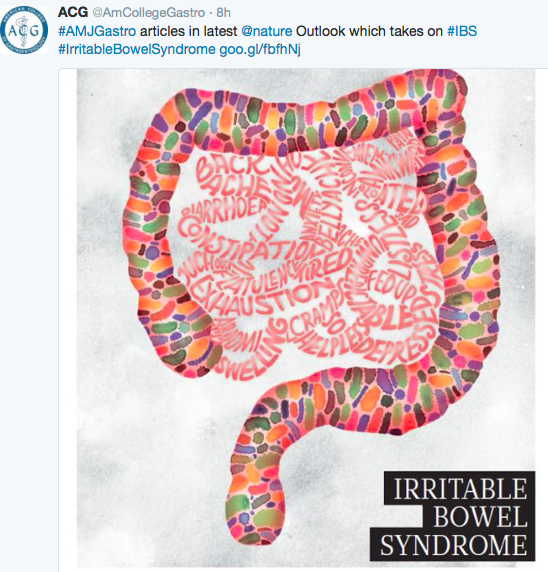
IBS diagram


Tick Bites Can Lead to Allergy to Red Meat

From NBC News: Tick Bite Linked to Rise in Red Meat Allergies

Excerpt:

A tick-related meat allergy has been quietly spreading across the southern and eastern U.S. over the past two decades, but in recent years the number of cases have steadily risen. A tick bite in some people can kick off a sensitivity to red meat that can result in symptoms such as itching, hives, swollen lips and breathing problems. The reaction can sometimes be life threatening. 

Terrific 8th grade graduation speech: 8th grader Nails Impersonations of presidential candidates

Five Year Data on Magnetic Device for GERD

Here’s an abstract regarding the efficacy of a magnetic device for gastroesophageal reflux in adults:

Background & Aims

Based on results from year 2 of a 5-year trial, in 2012 the US Food and Drug Administration approved the use of a magnetic device to augment lower esophageal sphincter function in patients with gastroesophageal reflux disease (GERD). We report the final results of 5 years of follow-up evaluation of patients who received this device.

Methods

We performed a prospective study of the safety and efficacy of a magnetic device in 100 adults with GERD for 6 months or more, who were partially responsive to daily proton pump inhibitors (PPIs) and had evidence of pathologic esophageal acid exposure, at 14 centers in the United States and The Netherlands. The magnetic device was placed using standard laparoscopic tools and techniques. Eighty-five subjects were followed up for 5 years to evaluate quality of life, reflux control, use of PPIs, and side effects. The GERD–health-related quality of life (GERD-HRQL) questionnaire was administered at baseline to patients on and off PPIs, and after placement of the device; patients served as their own controls. A partial response to PPIs was defined as a GERD-HRQL score of 10 or less on PPIs and a score of 15 or higher off PPIs, or a 6-point or more improvement when scores on vs off PPI were compared.

Results

Over the follow-up period, no device erosions, migrations, or malfunctions occurred. At baseline, the median GERD-HRQL scores were 27 in patients not taking PPIs and 11 in patients on PPIs; 5 years after device placement this score decreased to 4. All patients used PPIs at baseline; this value decreased to 15.3% at 5 years. Moderate or severe regurgitation occurred in 57% of subjects at baseline, but only 1.2% at 5 years. All patients reported the ability to belch and vomit if needed. Bothersome dysphagia was present in 5% at baseline and in 6% at 5 years. Bothersome gas-bloat was present in 52% at baseline and decreased to 8.3% at 5 years.

Conclusions

Augmentation of the lower esophageal sphincter with a magnetic device provides significant and sustained control of reflux, with minimal side effects or complications. No new safety risks emerged over a 5-year follow-up period. These findings validate the long-term safety and efficacy of the magnetic sphincter augmentation device for patients with GERD. ClinicalTrials.gov no: NCT00776997.

It is important to note the following:

  1. Symptom control was not different between the magnetic sphincter and surgery
  2. The target population met the inclusion criteria: typical GERD symptoms, abnormal esophageal acid exposure by pH monitoring, partial response to daily PPI, and absence of large hiatus hernia or severe esophagitis

Related blog post:  Stopping reflux with magnets | gutsandgrowth

Screen Shot 2016-05-16 at 6.06.19 PM


NYT: Educate Your Immune System

A recent commentary updates the concept of the hygiene theory and how our lack of exposures to a ‘dirtier’ environment when we are younger can make us more prone to autoimmune diseases, including celiac disease, diabetes, and multiple sclerosis.

Here’s the link: Educate Your Immune

Here’s an excerpt:

People living just over the border in Russian Karelia, as the region is known, have the same prevalence of genes linked to autoimmune disease [as in Finland]. They also live at the same latitude and in the same climate. And yet they have a much lower vulnerability to autoimmune disease. Celiac disease and Type 1 diabetes occur about one-fifth and one-sixth as often, respectively, in Russian Karelia as in Finland. Hay fever and asthma, allergic diseases that also signal a tendency toward immune overreaction, are far less common.

So in a follow-up study, the results of which appeared last month in the journal Cell, Dr. Xavier and his colleagues followed 222 children who were genetically at risk of developing autoimmune diabetes. The newborns were equally divided among Finland, Russia and Estonia, where the prevalence of Type 1 diabetes is on the rise, but still well below Finland’s.

Autoimmune diabetes can be predicted, to some degree, by the appearance of certain antibodies in the bloodstream that attack one’s own tissues. After three years, 16 Finnish children and 14 Estonian children had these antibodies; only four Russian children did. And when the scientists compared the children’s microbiomes in the three countries, they found stark differences. A group of microbes called bacteroides dominated in Finnish and Estonian infants. But in Russia, bifidobacteria and E. coli held sway….

Russian kids have more fecal oral infections, such as hepatitis A, suggesting more sharing not only of pathogens, but of microbes that may benefit health. And previous studies have found that Russian homes harbor a richer and more diverse community of microbes than Finnish ones….

The world today is very different from the one our immune system evolved to anticipate — not just in what we encounter, but in when we first encounter it. Preventing autoimmune disorders may require emulating aspects of that “dirtier” world.

Screen Shot 2016-06-03 at 6.23.18 PM

Best Fecal Marker for Crohn’s Disease: Calprotectin

A recent study (EK Wright et al. Inflamm Bowel Dis 2016; 22: 1086-94) collected data from 135 participants in a prospective, randomized, controlled trial aimed at preventing postoperative Crohn’s disease (CD) recurrence.  As part of this study, serial stool collections enabled comparison of fecal markers: calprotectin (FC), lactoferrin (FL) and S100A12 (FS).

FC was the optimal marker and was superior to CRP and CDAI. Table 4 provides a list of sensitivity, specificity, PPV, and NPV for each of the fecal markers at various cutoffs.

For FC, using the optimal cutoff of 135 mcg/g, the sensitivity was 0.87, specificity was 0.66, PPV was 56%, and NPV 91%.  A lower cutoff (50 mcg/g) improved sensitivity to 0.96 and NPV to 94%; whereas a higher cutoff (200 mcg/g) lowered the sensitivity to 71% but improved the specificity to 0.74 along with raising the PPV% to 59%.

My take: While the yield of a test changes based on the population examined, this report indicates that it is likely that calprotectin would outperform the other fecal inflammatory markers in most settings.

Related blog posts:

Briefly noted: G Gale et al. Inflamm Bowel Dis 2016; 22: 1071-77.  This report describes more extensive disease when there is concomitant orofacial granulomatosis with Crohn’s disease.

Paris from Postcards

Paris from Postcards, Vik Muniz

ParisCaption

Identifying IBD Years Before Symptoms

A while back there was a movie called “Minority Report.”  The movie’s premise was that crimes could be predicted and stopped before they occurred.  A recent study (P Lochhead et al. Clin Gastroenterol Hepatol 2016; 14: 818-24) presents intriguing data suggesting a similar scenario for inflammatory bowel disease (IBD).

The authors used a prospective, nested case control study of participants in the Nurses’ Health Study I and II. Median age of patients with Crohn’s disease (CD) (n=83) and ulcerative colitis (UC) (n=90) was 52.7 years and 50.4 years respectively. Key findings:

  • Median prediagnostic hsCRP levels (mg/L) were 2.3 in CD, 2.2 in UC and 1.5 in controls (n=344).
  • Median prediagnostic IL6 levels (pg/mL) were 1.7 in CD, 1.2 in UC, and 1.0 in controls.
  • Median time interval between blood collection and diagnosis was 6.6 years for CD and 6.8 years for UC.
  • There was increased odds for developing disease even after adjustment for potentially confounding variables like smoking.  This analysis held up even when excluding disease that developed within 2 years of sampling.

Overall, this study suggests that there is a significant population of patients with subclinical IBD which precedes the diagnosis by several years.  This report adds to a number of other studies showing potential “preclinical phase” of many diseases including rheumatoid arthritis and type 1 diabetes.

My take: It is fascinating that bloodwork can be abnormal years before clinical symptoms. However, as in “Minority Report” the problem will be with identifying a crime/disease that might never occur.

Unrelated –Chart Depicting Car Temps:

car temp

Why some kids are short & understanding linear growth

If you want to explore the biological basis for short stature, then an excellent review (YH Jee, J Bacon. J Pediatr 2016; 173: 32-7) is worthwhile.

The article begins by explaining the reasons why linear growth is rapid in infancy, slows in childhood and accelerates in adolescence through a process of growth plate chondrogenesis.  In addition, the idea that growth plate fusion causes growth cessation is not accurate.  Fusion of the growth plate occurs because of growth cessation. In addition, in many with “catch-up growth” the “delay in maturation appears to be driven by subtle undernutrition due to diminished appetite.”

Altered Growth Plate Chondrogenesis:

  • Nutritional intake -excess and inadequate nutrient intake affects growth, often through modulation of endocrine hormones.  Overnutrition accelerates linear growth “but the adult height is not substantially affected.”
  • Hormones –thyroid hormones, growth hormone, IGF-1, androgen, and estrogen all positively regulate linear growth.  Glucocorticoids negatively regulate linear growth.
  • Inflammatory cytokines –these cytokines (including TNF-α, IL-6, IL-1β) negatively regulate chondrogenesis
  • Paracrine growth factors, Extracellular Matrix, Intracellular Proteins –local growth factors can be deficient in those with specific genetic mutations:  FGFR3 -achondroplasia, GNAS -Albright hereditary osteodystrophy, PTH1R -Blomstrand chrondrodysplasia, PTPN11 (& others) -Noonan, SHOX -Langer mesmeric dysplasia.  SHOX mutations accounts for 2-5% of children with formerly idiopathic short stature.  SHOX gene is also involved in Turner syndrome short stature. More listed in their Table (pg 35).

My take: It is cool to see the evolved understanding of the various factors affecting stature.  While the authors conclude that exome sequencing will alter the diagnostic approach to children with severe short or tall stature, it seems that a genetic panel would be quite practical and less expensive than many endocrinological evaluations.

Related blog postHere’s Why Biologic Therapy for Crohn’s Helps Adolescents …

Imodium