Diets for Obesity and Steatotic Liver Disease Plus Patient Information from FISPGHAN

S Karjoo et al. JPGN 2025;81:485–496. Evidence-based review of the nutritional treatment of obesity and metabolic dysfunction-associated steatotic liver disease in children and adolescents

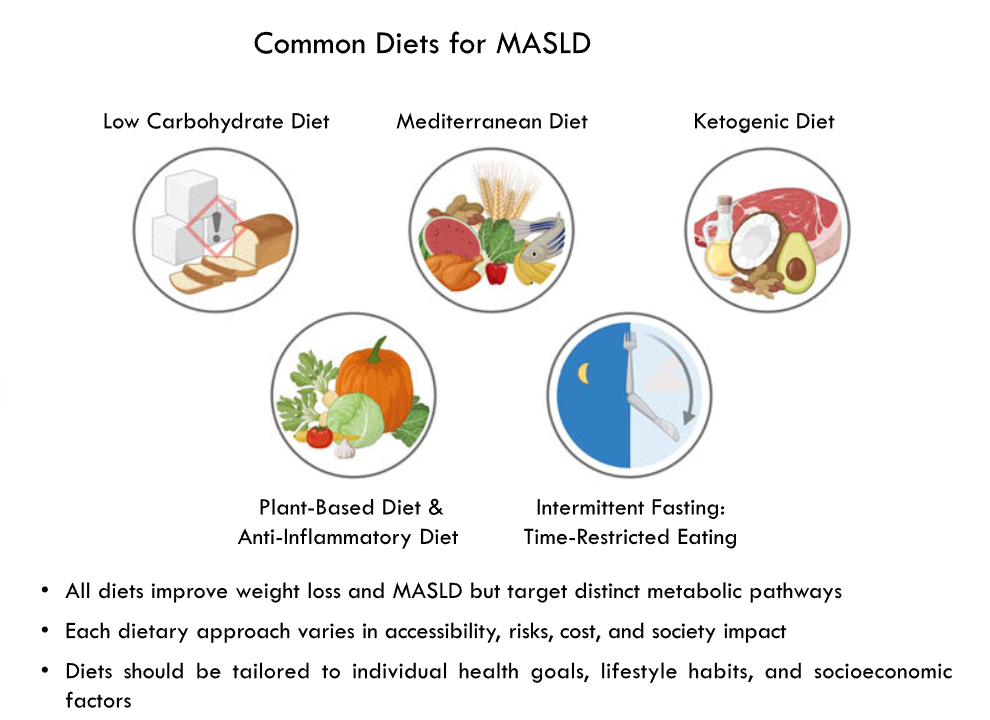
This invited commentary reviews the data for several diets that may improve weight loss and metabolic dysfunction-associated steatotic liver disease (MSALD).
Several points:

  • “Extremely restricted plant‐based diets may have deficiencies of vitamin D, calcium, and vitamin B12 which are nutrients found in animal products, and can be minimized by vitamin supplementation or increasing consumption of fish, mushrooms, egg yolk, cod liver oil, salmon, herring, and sole fish. VitaminB12 supplementation is recommended in plant‐based diets because this vitamin is primarily found in animal products”
  • Table 1 compares the structure of these diets and their advantages/drawbacks
  • “Low to moderate weight loss can be seen in the anti-inflammatory diet, plant-based diets, or Mediterranean diet. These diets are nutritionally complete. However, restrictive plant-based diet carries a risk of micronutrient deficiencies, which can be corrected with appropriate supplementation. These diets are effective in treating MASLD independent of weight loss due to their anti-inflammatory profile.”
  • “The ketogenic diet, certain carbohydrate-restricted diets, and intermittent fasting can lead to more weight loss but carry a higher risk of malnutrition. Children on these diets must be followed by nutritionists.”

My take: Each of the diets reviewed can help MASLD and obesity. Most patients pursuing dietary therapy would benefit from working with a nutritionist.

Related news: TEVA Press release, August 28, 2025: Generic liraglutide (need for daily injections) is now available.

Related blog posts:

Also, related patient advice from Federation of International Societies for Pediatric Gastroenterology, Hepatology, and Nutrition (FISPGAN) –outlines risk factors and prevention tips for metabolic dysfunction-associated steatotic liver disease (MASLD):
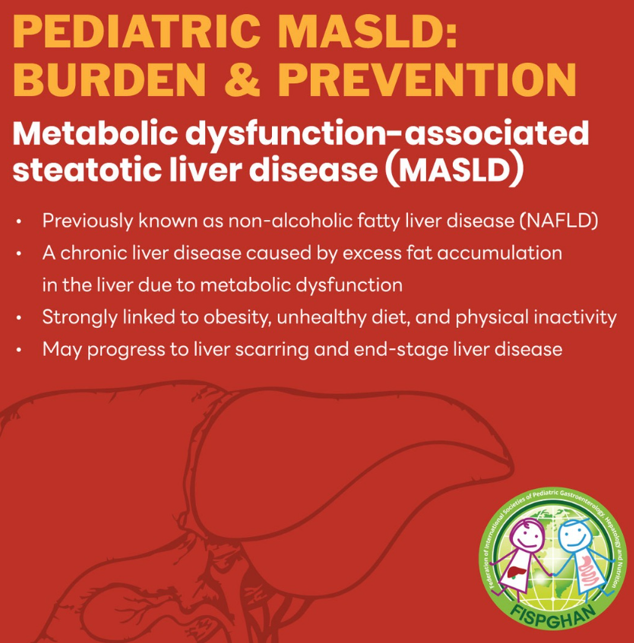

“You Can’t Outrun a Bad Diet”

It has been recognized for quite some time that physical exercise, while important for health, does NOT play a big role in weight loss (see: Challenging the Obesity Myths, NEJM 2013; 368: 446-54. “Physical education, as typically provided, has not been shown to reduce or prevent obesity”). This article and the associated commentary from NPR provide further evidence of this.

Methods:  The authors examined energy expenditure and two measures of obesity (body fat percentage and body mass index, BMI) for 4,213 adults from 34 populations across six continents and a wide range of lifestyles and economies, including hunter-gatherer, pastoralist, farming, and industrialized populations

Key findings:

  • “Economic development was positively associated with greater body mass, BMI, and body fat, but also with greater total, basal, and activity energy expenditure. Absolute measures of TEE (total energy expenditure) and AEE (activity energy expenditure) are greater in more economically developed populations (Fig. 2), consistent with their larger body size. Body size–adjusted TEE decreased marginally with greater development”
  • “Estimated energy intake was greater in economically developed populations, and in populations with available data (n = 25), the percentage of ultraprocessed food in the diet was associated with body fat percentage, suggesting that dietary intake plays a far greater role than reduced energy expenditure in obesity related to economic development.”

Commentary from NPR:

Back in the 1800s, obesity was almost nonexistent in the United States. Over the last century, it’s become common here and in other industrialized nations…One common explanation is that as societies have developed, they’ve also become more sedentary, and people have gotten less active….But in a major new study published in the journal PNAS, Pontzer and an international team of collaborators found that’s not the case…the total calories burned per day is really similar across these populations, even though the lifestyle and the activity levels are really different…it does mean we can’t outrun a bad diet. Pontzer says if we want to tackle obesity, the public health message should focus on changing what’s on our plates.”

My take: This article further supports the idea that a healthy diet is the crucial factor with regard to weight gain. However, numerous studies have shown that physical activity is important for good health, regardless of one’s weight.

Related blog posts:

Boats for punting at the Magdalen Bridge/River Cherwell. Oxford, UK

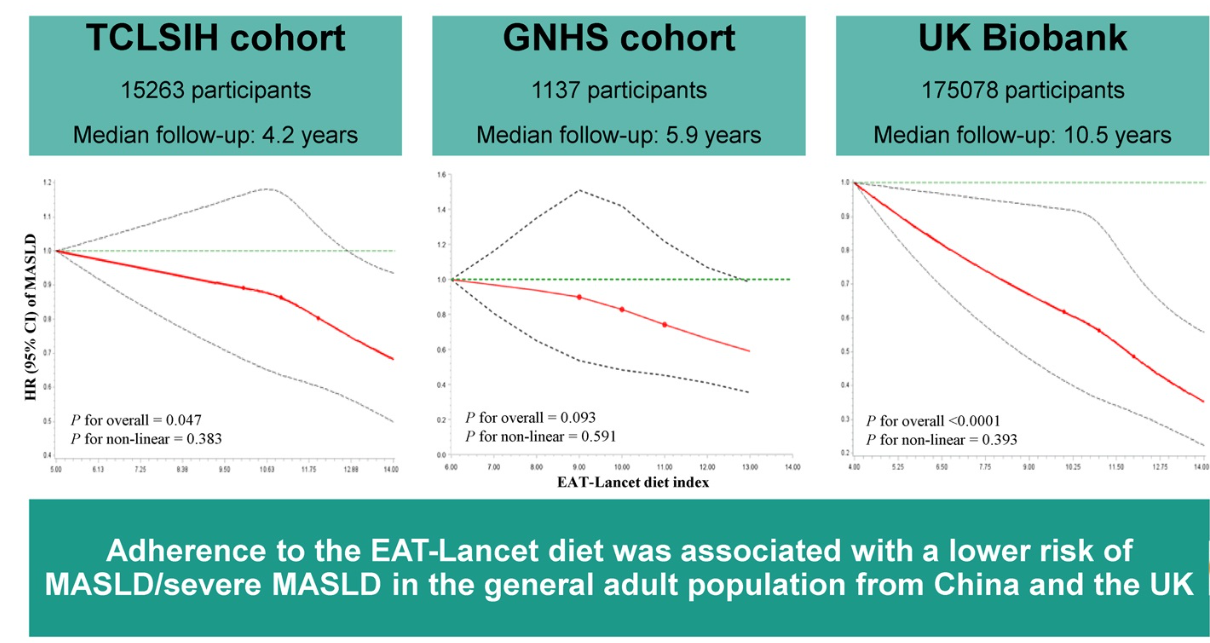
EAT-Lancet Diet Associated with Reduced Risk of MASLD

From the commentary: “In 2019, the EAT-Lancet Commission on Food, Plant, and Health proposed a planetary health diet, known as the EAT-Lancet reference diet, that promotes human health and sustainable food production globally…and recommends fruits, vegetables, whole grains, plant-based proteins (eg. legumes, nuts) and unsaturated plant oils, with limited or moderate amounts of animal-based proteins such as meat and dairy….[it] has been associated with multiple health benefits, including reducing the risks of type 2 diabetes, cardiovascular disease, certain cancers, and all-cause mortality.”

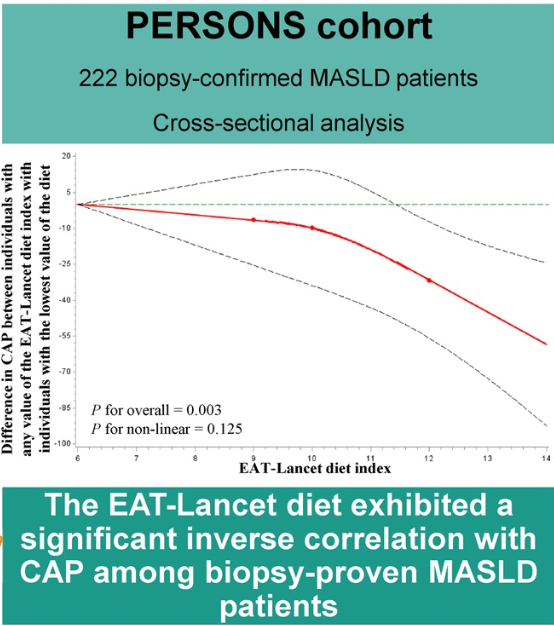
Methods: This prospective multicohort study comprised more than 191,000 adults from several cohorts. In addition, 228 Chinese adults from the Prospective Epidemic Research Specifically of Non-alcoholic Steatohepatitis (PERSONS) with biopsy-proven MASLD were included.

Key findings:

  • Participants in the highest tertiles of the EAT-Lancet diet index had a lower risk of MASLD compared with those in the lowest tertiles with HR ranging in different cohorts from 0.73 to 0.87
  • Liver-controlled attenuation parameter decreased with increasing the diet index in individuals with biopsy-proven MASLD (β = −5.895

My take (borrowed from the authors): Adherence to the EAT-Lancet reference diet was inversely associated with the risk of MASLD as well as its severity.

Related blog posts:

“Optimal dietary patterns for healthy aging”

Tessier, AJ., Wang, F., Korat, A.A. et al.  Nat Med (2025). https://doi.org/10.1038/s41591-025-03570-5. Open Access! Optimal dietary patterns for healthy aging

Key Points:

  • Of >105,000 participants with 30-year follow-up, only 9.3% achieved healthy aging (age 70, w/o any chronic diseases). Their diet was significantly associated with this outcome
  • A Mediterranean type diet high in fruits, vegetables, legumes, nuts, whole grains, low fat dairy products, plant-based foods, and a diet with reduced sodium, trans fats, animal-based foods, sugary beverages, ultra- processed foods was the optimal pattern
These are the specific foods that were linked with healthy aging and other outcomes.
Green-favorable; Red-unfavorable

Eric Topol has provided an excellent commentary on this article for those interested in a deeper analysis: Our Diet and Healthy Aging

Dr. Topol notes that there has been a decline in interest in plant-based foods. “In The Atlantic magazine this week [among other big Signal things ;-)] there was an article (←gift link) on the loss of appeal of plant-based eating…” He also previews his new book Super Agers.

Related blog posts:

Expert Advice on Gluten Introduction and Risk of Celiac Disease

H Szajewska et al. JPGN 2024; https://doi.org/10.1002/jpn3.12280. Open Access! Early diet and the risk of coeliac disease. An update 2024 position paper by the ESPGHAN special interest group on coeliac disease

Key points:

  • Breastfeeding, whether any amount, exclusive, or of any duration, does not reduce the risk of developing CD
  • Introducing gluten into an infant’s diet at any time between completed 4 months (≥17 weeks) and 12 months of age does not affect the cumulative incidence of CD

Related blog posts:

Prokinetics Have Little Benefit for Gastroparesis

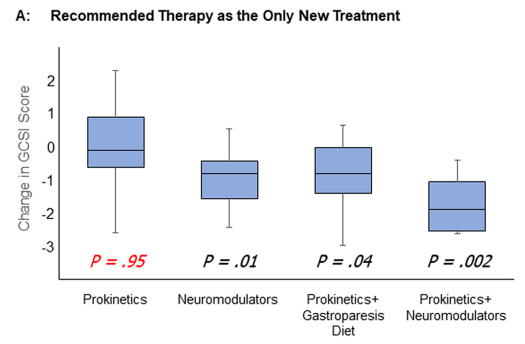
WL Hasler et al. Clin Gastroenterol Hepatol 2024; 22: 867-877. Open Access! Benefits of Prokinetics, Gastroparesis Diet, or Neuromodulators Alone or in Combination for Symptoms of Gastroparesis

Methods: In this prospective study of patients (n=129) with suspected gastroparesis, the authors examined longitudinal outcomes focusing on responses to prokinetics and other therapies. This included gastroparesis diets and neuromodulators. Patients underwent validated gastric emptying testing (wireless motility capsule and gastric emptying scan) before recommending new treatments.

Prokinetics included dopamine antagonists, motilin agonists, acetylcholinesterase
inhibitors, and pyloric botulinum toxin injection.

Key findings:

  • “Initiating prokinetics as solo new therapy had little benefit for patients with symptoms of
    gastroparesis.”
  • “Neuromodulators as the only new therapy decreased symptoms other than
    nausea and vomiting”
  • Combination therapy of a prokinetic with a neuromodulator appeared to be the most effective
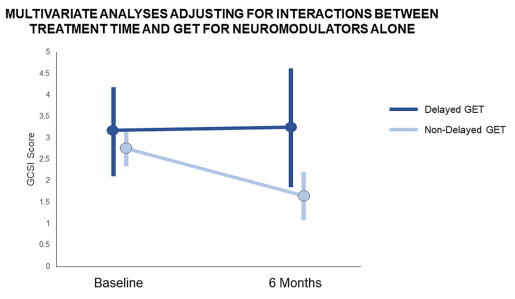
  • Neuromodulators were mainly effective in those without delayed gastric emptying times

My take: Our therapies for gastroparesis are not very good. And, neuromodulators are likely to be more helpful than prokinetics.

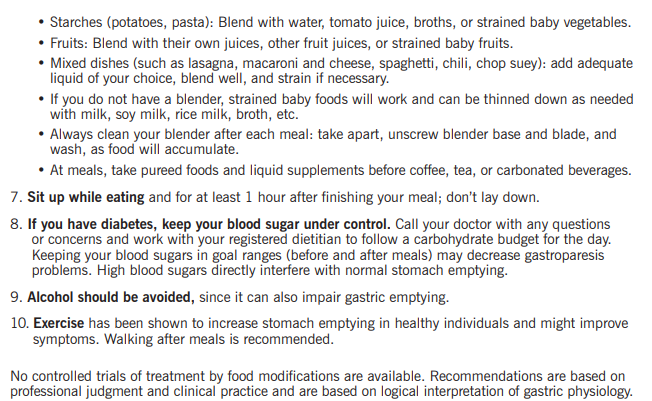
Example of a gastroparesis diet: Cleveland Clinic Gastroparesis Diet (7 pages). Part of the diet recommendations are shown below.

Related blog posts:

Which Diet is Best for Irritable Bowel Syndrome? A Randomized Trial

A Rej et al. Clin Gastroenterol Hepatol 2022; 20: 2876-2887. Open Access! Efficacy and Acceptability of Dietary Therapies in Non-Constipated Irritable Bowel Syndrome: A Randomized Trial of Traditional Dietary Advice, the Low FODMAP Diet, and the Gluten-Free Diet

Methods: In patients (n=99) with Rome IV–defined non-constipated IBS, outcomes after randomization to one of three diets were compared. The “traditional dietary advice” group: “Its principles include adopting healthy, sensible eating patterns such as having regular meals, never eating too little/too much, maintaining adequate hydration, and reducing the intake of (1) alcohol/caffeine/fizzy drinks, (2) fatty/spicy/processed foods, (3) fresh fruit to a maximum of 3 per day, (4) fiber and other commonly consumed gas-producing foods (eg, beans, bread, sweeteners, etc), and (5) addressing any perceived food intolerances (eg, dairy).” (Link: National Institute for Health and Care Excellence advice on IBS mgt). The Gluten-Free diet allowed for cross-contamination. All patients had specialist dietary counseling.

Key findings:

  • All three diets resulted in improvement. The primary end point of ≥50-point reduction in IBS-SSS was met by 42% (n = 14/33) undertaking TDA, 55% (n = 18/33) for LFD, and 58% (n = 19/33) for GFD (P = .43)
  • Alterations in stool dysbiosis index were similar across the diets, with 22%–29% showing reduced dysbiosis
  • “The pragmatic study design, whereby the responsibility was left on patients to undertake the diets following appropriate education, means our findings can be generalized”

My take: All three diet approaches would be appropriate to reduce IBS symptoms, thought the TDA is the easiest for patients.

Related blog posts:

What is An Emulsifier and Are They Safe in Our Diets?

Two recent articles examine emulsifiers and their potential impact on the GI tract and beyond.

Levine et al provide a good overview of the topic of emulsifiers. Key points:

  • Emulsifiers allow “the mixing of water and and water-soluble agents with fats and fat-soluble agents that is they possess both hydrophilic and lipophilic properties”
  • The FDA “has been responsible for approving the use of all direct food additives” (n=~3000) and “for regulatory purposes, [the FDA excluded] some substances that were generally regarded as safe (GRAS) (n=~450)…Precisely how some emulsifiers gained GRAS status is unclear.
  • “Lecithin” is derived from the Greek name for egg yolk (lekithos). “Over the years the use of the term “lecithin” has been taken to include various mixtures of different phospholipids” (not just phosphatidylcholine).
  • Lecithin can provide the substrate “for the production of trimethylamine N-oxide (TMAO)…linked to cardiac events and cardiovascular inflammation.”
  • “The list of emulsifiers that are widely used, but not considered GRAS, most notably include polysorbate 80 (p80), carboxymethylcellulose (CMC) and carrageenan…these emulsifiers have been linked to the disruption of the microbiota and gut mucosal lining…In addition, low-grade inflammation [has been] associated with consumption of emulsifying agents such as CMC and p80” [in mouse models].
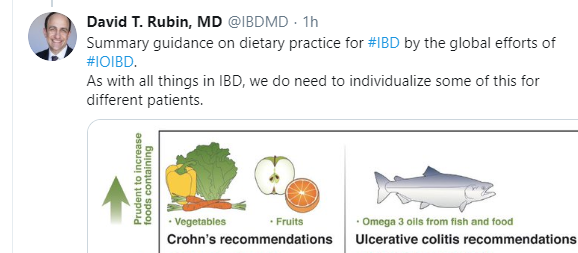
  • The International Organization for the Study of Inflammatory Bowel Disease (IOIBD) has recommended that IBD patients “limit consumption of certain commonly encountered synthetic emulsifiers, specifically carboxymethylcellulose (E466/cellulose gum) and polysorbate 80 (E433) [which] are present in many processed foods, such as ice cream. The group also recommends a decrease in foods containing carrageenan”

In the second study by Chassaing et al with 16 healthy adults, the authors studied the effects of CMC in those with an emulsifier-free diet (n=9) or an identical diet enriched with CMC (n=7).

Key findings:

  • Relative to control subjects, CMC consumption modestly increased postprandial abdominal discomfort and perturbed gut microbiota composition in a way that reduced its diversity
  • CMC-fed subjects exhibited changes in the fecal metabolome, particularly reductions in short-chain fatty acids and free amino acids
  • 2 subjects consuming CMC who exhibited increased microbiota encroachment into the normally sterile inner mucus layer, a central feature of gut inflammation, as well as stark alterations in microbiota composition

My take: The dramatic increase in the prevalence of IBD over the past 50 years indicates a strong influence of environment factors, particularly diet. Determining which of these factors are most important will be challenging. These articles indicate that some emulsifiers could be contributing to GI tract inflammation and non-GI tract inflammation as well.

The challenges with identifying dietary factors relate to difficulties with using randomized controlled trials (especially eliminating delicious foods) to assess the impact over a long period of follow-up.

Related blog posts:

New and Improved Biomarker Blood Test for Crohn’s Disease?

A recent study (G D’Haens, O Kelly, R Battat et al. Gastroenterol 2020; 158: 515-26,editorial 463) describes the development and validation of a blood test panel to assess Crohn’s disease (CD) endoscopic activity level.  The authors evaluated a blood test which measured 13 proteins in the blood using samples from 278 patients.  Then there were two validation cohorts:

  • 116 biologic-naive CD patients -cohort 1
  • 195 biologic-exposed CD patients -cohort 2

The blood tests were used to develop an endoscopic healing index (EHI) score (0-100). Higher scores indicate greater disease activity.

Key findings:

  • EHI values below 20 identified remission with a sensitivity of 97.1%  and 83.2% in cohorts 1 & 2 respectively; specificity was 69% and 37% respectively.
  • EHI values below 50 points identified patients with highest specificity of 100% and 88% in cohorts 1 and 2 respectively.
  • EHI AUROC (area under the receiver operating characteristic curve) did not differ significantly from that of fecal calprotectin and were higher than measurement of serum CRP (in cohort 1 but not cohort 2).

The editorial notes that the EHI performed much better in younger, biologically-naive patients and that the EHI could potentially be incorporated into a treat-to-target strategy which would potentially entail followup endoscopy in those with EHI >50.

My take: While the stool calprotectin has some logistical barriers in many patients, the EHI is likely a much more expensive test and needs further validation.  For now, the combination of CRP and calprotectin are the best noninvasive biomarkers to assess CD activity.

Briefly noted: Vedolizumab-Induced Pulmonary Toxicity -Case report of a patient with ulcerative colitis who developed interstitial lung disease (Gastroenterol 2020; 158: 478-9).

Related blog posts:


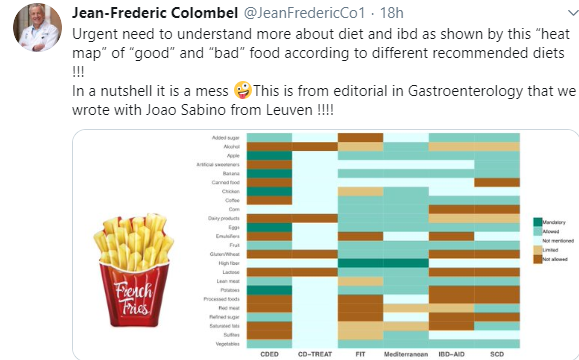
Good Food and Bad Food for Crohn’s Disease -No Agreement

As noted in a previous blog (IBD Briefs August 2019), there have been numerous diets proposed to help with Crohn’s disease.   The chart below illustrates the lack of any consensus.

Related blog posts: