Unknown's avatar

About gutsandgrowth

I am a pediatric gastroenterologist at GI Care for Kids (previously called CCDHC) in Atlanta, Georgia. The goal of my blog is to share some of my reading in my field more broadly. In addition, I wanted to provide my voice to a wide range of topics that often have inaccurate or incomplete information. Before starting this blog in 2011, I would tear out articles from journals and/or keep notes in a palm pilot. This blog helps provide an updated source of information that is easy to access and search, along with links to useful multimedia sources. I was born and raised in Chattanooga. After graduating from the University of Virginia, I attended Baylor College of Medicine. I completed residency and fellowship training at the University of Cincinnati at the Children’s Hospital Medical Center. I received funding from the National Institutes of Health for molecular biology research of the gastrointestinal tract. During my fellowship, I had the opportunity to work with some of the most amazing pediatric gastroenterologists and mentors. Some of these individuals included Mitchell Cohen, William Balistreri, James Heubi, Jorge Bezerra, Colin Rudolph, John Bucuvalas, and Michael Farrell. I am grateful for their teaching and their friendship. During my training with their help, I received a nationwide award for the best research by a GI fellow. I have authored numerous publications/presentations including original research, case reports, review articles, and textbook chapters on various pediatric gastrointestinal problems. In addition, I have been recognized by Atlanta Magazine as a "Top Doctor" in my field multiple times. Currently, I am the vice chair of the section of nutrition for the Georgia Chapter of the American Academy of Pediatrics. In addition, I am an adjunct Associate Clinical Professor of Pediatrics at Emory University School of Medicine. Other society memberships have included the North American Society for Pediatric Gastroenterology Hepatology and Nutrition (NASPGHAN), American Academy of Pediatrics, the Food Allergy Network, the American Gastroenterology Association, the American Association for the Study of Liver Diseases, and the Crohn’s and Colitis Foundation. As part of a national pediatric GI organization called NASPGHAN (and its affiliated website GIKids), I have helped develop educational materials on a wide-range of gastrointestinal and liver diseases which are used across the country. Also, I have been an invited speaker for national campaigns to improve the evaluation and treatment of gastroesophageal reflux disease, celiac disease, eosinophilic esophagitis, hepatitis C, and inflammatory bowel disease (IBD). Some information on these topics has been posted at my work website, www.gicareforkids.com, which has links to multiple other useful resources. I am fortunate to work at GI Care For Kids. Our group has 17 terrific physicians with a wide range of subspecialization, including liver diseases, feeding disorders, eosinophilic diseases, inflammatory bowel disease, cystic fibrosis, DiGeorge/22q, celiac disease, and motility disorders. Many of our physicians are recognized nationally for their achievements. Our group of physicians have worked closely together for many years. None of the physicians in our group have ever left to join other groups. I have also worked with the same nurse (Bernadette) since I moved to Atlanta in 1997. For many families, more practical matters about our office include the following: – 14 office/satellite locations – physicians who speak Spanish – cutting edge research – on-site nutritionists – on-site psychology support for abdominal pain and feeding disorders – participation in ImproveCareNow to better the outcomes for children with inflammatory bowel disease – office endoscopy suite (lower costs and easier scheduling) – office infusion center (lower costs and easier for families) – easy access to nursing advice (each physician has at least one nurse) I am married and have two sons (both adults). I like to read, walk/hike, bike, swim, and play tennis with my free time. I do not have any financial relationships with pharmaceutical companies or other financial relationships to disclose. I have helped enroll patients in industry-sponsored research studies.

Bilary Atresia Prognosis After 2-Year Survival with Native Liver

A recent study (M Witt et al. JPGN 2018; 689-94) indicates that among patients with biliary atresia who reached 2 years of life with native liver survival (NLS), they continued to be at risk for progressive liver failure.

Key findings:

  • Upon a median follow-up of 16.4 years, NLS rates at 5, 10, 15, 18 years of age were 89%, 72%, 60%, 54%, respectively.
  • Corresponding overall survival rates were 98%, 90%, 87%, 87%, respectively
  • NLS ended in 37% by liver transplantation (LTx) and in 6% by (pre-transplant) mortality.
  • Abstract Link: Prognosis of Biliary Atresia After 2-year Survival With Native Liver

My take: This data provides more precise information for families about prognosis and reinforces the need for careful followup.

Related blog posts:

Parker Ridge, near Banff


Suicide Rate Up 33% in Last 20 Years & Can We Stop It?

A recent article in USAToday highlights the increasing problem of suicides in U.S.:Suicide rate up 33% in less than 20 years, yet funding lags behind other top killers

Also, at the bottom of this post is more information on the topic of whether we can stop suicide from happening.

An excerpt from USAToday:

“More than 47,000 Americans killed themselves in 2017, the Centers for Disease Control and Prevention … contributing to an overall decline in U.S. life expectancy. Since 1999, the suicide rate has climbed 33 percent. 

Americans are more than twice as likely to die by their own hands, of their own will, than by someone else’s. But while homicides spark vigils and protests, entering into headlines, presidential speeches and police budgets, suicides don’t. Still shrouded in stigma, many suicides go unacknowledged save for the celebrities – Robin Williams, Kate Spade, Anthony Bourdain – punctuating the unrelenting rise in suicide deaths with a brief public outcry. 

And research suggests our ways of living may be partly to blame, in ways that don’t bode well for the future.

Alcohol and substance abuse are risk factors, and both are increasing. Isolation raises the risk, and nearly half of Americans say they sometimes or always feel alone. Increasing smartphone use has been linked to suicidal thoughts in teens. Even climate change has been found to have roughly the same effect on increasing suicides as an economic recession.”

A related commentary from the NY Times: Can We Stop Suicides? details the reasons for suicides and discusses the potential of ketamine as a treatment for depression/suicidality.


Same-Day Bowel Preparation Works for Afternoon Colonoscopies

From Gastro-Hep News: Same-Day Bowel Preparation Ideal for Afternoon Colonoscopies

An excerpt:

Same-day bowel preparation provides better cleansing and is preferred over a split-dose regimen for patients scheduled for an afternoon colonoscopy, according to results of a randomized, controlled study presented in abstract form by Dr Isabel Manzanillo-DeVore on October 9, 2018 at the American College of Gastroenterology (ACG) 2018 Annual Scientific Meeting in Philadelphia, Pennsylvania (Oral abstract 42)…

Patients in both groups were instructed to drink only clear liquids … beginning at noon the day before the colonoscopy…. In the same-day group, patients began bowel preparation at 5:30 am the day of the procedure and were told to finish a polyethylene glycol–electrolyte solution (PEG-ES; 4 L) at least 4 hours before their appointment.

Related posts:


December Liver Briefs

B Wildman-Tobriner et al. Gastoenterol 2018; 155: 1428-35.  This retrospective study which pooled data from 3 phase 2a trials with 370 subjects with nonalcoholic fatty liver disease (NAFLD) found that MRI iwth proton density fat fraction (PDFF) “did not accurately identify patients with NAS ≥4 (AUROC – 0.72) or fibrosis stage ≥3 (AUROC =0.66).”  Thus, this study indicates that currently liver histology remains the gold standard to determine severity of liver damage in paitents with NAFLD.

Related blog posts

P Nahon et al. Gastroenterol 2018; 155: 1436-1450. This study looks closer at whether direct-acting antivirals (DAA) for hepatitis C could increase the risk of hepatocellular carcinoma (HCC) in patients (n=1270) with cirrhosis. The authors found that the crude 3-year cumulative incidence of HCC were 5.9% in the DAA and 3.1% in the SVR-IFN group. However, after Cox analysis, “we found no statistically significant increase in risk of HCC associated with DAA use (HR 0.89).”  The authors indicated that patient characteristics (age, diabetes, reduced liver function) and lower screening intensity were the reasons for the increased crude rates of HCC.

Related blog post: Liver Short Takes December 2017

Love this sign –it indicates the truth of the saying:  ‘common sense is not that common’ (attributed to Voltaire)

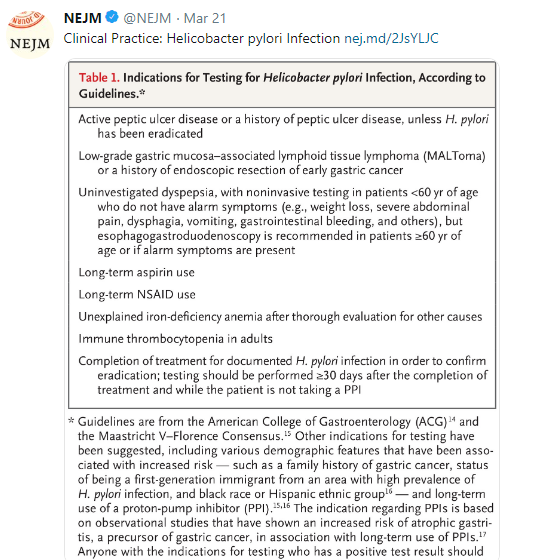
It is Getting Harder to Treat H pylori -Here’s Why

In a recent study (A Savoldi et al. Gastroenterol 2018; 155: 1372-82, editorial pg 1287), the authors conducted a systematic review and meta-analysis to examine the prevalence of antibiotic resistance to Helicobacter pylori. The authors identified 178 studies with 66,142 H pylori isolates. Tables 2 & 3 provide comprehensive data.

Key points:

  • In the Americas region, primary resistance to clarithromycin, metronidazole, levofloxacin and amoxicillin was 10%, 23%, 15%, and 10% respectively.
  • In the European region, primary resistance to clarithromycin, metronidazole, levofloxacin and amoxicillin was 18%, 32%, 11%, and 0% respectively.

Antibiotic resistance is increasing: 

  • In the Americas region, resistance in 2006-2008 compared to 2012-201 for clarithromycin, & metronidazole: 11%–>20%, 26%–>29% respectively.
  • In the European region, resistance in 2006-2008 compared to 2012-201 for clarithromycin, & metronidazole: 28%–>28%, 38%–>46% respectively.
  • “The resistance rates to clarithromycin, metronidazole, and levofloxacin have increased over time in all WHO regions.”  Other regions with data in study included Eastern Mediterranean, Southeast Asia, and Western Pacific.
  • In the study, the authors also “describe a clear significant association between antibiotic resistance and treatment failure.”

In their discussion, the authors note that the incidence of gastric cancer is higher in areas with increased antibiotic resistance.  Though there has been a decline in gastric cancer, “based on our data, we can hypothesize that this trend in reduction is expected to revert soon because available treatment can no longer guarantee a satisfactory eradication rate.”

From editorial:

  • H pylori is not one of those bacteria in which resistance develops as an epidemic by horizonatal transfer of mobile genetic elements…Resistance in H pylori only occurs unevenly by mutations…Fortunately, resistance occurs “very seldomly for …amoxicillin and tetracycline.”
  • Treatment failure is “almost 7 times greater (6.97) when the strain is clarithromycin resistant and even greater (8.18) when the strain is levofloxacin resistant.” Resistance to metronidazole confers a lesser degree of treatment failure risk: OR 2.52.

My take: This study provides some sobering news about H pylori prevalence and how it is becoming more difficult to treat.

Related blog posts:

Disclaimer: These blog posts are for educational purposes only. Specific dosing of medications/diets (along with potential adverse effects) should be confirmed by prescribing physician/nutritionist.  This content is not a substitute for medical advice, diagnosis or treatment provided by a qualified healthcare provider. Always seek the advice of your physician or other qualified health provider with any questions you may have regarding a condition.

Pooled Prevalence of resistance to clarithromycin (2006-2016). This is from Figure 2. Sections B & C (not shown) provide similar graphic info for metronidazole and levofloxacin

Delayed Recognition of Kawasaki Disease in Children with Presenting Intestinal Involvement

A recent study (C Columba et al. Full text: Intestinal Involvement in Kawasaki Disease J Pediatr 2018; 202: 186-93) indicates that when patients with Kawaski’s present with predominantly intestinal symptoms that this may lead to a delay in diagnosis and potential cardiac complications. In this systematic review, 33 articles reporting 48 cases of Kawasaki disease with intestinal involvement were considered.

Some key points:

  • In this study, abdominal pain and vomiting were the most frequently reported symptoms, followed by diarrhea. Fever was typically present but other features of Kawaski disease were not apparent at presentation.  Presentation can include dilated bowel loops suggestive of obstruction (pseudo-obstruction), pancreatitis, and intestinal vasculitis/bowel wall thickening.
  • “The prevalence of gastrointestinal involvement in Kawasaki disease is unknown as available data can only be derived from single reports and few case series. Miyake et al in their retrospective case series of 310 children with Kawasaki disease reported gastrointestinal involvement in only 7 cases (2.3%).”
  • “Abdominal symptoms in Kawasaki disease are more often due to hydrops of the gallbladder. In Taiwan, a routine abdominal ultrasound showed hydrops of the gallbladder in 21% of patients with Kawasaki disease.”

My take: Since early treatment of Kawasaki disease may improve outcomes, it is worthwhile to consider this in the differential diagnosis of patients presenting with possible obstruction and in those who have fever in addition to pain/emesis.

Related blog posts:

More views from Parker Ridge hike, Banff

Evidence-Based IBS Treatment Recommendations from ACG

A recent  American College of Gastroenterology Task Force conducted a systematic review (AC Ford et al. The American Journal of Gastroenterology 2018;113:1–18 ) to update management recommendations for irritable bowel syndrome -Link:

American College of Gastroenterology Monograph on Management of Irritable Bowel Syndrome

The highlights of this report are summarized at Gastroenterology & Hepatoloy: Highlights of the Updated Evidence-Based IBS Treatment Monograph

A few excerpts:

“There have been numerous studies performed on the roles of diet and dietary manipulation in IBS. Three fairly firm conclusions were made following the review of these studies: (1) the low–fermentable oligosaccharide, disaccharide, monosaccharide, and polyol (FODMAP) diet seems to be effective for overall IBS symptom improvement; (2) a gluten-free diet is not effective for symptom improvement; and (3) conducting tests to detect various types of allergies or intolerances in order to base a diet on those results does not appear to be effective. Of these 3 conclusions, the most impressive data that came out of the research was the evidence for the low-FODMAP diet. Not only were there more studies on this diet, but the results were fairly consistent and favorable, at least for the short-term management of IBS.”

” We did not find evidence supporting the idea that prebiotics and synbiotics were effective in IBS management… In ­contrast, studies demonstrated that probiotics did improve global gastrointestinal symptoms, as well as the individual symptoms of bloating and flatulence in patients with IBS. However, determining which probiotic is best was difficult”

“Three prosecretory agents are available: linaclotide (Linzess, Allergan/Ironwood Pharmaceuticals), lubiprostone (Amitiza, Takeda), and plecanatide (Trulance, Synergy Pharmaceuticals), with plecanatide being the most recently approved agent. All 3 of these agents had convincing data to support their use in patients with constipation-predominant IBS

My take: In IBS patients, if dietary therapy is recommended, current evidence favors a low FODMAP diet rather than a gluten-free diet.

Related blog posts:

near Banff

Image above -Parker Ridge Trail

Finite Therapy with Oral Antivirals for Chronic Hepatitis B Infection

A recent study (WJ Jeng et al. Hepatology 2018; 68: 425-34) indicates that many patients with Hepatitis B e Antigen-Negative Chronic Hepatitis B benefit from a finite treatment with oral antivirals.

These findings are discussed by P Lampertico and T Berg (editorial 397-400). In the Jeng study, the investigators prospectively followed the effect of antiviral cessation in 691 individuals after patients had undetectable HBV DNA and met Asian Pacific Association for the Study of Liver guidelines for stopping.  HBsAg clearance occurred in 13% who discontinued therapy compared to 3% during nucleos(t)ide treatment.  The authors note that virologic relapse occurred in 79% and that the immune system activation driven by clinical relapse can be beneficial in yielding a cure.  Clinical decompensation was infrequent and most could be retreated; three patients with cirrhosis and decompensation died

My take: These studies show that in carefully-selected and carefully-monitored patients with HBeAg-negative chronic hepatitis B infection, it is feasible to successfully stop oral antiviral therapy.

Related blog posts:

Disclaimer: These blog posts are for educational purposes only. Specific dosing of medications (along with potential adverse effects) should be confirmed by prescribing physician.  This content is not a substitute for medical advice, diagnosis or treatment provided by a qualified healthcare provider. Always seek the advice of your physician or other qualified health provider with any questions you may have regarding a condition.

  • Near Banff


Pediatric Liver Enzyme Reference Values

A recent study (S Bussler et al. Hepatology 2018; 1319-1330)  provides reference age-related reference values for ALT, AST, and GGT for children from 11 months of age through 16 years.  This study from Leipzig used the LIFE Child prospective longitudinal population-based cohort with 3,131 cases (normal weight).

  • Figure 2 provides age- and sex-related percentiles for ALT.  At all ages and in both genders, the 90% cutoff was ~30 IU (or less).
  • Figure 3 provides age- and sex-related percentiles for AST.  There was a negative sloping curve with both genders, such that the 90% cutoff was ~60 IU at ~1 yr and ~40 IU at ~13 yr. Females tended to have modestly higher values.
  • Figure 4 provides age- and sex-related percentiles for GGT.  At all ages and in both genders, the 90% cutoff was ~25 IU. Males tended to have modestly higher values.

These values overall are similar to previous studies. From NASPGHAN NAFLD Guidelines: For ALT: “In the United States, sex-specific biologically based cutoffs have been determined from nationally representative data and have been validated in a fairly diverse cohort. These cutoffs are 22 mg/dL for girls and 26 mg/dL for boys. A Canadian study found the upper limit of normal for ALT to be 30 mg/dL in children 1 to 12 years of age, and 24 mg/dL in those between 13 and 19 years”

Related blog post: Pediatric NAFLD Guidelines 2017

Near Banff


Another Reason For HPV Vaccine –Prevention of Anal Cancer

Briefly noted: A recent study (L Vuitton et al. Clin Gastroenterol Hepatol 2018; 16: 1768-76) document a high prevalence of anal canal high-risk human papillomavirus (HPV)  infection in all subjects (n=469, median age 54 years) and even higher rates in patients with Crohn’s disease (n=70).  The authors detected HPV DNA in anal tissues from 34% of the subjects and high risk (oncogenic) HPV in 18%.  In patients with Crohn’s disease, high risk HPV was detected in 30%.

My take: HPV infection predisposes to anal cancer which represent 3-4% of lower-digestive tract cancers. The high rate of HPV

Related blog posts:

near Banff