About gutsandgrowth
I am a pediatric gastroenterologist at GI Care for Kids (previously called CCDHC) in Atlanta, Georgia. The goal of my blog is to share some of my reading in my field more broadly. In addition, I wanted to provide my voice to a wide range of topics that often have inaccurate or incomplete information.
Before starting this blog in 2011, I would tear out articles from journals and/or keep notes in a palm pilot. This blog helps provide an updated source of information that is easy to access and search, along with links to useful multimedia sources.
I was born and raised in Chattanooga. After graduating from the University of Virginia, I attended Baylor College of Medicine. I completed residency and fellowship training at the University of Cincinnati at the Children’s Hospital Medical Center. I received funding from the National Institutes of Health for molecular biology research of the gastrointestinal tract.
During my fellowship, I had the opportunity to work with some of the most amazing pediatric gastroenterologists and mentors. Some of these individuals included Mitchell Cohen, William Balistreri, James Heubi, Jorge Bezerra, Colin Rudolph, John Bucuvalas, and Michael Farrell. I am grateful for their teaching and their friendship. During my training with their help, I received a nationwide award for the best research by a GI fellow.
I have authored numerous publications/presentations including original research, case reports, review articles, and textbook chapters on various pediatric gastrointestinal problems. In addition, I have been recognized by Atlanta Magazine as a "Top Doctor" in my field multiple times.
Currently, I am the vice chair of the section of nutrition for the Georgia Chapter of the American Academy of Pediatrics. In addition, I am an adjunct Associate Clinical Professor of Pediatrics at Emory University School of Medicine. Other society memberships have included the North American Society for Pediatric Gastroenterology Hepatology and Nutrition (NASPGHAN), American Academy of Pediatrics, the Food Allergy Network, the American Gastroenterology Association, the American Association for the Study of Liver Diseases, and the Crohn’s and Colitis Foundation.
As part of a national pediatric GI organization called NASPGHAN (and its affiliated website GIKids), I have helped develop educational materials on a wide-range of gastrointestinal and liver diseases which are used across the country. Also, I have been an invited speaker for national campaigns to improve the evaluation and treatment of gastroesophageal reflux disease, celiac disease, eosinophilic esophagitis, hepatitis C, and inflammatory bowel disease (IBD). Some information on these topics has been posted at my work website, www.gicareforkids.com, which has links to multiple other useful resources.
I am fortunate to work at GI Care For Kids. Our group has 17 terrific physicians with a wide range of subspecialization, including liver diseases, feeding disorders, eosinophilic diseases, inflammatory bowel disease, cystic fibrosis, DiGeorge/22q, celiac disease, and motility disorders. Many of our physicians are recognized nationally for their achievements. Our group of physicians have worked closely together for many years. None of the physicians in our group have ever left to join other groups. I have also worked with the same nurse (Bernadette) since I moved to Atlanta in 1997.
For many families, more practical matters about our office include the following:
– 14 office/satellite locations
– physicians who speak Spanish
– cutting edge research
– on-site nutritionists
– on-site psychology support for abdominal pain and feeding disorders
– participation in ImproveCareNow to better the outcomes for children with inflammatory bowel disease
– office endoscopy suite (lower costs and easier scheduling)
– office infusion center (lower costs and easier for families)
– easy access to nursing advice (each physician has at least one nurse)
I am married and have two sons (both adults). I like to read, walk/hike, bike, swim, and play tennis with my free time.
I do not have any financial relationships with pharmaceutical companies or other financial relationships to disclose. I have helped enroll patients in industry-sponsored research studies.
Franklin Roosevelt’s secretary of state, Cordell Hull, wrote: “A lie will gallop halfway round the world before the truth has time to pull its breeches on.”
This saying came to my mind as I read a recent study (KE Hansen et al. Gastroenterol 2019; 156: 926-34) titled: “Dexlansoprazole and esomeprazole do not affect bone homeostasis in healthy postmenopausal women.”
In this study, the authors performed a prospective double-blind study with 115 healthy postmenopausal women who were treated with one of these two PPIs or placebo daily for 26 weeks.
Key findings:
- PPI therapy did not reduce true fractional calcium absorption
- There were no significant difference between groups in serum or urine levels of minerals, bone mineral density, or parathyroid hormone
Previous studies have found conflicting results of PPIs on bone density. Studies suggesting that PPIs could affect bone density have been questioned due to “low odds ratios (<2), lack of dose response, biological implausibility, and uncontrolled potential confounders.” The authors note that they chose bone turnover rather than changes in BMD as a primary outcome as bone turnover precede changes in BMD and should serve as an early marker of adverse effects.
My take: This study, while short in duration and with limited numbers of participants found no harmful effects of PPIs on skeletal health.
Related blog posts:

Tajo River, Toledo Spain
Briefly noted: Using a Dutch database to identify 449 patients with autoimmune hepatitis, a recent study (FF van den Brand et al. Clin Gastroenterol Hepatol 2019; 17: 940-7) found that having associated cirrhosis increased the mortality rate over a 10-year followup. In this circumstance, the standardized mortality ratio (SMR) was 1.9. In contrast, if cirrhosis was not present, there was no significant increase in SMR (1.2). Patients with overlapping PSC had the greatest increase in mortality with an SMR of 4.7.

View from Sofia Reina museum. Madrid
According to a recent study (EL Yu et al. J Pediatr 2019; 207: 64-70), about one-third of boys and one-fourth of girls with obesity have nonalcoholic fatty liver disease (NAFLD).
This study from San Diego with 408 children aged 9-17 years (mean 13.2 years) with obesity evaluated for NAFLD with laboratories (to exclude other etiologies) and with liver MRI proton density fat fraction (PDFF), with ≥5% considered the threshold for NAFLD.
Key findings:
- Prevalence of NAFLD was 26% in this population, with 29.4% in males and 22.6% in females
- The optimal cut offs of ALT for detecting NAFLD in this study were ≥30 U/L for females and ≥42 U/L for males. These are much lower than NASPGHAN guidelines which proposed ≥80 U/L or twice the ULN as thresholds for further investigation. (The NASPGHAN recommendations are likely to have higher specificity in identifying children at greater risk for nonalcoholic steatohepatitis (NASH).)
Limitations:
- 77% of this cohort were hispanic, thus prevalence may vary significantly in other populations.
- MRI-PDFF -the exact cut off is unclear. The authors note that if 3.5% were chosen, the NAFLD prevalence jumped to 49.3% (according to Table II –though the discussion stated 53.2%)
My take: Understanding the likelihood of NAFLD in children at risk is a helpful first step. This study points to the growing use of non-invasive diagnosis with MRI.
On a related topic, briefly noted: “Obesity in Adolescents and Youth: The Case for and against Bariatric Surgery” (A Khattab, MA Sperling. J Pediatr 2019; 207: 18-22). In this review, the authors refer frequently to endocrine society guidelines (J Clin Endocrinol Metab 2017; 102: 709-57). These guidelines generally recommend bariatric surgery only under specific conditions (eg. completion of Tanner 4 or 5 along with a BMI of 40 kg/m-squared or BMI of 35 with significant extreme comorbidities after failure of lifestyle modifications & without untreated psychiatric illness). This review predicts increasing use of bariatric surgery in adolescents “as more data on long-term outcomes in larger cohorts become known.”
Related blog posts on fatty liver disease:
Related blog posts on bariatric surgery:

Case report: Recently, our group consulted on a 3 week old infant (ex34 week) who weighed 2.8 kg and had cholestasis. In addition, he had a GGT in the 400s and an ultrasound notable for a “small” gallbladder. Due to the patient’s small size, he underwent a HIDA (no excretion). The GGT was actually improving but the clinical situation was concerning for biliary atresia.
Instead of arranging a liver biopsy, we were able to perform a MMP-7 (Serum Matrix Metalloproteinase-7) assay which will be commercially available soon. The result, which returned in 48 hours, indicated that the child had a >95% likelihood of biliary atresia. Subsequently, this infant is recovering from a hepatoportoenterostomy. No liver biopsy was needed prior to surgery.
My take: The MMP-7 assay is a remarkable test which is going to rapidly change the approach to infants with cholestasis. I expect that this test will be ordered along with a serum alpha-one antitrypsin phenotype and an ultrasound. In those with persistent cholestasis with negative initial testing, it is likely that, in the majority, a genetic cholestasis panel would be pursued rather than a liver biopsy.
Related blog posts:


Mesquite Flat Sand Dunes
Two recent case reports indicate that Tofacitinib may be useful in refractory cases of acute severe ulcerative colitis (ASUC) (JA Berinstein et al. Clin Gastroenterol Hepatol 2019; 17: 988-90) and for pyoderma gangrenosum (PG) (B Kochar et al. Clin Gastroenterol Hepatol 2019; 17: 991-93)
The case report for ASUC described 4 patients who received off-label high-intensity tofacitinib. Initially dosing was 10 mg 3 times a day for 9 doses with subsequent transition to standard dosing. All four patients had a rapid improvement, though one patient required a colectomy 6 months later and one patient required urgent colectomy after rapid return of symptoms when tofacitinib dose was reduced.
The case report for PG involved 3 patients -two healed with tofacitinib and one improved considerably; the latter patient required dose escalation to 10 mg twice a day. To understand the mechanism of action further, the authors performed immunohistochemical staining from skin biopsy specimens from two patients and detected “strong staining of phosphorylated JAK-1, phosphorylated JAK-2, phosphorylated JAK-3…in the epidermis.” Tofacitinib is an oral JAK-1/JAK-3 inhibitor. In all of these patients, inflammatory arthritis was the indication for tofacitinib.
My take: Due to tofacitinib’s rapid onset of action as well as its rapid clearance, it is a promising agent for both acute severe ulcerative colitis and pyoderma gangrenosum. More clinical trials are needed.
Related blog posts -Tofacitinib:
Related blog posts -ASUC:
Related blog posts -PG:
Disclaimer: These blog posts are for educational purposes only. Specific dosing of medications/diets (along with potential adverse effects) should be confirmed by prescribing physician/nutritionist. This content is not a substitute for medical advice, diagnosis or treatment provided by a qualified healthcare provider. Always seek the advice of your physician or other qualified health provider with any questions you may have regarding a condition.
Image below is from an unrelated tweet.

Briefly noted: A recent retrospective study (AA Butt et al. Gastroenterol 2019; 156: 987-96) utilized a Veterans HCV database (n=242,680) and determined that HCV therapy improved cardiovascular outcomes.
Key finding: Treatment with a direct-acting antiviral regimen lowered the risk of cardiovascular events by more than 40% (hazard ratio of 0.57) compared to no treatment.
This finding is limited based on the reliance of a retrospective study and not being able to control for factors that may have led some patients to not receive treatment.
Related blog posts:
A recent retrospective study (J Garah et al. JPGN 2019; 68: 574-77) showed that many cases of exocrine pancreatic insufficiency, based on a low fecal elastase (<200), resolved over ~6 months.
Background:
- 17 of 43 children had adequate data and no other recognized comorbidities which could explain low elastase levels
- In these 17 children the median age was 3 years
- Presenting symptoms were failure to thrive, or diarrhea. Children with known etiologies (eg. cystic fibrosis, Shwachman-Diamond, cholestatic liver disease) were excluded.
- Median elastase at time of diagnosis was 71
Key findings:
- Median time for normalization of elastase was 6 months. Patients received pancreatic supplements until elastase normalized.
- 11 of the 17 had values of elastase <100, and an additional two had values of 105.
- In all 17 children without identifiable underlying diseases, the pancreatic insufficiency was transient.
- Only two children had fat soluble vitamin deficiency associated with pancreatic insufficiency
The article discusses the use of elastase for diagnosis of pancreatic insufficiency in comparison to more direct/invasive testing which can be difficult to perform. It is important to recognize that elastase values are often unreliable in the presence of diarrhea or if diluted by urine. Repeated assays may be needed to have confidence that elastase
My take: This report identifies “transient pancreatic insufficiency” as a frequent explanation for many children and may represent a postinfectious etiology. Thus, if no comorbidity is identified, the prognosis is favorable in most children.

Sculptured Cypress Trees in Retiro Park, Madrid
AGA Clinical Practice Update on Diagnosis and Monitoring of Celiac Disease—Changing Utility of Serology and Histologic Measures: Expert Review (S Husby et al. Gastroenterol 2019; 156: 885-89)
Best Practice Advice 1: Serology is a crucial component of the detection and diagnosis of CD, particularly tissue transglutaminase–immunoglobulin A (TG2-IgA), IgA testing, and less frequently, endomysial IgA testing.
Best Practice Advice 2: Thorough histological analysis of duodenal biopsies with Marsh classification, counting of lymphocytes per high-power field, and morphometry is important for diagnosis as well as for differential diagnosis.
Best Practice Advice 2a: TG2-IgA, at high levels (> ×10 upper normal limit) is a reliable and accurate test for diagnosing active CD. When such a strongly positive TG2-IgA is combined with a positive endomysial antibody in a second blood sample, the positive predictive value for CD is virtually 100%. In adults, esophagogastroduodenoscopy (EGD) and duodenal biopsies may then be performed for purposes of differential diagnosis.
Best Practice Advice 3: IgA deficiency is an infrequent but important explanation for why patients with CD may be negative on IgA isotype testing despite strong suspicion. Measuring total IgA levels, IgG deamidated gliadin antibody tests, and TG2-IgG testing in that circumstance is recommended.
Best Practice Advice 4: IgG isotype testing for TG2 antibody is not specific in the absence of IgA deficiency.
Best Practice Advice 5: In patients found to have CD first by intestinal biopsies, celiac-specific serology should be undertaken as a confirmatory test before initiation of a gluten-free diet (GFD).
Best Practice Advice 6: In patients in whom CD is strongly suspected in the face of negative biopsies, TG2-IgA should still be performed and, if positive, repeat biopsies might be considered either at that time or sometime in the future.
Best Practice Advice 7: Reduction or avoidance of gluten before diagnostic testing is discouraged, as it may reduce the sensitivity of both serology and biopsy testing.
Best Practice Advice 8: When patients have already started on a GFD before diagnosis, we suggest that the patient go back on a normal diet with 3 slices of wheat bread daily preferably for 1 to 3 months before repeat determination of TG2-IgA.
Best Practice Advice 9: Determination of HLA-DQ2/DQ8 has a limited role in the diagnosis of CD. Its value is largely related to its negative predictive value to rule out CD in patients who are seronegative in the face of histologic changes, in patients who did not have serologic confirmation at the time of diagnosis, and in those patients with a historic diagnosis of CD; especially as very young children before the introduction of celiac-specific serology.
Management
Best Practice Advice 10: Celiac serology has a guarded role in the detection of continued intestinal injury, in particular as to sensitivity, as negative serology in a treated patient does not guarantee that the intestinal mucosa has healed. Persistently positive serology usually indicates ongoing intestinal damage and gluten exposure. Follow-up serology should be performed 6 and 12 months after diagnosis, and yearly thereafter.
Best Practice Advice 11: Patients with persistent or relapsing symptoms, without other obvious explanations for those symptoms, should undergo endoscopic biopsies to determine healing even in the presence of negative TG2-IgA.
Related blog posts:

Fountans by Manzanares River, Madrid. Royal Palace and Cathedral in background
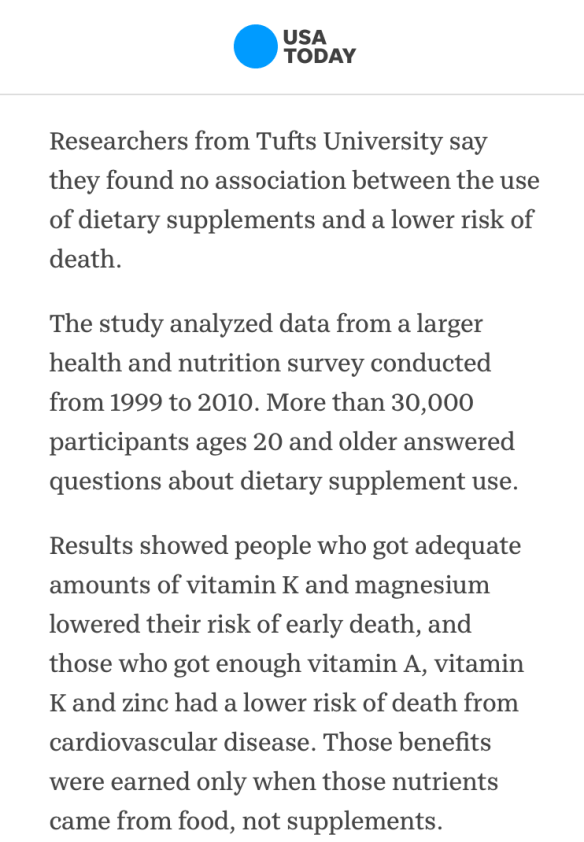
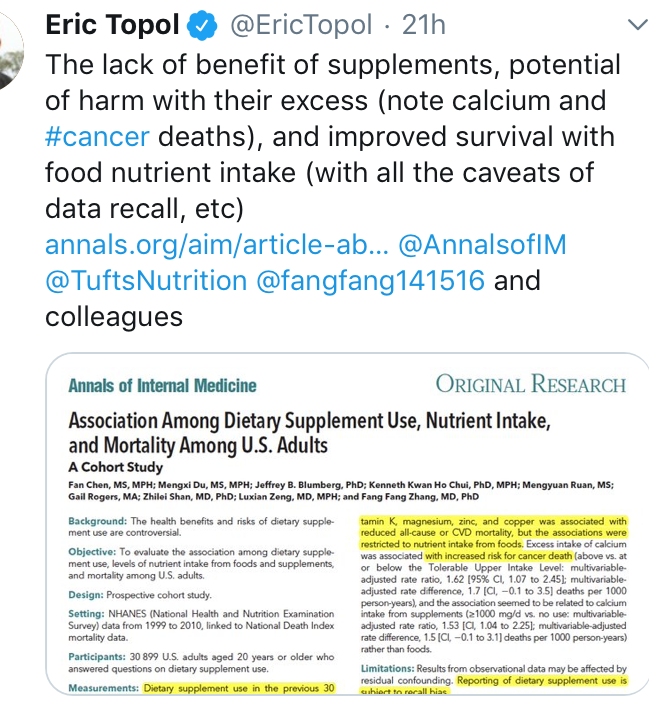
Yesterday’s post highlighted a study which indicated that low quality diets result in signiificant mortality. The tweets below refer to a study which indicated that supplements generally do not help one achieve a good diet. For a diet to be effective, the nutrients need to be present in the diet.