New Agent for Refractory Reflux

In the June issue of Gastroenterology (158: 2015-16), a tribute to George Sachs (1935-2019) recognizes his work in the field of gastroenterology and his development of proton pump inhibitors (PPIs).

Much more work remains as ~30% of patients with gastroesophageal reflux remain symptomatic despite PPI therapy.   In the same issue, IW-3718, a bile acid sequestrant colsevelam with a gastric-retentive formulation was studied in 280 patients (MF Vaez et al. Gastroenterol 2020; 158: 2017-19).

Methods: The authors performed a multicenter, double-blind, placebo-controlled 8-weel treatment trial (2016-17); patients received the study drug (500, 1000, 1500 mg) or placebo twice daily.  The authors enrolled symptomatic patients (≥4 times per week) with erosive esophagitis or pathologic reflux based on Bravo study (pH<4 for ≥4.2% during at least one 24-hour period). They continued PPI therapy which they had been receiving for a minimum of 8 weeks prior to starting study medication.

Key findings:

  • Improvement in heartburn severity scores for placebo, 500, 1000, and 1500 mg groups: 46%, 49%, 55%, and 58%.  The 11.9% difference between 1500 mg group compared to placebo reached statistical significance (P=.04)
  • There was an improvement in weekly regurgitation frequency score as well from baseline to week 8 in 1500 mg group of 17.5% compared to placebo.
  • No serious drug related serious adverse events were identified.  Constipation was noted in 8% of study drug recipients compared 7% for placebo recipients.

Limitations: lack of a centralized review for endoscopy images, high placebo response rate, once daily use of PPI in study, and problems with overlap of functional symptoms

My take: This study shows why a placebo control is needed in reflux studies.  While IW-3718 at higher doses was effective, its response appears much less notable when compared with placebo-recipients.

Study May Indicate Biologic Basis for Brain Fog in Persons with Celiac Disease

From The Onion: Dumbass Dog Wearing Face Mask All Wrong

From The Onion


A recent study (ID Croall, et al. Gastroenterol 2020; 158: 2112-22), using a UK Biobank with 500,000 adults, compared 104 participants with celiac disease to 198 healthy age-matched controls (mean age 63 years).

The authors examined cognitive outcomes, mental health outcomes and imaging data (MRI, diffusion tensor imaging).

Key findings: 

  • The celiac cohort had significant deficits in reaction time (P=.004), anxiety (P=.025), depression (P=.015), thoughts of self-harm (P=.025), and health-related unhappiness (P=.01)
  • Imaging studies showed white matter changes “which match up well anatomically with the regions affected in the celiac-related neurologic syndrome gluten ataxia.”

Limitations: study lacked data on celiac treatment status –whether better control or earlier diagnosis/treatment would reduce CNS complications is uncertain.  Also, whether these findings are more or less prevalent in individuals with undiagnosed celiac disease is unclear.

My take: This study provides further evidence that celiac disease results in significant neurologic problems and further reasons for those with celiac disease to adhere to a strict gluten-free diet (as other studies of neurologic outcomes indicate that a GFD can improve/reverse neurologic morbidities).

Related blog posts:


PPIs Associated with Increased Risk of COVID-19 Infection

Here is link to original study: Increased Risk of COVID-19 Among Users of Proton Pump Inhibitors 

Almario CV, Chey WD, Spiegel BMR. Increased risk of COVID-19 among users of proton pump inhibitors. Am J Gastroenterol 2020 (pre-print posted online July 7, 2020)

From ACG:  Information Sheet and FAQs About Proton Pump Inhibitors (PPIs) and Risk of COVID-19

This study shows an association but does not prove that PPIs increase risk of COVD-19.  Patients taking PPIs may have other attributes that increase their risk compared to those who are not taking PPIs.

Here is some more information on twitter thread of this topic:

AGA Practice Guidelines: Probiotics NOT Helpful for Most GI Conditions

Here is a link to the EPUB draft of AGA clinical report (G Su et al. Gastroenterology DOI: https://doi.org/10.1053/j.gastro.2020.05.059): AGA Clinical Practice Guidelines on the Role of Probiotics in the Management of Gastrointestinal Disorders

Here is a link to the pre-draft technical review by GA Preidis et al. Gastroenterology DOI: https://doi.org/10.1053/j.gastro.2020.05.060 AGA Technical Review on the Role of Probiotics in the Management of Gastrointestinal Disorders

  • The report recommends NOT using probiotics outside of clinical trials for irritable bowel syndrome, Clostridium difficile infection treatment, Crohn’s disease, and gastroenteritis.
  • It recommends a specific probiotic for pouchitis and for prevention of necrotizing enterocolitis in preterm infants <37 weeks and 3 probiotics for patients who are receiving antibiotics (to prevent Clostridium difficile infection)

CNN summary: Probiotics don’t do much for most people’s gut health despite the hype, review finds

“While our guideline does highlight a few use cases for probiotics, it more importantly underscores that the public’s assumptions about the benefits of probiotics are not well-founded,” said Dr. Grace L. Su, a professor of medicine and chief of gastroenterology at the University of Michigan, Ann Arbor, in a news statement. She was the chair of the panel that issued the new guidance….

“The industry is largely unregulated and marketing of product is often geared directly at consumers without providing direct and consistent proof of effectiveness,” said the new guidelines. “This has led to widespread use of probiotics with confusing evidence for clinical efficacy,” it said…

“Not all probiotics are created equal. Some probiotic strains and mixtures are very effective for some types of diseases and should not be overlooked due to studies that lump all probiotics together as one”

My take: Probiotics are overhyped and underperform for most conditions. This report suggests that most people should NOT be taking probiotics.

Related blog posts:

Relative Efficacy of Medications for Irritable Bowel Syndrome with Constipation

A recent systematic review and network meta-analysis (CJ Black, et al. Clin Gastroenterol Hepatol 2020; 18: 1238-39) reviewed the relative efficacy of medications for irritable bowel syndrome with constipation. In total, the 14 trials randomized 9113 patients.

Key points:

  • All treatments were significantly more effective than placebo
  • Linaclotide was ranked most effective; however, indirect comparison of active treatments revealed no significant differences between the individual drugs

“Channelopathy of the Pancreas Causes Chronic Pancreatitis” and SARS-CoV-2 in Sewage

Interesting article: Full Text: SARS-CoV-2 RNA concentrations in primary municipal sewage sludge as a leading indicator of COVID-19 outbreak dynamics 

___________________________________________________________________

M Sahin-Toth. Gastroenterology 2020; 158: 1538-40. Full Text Link: Channelopathy of the Pancreas Causes Chronic Pancreatitis

Excerpt from editorial:

In this issue of Gastroenterology, Masamune et al report a landmark discovery, the genetic association of functionally defective TRPV6 channel variants and chronic pancreatitis. The authors investigated the TRPV6 gene in Japanese and European patients with nonalcoholic chronic pancreatitis using targeted sequencing followed by functional analysis of the identified variants. In the Japanese discovery cohort, they found functionally defective variants in 4.3% of the patients and in 0.1% of the controls (odds ratio 48). In the European replication cohort, 2% of the patients carried a defective variant and none was found in controls.

Original research study: A Masamune et al. Gastroenterology 2020; 158: 1626-41. Full text: Variants That Affect Function of Calcium Channel TRPV6 Are Associated With Early-Onset Chronic Pancreatitis

An excerpt:

TRPV6 variants are globally associated with early-onset nonalcoholic CP. To our knowledge, TRPV6 is a novel pancreatitis-associated gene beyond the pancreatic digestive enzyme/enzyme inhibitor system, and it is the first gene that directly regulates Ca2+ homeostasis. Our findings open a completely new avenue by emphasizing the potential role of ductal cells and, especially, calcium channels in the pathophysiology of pancreatitis, which might lead to the development of personalized medicine targeting TRPV6 channel activity.

From editorial by Sahin-Toth

Visual abstract for research study by Masamne et al.


Rifabutin-based Triple Therapy for H pylori

From NEJM Journal Watch (5/8/20): A New First-Line Treatment Regimen for H. pylori Infection

In this industry-funded, phase III trial conducted in the U.S., 455 H. pylori-treatment–naive patients with dyspepsia and a confirmed H. pylori diagnosis were randomized to treatment with capsules containing rifabutin, amoxicillin, and omeprazole or capsules containing amoxicillin and omeprazole for 14 days. Participants took 4 capsules every 8 hours. The eradication rate in the rifabutin-based therapy group was significantly higher (84%) compared with the comparison group (58%). In patients with confirmed adherence to treatment, the eradication rates were 90% versus 65%, respectively. No H. pylori resistance to rifabutin was detected, and side effects were similar between groups.

My take: More treatment options are needed due to drug resistance.  Also, “further studies are needed to compare this new triple therapy with current quadruple therapies.”

Related blog posts:

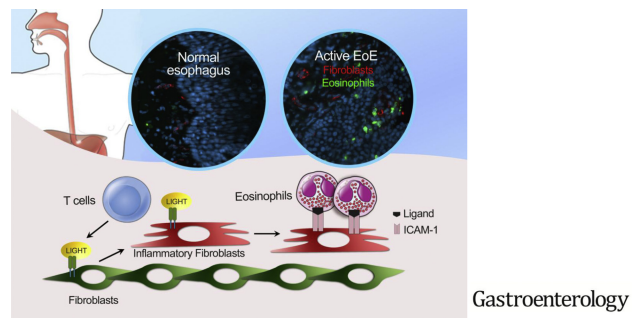
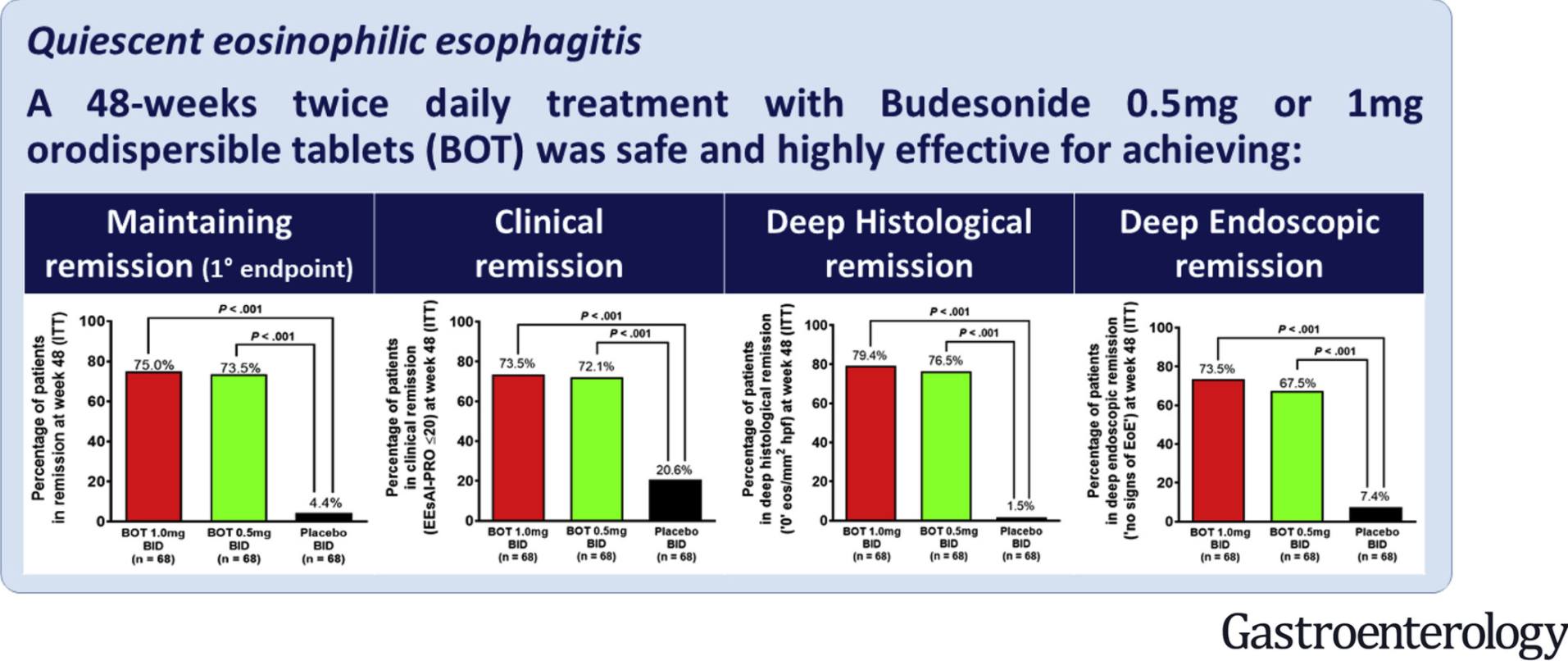
New 2020 Eosinophilic Esophagitis Guidelines

Full text (I Hirano et al. Gastroenterol 2020; 158: 1776-86)AGA Institute and the Joint Task Force on Allergy-Immunology Practice Parameters Clinical Guidelines for the Management of Eosinophilic Esophagitis

Full text: PDF

This guideline was developed through a collaboration between AGA and the Joint Task Force for Allergy-Immunology Practice Parameters, which comprises the American Academy of Allergy, Asthma & Immunology and the American College of Allergy, Asthma & Immunology. This guideline is jointly published in Gastroenterology and Annals of Allergy, Asthma and Immunology.

Technical review article (MA Rank et al. Gastroenterol 2020; 158: 1789-1810): Technical Review on the Management of Eosinophilic Esophagitis: A Report From the AGA Institute and the Joint Task Force on Allergy-Immunology Practice Parameters


Link: Clinical Decision Support Tool

Link: Treatment of EoE Spotlight Poster

Related blog posts:

Great Issue: We Need More Negative Studies (Published)

A recent ACG “Negative Issue” had some terrific articles –thanks to Ben Gold for sharing his issue.

Here are a few of the studies:

  1. Buspirone had similar efficacy as placebo in a randomized clinical trial for childhood functional abdominal pain, (n=117)  Full text: Comparison of the Efficacy of Buspirone and Placebo in Childhood Functional Abdominal Pain Key finding: Treatment response rates for buspirone and placebo were 58.3% and 59.6% at week 4 (P = 0.902) and 68.1% and 71.1% at week 12 (P = 0.753), respectively.
  2. IBS does not increase mortality in a nationwide cohort study (>300,000 in study)  Full text: Mortality Risk in Irritable Bowel Syndrome Key finding: After adjustment for confounders, IBS was not linked to mortality (HR = 0.96; 95% CI = 0.92–1.00) …and patients with IBS not undergoing a colorectal biopsy were at no increased risk of death (HR = 1.02; 95% CI = 0.99–1.06).
  3. Mongerson was not effective for active Crohn’s disease in a large phase 3 study, n=701 Full text: Mongersen (GED-0301) for Active Crohn’s Disease Key finding: The primary endpoint, clinical remission achievement (CD Activity Index score <150) at week 12, was attained in 22.8% of patients on GED-0301 vs 25% on placebo (P = 0.6210). At study termination, proportions of patients achieving clinical remission at week 52 were similar among individual GED-0301 groups and placebo.
  4. Treatment of H pylori did not increase the risk of C difficile infection (retrospective study)  Full text: Treatment of Helicobacter pylori & Clostridium difficile  Key finding: Of these 38,535 patients with H pylori based on endoscopic pathology, urea breath testing, or stool antigen, 284 (0.74%) had subsequent CDI. Those who developed CDI were less likely to have received treatment for HP within the VHA (66.2% vs 74.8%, P < 0.001)
  5. Percutaneous liver biospy was not safer when done by experienced clinician compared to a fellow, n=212 biopsies  Full text: Major Complications of Pediatric Percutaneous Liver Biopsy Do Not Differ Among Physicians With Different Degrees of Training  Key finding: No significant differences were found between groups (fellows vs staff) regarding number of punctures (median of 1.7 for both), nonrepresentative biopsies (4.2% vs 2.6%), and hemoglobin drop (median of 0.7 vs 0.5 g/L).  Interestingly, in the discussion, the authors assert: “previous studies do not support the conclusion that ultrasound-guided biopsies are superior in terms of safety or adequacy when compared with the use of ultrasound to mark the puncture” (this is based on a study referenced from 2007:  J Gastroenterol Hepatol 2007;22(9):1490–3.)  However, given that severe complications from liver biopsy are infrequent, this current study may be underpowered to detect a small difference between experienced clinicians and fellows.

Related blog posts:


It’s come to this:  Link: YouTube: Dirty Dancing Remake -Safest with a Lamp (this link is for Bernsie). 4 minute video.

@AmyOxentenkoMD: Celiac Disease and Mimics

One trend lately has been the use of twitter for virtual lectures (ACG Free Virtual Grand Round Lectures).  A recent example from ACG highlighted Celiac disease. Reviewed topics included seronegative celiac disease as well as other conditions that can create similar histology findings.

Here is a link to full slide set PDF: Celiac Disease Or Not?

Here are some of the slides: