Underlying Genetic Disease in Pediatric Inflammatory Bowel Disease

Link to text of accepted study (Gastroenterology, ahead of publication): Prevalence and Clinical Features of Inflammatory Bowel Diseases Associated with Monogenic Variants, Identified by Whole-exome Sequencing in 1000 Children at a Single Center 

Abstract:

Background & Aims: A proportion of infants and young children with inflammatory bowel diseases (IBD) have subtypes associated with a single gene variant (monogenic IBD). We aimed to determine the prevalence of monogenic disease in a cohort of pediatric patients with IBD.

Methods: We performed whole-exome sequencing analyses of blood samples from an
unselected cohort of 1005 children with IBD, 0–18 y old (median age at diagnosis, 11.96 y) at a single center in Canada and their family members (2305 samples total). Variants believed to cause IBD were validated using Sanger sequencing. Biopsies from patients were analyzed by immunofluorescence and histochemical analyses.

Results: We identified 40 rare variants associated with 21 monogenic genes among 31 of the 1005 children with IBD (including 5 variants in XIAP, 3 in DOCK8, and 2 each in FOXP3, GUCY2C, and LRBA). These variants occurred in 7.8% of children younger than 6 y and 2.3% of children 6–18 y old. Of the 17 patients with monogenic Crohn’s disease, 35% had abdominal pain, 24% had non-bloody loose stool, 18% had vomiting, 18% had weight loss, and 5% had intermittent bloody loose stool. The 14 patients with monogenic ulcerative colitis or IBD unclassified received their diagnosis at a younger age, and their most predominant feature was bloody loose stool (78%). Features associated with monogenic IBD, compared to cases of IBD not associated with a single variant, were age of onset younger than 2 y (odds ratio [OR], 6.30; P=.020), family history of autoimmune disease (OR, 5.12; P=.002), extraintestinal manifestations (OR, 15.36; P<.0001), and surgery (OR, 3.42; P=.042). Seventeen patients had variants in genes that could be corrected with allogeneic hematopoietic stem cell transplantation.

Conclusions: In whole-exome sequencing analyses of more than 1000 children with IBD at a single center, we found that 3% had rare variants in genes previously associated with pediatric IBD. These were associated with different IBD phenotypes, and 1% of the patients had variants that could be potentially corrected with allogeneic hematopoietic stem cell transplantation. Monogenic IBD is rare but should be considered in analysis of all patients with pediatric onset of IBD.
KEY WORDS: HSCT, genetics, risk factor, prevalence


VEO-IBD -Useful “Position” Paper is Really a Review

A recent publication (Full text: NASPGHAN Position Paper on the Evaluation and Management for Patients with Very Early-onset Inflammatory Bowel Disease. JR Kelsen et al. JPGN 2020; 70: 389-403) is more of a review than a true position paper. A related upcoming study (highlighted tomorrow) indicates that ~8% of VEO-IBD patients have underlying monogenetic forms of IBD.

While the article makes numerous useful points, explicit recommendations are not clearly stated.

Key Points:

  • Epidemiology: 6-15% of pediatric IBD population presents at <6 years of age
  • Children with VEO-IBD need careful immunologic evaluation.  Some of the specific disorders that need to be considered include Chronic Granulomatous Disease (can check DHR) and XIAP (can check a flow cytometry-based assay).
  • Besides panendoscopy, the article recommends close collaboration with the pathologist to identify specific features of the numerous VEO-IBD disorders (most listed/described in Table 1)
  • Identification of VEO-IBD disorders with genetic testing (either whole exome or targeted gene panel) helps determine specific medical therapies and/or stem cell transplantation for disorders like CTLA4B deficiency, LRBA defects, IL-10 deficiency, XIAP, STXBP2, and FOXP3 deficiency.
  • Infliximab does not work as well in VEO-IBD patients.  A recent study found only 12% remained on infliximab 3 years after initiation.
  • VEO-IBD were much more likely to need surgery with rates of 50% for those with onset before 1 year and ~30% for those after 1 year of age.  Colectomy should be considered with caution due to the overlapping presentation of Crohn’s disease and ulcerative colitis in this age group.

One topic that was not discussed was the potential role for dietary therapy in this age group.

Related blog posts:

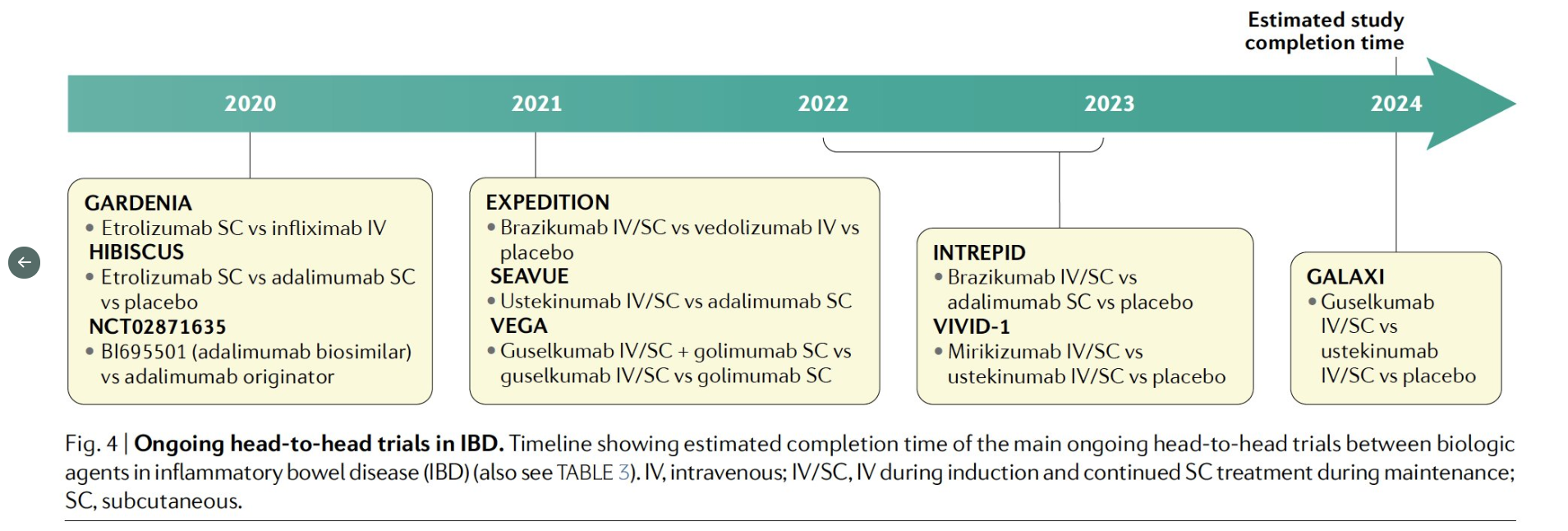
The following related images are from Eric Topol’s twitter feed and share figures from a Nature review.

Seen on Eric Benchimol’s twitter feed

Silent Anal Fistulas –Sounds Bad, Is It?

A recent prospective study (PH Kim et al. Clin Gastroenterol Hepatol 2020; 18: 415-23) with 440 consecutive adults (mean age 29.6 years) with Crohn’s disease (CD) identified asymptomatic anal fistulas with MRE (including anal MRI) studies. 36 patients were newly diagnosed and the remainder had established CD.

Key findings:

  • In all of these patients, none of whom had clinical fistulas, an MRE identified “perianal tracts” in 53 (12%).
  • 37 of 290 (12.8%) of patients without a perianal fistula history and 16 of 150 (10.7%) with a history of healed perianal fistula had perianal tracts identified on MRE
  • No patients had any lesions that required treatment after examination by a surgeon
  • MRE detection of asymptomatic tracts was independently associated with later need for perianal treatment: 17.8% cumulative incidence at 37 months (aHR 3.06)

My take: Abnormal perianal tracts on MRE in asymptomatic patients indicate an increased risk of developing clinically-significant perianal disease –though most do not.

More on COVID19:

  • No children with IBD have been reported thus far from ESPGHAN which includes a 100 sites (mainly Europe) (as of March 10th); to report cases: ESPGHAN COVID19 Case Report Page
  • There is some discussion that biologic therapy for IBD may have some protective effects


IBD Shorts March 2020

Ustekinumab Predictor. At recent ACG meeting, PS Dulai presented data on 781 adult patients that was used to determine likelihood of ustekinumab response. Source: GIHepNews: New ustekinumab response predictor in Crohn’s called ‘brilliant’

Variable  & Points:

  • No prior anti-TNF agents:  2 points
  • No prior bowel surgery: 2 points
  • No smoking (current or prior): 1 point
  • No active fistulas: 1 point
  • Baseline albumin: >4.3    3 points, >3.9-4.3     2 points, >.3.2-3.9   0 points,     >2.5-3.2    -1 point, 2.5 or less   -3 points

Probability of Response Interpretation:

  • High if ≥5 points
  • Intermediate if 2-4 points
  • Low if 0 or 1 points

Infliximab outperformed golimumab for moderate-to-severe ulcerative colitis. S Singh et al. Clin Gastroenterol Hepatol 2020; 18: 424-31. Using data from three phase 3 trials (1793 patients), the authors found that infliximab worked more rapidly and with greater efficacy than golimumab.  At week 6, patient reported outcome of clinical remission was 50.0% and 38.9% (aOR 2.0).  After adjusting for patient variables, infliximab was superior in achieving clinical remission with aOR 3.01 (39% vs. 21%).

Increasing incidence of inflammatory bowel disease in Latin America and Caribbean. PG Kotze et al. Clin Gastroenterol Hepatol 2020; 18: 304-12. This systematic review examined incidence & prevalence of IBD over the last 30 years. In Brazil, for example, the incidence of Crohn’s disease jumped from 0.08 per 100,000 person-years in 1988 to 5.5 per 100,000 person-years in 2015.

IBD Passport Website: IBD Passport homepage. “IBD Passport is an award winning website that aims to provide comprehensive, practical and reliable information on all aspects of travelling with Crohn’s Disease or Ulcerative Colitis (Inflammatory Bowel Disease). IBD Passport is the first website to combine this information into one resource to make planning your trip easy. IBD Passport is a UK registered non-profit charity (Registered number: 1171268) with a global reach aimed to support IBD travellers of all nations and regions in the world.”

Adverse Effects of Low-Dose Methotrexate (≤20 mg/week). DH Solomon et al. Ann Intern Med. 2020. DOI: 10.7326/M19-3369. n=4786, median age 66 years. This was a secondary analyses of a double-blind, placebo-controlled, randomized trial. “With the exception of increased risk for skin cancer (HR, 2.05 [CI, 1.28 to 3.28]), the treatment groups did not differ in risk for other cancer or mucocutaneous, neuropsychiatric, or musculoskeletal AEs.” There were increased risks of gastrointestinal, infectious, pulmonary, and hematologic AE.


“Weekend Effect” and Pediatric IBD

The “weekend effect” is a term used to indicate that outcomes for many medical conditions are worse when patients are admitted to the hospital on the weekend.

A recent study (MD Egberg et al. Inflamm Bowel Dis 2020; 26: 254-60; editorial by C Ballengee Menchini 261-2) documents the degree of this effect on the risk of complications for pediatric patients with inflammatory bowel disease (IBD).

This study used a cross-sectional analysis with the Kids’ Inpatient Database (KID), a nationally representative database.  The study included 3255 urgent surgical hospitalizations and included patients 18 years old and younger.

Key findings:

  • The risk difference for weekend Crohn’s disease (CD) surgical hospitalizations involving a complication vs weekday hospitalizations was 4%
  • The risk difference for weekend ulcerative colitis (UC) surgical hospitalizations involving a complication vs weekday hospitalizations was 7%
  • The relative risk of surgical complications was 30% and 70% higher for weekend admissions for CD and UC respectively
  • For both weekend and weekday admissions, the most common complications were ‘postoperative intestinal/hepatic complications,’ ileus and sepsis
  • Hospital teaching status and population-density did not affect outcomes

Possible Reasons for Weekend Effect:

  • Reduced hospital staffing
  • Delayed seeking care by patients which increases illness severity
  • Reduced access to diagnostic resources
  • Lack (or reduced) of access to specialist care

Limitations include reliance on administrative data and potential for misclassification and unidentified confounding variables.

Related blog post:

From Weekend Hike on Mount Yonah:


IBD Shorts February 2020

Cost of IBD Care is Increasing. From Healio Gastro: Chronic inflammatory disease expenditures nearly double over last 2 decades Reference: Click B, et al. Poster 22. Presented at: Crohn’s and Colitis Congress; Jan. 23-25, 2020; Austin, Texas

An excerpt from Healio Gastro summary: [Using] the Medical Expenditure Panel Survey (MEPS), a nationally representative database of health care use and expenditure data collected since 1998The researchers assessed total annual, outpatient, inpatient, emergency and pharmacy expenditures in both patients with IBD (n = 641) and RA (n = 641). They used three separate time periods – 1998-2001, 2006-2009 and 2012-2015 –to compare expenditures over time…

Median per-patient annual health care expenditure in patients with IBD was $6,570 compared with $4,010 in patients with RA across all years of the study. Total annual spending increased approximately 2.2 times (95% CI, 1.6-3; P < .01) over the study period and was 36% higher in IBD than RA (P = 0.01).

Pharmaceutical spending increased more than fourfold (95% CI, 3.2-6.1; P < .01) and became the largest cost category (44% total). However, inpatient expenses in IBD decreased 40% over the study period.

My take: While the cost has increased, these new treatments are improving outcomes.  With the emergence of biosimilars, there may be improvement in pharmaceutical spending.

More on Proactive Therapeutic Drug Monitoring (pTDM) Being Helpful: SR Fernandes et al. Inflamm Bowel Dis 2020; 26: 263-70, editorial 271-2.  In this study, a prospective group of patients (n=56) undergoing pTDM were compared with a historical control group (n=149). pTDM had less frequent surgery (9% vs. 21%) and higher rates of mucosal healing (73% vs. 39%).  Treatment escalation was 3 times more common with pTDM than in the control group.

Increased risk of VTE in IBD patientsJD McCurdy et al. Inflamm Bowel Dis 2020; https://doi.org/10.1093/ibd/izaa002

Abstract Link: Risk of Venous Thromboembolism After Hospital Discharge in Patients With Inflammatory Bowel Disease: A Population-based Study

In a population-based study from Ontario, the authors analyzed a total of 81,900 IBD discharges (62,848 nonsurgical and 19,052 surgical) which were matched to non-IBD controls… The cumulative incidence of VTE at 12 months after discharge was 2.3% for nonsurgical IBD patients and 1.6% for surgical IBD patients…Nonsurgical IBD patients and surgical patients with ulcerative colitis are 1.7-fold more likely to develop postdischarge VTE than non-IBD patients.

IBD and Immune-Mediated Diseases

J Burisch et al. Clin Gastroenterol Hepatol 2019; 17: 2704-12.  In this nationwide cohort from Denmark with 14,377 adult patients with IBD (median age 45.8 yrs) and 71,885 controls; immune-mediated diseases (IMID) were present in 22.5% of those with IBD.

Most common IMID:

  • psoriasis
  • asthma
  • type 1 diabetes
  • iridocyclitis

Other IMID:

  • multiple sclerosis
  • pyoderma gangrenosum
  • rheumatoid arthritis
  • ankylosing spondylitis,
  • celiac
  • primary scelorsing cholangitis,
  • primary biliary cholangitis
  • sarcoidosis
  • Graves’ disease

Findings:

  • Patients receiving infliximab were at a reduced risk of developing an IMID with aOR of 0.52 for Crohn’s disease (CD) and 0.47 for Ulcerative Colitis. (UC)
  • 80.3% of IMID were noted prior to onset of IBD
  • The presence of IMID was associated with an increased risk of surgery in patients with CD with aOR of 2.30 but not in patients with UC

My take: About 1 in 4 patients with IBD have at least 1 other immune-mediated disease.  The presence of an immune-mediated disease is associated with a higher likelihood of needing a biologic therapy and with surgery in patients with Crohn’s disease. In patients with numerous immune-mediated diseases, one needs to consider the possibility of other etiologies (eg. CTLA4 defiency)

Related blog posts:

Saint Jerome (not far from Montreal)

This blog, gutsandgrowth, assumes no responsibility for any use or operation of any method, product, instruction, concept or idea contained in the material herein or for any injury or damage to persons or property (whether products liability, negligence or otherwise) resulting from such use or operation. These blog posts are for educational purposes only. Specific dosing of medications (along with potential adverse effects) should be confirmed by prescribing physician.  Because of rapid advances in the medical sciences, the gutsandgrowth blog cautions that independent verification should be made of diagnosis and drug dosages. The reader is solely responsible for the conduct of any suggested test or procedure.  This content is not a substitute for medical advice, diagnosis or treatment provided by a qualified healthcare provider. Always seek the advice of your physician or other qualified health provider with any questions you may have regarding a condition

Real-World Vedolizumab: Better Than Expected

Two recent studies indicate that vedolizumab is performing better than expected in the “real world.”

  • JL Koliani-Pace et al. Inflamm Bowel Dis 2019; 25: 1854-61
  • DM Faleck et al. Clin Gastroenterol Hepatol 2019; 17: 2497-2505.

In the first study, the researchers used 2 data sets (VICTORY cohort, n=1087, & the Truven cohort, n=2574)  to compare vedolizumab in two separate eras; the early era was May 2014-June 2015  and the later era was July 2015-June 2017.

Key findings:

  • Patients with Crohn’s disease (CD) in the VICTORY cohort during the second era had better clinical remission rates: 40% vs 31% and better mucosal healing rates 58% vs 42%
  • Later era patients with ulcerative colitis (UC) in the Truven database had lower rates of IBD-related hospitalization (22.4% vs. 9.6%) and surgery (17.2% vs. 9.4%)
  • In the later era, patients were more likely to be biologic naive.

This study indicates that, overall, patients treated in the first era were likely more sick and less likely to respond to vedolizumab.  The authors’ note that this could be a ‘warehouse effect’ whereby “patients treated within the first year of a drug’s approval are likely representative of a select group of high-risk patients who are refractory to currently available therapies and are being warehoused on ineffective and undesirable therapies (ie. chronic steroid) to bridge them through until a promising agent is approved by the FDA.”

In the second study, the authors retrospectively examined 650 patients with CD and 437 with UC who were treated between 2014-16.  Patients who had a more recent diagnosis of CD (≤2 years) fared better than those with more long-standing disease.

Key findings:

  • Early-stage CD vs. later-stage CD clinical remission rates: 38% vs 23%
  • Early-stage CD vs. later-stage CD with corticosteroid-free remission: 43% vs 14%
  • Early-stage CD vs. later-stage CD with endoscopic remission: 29% vs. 13%
  • UC disease duration did not associate with response to vedolizumab

My take: Taken together, these studies indicate that vedolizumab in the real world may outperform the results of the landmark studies which helped garner FDA approval.  In patients who are less sick and have not been considered refractory to multiple treatments, response rates to vedolizumab are higher.

Related blog posts:

Video for Patients: Benefits and Risks of IBD Treatment & Risks of Untreated IBD

A recent study (NE Newman, KL Williams, BJ Zikmunde-Fisher, J Adler. JPGN 2020;70: e33-36) highlights work to communicate the benefits and risks of the treatment for inflammatory bowel disease (IBD) along with the risks of untreated IBD.  “We developed a simple video aid to illustrate competing risks associated with medications and underling disease in context of inflammatory bowel disease…Those who viewed the video aid had more realistic perceptions than those who did not view it.”

Here is a link to the ~13 minute online video: IBD: Risk of Disease and Treatments

Overall, the presentation is very helpful and thoughtful.  I think this would be an excellent overview for families.  For practitioners, a few points that could benefit from some nuance are noted below some screenshots.  It is worth stating that the authors had started this project a few years ago and some of the points below are related to more information that has emerged.

In the section of treatment benefits (above), the presentation suggests that thiopurines (azathioprine, 6-mercaptopurine) and methotrexate both are effective in about 50%; this is probably an overestimate; in addition, methotrexate as monotherapy is definitely less effective (if effective at all) for ulcerative colitis .  Also, it would be worthwhile to indicate that anti-TNF monotherapy with therapeutic drug monitoring may help achieve similar benefits as dual therapy.

In the section of colon cancer, the authors provide useful data that current treatments lower this risk substantially.  It is notable that more recent reports suggest that there have been improvements in the rates of colon cancer associated with IBD.

Overall, the section on lymphoma is very good.

In the section on other complications, the presentation suggests that there may be impaired wound-healing with anti-TNFs.  I think this risk is overstated in this slide. Also, I think the risk of severe infection with thiopurines is a little bit higher than stated; though, this can be mitigated with careful monitoring.

I think this summary slide could be improved by noting that the overall risk of serious cancers is likely lowered by treating IBD.  Since colon cancer is a fairly common cancer and IBD treatment reduces the risk, this likely outweighs the increased risk of other cancers (eg. lymphoma) which are much less common.

Another link to video: https://tinyurl.com/IBDTreatments

Related posts:

Disclaimer: This blog, gutsandgrowth, assumes no responsibility for any use or operation of any method, product, instruction, concept or idea contained in the material herein or for any injury or damage to persons or property (whether products liability, negligence or otherwise) resulting from such use or operation. These blog posts are for educational purposes only. Specific dosing of medications (along with potential adverse effects) should be confirmed by prescribing physician.  Because of rapid advances in the medical sciences, the gutsandgrowth blog cautions that independent verification should be made of diagnosis and drug dosages. The reader is solely responsible for the conduct of any suggested test or procedure.  This content is not a substitute for medical advice, diagnosis or treatment provided by a qualified healthcare provider. Always seek the advice of your physician or other qualified health provider with any questions you may have regarding a condition.