Duodenal Hematoma Following Endoscopy

A Coe et al. J Pediatr Gastroenterol Nutr. 2025;81:1514–1517. Duodenal hematoma in pediatric upper endoscopy: A5‐year review and comparison to previous experience

This 5-year single-center study from 2018 to 2022 identified a total of 13 patients with duodenal hematoma (DH). There were a total of 21,569 EGDs, and 16,978 EGDs with duodenal biopsies were performed during the study period.

Key findings:

  • 1 DH in 1306 (0.08%) EGDs with duodenal biopsies. Ten of the thirteen patients had normal duodenal histology, and the other three each had findings of celiac disease, peptic duodenitis, and graft-versus host disease
  • None of the patients had a history of anticoagulant or antiplatelet agent therapy
  • Symptom onset occurred within 24 h for 8/13 (62%),48 h for 11/13 (85%), and 72 h for all 13 patients after EGD. Emesis occurred in all 13 patients and abdominal pain 7/13 (58%)
  • All patients were admitted with a mean length of stay of 18 days
  • Treatment: jejunal feedings in 4 of the 13 patients (31%), and parenteral nutrition in 10 of 13 (77%) patients. Most patients (62%) utilized opioids for pain management following DH
  • A similar study was conducted at the same center in 2015. It was noted that there was a lower rate of duodenal biopsies in the current cohort: 78.7% versus 92.4%
Computed tomography coronal image with hematoma

My take: Duodenal hematoma is a major complication leading to the need for parenteral nutrition and prolonged hospitalization. BMT and organ transplantation appear to increase this risk based on prior studies.

Related blog posts:

Effectiveness of Switch to Subcutaneous Infliximab

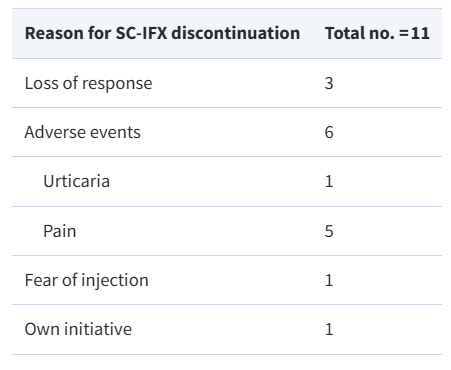
N Mathieu et al. Clin Gastroenterol Hepatol 2025; 23: 2597 – 2606. Open Access! PErsistence and Safety of Subcutaneous Infliximab 1 Year After Switch From Intravenous Route in IBD Patients in REMission

Methods: The PEREM (PErsistence, effectiveness and safety of subcutaneous infliximab after switch from intravenous infliximab in IBD patients in REMission) study, a prospective national French cohort trial, enrolled 426 patients with IBD. Participants were in steroid-free clinical remission for at least 6 months on IV-IFX when they switched to SC-IFX. 56% were on IV-IFX standard dosing (5 mg/kg 8-weekly) and 16% received combination therapy with an immunomodulator drug at baseline. All patients were switched to SC-IFX standard dosing (ie, 120 mg every other week). The treatment could be intensified during follow-up, either to 120 mg every week or 240 mg every other week.

Key Findings:

  •  At week 48, SC-IFX persistence was 95.4%
  •  86.9% of patients were in steroid-free clinical remission
  • Mean infliximab levels were 8.0 μg/mL at inclusion and 18.0 μg/mL at week 48 (P < .0001)
  • Among the 19 (4.5%) patients who stopped SC-IFX, 6 (1.4%) switched back to IV-IFX
  • 23 (5.4%) patients required SC-IFX dose escalation
  • Dosing at 10 mg/kg/Q4W had 100% SC IFX persistence compared to 95% for 5 mg/kg/Q8W; however, at the 48 week followup, there were only 6 patients in the higher dose compared to 149 in the lower dose
  • Ongoing use of combination therapy was not associated with better persistence. Though, only 7 patients were receiving combination therapy at the 48 week followup

From the discussion:

  • “The high persistence observed in the PEREM study is partly explained by the long-term control of the disease by the time of switch, the median time since last flare being over 5 years before inclusion. Henceforth, the persistence observed here is in accordance with results on long term maintenance of IV-IFX, the yearly persistence of IV-IFX without intervention being 87%.”
  • SC-IFX was associated with higher levels. However, this was expected and higher levels are needed with SC administration. The “different bioavailability of SC-IFX compared with IV-IFX is responsible for different goals of infliximab blood levels depending on its route. In particular, a level above 20 μg/mL has been associated with higher rates of remission20” with SC-IFX.

My take: This study shows that SC-IFX is a good option for patients in long-term remission. With SC-IFX therapy, more effort is needed to make sure patients are adherent with therapy and monitoring in order to achieve optimal outcomes.

Related blog posts:

From Treatment to Cures for Autoimmune Diseases


In March 2024, CAR-T therapy was shown to be a promising though difficult and expensive option for severe SLE (NEJM 2024; 390: 687-700. Blog post: CAR T-cell Therapy: A Cure for Autoimmune Disease?)

Eric Topol has summarized more recent advances that indicate that future treatments could be safer and less costly. Instead of manipulating T-cells outside the body, an inside the body (in vivo) approach looks promising. Substack post, 12/14/25: The Exhilarating Movement From Treatment to Cures for Autoimmune Diseases

An excerpt:

“This inside the body, off-the-shelf strategy has already been shown to be safe and successful in Phase 1 trials of refractory SLE and in patients with systemic sclerosis or severe myositisSeveral companies are in clinical trials with in vivo CAR T for autoimmune diseases including Capstan Therapeutics, Kite Therapeutics, Umoja Biopharma, and Shenzhen Magic-RNA. The striking progress in this field towards universal, potential one-shot cures is tempered by residual anticipated high cost, the cytokine release syndrome and neurotoxicity that can occur with CAR T. The mRNA and non-viral vectors are considered a better choice than a lentivirus vector because of the latter’s potential risk of mutagenesis and cancer…

The Soft Reset: Inverse Vaccines to Achieve Tolerance

Tolerogenic vaccines [are] the opposite of standard vaccines that boost the immune system…Inverse vaccines are being pursued in celiac disease (Anokion, with positive clinical trial results reported earlier this year) , multiple sclerosis (ANokion, Moderna, BioNTech), and Type 1 diabetes (Diamyd Medical), rheumatoid arthritis (Janssen clinical trials.

How Progress in Cancer Fuels Autoimmune Disease Innovation

Cancer biology is the mirror image of autoimmunity. Predisposition to cancer occurs when the immune system is hypoactive, losing its protection, whereas autoimmune disease reflects hyperactivity and a dysregulated state…The B cells are a common culprit, hence the successful use of CAR T vs B cells for both diseases. The checkpoint inhibitor PD-1 (prototype Keytruda) is to cancer (cut the brakes on the immune system) as PD-1 agonists (slam on the brakes) are to autoimmune diseases. Similarly, cancer vaccines to rev up immunotherapy are the opposite of inverse, tolerogenic vaccines…

[There is a] reciprocal relationship between CAR T for cancer and autoimmunity. What’s important to emphasize is all the work to achieve in vivo, universal CAR T works for both diseases. Anything that helps cancer immunotherapy has the big dividend of also helping the efforts for curing autoimmune diseases. The new field of structural immunotherapeutics has legs to achieve precise control of our immune system vs either sets of diseases…

We’e seeing the initial stages of a renaissance vs autoimmunity. Curing instead of just treating autoimmune diseases.”

Related blog posts:

Long-Term Outcomes of Surgery For Excessive Drooling

D van den Nieuwenhof, . et al. The Journal of Pediatrics, Volume 288, 114807. Open Access! Long-Term Outcomes of Surgical Drooling Treatment in Individuals with Neurodevelopmental Disabilities: A Retrospective Cohort Study

Background: “Long-term relief of drooling remains a challenge due to the side effects of anticholinergics,13 and botulinum neurotoxin type A injections provide only a temporary relief of drooling with potential loss of effect after repeated injections.15…Surgery for drooling is often considered if moderate to severe drooling persists in children after the age of 12 years.”

Submandibular duct relocation (SMDR) “is currently considered the first choice among these surgical procedures and involves the relocation of the submandibular duct papillae to the base of the tongue, allowing saliva to flow posteriorly into the oropharynx and trigger the swallowing reflex…Since the saliva is rerouted to the oropharynx, an adequate pharyngeal swallowing phase is a prerequisite for this surgery to prevent saliva aspiration and choking. Thus, SMDR is contraindicated in patients at risk of aspiration… In these cases, SMGE [submandibular gland excision] or SDL [submandibular duct ligation] can be considered.19

Methods: This was a retrospective cohort study with 255 patients. The authors used the visual analog scale (VAS) for drooling as the primary outcome to compare the long-term treatment outcomes of submandibular duct relocation (SMDR), submandibular gland excision (SMGE), and submandibular duct ligation (SDL) for the treatment of anterior drooling in individuals with neurodevelopmental disabilities.

Key findings:

  • A mean reduction in VAS was observed of 44.9 points for SMDR (P < .001), 27.2 for SMGE (P < .001), and 25.4 for SDL (P < .001). 
  • A significant degree of drooling recurrence was observed after SDL and SMGE at long-term follow-up

    Discussion points:

    • “SMDR is an invasive treatment requiring a night of postsurgical intubation and observation in intensive care. In specifically vulnerable children, less invasive alternatives such as SDL might therefore be preferential.”
    • “Since drooling is predominantly caused by insufficient swallowing, maintaining a balance between saliva production and clearance through swallowing is essential. SMGE and SDL inhibit saliva secretion from the submandibular glands, thereby reducing the overall volume of saliva produced.19,20 However, these procedures do not actively influence the swallowing process…A durable effect after SMGE and SDL is therefore achievable only if the reduction in saliva production reaches a threshold where the volume of saliva produced matches or falls below the individual’s capacity to swallow it effectively. On the other hand, after SMDR, the swallowing frequency itself probably increases.”
    • Selection bias: “SMDR was contraindicated for patients with inadequate swallowing… leads to a selection of less vulnerable patients with more favorable characteristics to undergo the SMDR procedure.” Thus, the improved results from SMDR over the other techniques is likely related to selection bias, though the authors adjusted the analysis “for differences in cognitive and oral motor functioning.”

    My take: Excessive drooling is a common problem in children with neurodevelopmental disabilities. This study provides useful data on surgical management.

    Video Capsule Endoscopy in VEO-IBD — Is the Juice Worth the Squeeze?

    S-I Hagiwara et al.  Inflammatory Bowel Diseases, 2025; izaf144https://doi.org/10.1093/ibd/izaf144. Open Access! Feasibility and Safety of Small Bowel Capsule Endoscopy in Very Early-Onset Inflammatory Bowel Disease: A Multi-Institutional Study

    This article shows that video capsule endoscopy (VCE) (aka small bowel capsule endoscopy [SBCE]) is feasible in children with very early-onset inflammatory bowel disease (VEO-IBD). There were 82 patients (median age, 3.8 years; median body weight, 13.0 kg) who underwent 104 SBCEs. All capsules were deployed endoscopically. Gastrointestinal patency was assessed in 95% of procedures, most commonly using patency capsules (70%).

    Key findings:

    • Observation of the entire small intestine was achieved in 100 (96.1%) patients
    • Of the remaining 4 patients, 3 could not undergo a complete observation of the entire small intestine due to battery depletion, and 1 had the capsule retained in the stomach
    • Abnormal small bowel findings were observed in 42% of patients, with aphthae being the most common (34%), followed by ulcers (18%)

    In their discussion, the authors note that due to young age, the capsules and the patency capsules required endoscopic deployment (best in duodenum). Thus, most patients received general anesthesia or intravenous sedation twice within a short period.

    The authors note that “SBCE has been reported to be superior to MRE in detecting superficial mucosal activity… [and] offers a radiation-free, relatively well-tolerated, and highly sensitive method for mucosal evaluation in VEO-IBD.”

    My take: Given the typical use of a patency capsule and thus the need for two separate anesthesia dates, I doubt the “juice is worth the squeeze” in utilizing SBCE for most patients VEO-IBD.

    Related blog posts:

    Useful repurposing of phone booth in Cotwolds, UK

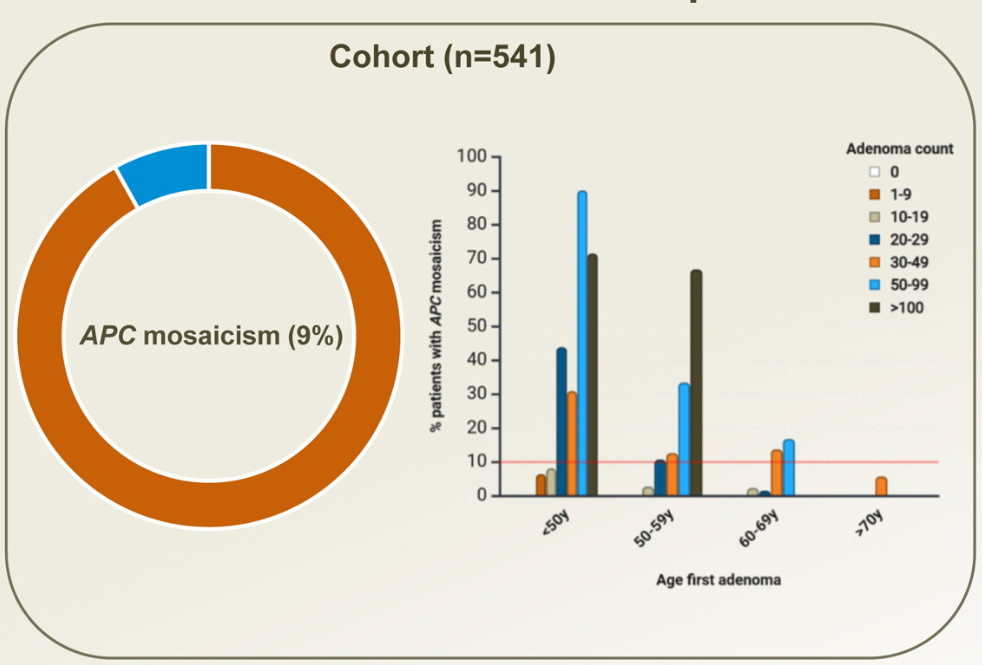
    Genetic Risk Assessment and Testing for Gastrointestinal Cancers and Polyposis (2025)

    K Monahan et al. Gastroenterol 2025; 169: 1147-1165. Open Access! In Our Scope of Practice: Genetic Risk Assessment and Testing for Gastrointestinal Cancers and Polyposis in Gastroenterology

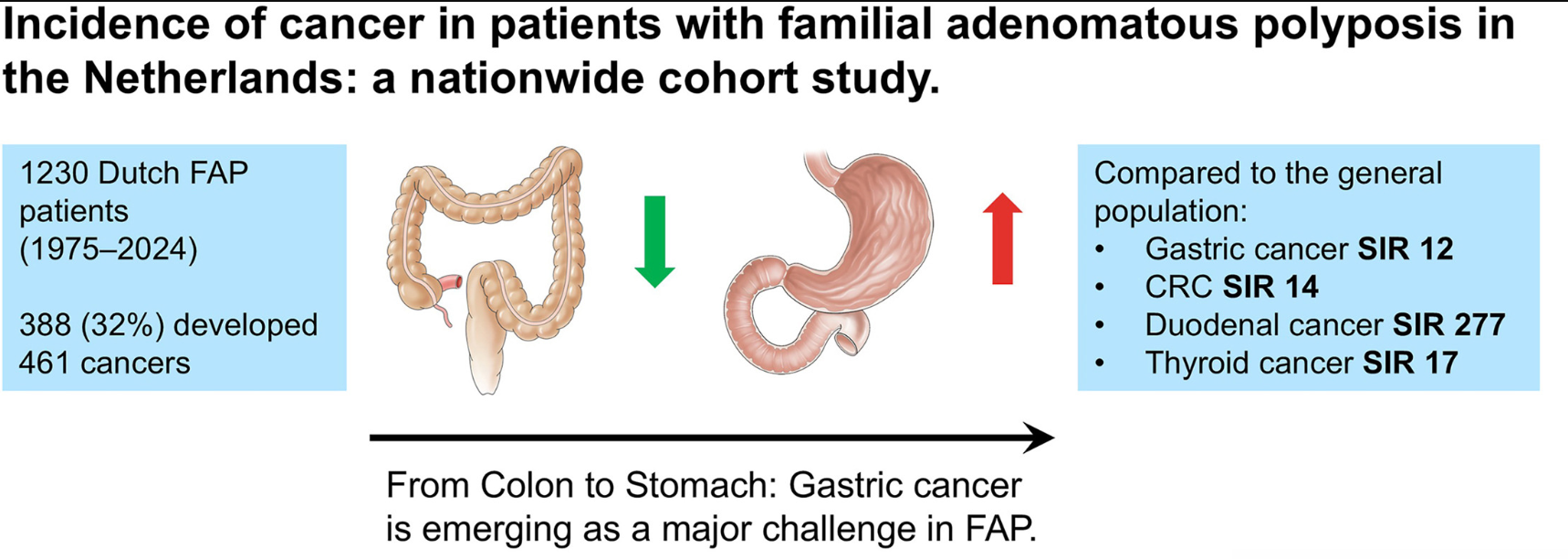
    This open access review is a great up-to-date reference/resource on risks, evaluation/surveillance, and genetic testing in a wide range of disorders. This includes the myriad of polyposis syndromes as well as colorectal cancer, pancreatic cancer, and gastric cancer.

    Table 2 describes the Genetic Syndromes Associated With Risks for GI Cancers and Polyposis and the recommended surveillance/testing. For example –FAP (familial adenomatous polyposis) and JPS (juvenile polyposis syndrome):

    Yield of MGPT in GI cancers and polyposis. MGPT has been evaluated in a number of GI cancers/polyposis. Shown in this figure are rates of positive findings on MGPT. Some of the variability among studies could be attributed to the number of genes included on the panels. [As an example,] among CRC patients, 9.9%–15% of cases were found to carry pathogenic variants in cancer-related genes.62,65,66

    One recent new twist is the availability of direct-to-consumer testing (DTC). “Caution is advised as DTC tests can vary with regard to their quality and clinical validity. For example, some nonclinical DTC genetic tests use arrays (or “chips”) to detect single nucleotide polymorphisms associated with cancer risk in genome-wide association studies, and do not perform comprehensive sequencing of the genes of interest or evaluate for genomic deletions or duplications. DTC testing may focus on selected high-risk variants and thus incomplete test results could be falsely reassuring.

    Furthermore, DTC tests do not usually include pre- and post-test genetic counselling to inform individuals about the genomic information being evaluated, as well as the broad implications for them as an individual, and for their families.”

    My take: This article provides useful updated guidance on genetic testing for a wide range of GI disorders that predispose to cancer.

    Related blog posts:

    Is Surveillance Helpful For Patients with Barrett’s Esophagus?

    Key finding: Compared with at need endoscopy, 2-yearly surveillance costs $115,563/QALY
    gained.

    Related editorial: SN Van Munster et al. Gastroenterol; 2025: 169: 1116 – 1118. Open Access! Endoscopic Surveillance for Nondysplastic Barrett’s Esophagus: Are We Violating “Primum Non Nocere”?

    “Although guidelines have historically endorsed surveillance, this endorsement has rested on observational studies vulnerable to bias and confounding. The first RCT now available provides no evidence that routine surveillance improves survival or decreases cancer burden. These findings align with an expanding body of prospective cohort evidence suggesting that the annual progression rate from NDBE to EAC [Non-Dysplastic Barrett’s Esophagus to Esophageal Adenocarcinoma] is substantially lower than historically believed—approximately 0.3%–0.5% per year,8–10,13,14 as opposed to the 2.0%–4.0% per year estimated in the early 1990s.15–17

    The authors note that recent Dutch guidelines have been revised: “Routine surveillance is no longer recommended for low-risk Barrett’s patients—defined as those with segments with a maximal extent (Prague M) of <5 cm and no prior dysplasia.”

    My take: While Barrett’s esophagus is a rare issue for pediatric gastroenterologists, it is worth noting that these recent studies cast doubt on the benefit of routine surveillance endoscopy in patients with nondysplastic Barrett’s esophagus.

    Related blog posts:

    Disclaimer: This blog, gutsandgrowth, assumes no responsibility for any use or operation of any method, product, instruction, concept or idea contained in the material herein or for any injury or damage to persons or property (whether products liability, negligence or otherwise) resulting from such use or operation. These blog posts are for educational purposes only. Specific dosing of medications (along with potential adverse effects) should be confirmed by prescribing physician.  Because of rapid advances in the medical sciences, the gutsandgrowth blog cautions that independent verification should be made of diagnosis and drug dosages. The reader is solely responsible for the conduct of any suggested test or procedure.  This content is not a substitute for medical advice, diagnosis or treatment provided by a qualified healthcare provider. Always seek the advice of your physician or other qualified health provider with any questions you may have regarding a condition.

    Postoperative Outcomes with Tofacitinib Following Colectomy for ASUC and Real-World Outcomes for Upadacitinib in Crohn’s Disease

    C Larson et al. Clin Gastroenterol Hepatol 2025; 23: 2263-2271. Postoperative Outcomes in Tofacitinib-Treated Patients With Acute Severe Ulcerative Colitis Undergoing Colectomy

    This  was a multicenter, retrospective, case-control study of patients hospitalized with ASUC who underwent colectomy, comparing patients treated with tofacitinib (n=41) prior to colectomy with infliximab-treated controls (n=68).

    Key findings:

    • Compared with tofacitinib-treated patients, infliximab-treated patients had higher overall rates of overall (44 [64.7%] vs 13 [31.7%]; P = .002) and serious (19 [27.9%] vs 3 [12%]; P = .019) postoperative complications

    My take: This study supports the safety of JAK inhibitor therapy for ASUC. It showed a significantly lower rate of overall postoperative complications in ASUC patients treated with tofacitinib compared with infliximab; the authors note that “these findings can likely be extrapolated to upadacitinib, a selective JAK inhibitor, given its similar mechanism of action.”

    J Devi et al. Clin Gastroenterol Hepatol 2025; 23: 2281-2291. Open Access! Real-World Effectiveness and Safety of Upadacitinib in Crohn’s Disease: A Multicenter Study

    Related blog posts:

    Likelihood of Celiac Disease with Conflicting Serology Results

    R Mandile et al. J Pediatr Gastroenterol Nutr. 2025;81:1482–1487. Advantages of anti-endomysial evaluation in children with low titers of anti-transglutaminase antibodies: A retrospective study

    This was a single center retrospective study examining children (n=202) undergoing EGD (2022-2024) to evaluate for celiac. Among those with low anti-TTG IgA titers, Group 1 (n=25) was EMA negative and Group 2 (n=100) was EMA positive.

    Key findings:

    • The finding of discordant serology (anti-transglutaminase [anti-TG] positive and EMA negative) is infrequent (12% cases, 25 out of 202), and all patients with discordant serology had anti-TG positive at low titer (<4 times the upper limit of normality).
    • Group 1 (N = 25) had a mean anti-TG titer of 1.86× ULN and villous atrophy (VA) in only 8% (2/25). Group 2 (N = 100) had VA in 35% (35/100)
    Percentage of patients with villous atrophy between EMA positive and EMA negative children.

    Discussion Points:

    • The diagnosis of CD still requires performing an EGD in at least half of the cases
    • This “study suggests that patients with low levels of anti-TG but EMA positive antibodies should anyway receive an EGDS in the next 6 months, since in around one-third of the cases a duodenal atrophy will be detected”
    • In those with low anti-TG but EMA negative, ” it could be reasonable to initially follow-up patients over time with clinical and serological monitoring (in particular of anti-TG titer), postponing the EGDS to a later stage, when the disease is more advanced and the chance of finding a concomitant VA (and thus the need to start a GFD) is higher”

    My take: In patients with minimal symptoms and low level anti-TG, my strategy has been to follow with serological monitoring and if repeatedly abnormal, proceed with endoscopy. This study suggests that obtaining EMA early may influence choice to proceed earlier with endoscopy.

    Related blog posts

    How Procedure Volume Affects Pediatric Colonoscopy Success Rates

    J Huang et al. J Pediatr Gastroenterol Nutr. 2025;81:1488–1495. Open Access! Numbers matter: How pediatric endoscopy quality varies with annual procedural volume

    In this retrospective study with 985 ileocolonoscopies (2021-2024):

    Methods:  “Quality indicators were compared across groups using Kruskal–Wallis analyses. Multivariate modeling was performed to identify variables predicting terminal ileal intubation and TIIR ≥ 85%.”

    Key findings:

    • Overall ileal intubation rate (TIIR) and cecal intubation rate (CIR) were 86.3% and 91.6%, respectively
    • Annual procedure volume ( APV ≥ 40) was identified as predictive for TIIR ≥ 85% (p < 0.01)
    • Faculty years’ experience (≥10 vs. <10 years) predicted shorter procedure duration (adjusted hazard ratio [confidence interval]: 1.40)
    • Adequate bowel prep was associated with higher TIIR (901% vs 76.7%), CIR (93.8% vs 86.0%) and shorter duration procedures (34 min vs 41 min)
    a Presented as median (IQR) in minutes. b Includes only 967 combined esophagogastroduodenoscopy/ileocolonoscopy procedures without multiservice involvement.
    Bolded text and numbers reflect results demonstrating statistical significance

    My take (borrowed in part from the authors): The authors state that “our findings suggest that a threshold of 40 annual procedures [ileocolonoscopies] is necessary to maintain high pediatric endoscopic quality.” While I agree that adequate procedural volume is helpful, there is a great deal of individual variation/ability. Particularly if the endoscopist has a lower procedural volume, metrics like ileal intubation rate can be useful to assure good quality.

    Related blog posts: