Calprotectin Less Accurate for Isolated Ileal Crohn’s Disease

G D’Arcangelo et al. JPGN 2021; 73: 242-246. Is Fecal Calprotectin a Useful Marker for Small Bowel Crohn Disease?

In this retrospective study with 98 patients, the authors examined the sensitivity and specificity of fecal calprotectin (FC) at a cutoff of 150 mcg/g in comparison to findings of ileocolonoscopy and MRE in those with isolated ileal CD (L1, n=14), colonic CD (L2, n=10) and ilecolonic CD (L3, n=74) . Note: the abstract erroneously states the cutoff as 50 mcg/g.

Key findings:

  • The sensitivity and specificity of FC for L1 CD were 36% and 91%, respectively, compared to 93% and 75% for L2 and 70% and 95% for L3.
  • An FC of 95 mg/kg was identified as the best cut off for identification of active isolated ileal disease, with a sensitivity of 77% and a specificity of 56%

My take: Though this study had only 14 patients with isolated ileal disease, it is likely that a calprotectin level is less reliable as a biomarker in these patients.

Related article: Jukic A, Bakiri L, Wagner EF, et al Calprotectin: from biomarker to biological functionGut Published Online First: 18 June 2021. doi: 10.1136/gutjnl-2021-324855. Thanks to KT Park for this reference. Open Access- Full text: Calprotectin: from biomarker to biological function

Related blog posts:

CDED + PEN: An Alternative Diet to Exclusive Enteral Nutrition?

T Niseteo et al Nutr Clin Pract 2021: 1-7. Modified Crohn’s disease exclusion diet is equally effective as exclusive enteral nutrition: Real-world data Thanks to Kipp Ellsworth for this reference.

This was a retrospective study with 61 children, median age, 14.4 years; overall, 42 (69%) achieved clinical remission based on weighted PCDAI. The study compared a modified Crohn’s disease exclusion diet (CDED) (modified as 80% in this group had 1–2 weeks of EEN initially) to EEN; PEN accounted for ~50% of calories CDED/PEN group received mainly modulen whereas EEN received a number of standard polymeric isocaloric formulas (eg. pediasure, osmolite, ensure plus). Concomitant medical therapy was used in ~80% of patients (most often azathioprine).

Key finding: Clinical remission was similar in both groups: 27 of 41 (65.9%) received EEN and 15 of 20 (75.0%) received CDED + PEN after 6-8 weeks of treatment. In addition, both groups had improvement in CRP and Hemoglobin.

*Several authors grants/payments from formula manufacturers.

My take: This study while favorable towards a combination of CDED/PEN is limited by small numbers, retrospective design, limited followup and absence of data on mucosal healing.

Related blog posts:

K Lambert et al. AP&T 2021; https://doi.org/10.1111/apt.16549. Systematic review with meta-analysis: dietary intake in adults with inflammatory bowel disease. Thanks to Ben Gold for this reference.

This meta-analysis included 19 studies of adults with IBD involving dietary intake. Results “show inadequate energy for all subgroups of adults with IBD (mean intake in adults with IBD 1980 ± 130 kcal), as well as fiber (14 ± 4 g), folate (246 ± 33 mg) and calcium (529 ± 114 mg) per day.” Further, “In comparison to the healthy control groups, IBD patients consumed significantly less dietary fiber (SMD −0.59; 95% CI, −0.73 to −0.46).” 

Would You Want a Smart Toilet?

Gastro & Endo News July 2021, Full Text: Disease Surveillance With Every Flush: Introducing the Smart Toilet

Key finding:

  • The Smart Toilet was able to determine the stool consistency and if the stool had blood 85% and 75% accuracy, respectively, in agreement with a gastroenterologist.

An excerpt:

“At the 2021 virtual Digestive Disease Week, Duke University gastroenterologist Deborah Fisher, MD, and engineering professor Sonia Grego, PhD, showed that toilets enabled with artificial intelligence can analyze stool samples for signs of acute or chronic gastrointestinal disease, such as bleeding, infections or even inflammatory bowel disease.”

My take: I definitely do NOT want my toilet to be too smart. It would not be hard to imagine the toilet berating me for what I ate for dinner the night before.

Can Antibiotics Increase the Risk of Antidrug Antibodies to Infliximab?

A lot of research is looking at how alterations in the microbiome affect a plethora of medical outcomes. Recently, there was a study linking sugar consumption in adolescence with an increased risk of adenomas (full text link: Simple Sugar and Sugar-Sweetened Beverage Intake During Adolescence and Risk of Colorectal Cancer Precursors; Gastroenterol 2021; 161: 128-142).

Now, a study indicates that taking oral antibiotics can influence the risk of developing antibodies to infliximab.

Full text (open access): Antibiotic use differentially affects the risk of anti-drug antibody formation during anti-TNFα therapy in inflammatory bowel disease patients: a report from the epi-IIRN (thanks to John Pohl for this reference)

Citation: Gorelik Y, Freilich S, Gerassy-Vainberg S, et al Antibiotic use differentially affects the risk of anti-drug antibody formation during anti-TNFα therapy in inflammatory bowel disease patients: a report from the epi-IIRNGut Published Online First: 03 August 2021. doi: 10.1136/gutjnl-2021-325185

This study reviewed data from 1946 patients with 363 who developed anti-drug antibodies (ADA). Then, specific pathogen and germ-free C57BL mice were treated with respective antibiotics and challenged with infliximab. ADA were assessed after 14 days.

Key findings:

  • Cox proportional hazard model demonstrated an increased risk of ADA development in patients who used cephalosporins (HR=1.97, 95% CI 1.58 to 2.44), or penicillins with β-lactamase inhibitors (penicillin-BLI, HR=1.4, 95% CI 1.13 to 1.74), whereas a reduced risk was noted in patients treated with macrolides (HR=0.38, 95% CI 0.16 to 0.86) or fluoroquinolones (HR=0.20, 95% CI 0.12 to 0.35).
  • In mice exposed to infliximab, significantly increased ADA production was observed in cephalosporin as compared with macrolide pretreated mice. Germ-free mice produced no ADA.

My take: The combination of retrospective data and mouse studies suggests that taking some antibiotics (mainly penicillins and cephalosporins) could increase the risk of immunogenicity to infliximab and increase the risk of anti-drug antibodies.

ESPGHAN Position Paper: Nutrition for Critically Ill Neonates

SJ Moltu et al JPGN 2021; 73: 274-289. Full Text: Nutritional Management of the Critically Ill Neonate: A Position Paper of the ESPGHAN Committee on Nutrition

Background: The authors of this position paper are trying to modulate the treatment recommendations based on the PEPaNIC trial. This “large randomized trial, the Early versus Late Parenteral Nutrition in the Pediatric Intensive Care Unit (PEPaNIC) trial, showed that withholding parenteral nutrition (PN) during the first week of acute illness improved early outcomes as compared to PN initiated during the first 24 hours after admission in children [Fivez T, Kerklaan D, Mesotten D, et al. Early versus late parenteral nutrition in critically ill children. N Engl J Med 2016; 374:1111–1122] (71). Effects were similar in the subgroup of 209 term-born neonates recruited to the trial (72). Despite this finding, many clinicians appear reluctant to limit early nutritional support due to (1) concerns about possible harm by not providing adequate nutrients during the first week of critical illness, particularly in neonates and undernourished children (73), and (2) the belief that exogenous dietary protein provision is essential during critical illness (73).”

Key recommendations:

  • In preterm infants, available evidence does not support any significant changes to current guidelines, which recommend that critically ill preterm infants should receive nutritional support started at (or reduced to) the minimal amount needed to cover basal metabolic rate and basic macronutrient needs during the early acute phase (26,27,129,149). For many preterm infants, this means that they will need PN.
  • In critically ill term neonates, initiation of PN within 24 hours is not routinely recommended; however, considering the limitations of the PEPaNIC trial and the observed low risk of long-term harm from early PN in critically ill neonates, the ESPGHAN-CoN does NOT support a change towards withholding parenteral nutritional support for 7 days as standard nutritional care. This position paper suggests considering careful initiation of nutritional support, including micronutrients, just below or at predicted REE after 48–72 hours… when adequate enteral nutrition is not feasible

My take: Particularly in preterm infants, adequate nutrition should not be withheld due to their very limited reserves. In term critical infants, these guidelines offer a logical approach until more studies are available.

Related blog posts:

Why Is There Low Adherence to H pylori Guidelines?

S Bonilla et al. JPGN 2021; 73: 178-183. Low Adherence to Society Guidelines for the Management of Helicobacter Pylori Among Pediatric Gastroenterologists

This retrospective study with 250 patients determined that clinicians at this large center (Boston Children’s) have a low rate of adherence to the NASPGHAN/ESPGHAN H pylori guidelines (JPGN 2017; 64: 991-1003).

Key findings:

  • Patient outcomes: 107/186 (58%) had resolution of symptoms after treatment; abdominal pain was the most common presenting symptom (67%)
  • 131 (62%) had documented followup visit and an eradication test
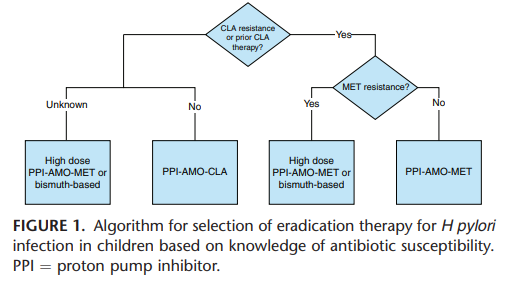
  • First-line treatment was most commonly amoxicillin, clarithromycin, and PPI (69%) (in those without sensitivity information, amoxicillin, metronidazole, and PPI are recommended in the guidelines)
  • Biopsy culture was sent in 3% of patients

In their discussion, the authors make a number of points:

  • Both pediatricians and gastroenterologists “are utilizing a ‘test and treat’ strategy rather than endoscopy-based diagnostic testing.” This along with low followup and low biopsy culture deviate from NASPGHAN guideline.
  • 77 of 256 patients had non-invasive testing prior to referral and in this subset, more than two-thirds of patients received a clarithromycin-based triple therapy before being referred; “this has a high likelihood of failure.”
  • The authors advocate endoscopy over empiric treatment but acknowledge some reasons why families may want to avoid endoscopy (interestingly the authors do not mention the cost of the procedure). They also note that H pylori culture is not widely available.

My take: There are several reasons why there is low adherence to NASPGHAN/ESPGHAN guidelines

  1. Treatment recommendations for initial triple therapy does not align with adult guidelines for quadruple therapy. Even the “rescue” therapies (Table 5), these pediatric guidelines do not recommend quadruple therapy. Yet, there is no indication that H pylori is more susceptible to treatment in children.
  2. Recommendations for susceptibility/antibiotic resistance testing (Table 1, #11) makes no sense if susceptibility testing is not available. Fortunately, PCR-based assays are making this easier recently.
  3. The absence of susceptibility testing and cost would favor empiric treatment over endoscopy as a first-line approach in those who have a reliable non-invasive test indicating infection along with symptoms suggestive of H pylori infection.

Related blog posts:

Adult Guidelines:

Other related posts

This is the treatment approach per pediatric guidelines; these recommendations
do NOT align with treatment recommendations in adults

Sugary Diet and Colonic Adenomas

H-K Joh et al. Gastroenterol 2021; 161: 128-142. Full text: Simple Sugar and Sugar-Sweetened Beverage Intake During Adolescence and Risk of Colorectal Cancer Precursors

Methods: We prospectively investigated the association of adolescent simple sugar (fructose, glucose, added sugar, total sugar) and sugar-sweetened beverage (SSB) intake with CRC precursor risk in 33,106 participants of the Nurses’ Health Study II who provided adolescent dietary information in 1998 and subsequently underwent lower gastrointestinal endoscopy between 1999 and 2015.

Key Findings:

  • High sugar and SSB intake during adolescence was positively associated with risk of adenoma, but not serrated lesions.
  • Per each increment of 5% of calories from total fructose intake, multivariable ORs were 1.17 (95% CI, 1.05–1.31) for total and 1.30 (95% CI, 1.06–1.60) for high-risk adenoma

Full text (editorial, pg 27): JK Lee et al: Sugary Truth of Early-Onset Colorectal Neoplasia—Not So Sweet After All

Key points:

  • “In the United States, SSB [sugar-sweetened beverage] consumption has increased by nearly 5-fold over time, from 10.8 gallons per person in 1950 to 49.3 gallons per person in 2000.8 In adolescents, SSB consumption has more than doubled since the 1960s and comprises the largest source of simple sugar and calories in their diets”
  • “Recent studies, including several from the Nurses’ Health Study, have identified lifestyle factors from early adulthood, including Western diet,13,14 alcohol,15 tobacco,16 sedentary television viewing,11 diabetes,17 and obesity12 as risk factors for early-onset CRC or adenoma. Other studies report no association between sugar, fruit juice, and SSB consumption during adulthood and risk of CRC in older adults”

My take (borrowed from editorial): “Increasing fructose and SSB consumption, particularly among adolescents and young adults, is troublesome because substantial evidence links consumption to various health outcomes, including obesity, type 2 diabetes, cardiovascular disease, some cancers, all-cause mortality, and now early-onset high-risk adenoma…. clinicians should continue to support public health policies discouraging or reducing consumption of simple sugars and SSBs in adolescents, for whom exposure might have lifelong consequences.”

COVID Booster Advice for IBD from Dr. David Rubin (@IBDMD)

On Friday, our office started fielding questions regarding COVID-19 booster shots in our IBD population. Currently, I agree with the advice for patients as detailed by Dr. Rubin in the screenshots that follow. Key points:

  • Studies have shown that IBD patients are not at increased risk of COVID-19 infections compared to the general population. 
  • Except for those on high-dose prednisone, it appears that our patient population with IBD does mount an adequate response to vaccination.  That is, they are not considered severely immunocompromised. 
  • In short, it is reasonable, but not a clear recommendation, to give a booster mRNA vaccine dose to patients who are receiving anti-TNF agents and those receiving immunomodulators; this is a patient choice.

Also, from CDC 8/13/21:

Disclaimer: This blog, gutsandgrowth, assumes no responsibility for any use or operation of any method, product, instruction, concept or idea contained in the material herein or for any injury or damage to persons or property (whether products liability, negligence or otherwise) resulting from such use or operation. These blog posts are for educational purposes only. Specific dosing of medications (along with potential adverse effects) should be confirmed by prescribing physician.  Because of rapid advances in the medical sciences, the gutsandgrowth blog cautions that independent verification should be made of diagnosis and drug dosages. The reader is solely responsible for the conduct of any suggested test or procedure.  This content is not a substitute for medical advice, diagnosis or treatment provided by a qualified healthcare provider. Always seek the advice of your physician or other qualified health provider with any questions you may have regarding a condition.

“What is Biden Waiting For?” & COVID-19 Vaccine Effectiveness for Delta Variant

A good read by Don McNeil Jr: What is Biden Waiting For?

He argues that the federal government needs to do a lot more, including the use of vaccine mandates to control this pandemic.

Some excerpts:

  • Why is this administration so hesitant about saving American lives? And the American economy?….
  • The key to saving lives is vaccine. The key to reopening offices and factories is vaccine. The key to reopening schools is vaccine. The key to keeping bars and restaurants open in cold weather is vaccine. The key to travel and shopping is vaccine. Vaccine in everybody….
  • mRNA vaccines start waning after six months. Israel is already offering booster shots to everyone over 60. We must do the same….We are too fearful of very rare side effects…
  • Why in the world do we not yet have federal vaccine passports? In a land of block-chain currencies, QR code menus, encrypted texts and microchip credit cards, those little CDC-logo flashcards are just pathetic…
  • It’s also time to drop “religious exemptions.” No major religion — not one, from Confucianism to Catholicism — opposes vaccination…
  • We need to treat deliberate disinformation for what it is: a betrayal of the American public.

My take: With the emergence of the Delta variant, it will take a much higher level of vaccination/natural immunity (>95%) to control this pandemic. Vaccination is a much safer strategy than natural immunity (after infections).

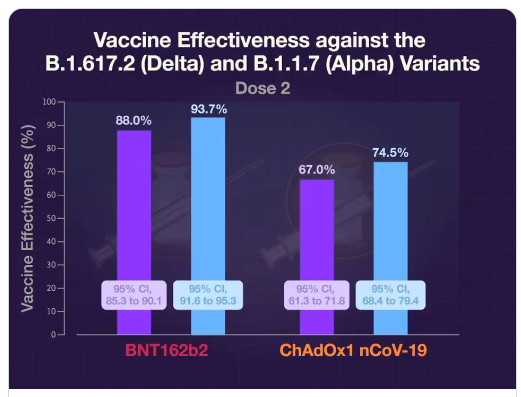
Also, NEJM Quick take: Effectiveness of COVID-19 Vaccines (1:29 min). Pfizer-(BNT162b2) vaccine had 88% effectiveness against Delta variant in England after 2 doses compared to 94% for alpha variant..

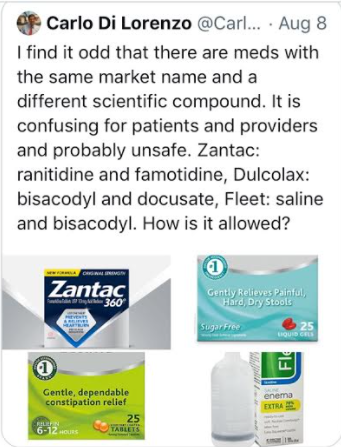
Zantac 360 is Not Zantac

Recently the FDA has allowed Zantac to be relaunched as Zantac 360. This is well-described in a recent blog post on GoodRx: Zantac Returns to Market With a New Ingredient

While famotidine (the new ingredient in Zantac 360) acts similar to ranitidine (the old ingredient), there is no longer N-nitrosodimethylamine (NDMA) detectable which was a concern as a potential cancer risk. It comes in two different strengths (10 mg and 20 mg).

My take: In my view, it is a bad decision to allow Zantac to be relaunched with this new ingredient; this is like allowing some hot dogs to be sold as hamburgers.

Related blog posts: