Is Fatty Liver Increased in Pediatric Population with Type 1 Diabetes Mellitus?

J Sae-wong et al. J Pediatr 2021; 230: 32-37. The Prevalence of Nonalcoholic Fatty Liver Disease and Its Risk Factors in Children and Young Adults with Type 1 Diabetes Mellitus

In this cross-sectional study with 50 children with Type 1 Diabetes Mellitus (T1DM), MRE and MRI-PDFF studies were undertaken to determine whether the participants had nonalcoholic fatty liver disease (NAFLD). Key findings:

  • The median age and duration of T1D were 16.9 years (IQR, 13.6-20 years) and 6.5 years (IQR, 4-11 years), respectively. 26% of the cohort were overweight or obese.
  • The prevalence of NAFLD was 10% (more than half had normal ALT values). Four out of 5 patients with NAFLD were overweight/obese, and 2 had an and elevated alanine aminotransferase (ALT) level. None had liver fibrosis (defined as MRE >2.9 kPa).
  • High BMI-SDS (body mass index standard deviation score) was the sole independent risk factor associated with NAFLD (OR, 5.79; 95% CI, 1.04-32.18).

My take: This study is reassuring regarding the prevalence of NAFLD in children and young adults with T1D which was comparable to that in the general population. Routine screening for NAFLD in patients with T1D does not appear to be useful.

Related blog posts:

Why It Is Still A Bad Idea To Test Asymptomatic Patients For Clostridium Difficile

JM Parnell et al. JPGN 2021; 72: 378-383. Two-step Testing for Clostridioides Difficile is Inadequate in Differentiating Infection From Colonization in Children

In this prospective study, the authors enrolled asymptomatic pediatric patients (n=225) and compared C diff testing results with symptomatic patients (n=41) with positive nucleic-acid amplification-based testing (NAAT).

Key findings:

  • Of the 225 asymptomatic children enrolled in the study, 47 (21%) were colonized with C. difficile including 9/59 (15.5%) with cancer, 30/92 (32.6%) with CF, and 8/74 (10.8%) with IBD. 
  • Overall, “use of a multistep testing algorithm with NAAT followed by EIA failed to differentiate symptomatic CDI from asymptomatic colonization in our pediatric cohort.” When symptomatic and colonized children were compared, neither EIA (enzyme immunoassay) positivity (44% vs 26%, P = 0.07) nor CCNA (functional cell cytotoxicity neutralization assay) positivity (49% vs 45%, P = 0.70) differed significantly

My take: Don’t test children who are asymptomatic for Clostridium difficile. Even in children with symptoms, C diff positivity could reflect colonization and symptoms could be due to other etiologies.

Related blog posts:

Parenteral Nutrition: “The Scar Remains”

A recent study (KM Gura et al. J Pediatr 2021; 230: 46-54. Fish Oil Emulsion Reduces Liver Injury and Liver Transplantation in Children with Intestinal Failure-Associated Liver Disease: A Multicenter Integrated Study) provides multicenter data comparing fish oil emulsion (FOLE) (Omegaven) with a historical control of soybean emulsion (SOLE) (Intralipid). The FOLE group was enrolled between 2004-2018; the SOLE group had data from 1999-2012.

Key points:

  • Among FOLE recipients (n=189), 65% experienced cholestasis resolution vs 16% of SOLE recipients (n=73) (P < .0001).
  • The aspartate aminotransferase to platelet ratio index scores improved in FOLE recipients (1.235 vs 0.810 and 0.758, P < .02) but worsened in SOLE recipients (0.540 vs 2.564 and 2.098; P ≤ .0003) 
  • Liver transplantation was reduced in FOLE vs SOLE (4% vs 12%; P = .0245).

My main criticisms of the study:

  1. While the methods explain that FOLE received 1 gm/kg/d, compared with 3 gm/kg/d for SOLE, this was NOT reviewed in the discussion. This is quite important in terms of proving that one product is preferred over the other. With lipid toxicity, it would be expected that delivering 3 times as much would be more damaging on the liver.
  2. The discussion does not discuss the potential neurological consequences of lipid minimization/lower doses of lipids. In the same Journal of Pediatrics issue, Bell et al report that 77% of SBS in their cohort of extremely premature infants with short bowel syndrome had moderate-to-severe neurodevelopmental impairment (related blog post: Neurodevelopmental Impairment in the Majority of Extremely Premature Infants with Short Bowel Syndrome)
  3. The discussion has only a single sentence regarding the change in care between the eras of SOLE and FOLE: “Additional limitations include a relatively small sample size and changes in surgical, medical, and nutritional practice between the 2 eras that could not be controlled for this study.”
  4. Also, the discussion omits the development of other FOLE alternatives (eg. SMOFlipid) which has been a very important advance in the management of patients with SBS.

The commentary by Samuel Kocoshis (J Pediatr 2021; 230: 11-12) provides a good deal of insight. The title and first paragraph provides some interesting historical context: (full text) “Even When the Would Is Healed, the Scar Remains” “The above maxim was coined by the Roman author Publilius Syrus when referring to wounds of most tissues or body parts.1 Because hepatic regeneration was recognized (as evidenced by the story of Prometheus’s liver being eaten daily by an eagle only to regenerate the next day) in Syrus’s time, his dictum was too far too simplistic when applied to the liver. One must delve more deeply into the mechanism of liver injury to ascertain just when hepatic scaring persists or when it disappears.”

My take: This study illustrates harm reduction with the change in lipid administration. The development of new lipid products has made a huge difference in the outcomes of children with short bowel syndrome.

Related blog posts:

“Pediatric Formula Basics”

CHOA Nutrition Support Core Seminar -Thanks to Kipp Ellsworth for organizing this series and sharing content. This lecture is a really good review and would be a great place to start when discussing formulas with medical students and residents.

Link to Webex (49 min): “Pediatric Formula Basics” by Clancy Bryant, MS, RD (March 2, 2021). Password: FbhSgup5

Also, can reach via: Our first Nutrition Support Core Lecture of 2021: “Pediatric Formula Basics” by Clancy Bryant, MS, RD-20210302 1810-1

Key points:

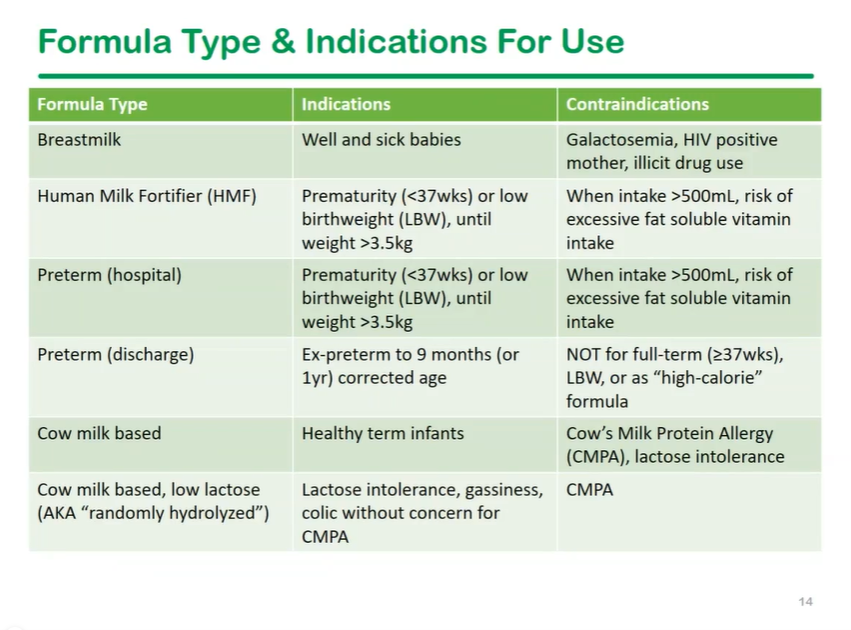
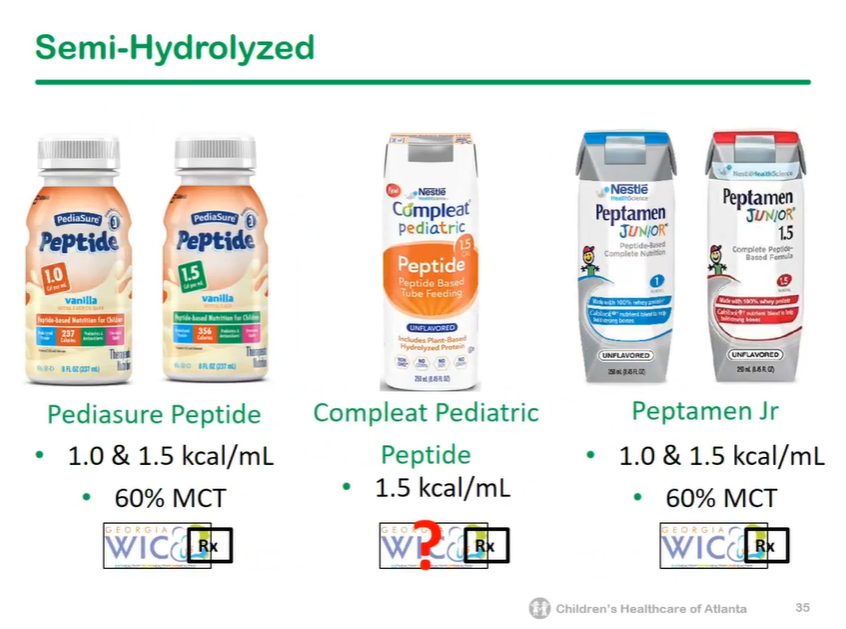
  • This lecture reviewed selection of formulas for infants, children and adolescents; some of the most common formula choices (but not all) were reviewed
  • This talk reviewed reflux guidelines as reflux symptoms often impact decisions on formula choice in infancy. Thickened formulas like Enfamil AR and Similac Spit Up do not work with acid suppression medications.
  • WIC resources (for children <5 years) -can identify through website: https://dph.georgia.gov/WIC/wic-formula-resources
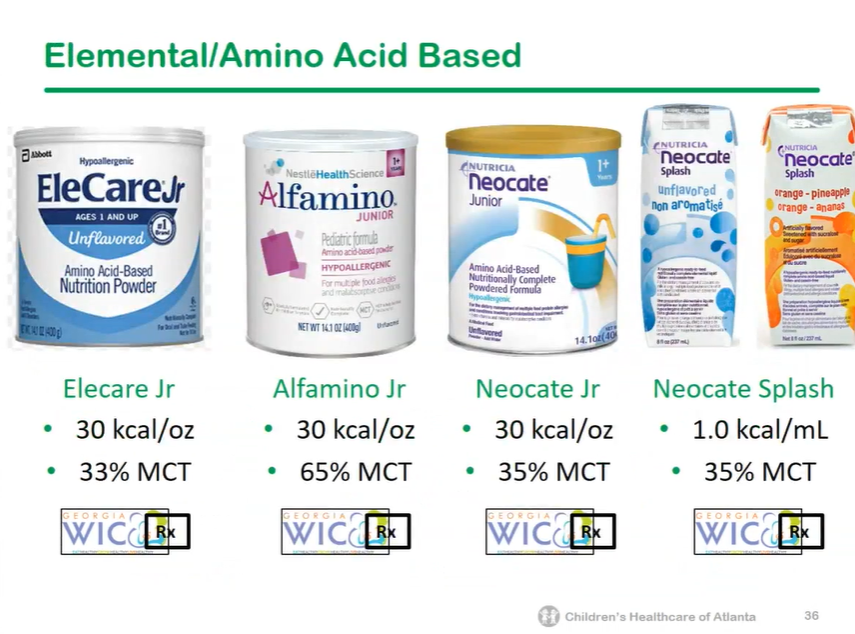
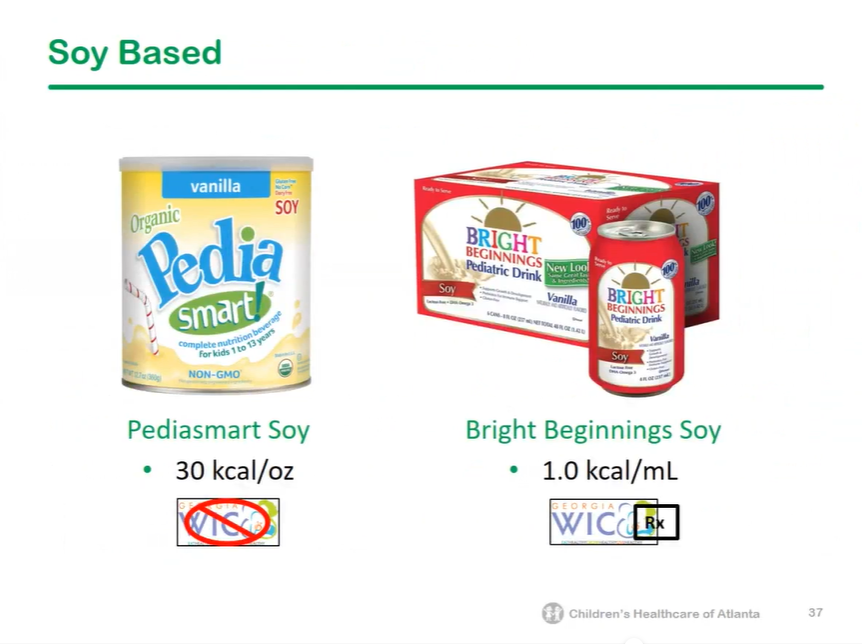
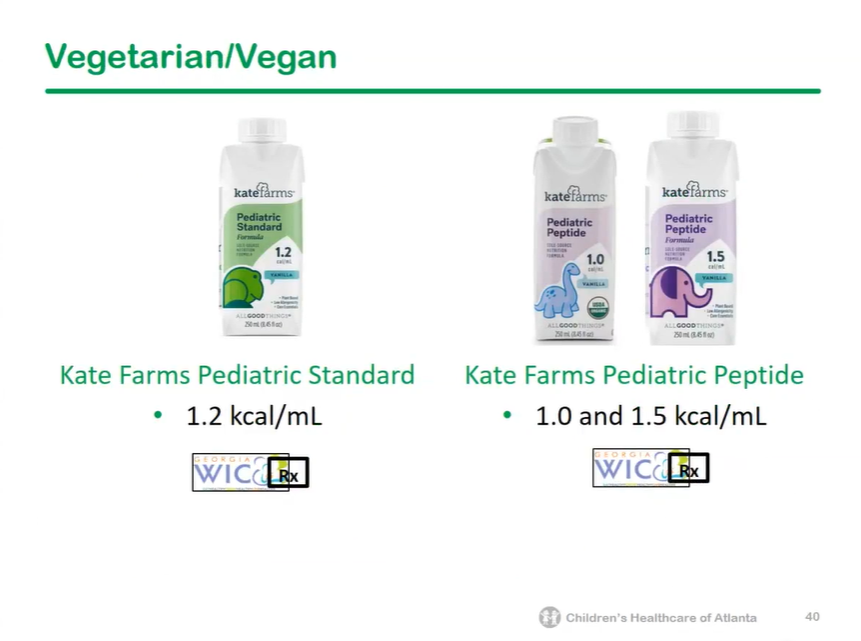
    • WIC script requires 2 ICD-10 diagnosis which are relevant to chosen formula
    • For standard formula, no prescription is needed; if formula is not on WIC formulary, it will not be covered
    • If child is NPO, write for “patient is NPO, please give maximum formula”
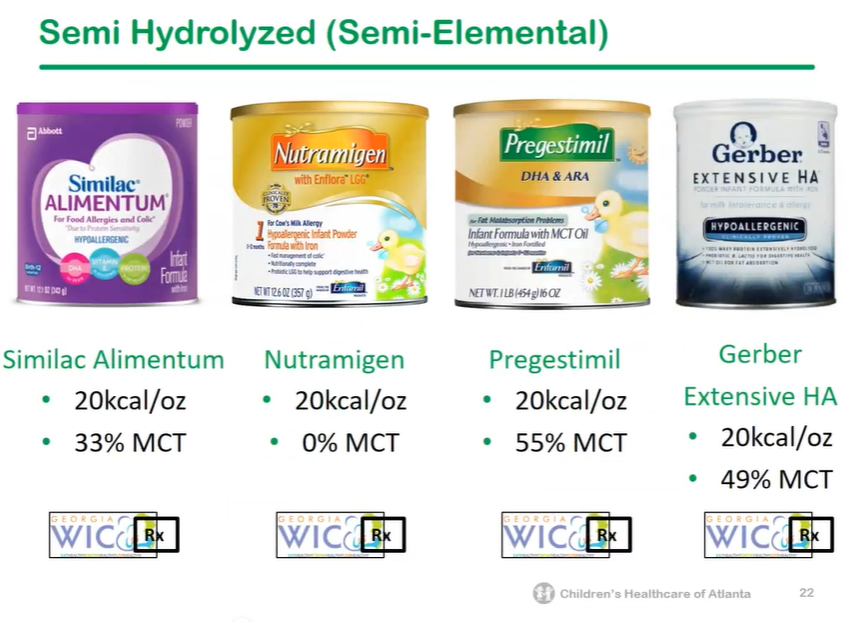
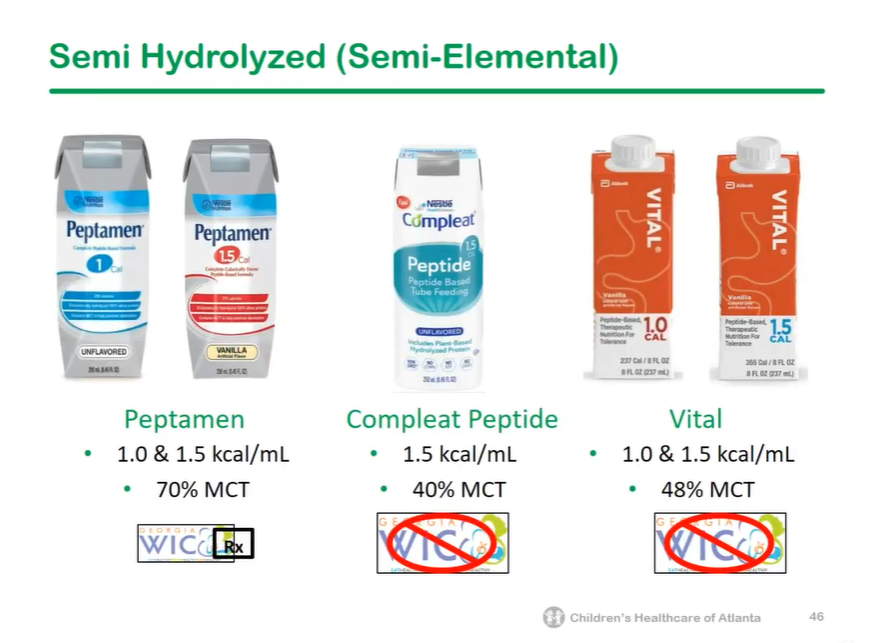
  • For cholestatic liver disease: high MCT formulas include pregestamil (55%), Alimentum (33%) and elemental formulas (33-49%)
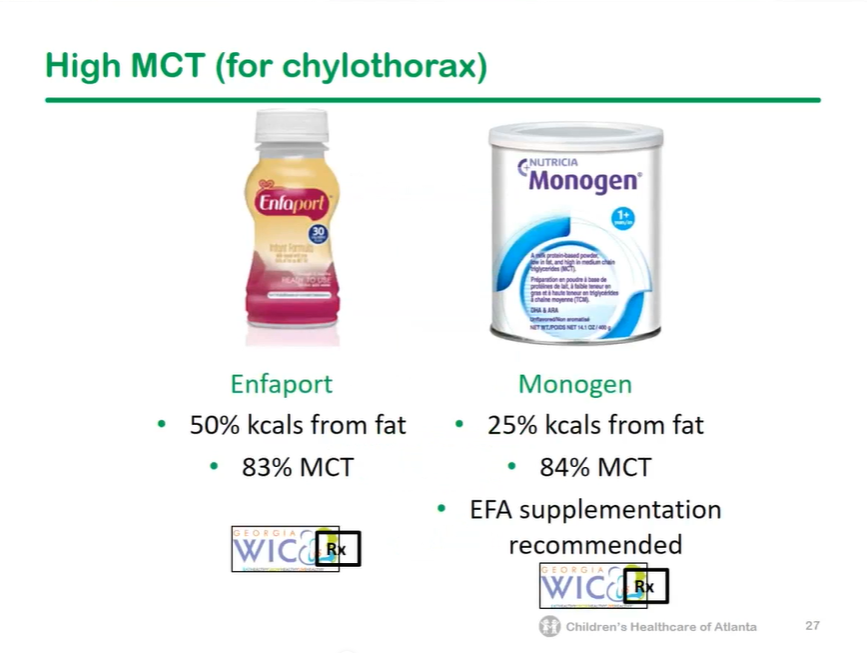
  • For chylous effusions, very high MCT formulas (83%, 84%) include enfaport and monogen (needs EFA supplementation)
  • Formulas for children and adolescents come in concentrations of 0.6 kcal/mL to 2.0 kcal/mL
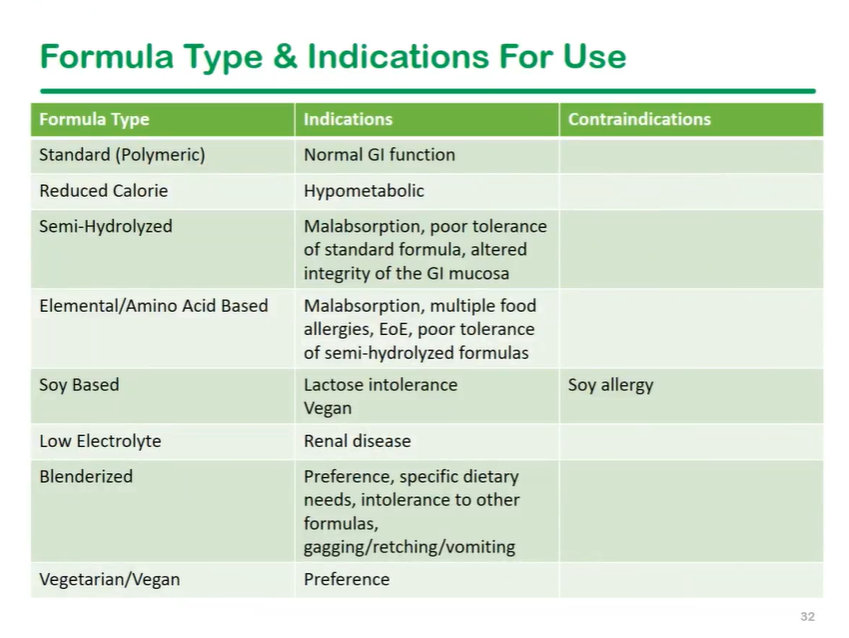
    • Reduced calorie formulas (eg. Pediasure Reduced Calorie or Compleat Pediatric Reduced Calorie) are helpful to provide adequate micronutrients/protein in children with hypocaloric needs
  • Blenderized formulas often helpful for children with retching (when given via gastric route); some of these may increase vitamin A levels and beta-carotene (eg. Nourish, Compleat Pediatric Organic Blends). Real food blends are not nutritionally-complete. Harvest is able to run through enteral tube without dilution.
    • For those older than 10 years of age, Liquid Hope is similar to Nourish and Compleat Organic Blends is similar to Compleat Pediatric Organic Blends
  • Low electrolyte formulas, like Renalcal and Renastart, may be useful for children with kidney dysfunction. Corresponding formulas for >10 years of age include Suplena and Novasource Renal
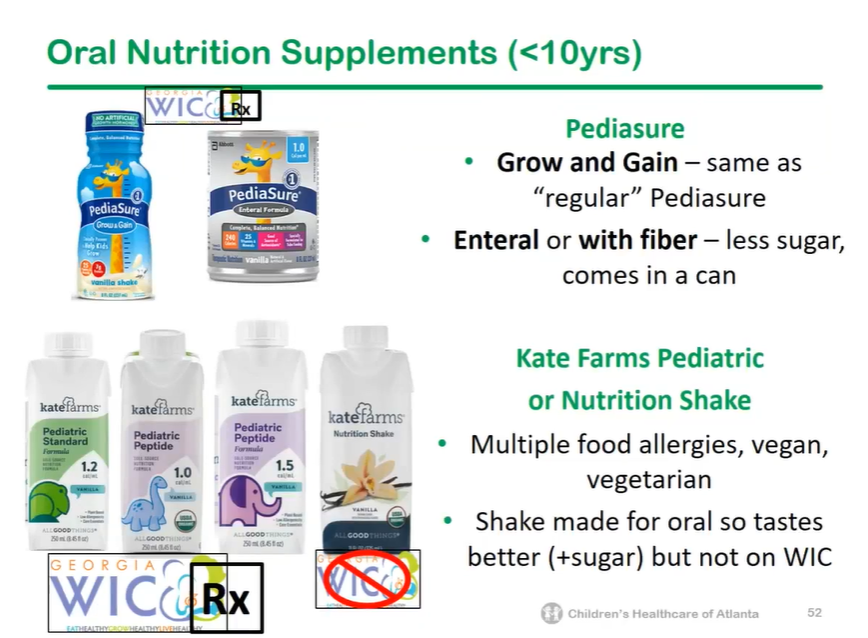
  • Kate Farms is often a good choice for patients with multiple allergies or eosinophilic esophagitis

Some of the slides:

Formulas for 1-10 years of age.

Adult formulas (>10 years):

Related blog posts:

Best Practice for Fatty Liver Disease

ZM younossi, KE Corey, JK Lim. Gastroenerol 2021; 160; 912-918. AGA Clinical Practice Update on Lifestyle Modification Using Diet and Exercise to Achieve Weight Loss in the Management of Nonalcoholic Fatty Liver Disease: Expert Review

Some of the Best Practice Advice Recommendations:

  • #1 “Lifestyle modification using diet and exercise to achieve weight loss is beneficial for all patients with nonalcoholic liver disease (NAFLD).”
  • #2 Weight loss leads to improvement. >5% wt loss can decrease steatosis, >7% can lead to resolution of NAFLD, >10% can stabilize or reduce fibrosis
  • #3 “Adults with NAFLD should follow the Mediterranean diet…as well as limit or eliminate consumption of commercially produced fructose”
  • #8 Evaluate for coexisting conditions, such as “obesity, diabetes mellitus, hypertension, dyslipidemia and cardiovascular disease.”

Also another publication on fatty liver disease:

LF Chun et al. J Pediatr 2021: https://doi.org/10.1016/j.jpeds.2021.01.064. Hepatic Steatosis is Negatively Associated with Bone Mineral Density in Children

Related blog posts:

Paradoxical Chronic Recurrent Multifocal Osteomyelitis (CRMO)

A recent case series (A Cordesse et al. JPGN Reports; 2020. November 2020 – Volume 1 – Issue 2 – p e007doi: 10.1097/PG9.0000000000000007. Chronic Recurrent Multifocal Osteomyelitis in Pediatric Crohn Disease, A Paradoxical Effect to Antitumor Necrosis Factor Alpha) reported on paradoxical Chronic Recurrent Multifocal Osteomyelitis (CRMO) which I have seen in one of my patients as well.

Key points:

  • In patients receiving anti-TNF agents which are usually effective for CRMO, CRMO may develop paradoxically and may be associated with a psoriaform reaction.
  • At the time of diagnosis of paradoxical reaction, all patients were in remission due to anti-TNFα efficiency. Trough levels of anti-TNFα were in the expected range, and there were no anti–anti-TNFα antibodies.
  • All patients recovered after discontinuation of infliximab (n = 2) or adalimumab (n = 1). 

My take: This study describes a rare adverse effect of anti-TNFα agents. If CRMO develops while on one of these agents, an alternative treatment is needed.

Hellebores

More Data Supporting Lactated Ringers for Acute Pancreatitis

A Lee et al. Gastroenterol 2021; 160: 955-957. Lactated Ringers vs Normal Saline Resuscitation for Mild Acute Pancreatitis: A Randomized Trial

PK Garg et al. Gastroenterol 2021; 160: 655-59. Full text (editorial) Optimum Fluid Therapy in Acute Pancreatitis Needs an Alchemist

Key findings from this double-blind randomized controlled trial (n=121):

  • ICU admissions were 9.8% in LR group compared with 25% of NS group (RR 0.4, CI 0.2-0.9)
  • Quicker discharge with 44% at 72 hrs in LR group compared with 28% in NS group
  • Median length of stay was 3.5 days (LR group) compared with 4.6 days (NS group)

Critique of study from editorial: “The strengths of their study include a well-designed protocol, reasonable sample size and inclusion of patients within 8 hours of diagnosis; thus, fluids were administered during the critical period when there is a window of opportunity to restore the intravascular volume and maintain adequate tissue perfusion. However, the study included patients with mild pancreatitis. Another issue is that the benefit shown was for secondary outcomes and, thus, these results should be taken as exploratory and hypothesis generating.”

My take: For now, lactated ringer’s is the fluid of choice in individuals with acute pancreatitis.

Related blog posts:

Senseless Gun Homocides

Even “The Onion” sometimes has a serious article: ‘No Way To Prevent This,’ Says Only Nation Where This Regularly Happens

Related blog posts:

Stratifying Risk of Clots in Inflammatory Bowel Disease

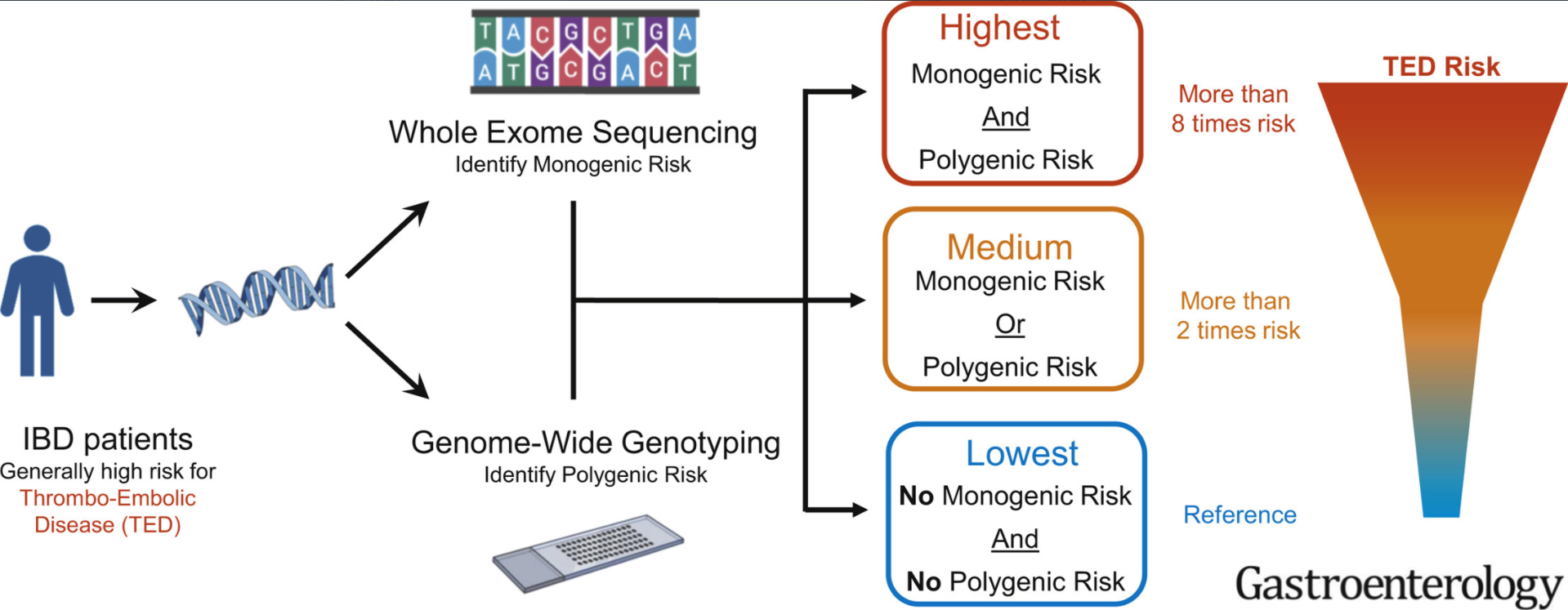
T Naito et al. Gastroenterol 2021; 160: 771-780. Full text: Prevalence and Effect of Genetic Risk of Thromboembolic Disease in Inflammatory Bowel Disease

Background: 10% of healthy subjects are genetically at high risk for thromboembolic disease (TED). For adults with inflammatory bowel disease, TED is “largest cause of mortality in
patients”

Key findings:

  • In total, this retrospective study had 792 IBD patients who had both whole-exome sequencing and genotyping data to identify thrombophilia pathogenic variants. 122 of 792 IBD patients (15.4%) as genetically high risk for TED.
  • Genetic TED risk was significantly associated with increased TED event (odds ratio,2.5; P ¼ .0036).
  • Patients with high TED genetic risk more frequently had thrombosis at multiple sites (78% vs 42%, odds ratio, 3.96; P ¼ .048)

“Our analyses demonstrate that approximately 1 in 7 patients with IBD have odds 2.5 times higher than nongenetically high-risk patients with IBD for experiencing TED.” The risk of TED in IBD is generally 3- to 4-fold higher than the general population

My take: In children, the risk of clots is much lower than in adults. Thus, the potential to identify those at highest risk would be useful in order to target interventions. Also, patients at higher risk for TED may affect choice of treatment (eg. avoiding JAK inhibitors).

Related blog posts:

From The Onion:

From The Onion

FITCH Study of Bezafibrate for Pruritus Due to Cholestatic Liver Disease

In the Fibrates for Itch (FITCH) study, (E de Vries, R Bolier e al. Gastroenterol 2021; 160: 734-743. Full text pdf: Fibrates for Itch (FITCH) in Fibrosing Cholangiopathies:A Double-Blind, Randomized, Placebo-Controlled Trial), the authors study bezafibrate, a broad peroxisome proliferator-activated receptor (PPAR) agonist.

Key findings:

  • 70 patients completed the trial (44 PSC, 24 PBC, 2 SSC) (SSC =secondary sclerosing cholangitis). Treated patients received bezafibrate 400 mg once a day for 21 days.
  • For the primary end point, bezafibrate led in 45% (41% PSC, 55% PBC) and placebo in 11% to >/=50% reduction of severe or moderate pruritus (P ¼ .003).
  • Bezafibrate also reduced serum alkaline phosphatase (35%, P ¼ .03 vs placebo) correlating with improved pruritus (VAS, P ¼ .01) suggesting reduced biliary damage.
  • Serum bile acids and autotaxin activity remained unchanged.

My take: While the majority of patients did not reach the primary end point, bezafibrate merits further investigation and may be a useful agent for pruritus in the setting of cholestatic liver disease. From the associated editorial (pg 649, JK Dyson et al. Bezafibrate for the Treatment of Cholestatic Pruritus: Time for a Change in Management?): “FITCH is an important study and provides novel and important data. It suggests that bezafibrate can be part of the answer to cholestatic pruritus.”

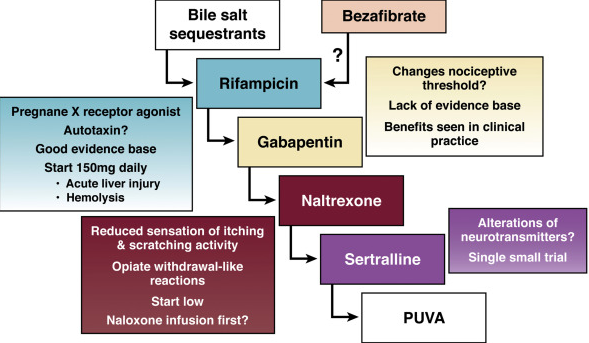
From Editorial:

Current treatment ladder for pruritus and the potential positioning of bezafibrate in the future.

Related blog posts:

Yesterday’s post alluded to alcoholic liver disease. More on that topic from NPR:

Link: Sharp, ‘Off The Charts’ Rise In Alcoholic Liver Disease Among Young Women

Cases of alcoholic liver disease — which includes milder fatty liver and the permanent scarring of cirrhosis, as well as alcoholic hepatitis — are up 30% over the last year at the University of Michigan’s health system, says Dr. Jessica Mellinger, a liver specialist there….

In the U.S., more than 44,000 people died of alcoholic liver disease in 2019. And although liver diseases still affect more men, younger women are driving the increase in deaths, a trend that began several years ago and is now supercharged by the pandemic