Missing Care Due to COVID-19

When analyzing health care expenditures, it has been well-recognized that many patients/families cut back on both necessary and unnecessary care when faced with increased costs; that is, individuals are not very good at selecting care that is truly essential.  This is one reason why many health care policy advisors are opposed to  high copays and deductibles as a way of reducing health care costs.

I have seen the same type of problem amidst the pandemic.  Due to fears of contracting SARS-CoV-2 (rather than mainly cost), individuals/families are deferring routine medical care.  This is leading to delays in diagnosis of many serious illnesses and missing opportunities to prevent illnesses (eg. vaccines).  A recent study has shown some of the impact with regard to cancer that happened early in the pandemic (and may be ongoing).

HW Kaufman et al. JAMA Netw Open. 2020;3(8):e2017267. doi:10.1001/jamanetworkopen.2020.17267. Full text: Changes in the Number of US Patients With Newly Identified Cancer Before and During the Coronavirus Disease 2019 (COVID-19) Pandemic

Introduction/Background:  In this study, we analyzed weekly changes in the number of patients with newly identified cancer before and during the COVID-19 pandemic.

Methods: This cross-sectional study included patients across the United States who received testing for any cause by Quest Diagnostic; data was compared between baseline period (January 6, 2019, to February 29, 2020) and the COVID-19 period (March 1 to April 18, 2020). n=278 778 patients. Study evaluated  breast cancer,  colorectal cancer, lung cancer,  pancreatic cancer, gastric cancer, and esophageal cancer.

Key findings:

  • During the pandemic period, the weekly number fell 46.4% (from 4310 to 2310) for the 6 cancers combined, with significant declines in all cancer types, ranging from 24.7% for pancreatic cancer (from 271 to 204; P = .01) to 51.8% for breast cancer (from 2208 to 1064; P < .001)

The authors noted a similar problem has been reported with cardiovascular disease.  A study from 9 high-volume US cardiac catheterization laboratories found a 38% decrease in patients treated for ST-elevation myocardial infarction, considered a life-threatening condition.

My take: It is difficult to calculate the actual toll of this pandemic which includes a great deal of secondary problems: delays in diagnosis of life-threatening conditions, mental health/suicides, death from poverty, setbacks in the opioid crisis & overdose deaths, and enormous setbacks in global health projects.

Related blog posts:

Elevated Ferritin Evaluation (in adults)

This is a useful article in evaluation of elevated ferritin levels in adults.  This approach is NOT applicable in young children but may have some use in adolescents.  In young children, other considerations include HLH and macrophage activation. In newborns, elevation of ferritin (along with liver dysfunction) may be indicative of GALD (gestational alloimmune liver disease).

W. Palmer et al. AJG 2020; 115: 1353-55. How I Approach Patients With Elevated Serum Ferritin

Image from ACG Twitter Link


Autoimmune Hepatitis -Early Response Associated with Remission

Briefly noted: S Pape et al .Clin Gastroenterol Hepatol 2020; 18: 1609-1617. Full Text: Rapid Response to Treatment of Autoimmune Hepatitis Associated With Remission at 6 and 12 Months

Methods: This was a retrospective cohort study, collecting data from 2 independent cohorts of adults (each with n=370) with AIH from 12 centers in 7 countries in Europe.

Key findings:

  • The authors found that a significant decrease in level of AST after 8 weeks of treatment was significantly associated with normalization of transaminase levels at 26 and 52 weeks (P < .001)
  • In both cohorts, rapid responders (≥80% decrease in level of AST after 8 weeks) were more likely to achieve normalization of transaminases at 26 and 52 weeks when compared to non-rapid responders
  • Rapid responders in the discovery cohort had lower risk of liver-related death or transplantation (adjusted hazard ratio 0.18)
  • Slow responders (without normalization of transaminases after 1 year) had the highest risk of liver transplantation or liver-related death.

My take: It is no surprise that patients who respond rapidly to treatment would fare better.  This study establishes a target of >80% improvement in AST at 8 weeks.

Related blog posts:

New Data on Bisacodyl for Pediatric Constipation

A recent retrospective study (S Bonilla et al. JPGN 2020; 71: 288-291. Long-term Use of Bisacodyl in Pediatric Functional Constipation Refractory to Conventional Therapy) provides some reassuring information about the use of bisacodyl for pediatric constipation, n=164.  Bisacodyl’s mechanism of action is due to its ability to cause mucosal secretion and a prokinetic effect on colonic mucosa.

Key findings:

  • Bisacodyl median dose was 5 mg/day, median duration of treatment was 14 months
  • Median number of BM/wk doubled after initiation of bisacodyl from 2 to 4 bm/w (P < 0.001)
  • Approximately 57% of patients had successful response. At long-term follow-up 55% of patients were successfully weaned off bisacodyl (median time of 18 months)
  • Side effects: 8 patients reported abdominal pain, 4 had diarrhea, and 1 had nausea
  • Limitations: open-label study, retrospective study, lack of a placebo-control

My take (from authors): “We observed no long-term complications with its long-term use in children.” Prospective studies are needed.

Related blog posts:

Published IBD-COVID-19 Data from SECURE-IBD & Others

When I received an email in EARLY MARCH of this year regarding SECURE-IBD, I thought the researchers were insightful and proactive.  Recently, the authors published their early findings: EJ Brenner, RC Ungaro et al. Gastroenterol 2020; 159: 481-491. Full Text PDF: Corticosteroids, But Not TNF Antagonists, Are Associated With Adverse COVID-19 Outcomes in Patients With Inflammatory Bowel Diseases: Results From an International Registry

“Surveillance Epidemiology of Coronavirus Under Research Exclusion for Inflammatory Bowel Disease (SECURE-IBD) is a large, international registry created to monitor outcomes of patients with IBD with confirmed COVID-19.”

Key findings:

  • 525 cases from 33 countries were reported (median age 43 years, 53% men)
  • Risk factors for severe COVID-19 among patients with IBD included increasing age (adjusted odds ratio [aOR], 1.04; 95% CI, 1.01–1.02), ≥2 comorbidities (aOR, 2.9; 95% CI, 1.1–7.8), systemic corticosteroids (aOR, 6.9; 95% CI, 2.3–20.5), and sulfasalazine or 5-aminosalicylate use (aOR, 3.1; 95% CI, 1.3–7.7).
  • Tumor necrosis factor antagonist treatment was not associated with severe COVID-19 (aOR, 0.9; 95% CI, 0.4–2.2)

Other COVID-19 articles from same journal:

My take: There is a tremendous amount of information regarding SARS-CoV-2 & COVID-19 with regard to the GI tract and liver disease.  For the most part, the data indicate that individuals need to continue to treat their underlying disease and that most therapies do not increase the risk of worsening infection; the biggest risk factors remain increasing age and common comorbidities (eg. obesity, hypertension, and diabetes).  The published studies also provide insight and recommendations for preventing SARS-CoV-2 for health care providers.

Related blog posts:

Hepatitis C in 2020: NASPGHAN Position Paper

DH Leung et al. JPGN 2020; 71: 407-17.  Full Text: Hepatitis C in 2020: A North American Society for Pediatric Gastroenterology, Hepatology, and Nutrition Position Paper

This is a very useful summary and some important recommendations –here are a few:

  • Direct-acting antivirals (DAAs) which …[are] highly effective antiviral agents are now approved for use in children as young as 3 years of age and have demonstrated sustained virologic responses exceeding 90% in most genotypes
  • We recommend treatment be considered and offered to all children with chronic HCV as early as 3 years of age with currently approved and anticipated DAA combination therapies.
  • Currently, the American Academy of Pediatrics recommends anti-HCV antibody screening of children with maternal HCV risk factors at 18 months of age, when detection of passively acquired transplacental immunoglobulin G should have waned … Waiting until 18 months of age or older is, however, frequently unpalatable for parents and physicians concerned about reliable follow-up. Therefore, after the infant is 2 months of age, the AASLD-IDSA HCV Guidance Panel suggests consideration of examining serum HCV RNA by polymerase chain reaction (PCR)
  • Interestingly, in the image below, the authors note that most children are asymptomatic; however, the figure suggests the possibility of thyroid disease.  In the text of the article: ” Extrahepatic manifestations of chronic hepatitis C, including membranoproliferative glomerulonephritis, thyroid dysfunction with or without thyroid autoimmune disease, and the development of nonorgan specific antibodies, are exceedingly rare

Recommended Resources for Pediatric Gastrointestinal and Liver Providers

Related blog posts:

Disclaimer: This blog, gutsandgrowth, assumes no responsibility for any use or operation of any method, product, instruction, concept or idea contained in the material herein or for any injury or damage to persons or property (whether products liability, negligence or otherwise) resulting from such use or operation. These blog posts are for educational purposes only. Specific dosing of medications (along with potential adverse effects) should be confirmed by prescribing physician.  Because of rapid advances in the medical sciences, the gutsandgrowth blog cautions that independent verification should be made of diagnosis and drug dosages. The reader is solely responsible for the conduct of any suggested test or procedure.  This content is not a substitute for medical advice, diagnosis or treatment provided by a qualified healthcare provider. Always seek the advice of your physician or other qualified health provider with any questions you may have regarding a condition

Colchicine and Leukopenia

A recent study (E Sag et al. J Pediatr 2020; 224: 166-70) provided some useful information about the development of leukopenia in children receiving colchicine.

This study included 213 patients receiving colchicine at doses between 0.5 mg adn 2 mg/day.  Routine labs were obtained 2 weeks after starting treatment, at 3 months, and then every 6 months.  If leukopenia was identified, f/u labs were obtained 1 week later. Colchicine doses were decreased in patients with persistent leukopenia.

Key findings:

  • 23 (10.8%) developed reversible leukopenia.  No cases of leukopenia were severe and there was not an increased rate of infections.

Related blog posts:

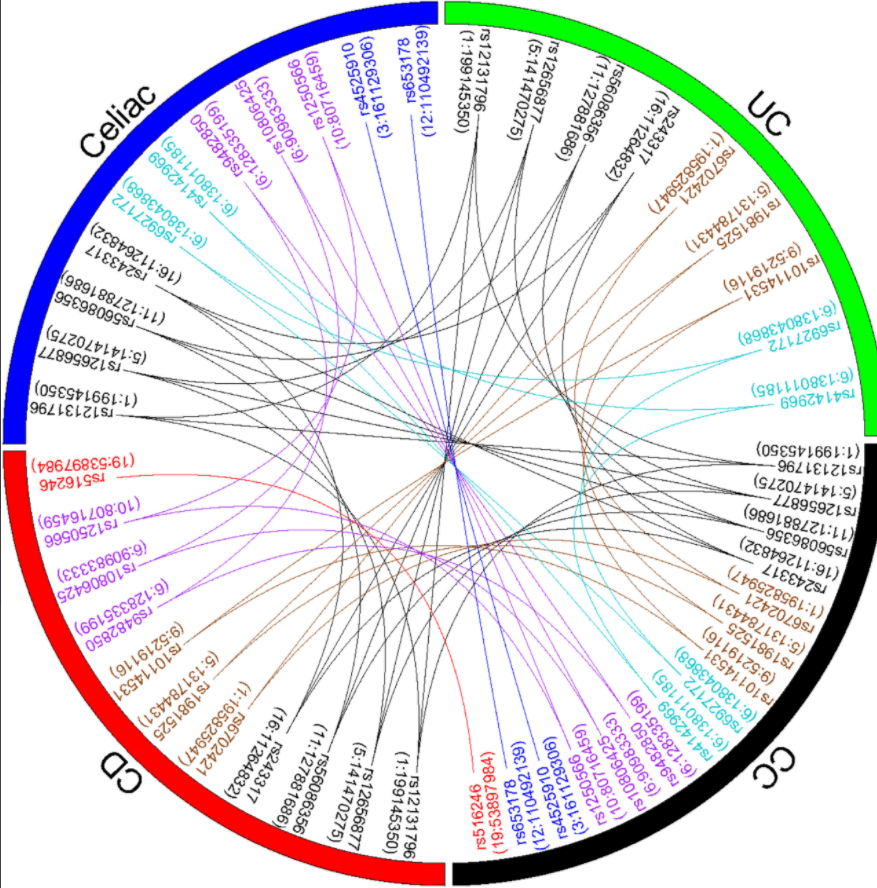
Shared Genetic Risk of Celiac Disease, Crohn’s Disease, Ulcerative Colitis, and Collagenous Colitis

E Stahl et al. Gastroenterol 2020; DOI:https://doi.org/10.1053/j.gastro.2020.04.063 Link: Collagenous Colitis Is Associated With HLA Signature and Shares Genetic Risks With Other Immune-Mediated Diseases

“In this largest genetic study of CC to date with histologically confirmed diagnosis, we strongly implicated the HLA locus and proposed potential non-HLA mechanisms in disease pathogenesis. We also detected a shared genetic risk between CC, celiac disease, CD, and UC.”


Collagenous Gastritis

“Collagenous gastritis (CG) is a rare gastrointestinal disorder with fewer than 300 cases reported in the English-language literature.”  If you have to manage one of these rare cases, here is a useful reference:

Key points:
  • The prevalence of CG was 2.1/100,000 in children aged younger than 18 years
  • The endoscopic and histologic findings remained pathologic in all the examined patients during a median follow-up of 4.4 years
  • The serum levels of calprotectin and amyloid A were increased in 10/15 (67%) and 5/15 (33%) of the patients, respectively