From NY Times: Here’s the Biggest Thing to Worry About With Coronavirus
“We don’t have enough ventilators and I.C.U. beds if there’s a significant surge of new cases. As with Italy, the health system could become overwhelmed.”
From NY Times: Here’s the Biggest Thing to Worry About With Coronavirus
“We don’t have enough ventilators and I.C.U. beds if there’s a significant surge of new cases. As with Italy, the health system could become overwhelmed.”
——
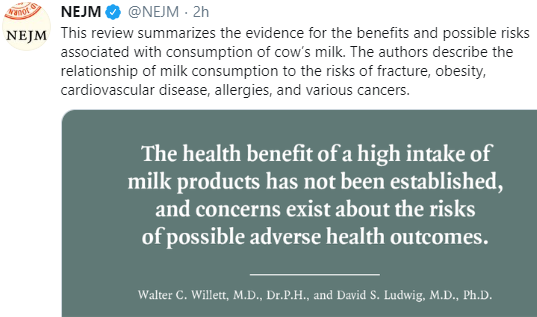
A provocative review (WC Willett, DS Ludwig. NEJM 2020; 182: 644-54) provides a rationale for why a healthy diet may not need milk.
Key points:
More details:
The authors review the composition of cow’s milk and compare it to human milk and cheddar cheese (Table 1). They note that cows have been bred to produce higher levels of insulin-like growth factor 1 (IGF-1) and that they are pregnant for most of the time they are milked; this greatly increases hormones like progestins and estrogens in milk.
The authors review how milk can promote growth and development in children. Tall stature, associated with milk intake, is associated with lower risks of cardiovascular disease but with higher risks of many cancers, hip fractures, and pulmonary emboli.
Bone health and fracture risk: “paradoxically, countries with the highest intakes of milk and calcium tend to have the highest rates of hip fractures;” this, however, may not be causal as their are a lot of confounding factors (eg. Vitamin D status, ethnicity). The authors also note that U.S. studies have shown calcium intake was unrelated to bone mineral density in the hip. Further, the authors point out the discrepancies between U.S. and U.K with regard to daily calcium requirements; at age 4-8 yrs, U.S RDA is 1000 mg per day compared to 450-550 mg in UK. Estimation of the calcium requirement is “problematic.”
Body weight and obesity. “Studies of milk consumption and body weight in children are few and are subject to confounding and reverse causation.” Available studies, however, have shown that whole milk and 2% milk are associated with lower risk of obesity than low-fat or skim milk.
Blood pressure, lipids, and cardiovascular disease in relation to milk consumption: Ultimately, whether milk is beneficial is mainly related to the comparison foods.
Milk and the development of diabetes: intake of dairy products has been associated with a modestly lower risk of type 2 diabetes. Despite some hypothetical risks for type 1 diabetes, children weaned to “hydrolyzed protein instead of cow’s milk did not have fewer autoantibodies to beta cells after 7 years than children who drank cow’s milk.”
Milk intake and cancer. Milk consumption is associated with a lower risk of colorectal cancer (likely due to its high calcium intake) and an increased risk of breast cancer, prostate cancer, and endometrial cancer; these effects may be mediated by the sex-hormones in milk.
Allergies to milk may affect up to 4% of infants. In addition, lactose intolerance “limits consumption of milk worldwide.”
Total mortality and its association with milk intake: “in a meta-analysis that included 29 cohort studies, intake of milk (total, high-fat, and low-fat) were not associated with overall mortality.” Again, the risk is related to what food is substituted for milk intake.
Organic/grass-fed production and potential detrimental environmental effects from milk production; the latter includes pollution, antibiotic resistance, and greenhouse gas production.
My take: These authors are not going to get any funding from the dairy industry. Dairy is typically an important nutrient source in children. Particularly in adults, lower intakes of dairy may be warranted.
Related blog posts:
A recent prospective study (PH Kim et al. Clin Gastroenterol Hepatol 2020; 18: 415-23) with 440 consecutive adults (mean age 29.6 years) with Crohn’s disease (CD) identified asymptomatic anal fistulas with MRE (including anal MRI) studies. 36 patients were newly diagnosed and the remainder had established CD.
Key findings:
My take: Abnormal perianal tracts on MRE in asymptomatic patients indicate an increased risk of developing clinically-significant perianal disease –though most do not.
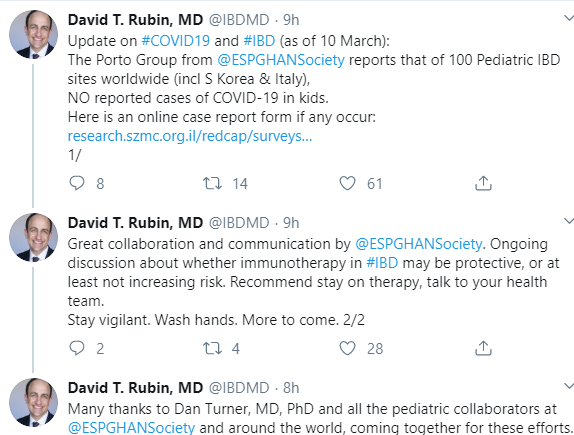
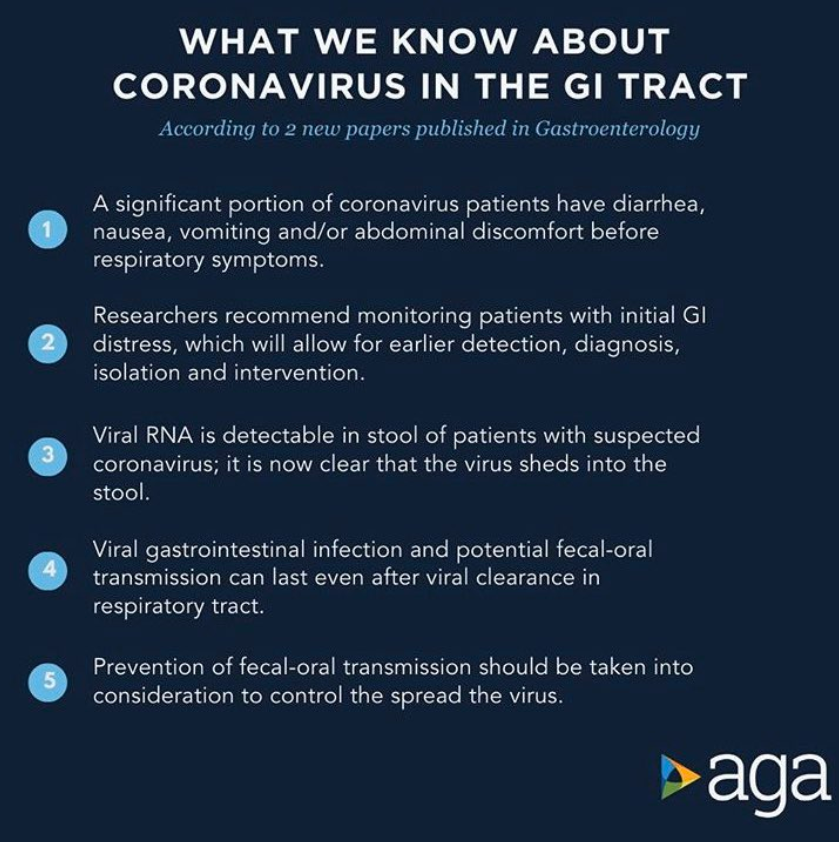
More on COVID19:
A recent prospective longitudinal cohort study (J Franken et al. JPGN 2020; 70: e41-47) examined the development of gastroesophageal reflux (GER) in 50 children who underwent gastrostomy tube (GT) placement between 2012-2014.
Key findings:
Among the 25 who underwent pre- and post-operative impedance-pH analysis
My take: This study shows that reflux symptoms and documented reflux are commonplace in children undergoing GT placement. Based on this limited sample size, it appears that GER does not appreciably change following GT placement.
Related blog posts:
Ustekinumab Predictor. At recent ACG meeting, PS Dulai presented data on 781 adult patients that was used to determine likelihood of ustekinumab response. Source: GIHepNews: New ustekinumab response predictor in Crohn’s called ‘brilliant’
Variable & Points:
Probability of Response Interpretation:
Infliximab outperformed golimumab for moderate-to-severe ulcerative colitis. S Singh et al. Clin Gastroenterol Hepatol 2020; 18: 424-31. Using data from three phase 3 trials (1793 patients), the authors found that infliximab worked more rapidly and with greater efficacy than golimumab. At week 6, patient reported outcome of clinical remission was 50.0% and 38.9% (aOR 2.0). After adjusting for patient variables, infliximab was superior in achieving clinical remission with aOR 3.01 (39% vs. 21%).
Increasing incidence of inflammatory bowel disease in Latin America and Caribbean. PG Kotze et al. Clin Gastroenterol Hepatol 2020; 18: 304-12. This systematic review examined incidence & prevalence of IBD over the last 30 years. In Brazil, for example, the incidence of Crohn’s disease jumped from 0.08 per 100,000 person-years in 1988 to 5.5 per 100,000 person-years in 2015.
IBD Passport Website: IBD Passport homepage. “IBD Passport is an award winning website that aims to provide comprehensive, practical and reliable information on all aspects of travelling with Crohn’s Disease or Ulcerative Colitis (Inflammatory Bowel Disease). IBD Passport is the first website to combine this information into one resource to make planning your trip easy. IBD Passport is a UK registered non-profit charity (Registered number: 1171268) with a global reach aimed to support IBD travellers of all nations and regions in the world.”
Adverse Effects of Low-Dose Methotrexate (≤20 mg/week). DH Solomon et al. Ann Intern Med. 2020. DOI: 10.7326/M19-3369. n=4786, median age 66 years. This was a secondary analyses of a double-blind, placebo-controlled, randomized trial. “With the exception of increased risk for skin cancer (HR, 2.05 [CI, 1.28 to 3.28]), the treatment groups did not differ in risk for other cancer or mucocutaneous, neuropsychiatric, or musculoskeletal AEs.” There were increased risks of gastrointestinal, infectious, pulmonary, and hematologic AE.
A recent double-blind pilot study (n=20) (JM Spegel et al. Clin Gastroenterol Hepatol 2020; 18: 328-36) explored the use of epicutaneous immunotherapy (EPIT) in children with milk-induced eosinophilic esophagitis (EoE). 15 children received active treatment with a “Viaskin” milk allergen extract patch and 5 children received a placebo.
The premise of EPIT for EoE has been based on animal models (mouse & piglet) which have shown that epicutaneous desensitization to peanuts has been successful in preventing development of EoE.
The design of the study involved EPIT during a 9 month milk-free period followed by a milk-containing diet for 2 months. Biopsies were taken and then there was an additional 11 month open-label phase in which all patients received EPIT.
Key findings:
My take: The primary and secondary endpoints were not reached in this study. However, based on the open-label phase response, further studies are warranted.
Related blog posts:
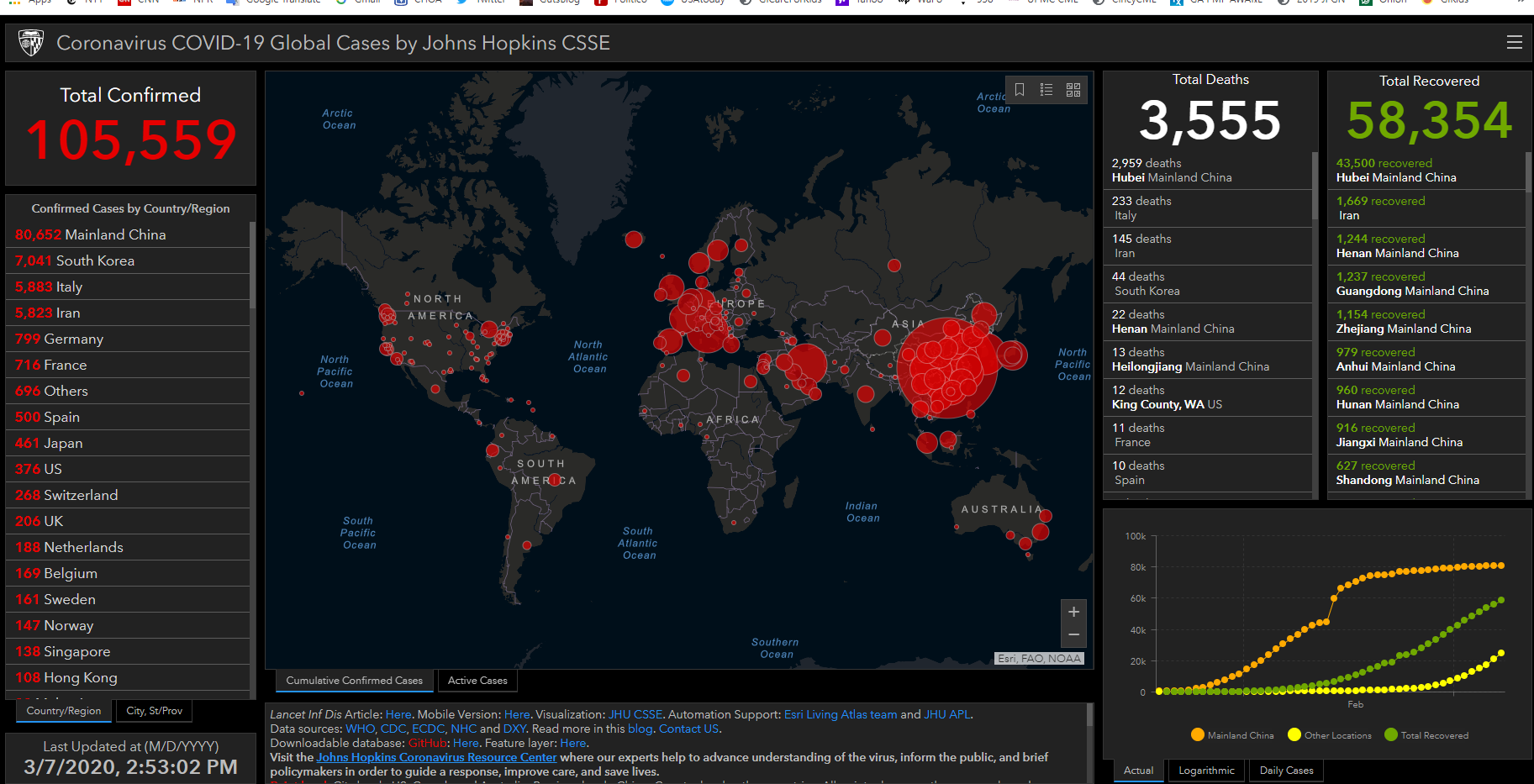
Also, from Johns Hopkins: COVID19 Caseload & Outcomes Worldwide
NY Times: Who’s Behind Your Outrageous Medical Bills?
This article describes how “surprise bills are just the latest in a decades-long war between players in the health care industry over who gets to keep the fortunes generated each year from patient illness — $3.6 trillion in 2018.”
Key points:
My take: When physicians/hospitals and insurance companies are at odds, patients/families are the ones paying the price.
Related article: NY Times: My $145,000 Surprise Medical Bill What my brief glimpse into the financial abyss taught me about the American health care system.
A recent study (MP Jones et al. Clin Gastroenterol Hepatol 2020; 18: 360-7) provides granular data on a well-recognized phenomenon: stomach pain is more common in older children than younger children and is associated with psychosocial factors.
Design: “All Babies in Southeast Sweden” Study with 1781 children (born 1997-99). Families answered questionnaires at birth, 1 year, 2.5 years, 5 years, 8 years and 10-12 years.
Key findings:
My take: This study reinforces the idea that psychosocial factors increase the development of non-organic abdominal pain. If they could be addressed better, GI clinics would be less busy.
Related blog posts:
When I hear people say that the changes in climate are ‘just another weather cycle,’ I wonder if they understand the reasons why scientists are so worried. It is not simply the historic increases in temperature. The bigger concerns are the permanent changes in the environment that foster ongoing and worsening problems. The atmosphere now has greenhouse gases that could take a 1000 years to dissipate even without further pollution (Related blog post: The Health Consequences of Climate Change). This is akin to sleeping under more blankets except that in the middle of the night, when you are sweating, there is not a simple fix –no easy way to remove the greenhouse gases in the atmosphere.
A recent commentary (RN Salas. NEJM 2020; 382: 589-91) details the myriad ways that the climate crisis will affect clinical practice.
The climate crisis is a threat multiplier; key points:
My take (borrowed from commentary): “Despite the irony, I often describe our current knowledge of the health effects of climate crisis as an iceberg. Though we see a peak above the water’s surface, there is much to fear from the larger mass beneath –the effects that we haven’t yet identified.”
Related blog posts:
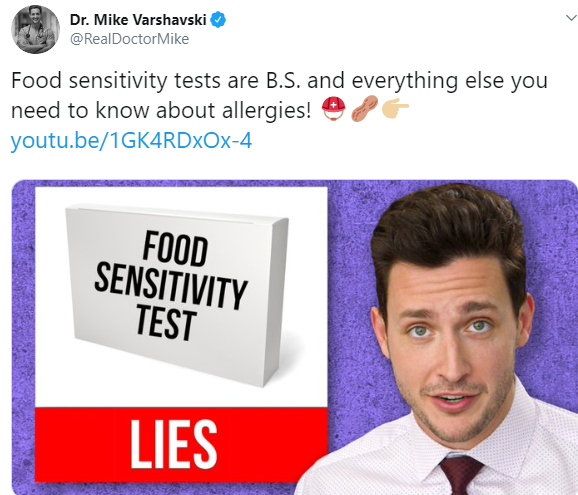
This is a link to a 20 minute video regarding “The Truth About Allergies and Food Sensitivity Tests” with Dr. Dave Stutkus and Dr. Mike Varshavski. (If trouble with link, then can find with quick search on YouTube.)
A couple of clarifications:
The video (~at the 3 minute mark) does not provide much nuance on “non-celiac gluten sensitivity” (see related blog posts below)
Some other points:
Dr. Stutkus decided to undergone ‘food sensitivity’ tests and was reportedly sensitive to nearly 80 foods.
Related blog posts:
Disclaimer: This blog, gutsandgrowth, assumes no responsibility for any use or operation of any method, product, instruction, concept or idea contained in the material herein or for any injury or damage to persons or property (whether products liability, negligence or otherwise) resulting from such use or operation. These blog posts are for educational purposes only. Specific dosing of medications (along with potential adverse effects) should be confirmed by prescribing physician. Because of rapid advances in the medical sciences, the gutsandgrowth blog cautions that independent verification should be made of diagnosis and drug dosages. The reader is solely responsible for the conduct of any suggested test or procedure. This content is not a substitute for medical advice, diagnosis or treatment provided by a qualified healthcare provider. Always seek the advice of your physician or other qualified health provider with any questions you may have regarding a condition