NEJM: Compassionate Use of Remdesivir

Full report, NEJM, J Grein et al. April 10, 2020, DOI: 10.1056/NEJMoa2007016: Compassionate Use of Remdesivir for Patients with Severe Covid-19

53 of 61 had adequate data for inclusion.  Indications of severe COVID-19: at baseline, 57% required mechanical ventilation and 4 (8%) were receiving ECMO.

With a median follow-up of 18 days, Key findings:

  • 36 patients (68%) had an improvement in oxygen-support class, including 17 of 30 patients (57%) receiving mechanical ventilation who were extubated.
  • 25 patients (47%) were discharged
  • 7 patients (13%) died; mortality was 18% (6 of 34) among patients receiving invasive ventilation and 5% (1 of 19) among those not receiving invasive ventilation.
  • By 28 days of follow-up, the cumulative incidence of clinical improvement, as defined by either a decrease of 2 points or more on the six-point ordinal scale or live discharge, was 84%

My take: Given the severity of the disease, this therapy looks promising. However, the authors note that “measurement of efficacy will require ongoing randomized, placebo-controlled trials of remdesivir therapy.”
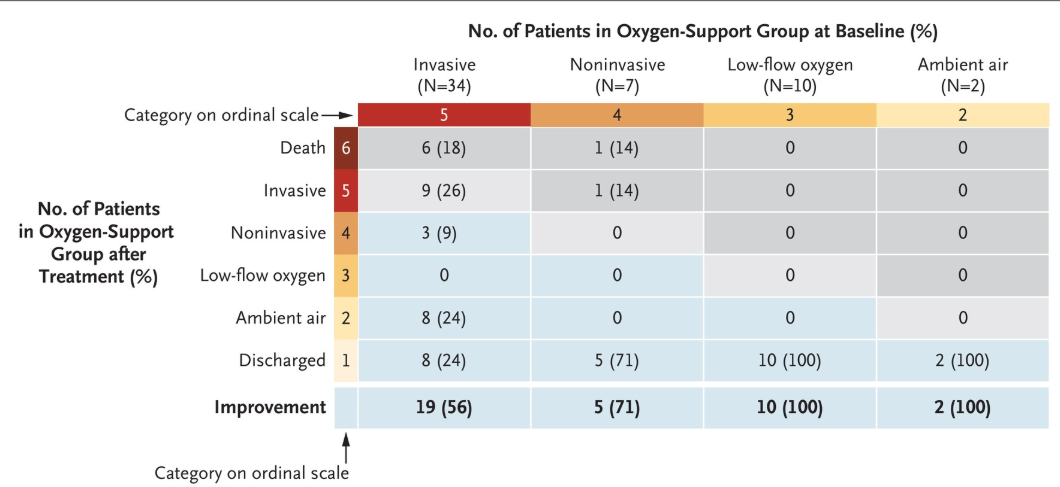
For each oxygen-support category, percentages were calculated with the number of patients at baseline as the denominator. Improvement (blue cells), no change (beige) and worsening (gray) in oxygen-support status are shown. Invasive ventilation includes invasive mechanical ventilation, extracorporeal membrane oxygenation (ECMO), or both. Noninvasive ventilation includes nasal high-flow oxygen therapy, noninvasive positive pressure ventilation (NIPPV), or both.



What is Going On With Pouchitis? & No More Handshakes

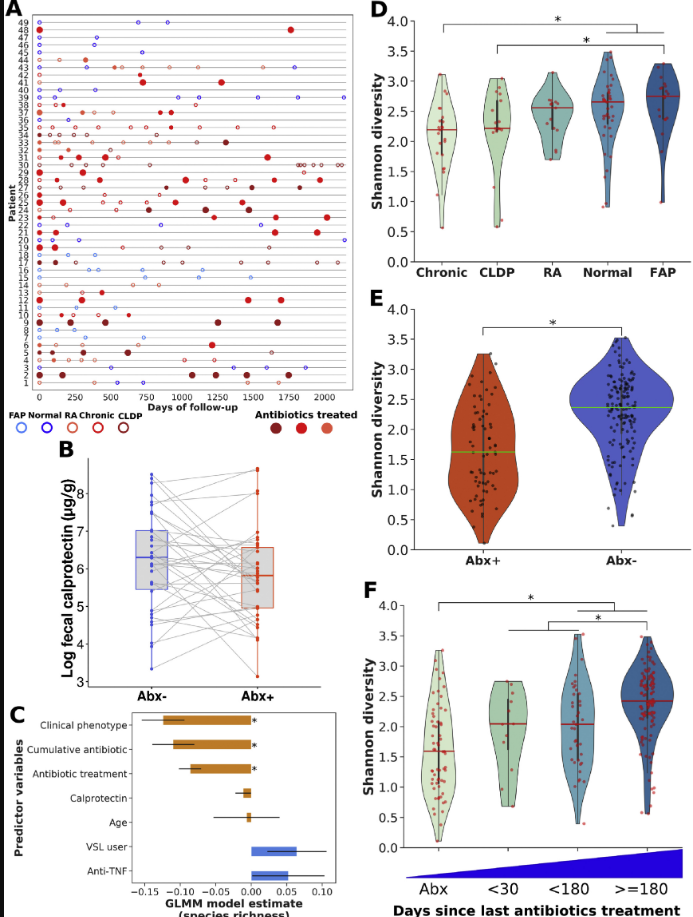
A prospective study (V Dubinsky et al. Gastroenterol 2020; 158: 610-24) followed 49 patients who had undergone pouch surgery for ulcerative colitis or for familial adenomatous polyposis (FAP).

The authors followed multiple parameters including calprotectin, metagenomes/bacterial diversity, antibiotic resistance testing, and virulence factors/toxins. 33 patients received antibiotics for a median of 425 days.  Most patients were treated with a combination of ciprofloxacin and metronidazole.

Full text link: Predominantly Antibiotic-resistant Intestinal Microbiome Persists in Patients With Pouchitis Who Respond to Antibiotic Therapy

Key findings:

  • Pouch phenotype: normal from UC (n=10), recurrent acute pouchitis (n=6), chronic pouchitis and Crohn’s-like disease of the pouch (n=27), and normal from FAP (n=6)
  • 79% of antibiotic-treated patients had a clinical response to each course of antibiotics
  • 89% of those who completed a 4-week course relapsed within 3 months
  • Median calprotectin values decreased by 40% in response to antibiotics
  • Antibiotic treatment reduced disease-associated bacteria including Clostridium perfringens, Ruminococcus gnavus, and Klebsiella pnneumoniae. However, F prausnitzii, a putative anti-inflammatory species, also decreased during antibiotic treatment
  • While antibiotic resistance was noted, these strains had a tendency toward lower potential for virulence and “did not induce secretion of inflammatory cytokines by epithelial cells”

Why do patients become antibiotic-dependent?

“We observed a drastic shift in microbiome composition on antibiotics cessation, characterized by blooms of nonintestinal bacteria, especially those originating from the oral cavity, as well as of opportunistic pathogens. Intestinal colonization by oral bacteria has been associated with UC and Crohn’s disease, and shown to trigger severe intestinal inflammation in germ-free mice…[this] drug-resistant microbiome may be fragile and unable to prevent colonization by exogenous bacteria that are ecologically fitter once antibiotics are discontinued.”

My take: This study provides insight into how antibiotics improve pouchitis; namely, they reduce disease-associated bacteria and promote an antibiotic-resistant microbiome with lower inflammatory potential.

Related blog posts:

Figure 1:

Link:  34 AAP Publications regarding COVID-19 and children

Gastric Electrical Stimulation For Refractory Vomiting, IBD Resources & MMWR COVID-19 Report

A recent yard sign from my wife for neighborhood walkers during the pandemic

P Ducrotte el al (Gastroenterol 2020; 158: 506-14, editorial 461-3) examined the use of an implanted gastric electrical stimulation (GES) in 172 patients in a randomized crossover trial (mean age 45 years).  GES device was implanted and left unactivated until patients were randomized in a double-blind manner to receive stimulation (for 4 months) or not.  Patients had vomiting that was either idiopathic, postsurgical or associated with diabetic gastroparesis (n=72).

Key findings:

  • A significant decrease in vomiting occurred with the device on based on a nonvalidated vomiting score.  During the ON period, vomiting was improved with score of 2.2 compared to vomiting score of 1.8 with device off.  30.6% of patients reported at least a 1 point improvement with device ON compared to device OFF.  However, 16.5% of patients reported improvement with device OFF compared to device ON.
  • Gastric emptying was not accelerated during treatment (device on) compared to no treatment
  • GES was NOT associated with increased quality of life
  • GES was not associated with improved nutritional parameters
  • Adverse effects included pain (n=26) or infection (n=16) at the insertion site of GES; 3 patients required GES removal.

My take (from editorial): “Taking into account the modest magnitude of therapeutic benefit, the cost of the treatment and the potential for adverse events with GES, it seems advisable to exhaust all (symptomatic) therapeutic options” beforehand.

Related blog posts:

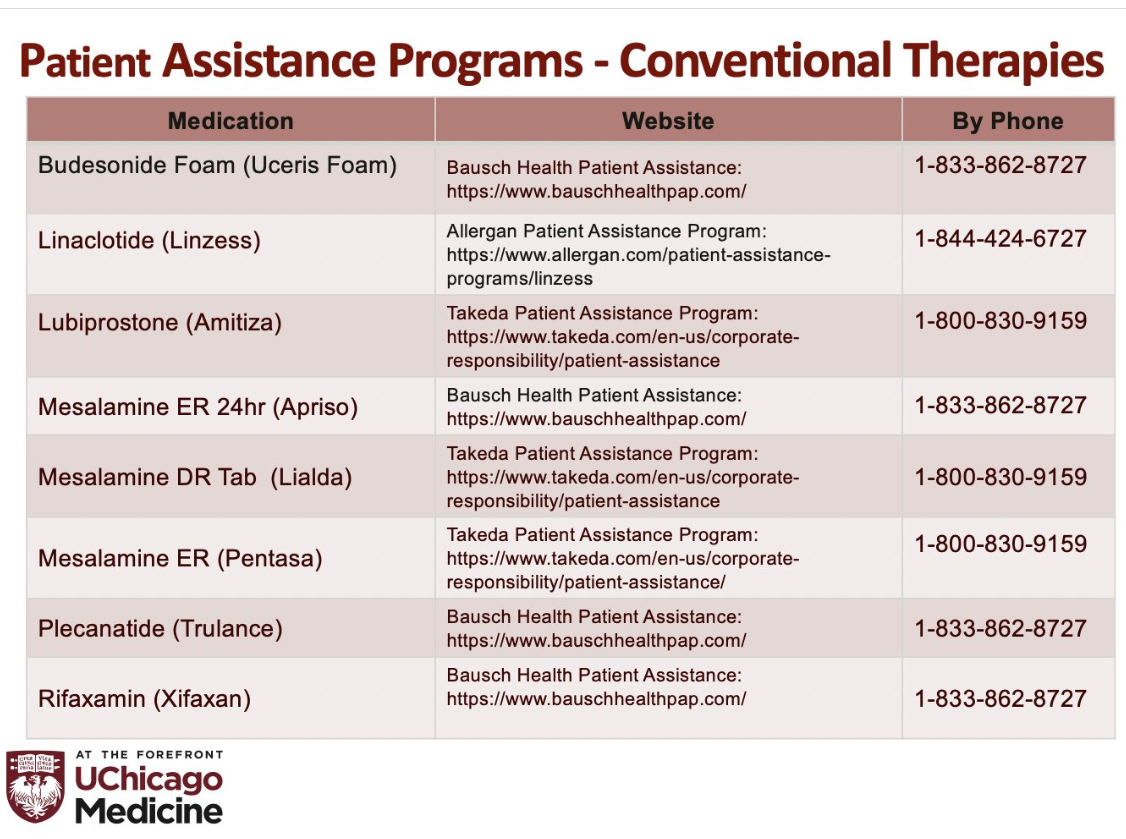
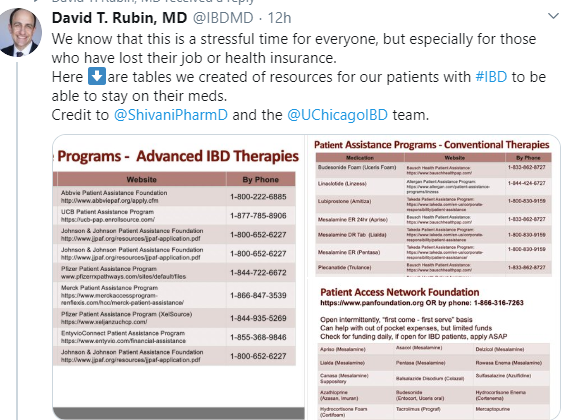
IBD Resources (from David Rubin, MD):

COVID-19 March 2020: MMWR Report (Link to report from Bryan Vartabedian 33mail)

  • March 1-28 2020, 84% of hospitalized U.S. patients had underlying diseases -he most common being obesity, hypertension, chronic lung disease, diabetes mellitus, and cardiovascular disease.
  • Hospitalization rates increased with age, with a rate of 0.3 (per 100,000) in persons aged 0–4 years, 0.1 in those aged 5–17 years, 2.5 in those aged 18–49 years, 7.4 in those aged 50–64 years, and 13.8 in those aged ≥65 years


Deconstructing PPI-Associated Risks with Nearly 8 Billion Data Points and More on COVID-19 GI Symptoms (Video)

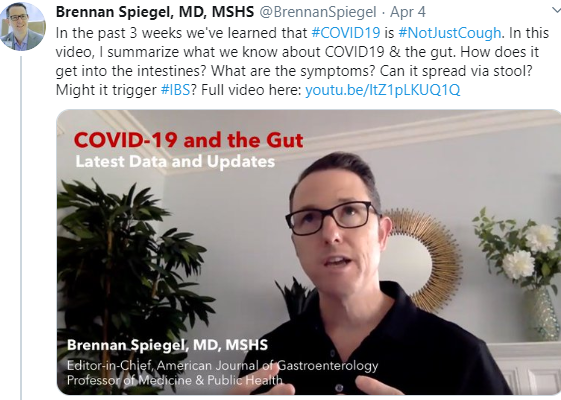
Link: 22 minute video —COVID-19 and the GI Tract -What We Know Right Now

———————

A recent study (C Ma et al. Gastroenterol 2020; 158: 780-82) used cross-sectional data from the National Ambulatory Medical Care Survey (NAMCS) (2006-2015) with a total 7,872,115,883 weighted observations.  They used this data to evaluate medication exposures and outcomes.

Key findings:

  • There was no association between PPI use and dementia, pneumonia, or intestinal infections.  There was a trend towards intestinal infections (AOR 1.48, CI 0.80-2.71) but this did not reach statistical significance. “Sensitivity analysis showed an association between PPI use and C difficile.”
  • There was an association with chronic kidney disease (CKD) (AOR 1.26); however, this was seen with a multitude of drug classes including statins, calcium channel blockers, and beta-blockers.

Discussion:

  • This study notes that a recent large randomized controlled trial found no statistically significant differences between those receiving PPIs and those receiving placebo except for intestinal infections.
  • With regard to CKD, “it is extremely unlikely that all of these medications increase the risk of CKD, and therefore, it is likely that these findings are due to residual confounding.”

My take: With the exception of C difficile/intestinal infections, this study provides further evidence of the safety of PPIs and a lack of association between these medications and purported PPI-related adverse events.  That said, it is still a good idea to limit use for appropriate indications.

Related blog posts:


Also, IOIBD recommendations for IBD patients and COVID-19 have been published.

Here is link as well:

IOIBD (International Organization for the Study of Inflammatory Bowel Disease) Recommendations (#76) for IBD Patients with Regard to COVID-19:

Full link: IOIBD Update on COVID19 for Patients with Crohn’s Disease and Ulcerative Colitis (3/26/20)


NY Times: How Will We Know When to Reopen the Country? & Timely Tweets

A good read from Aaron Carroll/NY Times: How Will We Know When to Reopen the Country?

Here is an excerpt:

Everyone wants to know when we are going to be able to leave our homes and reopen the United States. That’s the wrong way to frame it.

The better question is: “How will we know when to reopen the country?”…

 A recent report by Scott Gottlieb, Caitlin Rivers, Mark B. McClellan, Lauren Silvis and Crystal Watson staked out some goal posts.

  • Hospitals in the state must be able to safely treat all patients requiring hospitalization, without resorting to crisis standards of care.
  • A state needs to be able to test at least everyone who has symptoms.
  • The state is able to conduct monitoring of confirmed cases and contacts.
  • There must be a sustained reduction in cases for at least 14 days…

These four criteria are a baseline…Until we get a vaccine or effective drug treatments, focusing on these major criteria, and directing efforts toward them, should help us determine how we are progressing locally, and how we might achieve each goal.

Related blog posts/links:


C difficile three-fer: Overdiagnosis with Multiplex Testing, Fidaxomicin Pediatric Approval, & Changing Incidence

Queen Elizabeth II -picture for the pandemic

JM Cotter et al. (J Pediatr 2020; 218: 157-65) reviewed 1214 C difficile positive results from a total of 6841 C difficile tests 2013-15 & 2015-17). Key findings:

  • In the later era of multiplex tests, there was a much higher rate of C difficile detection (1.7-2.3 times higher) and a much higher rate of detection.
  • However, 31% of the multiplex tests identified another organism which indicates a high likelihood of a false-positive test (C difficile colonization)
  • Many of these “C difficile infections” were detected simply due to ease of test ordering.  In addition, the test results should be viewed with suspicion particularly in low-risk individuals.
  • Nearly one-third of the C difficile infected patients were oncology patients who are known to have high rates of asymptomatic colonization.
  • In patients known to have high risk of asymptomatic colonization (eg. young, oncology, IBD), detection of C difficile infection may lead to anchoring bias resulting in diagnostic delays for other disorders.

My take: We know that we are approaching the diagnosis of C difficile infection the wrong way (see IDSA guidelines below), but it is so quick and easy.

Related blog posts:

  • Clostridium difficile Guidelines The diagnosis of CDI… Molecular tests (eg, nucleic acid amplification tests [NAATs], such as polymerase chain reaction), which do not differentiate colonization and infection, are now the most commonly used test for CDI among US hospitals. NAATs have the potential to misdiagnose patients with colonization as having CDI, particularly when used in patients with low likelihood of CDI. Thus, this guideline strongly reinforces the importance of practicing good diagnostic stewardship and limiting C difficile testing to patients with new-onset, unexplained, and clinically significant (ie, at least 3 unformed stools in a 24-hour period) diarrhea…formed stools should not be tested for C difficile, nor should patients be retested within 7 days of a previous negative C difficile test. In pediatric populations, because of the unclear role of C difficile as a cause of diarrhea in infants, children less than 12 months of age should not be tested…If diagnostic stewardship is not an achievable goal, use of NAAT alone is likely to lead to frequent misdiagnosis of CDI among patients with C difficile colonization. In these cases, NAAT alone should be avoided and a multistep algorithm that incorporates toxin testing is recommended.

From MDEdge Pediatrics: full link: FDA approves fidaxomicin for treatment of C. difficile-associated diarrhea

An excerpt:

Approval [by FDA] was based on results from SUNSHINE, a phase 3, multicenter, investigator-blind, randomized, parallel-group study in 142 pediatric patients aged between 6 months and 18 years with confirmed C. difficile infection who received either fidaxomicin or vancomycin for 10 days. Clinical response 2 days after the conclusion of treatment was similar in both groups (77.6% for fidaxomicin vs. 70.5% for vancomycin), and fidaxomicin had a superior sustained response 30 days after the conclusion of treatment (68.4% vs. 50.0%)…

The fidaxomicin pediatric trial was the first randomized, controlled trial of C. difficile infection treatment in children,” Larry K. Kociolek, MD

AY Guh et al. NEJM 2020; 382: 1320-30. The authors examined the U.S. Burden of CDI by using the Emerging Infections Program (35 counties in 10 states). Key findings:

  • 15,461 cases of CDI in 2011 and 15,5512 in 2017 detected which extrapolates to 476,000 national cases in 2011 and 462,400 national cases in 2017
  • When accounting for increased use of PCR assays, the authors estimate that the C difficile infectious burden decreased by 24% from 2011 to 2017 (due to a drop in health care-associated infections.

My wife has been receiving a lot of compliments for her daily jokes which she decided to post for all of the neighborhood walkers: “If number two pencils are so popular, why are they still number 2?”

Dark Side of Zoom and Zoombombing

The video conferencing available via Zoom has been enormously helpful during this sheltering-in place.  However, it has received attention for privacy concerns (thanks to my sister for the following references).

From NPR (4/3/20) A Must For Millions, Zoom Has A Dark Side — And An FBI Warning

An excerpt:

“a new form of harassment known as “Zoombombing,” in which intruders hijack video calls and post hate speech and offensive images such as pornography. It’s a phenomenon so alarming that the FBI has issued a warning about using Zoom…

Researchers have turned up flaws in Zoom’s software that could let hackers spy through a computer’s webcam or microphone. Zoom says it released fixes for these issues on Wednesday…The website Motherboard found that Zoom was sharing data with Facebook, even data on people who are not Facebook users.”

FBI Warning: FBI Warns of Teleconferencing and Online Classroom Hijacking During COVID-19 Pandemic

The following steps can be taken to mitigate teleconference hijacking threats:

  • Do not make meetings or classrooms public. In Zoom, there are two options to make a meeting private: require a meeting password or use the waiting room feature and control the admittance of guests.
  • Do not share a link to a teleconference or classroom on an unrestricted publicly available social media post. Provide the link directly to specific people.
  • Manage screensharing options. In Zoom, change screensharing to “Host Only.”
  • Ensure users are using the updated version of remote access/meeting applications. In January 2020, Zoom updated their software. In their security update, the teleconference software provider added passwords by default for meetings and disabled the ability to randomly scan for meetings to join.
  • Lastly, ensure that your organization’s telework policy or guide addresses requirements for physical and information security.

If you were a victim of a teleconference hijacking, or any cyber-crime for that matter, report it to the FBI’s Internet Crime Complaint Center at ic3.gov. Additionally, if you receive a specific threat during a teleconference, please report it to us at tips.fbi.gov or call the FBI Boston Division at (857) 386-2000.

Advice to avoid hackers from stealing user credentials:  Don’t click on links in Zoom chats from people that you don’t know or when they start with double slashes “\\”.

COVID-19 Posts

My wife has been receiving a lot of compliments for her daily jokes which she decided to post for all of the neighborhood walkers. “A lot of people cry when they cut an onion. The trick is not to form an emotional bond.”

This coronavirus disease has caused incredible upheaval & misery throughout the world.  In addition, it has created an “infodemic.”  This blog post is intended to collate my previous related posts/& many of the referenced links into one location, to provide GI society guidelines for PPE/endoscopy as well as to place a good image at the bottom:

Aslo, recommendations from GI societies -AGA, ACG, ASGE and AASLD

  1. Use of Personal Protective Equipment in GI Endoscopy
  2. Endoscopic Procedure Guidance

JOINT GASTROENTEROLOGY SOCIETY MESSAGE: COVID-19
Use of Personal Protective Equipment in GI Endoscopy
RECOMMENDATIONS:
  1. General measures of physical distancing and adequate hand hygiene are of critical importance and need to be practiced diligently, independent of other protective measures.
  2. All elective, non-urgent procedures should be postponed until ample supplies of PPE, hospital beds and other resources are available after the COVID-19 surge.
  3. All members of the endoscopy team should wear a full set of PPE, predicated on resource availabilities.
  4. The correct sequence of putting on and taking off PPE (“donning” and “doffing”) is critical and needs to be understood and practiced [17].
  5. All members of the endoscopy team should wear N95 respirators (or devices with equivalent or higher filtration rates) for all GI procedures performed on patients with known SARS-CoV-2 infection and those with high risk of exposure. Given the high rate of infection transmission from pre-symptomatic individuals, all patients undergoing GI endoscopy in an area of community spread need to be considered ‘high risk’.
  6. All healthcare workers should have their N95 respirators fitted by an occupational health specialist prior to the first usage.
  7. Staffing of endoscopy rooms should be reduced to the minimum number of individuals necessary, in order to conserve PPE and other resources.
  8. In some cases, shortages may require extended and limited reuse of N95 respirators. Guidance is available on how to wear, remove and store respirators to minimize contamination [18]. Decontamination of N95 respirators with hydrogen peroxide vapor has been approved by the FDA as a means of reuse in times of limited supply [19].
GASTROENTEROLOGY PROFESSIONAL SOCIETY
GUIDANCE ON ENDOSCOPIC PROCEDURES
DURING THE COVID-19 PANDEMIC
Below is guidance regarding how to manage the clinical procedural needs of patients during the COVID-19 pandemic. Any decisions should be informed by the local situation and available resources. There may be state, local and institutional rules in place that must be considered as well. This guidance is offered until more definitive data-driven information becomes available.
For those patients for whom a procedure or appointment is not deemed immediately necessary, each practice should implement mechanisms to assure appropriate follow-up once the immediate impact of the COVID-19 pandemic has eased or passed.
All Elective Procedures Should Be Delayed
  1. Screening and surveillance colonoscopy in asymptomatic patients ​
  2. Screening and surveillance for upper GI diseases in asymptomatic patients​, including surveillance for esophageal varices in patients with cirrhosis
  3. For patients needing interval endoscopy for obliteration of esophageal varices post-acute bleeding, the individual circumstances of the patient need to be taken into account to determine safety of delay (i.e., size of varices, red wale markings, CTP status of the patient, acute bleed characteristics).
  4. Evaluation of non-urgent symptoms or disease states where procedure results will not imminently (within 4-6 weeks) change clinical management (e.g., EGD for non-alarm symptoms, EUS for intermediate risk pancreatic cysts) ​
  5. Motility procedures – esophageal manometry, ambulatory pH testing, wireless motility capsule testing and anorectal manometry
Urgent/Emergent Procedures Should Not Be Delayed ​
  1. Upper and lower GI bleeding​ or suspected bleeding leading to symptoms
  2. Dysphagia significantly impacting oral intake (including EGD for intolerance of secretions due to foreign body impaction or malignancy (stent placement))
  3. Cholangitis or impeding cholangitis (perform ERCP)​
  4. Symptomatic pancreaticobiliary disease ​(perform EUS drainage procedure if necessary for necrotizing pancreatitis and non-surgical cholecystitis, if patient fails antibiotics)
  5. Palliation of GI obstruction [UGI, LGI (including stent placement for large bowel obstruction) and pancreaticobiliary] ​
  6. Patients with a time-sensitive diagnosis (evaluation/surveillance/treatment of premalignant or malignant conditions, staging malignancy prior to chemotherapy or surgery) ​
  7. Cases where endoscopic procedure will urgently change management (e.g., IBD)
  8. Exceptional cases will require evaluation and approval by local leadership on a case by case basis
Q. Should all emergent EGD patients be intubated?
A. Absent other reasons that present a threat to the airway, intubation is not indicated for all EGDs. Proper use of PPE, including N95 masks is paramount.
Q. Should procedures be performed on patients with intermediate level cases such as Iron Deficiency Anemia (IDA) or mild dysphagia?
A. Decisions regarding cases such as these will need to be made on a case by case basis, taking into account resource availability, level of community infectivity and risk to the patient.


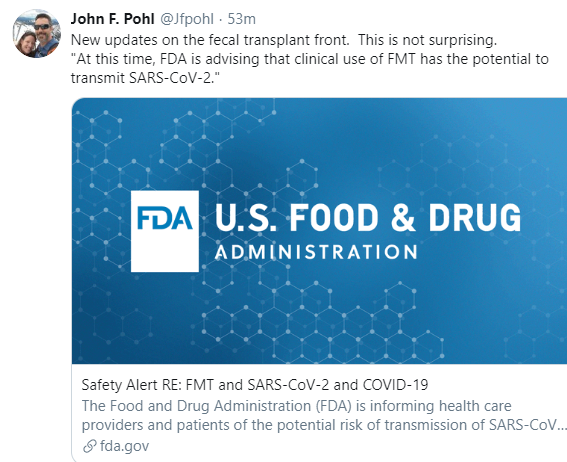
FMT Warning & “Get Your Butt in Gear” –Less Than 10% of Kids Meeting Guidelines for Healthy Movement

To lessen obesity, three health risk behaviors have been targeted:

  • Sedentary behavior -goal is to limit to 2 hours of screen time in 24 hours
  • Physical activity -goal is 1 hour (or more) of moderate to vigorous activity
  • Sleep duration -goal is 9-12 hours (ages 6-12 years) and 8-10 hours (13-18 years)

A recent study (X Zhu et al. J Pediatr 2020; 218: 204-9) shows that <10% of U.S. kids meet these goals.  The authors examined data (2016-17) from the National Survey of Children’s Health (NSCH) dataset (n=71,811)

Key findings:

  • 80.9% did NOT meet physical activity goal
  • 76.2% did meet screen time goal
  • 581% did meet sleep goal
  • However, only 9.4% met all 3 goals
  • Not meeting these ‘movement’ guidelines was associated with obesity, particularly in females (aOR 4.97 compared to aOR 3.99 for males)

My take: We are all made to be different shapes and sizes.  Nevertheless, we should strive for healthy behaviors and healthy eating which could improve outcomes.