Recognizing Reactive Arthritis due to Clostridium difficile

A recent study shows that reactive arthritis can occur in children with Clostridium difficile infection and that recognition of this problem will improve management.

From JAMA Online First, DB Horton et al JAMA Pediatr. Published online May 16, 2016. doi:10.1001/jamapediatrics.2016.0217 (thanks to Ben Gold for this reference):

Abstract:

Importance  The incidence of Clostridium difficile infection has increased among children. The epidemiology of pediatric C difficile infection–associated reactive arthritis is poorly understood.

Objective  To characterize the incidence, recognition, and distinguishing clinical features of pediatric C difficile infection–associated reactive arthritis among children with C difficile infection.

Design, Setting, and Participants  In this cohort and nested case-control study using electronic health records from January 1, 2004, to December 31, 2013, across 3 geographically diverse pediatric health care networks, we screened for reactive arthritis among 148 children between ages 2 and 21 years with diagnostic or procedural codes suggesting musculoskeletal disease associated with C difficile diagnosis or positive testing. We identified 26 cases with acute arthritis or tenosynovitis within 4 weeks before to 12 weeks after confirmed C difficile infection with (1) no alternative explanation for arthritis and (2) negative synovial cultures (if obtained). Network-matched C difficile–infected controls without arthritis were randomly selected at the time of cohort member C difficile infections.

Main Outcomes and Measures  Incidence of C difficile infection–associated reactive arthritis was calculated based on (1) pediatric source population and (2) children with C difficile infection. Characteristics of cases and controls were compared using conditional logistic regression.

Results  Based on the cases identified within the source population of the 3 hospital networks, we estimated that C difficile infection–associated reactive arthritis incidence was 5.0 cases per million person-years (95% CI, 3.0-7.8). Reactive arthritis affected 1.4% of children with C difficile infection yearly (95% CI 0.8%-2.3%). Joint symptoms began a median of 10.5 days after initial gastrointestinal symptoms, often accompanied by fever (n = 15 [58%]) or rash (n = 14 [54%]). Only 35% of cases of C difficile infection–associated reactive arthritis were correctly diagnosed by treating health care professionals (range across centers, 0%-64%). Five affected children (19%) were treated for presumed culture-negative septic hip arthritis despite having prior postantibiotic diarrhea and/or other involved joints. Compared with controls, cases of C difficile infection–associated reactive arthritis were less likely to have underlying chronic conditions (odds ratio [OR], 0.3; 95% CI, 0.1-0.8). Although all cases had community-onset C difficileinfection and fewer comorbidities, they were more likely to be treated in emergency departments and/or hospitalized (OR, 7.1; 95% CI, 1.6-31.7).

Conclusions and Relevance  C difficile infection–associated reactive arthritis is an underdiagnosed, potentially morbid reactive arthritis associated with C difficile infection occasionally misdiagnosed as septic arthritis. Given the rising incidence of pediatric C difficile infections, better recognition of its associated reactive arthritis is needed.

Screenshot from JAMA website


Screenshot from JAMA website

Changing Approach to Neonatal Acute Liver Failure

A recent review (SA Taylor, PF Whittington. Liver Transplantation 2016; 22: 677-85) provides several important concepts for practitioners who may need to manage neonatal acute liver failure.

The most common etiologies (in parenthesis the approximate percentage of cases in their experience):

  • Gestational alloimmune liver disease (GALD) (60-90%)
  • Viral hepatitis (20-30%)-particularly HSV, followed by HHV-6, and rarely CMV
  • Hemophagocytic lymphohistiocytosis (HLH) (<10%)
  • Mitochondrial hepatopathy (<5%)
  • Rare causes include galactosemia, hereditary tyrosinemia type 1, and hereditary fructose intolerance. (<1%)  In addition, bile acid synthetic defect 5-beta-reductase deficiency can cause neonatal liver failure.

While INR ≥2.0 was used in the PALF studies as a primary defining feature of liver failure, since an INR of 2.0 can occur in the normal newborn, the authors recommend using an INR≥ 3.0 for neonatal liver failure.

Their Table 1 helps provide some important differences, Distinguishing features:

  • With GALD, ALT values are typically <100 due to underdeveloped hepatic parenchyma and ferritin is typically >800 and <7000.  IUGR is frequent (70-90%) as is hypoglycemia. Hepatosplenomegaly is uncommon.
  • With viral infections and HLH, ALT values are typically high, ferritin often very high, hepatosplenomegaly is common. IUGR is rare.
  • With mitochondrial disorders, ALT typically is between 100-500, ferritin levels are variable, and IUGR occurs in 20-30%.  A distinguishing feature is lactate: pyruvate ratio and ketone body ratios.
  • By thinking carefully about the reasons for liver failure in the neonatal period and not trying to examine for every possible liver disease, the use of these variables can expedite the evaluation and decrease the cost.  Genetic testing is not recommended due to the slow turnaround time, “and many diseases that are prominent causes of cholestatic disease …just do not cause NALF.”

With regard to treatment, the authors advocate use of IVIG if suspicion for GALD.  If workup (lip biopsy and/or MRI) confirms GALD then exchange transfusion and repeat IVIG is recommended.

My take: This reference should be helpful when managing a neonate with severe liver disease.

Related blog posts:

Set from the Musical "Beautiful"

Set from the Musical “Beautiful”

NPR: Getting Last-Ditch Experimental (Compassionate Use) Drugs

NPR: It’s Still Not Easy to Get Last-Ditch Experimental Drugs

An excerpt:

The Food and Drug Administration has reduced an obstacle from its compassionate use policy, streamlining paperwork that physicians must submit to obtain experimental drugs for patients with life-threatening illnesses.

Doctors will now file an application for FDA approval that contains just 11 questions, 15 fewer than the old form. They should be able to complete this new version in 45 minutes, the FDA said. The new form is simpler because it was designed for individual patients, replacing an all-purpose format that had been used by doctors acting on behalf of individuals or groups of patients…

Doctors still must first obtain a letter of authorization from that drug’s manufacturer. The FDA can’t compel drugmakers to grant permission. Manufacturers might reject requests because they’re worried about liability if the drug causes harm or they might consider the drug unsuited for a particular patient.

In Case Someone Asks…Low FODMAP Maternal Diet May Help Colic

According to a very small study, maternal ingestion of a low FODMAP diet reduced crying in colicy babies who were breastfed.  This report was presented at the recent United European Gastroenterology meeting (P0609).  The study consisted of a single-blind, open-label study of 18 infants.  The key finding was reduced crying from 142 minutes to 90 minutes over the 2 week study period.

A summary of this report is available at gastroendonews.com (May 2016, pg 8).

My take: A bigger study is needed to ascertain whether this intervention is worthwhile.  Many kids get better during a 2 week period without treatment.

Concise Review: Fatty Liver in Pediatrics

A recent review (J Schwimmer. Hepatology 2016; 1718-25) provides a succinct up-to-date approach to the common problem of Nonalcoholic Fatty Liver Disease.

As this was a review, much of the material has been covered by this blog and previous publications.  The review discusses the upper limit of normal for alanine aminotransferase and its utility.  Liver imaging is discussed: “MRI is well suited for use in clinical research” whereas “ultrasound does not meet the standard clinical threshold required to be used to diagnose fatty liver…or used as an outcome measure.”

Dr. Schwimmer reviews a prospective study of 347 overweight or obese children with suspected NAFLD (blog review of this study: Screening for NAFLD).  He notes that 24% (n=61) of those who underwent liver biopsy ultimately had other diagnoses, especially autoimmune liver disease (n=11) and celiac disease (n=4). “The clinical challenge is to determine who needs how much of a workup. The greater potential for hepatotoxicity and the more advanced the disease is believed to be, the greater the need to be certain of the diagnosis and to properly grade and stage the disease.”  Currently, “no other diagnostic modality has shown sufficient accuracy to be appropriate for clinical use in the place of biopsy.”

He reviews associated health conditions with NAFLD including obesity, dyslipidemia, hypertension, cardiac dysfunction, and obstructive sleep apnea (~60% of NAFLD patients).

What about treatment? “There is not an available, proven, safe, and effective [pharmacologic] treatment for NAFLD in children…Current treatment is …focused on optimizing lifestyle, including nutrition, physical activity, and mental well-being.”

My take: Despite 20 years of clinical practice, the workup for NAFLD remains a vexing problem.  It is not practical to offer a liver biopsy to 10% of the pediatric population.  So determining who (besides those with more severe presentations) will benefit from an exhaustive workup remains unclear.  In the meanwhile, at a minimum, we need to keep looking for treatable liver conditions (eg. autoimmune hepatitis, celiac disease, Wilson’s disease, and viral hepatitis).

An article with a similar focus (Dr. Schwimmer is the corresponding author): J Pediatric 2016; 172: 9-13.  This report and Dr. Schwimmer’s review both tout the safety of liver biopsy.  Neither report presents much data on costs of either liver biopsies or MRI.

Related blog posts:

Zoo Atlanta 2016

Zoo Atlanta 2016


Bring Out the Big Guns: Treating Infections with Cirrhosis

A recent study (M Merli et al. Hepatology 2016; 1632-39) indicates that health-care associated infections (HCA) in the setting of cirrhosis respond more favorably to broad-spectrum antibiotics.  In this prospective study of 96 randomized patients, in-hospital mortality was improved in the broad-spectrum group (6%) compared to the standard group (25%).  There was a similar multidrug-resistnace rate (50% broad spectrum compared with 60% in standard group).

Table 1 lists the antibiotic selection.  In the broad spectrum treatment, this almost always included imipenem/cilastin (I/C); with spontaneous bacterial peritonitis (SBP), I/C was combined with vancomycin, and with pneumonia it was combined with both vancomycin and azithromycin.  In contrast, the standard group’s main medication was augmentin (with added azithromycin for pneumonia) or cefotaxime for SBP.

My take: Does this study show that infections in the setting of cirrhosis are becoming more difficult to treat? Probably. How much these findings can be extended to the pediatric population remains uncertain.

Somewhat related topic: Primary prophylaxis of Variceal Bleeding in Children –Summary of the Baveno VI Pediatric Satellite Symposium.  BL Shneider et al. Hepatology 2016; 63: 1368-80. Key point: “there are few pediatric data…therefore, no recommendations for primary prophylaxis with endoscopic variceal ligation, sclerotherapy, or nonspecific beta-blockade in children was proposed.”

Silver Comet Trail

Silver Comet Trail

Balanced Summary of Probiotics & Microbiome Effects on the Brain

A good updated summary on probiotics from 538 GutScienceWeek:

Do probiotics work? Are they good for me?

This link reviews a good deal of science and has a nice table explaining costs.

Take home message: Probiotics which vary greatly by strain and often lack rigorous production standards may be beneficial for specific conditions like preventing antibiotic-induced diarrhea but probably are not beneficial on an ongoing basis.

The final post in the series looks at How the Gut Affects Your Mood.

While the author explains that there is likely a microbiome effect on the central nervous system as well as some intriguing animal studies, it is too early to know that manipulation of the microbiome will have beneficial effects on neurological/developmental concerns.

Screen Shot 2016-05-19 at 6.32.33 PM

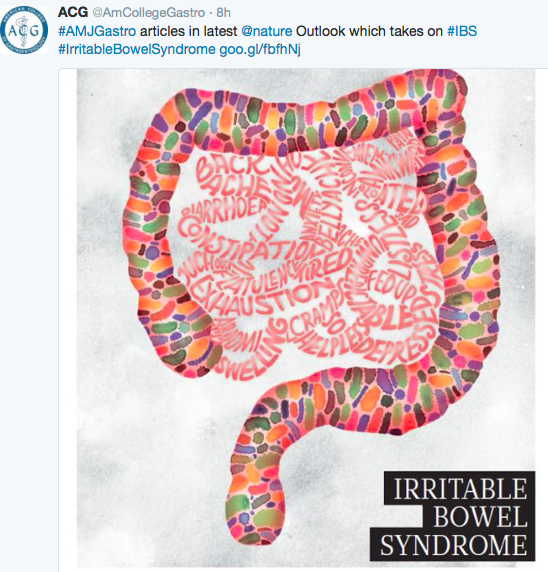
Gluten-Free for IBS-D?

A recent study (I Aziz et al. Clin Gastroenterol Hepatol 2016; 14: 696-703) shows that a 6 week gluten-free diet reduced IBS-D symptoms in 29 of 41 (71%) patients.

  • The authors performed a prospective study with all patients receiving a gluten-free diet.  At 6 weeks, 21 of 29 who had responded to GFD continued GFD through 18 months followup.
  • One difference with this study compared to prior studies –these patients were irritable bowel syndrome with diarrhea and fulfilled Rome III criteria.  Celiac disease had been excluded with serology and histology; thus, these patients did not have “potential” celiac disease.
  • In addition to GI symptoms like abdominal pain, distention, and stooling problems, patients experienced improvement in mood, fatigue and quality of life.
  • The authors note that the response rate of 71% is much higher than they would have expected if the response was related solely to a placebo effect.

My take: This small study shows that a gluten free diet may be effective in improving the symptoms in many patients with IBS-D.  Other studies have shown that several other diets are effective as well.

Related blog posts:

IBS diagram


Tick Bites Can Lead to Allergy to Red Meat

From NBC News: Tick Bite Linked to Rise in Red Meat Allergies

Excerpt:

A tick-related meat allergy has been quietly spreading across the southern and eastern U.S. over the past two decades, but in recent years the number of cases have steadily risen. A tick bite in some people can kick off a sensitivity to red meat that can result in symptoms such as itching, hives, swollen lips and breathing problems. The reaction can sometimes be life threatening. 

Terrific 8th grade graduation speech: 8th grader Nails Impersonations of presidential candidates

Five Year Data on Magnetic Device for GERD

Here’s an abstract regarding the efficacy of a magnetic device for gastroesophageal reflux in adults:

Background & Aims

Based on results from year 2 of a 5-year trial, in 2012 the US Food and Drug Administration approved the use of a magnetic device to augment lower esophageal sphincter function in patients with gastroesophageal reflux disease (GERD). We report the final results of 5 years of follow-up evaluation of patients who received this device.

Methods

We performed a prospective study of the safety and efficacy of a magnetic device in 100 adults with GERD for 6 months or more, who were partially responsive to daily proton pump inhibitors (PPIs) and had evidence of pathologic esophageal acid exposure, at 14 centers in the United States and The Netherlands. The magnetic device was placed using standard laparoscopic tools and techniques. Eighty-five subjects were followed up for 5 years to evaluate quality of life, reflux control, use of PPIs, and side effects. The GERD–health-related quality of life (GERD-HRQL) questionnaire was administered at baseline to patients on and off PPIs, and after placement of the device; patients served as their own controls. A partial response to PPIs was defined as a GERD-HRQL score of 10 or less on PPIs and a score of 15 or higher off PPIs, or a 6-point or more improvement when scores on vs off PPI were compared.

Results

Over the follow-up period, no device erosions, migrations, or malfunctions occurred. At baseline, the median GERD-HRQL scores were 27 in patients not taking PPIs and 11 in patients on PPIs; 5 years after device placement this score decreased to 4. All patients used PPIs at baseline; this value decreased to 15.3% at 5 years. Moderate or severe regurgitation occurred in 57% of subjects at baseline, but only 1.2% at 5 years. All patients reported the ability to belch and vomit if needed. Bothersome dysphagia was present in 5% at baseline and in 6% at 5 years. Bothersome gas-bloat was present in 52% at baseline and decreased to 8.3% at 5 years.

Conclusions

Augmentation of the lower esophageal sphincter with a magnetic device provides significant and sustained control of reflux, with minimal side effects or complications. No new safety risks emerged over a 5-year follow-up period. These findings validate the long-term safety and efficacy of the magnetic sphincter augmentation device for patients with GERD. ClinicalTrials.gov no: NCT00776997.

It is important to note the following:

  1. Symptom control was not different between the magnetic sphincter and surgery
  2. The target population met the inclusion criteria: typical GERD symptoms, abnormal esophageal acid exposure by pH monitoring, partial response to daily PPI, and absence of large hiatus hernia or severe esophagitis

Related blog post:  Stopping reflux with magnets | gutsandgrowth

Screen Shot 2016-05-16 at 6.06.19 PM