Why We Should Not Worry That Much About Water Intake

A recent article in the NY Times rebuts the claim that so many kids are dehydrated: No, You Don’t Have to Drink 8 Glasses of Water a Day

An excerpt:

Prospective studies fail to find benefits in kidney function or all-cause mortality when healthy people increase their fluid intake. Randomized controlled trials fail to find benefits as well, with the exception of specific cases — for example, preventing the recurrence of some kinds of kidney stones. Real dehydration, when your body has lost a significant amount of water because of illness, excessive exercise or sweating, or an inability to drink, is a serious issue. But people with clinical dehydration almost always have symptoms of some sort….

This summer’s rash of stories was inspired by a recent study in the American Journal of Public Health. Researchers used data from the National Health and Nutrition Examination Survey from 2009 to 2012 to examine 4,134 children ages 6 to 19. Specifically, they calculated their mean urine osmolality, which is a measure of urine concentration. The higher the value, the more concentrated the urine…

But as people in this country live longer than ever before, and have arguably freer access to beverages than at almost any time in human history, it’s just not true that we’re all dehydrated.

Some of the key points:

  • Much of the research suggesting that there is an epidemic of under hydration is being funded by companies with a financial interest
  • Water is contained in both foods and other beverages
  • The research standard of urine osmalality >800 mOsm is not used clinically
  • There are no documented health advantages that have been identified in individuals who drink more fluid (except in those with documented history of kidney stones)

Related blog posts:


Does Staying Up All Night Affect Surgery the Next Day?

According to a recent study (A Govindarajan et al. NEJM 2015; 373: 845-33), the answer is no.  That being said, my preference would be for a well-rested surgeon.

Some of the details:

The authors conducted a retrospective, population-based, matched cohort study in Ontario, Canada.  Twelve procedures were analyzed from 1448 physicians and involving 38,978 patients.  The same physicians had his/her procedures compared when they were done after treating patients from midnight to 7am to when these were done on days that were not preceded by night call.  The physicians included in the study were attending physicians; thus this does not provide insight into whether residents or fellows would perform similarly.

Key finding:

  • No difference in any primary outcome: death, readmission, or complication.  This primary outcome occurred in 22.2% after night call and 22.4% without night call.

Here’s a graph below -which depicts, from top to bottom, odds ratio for cholecystectomy (n=9322 patients, 479 physicians), gastric bypass (n=320 patients, 25 physicians), colon resection (n=2214 patients, 315 physicians), hysterectomy (n=7020 patients, 384 physicians), knee arthroplasty (n-2504 patients, 192 physicians), hip arthroplasty (n=1564 patients, 154 physicians), repair hip fracture (n=1192 patients, 166 physicians), lung resection (n=550 patients, 55 physicians), CABG (n=460 patients, 48 physicians), Spine surgery (n=3456 patients, 104 physicians), Craniotomy (n=1396patients, 66 physicians), Angioplasty (n=8980 patients, 130 physicians)

From NEJM Twitter Feed

From NEJM Twitter Feed

FDA Approves New Drug for Nausea/Vomiting

FDA Announcement -here’s excerpt:

The U.S. Food and Drug Administration approved Varubi (rolapitant) to prevent delayed phase chemotherapy-induced nausea and vomiting (emesis). Varubi is approved in adults in combination with other drugs (antiemetic agents) that prevent nausea and vomiting associated with initial and repeat courses of vomit-inducing (emetogenic and highly emetogenic) cancer chemotherapy….

“Chemotherapy-induced nausea and vomiting remains a major issue that can disrupt patients’ lives and sometimes their therapy,” said Amy Egan, M.D., M.P.H., deputy director of the Office of Drug Evaluation III in the FDA’s Center for Drug Evaluation and Research. “Today’s approval provides cancer patients with another treatment option for the prevention of the delayed phase of nausea and vomiting caused by chemotherapy.”

Varubi is a substance P/neurokinin-1 (NK-1) receptor antagonist. Activation of NK-1 receptors plays a central role in nausea and vomiting induced by certain cancer chemotherapies, particularly in the delayed phase. Varubi is provided to patients in tablet form.

The safety and efficacy of Varubi were established in three randomized, double-blind, controlled clinical trials where Varubi in combination with granisetron and dexamethasone was compared with a control therapy (placebo, granisetron and dexamethasone) in 2,800 patients receiving a chemotherapy regimen that included highly emetogenic (such as cisplatin and the combination of anthracycline and cyclophosphamide) and moderately emetogenic chemotherapy drugs. Those patients treated with Varubi had a greater reduction in vomiting and use of rescue medication for nausea and vomiting during the delayed phase compared to those receiving the control therapy…

The most common side effects in patients treated with Varubi include a low white blood cell count (neutropenia), hiccups, decreased appetite and dizziness.

Varubi is marketed by Tesaro Inc., based in Waltham, Massachusetts.

Changing Practice Patterns with Pediatric Pancreatitis

A recent study (FK Szabo et al. J Pediatr 2015; 167: 397-402) supports the practice of early enteral nutrition and aggressive fluid administration with acute pancreatitis. Starting in January 2014, Cincinnati Children’s began using high rates of intravenous fluid and resuming enteral nutrition within 48 hours for children presenting with acute pancreatitis.  This retrospective study assessed this practice in 201 patients and compared with prior experience dating back to 2009. To be included, patients had to have mild acute pancreatitis based on the Atlanta criteria (Gut 2013; 62: 102-11). Exclusion criteria:

  • Severe acute pancreatitis: multiorgan failure, systemic inflammatory response, local pancreatic complications (eg. necrosis, hemorrhage, pseudocyst), or respiratory complications
  • Pancreatitis due to trauma, gallstones or postsurgical

With regard to enteral nutrition (EN), nasoenteric tubes were not placed during the first 48 hours, but preexisting enteral tubes were used. So, most patients were orally fed. With regard to IV fluids, 62% received 1.5-2 times the maintenance IVF during the first 24 hours of admission.  More than 90% of cases received dextrose 5% normal saline. Key Findings:

  • Length of stay was 2.9 days in the early EN group compared with 4.4 days in the NPO group (P <.0001).  It is noted that the NPO group did include 24% with severe acute pancreatitis compared with 6% in the early EN group.
  • The authors did not identify any change in measured outcomes based on high or low volume IVF.

From the discussion:

  • “EN remains an integral part of management which has been associated with a lower incidence of infection, multiorgan failure, lower mortality rates, and a shorter hospital stay in adult patients with AP [acute pancreatitis]”
  • “Our study shows that oral feeds represent a safe and a feasible strategy in mild AP.” There was not an increase in readmission rates within 72 hours of discharge, either.

Because this is a retrospective study, this limits the interpretation of these findings; there could be an element of reverse causation with regard to the outcomes.

My take: Increasing evidence supports the practice of early enteral feedings in mild acute pancreatitis.  The exact IV fluids to use remain unclear, though my preference is lactated ringer’s based on ERCP-induced pancreatitis studies.

Related blog posts:

  • Why an ERCP Study Matters to Pediatric Care | gutsandgrowth This post explains why LR may be best.
  • Nutrition University / gutsandgrowth What are the nutritional management recommendations for acute pancreatitis? Justine Turner indicated that too many centers continue to rely on parenteral nutrition.  Yet, guidelines recommend the use of enteral nutrition due to lower risk of poor outcomes (eg. infections when NPO and on parenteral nutrition). ‘Resting pancreas is not helpful.’ With acute pancreatitis, enzyme secretion is reduced.  Her approach is to start nasogastric (NG) feedings at about 24 hours after presentation, as long as hemodynamically stable.  She indicated that nasojejunal (NJ) feedings can be done if NG is not well-tolerated.  NJ feedings are effective at reducing enzyme secretion.  However, Praveen Goday stated that his practice was often starting with NJ feeds.  “Sometimes there is only one shot” before the ICU team starts HAL.  Both physicians indicated that polymeric formulas were probably acceptable; however, starting with semi-elemental or elemental feedings are often done, again as a practical matter to minimize the likelihood of reverting to parenteral nutrition.
Artist Point, Yellowstone

Artist Point, Yellowstone

1000th Tweet: GI Symptoms Preceding IBD Diagnosis

Another milestone for this blog: since 2012, the blog has been publicized on twitter; this is the 1000th tweet. It is also 1314th blog post over nearly 4 years.

A recent study (H Singh et al. Clin Gastroenterol Hepatol 2015; 13: 1302-09) indicates that children with inflammatory bowel disease (IBD) were more likely to have gastrointestinal symptoms in each of the 4 years before the diagnosis of IBD than children without IBD.

In this study, the researchers identified all children with IBD from a population-based Manitoba database; Manitoba had a population of 1.27 million in 2012.  651 children were matched with 5950 controls without IBD.  The study’s Table 1 & 2 indicates that children with IBD had increased clinic visits prior to diagnosis:

  • 54-66 months prior: standardized rate ratio for number of ambulatory visits 1.15; & for ≥1 visit due to GI symptoms odds ratio 1.44
  • 42-54 months prior: standardized rate ratio for number of ambulatory visits  1.22; & for ≥1 visit due to GI symptoms odds ratio 2.05
  • 30-42 months prior: standardized rate ratiofor number of ambulatory visits 1.19; & for ≥1 visit due to GI symptoms odds ratio 2.16
  • 18-30 months prior: standardized rate ratio for number of ambulatory visits 1.23; & for ≥1 visit due to GI symptoms odds ratio 2.93
  • 6-18 months prior: standardized rate ratio for number of ambulatory visits  1.15; & for ≥1 visit due to GI symptoms odds ratio 5.23

There was not a clear trend in increased symptoms between those who developed Crohn’s disease compared with Ulcerative Colitis. In addition, the study noted a trend towards decreased colectomy and resective surgery in Crohn’s in the time period 2002-2010 compared with 1987-2001.  One limitation of this study is the few number of pediatric gastroenterologists in Manitoba (only 1 before 2003); the lack of pediatric gastroenterology availability could impact timely diagnosis.

My take: This data shows that GI symptoms still predate diagnosis in many children and indicate a potential for diagnosis delay. The authors note that noninvasive tools like stool calprotectin have not been widely adopted (at least in Manitoba) and could be helpful in reducing diagnostic delays.

Estes Park, Colorado

Estes Park, Colorado

Latest News: ‘Georgia Girl Saved by Fecal Transplant’

For those not able to see the live presentation…

GI Care for Kids physician, Jeff Lewis, helped bring fecal microbiota transplant (FMT) to Georgia. Here’s a success story from Fox5 Atlanta from August 31, 2015.  Here’s the link:

Georgia Girl Saved by Fecal Transplant  This link includes a 4:08 video and written summary as well.

From Twitter:

Screen Shot 2015-08-31 at 6.38.42 PM


Higher Stool Infliximab Correlates with Poor Response in Severe Ulcerative Colitis

A recent study (full text link: “Loss of Infliximab into feces is associated with lack of response to therapy in patients with severe ulcerative colitisGastroenterol 2015; 149; 350-55.e2) provides information about patients with ulcerative colitis who do not respond well to infliximab therapy.

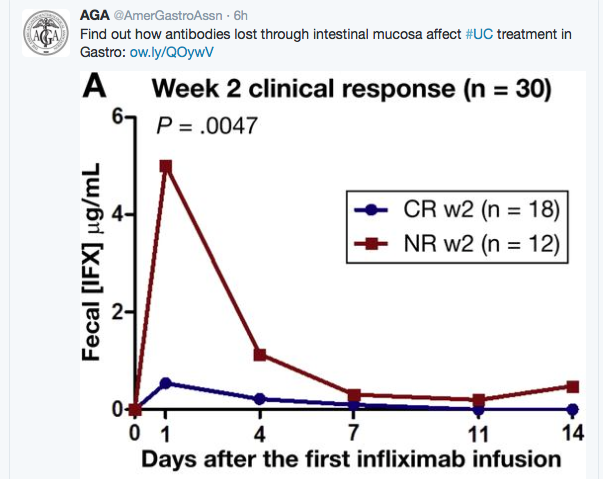
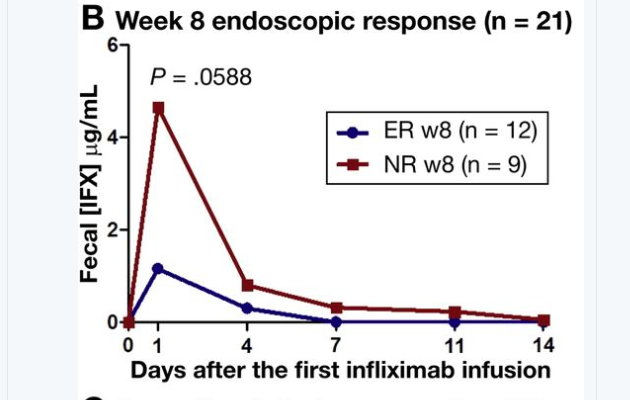
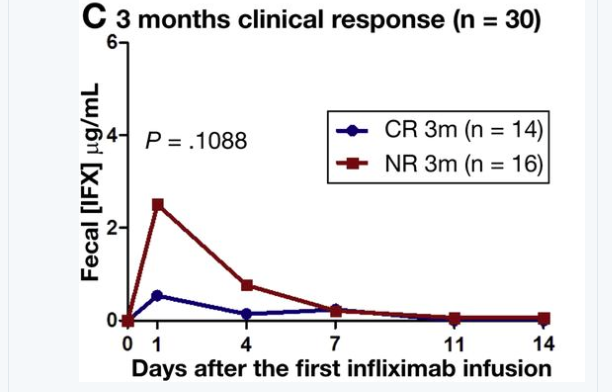
In this study, the authors obtained fecal samples from 30 consecutive patients with moderate to severe UC during the 1st 2 weeks of therapy.  In addition, they obtained serum infliximab levels as well as assessed clinical and endoscopic response at 2 weeks, 8 weeks, and 3 months after treatment began.

Key findings:

  • Fecal infliximab was detected in 129 of 195 (66%) samples.  The greatest loss was observed approximately 2 days after infusion. Low serum albumin was associated with greater infliximab levels in the stool.
  • Clinical nonresponders at week 2 had significantly higher fecal infliximab
  • The authors did not observe a correlation between fecal and serum infliximab concentrations.  However, it is possible that stool losses could indicate lower mucosal concentrations of infliximab.
From AGA twitter account

From AGA twitter account

From AGA twitter account

From AGA twitter account

From AGA twitter feed

From AGA twitter feed

Bottomline: It is not clear whether stool losses of infliximab directly contribute to drug failure or whether the loss is another biomarker of disease activity/high-risk patients.

The study authors note that “intestinal loss of IFX in moderate to severely active UC is associated with a diminished response to this treatment.  Patients with severe disease can, therefore, benefit from more intensive dosing regiments. This strategy warrants a prospective clinical trial.”

Related blog posts:

Head-to-Head: Nutritional Therapy versus Biological Therapy in Pediatric Crohn’s Disease

The best data to date: D Lee et al. Inflamm Bowel Dis 2015; 21: 1786-93. In this prospective study, the authors studied treatment initiation in children (N=90), comparing partial enteral nutrition (PEN, n=16), exclusive enteral nutrition (EEN, n=22), and anti-TNF therapy (n=52).

Results:

  • Clinical response, defined by PCDAI reduction ≤15 or final PCDAI ≤10, was achieved by 64% PEN, 88% EEN, and 84% anti-TNF.
  • Fecal calprotectin ≤250 noted in 14% PEN, 45% EEN, and 62% anti-TNF

Because of the discrepancy between EEN and PEN, the authors speculate that the “efficacy of EEN may be a consequence of elimination of table food rather than providing a uniquely therapeutic method of delivering nutrients.”  They note that “choice of formula has not impacted the efficacy of enteral nutrition.”

More extensive information on this subject: D Lee et al. Gastroenterol 2015; 148: 1087-1106.

Bottomline: Anti-TNF therapy was as effective or more effective than EEN. And, “for patients who prefer treatment with a nutrition-based therapy, EEN seems superior to PEN.”

Related blog posts:

Street Art, NYC

Street Art, NYC

Pediatric Entecavir Data

While entecavir and tenofovir have been in use for many years in adult hepatology for hepatitis B virus (HBV) infection, a well-designed study supporting their use in pediatrics has been lacking until now.  Recently, a study (M Jonas et al. Hepatology 2015; DOI: 10.1002/hep.28015)  has shown that entecavir is effective for pediatric HBV

Link to full study. Randomized Controlled Trial of Entecavir Versus Placebo in Children with HBeAg-positive Chronic Hepatitis B

Here’s the abstract:

This ongoing, randomized phase III study assesses the safety and efficacy of entecavir versus placebo in nucleos(t)ide-naive children (2 to <18 years) with HBeAg-positive chronic hepatitis B (CHB). Blinded treatment was administered for a minimum of 48 weeks. After Week 48, patients with HBeAg seroconversion continued blinded treatment; those without, switched to open-label entecavir. The primary endpoint was HBeAg seroconversion and HBV DNA <50 IU/mL at Week 48. A total of 180 patients were randomized (2:1) and treated. Baseline median age was 12 years, with approximately 50% of children aged >12 to <18, and 25% each aged ≥2 to ≤6 and >6 to ≤12. Rates for the primary endpoint at Week 48 were significantly higher with entecavir than placebo (24.2% [29/120] versus 3.3% [2/60]; P=0.0008). Furthermore, higher response rates were observed with entecavir compared with placebo for the key Week 48 secondary endpoints: HBV DNA <50 IU/mL (49.2% [59/120] versus 3.3% [2/60]; P < 0.0001), alanine aminotransferase normalization (67.5% [81/120] versus 23.3% [14/60]; P < 0.0001), and HBeAg seroconversion (24.2% [29/120] versus 10.0% [6/60]; P = 0.0210). Among entecavir-randomized patients there was an increase in all efficacy endpoints between Weeks 48 and 96, including an increase from 49% to 64% in virologic suppression. The cumulative probability of emergent entecavir resistance through Years 1 and 2 of entecavir was 0.6 and 2.6%, respectively. Entecavir was well tolerated with no observed differences in adverse events or changes in growth compared with placebo. Conclusion: In childhood CHB, entecavir demonstrated superior antiviral efficacy to placebo with a favorable safety profile. These results support the use of entecavir as a therapeutic option in children and adolescents with CHB.

Related blog posts:

From Brooklyn Bridge

From Brooklyn Bridge


Picky Eating and Underlying Psychological Problems

Several news outlets have summarized a recent study which showed increased risk of psychological problems associated with being a picky eater.

An excerpt of a summary is from NBC news:

Picky eating, even at moderate levels, is linked with psychiatric problems, including anxiety and symptoms of depression in kids, according to a study published Monday in the journal Pediatrics. It found the mental problems worsened as the picky eating became more severe.

“We need to do a better job of giving advice to these parents,” Nancy Zucker, study co-author and associate professor of psychology at Duke University, told NBC News.

“The first take-home message is that you’re not to blame. The second take-home message is that it’s more complicated than we think.”

The study screened more than 1,000 children ages 2 to 5, and found 20 percent were picky eaters. The researchers stress this goes beyond kids who just hate broccoli or have certain dislikes.

More than 17 percent of kids were classified as moderate picky eaters: These children had a very limited range of foods they would eat and they would not try anything else, Zucker said.

About 3 percent were considered severe picky eaters: Their sensitivities to smell or taste were so strong that even eating outside of the home was difficult. As they get older, it could be hard for them to go out with friends or eat at school. …

The researchers also note the term “picky eating” may now be obsolete. They suggest the condition might be better described as avoidant/restrictive food intake disorder (ARFID).

Also from NPR: When a Child’s Picky Eating Becomes More Than a Nuissance