ARCH Study: Higher Doses of Infliximab in Acute Severe Ulcerative Colitis

KG Whaley et al. Clin Gastroenterol Hepatol 2023; 21: 1338-1347. Multicenter Cohort Study of Infliximab Pharmacokinetics and Therapy Response in Pediatric Acute Severe Ulcerative Colitis

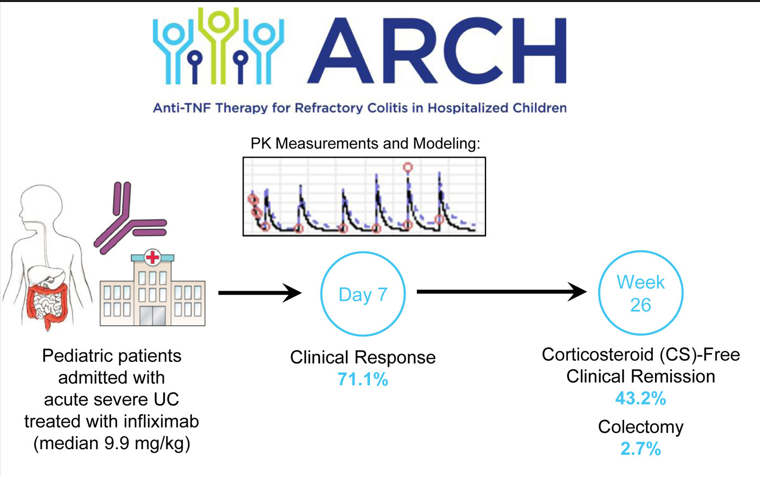
This was a multicenter prospective cohort of hospitalized children initiating IFX for ASUC or IBD-unclassified (n=38).

Key findings:

  • Compared to previous publications of pediatric ASUC, there was a low colectomy rate in this cohort of 2.7% at week 26 and 10.8% at 2 years
  • Median initial IFX dose was 9.9 mg/kg
  • Early rapid clearance was strongly associated with colectomy
  • Faster clearance was associated with higher WBC, presence of antibodies to infliximab and lower albumin. Higher platelets were associated with increased volumes of distribution. Concomitant immunomodulator use (26% with methotrexate, 13% thiopurine) “was not a significant covariate for PK parameters”

Discussion points:

  • Higher IFX dosing (10 mg/kg) may sufficiently optimize early outcomes in pediatric ASUC. Prior retrospective studies of adult and pediatric ASUC patients have supported lower colectomy rates with intensified induction regimens compared to standard induction regimens
  • The availability of vedolizumab may also have contributed to a lower colectomy rate
  • WBCs, “specifically neutrophils, may participate in the elimination of IFX”
  • Limitations: observational study, lack of dose standardization, lack of endoscopic outcomes

My take: Especially in pediatric patients, there is ample data to support using 10 mg/kg dosing for infliximab in patients with more severe inflammatory bowel disease, both ulcerative colitis and Crohn’s disease.

Related blog posts:

Durability of Biologics in Children with Inflammatory Bowel Disease

JL Kaplan et al. JPGN 2023; 76: 567-575. Open Access! Use, Durability, and Risks for Discontinuation of Initial and Subsequent Biologics in a Large Pediatric-Onset IBD Cohort

Methods: The authors analyzed pediatric inflammatory bowel disease (IBD) data from the ImproveCareNow Network registry (n= 17,649) between May 2006 and September 2016, including time to biologic initiation, choice of first subsequent biologics, biologic durability, and reasons for discontinuation

Key findings:

  • 7585 (43%) were treated with a biologic agent before age 18. 50% of children with Crohn’s disease (CD) received a biologic compared to 25% of children with ulcerative colitis (UC)
  • First biologic agents for all patients were anti-tumor necrosis factor agents (88% infliximab, 12% adalimumab)
  • Probability of remaining on first biologic in patients with CD: 93% at 6 months, 85% at 12 months, 79% at 24 months, and 74% at 36 months
  • Probability of remaining on first biologic in patients with UC: 84% at 6 months, 75% at 12 months, 66% at 24 months, and 55% at 36 months
  • First biologics were discontinued because of loss of response (39%), intolerance (23%), and nonresponse (19%).

My take: This is an important study that shows that anti-TNF therapy durability was 79% in patients with CD and 66% in patients with UC at 2 years. This pediatric-specific information will help with counseling families when starting biologic therapy. There was improvement in durability after 2013 compared to prior -so perhaps perhaps even better durability is occurring in 2023. It is a little ironic that this study is from ImproveCareNow given that the results are quite dated. There have been a lot of changes in the last seven years. These include the widespread use of dose optimization/therapeutic drug levels and the approval of several new classes of targeted medications.

Related blog posts:

Tucson Botanical Gardens

Landmark Study: Oral Biologic for Crohn’s –Upadacitinib

EV Loftus et al. N Engl J Med 2023; 388:1966-1980. Upadacitinib Induction and Maintenance Therapy for Crohn’s Disease

This study is the basis for the FDA’s approval of updacitnib (Rinvoq) for Crohn’s disease in adults: New FDA Rinvoq (upadacitinib) Indication: Oral Treatment For Crohn’s

This publication describes the results of two multicenter, double-blind, randomized, placebo-controlled induction trials (n=1021 adults,U-EXCEL, U-ECEED) and one maintenance trial (n=502, U-ENDURE) with Upadacitinib (Rinvoq). The induction trials involved an early mandatory glucocorticoid taper.

Key findings:

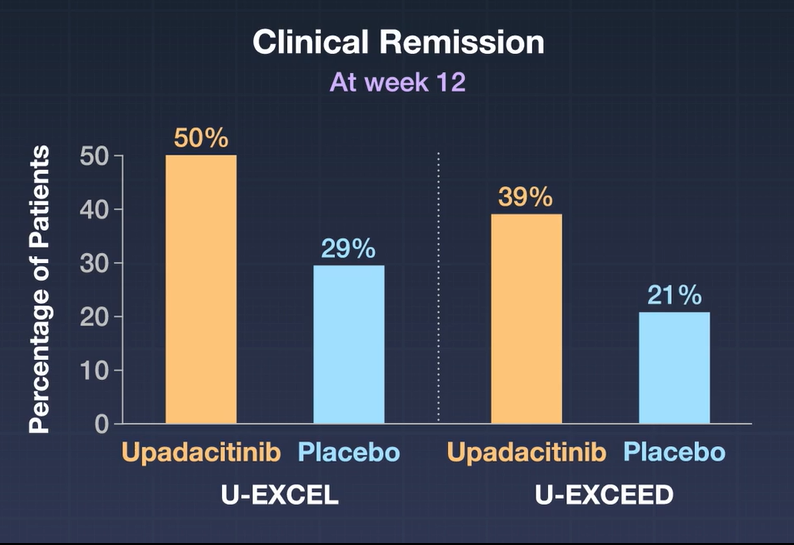
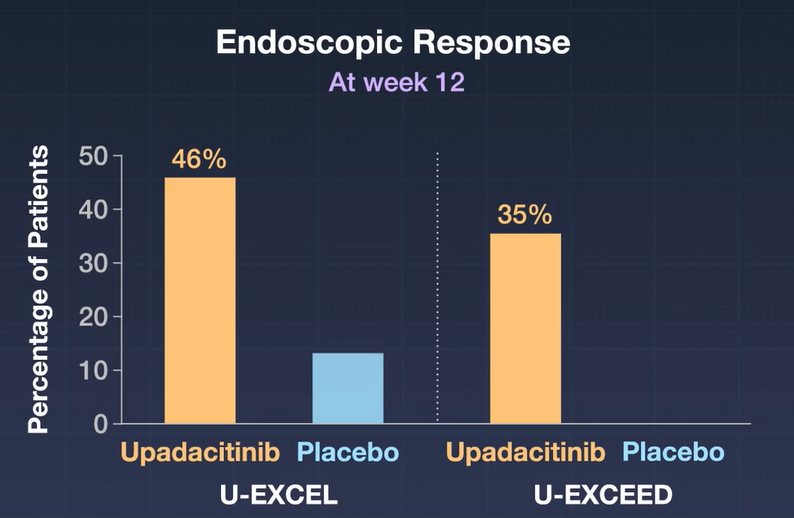
  • A significantly higher percentage of patients who received 45-mg upadacitinib than those who received placebo had clinical remission (in U-EXCEL, 49.5% vs. 29.1%; in U-EXCEED, 38.9% vs. 21.1%) and an endoscopic response (in U-EXCEL, 45.5% vs. 13.1%; in U-EXCEED, 34.6% vs. 3.5%) (P<0.001 for all comparisons).
  • There was a rapid onset of action with a difference in clinical response compared to placebo at 2 weeks
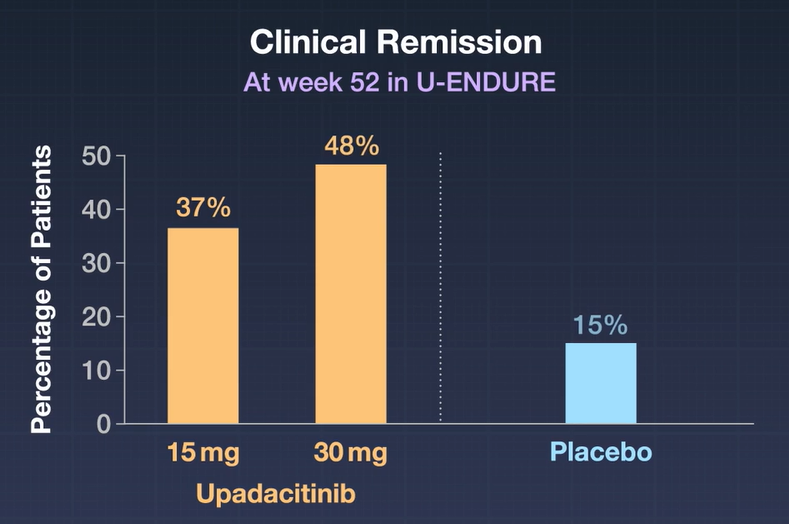
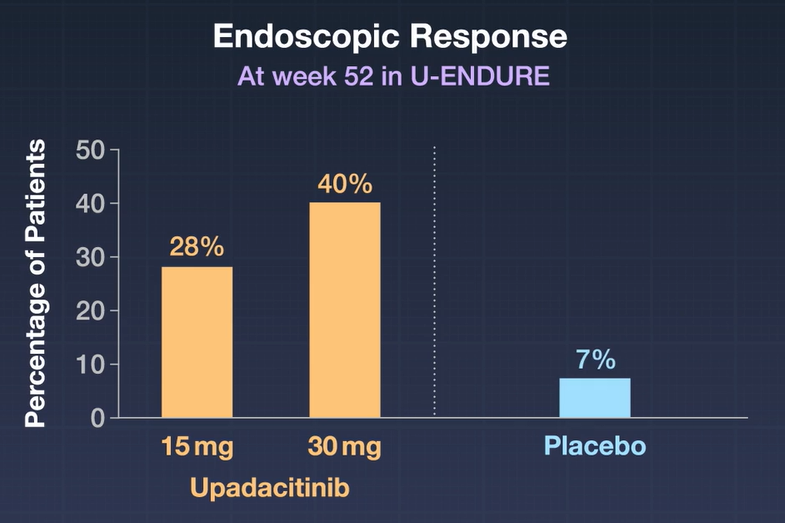
  • Maintenance Trial of clinical responders: At week 52 in U-ENDURE, a higher percentage of patients had clinical remission with 15-mg upadacitinib (37.3%) or 30-mg upadacitinib (47.6%) than with placebo (15.1%), and a higher percentage had an endoscopic response with 15-mg upadacitinib (27.6%) or 30-mg upadacitinib (40.1%) than with placebo (7.3%) (P<0.001 for all comparisons).
  • Adverse effects included gastrointestinal perforations (6 in study medication, 1 in placebo), neutropenia in up to 2.6%, and increased Herpes Zoster infections in patients receiving study medication (1.5% to 3%).

A good commentary of this study is in the same issue: M Abreu. N Engl J Med 2023; 388:2005-2009. It is noted that upadacitinib showed a good response even though a different JAK inhibitor, tofacitinib, had disappointing results for patients with Crohn’s disease. Other points:

  • “It is hard to compare findings across studies because of differences in the characteristics of patients and end points. That being said, the incidences of clinical remission observed by Loftus et al. were greater than those observed in most studies of biologic drugs to treat Crohn’s disease. Moreover, upadacitinib was more likely than placebo to resolve extraintestinal manifestations.”
  • “They did not find evidence of cardiovascular or thromboembolic complications, which were previously observed in patients with rheumatoid arthritis treated with tofacitinib and which led to a black-box warning.10 However, the treatment of greater numbers of patients for a longer duration will be required to determine whether upadacitinib is asssociated with a risk of such complications.”
  • “Among the most common upadacitinib-specific adverse events were anemia [6.9%] and acne [6.3%]. The increase in anemia may be due to off-target effects of upadacitinib on erythropoietin signaling through JAK2.”

My take: This is great news for patients with Crohn’s disease. In addition to having a new option for refractory disease, this option does not require IV administration. When will pediatric data be available?

New FDA Rinvoq (upadacitinib) Indication: Oral Treatment For Crohn’s

5/18/23: FDA approves first oral treatment for moderately to severely active Crohn’s disease

“Patients should start with 45 mg of Rinvoq once daily for 12 weeks. Following the 12-week period, the recommended maintenance dosage is 15 mg once a day. A maintenance dosage of 30 mg once daily can be considered for patients with refractory, severe, or extensive Crohn’s disease.”

“The most common side effects of Rinvoq as indicated for Crohn’s disease are upper respiratory tract infections, anemia, fever, acne, herpes zoster, and headache…. Serious infections, mortality, malignancy, major adverse cardiovascular events, and thrombosis have occurred with JAK inhibitors such as Rinvoq.”

Tucson Botanical Gardens

Pneumatosis Intestinalis in Children with Intestinal Failure

Tucson Botanical Gardens

ML Reppucci et al. JPGN 2023; 76: 561-565. Pneumatosis Intestinalis in Children With Intestinal Failure: The Result of Intestinal Stress From Enteral Feeding?

This was a single-center, retrospective review (n=111) of children with intestinal failure (2019-2022). Key findings:

  • 30.6% of patients (34 of 111) developed PI
  • Only one patient had a surgical cause (midgut volvulus) identified

The authors speculate that enteral feedings, in some, cause a stress (?relative ischemia, ?intraluminal pressure) which leads to pneumatosis.

My take: We still don’t understand pneumatosis intestinalis (PI) very well outside of the neonatal population where it is often a life-threatening medical condition.

Related blog post: Image Only: Pneumatosis Intestinalis in Necrotizing Enterocolitis

How Obesity Permeates Transplant Medicine

A Mathur. Liver Transplantation 2023; 29: 465-466. Open Access! Salvaging the fatty liver for transplant: is short duration NMP enough? (ed)

 “As of 2020, the Center for Disease Control (CDC) notes that 40% of the ~258 million US adults suffer from obesity. This represents just more than a 100 million people suffering from obesity. In addition, about 23 million people suffer from severe obesity with a body mass index >40 kg/m2.” Fatty liver disease (aka NAFLD), driven primarily by obesity, is a leading cause of liver transplantation. In addition, fatty liver disease is impacting the ability to treat liver failure.

“The end result of this epidemic is that we are identifying a greater proportion of organ donors with varying degrees of liver steatosis. Transplantation of steatotic livers is associated with an increased degree of ischemia-reperfusion injury (IRI) and release of inflammatory cytokines from the graft. The consequences of this can range from severe reperfusion syndromes with immediate vasoplegia and circulatory collapse to distant organ dysfunction with acute kidney injury, liver allograft dysfunction, and primary nonfunction (PNF).”

In order to try to identify suitable liver organs for transplantation, researchers are trying to identify strategies to utilize steatotic grafts safely. Patrono et al (Liver Transplantation 2023; 29: 508-502) examined the feasibility of using normothermic machine perfusion (NMP) in the setting of macrovesicular steatosis (MaS) ≥30%. They identified 10 patients who had liver transplants using NMP in patients with MaS ≥30%; 4 additional organs were not used despite NMP. 8 of 10 patients showed good liver function, representing 57% (8 of 14) of NMP fatty organs.

Another study in the same issue (NB Ha et al. Liver Transplantation 2023; 29: 476-484) showed that patients with sarcopenic obesity (=low muscle mass obesity) had high waitlist mortality of 40% compared to 21% and 12% for those with sarcopenia without obesity and for those with obesity without sarcopenia, respectively.

My take: Obesity increases the risk of fatty liver associated cirrhosis/liver failure, and is impacting the availability of suitable organs for those in need. Furthermore, in those with obesity, the presence of sarcopenia increases the risk of death on transplant waitlist.

Tucson Botanical Gardens

Answering Patient Questions: AI Does Better Than Doctors

Eric Topol (4/28/23): When Patient Questions Are Answered With Higher Quality and Empathy by ChatGPT than Physicians

RE: JW Ayers et al. JAMA Intern Med 2023; doi:10.1001/jamainternmed.2023.1838 Open Access! Comparing Physician and Artificial Intelligence Chatbot Responses to Patient Questions Posted to a Public Social Media Forum

Thanks to Jeff Lewis for sharing Eric Topol’s article. Here are some excerpts:

In JAMA Internal Medicine, a new report compared the quality and empathy of responses to patient questions for doctors vs ChatGPT, a generative AI model that has already been superseded by GPT4…

Researchers at UCSD used the Reddit social media platform (Reddit’s/AskDocs) to randomly selected 195 patient questions that had been answered by verified, volunteer physicians and also posed them to ChatGPT in an identical fashion. The answers were reviewed by a panel of 3 health care professionals blinded to whether the response was from a doctor or the chatbot…

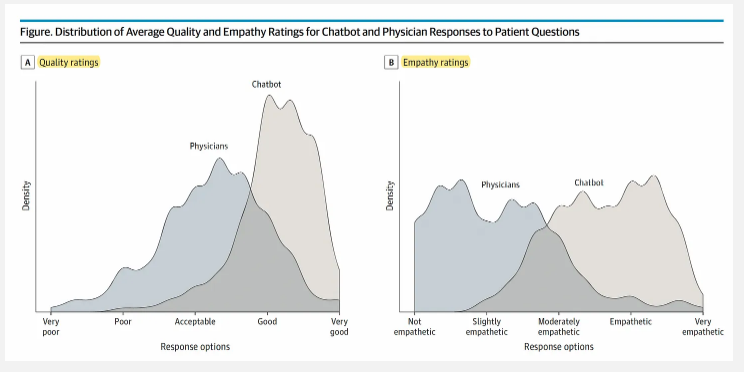
The results were pretty striking, as shown in the graph below. For quality, the evaluators preferred the ChatGPT response 79% of the time; the quality score of good and very good was 79% for the chatbot vs 22% for physicians, a near 4-fold difference. That gap was even greater for empathy rating of the responses, nearly 10-fold higher favoring the chatbot, for proportion of empathetic or very empathic responses (45.1 vs 4.6%). As would be expected, the length of responses by doctors was significantly reduced (average of 52 vs 211 words, respectively). Of course, doctors have less time available and machines can generate such long-form output in seconds…

Several examples were presented, and I show one below that is representative. This actually happened to my mother-in-law several years ago and it was quite a frightening incident with extensive corneal injury.There were definite limitations of the study, since the questions were derived from a social medial platform, not from physicians who were actually involved in the care of the patient asking questions. And, of course, this was not comparing the additivity of a chatbot plus a physician..

My take: This study indicates that physicians/patients may benefit from leveraging chatbots to improve communication.  Artificial intelligence assistants can aid in drafting responses to patient questions. Though physicians, at this time, are more capable of providing patient-specific information. For more general questions, chatbots appear to do quite well. My personal office-related experience with ChatGPT includes drafting an appeal letter, providing educational material on encopresis, helping with a condolence letter, and researching a rare condition. Just two days ago (at the time of drafting this post), I asked ChatGPT to explain ulcerative colitis and treatments, including mesalamine and steroids, at an 8th grade reading level in Spanish. I found this was a good way to start a conversation with a family.

This study was covered in many news outlets including WSJ, CNN, Yahoo, Daily Mall…

Related blog posts:

Does Positioning Help Infants with Reflux?

IM Paul et al. JPGN Reports 2023; 4(2):p e312. Open Access! Pilot Study of Inclined Position and Infant Gastroesophageal Reflux Indicators

Methods: Healthy infants aged 1–5 months with gastroesophageal reflux disease (GERD) (N = 25) and controls (N = 10) were enrolled into one post-feed observation. Infants were monitored in a prototype reclining device for consecutive 15-minute periods in supine position with head elevations of 0°, 10°, 18°, and 28° in random order. Continuous pulse oximetry assessed hypoxia (O2 saturation <94%) and bradycardia (heart rate <100).

Key findings:

  • Overall, 17 (68%) infants had 80 episodes of hypoxia (median 20 seconds duration), 13 (54%) had 33 episodes of bradycardia (median 22 seconds duration), and 15 (60%) had 28 episodes of regurgitation.
  • For all 3 outcomes, incident rate ratios were not significantly different between positions, and no differences were discovered for observed symptoms or infant comfort.

Limitations: This was a one-feeding study with a small number of infants

My take: This study shows a high frequency of transient hypoxia and bradycardia in healthy infants with regurgitation. In addition, there was not improvement in reflux parameters in the inclined position.

Related blog posts:

Tucson Botanical Gardens

Incredible Review of GERD, BRUE, Aspiration, and Gastroparesis

Recently, Rachel Rosen gave a terrific review of reflux and reflux-related entities as part of our annual William (Billy) Meyers lectureship.  This lecture information would be helpful for every pediatric gastroenterologist as well as every pediatrician, pediatric ENT, pediatric pulmonologist, pediatric SLP and lactation specialist.  It puts to rest many obsolete ideas about reflux and its management. Some of her points have been covered by this blog previously (see links below) and by her bowel sounds podcast (see link below).   Some errors of omission and transcription may have occurred as I took notes during this lecture. 

Main points:

Reflux

  1. Using the label “GERD” increases the likelihood that an infant will be prescribed acid blockers; this phenomenon is noted as well with SLP and lactation specialist team members.  Everyone needs to be careful about ascribing infant symptoms to “reflux disease”
  2. AR formulas need acid to increase their viscosity (don’t use PPIs in infants taking AR formulas). Also, AR formula viscosity is hindered when mixed with breastmilk (don’t mix with breastmilk)
  3. Most infants with reflux have nonacid reflux.  PPIs do not help nonacid reflux
  4. PPIs are associated with increased aspiration and infection risks.  Acid suppression has been associated with increased risk of allergic diseases
  5. Rumination can look a lot like reflux on pH probe studies
  6. Reflux hypersensitivity, and functional heartburn can result in similar symptoms as reflux (can be distinguished with pH testing)
  7. Pepsin can increase lung inflammation and can be increased by PPI use
  8. Red airway appearance is NOT indicative of reflux (poor specificity, poor sensitivity)
  9. If having symptoms with transpyloric feedings, this indicates that the symptoms are NOT due to reflux; transpyloritc feedings have similar efficacy as a fundoplication
  10. Avoid fundoplication.  It does not result in fewer hospitalizations or improve pulmonary outcomes.  It can result in a number of complications
  11. Consider genotyping for CYP2C19 pharmacogenetics in patients receiving chronic PPI.  Those with rapid metabolism could benefit from higher doses.  Those with slow metabolism could benefit from lower doses.  Higher doses of PPIs increase risk for infections
  12. Bolus feedings result in fewer problems than continuous feedings

Delayed Gastric Emptying (Gastroparesis)

  1. Delayed GE is associated with increased lung bile acids.  This is important in lung transplant recipients and increased lung bile acids is seen more commonly in those with frequent admissions for respiratory issues
  2. In Dr. Rosen’s experience, prucalopride is currently the most useful promotility agent in documented gastroparesis

BRUE:

  1.  Infants with BRUE need to be tested for aspiration, not prescribed PPIs.
  2.  VSS (aka OPMS) has the highest yield of any test in infants with BRUE (~72% abnormal testing in one study). 
  3. Silent aspiration is common -don’t rely on SLP bedside assessment.
  4. Even with this diagnosis, many infants are still prescribed PPIs which increase the risk of complications (more hospitalizations, more infections, possible increase in allergies)

Aspiration:

  1. There are a number of potential etiologies, though most infants have aspiration due to neurological reasons (most transitory and improved by 7 months of age)
  2. In Boston, less than 5% with aspiration on VSS required GT placement
  3. Thickeners can be very helpful.  Practitioners need to know the differences (don’t use Simply Thick in 1st year of life due to NEC risk)

Chronic Cough:

  1. ~10% of kids with chronic cough have eosinophilic esophagitis (who have seen GI in Boston)

Related blog posts:

Cacti at Tucson Botanical Gardens

Increasing Violence in Health Care Settings

NPR 5/15/23: Hospitals create police forces to stem growing violence against staff

An excerpt:

This May, Georgia Gov. Brian Kemp, a Republican, signed a law that boosts criminal penalties for assaults against hospital workers and allows health care facilities in the state to create independent police forces. The law is a response to that testimony as well as hospital lobbying and data documenting a rise in violence against health care workers. In enacting the law, Georgia joined other states attempting to reverse a rise in violence over the last several years through stiffer criminal penalties and enhanced law enforcement…

Health care workers are five times as likely to experience violence as employees in other industries, according to federal data. On May 3, the day after Kemp signed the Safer Hospitals Act into law, a person opened fire in a midtown Atlanta medical office, killing one woman and injuring four others, including workers at the medical practice…

Health centers say they are better able to retain workers and improve patient care when they can reduce the number of violent incidents,