AGA Guidance: Nutritional Therapies for Inflammatory Bowel Disease

JG Hashash et al.Gastroenterology 166; 521-532. Open Access! AGA Clinical Practice Update on Diet and Nutritional Therapies in Patients With Inflammatory Bowel Disease: Expert Review

There are 12 “best practice” recommendations. Here are a few of them:

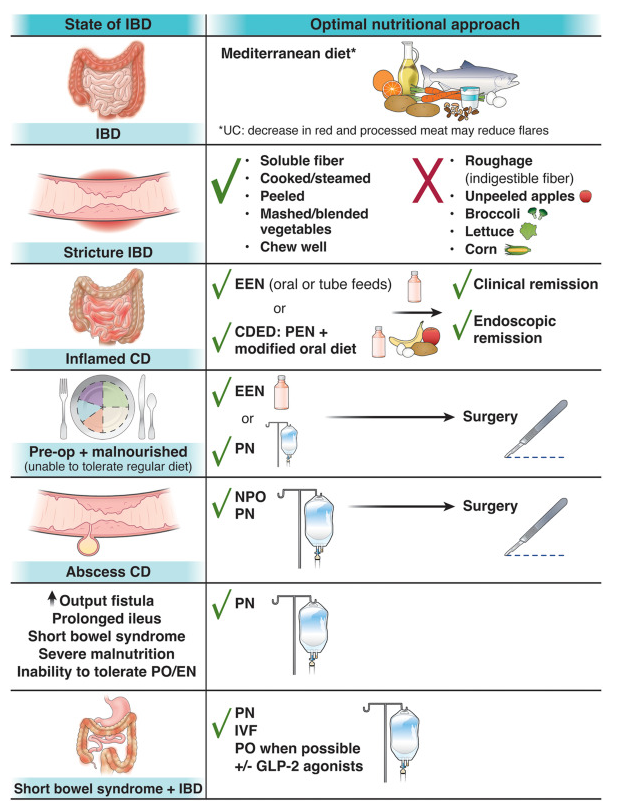
  • Best Practice Advice 1: Unless there is a contraindication, all patients with IBD should be advised to follow a Mediterranean diet rich in a variety of fresh fruits and vegetables, monounsaturated fats, complex carbohydrates, and lean proteins and low in ultraprocessed foods, added sugar, and salt for their overall health and general well-being. No diet has consistently been found to decrease the rate of flares in adults with IBD. A diet low in red and processed meat may reduce ulcerative colitis flares, but has not been found to reduce relapse in Crohn’s disease.
  • Best Practice Advice 3: Exclusive enteral nutrition using liquid nutrition formulations is an effective therapy for induction of clinical remission and endoscopic response in Crohn’s disease, with stronger evidence in children than adults. Exclusive enteral nutrition may be considered as a steroid-sparing bridge therapy for patients with Crohn’s disease.
  • Best Practice Advice 6: In patients with IBD who have an intra-abdominal abscess and/or phlegmonous inflammation that limits ability to achieve optimal nutrition via the digestive tract, short-term parenteral nutrition may be used to provide bowel rest in the preoperative phase to decrease infection and inflammation as a bridge to definitive surgical management and to optimize surgical outcomes.
  • Best Practice Advice 7: We suggest the use of parenteral nutrition for high-output gastrointestinal fistula, prolonged ileus, short bowel syndrome, and for patients with IBD with severe malnutrition when oral and enteral nutrition has been trialed and failed or when enteral access is not feasible or contraindicated.
  • Best Practice Advice 10: All patients with IBD should be monitored for vitamin D and iron deficiency. Patients with extensive ileal disease or prior ileal surgery (resection or ileal pouch) should be monitored for vitamin B12 deficiency.
  • Best Practice Advice 12: Breastfeeding is associated with a lower risk for diagnosis of IBD during childhood. A healthy, balanced, Mediterranean diet rich in a variety of fruits and vegetables and decreased intake of ultraprocessed foods have been associated with a lower risk of developing IBD.

AGA has a summary and video here: What you need to know about diet and nutritional therapies for IBD patients

Related blog posts:


Worldwide Trends in Underweight and Obesity

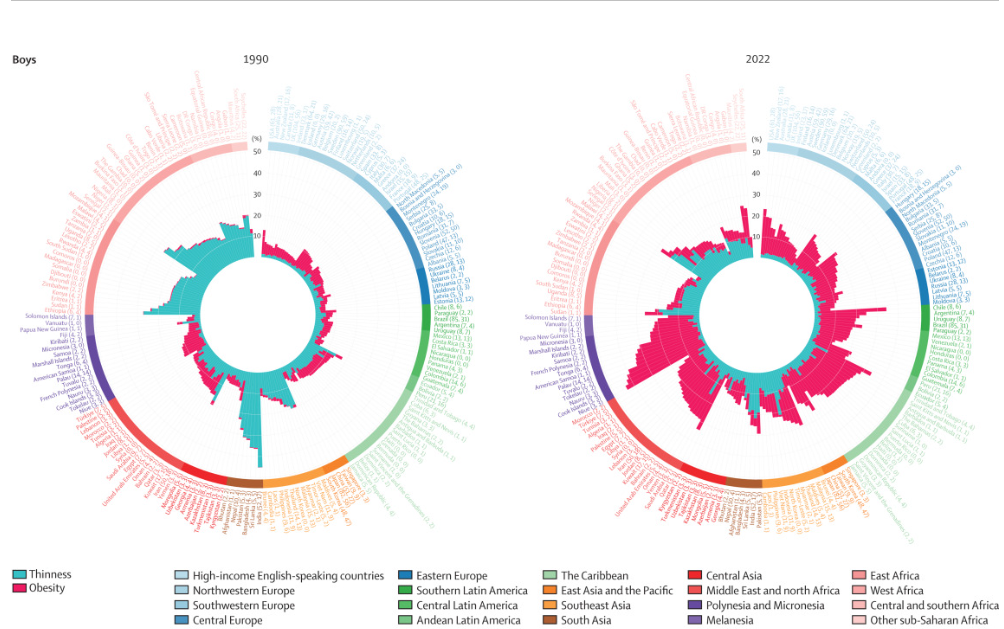
NCD Risk Factor Collaboration. The Lancet 2024; DOI:https://doi.org/10.1016/S0140-6736(23)02750-2 Open Access! Worldwide trends in underweight and obesity from 1990 to 2022: a pooled analysis of 3663 population-representative studies with 222 million children, adolescents, and adults

The authors used data from 3663 population-based studies with 222 million participants that measured height and weight in representative samples of the general population.

Key findings:

  • More than a billion people globally are now considered obese.
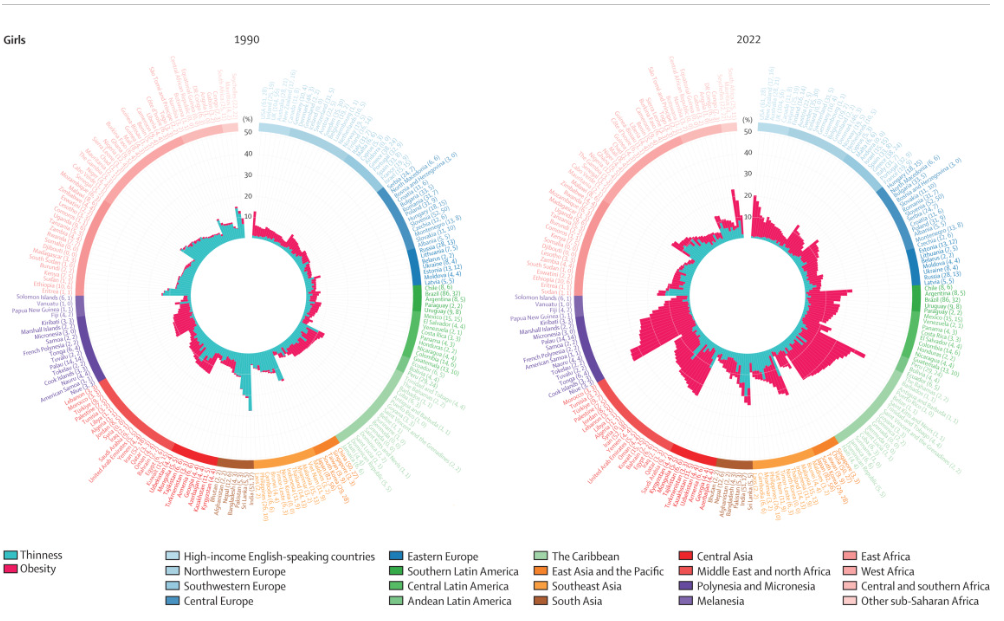
  • Obesity has more than quadrupled among children and adolescents since 1990.
  • Among all adults, 43 percent were overweight in 2022.
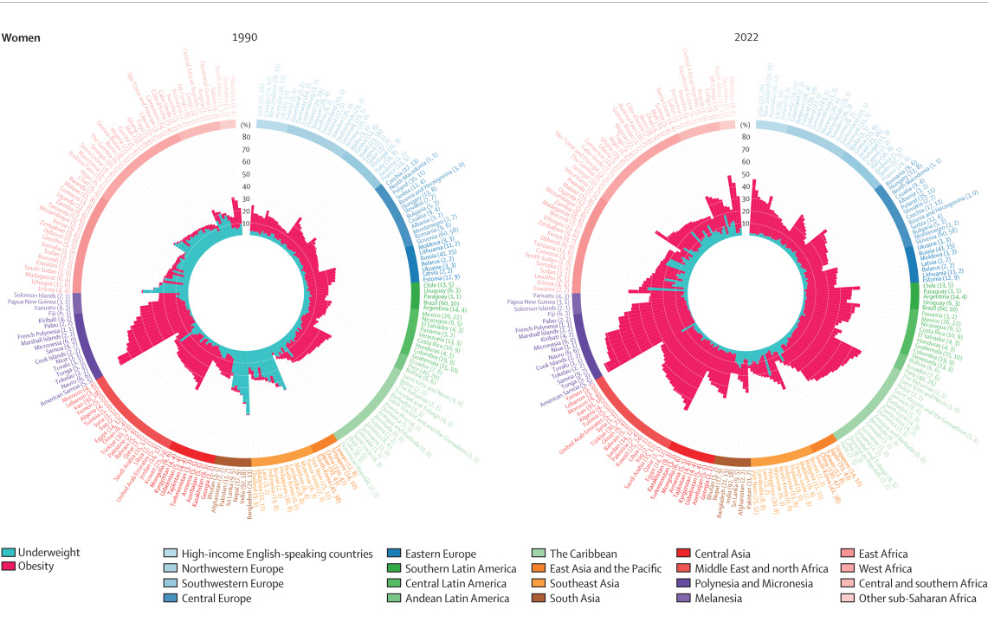
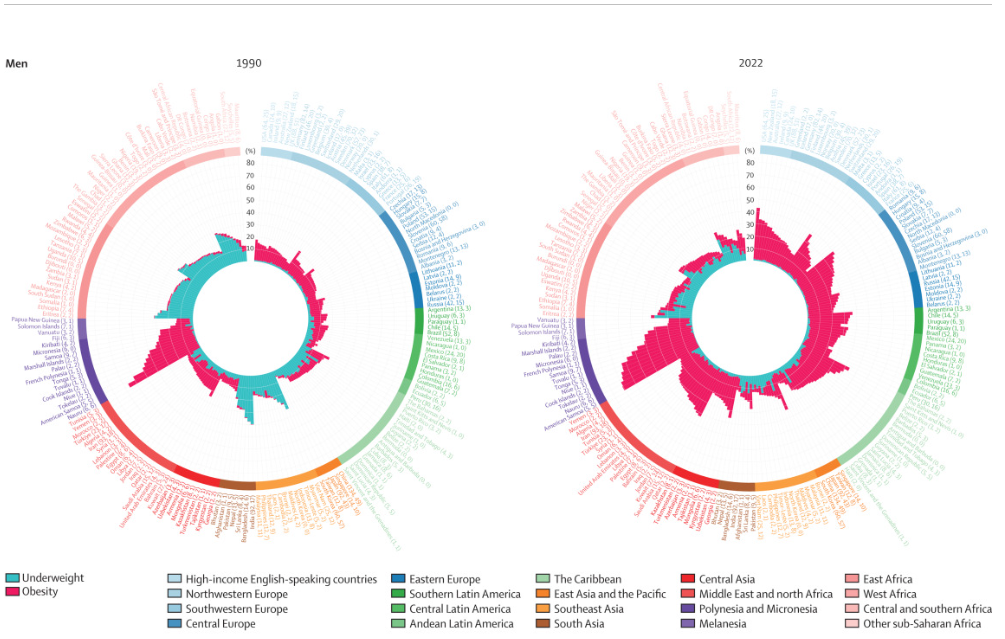
  • The combined burden of underweight and obesity has increased in most countries, driven by an increase in obesity, while underweight and thinness remain prevalent in south Asia and parts of Africa.
  • The trend of increasing obesity prevalence was present in adults and children (5-19 years).
  • Age-standardized prevalence of obesity increased by more than 20 percentage points in 49 countries (25%) for women and 24 countries (12%) for men, and by as much as 33·0 percentage points in The Bahamas for women and 31·7 percentage points in Romania for men.

My take: This is an impressive study providing extensive data on what’s happening with weight trends. Clearly, there is an urgent need for obesity prevention.

Related blog posts:

Humor from The Onion:

Primary Prevention of Obesity Still Needed

SL Gortmaker, SN Bleich, DR Williams. NEJM 2024; 390: 681-683. Childhood Obesity Prevention — Focusing on Population-Level Interventions and Equity

Despite the exciting advances in obesity pharmacology, most children and adults are unlikely to benefit from these expensive therapies anytime in the near future.

This commentary’s key points:

  • “Scholars and policymakers shouldn’t lose sight of population-level strategies that can prevent excess weight gain and obesity among children in the first place.”
  • The authors identify three successful policy examples: 1. Revision of WIC food packages to improve nutritional quality at a cost about $18 per child. 2. Improving school lunch standards (2010 Healthy, Hunger-Free Kids Act) at a cost of about $30 per child. 3. Excise tax on sugar-sweetened beverages. “In California, an analysis found that such a tax would be cost-saving, would prevent 42,700 cases of obesity in children and 223,000 cases in adults statewide over 10 years because of projected reductions in consumption of sugar-sweetened beverages.”
  • “Leveraging these strategies won’t fix the problem of childhood obesity overnight, but it could (and has already begun to) slow the development of new cases, particularly among members of historically underserved populations — a major public health achievement.”

My take: There is not a simple solution for widespread obesity in children and adults. We need to chip away at this problem from every angle. It is crucial to use public policy changes as one of our tools.

Related blog posts:

Near Leduck Island off St John

NY Times: Bariatric Surgery at 16

Wishing everyone a good holiday & thanks to those of you who are working today

———————————-

NY Times 10/31/23: Bariatric Surgery at 16

This is a terrific review of obesity and current management options, including surgery and medications. The review provides a thorough explanation of some of the reasons why we are having so many more children with obesity. The article personalizes the problems by focusing on one teen, Alexandra, who underwent sleeve gastrectomy.

Here are a few excerpts (from this lengthy article):

Alexandra is one of the roughly 20 percent of children in the United States living with obesity, up from 5 percent in the 1970s. Another 16 percent or so are considered overweight…

In response to so many grim facts, the A.A.P. in January released its first “clinical practice guideline” for those who care for children who have obesity. The academy now recommends that they immediately start “intensive health behavior and lifestyle treatment,” which it labels “the foundation” of obesity management; this approach supersedes the former strategy of “watchful waiting.” For older youth in certain circumstances — those with a higher B.M.I., say — drugs and, in cases of severe obesity, surgery should be made available as options...

The tenacity of body weight can be traced to our biology. Humans evolved to resist losing body fat so that we don’t become extinct, says Rudolph Leibel, chief of the pediatric molecular genetics division at Columbia University’s medical center…

A small number of children with severe obesity are born with leptin deficiency, a gene mutation identified by Sadaf Farooqi, a professor at the University of Cambridge’s Institute of Metabolic Science. Their appetites seem to be bottomless. Though it’s rare, Farooqi cites the extreme effect of this mutation as a clear illustration of the “very strong” impact that biology has upon appetite….Ghrelin, a hunger hormone, increases when food intake is restricted, making us eat more. Insulin, another important hormone, helps turn the food we eat into energy and controls things like blood sugar that influence how much we eat…“We don’t decide whether we’re going to be hungry or not, whether we’re going to have a craving or not….

Genetics may determine more than 70 percent of children’s body weight…But if our genes didn’t change significantly in the last century, why, then, are children getting bigger?No one knows for sure. One likely explanation, however, is the evolutionary mismatch between our genes and our surroundings…

The amount of readily accessible food has expanded immensely, making it easier than ever to eat — open a phone app, say, or go to a drive-through. Plenty of Americans can consume as much as they want, whenever they want.

Today nearly 70 percent of what children eat is ultraprocessed food… Ultraprocessed foods appeal to parents too: They’re cheap, last for years in pantries and freezers and require little preparation. “All food companies are trying to sell products,” Nestle says. “That’s the system, and if the system makes kids fat, well, too bad. Collateral damage.”..Over the past few decades, the variety of food items in some supermarkets has risen to more than 40,000 from 7,000…

Adolescents who have had bariatric surgery — most of them white and female — experienced weight loss similar to what adults lost: around 25 percent of their B.M.I. And while nearly 90 percent of these teenagers needed diabetes medications before the operation, none did afterward…Only a tiny fraction of the teenagers with severe obesity who qualify actually receive the operation…

The latest glucagon-like peptide-1 receptor agonists — as a group, commonly referred to as Ozempic — are the true game changers, a class of drugs that are making possible a degree of weight loss not seen before with medications. The pharmaceutical company Novo Nordisk manufactures GLP-1s for weight loss, one of which is semaglutide and sold under the brand name Wegovy. (Ozempic is the brand name for a lower-dose version of semaglutide that is prescribed to treat diabetes)…

The major studies of children and these drugs have enrolled many fewer adolescent subjects than adults, but no new safety concerns have emerged. In addition to semaglutide’s principal side effects of nausea, vomiting and diarrhea — reported by two-thirds of study participants — more serious ones include gallstones and pancreatitis. Wegovy comes with a caution about possible thyroid cancer, and the F.D.A. mandates that it include a warning about the possibility of suicidal ideation, because it acts on the brain…If patients discontinue the medicines, the weight returns…older drugs in its class have been used to treat diabetes for nearly two decades. But for any new medicine, the long-term risks remain uncertain…

For now, most adolescents who qualify for semaglutide probably won’t be able to get the drug at all [due to cost and drug shortages]….

[At the same time] a greater awareness of the drawbacks that can accompany the medicalizing of obesity, have fueled popular body-positivity movements like Health at Every Size, which seek to disentangle weight from health…

But despite the risks that can accompany obesity treatments — and despite the fact that the data doesn’t always present a clear picture — the prevailing attitude within the medical establishment is that, on balance, the potential negative consequences of obesity are too evident to ignore

Related blog posts:

The sidewalks and courtyards in Portugal have these amazing intricate patterns of rocks

Good Review on Newest Medications for Obesity

For those wanting an in-depth review:

Eric Topol: “The GLP-1 and now triple G-Agonists are exceeding expectations as weight loss drugs. Benefits for cardiovascular outcomes, possibly Type 1 diabetes, addiction, and more are reviewed in the latest Ground Truths.” His newsletter also describes the early results of these medications with MASH/NASH with improvement in ~90%.

To get the full review, go to Ground Truths: http://erictopol.substack.com (can sign up to get regular emails on many current medical topics)

Related blog posts:

Management of Ostomies

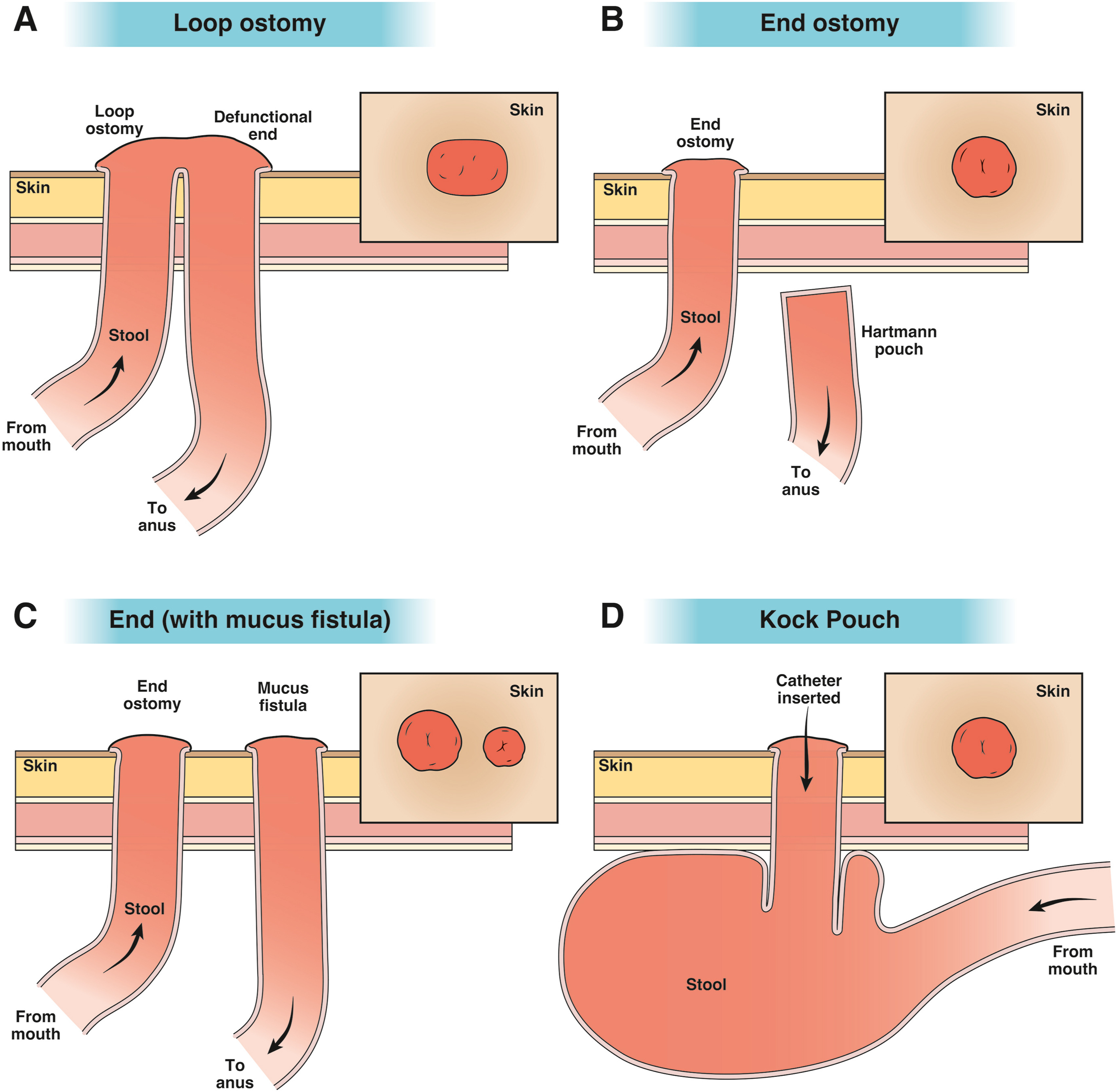
TL Hedrick et al. Clin Gastroenterol Hepatol 2023; 21: 2473-2477. Open Access! AGA Clinical Practice Update on Management of Ostomies: Commentary

This article is a helpful review on ostomy care. The article reviews approaches to common problems including early high ostomy output, ostomy leakage, stoma retraction, mucocutaneous separation, dermatological problems, chronic high ostomy output, parastomal hernia, and stoma prolapse. A few of their comments:

  • “An estimated 750,000 Americans live with an ostomy and 130,000 new ostomy surgeries occur in the United States annually.1
  • “Reversal [of ostomy] before 6 weeks of the index surgery is associated with an increased risk of complications”
  • For leakage of ostomy: “Management steps involve thickening the stool with antidiarrheals to facilitate a more solid effluent and pouching techniques to bolster the height of the stoma off the peristomal skin (eg, convex appliance, ostomy belt, paste, or barrier rings). Each of these items is available through the patient’s medical equipment supplier. Additional pearls include heating the appliance with a hair dryer before application, lying flat for several minutes after application, ensuring the peristomal skin is dry before application, and use of a fine dusting of stomal powder followed by skin sealant on the peristomal skin before application.”
  • Stoma prolapse: “The rate of stomal prolapse is 5% to 10%.12 Acute prolapse can lead to incarceration and ischemia, which presents as pain, obstipation, and purple/black discoloration of the stoma…In the absence of ischemia, the prolapse may be reduced by laying the patient in a relaxed position and gently squeezing the ostomy back into the abdomen. If the stoma cannot be reduced with pressure alone, a cup of sugar applied directly to the stoma and left in place for 20 minutes can reduce stomal swelling and facilitate reduction of the prolapse. Surgery can be avoided if the prolapse is mild, easily reducible, and does not interfere with pouching.”
  • Medications for High Ostomy Output include bulking agents (fiber, guar gum, marshmellows), antimotility agents (eg. loperamide, diphenoxylate/atropine), and antisecretory agents (PPIs, Octreotide). Treatment of specific underlying disease may help, such as anti-inflammatory agents for IBD and GLP-2 analogues for short bowel.

Related blog posts:

Disclaimer: This blog, gutsandgrowth, assumes no responsibility for any use or operation of any method, product, instruction, concept or idea contained in the material herein or for any injury or damage to persons or property (whether products liability, negligence or otherwise) resulting from such use or operation. These blog posts are for educational purposes only. Specific dosing of medications (along with potential adverse effects) should be confirmed by prescribing physician.  Because of rapid advances in the medical sciences, the gutsandgrowth blog cautions that independent verification should be made of diagnosis and drug dosages. The reader is solely responsible for the conduct of any suggested test or procedure.  This content is not a substitute for medical advice, diagnosis or treatment provided by a qualified healthcare provider. Always seek the advice of your physician or other qualified health provider with any questions you may have regarding a condition.

Getting over the Stigma of Medicines for Anxiety/Depression and Obesity

This is a terrific personal account of starting medications for anxiety/depression and obesity.

NY Times: Aaron Carroll 9/9/23, What Obesity Drugs and Antidepressants Have in Common

An excerpt:

Until a few years ago, I had controlled my depression and anxiety through decades of counseling. I was reluctant to try medications because the medical understanding of them seemed vague…We also can’t explain why some people benefit from S.S.R.I.s and others do not. Because of this, many people still believe those who take them don’t really need them. I also believed that, if I was strong enough, I didn’t need medication…

I was wrong to doubt. It’s had a remarkable effect on my mood, and almost everyone around me noticed the difference. I was more optimistic, friendlier and more engaging. I was forced to reconsider why I had avoided taking the medication for so long. I think it’s because — even though I realize this isn’t true — taking it felt like an admission of failure…

I’ve recently faced a similar scenario with new drugs for obesity. I’ve struggled with my weight for most of my life. I’ve always been overweight, and in the last few years, I’ve slipped into obesity, according to my body mass index. I exercise regularly and carry the weight well, but it bothers me immensely. It especially troubles me because I have a fair amount of self-discipline and eat quite healthfully

Despite all the advances in science, we don’t know why some people, even when they try desperately, can’t seem to lose weight. Because of that, we often assume it must be a lack of willpower…

These drugs are expensive, but I was determined to see what would happen if I took one. It is hard to explain what life is like on this medication to people who don’t have trouble controlling their weight. I’m not hungry all the time. I’m not thinking about food incessantly. I’m not obsessing about what I wish I could eat and what I can’t. My mental health, and even my temperament, improved so much that my whole family rejoiced…

Before writing this essay, I had told just a few people I’m on the drug. I think it’s because, on some level, I still feel shame. I felt the same when I finally started taking an antidepressant…

Medical treatments should not be dismissed just because we don’t fully grasp their mechanisms; people who use them are not cheating.

Related blog posts:

Photos from Washington DC

Another Promising Medication (Retatrutide) for Obesity

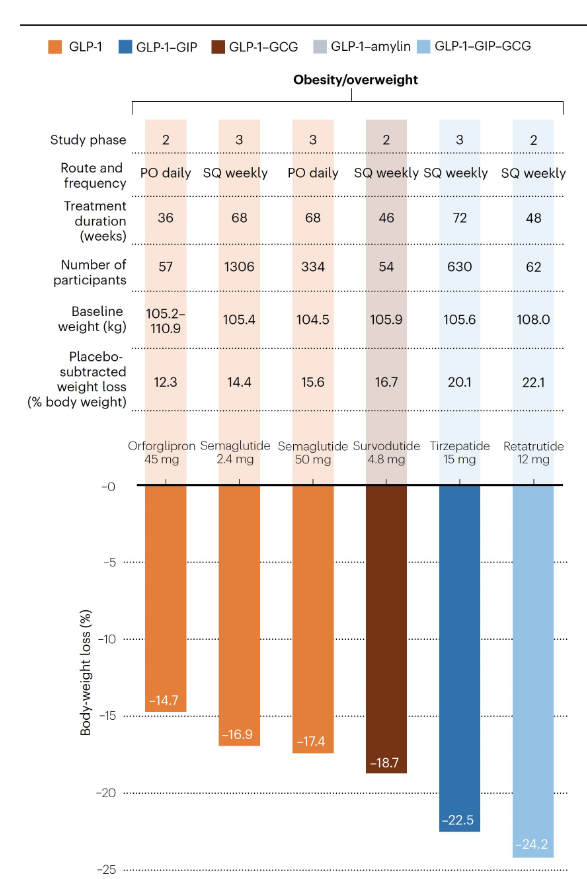
AM Jastreboff et al. NEJM 2023; DOI: 10.1056/NEJMoa2301972. Triple–Hormone-Receptor Agonist Retatrutide for Obesity  — A Phase 2 Trial.

Background: Retatrutide (LY3437943) is an agonist of the glucose-dependent insulinotropic polypeptide, glucagon-like peptide 1, and glucagon receptors.

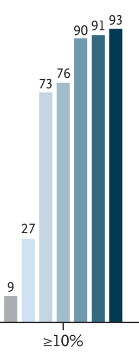
Methods: This study enrolled 338 with BMI of at least 27 in a a phase 2, double-blind, randomized, placebo-controlled trial with once-weekly injections of retatrutide.

Key Findings:

The number who achieved at least a 10% weight loss:

“The safety profile of retatrutide was consistent with reported phase 1 findings in persons with type 2 diabetes13 and similar to those of therapies based on GLP-1 or GIP–GLP-1 for the treatment of type 2 diabetes or obesity”

My take: There are a number of effective agents for obesity that have been developed very recently. Long term efficacy and safety are still not well-understood.

Related blog posts:

Guilt of Breastfeeding Failure

In previous posts, this blog (see below) has examined the potential bias of studies reporting better outcomes in breastfed infants along with issues of maternal guilt. A recent commentary explores the issue of feeling guilty when breastfeeding does not go well.

AJ Kennedy. NEJM 2023; 388:1447-1449. Breast or Bottle — The Illusion of Choice

Some excerpts:

Only about 25% of women in the United States exclusively breast-feed for the recommended period.2  After my struggles, these statistics seem realistic to me, but before I went through it myself, I had no concept of how hard it could be…

Around the time my son turned 6 months old…my primary care doctor… gave me the courage to start taking medication and to stop breast-feeding that very week. Though the guilt about stopping has never fully gone away, the joy and happiness in my life quickly returned…

Even after I’ve told them that I might not choose to breast-feed this time around [with 2nd child], multiple doctors have “reminded” me that breast milk has been shown to carry Covid-19 antibodies — yet another reason to feel ashamed if I choose not to breast-feed…I am hopeful that this time around I can embrace formula feeding more quickly if that is the path that works best for me and my baby,…

I encourage the AAP and other national health organizations to consider how their statements on exclusive breast-feeding are perceived by the public. If 75% of us are not meeting this goal [6 months of exclusive breastfeeding], a more patient-centered approach and recommendation is needed.

My take: Breastfeeding does not work for everyone. Parents often feel guilty about perceived short-comings and we need to find a balance in encouraging breastfeeding but acknowledging that formula feeding is a good alternative.

Related blog posts:

Organ Pipe Cactus, Tucson Botanical Gardens

How to Get More Active Kids

J Pedersen et al. JAMA Pediatr 2022; 176: 741-749. Effects of Limiting Recreational Screen Media Use on Physical Activity and Sleep in Families With Children

Key finding: In this cluster randomized controlled trial (n=181, ages 6-10 years), screen media reduction in the treatment group resulted in an increase of 45.8 minutes per day of physical activity compare to the usual routine group.

Related blog posts:

Little Finger Rock Trail, Tucson, AZ