Management of Ostomies

TL Hedrick et al. Clin Gastroenterol Hepatol 2023; 21: 2473-2477. Open Access! AGA Clinical Practice Update on Management of Ostomies: Commentary

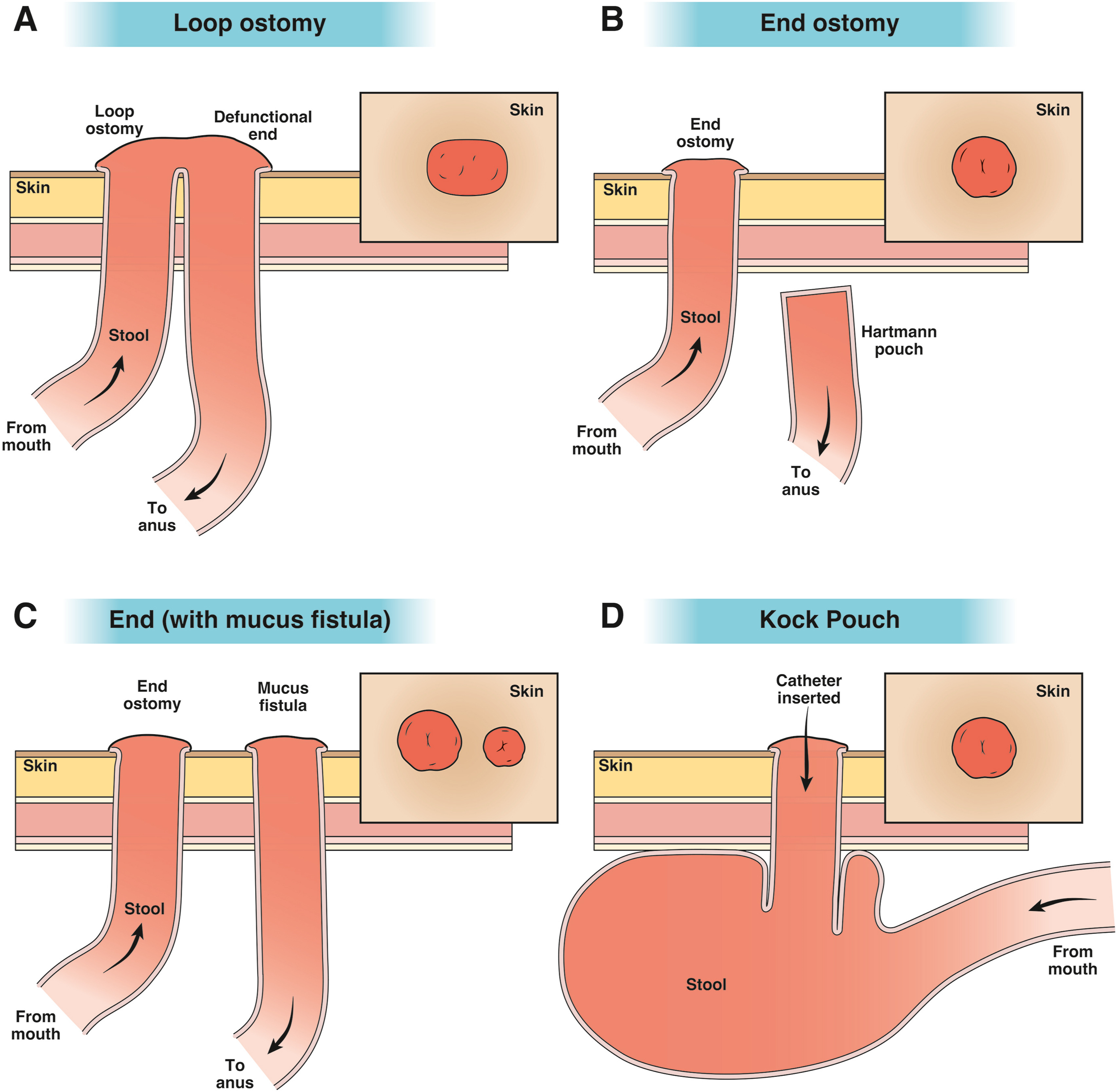
This article is a helpful review on ostomy care. The article reviews approaches to common problems including early high ostomy output, ostomy leakage, stoma retraction, mucocutaneous separation, dermatological problems, chronic high ostomy output, parastomal hernia, and stoma prolapse. A few of their comments:

  • “An estimated 750,000 Americans live with an ostomy and 130,000 new ostomy surgeries occur in the United States annually.1
  • “Reversal [of ostomy] before 6 weeks of the index surgery is associated with an increased risk of complications”
  • For leakage of ostomy: “Management steps involve thickening the stool with antidiarrheals to facilitate a more solid effluent and pouching techniques to bolster the height of the stoma off the peristomal skin (eg, convex appliance, ostomy belt, paste, or barrier rings). Each of these items is available through the patient’s medical equipment supplier. Additional pearls include heating the appliance with a hair dryer before application, lying flat for several minutes after application, ensuring the peristomal skin is dry before application, and use of a fine dusting of stomal powder followed by skin sealant on the peristomal skin before application.”
  • Stoma prolapse: “The rate of stomal prolapse is 5% to 10%.12 Acute prolapse can lead to incarceration and ischemia, which presents as pain, obstipation, and purple/black discoloration of the stoma…In the absence of ischemia, the prolapse may be reduced by laying the patient in a relaxed position and gently squeezing the ostomy back into the abdomen. If the stoma cannot be reduced with pressure alone, a cup of sugar applied directly to the stoma and left in place for 20 minutes can reduce stomal swelling and facilitate reduction of the prolapse. Surgery can be avoided if the prolapse is mild, easily reducible, and does not interfere with pouching.”
  • Medications for High Ostomy Output include bulking agents (fiber, guar gum, marshmellows), antimotility agents (eg. loperamide, diphenoxylate/atropine), and antisecretory agents (PPIs, Octreotide). Treatment of specific underlying disease may help, such as anti-inflammatory agents for IBD and GLP-2 analogues for short bowel.

Related blog posts:

Disclaimer: This blog, gutsandgrowth, assumes no responsibility for any use or operation of any method, product, instruction, concept or idea contained in the material herein or for any injury or damage to persons or property (whether products liability, negligence or otherwise) resulting from such use or operation. These blog posts are for educational purposes only. Specific dosing of medications (along with potential adverse effects) should be confirmed by prescribing physician.  Because of rapid advances in the medical sciences, the gutsandgrowth blog cautions that independent verification should be made of diagnosis and drug dosages. The reader is solely responsible for the conduct of any suggested test or procedure.  This content is not a substitute for medical advice, diagnosis or treatment provided by a qualified healthcare provider. Always seek the advice of your physician or other qualified health provider with any questions you may have regarding a condition.

Getting over the Stigma of Medicines for Anxiety/Depression and Obesity

This is a terrific personal account of starting medications for anxiety/depression and obesity.

NY Times: Aaron Carroll 9/9/23, What Obesity Drugs and Antidepressants Have in Common

An excerpt:

Until a few years ago, I had controlled my depression and anxiety through decades of counseling. I was reluctant to try medications because the medical understanding of them seemed vague…We also can’t explain why some people benefit from S.S.R.I.s and others do not. Because of this, many people still believe those who take them don’t really need them. I also believed that, if I was strong enough, I didn’t need medication…

I was wrong to doubt. It’s had a remarkable effect on my mood, and almost everyone around me noticed the difference. I was more optimistic, friendlier and more engaging. I was forced to reconsider why I had avoided taking the medication for so long. I think it’s because — even though I realize this isn’t true — taking it felt like an admission of failure…

I’ve recently faced a similar scenario with new drugs for obesity. I’ve struggled with my weight for most of my life. I’ve always been overweight, and in the last few years, I’ve slipped into obesity, according to my body mass index. I exercise regularly and carry the weight well, but it bothers me immensely. It especially troubles me because I have a fair amount of self-discipline and eat quite healthfully

Despite all the advances in science, we don’t know why some people, even when they try desperately, can’t seem to lose weight. Because of that, we often assume it must be a lack of willpower…

These drugs are expensive, but I was determined to see what would happen if I took one. It is hard to explain what life is like on this medication to people who don’t have trouble controlling their weight. I’m not hungry all the time. I’m not thinking about food incessantly. I’m not obsessing about what I wish I could eat and what I can’t. My mental health, and even my temperament, improved so much that my whole family rejoiced…

Before writing this essay, I had told just a few people I’m on the drug. I think it’s because, on some level, I still feel shame. I felt the same when I finally started taking an antidepressant…

Medical treatments should not be dismissed just because we don’t fully grasp their mechanisms; people who use them are not cheating.

Related blog posts:

Photos from Washington DC

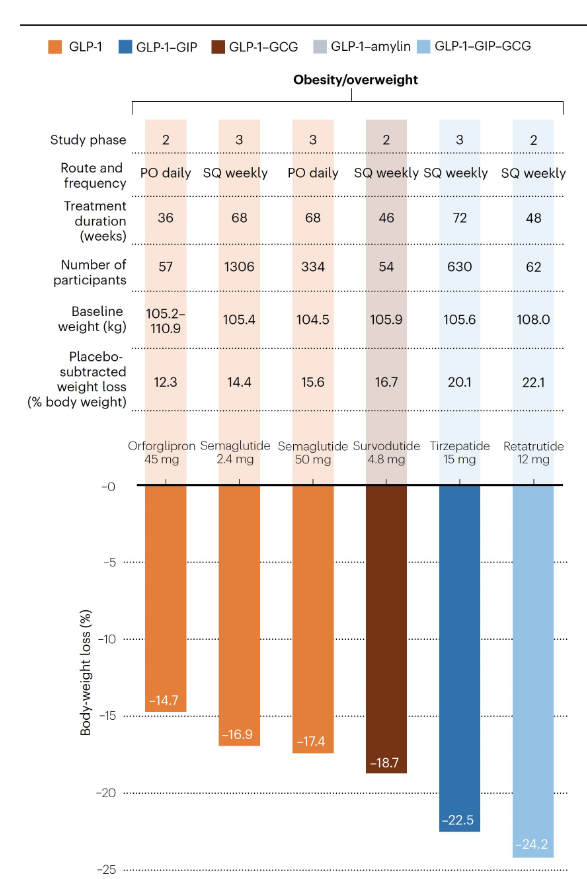
Another Promising Medication (Retatrutide) for Obesity

AM Jastreboff et al. NEJM 2023; DOI: 10.1056/NEJMoa2301972. Triple–Hormone-Receptor Agonist Retatrutide for Obesity  — A Phase 2 Trial.

Background: Retatrutide (LY3437943) is an agonist of the glucose-dependent insulinotropic polypeptide, glucagon-like peptide 1, and glucagon receptors.

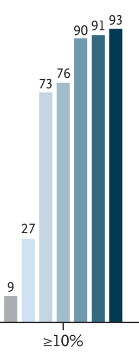
Methods: This study enrolled 338 with BMI of at least 27 in a a phase 2, double-blind, randomized, placebo-controlled trial with once-weekly injections of retatrutide.

Key Findings:

The number who achieved at least a 10% weight loss:

“The safety profile of retatrutide was consistent with reported phase 1 findings in persons with type 2 diabetes13 and similar to those of therapies based on GLP-1 or GIP–GLP-1 for the treatment of type 2 diabetes or obesity”

My take: There are a number of effective agents for obesity that have been developed very recently. Long term efficacy and safety are still not well-understood.

Related blog posts:

Guilt of Breastfeeding Failure

In previous posts, this blog (see below) has examined the potential bias of studies reporting better outcomes in breastfed infants along with issues of maternal guilt. A recent commentary explores the issue of feeling guilty when breastfeeding does not go well.

AJ Kennedy. NEJM 2023; 388:1447-1449. Breast or Bottle — The Illusion of Choice

Some excerpts:

Only about 25% of women in the United States exclusively breast-feed for the recommended period.2  After my struggles, these statistics seem realistic to me, but before I went through it myself, I had no concept of how hard it could be…

Around the time my son turned 6 months old…my primary care doctor… gave me the courage to start taking medication and to stop breast-feeding that very week. Though the guilt about stopping has never fully gone away, the joy and happiness in my life quickly returned…

Even after I’ve told them that I might not choose to breast-feed this time around [with 2nd child], multiple doctors have “reminded” me that breast milk has been shown to carry Covid-19 antibodies — yet another reason to feel ashamed if I choose not to breast-feed…I am hopeful that this time around I can embrace formula feeding more quickly if that is the path that works best for me and my baby,…

I encourage the AAP and other national health organizations to consider how their statements on exclusive breast-feeding are perceived by the public. If 75% of us are not meeting this goal [6 months of exclusive breastfeeding], a more patient-centered approach and recommendation is needed.

My take: Breastfeeding does not work for everyone. Parents often feel guilty about perceived short-comings and we need to find a balance in encouraging breastfeeding but acknowledging that formula feeding is a good alternative.

Related blog posts:

Organ Pipe Cactus, Tucson Botanical Gardens

How to Get More Active Kids

J Pedersen et al. JAMA Pediatr 2022; 176: 741-749. Effects of Limiting Recreational Screen Media Use on Physical Activity and Sleep in Families With Children

Key finding: In this cluster randomized controlled trial (n=181, ages 6-10 years), screen media reduction in the treatment group resulted in an increase of 45.8 minutes per day of physical activity compare to the usual routine group.

Related blog posts:

Little Finger Rock Trail, Tucson, AZ

IBD Updates: Low Lymphoma Risk, Fewer Biopsies for Ulcerative Colitis, MRE Distinguishes Backwash Ileitis, Beta-Fructans and IBD Activity

M Egberg et al. AJC 2023: 118: 354-359. Low Risk of Lymphoma in Pediatric Patients Treated for Inflammatory Bowel Disease

Key finding:

  • Using a database with 10,777 pediatric patients (2007-2018) with more than 28,000 patient years, there were 5 lymphomas reported. 4 had received thiopurines and none received anti-TNF monotherapy.

My take: This is a very reassuring study for the safety of anti-TNF agents.

AE Mikolajczyk et al. Inflamm Bowel Dis 2023; 29: 222-227. Assessment of the Degree of Variation of Histologic Inflammation in Ulcerative Colitis

  • In this retrospective study with 92 patients (182 colonoscopies), the authors found “minimal variability between degree of inflammation among biopsy fragments within and among different colorectal segments in UC, suggesting that even a single biopsy would adequately reflect the inflammation of the entire colorectum.”

My take: This study suggests that taking biopsies from every segment of the colon (when it looks uniform) is usually not needed, unless the purpose is to look for dysplasia. Also, it is worth recognizing that individuals with primary sclerosing cholangitis often have greater histologic activity in the right colon.

References only:

Weight Gain If Semaglutide Stopped

This article discusses several conditions like Prader-Willi and pregnancy that can result in increase hunger and then elaborates on genetic tendency towards obesity in an age of abundant ultra-processed high calorie foods. Excerpts:

A famous 1990 study of identical twins born in Sweden showed that pairs who were separated at birth and adopted had weights more similar to each other than to their adoptive families…The ability to sense such fullness — and hunger — varies, the result of genetic differences in brain circuits that control appetite.

The new drugs are the first to manipulate the hormonal regulatory systems governing energy balance. The drugs simulate the action of our native GLP-1 but with longer-lasting effects, amplifying the fullness signal inside the body…At the very least, though, the way the drugs work can teach us that people who are larger did not necessarily choose to be, just as people who are smaller did not — and are not morally superior. This “isn’t a free pass, either to individuals who do have the capacity to choose better, nor does it take the heat off of food industries,” said a University of Sydney nutritional biologist, Stephen Simpson, but it’s “evidence that obesity isn’t a personal lifestyle choice.”

My take: For those who benefit from GLP-1 medications, it is important to recognize that weight gain is likely when the medications are discontinued; this indicates once treatment is started, the goal would be to use indefinitely –until something better comes along.

Related blog posts:

Disclaimer: This blog, gutsandgrowth, assumes no responsibility for any use or operation of any method, product, instruction, concept or idea contained in the material herein or for any injury or damage to persons or property (whether products liability, negligence or otherwise) resulting from such use or operation. These blog posts are for educational purposes only. Specific dosing of medications (along with potential adverse effects) should be confirmed by prescribing physician.  Because of rapid advances in the medical sciences, the gutsandgrowth blog cautions that independent verification should be made of diagnosis and drug dosages. The reader is solely responsible for the conduct of any suggested test or procedure.  This content is not a substitute for medical advice, diagnosis or treatment provided by a qualified healthcare provider. Always seek the advice of your physician or other qualified health provider with any questions you may have regarding a condition

POSE 2.0 Procedure for Obesity

Anyone who follows this blog closely knows my inherent attraction for study acronyms; it is too bad I am not a leading researcher because it would be really fun to come up with some hilarious acronyms.

The Primary Obesity Surgery Endoluminal (POSE) Procedure for the treatment of obesity (GL Nava et al. Clin Gastroenterol Hepatol 2023; 21: 81-89) prospectively enrolled 44 adult patients who underwent “a novel pattern of full-thickness gastric body plications to shorten and narrow the stomach using durable suture anchor pairs.”

Key findings:

  • This procedure used an average of 19 suture anchor pairs, with a mean duration of 37 ± 11 minutes, and was technically successful in all subjects
  • Mean percentage total body weight loss (%TBWL) at 12 months was 15.7% ± 6.8%. >15% TBWL was achieved by 58%
  • Improvements in lipid profile, liver biochemistries, and hepatic steatosis were seen at 6 months
  • Repeat assessment at 24 months (n = 26) showed fully intact plications. No serious adverse events occurred

My take: This study shows that endoscopic therapies for obesity are quite promising. However, endoscopic therapies and bariatric surgery may become 2nd or 3rd line therapies if oral medications are available that can achieve similar success. Though, medications could require indefinite treatment.

Related blog posts:

Favorite Posts 2022

Thank you to those who have helped me this past year with this blog –colleagues, friends and family. Wishing all of you a good 2023. Here are some of my favorite posts from this past year:

GI:

Nutrition:

Liver:

Endoscopy:

Health Policy:

Humor:

Semaglutide in Adolescent Obesity

D Weghuber et al NEJM 2022; DOI: 10.1056/NEJMoa2208601. Once-Weekly Semaglutide in Adolescents with Obesity

Methods: In this double-blind, parallel-group, randomized, placebo-controlled trial, we enrolled 201 adolescents (12 to <18 years of age) with obesity (a body-mass index [BMI] in the 95th percentile or higher) or with overweight (a BMI in the 85th percentile or higher) and at least one weight-related coexisting condition.  180 (90%) completed treatment. Participants were randomly assigned in a 2:1 ratio to receive once-weekly subcutaneous semaglutide (at a dose of 2.4 mg) or placebo for 68 weeks, plus lifestyle intervention.

Key findings:

  • The mean change in BMI from baseline to week 68 was −16.1% with semaglutide and 0.6% with placebo
  • At week 68, a total of 95 of 131 participants (73%) in the semaglutide group had weight loss of 5% or more, as compared with 11 of 62 participants (18%) in the placebo group
  • Improvement with respect to cardiometabolic risk factors (waist circumference and levels of glycated hemoglobin, lipids [except high-density lipoprotein cholesterol], and alanine aminotransferase) were greater with semaglutide than with placebo
  • “The safety of semaglutide in this adolescent population appeared to be consistent with findings among adults with overweight or obesity… Gastrointestinal disorders (primarily nausea, vomiting, and diarrhea) were the most frequent adverse events with semaglutide (occurring in 62% of participants, as compared with 42% in the placebo group) and were generally mild or moderate in severity and of short duration (median duration, 2 to 3 days for nausea, vomiting, and diarrhea in the semaglutide group)”
  • “Permanent discontinuations because of gastrointestinal disorders were very low. Furthermore, semaglutide did not appear to affect growth or pubertal development during the trial period”

My take: As in adults, treatment with semaglutide results in weight loss.

Related blog posts: