Is Infantile Colic a Biorhythm Disorder?

TU Egeli et al. JPGN 2023; 77: 171-177. A New Perspective on the Pathogenesis of Infantile Colic: Is Infantile Colic a Biorhythm Disorder?

In this prospective cohort with a colic group (n=46) and a control group (n=49), the key findings:

  • “In the melatonin analysis, the difference between day and night levels was significant in the control group, indicating an established circadian rhythm (P = 0.014). In the colic group, there was no day-night difference (P = 0.216) in melatonin, but serotonin levels were higher at night.”
  • “Day-night variability of H3f3b mRNA levels between the groups was significant, indicating circadian rhythm disturbance in the colic group compared to the control group (P = 0.003).”

The authors note that migraine “has recently been discovered as one of the disease related to biorhythm regulation.” For colic, the authors propose that increases in serotonin, which can cause intestinal distress, contribute to colic, particularly when this is unopposed by increases in melatonin. “Serotonin-melatonin counterbalancing system in the gastrointestinal system generally develops around 3 monhts, and serotonin causes painful intestinal cramps and crying in the evening.”

H3f3b is “expressed in peripheral buccal tissue and is thought to reflect the activity of the central clock.”

My take: If this study is confirmed by others, it could lead to diagnostic testing for colic. Perhaps, then reflux would not be blamed for causing screaming babies. Though, I doubt any effective treatments would be available for biorhythm disturbances in this age group due to safety concerns.

Related blog posts:

“Moral distress” or “Moral Injury” in Medicine

8/2/23 NPR Lisa Doggett: Doctors have their own diagnosis: ‘Moral distress’ from an inhumane health system

This article describes the terms “moral injury” and “moral distress” which contribute to job dissatisfaction for physicians.

Here are excerpts:

The terms “moral distress” and “moral injury” were first used in a military context to characterize the torment felt by soldiers as they tried to process and justify their actions amid the cruelty of war. In more recent years, these terms have been used to describe the feelings of guilt, sadness and defeat felt by health care professionals when we know what our patients need but can’t provide it...

At Austin’s CD Doyle clinic for people who are homeless, where I volunteer, nearly every patient has unmet needs impacting their health…Even in well-resourced private clinics, doctors often feel frustrated that they can’t spend time with patients who need it and have little control over their schedules…

Doctors struggle to meet productivity demands, rushing in and out of exam rooms, working late into the evening to finish documenting in cumbersome electronic medical record systems. Despite some efforts to move away from a “fee-for-service” payment model, in most cases, our system still rewards volume of patients seen over value of care provided…

In Texas and other states, recent legislation, such as abortion bans and prohibitions against gender-affirming care for trans-youth, have introduced new moral dilemmas for doctors. We want to do right by our patients but face added barriers – even the potential for jail time – if we overreach or misinterpret the laws…

A commitment from health care leaders, health insurance plans, and all levels of government to address the nonmedical conditions in which we live, work, learn and play — the social determinants of health that drive 80% to 90% of health outcomes on a population level – would improve the health of individuals and communities. It would also decrease the pressure on doctors to treat medical conditions stemming from unhealthy environments that we can’t change.

A survey published last fall in Mayo Clinic Proceedings showed an alarming increase in physician burnout, with 62.8% of respondents reporting at least one symptom in 2021 compared to just 38.2% in 2020.

Physicians, too, face rates of depression and suicide that are higher than the among the general population. While moral distress doesn’t fully account for the difference, it is a contributing factor for some.

My take: My role as a physician is often constrained by troubling factors out of my control including lack of resources and poor social situations.

Related blog posts:

Garlic from market in Nice, France

But How Well Does It Work in Theory and Eosinophilic Esophagitis Treatments

C Mayerhofer et al. Clin Gastroenterol Hepatol 2023; 21: 2197-2210. Open Access! Efficacy of Elimination Diets in Eosinophilic Esophagitis: A Systematic Review and Meta-analysis

“That’s all well and good in practice… but how does it work in theory?” I saw this quote many years ago when I was visiting the University of Chicago.

This quote came to mind as I was reading this article which showed relatively little change in the efficacy between more and less stringent elimination diets for eosinophilic esophagitis. This meta-analysis included 915 children and 847 adults and assessed the efficacy rates of 4 major dietary treatment regimens in eosinophilic esophagitis: 6-food (SFED), 4-food (FFED), 1-food (OFED), and a targeted elimination diet (TED).

Key findings:

  • The overall rate of histologic remission was 53.8% and in the individual dietary groups was 61.3% for SFED, 49.4% for FFED, 51.4% for OFED, and 45.7% for TED.
  • The overall rate of clinical response was 80.8%, with response rates of 92.8% for SFED, 74.1% for FFED, 87.1% for OFED, and 69.0% for TED.
Percentage of food antigen triggers identified via endoscopic
and clinical evaluation after food re-introduction.

My take: It is clear to me that more restrictive diets can yield better response rates; however, in clinical practice they are difficult to maintain and this study shows that the improvement with more food restrictions may be quite limited.

Another reference on eosinophilic esophagitis: CJ Ketchem et al. Clin Gastroenterol Hepatol. 2023 Aug;21(9):2252-2259. Open Access! Higher Body Mass Index Is Associated With Decreased Treatment Response to Topical Steroids in Eosinophilic Esophagitis. Key finding: Histologic response (n=296) to topic steroids was higher for those who were nonobese compared with obese at fewer than 15 eosinophils per high-power field (61% vs 47%; P = .049); in addition, nonobese patients had significantly greater endoscopic and symptomatic responses.

Related blog posts:

Why CDC is Drafting New Guidelines for Screening Children for Perinatally-Acquired Hepatitis C Infection

EW Hall et al. J Pediatr 2023; 258: 113409. Open Access PDF! Cost-Effectiveness of Strategies to Identify Children with Perinatally Acquired Hepatitis C Infection

In this study, the authors modeled three strategies for screening for Hepatitis C infection in children and compared to baseline testing (current approach): : anti-HCV with reflex to HCV RNA at 18 months among children known to be perinatally exposed.

New strategies:

  • #1: HCV RNA testing at 2-6 months among infants known to be perinatally exposed
  • #2 universal anti-HCV with reflex to HCV RNA at 18 months among all children
  • #3 universal HCV RNA testing at 2-6 months among all infants

Key findings:

  • Each of the 3 alternative testing strategies resulted in an increased number of children tested and improved health outcomes. HCV RNA testing at 2-6 months (test strategy 1) was cost-saving and resulted in a population-level difference in cost of $469 671.
  • More testing in each of the universal comparison strategies resulted in increased QALYs, but also over $38 million to over $129 million

In the discussion, the authors elaborate on why testing at 2-6 months is now the best approach:

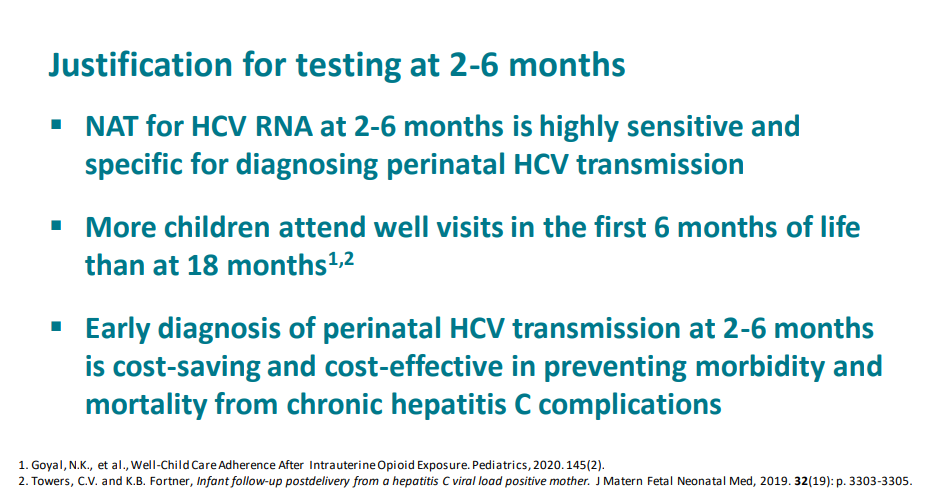
  • “Factors driving these results include pediatric loss to follow up at older ages, high attendance at well-child visits in the first 6 months of life, and highly sensitive nucleic acid testing with reliable results starting at age 2 months.”
  • “One study assessing >150 000 children at 2 health networks spanning 20 states determined children rarely missed 2-month, 4-month, and 6-month well-care visits, whereas 15-month and 18-month visits were attended by less than one-half of publicly insured children”
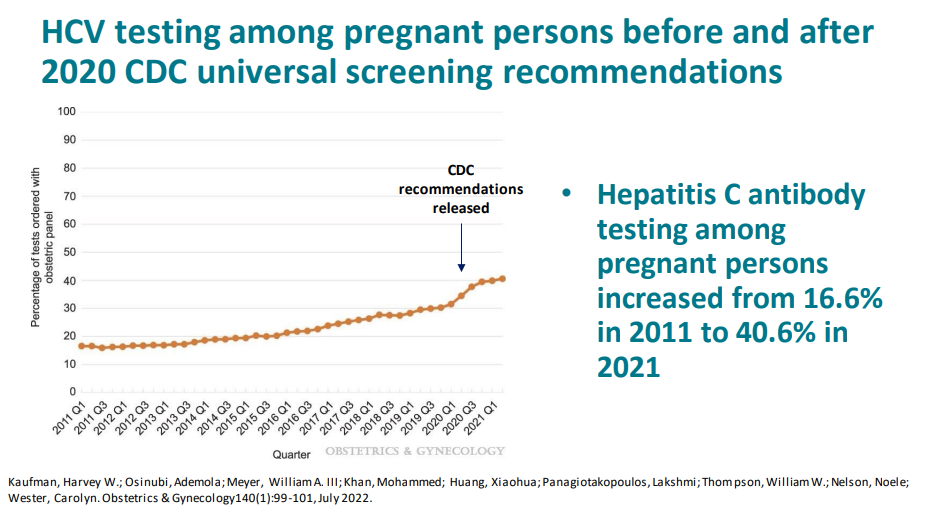
  • Current recommendations are for all pregnant women receive HCV screening, though currently it is below 50%. The universal testing strategy becomes more cost prohibitive as more women receive HCV testing in pregnancy

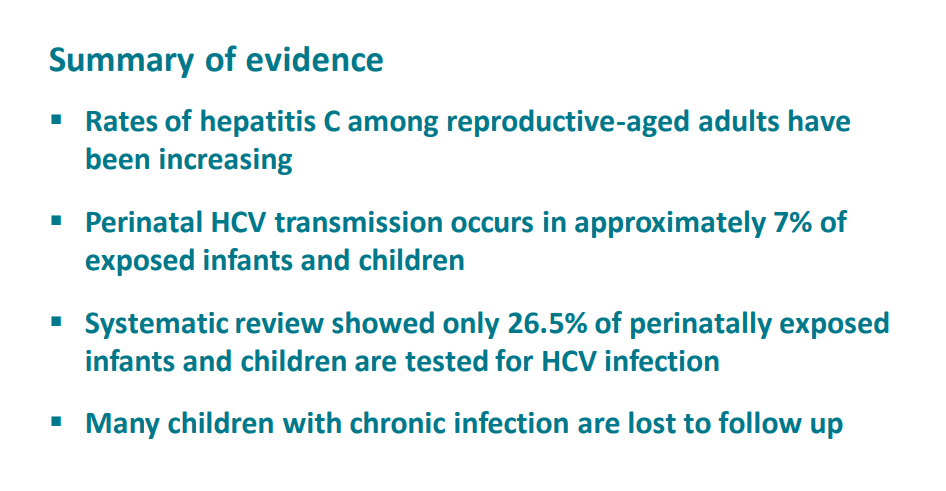
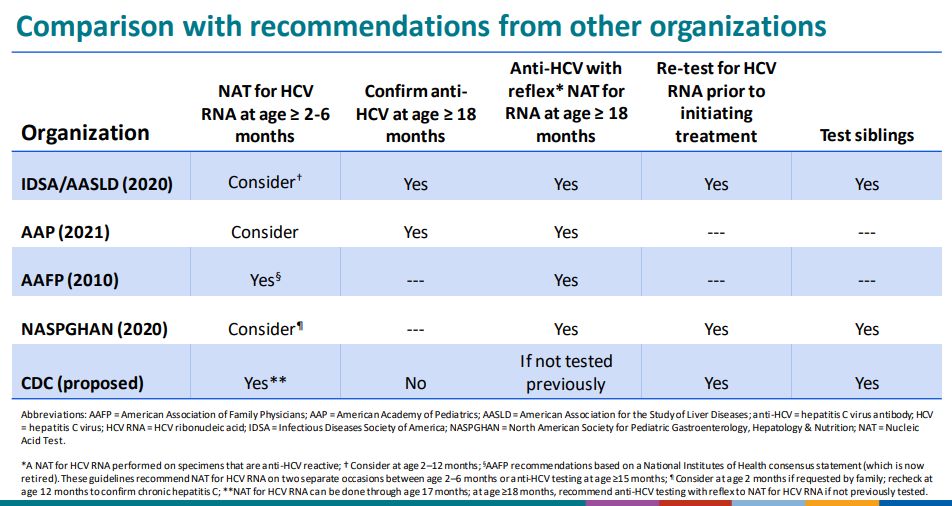
The CDC has undertaken a review and is likely to implement the 2-6 month old testing strategy as a recommendation. The authors of this study are involved in this process. A slide set reviewing the draft recommendations from 12/6/22:

Link 40 Slides: Overview of draft CDC recommendations for perinatal hepatitis C testing

Some selected slides:

My take (borrowed from authors): Testing of perinatally exposed infants at age 2-6 months with a single HCV RNA test will reduce costs and improve health outcomes.

Related blog posts:

Does a Liver Transplantation Improve the Course of Inflammatory Bowel Disease?

AR Safarpour et al. Inflamm Bowel Dis 2023; 29: 973-985. Alterations in the Course of Inflammatory Bowel Disease Following Liver Transplantation: A Systematic Review and Meta-analysis

The authors identifed 25 studies which met inclusion criteria. Key findings:

  • In the analysis of studies with 3-category outcomes (n = 13), the pooled frequencies of patients (n=646) with improved, unchanged, or aggravated IBD course after LT were 29.4%, 51.4% (, and 25.2%.
  • Subgroup analyses revealed that patients with ulcerative colitis (UC), younger age at LT, or shorter duration of follow-up were more likely to have an improved disease course.
  • In the analysis of studies with 2-category outcomes (n = 12), the pooled frequencies of patients (n=672) with improved/unchanged or aggravated IBD course were 73.6% and 24.1%, respectively

My take: Despite the intensification of immunosuppression, most often the course of IBD is unchanged in patients following a liver transplantation.

Related blog posts:

View from L’Jaardin Exotique in Eze, France

Only 30% Ready for Transition from Pediatric IBD to Adult Practice

A Foster et al. J Pediatr 2023; 258: 113403. Transition Readiness in Youth with Inflammatory Bowel Disease

In this cross-sectional multicenter study evaluating transition readiness in individuals (n=186, prospectively recruited ) with IBD 16-19 years old, the authors used the validated ON Taking Responsibility for Adolescent to Adult Care (ON TRAC) questionnaire. 

Key findings:

  • ON TRAC scores determined that 26.6% of AYAs at pediatric and 40.4% at adult centers reached the threshold of readiness. The findings are limited by potential nonresponse & sampling bias.
  • Disease remission negatively (P = .03) associated with ON TRAC scores.
  • A significant percentage of AYAs reported moderate-to-severe depression (21.7%) and generalized anxiety (36%); however, neither were significantly associated with ON TRAC scores

The authors suggest that a joint clinic with adult/pediatric providers may be helpful to improve transition.

MB Cohen. J Pediatr 2023; 258. DOI:https://doi.org/10.1016/j.jpeds.2023.113556 Are You Ready to Transition? In commentary on this article, Dr. Cohen writes the following: “a novel finding was that transition readiness was inversely related to disease remission; this confirms what had been previously suggested.1 Patients who are doing well may not be as engaged in developing skills for transition readiness and knowledge about their chronic illness, unlike those with more significant disease or symptoms.”

My take: Many studies show that adolescents and young adults with IBD are not fully prepared to transition to adult medical practices. In my view, it would be better to encourage the young adult to continue engaging with his/her parents until readiness is achieved rather than try to change to a multispecialty clinic.

Related blog posts:

Castle Hill Park, Nice France

Infliximab Injections Coming Soon

  1. L Gianolio et al JPGN 2023; 77(2):p 235-239, August 2023. Effectiveness of Switching to Subcutaneous Infliximab in Pediatric Inflammatory Bowel Disease Patients on Intravenous Maintenance Therapy

Key findings: After switching from IV infliximab to SC 120 mg every other week, 6 of 7 patients remained in clinical remission with no significant changes in laboratory markers and median infliximab trough levels (12.3 µg/mL at baseline; 13.9 and 14.0 µg/mL at 6 and 40 weeks respectively). 

2. Gastroenterology & Endoscopy News (7/31/23) Safety, Efficacy of Subcutaneous Infliximab Supported by Trial

Excerpt:

In this multinational trial, called LIBERTY-CD, the median trough level was 16 mcg/mL, which is higher than that typically associated with IV dosing, according to Dr. Hanauer, who presented the results at Digestive Disease Week 2023 (abstract 1028)… “most professional societies to recommend a trough of 10 mcg/mL,” Dr. Hanauer said….

All patients received induction doses of infliximab by IV at weeks 0, 2 and 6. Those who achieved at least a 100-point reduction in the Crohn’s Disease Activity Index (CDAI), which accounted for 86% of the 396 patients initially enrolled, were randomized in a 2:1 ratio to receive 120 mg of subcutaneous infliximab (CT-P13) or placebo every two weeks.

The proportion of patients meeting the end point of clinical remission, defined on the basis of CDAI, was 62.3% for active therapy and 32.1% for placebo (P<0.0001). The proportion of patients in the active treatment arm achieving an endoscopic response was nearly three times higher than the proportion in the placebo arm (51.1% vs. 17.9%; P<0.0001).

My take: This study shows that SC infliximab (after IV induction) should be effective. A study showing that the SC product is not inferior to the IV dosing would be helpful. It is likely that vedolizumab will receive approval in U.S. for a similar IV induction followed by maintenance subcutaneous therapy in the next year.

Eze, France

What I Don’t Like About a “Multidisciplinary Approach” for Infants with GERD-Like Symptoms

MH Fishbein et al. JPGN 2023; 77: 39-46. A Multidisciplinary Approach to Infants With GERD-Like Symptoms: A New Paradigm

This was a retrospective study (2011-2019) with 174 full-term infants (<6 months of age). The physician in the study decided which infants needed evaluation by SLP and/or OT.

Key findings:

  • “GERD-like symptoms” were present in 109 with 46 having concerns for dysphagia, 37 having colic/unsettledness, and 26 with concerns combined for dysphagia/colic. 65 were determined to have uncomplicated GER.

The authors conclude that “a multidisciplinary approach, including SLP and OT, is recommended for the evaluation of infants with GERD-like symptoms.” Of note, all but one of the authors are either OTs or SLPs. The authors also promote their AAP book: The CALM Baby Method: Solutions for Fussy Days and Sleepless Nights as a resource for pediatricians and families

Here’s what I don’t like about the recommendations:

  • If taken literally, the authors essentially advocate that a huge percentage of infants need to be seen by OT and SLP as many infants have GERD-like symptoms. The authors cite a review that indicated that 10-25% of infants have GERD symptoms at 1 month; however, other studies have found much higher numbers.
  • While this article stresses the fact that medications are not helpful for GERD symptoms and the importance of not overlooking dysphagia, in my experience many SLPs and OTs are frequently advocating for infants to be placed on GERD medications. In addition, many SLPs and OTs attribute a variety of infant (non-reflux) behaviors to GERD.
  • In many infants with dysphagia, the clinical evaluation by SLP does not have a high sensitivity due to silent aspiration. As such, SLP involvement could be focused on those with objective evidence of dysphagia.

My take: Most infants with GERD-like symptoms do not need to be seen by SLPs or OTs. Dysphagia symptoms (eg. choking, cough with eating, stridor, congestion, poor feeding) need to be evaluated.

Related blog posts:

Coastal Trail, Cap d’Ail, France

Population-Based Study: Prevalence of Bowel and Bladder Dysfunction in Early Childhood (Good Bowel Control is Happening Later)

SJ Verkuijl et al. JPGN 2023; 77: 47-54. Open Access! The Prevalence of Bowel and Bladder Function During Early Childhood: A Population-Based Study

Methods: This cross-sectional questionnaire study (n=791 Dutch children) up to age 7 yrs of age.

Key findings:

  • The mean age at which parents/caregivers considered their child fully toilet-trained was 5.1 ± 1.5 years. “Compared to studies performed 15 years ago, we found toilet training to be completed at an older age (23,26–28).”
  • Prevalence of fecal incontinence among toilet-trained children was 12%.
  • Prevalence of constipation was 14%, with excessive stool retention (75.9%) and painful/hard stools (78.7%) as the 2 most common symptoms.
  • The prevalence of urinary incontinence among all toilet-trained children was 40%. The majority of these urinary incontinent children suffered from daytime incontinence (56%). Enuresis occurred in 22% and the other 22% suffered from combined daytime incontinence and enuresis.
  • There were significant associations between fecal incontinence and constipation [odds ratio (OR) = 3.88], fecal incontinence and urinary incontinence (OR = 5.26), and constipation and urinary incontinence (OR = 2.06)
  • Half of the children with constipation and almost all the children with fecal incontinence remained untreated.
Stool Frequency by age (Figure 1 B)

In the discussion, the authors note “treatment of constipation and/or fecal incontinence often leads to the resolution of urinary incontinence (34).”

In my experience, many families sent by urologists have been told that the constipation is causing urinary incontinence. For many children, the explanation is more complicated; association of constipation does not indicate causation. A lot of children have limited sensation of response to both bowel and bladder, rather than the rectum pushing on the bladder. Most children that I see with constipation/encopresis do not have urinary incontinence. However, behavior approaches to toileting can be helpful for both.

My take: This is a useful study providing an updated view on when to expect good toileting and highlighting the frequency of bowel/bladder dysfunction (which is often untreated).

Related blog posts:

Understanding Reflux/Airway Disease and Potential Role of Airway Impedance

A recent blog post, Airway Impedance to Objectively Assess Airway Mucosal Integrity, reviewed a study by Rosen et al (R Rosen et al. J Pediatr 2023; 256: 5-10) which used a novel approach in assessing airway disease using airway impedance.

This month’s Journal of Pediatrics provides a terrific commentary by my partner, Jose Garza. Open Access: Airway Impedance: In Search of a New Tool (DOI:https://doi.org/10.1016/j.jpeds.2023.01.007).

The article first describes the history of identifying gastroesophageal reflux: “the first attempt to detect GER was in 1884 by Reichman, who lowered a sponge into the esophagus of a patient with heartburn and showed that it contained acid when retrieved. He found that fluid expressed from the sponge was acidic in persons with heartburn and alkaline in normal controls. The first in situ measurement of acid reflux in the esophagus is credited to Tuttle and Grossman 2 in 1958.”

With the development of multi-channel impedance, the concept of reflux has shifted in young children: “non-acid reflux events are more important to the development of symptoms than acid events.”

With regard to Rosen et al, the commentary reiterates that “measuring laryngeal mucosal integrity [using impedance] is safe and feasible in children with extraesophageal symptoms.” The study showed “no correlation between otolaryngology airway inflammation scores with airway impedance, further emphasizing the fact that we need to move away from these scores, as they have failed to show correlation with GERD and with laryngeal mucosal integrity.”

“The authors did find a decrease in airway impedance in patients with history of aspiration; those who aspirated more textures had lower median airway impedance. Therefore, not all airway inflammation is the result of reflux and oropharyngeal dysphagia–associated aspiration can cause GER-like symptoms and airway inflammation. Aspiration can be silent, and if we do not look for it, we are not going to find it.”

“Another group of patients with low airway impedance comprised patients receiving PPIs, which makes it clear that acid is not what is affecting the airway. Otherwise, PPIs would improve airway impedance.” 

My take (borrowed from author): “It is not yet clear whether measuring airway impedance will eventually become a widespread test with clinical applicability. However, the concepts advanced in this report are clearly a step in the right direction.”

Place Massena, Nice, France