This in-depth report reviews pyoderma gangrenosum including the differential diagnosis, the pathophysiology/genetics, presentation/diagnosis and treatment approaches. Anti-TNF therapy: “Currently available published data support using an anti-TNF-α biologic agent as first-line therapy for severe PG therapy in pediatric IBD, as well as for those cases that have not responded to local therapies.”
This reported case series with 5 patients with severe ulcerative colitis (UC) who received a combination of tofacitinib and infliximab for at least 90 days were retrospectively reviewed. Tofacitinib dosing was de-escalated to 5 mg twice daily after 8 weeks. Thiopurine therapy was stopped with tofacitinib initiation.
Key findings:
Median duration of combination therapy was 9 months (range, 4–12 months). At 90 days, all patients had a reduction in Mayo score of ≥3. Four patients improved clinically and biochemically (Table 1), with 3 patients achieving steroid-free remission.
The only adverse event reported was one patient developing varicella zoster.
The authors letter title regarding tofacitinib being “safe and effective” is clearly overstated. The reply notes that in limited experience the group from the University of Michigan had a 50-year-old man develop severe pulmonary and CNS disease due to acquisition of legionnaires disease while on combination tofacitinib and infliximab.
My take: (borrowed from reply) “Efficacy and safety data obtained through rigorous randomized trials are needed…it is possible that long-term use of combination tofacitinib and infliximab will lead to an unacceptable risk of infection.”
Another study of tofacitinib: GR Lichtenstein et al. Inflamm Bowel Dis 2021; 27: 816-825. Tofacitinib, an Oral Janus Kinase Inhibitor: Analysis of Malignancy (Excluding Nonmelanoma Skin Cancer) Events Across the Ulcerative Colitis Clinical Program Key finding: With an exposure of 2576.4 patient years & 124 overall cohort tofacitinib-treated patients, 20 developed a malignancy
In this retrospective study with 129 patients (mean age 25 yrs, mean disease duration 14.5 yrs) whose CD was in clinical/endoscopic remission, the authors examined factors associated with clinical relapse within 2 years; this included dose escalation, change in therapy, need for systemic steroids, or CD-related hospitalization or surgery.
Key findings:
Within 2 y of endoscopic evaluation, 42 patients (32.6%) had a clinical relapse.
There were no significant differences in proportions of patients with active ileal CD (23.8%), quiescent CD (28.6%), or normal histology (37%) between those who relapsed and those remaining in remission (P = .43). In addition, there was no no association between histologic features of active disease in ileal histology biopsies and symptom scores (Harvey Bradshaw index and simple inflammatory bowel disease questionnaire scores)
There were no significant differences in proportions of relapses among patients with active colonic disease (38.1%), quiescent disease (35.0%), or normal histology (27.9%, P = .73).
My take: In terms of outcomes, clinical and endoscopic remission are important but whether histologic remission is needed is unclear (at this time).
Related blog posts:
Histologic Healing and IBD Outcomes –several studies showed that histologic healing in ileal Crohn’s disease and in ulcerative colitis are associated with better outcomes
Disclaimer: This blog, gutsandgrowth, assumes no responsibility for any use or operation of any method, product, instruction, concept or idea contained in the material herein or for any injury or damage to persons or property (whether products liability, negligence or otherwise) resulting from such use or operation. These blog posts are for educational purposes only. Specific dosing of medications (along with potential adverse effects) should be confirmed by prescribing physician. Because of rapid advances in the medical sciences, the gutsandgrowth blog cautions that independent verification should be made of diagnosis and drug dosages. The reader is solely responsible for the conduct of any suggested test or procedure. This content is not a substitute for medical advice, diagnosis or treatment provided by a qualified healthcare provider. Always seek the advice of your physician or other qualified health provider with any questions you may have regarding a condition.
Data pooled from 27 studies showed the prevalence of NAFLD among IBD patients was 32% (substantial heterogeneity); this is “statistically significantly higher than the prevalence of NAFLD in the general population (25.2%; P < 0.001)”
A total of 93 studies were identified, comprising 16,064 IBD patients with co-occurring IMIDs and 3,451,414 IBD patients without IMIDs. IMIDs included the following:
Unspecified autoimmune disease
Diabetes type 1
Asthma
Grave disease
Spondyloarthropathy
Ankylosing spondylitis
Iridocyclitis
Uveitis
Rheumatoid arthritis
Polymyalgia rheumatica
Psoriasis/psoriatic arthritis
Primary Sclerosing Cholangitis
Celiac disease
Pyoderma gangrenosum
Pernicious anemia
Autoimmune hepatitis
Sarcoidosis
Giant cell arteritis
Primary biliary cholangitis
Hashimoto thyroiditis
Episcleritis
Sjogren syndrome
Key findings: Patients with IBD and co-occurring IMIDs were at increased risk of having extensive colitis or pancolitis (risk ratio, 1.38; 95% Cl, 1.25–1.52; P < 0.01, I2 = 86%) and receiving IBD-related surgeries (risk ratio, 1.17; 95% Cl, 1.01–1.36; P = 0.03; I2 = 85%) compared with patients without IMIDs
Methods: Fecal samples were obtained from 99 twins (belonging to 51 twin pairs), 495 healthy age-, sex-, and body mass index–matched controls, and 99 unrelated patients with IBD. Whole-genome metagenomic shotgun sequencing was performed.
Key findings:
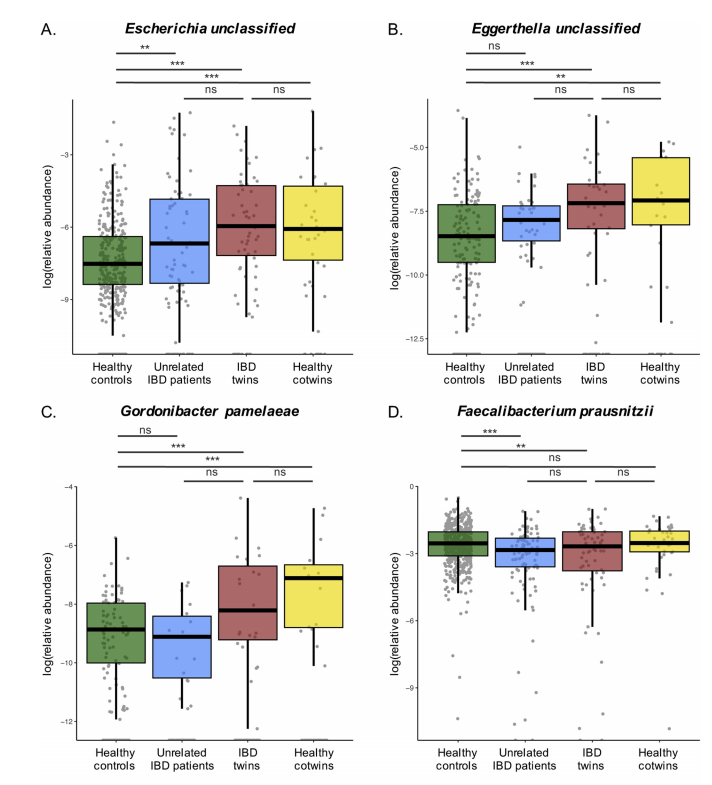
No significant differences were observed in the relative abundance of species and pathways between healthy cotwins and their IBD-twins.
Compared with healthy controls, 13, 19, and 18 species, and 78, 105, and 153 pathways were found to be differentially abundant in healthy cotwins, IBD-twins, and unrelated patients with IBD, respectively.
Discussion: “The gut microbiome composition of individuals at increased risk of developing IBD (i.e. healthy cotwins from IBD-discordant twin pairs) displays IBD-like signatures on a species and pathway level…The overlap in gut microbial features between healthy cotwins at increased risk of developing IBD and related and unrelated IBD patients suggests that these IBD-like microbiome signatures might precede the onset of IBD. This potentially opens new avenues for diagnosis and therapy in individuals with pre-symptomatic IBD.”
My take This study indicates that the microbiome changes in persons with IBD are also found in their healthy twins. In many ways, this is similar to the frequent finding of abnormal serology in Crohn’s disease; ASCA antibodies were considered much less helpful as a diagnostic test after the realization that ~20% of healthy first degree relatives also have detectable levels.
Figure 4 (pg 1979) shows the relative abundance of a selection of IBD-associated species and highlights similarities between the healthy cotwins and IBD twins.
Methods: The UC San Diego IBD Biobank was used to prospectively collect 332 stool samples (every 6 months) from 129 subjects (50 ulcerative colitis; 79 Crohn’s disease). Of these, 21 with Crohn’s disease had ileocolonic resections, and 17 had colectomies.
Key finding: Intestinal surgeries in IBD patients seem to reduce the diversity of the gut microbiome and metabolome in IBD patients. Colectomy has a larger effect than ileocolonic resection.
Limitations: Confounding variables (eg. antibiotics) and selection bias (patients with more severe disease
34,644 newly diagnosed patients with IBD (CD = 59.5%)
The probability of first and second hospitalizations remained unchanged in Québec and the probability of major surgery was low overall but did increase despite the higher and earlier use of anti-TNFs. However, the authors note that “in the present study, biologics use under the public reimbursement plan was 13% in patients with UC and 16% in patients with CD.”
My take: This study is provocative but probably misleading; it is quite likely that use of anti-TNF agents do lower the risk of hospitalization and surgery.
Methods: The authors used the Mount Sinai BioMe Biobank, which contains genetic data on 32,595 patients. After rigorous phenotype validation, 19,541 individuals were retained, of whom 339 were IBD patients (273 CD, 28 UC, and 37 individuals who were classified as both) and 19,202 were controls
Key findings: In this study, the authors identified several rare VEO-IBD variants with high genetic penetrance using the biobank samples and then replicated results in large case control African American and European data sets.
One of the variants with the highest genetic penetrance located in the gene LRBA was predicted to result in a deleterious change to the amino acid structure. Reduced expression of CTLA-4 secondary to the variants we identified in LRBA may result in autoinflammation that contributes to IBD. “Targeting reduced CTLA-4 expression is an exciting treatment venue, because expression of CTLA-4 has been shown to be increased by chloroquine treatment in vitro.”
Enteropathy is present in 63% of all known individuals with LRBA deficiency, with 27% having chronic diarrhea as the presenting symptom
Mangroves in John Pennekamp State Park (Key Largo)
In this prospective study of 31 pediatric patients with Crohn’s disease, the authors found correlations between ADL values and the endpoints of clinical remission (CR) and mucosal healing (MH). The authors checked TLs at 4 months, 1, 2, and 3 years. Key findings:
The median trough levels (TLs) of ADL were higher in patients in CR (7.6 ± 3.5 μg/mL) than in patients with active disease (5.1 ± 2.2 μg/mL).
ADL TLs were significantly higher in patients who achieved MH than in those who did not (14.2 ± 7.6 vs 7.8 ± 5.2 μg/mL).
The optimal cut-point for predicting MH at 1 year of ADL treatment was 8.18 μg/mL
MH was noted in 42% at 4 months and 55% at 1 yr; CR was noted in 90% at 4 months and 84% at 1 yr. ADL treatment was associated with positive effects on growth indicators as well.
The authors discuss TDM for anti-TNF therapy, noting that for infliximab, the AGA recommends values >5 mcg/mL and the ACG >7.5 mcg/mL. There are fewer studies of ADL TDM -prior studies have indicated goals of >5.8, >7.1, >8, and >8.1; thus, this study is in agreement with these prior studies.
My take: This study further supports the value of TDM; better drug levels correlate with better outcomes.
AGA 2017 Guidelines on Therapeutic Monitoriing Proactive drug monitoring: “careful and selective use of proactive TDM could be beneficial, but current evidence for its routine use is limited and its overall benefits remain uncertain”
Fort Jefferson, Dry Tortugas. The fort has reportedly 16 million bricks (I didn’t confirm this figure).
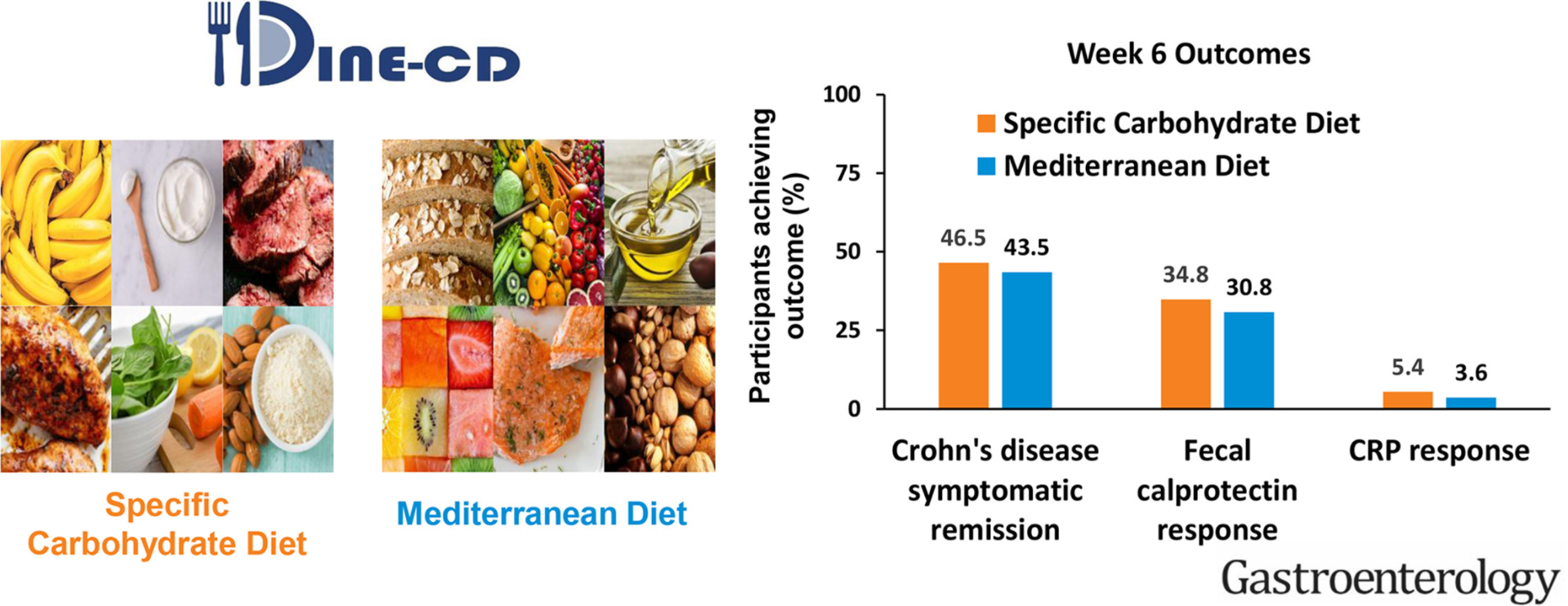
This study compared the effectiveness of the Specific Carbohydrate Diet (SCD) to the Mediterranean Diet (MD) as treatment for Crohn’s disease (CD) with mild to moderate symptoms.
Methods
Adult patients with CD and with mild-moderate symptoms were randomly assigned 1:1 to consume the MD or SCD for 12 weeks. For the first 6-weeks, participants received prepared meals and snacks according to their assigned diet. After 6-weeks, participants were instructed to follow the diet independently. The primary outcome was symptomatic remission at week 6. Key secondary outcomes at week 6 included: fecal calprotectin (FC) response (FC <250 μg/g and reduction by >50% among those with baseline FC >250 μg/g) and C-Reactive Protein (CRP) response (high-sensitivity CRP (hsCRP) <5 mg/L and >50% reduction from baseline among those with hsCRP >5mg/L).
Results
194 patients were randomized, and 191 were included in the efficacy analyses. The percentage of participants who achieved symptomatic remission at week 6 was not superior with SCD (SCD 46.5%, MD 43.5%; P = .77). FC response was achieved in 8/23 participants (34.8%) with SCD and 4/13 participants (30.8%) with MD (P = .83). CRP response was achieved in 2/37 participants (5.4%) with SCD and 1/28 participant (3.6%) with MD (P = .68).
Conclusions
SCD was not superior to MD to achieve symptomatic remission, FC response and CRP response. CRP response was uncommon. Given these results, the greater ease of following the MD, and other health benefits associated with MD, the MD may be preferred to the SCD for most patients with CD with mild to moderate symptoms.
The authors collected data from a multicenter randomized trial of the CD exclusion diet (CDED) in children (mean age, 14.2 ± 2.7 y) with Crohn’s disease who were randomly assigned to groups given either exclusive enteral nutrition (EEN, n = 34) or the CDED with 50% (partial) enteral nutrition (PEN) (n = 39).
The CDED has been discussed previously on this blog; it aims to avoid animal and saturated fat, milk fat, gluten, specific emulsifiers, taurine, red (reduced heme) and processed meat, and certain fibers from some fruits and vegetables. In addition to excluding patients who received competing therapies (eg. steroids, immunomodulators, and biologics), the authors excluded patients with isolated large bowel disease (L2).
Key findings:
At week 3 of the diet, 82% of patients in the CDED group and 85% of patients in the EEN group had a dietary response or remission. Median serum levels of C-reactive protein had decreased from 24 mg/L at baseline to 5.0 mg/L at week 3 (P < .001)
Among the 49 patients in remission at week 6, 46 patients (94%) had had a diet response or remission by week 3 and 81% were in clinical remission by week 3
The authors note that the rapid response to dietary therapy suggests a role for a ‘trial by diet’. As such, dietary therapy could be used as monotherapy, for patients failing other therapies, or as a bridge to biological therapy. The authors note that the exact reasons for response to dietary therapy are unsettled and could be “due to both foods excluded and foods enriched in the diet.” In addition, they note that diet appears to be a trigger for inflammation and that reintroduction of foods leads to rebound in inflammation (eg. higher calprotectin) and dysbiosis.
My take: This study shows that dietary therapy works quickly. In this small study, the effectiveness of combined CDED with 50% PEN was similar to EEN.
Combination therapy was not associated with better clinical outcomes in patients receiving vedolizumab (16 studies: OR, 0.84; 95% CI, 0.68–1.05; I2=13.9%; Q test P = .17); n= 933 and n=2378 with combination therapy and monotherapy, respectively
Combination therapy was not associated with better clinical outcomes in patients receiving ustekinumab (15 studies: OR, 1.1; 95% CI, 0.87–1.38; I2 = 11%; Q test P = .28); n=856 and n=1926 patients with combination therapy and monotherapy, respectively
Why don’t immunomodulators seem to help? “Unlike anti-TNF, prospective studies as well as post hoc analysis of randomized controlled trial consistently reported a low immunogenicity [with ustekinumab and vedolizumab]…all the prospective studies available to date have shown no impact of immunomodulator on the trough serum level of vedolizumab or ustekinumab.”
Limitation: patients treated with combination therapy in the included studies could be more severe
My take: “This meta-analysis found that overall the use of combination therapy in patients treated with vedolizumab or ustekinumab was not associated with a clinical benefit in comparison with the use of monotherapy.”