Aprepitant for CVS

Last year at NASPGHAN meeting (NASPGHAN Highlights and Tweets), there was data presented on aprepitant for cyclic vomiting syndrome (CVS).  This came up at a recent hospital PNT meeting as well.

  • Aprepitant (Emend) is an anti-emetic that works by blocking the NK1 receptor.
  • It has FDA approval for prevention of nausea and vomiting in moderate and highly emetogenic chemotherapy (adults and pediatrics) and prevention of post-operative nausea and vomiting (adult only).

Supporting Data for use of Aprepitant

An abstract published in 2006 reported on the use of aprepitant in 11 children (3-16 years)2.   Patients were refractory to/had poor response to pizotifen (not available in US – serotonin and histamine antagonist), propranol, and ondansetron.  Aprepitant was dosed at 80 mg/m2 up to twice weekly in combination with ondansetron.  Nine out of 11 patients had reduction in cycle frequency, duration of vomiting episodes and intensity of vomiting.  Three patients achieved complete cycle abolishment.

Cristoferi et al retrospectively reviewed 41 patients (age range 4-16.5 years, median 8 years) treated acutely or prophylactically with aprepitant.3  The primary outcome was decrease in frequency and intensity of CVS episodes.  The follow up period was 18-60 months.  The majority of patients failed cyproheptadine/pizotiphen, ondansetron, and amitriptyline as prophylactic medications.

Dosing regimens utilized in Cristoferi paper:

Prophylactic regimen (oral):

  • < 40 kg, 40 mg twice/week = $220/week (average wholesale price)
  • >40 kg to < 60 kg, 80 mg twice/week = $408/week
  • > 60 kg, 125 mg twice/week = $612/week

Acute regimen (oral):

  • >20 kg, 125 mg x 1 followed by 80 mg on day 2 and day 3 = $714
  • 15-<20 kg, 80 mg x 3 days = $612
  • < 15 kg, 80 mg x 1 followed by 40 mg on day 2 and day 3 = $424

Response rates:

  • With the prophylactic regimen, the authors reported a complete response in 3/16 (19%) and a partial response 10/16 (62%) [partial response was considered if there was ≥50% decrease in CVS episode frequency and intensity].
  • With the acute regimen, the authors reported 19/25 (76%) with a complete response and 3/25 (12%) with a partial response.

My take: Aprepitant appears promising as an agent for children who fail first-line therapies like periactin, tricyclic antidepressants, and ondansetron.

References

  1. Bhandari S and Venkatesan T.  Novel treatments for cyclic vomiting syndrome:  beyond ondansetron and amitriptyline.  Curr Treat Options Gastro 2016;14:495-506.
  2. Russell RK, et al. NK1 receptor antagonism ameliorates nausea and emesis in typical and atypical variants of treatment refractory cyclical vomiting syndrome.  J Pediatr Gastroenterol Nutr 2006;42:E13.
  3. Cristoferi F, et al. Efficacy of the neurokin-1 receptor antagonist aprepitant in children with cyclical vomiting syndrome.  Aliment Pharmacol Ther 2014;40:309-17.

Related blog posts:

Disclaimer: These blog posts are for educational purposes only. Specific dosing of medications/diets (along with potential adverse effects) should be confirmed by prescribing physician/nutritionist.  This content is not a substitute for medical advice, diagnosis or treatment provided by a qualified healthcare provider. Always seek the advice of your physician or other qualified health provider with any questions you may have regarding a condition.

Highest Reported Prevalence Rates for Eosinophilic Esophagits

A recent retrospective study (J Robson et al. Clin Gastroenterol Hepatol 2019; 17: 107-14) utilized a pathology database encompassing the vast majority of Utah pediatric cases to determine the incidence and prevalence of eosinophilic esophagitis (EoE) from 2011 to 2016.

The authors determined cases of EoE by looking for symptomatic children with isolated esophageal eosinophilia (more that 14 eos/hpf) in the absence of other comorbid conditions.

Key findings:

  • 1060 children met the criteria for a new diagnosis of EoE
  • Average annual incidence of EoE was 24 per 100,000 children; this is nearly double the previously reported rate 12.8 per 100,000 from Hamilton County, Ohio in 2003.
  • Prevalence of EoE was 118 per 100,000 children

The authors speculate on several factors that produced this increased incidence rate –all related to EoE risk factors:

  • Predominant non-Hispanic White population
  • High rates of atopy
  • Increased capture rate of their database
  • Also, the authors did NOT exclude PPI-responsive esophageal eosinophilia (which is a subtype of EoE and not a different disease

The authors note that “there is reason to believe that this [high incidence rate] is a conservative estimate:”

  • ~2% of pathology reports had 10-14 eos/hpf.  Further review of these cases would likely have identified some which have exceeded the >14 threshold
  • Some pediatric EoE cases are diagnosed by adult gastroenterologists who did not use the pathology databases

My take: This study shows high rates of EoE but comes as no surprise.  And, there are likely a large number of individuals with mild EoE which has not been diagnosed.  In my experience, families and physicians often overlook altered eating habits as related solely to behavior.  Useful questions to uncover dysphagia include the following: how long does it take your child to eat? does your child have to drink a lot of liquids when eating? does food get stuck frequently?

Related blog posts:


Antidepressants for Patients with IBD and Their (Beneficial) Affect on Bowel Disease Activity

A recent population-based cohort study (MS Kristensen et al. Inflamm Bowel Dis 2019; 25: 886-93) indicates that antidepressants are likely to be beneficial for patients with inflammatory bowel disease and could lower disease activity in addition to improving mood.

This study population, n=42,890, with prospectively collected data comprised all patients in the Danish National Patient Registry from 2000-2017 with ICD diagnoses of ulcerative colitis (UC, 69.5%) or Crohn’s disease (CD, 30.5%).  Outcome measures included markers of disease relapse:

  • hospitalizations with IBD as primary diagnosis
  • surgery with IBD as primary operation code
  • step-up medications with corticosteroids or anti-TNF treatment

Key findings:

  • After adjusting for confounders, lower incidence rate of disease activity was found among antidepressant users than nonusers.
    • For CD, the incidence rate ratio was 0.75 (CI 0.68-0.82).
    • For UC, the incidence rate ratio was 0.90 (CI 0.84-0.95).
    • For CD patients without prior use of antidepressants before diagnosis of CD, there was markedly lower incidence rate ratio of 0.51 (CI 0.43-0.62).
  • 28% of the study population redeemed at least 1 prescription for an antidepressant at some point.  This is similar to a Finnish study in which antidepressant use in IBD was 28% compared to 19% in general population

The authors note that anti-depressants may affect the level of pro-inflammatory cytokines which are involved in the pathogenesis of IBD.  This study did not assess potential adverse effects of using anti-depressants.

My take: This study is intriguing and suggests that antidepressants may improve the disease course in IBD. Whether this is related to more favorable brain-gut interaction or whether this is related to drug effects on inflammatory agents is unclear.

Related blog post: Psychosocial Problems in Adolescents with IBD

Park Guell -Fantastic Park in Barcelona (need to buy a pass to get to some parts)

Disclaimer: These blog posts are for educational purposes only. Specific dosing of medications/diets (along with potential adverse effects) should be confirmed by prescribing physician/nutritionist.  This content is not a substitute for medical advice, diagnosis or treatment provided by a qualified healthcare provider. Always seek the advice of your physician or other qualified health provider with any questions you may have regarding a condition.


Large Study Shows FMT Efficacy/Safety in Children

Clinical Gastroenterol Hepatol 2019. In press: Efficacy of Fecal Microbiota Transplantation for Clostridium difficile Infection in Children Thanks to Ben Gold for this reference.

Abstract

Background & Aims

Fecal microbiota transplantation (FMT) is commonly used to treat Clostridium difficile infection (CDI). CDI is an increasing cause of diarrheal illness in pediatric patients, but the effects of FMT have not been well studied in children. We performed a multi-center retrospective cohort study of pediatric and young adult patients to evaluate the efficacy, safety, and factors associated with a successful FMT for the treatment of CDI.

Methods

We performed a retrospective study of 372 patients, 11 months to 23 years old, who underwent FMTs at 18 pediatric centers, from February 1, 2004 to February 28, 2017; 2-month outcome data were available from 335 patients. Successful FMT was defined as no recurrence of CDI in the 2 months following FMT. We performed stepwise logistic regression to identify factors associated with successful FMT.

Results

Of 335 patients who underwent FMT and were followed for 2 months or more, 271 (81%) had a successful outcome following a single FMT and 86.6% had a successful outcome following a first or repeated FMT. Patients who received FMT with fresh donor stool (odds ratio [OR], 2.66; 95% CI, 1.39–5.08), underwent FMT via colonoscopy (OR, 2.41; 95% CI, 1.26–4.61), did not have a feeding tube (OR, 2.08; 95% CI, 1.05–4.11), or had 1 less episode of CDI before FMT (OR, 1.20; 95% CI, 1.04–1.39) had increased odds for successful FMT. Seventeen patients (4.7%) had a severe adverse event during the 3-month follow-up period, including 10 hospitalizations.

Conclusion

Based on the findings from a large multi-center retrospective cohort, FMT is effective and safe for the treatment of CDI in children and young adults. Further studies are required to optimize the timing and method of FMT for pediatric patients—factors associated with success differ from those of adult patients.

Related blog posts:

Park Guell, Barcelona

Vedolizumab vs Adalimumab for Infliximab Failure in Ulcerative Colitis –Which is Better?

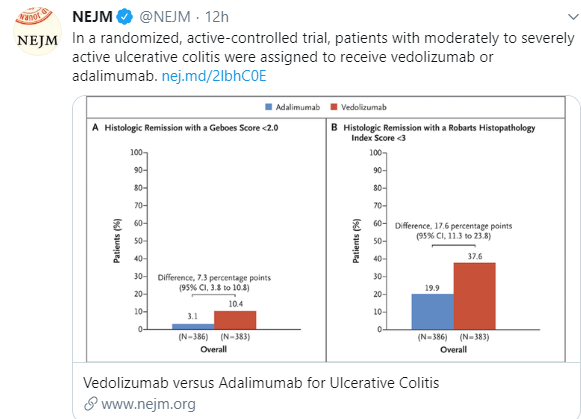
A recent retrospective study (A Favale et al. Comparative Efficacy of Vedolizumab and Adalimumab in Ulcerative Colitis Patients Previously Treated With Infliximab Inflammatory Bowel Diseases, izz057, https://doi.org/10.1093/ibd/izz057 Published: 01 April 2019) suggests that vedolizumab is more effective for ulcerative colitis with secondary infliximab failure.

Here’s the abstract:

Background

Adalimumab (ADA) and vedolizumab (VDZ) have shown efficacy in moderate to severe ulcerative colitis (UC) patients who failed infliximab (IFX). Although, a comparative efficacy evaluation of ADA and VDZ in this clinical setting is currently missing.

Aim

The aim of this study is to compare the efficacy of ADA and VDZ in patients affected by UC who failed IFX.

Methods

Clinical records of UC patients from 8 Italian IBD referral centers who failed IFX and were candidates to receive either ADA or VDZ were retrospectively reviewed. The primary end point was therapeutic failure at week 52. Secondary end points included therapy discontinuation at weeks 8, 24 and 52, the discontinuation-free survival, and safety.

Results

One hundred sixty-one UC patients, 15 (9.2%) primary, 83 (51.6%) secondary IFX failures, and 63 (39.2%) IFX intolerants were included. Sixty-four (40%) patients received ADA and 97 (60%) VDZ as second line therapy. At week 52, 37.5% and 28.9% of patients on ADA and VDZ, respectively, had therapeutic failure (P = 0.302). However, the failure rate was significantly higher in the ADA group as compared with VDZ group among IFX secondary failures (48.0% ADA vs 22.4%VDZ, P = 0.035). The therapy discontinuation-free survival was significantly higher in the group of IFX secondary failures who received VDZ as compared with ADA at both the univariate (P = 0.007) and multivariate survival analysis (OR 2.79; 95% CI, 1.23–6.34; P = 0.014). No difference in the failure and biologic discontinuation-free survival was observed in the IFX primary failure and intolerant subgroups.

Conclusion

Vedolizumab might be the therapy of choice in those UC patients who showed secondary failure to IFX.

Link to video abstract (2 min):  Comparative Efficacy of Vedolizumab and Adalimumab in Ulcerative Colitis Patients Previously Treated With Infliximab


Outcomes and Risk Factors in Cystic Fibrosis Liver Disease

A recent retrospective study (P-Y Boelle et al. Hepatology 2019; 69: 1648-56, associated editorial 1379-81) examines a large cohort of 3,328 patients with cystic fibrosis and pancreatic insufficiency (born after 1985) who were followed into a longitudinal “French CF Modifier Gene Study.”

Background from editorial:

  • Cystic fibrosis liver disease (CFLD) has been thought to occur mainly before puberty with ~40% of patients developing biochemical or ultrasonographic signs of liver involvement by age 12 years.
  • Registry studies have shown slow progression of liver disease with the development of cirrhosis and portal hypertension in 5-10% of patients.  Due to difficulty identifying those at high risk for disease progression and the long time course, it has been impractical to complete definitive clinical trials to establish whether any therapies alter the natural history.
  • Ursodeoxycholic acid (UDCA) is the only current treatment available for CFLD; UDCA has been shown to have beneficial effects on biochemistries and liver stiffness, but effects on survival or need for transplantation are unknown.
  • Concerns have been raised about the potential for toxic UDCA metabolites (eg. lithocholic acid) in part based on unfavorable results of high-dose UDCA with primary sclerosing cholangitis

Key findings of this current study:

  • The incidence of CFLD increased “by approximately 1% every year, reaching 32.2% by age 25”
  • The incidence of severe CFLD increased “only after age 5, reaching 10% by age 30.”
  • Risk factors for CFLD and severe CFLD: male sex, CFTR F508del homozygosity, and history of meconium ileus.
  • Earlier introduction of UDCA (over the last 20 years) “did not change the incidence of severe CFLD.”

My take: This study confirms a previous study showing that CFLD occurs also in adulthood (Koh C et al. Hepatology 2017; 66:591-601) and adds further doubt about whether UDCA is beneficial.

Related article: AJ Freeman et al. “A Multidisciplinary Approach to Pretransplant and Posttransplant Management of Cystic Fibrosis-Associated Liver Disease” Liver Transplantation 2019; 25: 640-57.

Related blog posts:

Peonie in Sandy Springs

Surprising Findings in Prospective Budesonide-Eosinophilic Esophagitis Study

A recent study (ES Dellon et al Clin Gastroenterol Hepatol 2019; 17: 666-73) prospectively followed patients in a 24 week open-label extension of a randomized, double-blind, placebo-controlled trial of budesonide oral suspension (BOS) for eosinophilic esophagitis (EoE). The authors defined histologic response as ≤6 eos/hpf. During the extension, the dosage of BOS was reduced from 2 mg twice daily to 2 mg once a day.

Key findings:

  • No new safety signals. One patient in placebo/BOS arm (n=37) developed oral candidiasis and one patient in the BOS/BOS arm (n=45) did as well. In addition, four patients in placebo/BOS developed esophageal candidiasis. No clinically relevant changes in morning serum cortisol levels were identified.
  • Histologic response was observed in 49% (16/33) in placebo/BOS arm and 23% (9/39) of BOS/BOS arm. 58% of placebo/BOS and 28% of BOS/BOS patients had ≤15 eos/hpf.
  • Mean peak eosinophil count decreased in placebo/BOS arm from 119 to 29 and increased in BOS/BOS arm from 38 to 72.
  • Overall, only 42% of patients who responded to BOS during double-blind 12 week study maintained a histologic response.

While this study shows that BOS is effective for many patients with EoE, it also shows that many lose a response.  In addition, most patients who “did not respond to treatment during the double-blind phase did not gain a histologic or endoscopic response with longer-term treatment.”  Only 1 of 26 patients (4%) gained a response. This has several important implications:

  • Some patients may develop corticosteroid resistance
  • In patients who respond to induction, it may be prudent to continue with the same induction dose rather than reducing the dosage
  • In patients who do not respond to induction, further treatment is not beneficial

My take: Though the response to BOS was not very high in this study, the population studied was highly symptomatic and had histologically-severe EoE.  Thus, in a more typical population of patients with EoE, the response rate is likely to be more favorable. Also, many patients will not maintain a response to BOS at a lowered dose.

Related blog posts:

Boqureia Market, Barcelona


Disclaimer: These blog posts are for educational purposes only. Specific dosing of medications/diets (along with potential adverse effects) should be confirmed by prescribing physician/nutritionist.  This content is not a substitute for medical advice, diagnosis or treatment provided by a qualified healthcare provider. Always seek the advice of your physician or other qualified health provider with any questions you may have regarding a condition.

Measles Outbreak

704 Measles cases for this year were reported on April 30th. It is likely to climb much higher. More than 40,000 cases were reported in Europe in the first 6 months of 2018.

Related article: NY Times: Should Adults Get a Measles Booster Shot?

Related blog posts:

IBD Briefs: May 2019 (Part 2)

KP Quinn et la. Inflamm Bowel Dis 2019; 25: 460-71.  This is a terrific review of evaluation and management of pouch disorders.

A Armuzzi et al. Inflamm Bowel Dis 2019; 25: 568-79. This prospective cohort study examined infliximab biosimilar in 810 patients (PROSIT cohort).  This included 459 patients naive to anti-TNF therapy (group a) , 196 with previous exposure (group b), and 155 who were switched while on original infliximab (group c).  At 12 months, patients without a loss of response were 71%, 64%, and 82% respectively in these three groups.

S Coward et al Gastroenterol 2019; 156: 1345-53. This study from Canada used population-based health administrative data from multiple provinces and then applied autoregressive integrated moving average regression to predict prevalence of IBD in 2030. Key point: “In 2018, 267,983 Canadians were estimated to be living with IBD, which was forecasted to increase to 402,853 by 2030.” This is approximately 1% of the population (981 per 100,000).

F Castiglione et al. Aliment Pharm Ther 2019; 49: 1026-39. This observational longitudinal study with 218 patients with Crohn’s disease who completed 2-years of anti-TNF treatment examined transmural healing via ultrasonography (≤3 mm bowel wall thickness).  “Transmural healing was associated with a higher rate of steroid-free clinical remission (95.6%), lower rates of hospitalization (8.8%) and need for surgery 0%).”  The authors conclude that transmural healing is associated with better long-term clinical outcomes than mucosal healing.

“Magic Fountain” Barcelona


How Quickly Does Tofacitinib Work for Ulcerative Colitis?

The second study reference yesterday:

A recent study (S Hanauer et al. Clin Gastroenterol Hepatol 2019; 17: 139-47) shows that tofacitinib can work quickly to reduce symptoms in ulcerative colitis.

In a post-hoc analyses of data from OCTAVE induction 1 and 2 (n=905 patients, n=234 placebo), the authors determined that tofacitinib reduces symptoms within 3 days.

Key findings:

  • By day 3, there was a reduction in stool frequency (-1.06 vs. -0.27 for placebo) and a reduction in rectal bleeding subscore (-0.30 vs -0.14 for placebo)
  • 28.8% of tofacitinib-treated patients had a reduction in stool frequency subscore by >1 point compared to 17.9% for placebo.  For rectal bleeding subscore, tofacitinib-treated patients had a reduction by >1 point in 32% compared to 17.9% for placebo 20.1%.

My take: This study reinforces the impression that tofacitinib works rapidly.

Related blog posts:

La Boqueria, Barcelona