Nutritional Risks in Adolescents After Bariatric Surgery; Prevention of Childhood Obesity; Convalescent Serum for COVID-19

S Xanthakos et al. Clin Gastroenterol Hepatol 2020; 18: 1070-81. Full Text: Nutritional Risks in Adolescents After Bariatric Surgery

This was a multicenter prospective cohort study with 226 adolescents (mean age 16.5 years, mean BMI of 52.7) who had either Roux-en-Y bypass (RYGB, n=161) or vertical sleeve gastrectomy (VSG, n=67).

Key findings:

  • At 5 years, 59% of RYGB and 27% of VSG had ≥2 nutritional deficiencies
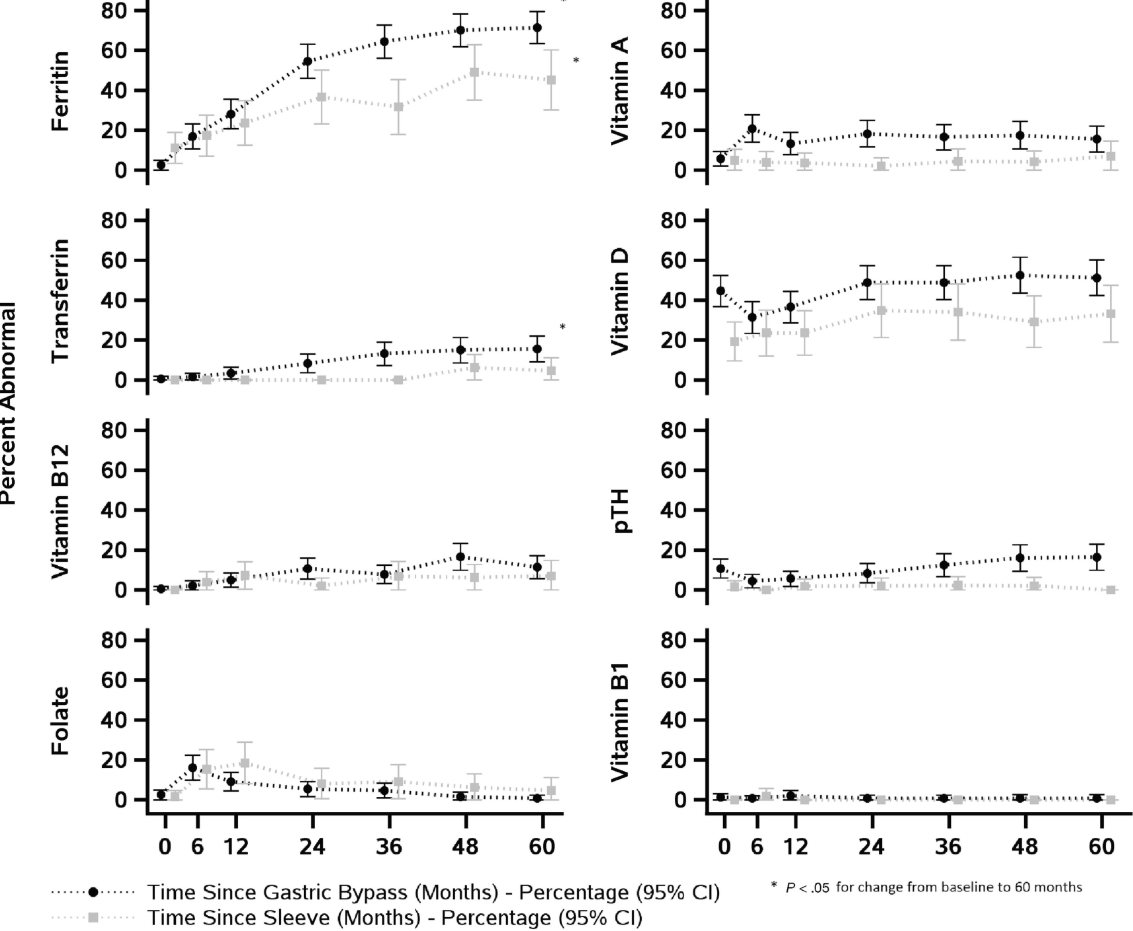
  • The most prevalent abnormality we observed was hypoferritinemia, which affected nearly twice as many RYGB recipients by Year 5 compared with VSG.
  • Vitamin B12 status likewise worsened disproportionately after RYGB, despite similar trajectories of weight loss after VSG
  • Image below shows the prevalence of abnormal values for vitamins over time

My take: This study shows that adolescents undergoing VSG had fewer nutritional deficiencies than RYGB and provides data supporting nutritional monitoring after bariatric surgery.
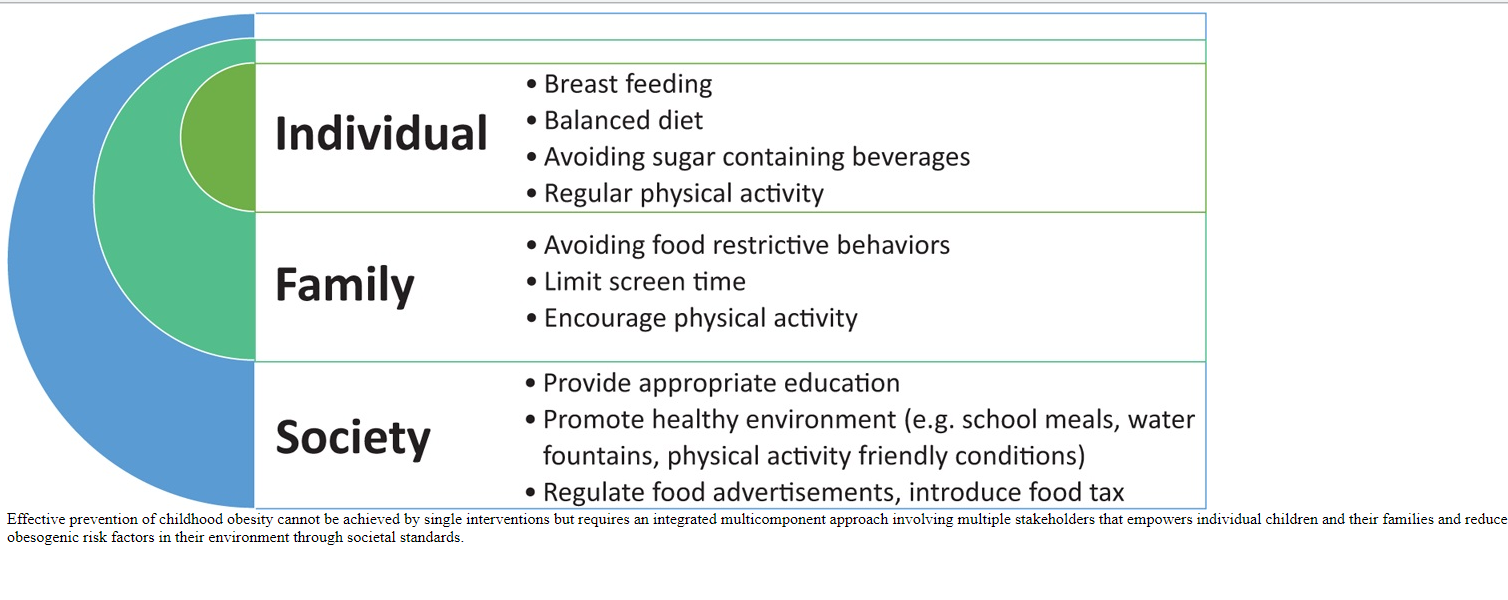
B Koletzko et al. JPGN 2020 70: 702-10. Full Text: Prevention of Childhood Obesity: A Position Paper of the Global Federation of International Societies of Paediatric Gastroenterology, Hepatology, and Nutrition (FISPGHAN)
Related blog posts (Bariatric Surgery):

Related blog posts (Obesity):


Relative Efficacy of Medications for Irritable Bowel Syndrome with Constipation

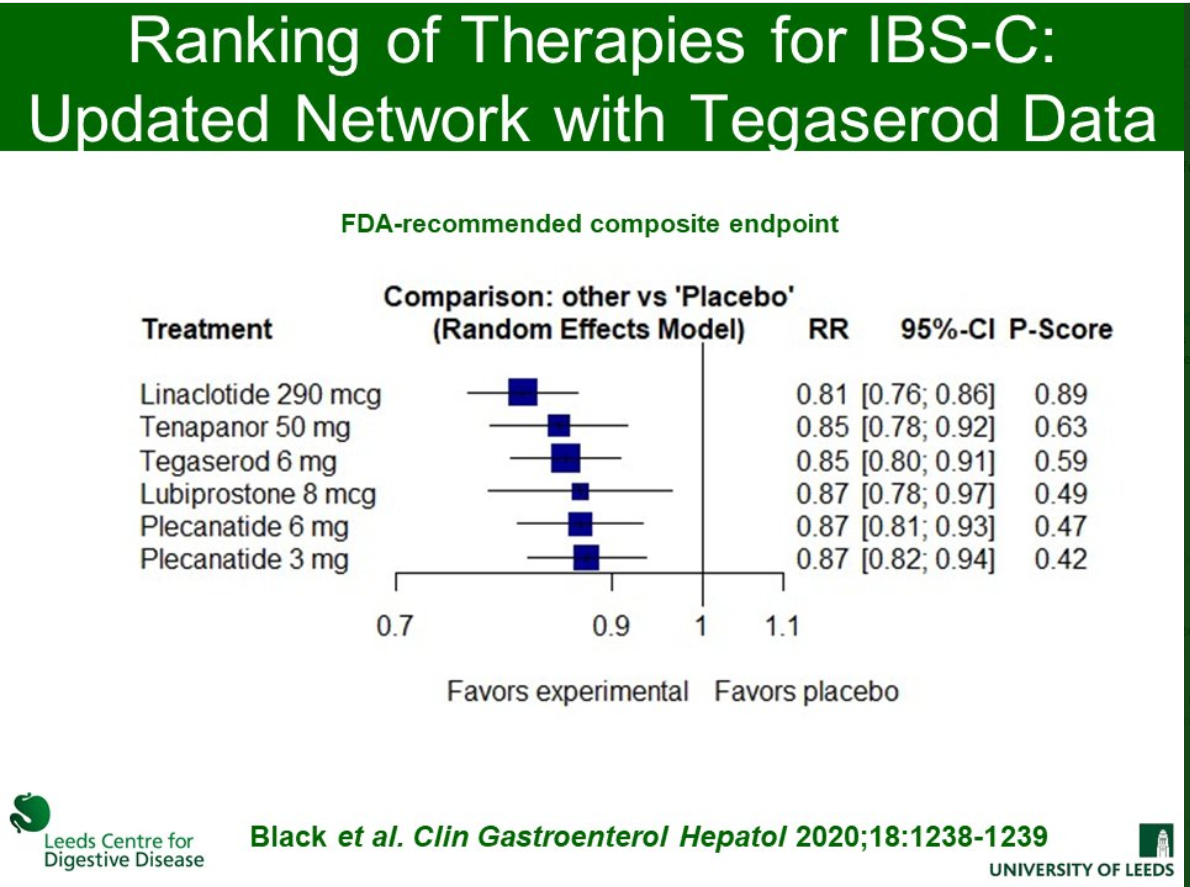
A recent systematic review and network meta-analysis (CJ Black, et al. Clin Gastroenterol Hepatol 2020; 18: 1238-39) reviewed the relative efficacy of medications for irritable bowel syndrome with constipation. In total, the 14 trials randomized 9113 patients.

Key points:

  • All treatments were significantly more effective than placebo
  • Linaclotide was ranked most effective; however, indirect comparison of active treatments revealed no significant differences between the individual drugs

Liver Shorts -May 2020 & CDC Recommendations for Office (NY Times Summary)

NY Times:  C.D.C. Recommends Sweeping Changes to American Offices


FDA Approves Hepatitis C Pangenomic Treatment for Children (Mar 19, 2020):

The U.S. Food and Drug Administration today approved a supplemental application for Epclusa (sofosbuvir and velpatasvir) to treat hepatitis C virus (HCV) in children ages 6 years and older or weighing at least 37 pounds (17 kilograms) with any of the six HCV genotypes—or strains—without cirrhosis (liver disease) or with mild cirrhosis.

Review: NAFLD in China 1999-2018 J Zhou et al. Hepatology 2020; 71: 1851-4.

  • NALFD increased by 8-9% in prevalence, to 29.1%.  This means there are more than 230 million individuals with NAFLD in China.

Use of HCV-positive donors for liver transplantation to HCV-negative recipients. N Anwar et al. Liver Transplantation 2020; 26: 673-80. Key finding: HCV-positive organs had similar outcomes regarding graft function, patient survival and post-LT complications.

Recent Decline in Hepatocellular Carcinoma Rates in U.S. MS Shiels, TR O’Brien. Gastroenterol 2020; 158: 1503-5. Using SEER-21 population based cancer registries covering 37% of U.S. population, the authors found a recent decline in rates of HCC:

  • 2000-2016: 119,078 cases of HCC in SEER-21 registries, 5.84/100,000
  • Rates increased b 5.6% per year from 2000-2007, then by 2.7% per year from 2007 to 2013, subsequent rate reached a plateau and declined with drop of 1.4% per year (P=.12)
  • Improvement could have been due in part to improvement in viral hepatitis treatment; a less favorable explanation could be that the drop occured due to a death from another cause (eg. non-HCC death due to cirrhosis, opioid-related death

Related blog posts:

Potential Treatment for Nonalcoholic Steatohepatitis N Chalasani et al. Gastroenterol 2020; 158: 1334-45. The study explored the use of Belapectin, an inhibitor of Galectin-3, in patients with nonalcoholic steatohepatitis and cirrhosis. n=162, phase 2 randomized, double-blind study. Key finding: 1 year of every 2 week infusions were safe but not associated with significant reductions in hepatic venous pressure gradient (HVPG) or fibrosis. However, in a subgroup without varices, there was lowered HVPG and lowered risk of new varices.

Treatment Options for Minimal Hepatic EncephalopathyRK Dhiman et al. Clin Gastroenterol Hepato 2020; 18: 800-12.  This meta-analysis which included 25 trials (n=1563) found the following:

  • For reversing minimal hepatic encephalopathy (MHE), rifaximin (OR 7.53) and lactulose  (OR 5.39) were effective with moderate quality evidence.  Probiotics had OR 3.89 and L-ornithine L-aspartate had OR 4.45 —both with low quality evidence.
  • For prevention of HE, L-ornithine L-aspartate had OR 0.19 (‘high moderate’ quality), and lactulose had OR 0.22 (moderate quality) were effective. Probiotics had OR 0.27 with low quality evidence.
  • The authors conlude that lactulose is the most effective agent for prevention and reversal of MHE.

Related blog posts:


Curbside Humor


How to Get Rid of the Placebo Effect in Inflammatory Bowel Disease Trials

A recent study (M Duijvestein et al. Clin Gastroenterol Hepatol 2020; 18: 1121-32, editorial 1030-32) analyzed data from recent randomized, double-blind, placebo-controlled trials for Crohn’s disease (CD).  In these induction trials fro eldelumab, filgotinib, risankizumab, and ustekinumab, the authors found very low rates of placebo response (n=188 in placebo arms).

Key findings:

  • Based on endoscopic assessment of CD activity, response rate to placebo was 16.2%; response indicated >50% reduction in the simple endoscopic score for CD.
  • The rate of remission was 5.2%
  • Even lower rates of response were noted in those with elevated CRP at baseline (OR 0.93) and those with history of anti-TNF therapy (OR 0.31)

Commentary:

  • The key to lowering the placebo response are to use objective biologic markers rather than relying exclusively on clinical symptoms.
  • Central reading of endoscopic endpoints also is thought to minimize placebo effect
  • The editorial notes that the use of placebo in clinical trials “must be justified by the importance of the additional scientific value gained, and placebo should be used in trials only if there is genuine equipoise between the active treatment and placebo.”
  • “Because of ethical questions concerning placebo and the emergence of head-to-head trials, placebo arms may disappear from future IBD trials.”

My take: In reality, very few individuals with CD improve without adequate treatment.  Use of objective criteria is crucial to finding out what really works, both in clinical trials and in clinical practice.

Related blog posts:

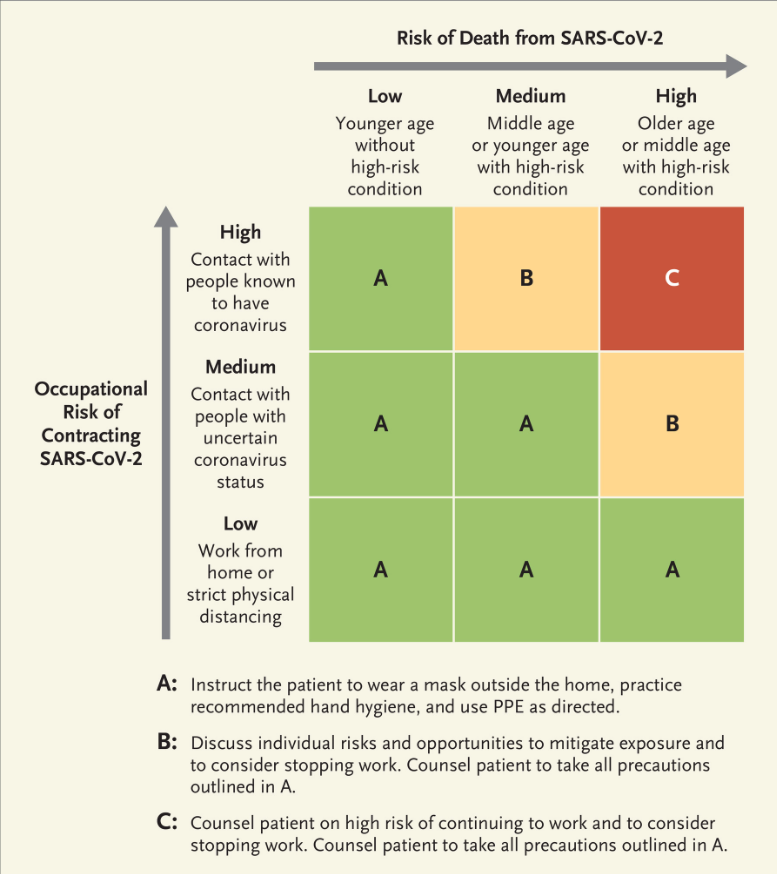
Is It Safe for Me to Go to Work?

Just for fun —YouTube (~3 minute video): The Swish Machine: 70 Step Basketball Trickshot (Rube Goldberg Machine)


Full text —MR Larochelle. DOI: 10.1056/NEJMp2013413. NEJM: Is It Safe for Me to Go to Work?

An excerpt:

I believe that a strategy to protect at-risk workers needs at least three components: a framework for counseling patients about the risks posed by continuing to work, urgent policy changes to ensure financial protections for people who are kept out of work, and a data-driven plan for safe reentry into the workforce…

The Occupational Safety and Health Administration has published guidance and proposed a scheme for classifying the risk of SARS-CoV-2 infection as high, medium, or low based on potential contact with persons who may or do have the virus (www.osha.gov/Publications/OSHA3990.pdf. opens in new tab). Low-, medium-, and high-risk categories of individual risk of death from Covid-19 are based on age and the presence of high-risk chronic conditions identified by the CDC…

As states move to reopen their economies, millions of nonessential employees will join essential employees in putting themselves at risk for contracting SARS-CoV-2 at work. Physicians should engage patients in individualized risk assessments. Our society has the moral imperative and means to provide vulnerable employees a financial safety net until we can better ensure their workplace safety.

Related blog post: @Atul_Gawande: How to Reopen

“Coronavirus Disease 2019 and the Pediatric Gastroenterologist”

Full Text: KF Murray, BD Gold, R Shamir et al. JPGN 2020; 70: 720-6. Coronavirus Disease 2019 and the Pediatric Gastroenterologist. This article includes CME availability too!

Some excerpts:

  • The latest global count updates can be found at: https://www.who.int/emergencies/diseases/novel-coronavirus-2019/situation-reports/.
  • SARS-CoV-2 is a positive-sense, single-stranded RNA virus belonging to the genus Betacoronavirus, and phylogenetically related (88%–89% similarity) to the two bat-derived SARS-like coronaviruses, bat-SL-CoVZC45 and bat-SL-CoVZXC21….
  • Routine gastroenterology practice poses increased risk of exposure and potential viral transmission during ambulatory interaction, especially during endoscopic procedures…
  • The use of telemedicine is now a critical tool for the pediatric gastroenterologists and their patients, whether in the academic setting or private practice…The recently published AAP guideline, entitled Telehealth Payer Policy in Response to COVID-19 (https://downloads.aap.org/DOPA/Telehealth_2_rev.pdf and https://www.aap.org/en-us/professional-resources/practice-transformation/telehealth/Pages/compendium.aspx), which outlines policy changes aiming to alleviate barriers to telehealth care, along with a webinar on telehealth and guidance on structuring your practice during the pandemic are tools that can be employed in both the academic and private practice pediatric gastroenterologist office to facilitate ongoing quality care of their patients

My take: This article provides a concise update and numerous resources.  As the information about the coronavirus is rapidly changing, the recommendations will continue to evolve.

Also, JPGN has a large number of articles available on its COVID-19 page: Link: COVID-19 page This page includes articles related to endoscopy, PPE, telemedicine, and central line infections.  Also, based on a personal communication, there will be a link to a recently published article soon on “Pediatric Crohn’s Disease and Multisystem Inflammatory Syndrome in Children (MIS-C) and COVID-19 Treated With Infliximab.”(Dolinger M T, Person H, Smith R, et al. Journal of Pediatric Gastroenterology & Nutrition 2020;  PMID: 32452979 DOI: 10.1097/MPG.0000000000002809)

“Channelopathy of the Pancreas Causes Chronic Pancreatitis” and SARS-CoV-2 in Sewage

Interesting article: Full Text: SARS-CoV-2 RNA concentrations in primary municipal sewage sludge as a leading indicator of COVID-19 outbreak dynamics 

___________________________________________________________________

M Sahin-Toth. Gastroenterology 2020; 158: 1538-40. Full Text Link: Channelopathy of the Pancreas Causes Chronic Pancreatitis

Excerpt from editorial:

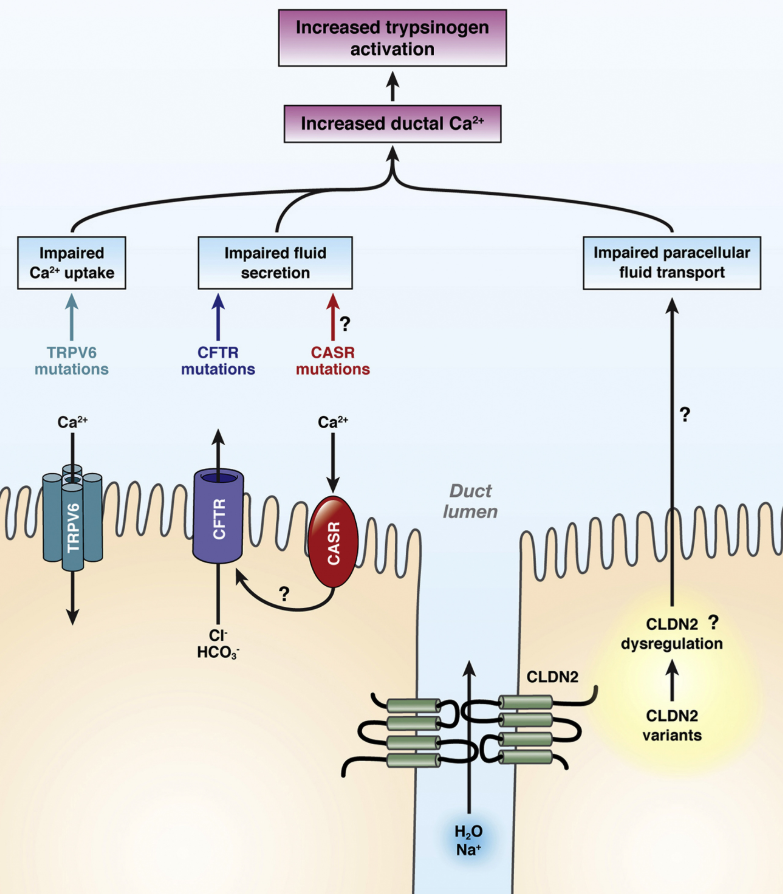
In this issue of Gastroenterology, Masamune et al report a landmark discovery, the genetic association of functionally defective TRPV6 channel variants and chronic pancreatitis. The authors investigated the TRPV6 gene in Japanese and European patients with nonalcoholic chronic pancreatitis using targeted sequencing followed by functional analysis of the identified variants. In the Japanese discovery cohort, they found functionally defective variants in 4.3% of the patients and in 0.1% of the controls (odds ratio 48). In the European replication cohort, 2% of the patients carried a defective variant and none was found in controls.

Original research study: A Masamune et al. Gastroenterology 2020; 158: 1626-41. Full text: Variants That Affect Function of Calcium Channel TRPV6 Are Associated With Early-Onset Chronic Pancreatitis

An excerpt:

TRPV6 variants are globally associated with early-onset nonalcoholic CP. To our knowledge, TRPV6 is a novel pancreatitis-associated gene beyond the pancreatic digestive enzyme/enzyme inhibitor system, and it is the first gene that directly regulates Ca2+ homeostasis. Our findings open a completely new avenue by emphasizing the potential role of ductal cells and, especially, calcium channels in the pathophysiology of pancreatitis, which might lead to the development of personalized medicine targeting TRPV6 channel activity.

From editorial by Sahin-Toth

Visual abstract for research study by Masamne et al.


Rifabutin-based Triple Therapy for H pylori

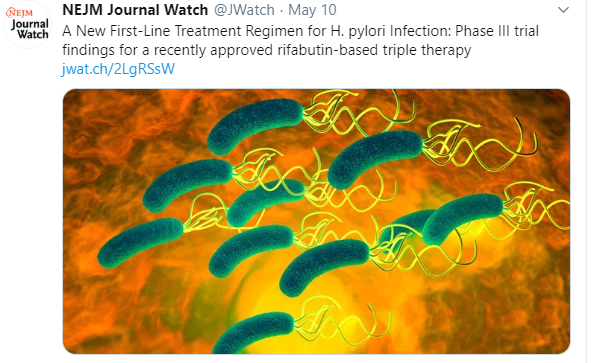
From NEJM Journal Watch (5/8/20): A New First-Line Treatment Regimen for H. pylori Infection

In this industry-funded, phase III trial conducted in the U.S., 455 H. pylori-treatment–naive patients with dyspepsia and a confirmed H. pylori diagnosis were randomized to treatment with capsules containing rifabutin, amoxicillin, and omeprazole or capsules containing amoxicillin and omeprazole for 14 days. Participants took 4 capsules every 8 hours. The eradication rate in the rifabutin-based therapy group was significantly higher (84%) compared with the comparison group (58%). In patients with confirmed adherence to treatment, the eradication rates were 90% versus 65%, respectively. No H. pylori resistance to rifabutin was detected, and side effects were similar between groups.

My take: More treatment options are needed due to drug resistance.  Also, “further studies are needed to compare this new triple therapy with current quadruple therapies.”

Related blog posts:

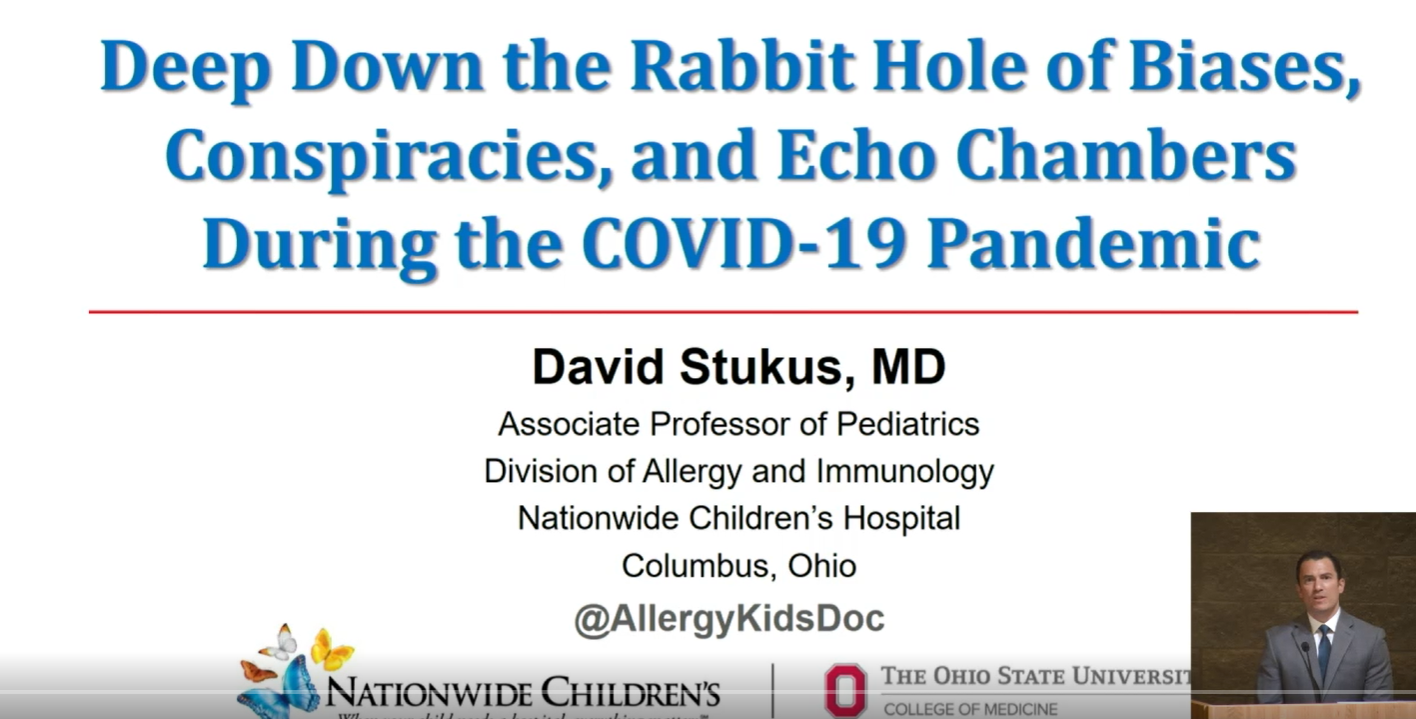
@AllergyKidsDoc: Deep Down the Rabbit Hole of Bias, Plus Two

NPR: From Camping To Dining Out: Here’s How Experts Rate The Risks Of 14 Summer Activities

This article describes the potential risks for dining out, staying at hotels, getting a haircut (ask your stylist to focus on cutting and not talking), going to the beach/pool and other activities.


Moving NY Times Graphic on coronavirus toll in U.S. (May 24, 2020): An Incalculable Loss: Remembering the Nearly 100,000 Lives Lost to Coronavirus in America


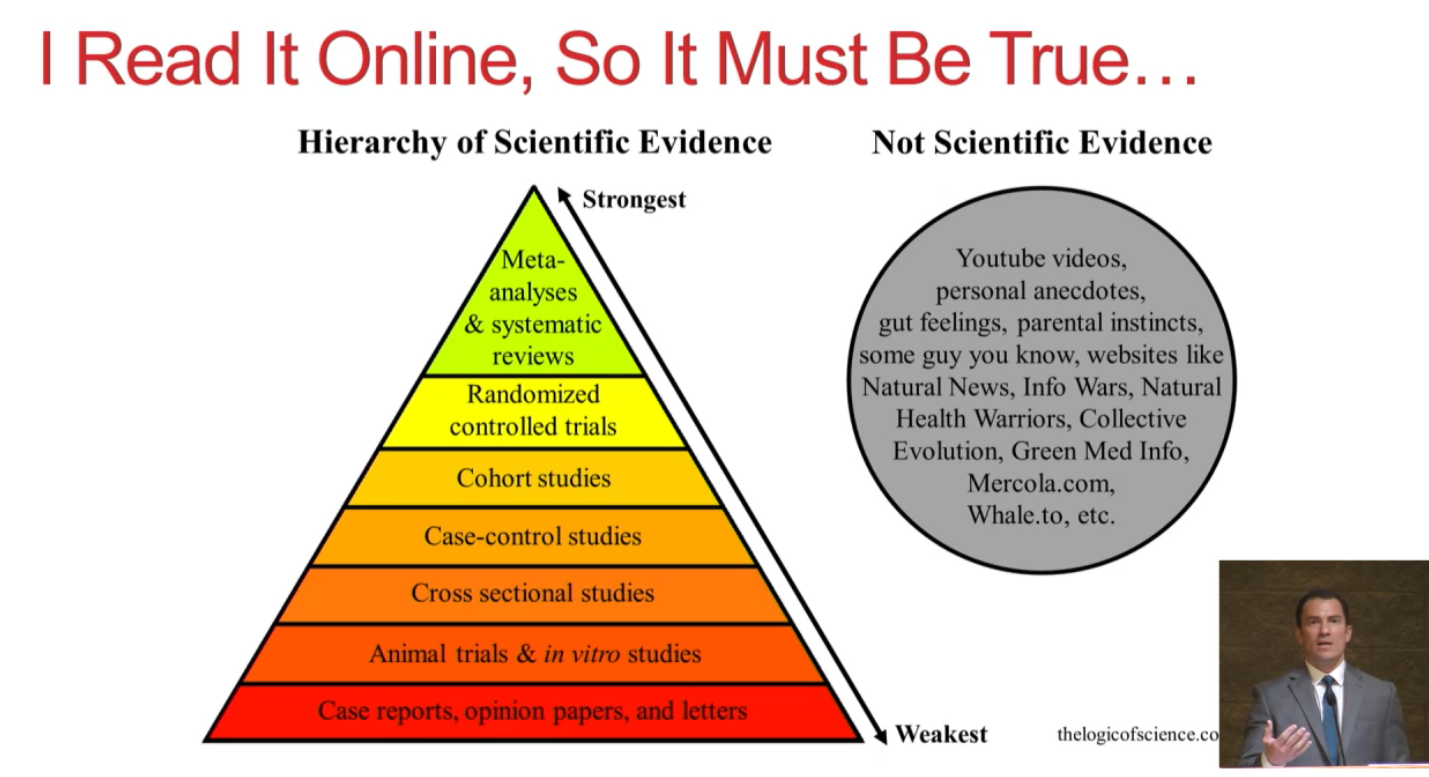
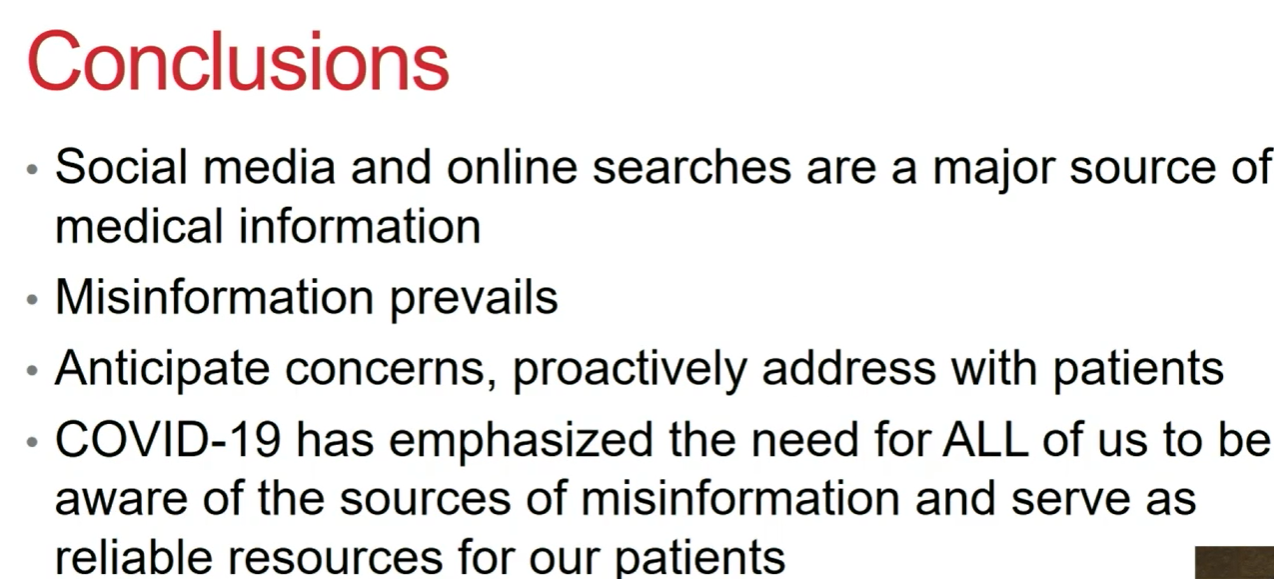
A recent lecture by Dave Stukus: Deep Down the Rabbit Hole of Biases, Conspiracies, and Echo Chambers (50 minutes). Thanks to Ben Gold for this reference.

This lecture summarizes some of the challenges of misinformation and quackery.

Some interesting points:

  • Explains common biases which lead us to faulty conclusions
  • Illustrates some far-fetched claims for Himalayan Salt Lamp as a treatment for asthma as well as Dr. Oz’s unproven recommendations for the coronavirus
  • Provides several books for those interested in learning a lot more (see last slide)

Some slides:


Related blog posts: