Economic Costs of Gluten Free Diet

A recent study (AR Lee et al. Nutrients; 2019, 11, 399). Open access: Persistent Economic Burden of the Gluten Free Diet) quantifies the additional costs of a gluten free diet (GFD) in the U.S. Thanks to Kipp Ellsworth for this reference.

The authors conducted a “market basket” study to establish the cost of a GFD. “A market basket is a group of products that are purchased by consumers …for this study, the market basket was food that would necessitate a GF substitute, including staple foods, snack foods, and commonly used ready-made or convenience meals.”

Key findings:

  • GF products were more expensive, overall the increase was 183%.  This is an improvement from a 2006 study which found the increase overall at 240% (adjusted for inflation).
  • Mass-market products were 139%  more expensive than wheat-based versions

Discussion:

  • Cost is identified as a frequent reason for nonadherence with diet, cited by 33% in one study
  • Overall, the burden of GFD is more frequently related to the restrictive nature of the diet which leads to a negative impact on quality of life. According to the authors, in one study (Am J Gastroenterol 2014; 109: 1304-11), treatment burden for celiac was ranked higher than for diabetes hypertension, and congestive heart failure

My take: This study shows the significant economic burden of a GFD.  In Italy, the  “government offers celiac patients vouchers to buy gluten-free food — up to 140 euros per month.” (NPR: Italy, Land of Pizza and Pasta)

Related blog posts:


AAP -Behind the Scenes 2019

The Georgia Chapter of the American Academy of Pediatrics (AAP) had a recent Board of Directors meeting.  There is a core group of pediatricians and pediatric specialists who, in conjunction with the AAP staff, work to improve the health of children. This includes arranging conferences, working with legislators, identifying regulatory issues and promoting best practices.  The Board of Directors meeting helps guide the chapter’s work.  This year’s meeting covered a lot of ground.  Two of the presentations provided information from the composite medical board and ABP certification/MOC.

The first presentation discussed the following:

  • -How physicians get into trouble: not completing CME credits, drug use, inappropriate contact with patients.  A new issue is not registering for PDMP (prescription drug monitoring program).  If a physician is not in compliance, they will be fined $3000 and reported to national database.
  • -Issue of lack of physician access in rural areas.
  • -High debt of physicians completing medical school and loan repayment programs to encourage physicians to locate in underserved areas.

The second presentation by Anna Kuo and Brad Weselman focused on changes in ABP’s MOC process, including the introduction of MOCA-Peds.  The goal of the changes is to make MOC process more relevant in improving practice.

FDA’s Very Limited Ability to Regulate Dietary Supplements

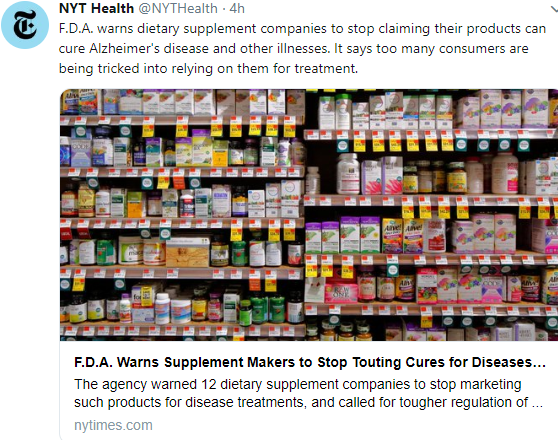
NY Times: Supplement Makers Touting Cures for Alzheimer’s and Other Diseases Get F.D.A. Warning

An excerpt:

The Food and Drug Administration on Monday warned 12 sellers of dietary supplements to stop claiming their products can cure diseases ranging from Alzheimer’s to cancer to diabetes.

At the same time, Dr. Scott Gottlieb, the agency’s commissioner, suggested that Congress strengthen the F.D.A.’s authority over an estimated $40 billion industry, which sells as many as 80,000 kinds of powders and pills with little federal scrutiny…

The F.D.A.’s oversight is based on a 1994 federal law, which imposed minimal reporting and labeling requirements on the makers of vitamins, minerals and herbs — a fledgling industry at the time. To prevent a company from selling a product, the law requires the F.D.A. to prove that it is unsafe…

There are now between 50,000 and 80,000 dietary supplements on the market, according to the F.D.A. The agency also says that three of every four American consumers now take a dietary supplement regularly.

Related blog posts:

Pushing the Boundaries on Dietary Therapy for Crohn’s Disease (CD-TREAT)

A recent study (available online in advance of publication) (V Svolos et al. Gastroenterology https://doi.org/10.1053/j.gastro.2018.12.002) examines the feasibility and science of modifying a diet to mimic exclusive enteral nutrition.

Full text accepted manuscript (from ScienceDirect/Gastroenterology website): Treatment of Active Crohn’s Disease With an Ordinary Food-based Diet That Replicates Exclusive Enteral Nutrition (PDF 135 pages)

Background: The authors note that exclusive enteral nutrition (EEN) is the only established dietary treatment for Crohn’s disease.

This complicated study had three main parts:

  1. Examining the effects of their CD-TREAT diet compared to EEN in 25 healthy adults in a randomized control trial
  2. Animal experiments (rat model) to explore the anti-inflammatory effect of CD-TREAT
  3. Pilot open-label study of 5 children with CD-TREAT diet (8-weeks)

In the first part of this study, the authors modeled a diet based on the components of the formula modulen. This diet continued to exclude gluten, lactose, and alcohol and tried matching other components (macronutrients, vitamins, minerals, fiber).  In place of maltodextrin (the commonest carbohydrate in EEN feeds), the authors substituted foods high in starch and low in fiber.  Also, the authors decreased carbohydrates in CD-TREAT (particularly complex carbohydrates) in favor of protein.  This diet was given to 25 healthy adults.

Key findings:

  • CD-TREAT induced similar effects to EEN on fecal microbiome, composition,metabolome, mean total sulfide, pH, and short-chain fatty acids (SCFA)

In the second part of this study, in the rat model, CD-TREAT and EEN produced similar changes in bacterial load, short-chain fatty acids, microbiome, and in ileitis severity.

In the third part of the study with 5 children, after 8 weeks —Key findings:

  • 4 (80%) had a clinical response
  • 3 (60%) entered a clinical remission with concurrent reductions in calprotectin (mean decrease of 918 +/- 555 mg/kg)

The CD-TREAT diet appears to affect the taxon abundance of many species of the microbiome in a manner similar to EEN therapy.  The authors noted that CD-TREAT also changed the abundance of genera belonging to Actinobacteria, Bacteroides, and Firmicutes.

Unlike EEN, the CD-TREAT diet is subject to more variable individual intakes; it is not identical in all individuals.

My take: The mechanism of action of EEN therapy remains poorly understood.  The CD-TREAT diet, which is far more diverse than EEN, appears to replicate many of the effects of EEN: “the microbial composition, fecal pH, SCFA, total sulfide, fecal bacterial load and fecal metabolome significantly changed in the same direction for both diets.” A larger clinical study is needed to confirm the effectiveness of the CD=TREAT diet.

Related blog posts:

Disclaimer: These blog posts are for educational purposes only. Specific dosing of medications/diets (along with potential adverse effects) should be confirmed by prescribing physician/nutritionist.  This content is not a substitute for medical advice, diagnosis or treatment provided by a qualified healthcare provider. Always seek the advice of your physician or other qualified health provider with any questions you may have regarding a condition

Joshua Tree National Park


Sport Drinks Not Needed

A recent expose from 538 explains why sports drinks are unnecessary.

538: You Don’t Need Sport Drinks to Stay Hydrated

Key points:

  • Though sports drinks are highly marketed, there is little scientific evidence behind their claims
  • Water is generally better for most people
  • Hyponatremia can be provoked by drinking too much fluids

A few excerpts:

  • “As it turns out, if you apply evidence-based methods, 40 years of sports drinks research does not seemingly add up to much,” Carl Heneghan and his colleagues at the University of Oxford’s Centre for Evidence-Based Medicine wrote in a 2012 analysis published in the British medical journal BMJ. ..
  • There has never been a case of a runner dying of dehydration on a marathon course, but since 1993, at least five marathoners have died from hyponatremia they developed during a race.  At the 2002 Boston Marathon, researchers from Harvard Medical School took blood samples from 488 marathoners after the finish. The samples showed that 13 percent of the runners had diagnosable hyponatremia…Athletes who develop hyponatremia during exercise usually get there by drinking too much because they’ve been conditioned to think they need to drink beyond thirst

My take: Drink when you are thirsty.  Exceptional talent and hard work, not sports drinks, are the key if you want to “Be Like Mike.”

Related blog posts:

Joshua Tree at Joshua Tree National Park

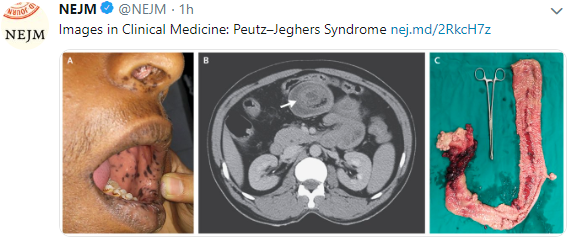
Screenshots: Peutz-Jeghers Syndrome, Alcohol #1 for Liver Transplantation, Case report Fanconi Syndrome due to Tenofovir Alafenamide

These images (S Sengupta, S Bose. NEJM 2019; 380: 472) show hyperpigmented macules on the lips, oral mucosa and nose in the first frame, a target sign on CT scan indicative of intussception, and a jejunal resection with polyps that triggered the intussception. Related blog post: Update for Peutz-Jegher Syndrome

Telemedicine -Still Not Popular

Several recent reports indicate that telemedicine is being adopted at a slow pace  –thanks to Ben Gold for these references.

AP: Telemedecine’s Challenge: Getting Patients to Click the App

An excerpt:

Widespread smartphone use, looser regulations and employer enthusiasm are helping to expand access to telemedicine, where patients interact with doctors and nurses from afar, often through a secure video connection…

Doctors have used telemedicine for years to monitor patients or reach those in remote locations. Now more employers are encouraging people covered under their health plans to seek care virtually for several reasons…

Telemedicine can reduce time spent away from the job, and it also can cost half the price of a doctor’s visit, which might top $100 for someone with a high-deductible plan…

Research firm IHS Markit estimates that telemedicine visits in the U.S. will soar from 23 million in 2017 to 105 million by 2022. But even then, they will probably amount to only about one out of every 10 doctor visits.

My take: Telemedicine can overcome geographical barriers. However, I worry about the person-to-person connection as this is hard even with face-to-face visits.

An unrelated article using telemedicine: IBD News Today: Remote Monitoring Offers Little Benefit to IBD Patient, Study Finds In this randomized study with 348 adult patients wtih IBD, telemedicine (in addition to clinic visits) did not improve patient confidence or management more than the control populaiton. 

Joshua Tree National Park


Plasma miR-1290 -Specific Biomarker for Necrotizing Enterocolitis

Briefly noted: P Cheung, et al. J Pediatr 2019; 205: 83-90.  This study showed that a plasma biomarker for necrotizing enterocolitis (NEC), miR-1290, was very useful in a cohort of 301 neonates.

  • Of 20 infants with miR-1290 > 650 copies/microliter, 15 were diagnosed with NEC.
  • In those with intermediate values (220-650 copies/microliter) adding CRP (>1.58 mg/dL) allowed for a sensitivity of 0.83, specificity of 0.96, a positive predictive value of 0.75, and a negative predictive value of 0.98.
  • The authors state that 7 of 36 infants had NEC diagnosed earlier by 8-32 hrs based on the availability of miR-1290 testing.

My take: Biomarkers are helping us identify serious diseases more quickly and changing how we practice.  Hopefully, work in this area will help us identify NEC sooner and improve outcomes.

Below is a visual abstract indicating that transfusion for platelet count less than 25 K was associated with a lower rate of death/major bleeding that a platelet count threshold of 50 K.

Visual abstract indicates that most preterm infants do not need platelet transfusions as long as the platelet count is >25 K.

Oral Antibiotics For Refractory Inflammatory Bowel Disease

A recent retrospective study (J Breton et al. Inflamm Bowel Dis 2019; https://doi.org/10.1093/ibd/izz006) currently available online in advance of publication is likely to influence current practice in children with refractory inflammatory bowel disease (IBD). Thanks to Ben Gold for sharing this reference.

Link to abstract: Efficacy of Combination Antibiotic Therapy for Refractory Pediatric Inflammatory Bowel Disease

Here are some of the details:

  • There were 63 patients who met inclusion criteria.
  • 27 (43%) with colonic (n=18) or ileocolonic (n=9) Crohn’s disease (CD)
  • 23 (36.5%) with ulcerative colitis
  • 13 (21% classified with IBD-U.
  • 34 (54%) were corticosteroid-refractory or dependent
  • 62/63 with previous or present loss of response or primary nonresponse to anti-tumor necrosis factor (anti-TNF) therapy
  • 48 (76.2%) were receiving anti-TNF therapy at time of antibiotic initiation
  • Of the 37 with available anti-TNF trough, 23 (62.%) were considered therapeutic  (IFX ≥5, or ADA ≥7.5)
  • Medical refractoriness “was defined by corticosteroid resistance, as shown by no or partial response to more than 7 days of hgih-dose corticosteroids (≥ 1 mg/kg/day prednisone equivalent) or primary nonresponse or loss of response to a biologic”

Antibiotic regimens: A=Amoxicillin, D =Doxycycline, M =Metronidazole, C= Ciprofloxacin, V= vancomycin. Antibiotic therapy was based on previous study which used ADM. A =50 mg/kg/day divided TID to max 500 mg/dose; D =4 mg/kg/day divided BID to max 100 mg/dose; M 15 mg/kg/day divided TID to max of 250 mg/dose. In children <8 yrs, C =20 mg/kg/day divided BID to max of 250 mg.  Vancomycin 125 mg/dose QID in <8 y and 250 mg/dose QID in ≥8 yo could be added as a 4th drug and Gentamicin cold be substituted in those with a drug allergy.

  • 45% ADM
  • 8% ADMV
  • 8% CMV
  • 8% AMV
  • 8% ACM
  • 6% ADV
  • 17% Other

Improvement with Regimen:

  • Median PUCAI dropped from 55 at baseline to 10 (P<0.0001) by 3 weeks ± 1 week after antibiotic initiation
  • 40 (63.5%) experienced a clinical response with a change in PUCAI of ≥20 points
  • 25 (39.7%) entered clinical remission, including 6 who achieved corticosteroid-free remission
  • Other markers of improvement: increased median hemoglobin (10.7–>11.6), Improved median CRP (1.1 –> 0), improved median ESR (38 –>21)
  • Use of doxycycline (OR 0.25) and high PUCAI ≥ 65 (OR 0.2) were both associated with a much lower odds of clinical remission

Outcomes:

  • Among the 25 entering clinical remission, 13 (65%) had successful rescue of current anti-TNF therapy, 6 were transitioned to another biologic (vedolizumab or ustekinumab)
  • No serious adverse drug-related toxicities were evident.  No cases of Clostridium difficile. One patient had a vaginal yeast infection

Implications:

  • The authors interpret their findings as indicating that antibiotics could serve as an effective rescue therapy in some and potentially rescue anti-TNF therapy in patients with refractory disease.
  • The discussion speculates that improvement is related to microbial modulation as dysbiosis “may play a causative role in perpetuating inflammation”
  • In those placed on antibiotics, the authors state that “clinical response should be assessed frequently and therapy discontinued if no improvement is documented within 1 week”

Safety and Antibiotic Choice:

  • While there were no safety signals evident in this study over 1 year, the long-term risks of using antibiotics is uncertain. For example, with ciprofloxacin, a fluoroquinolone, there is a well-recognized risk of permanent damage to tendons/joints (link to FDA update) and fluoroquniolones increase the risk of aortic tear/rupture.  Because aortic rupture is rare, this increased risk represents a very low absolute risk.
  • The authors indicate that doxycycline, used in 45%, had a much lower response rate.  This makes the choice of antibiotic regimen uncertain –none of the other regimens were used in more than 8%.
  • Given the retrospective nature, it is unclear whether some of the improvement could be related to additional time for the adjunctive/non-antibiotic treatments to work. Though, the authors found that the effect of antibiotics seemed to be independent of therapy optimization.

My take: This is an important study for children with limited treatment options in the setting of refractory disease and may act to salvage current anti-TNF treatment or facilitate a bridge to an alternative treatment.  Though, the optimal antibiotic regimen in this setting is unclear.

Related blog posts:

Disclaimer: These blog posts are for educational purposes only. Specific dosing of medications/diets (along with potential adverse effects) should be confirmed by prescribing physician/nutritionist.  This content is not a substitute for medical advice, diagnosis or treatment provided by a qualified healthcare provider. Always seek the advice of your physician or other qualified health provider with any questions you may have regarding a condition.

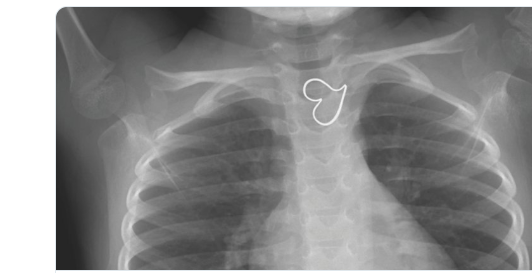
Heart-shaped Cactus, Joshua Tree National Park

Joshua Tree National Park. This image selected since this article discusses a ‘bridge’ therapy,